

Note: This article contains affiliate links. If you click on these links and make a purchase, I may earn a small commission at no extra cost to you. This helps support my research and content. Read my full affiliate disclosure here.
If you own a 2002-2006 Honda CR-V and notice longer stopping distances, vibration, or noise under braking, worn rotors are a likely cause. Choosing the right brake rotors restores braking performance, reduces noise and vibration, and helps ensure even pad wear for the rest of the system. This guide focuses specifically on rotors that fit the 2002-2006 CR-V and explains the practical differences that matter for daily driving, towing, and occasional highway use.Below are the top shortlisted rotor options for this model year window, followed by clear guidance on fitment, materials, thickness measurement, and common service decisions so you can pick the best replacement for your driving needs.
Looking for other parts? See all Honda CR-V parts & accessories.
Top Picks at a Glance


1. Detroit Axle Brake Kit for 2002–2004 Honda CR-V — Drilled & Slotted Rotors with Ceramic Pads (Front & Rear)

| Fitment | 2002–2004 Honda CR-V with 11.10 inch (282 mm) rotors |
|---|---|
| Rotors | Drilled & slotted, ventilated, zinc plated |
| Pads | 100% ceramic composition |
| Includes | Front+rear rotors, front+rear pads, brake cleaner, brake fluid, hardware |
| Warranty | 10 Year |
This Detroit Axle kit supplies both front and rear drilled-and-slotted rotors plus matching ceramic pads and the small consumables needed to replace the entire brake set on a 2002–2004 CR-V. The rotors are zinc plated to resist surface rust and have ventilation slots to shed heat and moisture, while the ceramic pads are low-metallicity for quieter operation and reduced dust. Detroit Axle also bundles brake cleaner, DOT3 fluid and basic hardware which makes the kit convenient for a DIY install. Fitment is vehicle-specific for CR-Vs with 282 mm rotors and the rotors are machined with accurate locating holes so they mount without modification. Expect improved fade resistance and a more assertive look from the drilled-and-slotted surfaces, though drilled rotors can be slightly noisier than plain rotors and bedding-in is recommended to reach optimal performance. The kit is best for mechanically confident owners doing a full axle-to-axle service rather than one-off pad swaps, and some buyers report occasional mismatched hardware packaging so check components before installation.
Best for: Buyers who want a single, vehicle-specific kit to replace all four rotors and pads at once and who value improved heat control and low-dust ceramic pads for everyday driving.
Less Ideal for: Drivers seeking an ultra-quiet, OEM-like appearance or buyers unwilling to perform bedding and a careful DIY installation should consider a plain rotor or professional installation instead.
- Complete kit includes front and rear rotors, front and rear ceramic pads, brake cleaner and DOT3 fluid for one full replacement.
- Drilled and slotted, ventilated rotors help with heat dissipation and reduce moisture buildup for steadier braking under repeated stops.
- Zinc plating on rotors provides corrosion resistance and a cleaner appearance compared with bare rotors.
- Ceramic pads produce less dust and are designed for lower noise compared with metallic pads.
- No printed installation instructions included in the box so DIYers should reference a service manual or online guide.
- Drilled-and-slotted design can be slightly noisier than plain rotors for some drivers.
Verdict: A convenient, vehicle-specific full brake kit that upgrades heat management and reduces pad dust, ideal for owners doing a complete DIY brake refresh on a 2002–2004 CR-V.
2. Max Advanced Brakes PerformanceMAX Front & Rear Brake Kit for 2005–2006 Honda CR-V (Slotted/Drilled Rotors, Ceramic Pads)

| Fitment | 2005–2006 Honda CR-V |
|---|---|
| Included Components | Brake Rotors, Brake Pads, Hardware |
| Rotor Finish | Black e-coating |
| Pad Type | Carbon-ceramic |
This PerformanceMAX kit replaces all four service rotors and pads for 2005–2006 Honda CR-Vs and is aimed at drivers who want stronger, fade-resistant braking without swapping to a big-name performance brand. The kit includes black e-coated slotted and cross-drilled rotors, carbon-ceramic friction material pads with dual-layer rubberized shims, and hardware needed for installation. In practice the slots and drill pattern help clear water and gases and improve initial pad bite during heavy or sustained stops, while the e-coating slows surface corrosion on exposed rotor faces. The carbon-ceramic pads are formulated for low dust and reduced noise and are described as thermally stable for towing, hill work, and repeated spirited stops. Expect a short bedding-in period as the coating and pads seat together; several reviewers noted initial vibration or coating residue that cleared after a few miles. This is a full kit so you get pads, rotors, and hardware, but installation requires basic brake tools and care with rotor direction and pad spring fitment on some calipers.
Best for: Buyers who prioritize stronger, fade-resistant stopping and cleaner-looking rotors on a 2005–2006 CR-V and who are comfortable performing or supervising a full four-wheel brake replacement.
Less Ideal for: Drivers seeking track-focused racing hardware or those who want an out-of-the-box, no-adjustment fit for unusual aftermarket calipers should consider other, application-specific options.
- Complete four-wheel kit includes front and rear rotors, pads, and installation hardware for a single purchase
- Slotted and cross-drilled e-coated rotors improve cooling, water evacuation, and corrosion resistance on exposed surfaces
- Carbon-ceramic pads claim low dust, reduced noise with rubberized shims, and thermal stability for repeated heavy braking
- Includes anti-seize lubricant and basic installation accessories to simplify a home brake job
- Black e-coating must be worn off the braking surface during break-in which can produce initial residue and requires careful bedding
- Some hardware pieces such as pad springs may need swapping or adjustment to fit certain calipers exactly
Verdict: If you want a complete, performance-oriented four-wheel brake refresh for a 2005–2006 CR-V that improves cooling and reduces dust while resisting corrosion, this kit delivers a practical, vehicle-specific upgrade.
3. Detroit Axle 10‑Piece Brake Kit — Drilled & Slotted Rotors with Ceramic Pads for 2002–2004 Honda CR‑V (11.10" front/rear)
| Fitment | 2002–2004 Honda CR‑V with 11.10" (282mm) front and rear rotors |
|---|---|
| Kit contents | 4 drilled & slotted rotors, front & rear ceramic pads with hardware, 10oz brake cleaner, 12oz brake fluid |
| Rotors finish | Silver zinc plated |
| Brake pad type | Ceramic |
This Detroit Axle kit provides a full brake refresh for 2002–2004 Honda CR‑V models that use 282mm (11.10 inch) rotors. It bundles four drilled and slotted rotors machined with locating holes, front and rear ceramic pads with hardware, a 10oz brake cleaner, and a 12oz bottle of DOT3 brake fluid so you can replace all wearable components in one job. The slotted and drilled rotors are designed to shed heat and moisture faster than plain rotors, while the zinc plating helps resist surface corrosion during storage and early service life. Ceramic pads offer quiet operation and low dust in normal driving, and the included hardware and fluids cut down trips to the parts store. Expect a straightforward DIY install if you have basic tools and brake experience; professional shops will also appreciate the complete kit. Limitations to note are that slotted and drilled surfaces can look aggressive but may wear faster under heavy track use, and some users report variability in long‑term durability compared with higher‑end premium rotors. Overall this kit is a practical, time‑saving option for owners who want a full replacement set with decent performance and low dust in everyday driving.
Best for: A practical DIYer or budget‑minded owner who wants a single purchase to replace all brake wear items and get quiet, low‑dust everyday braking on a 2002–2004 CR‑V.
Less Ideal for: Drivers who routinely push the car on track, carry heavy loads frequently, or prioritize the longest possible rotor life should consider heavier duty or performance‑grade rotor options.
- Complete kit includes front and rear drilled/slotted rotors, ceramic pads, hardware, brake cleaner, and brake fluid so no extra purchases are needed.
- Drilled and slotted rotors improve cooling and help evacuate gas and moisture for more consistent stopping under normal driving.
- Zinc plating reduces visible surface rust on the rotor face and helps maintain a cleaner appearance out of the box.
- Ceramic pads are quiet in operation and generate relatively low brake dust compared with many semi‑metallic compounds.
- Drilled and slotted rotors can exhibit faster wear or cracking risk under high‑temperature track use compared with plain high‑mass rotors.
- Long‑term durability reports are mixed; some users experienced quicker corrosion or premature wear over multiple seasons.
Verdict: If you want a convenient, budget‑focused full brake replacement that delivers quieter, low‑dust braking and includes everything for a one‑stop install on 2002–2004 CR‑V models, this kit is an efficient choice.
4. Detroit Axle Front Brake Kit with 11.10" Rotors and Ceramic Pads for 2002–2004 Honda CR-V
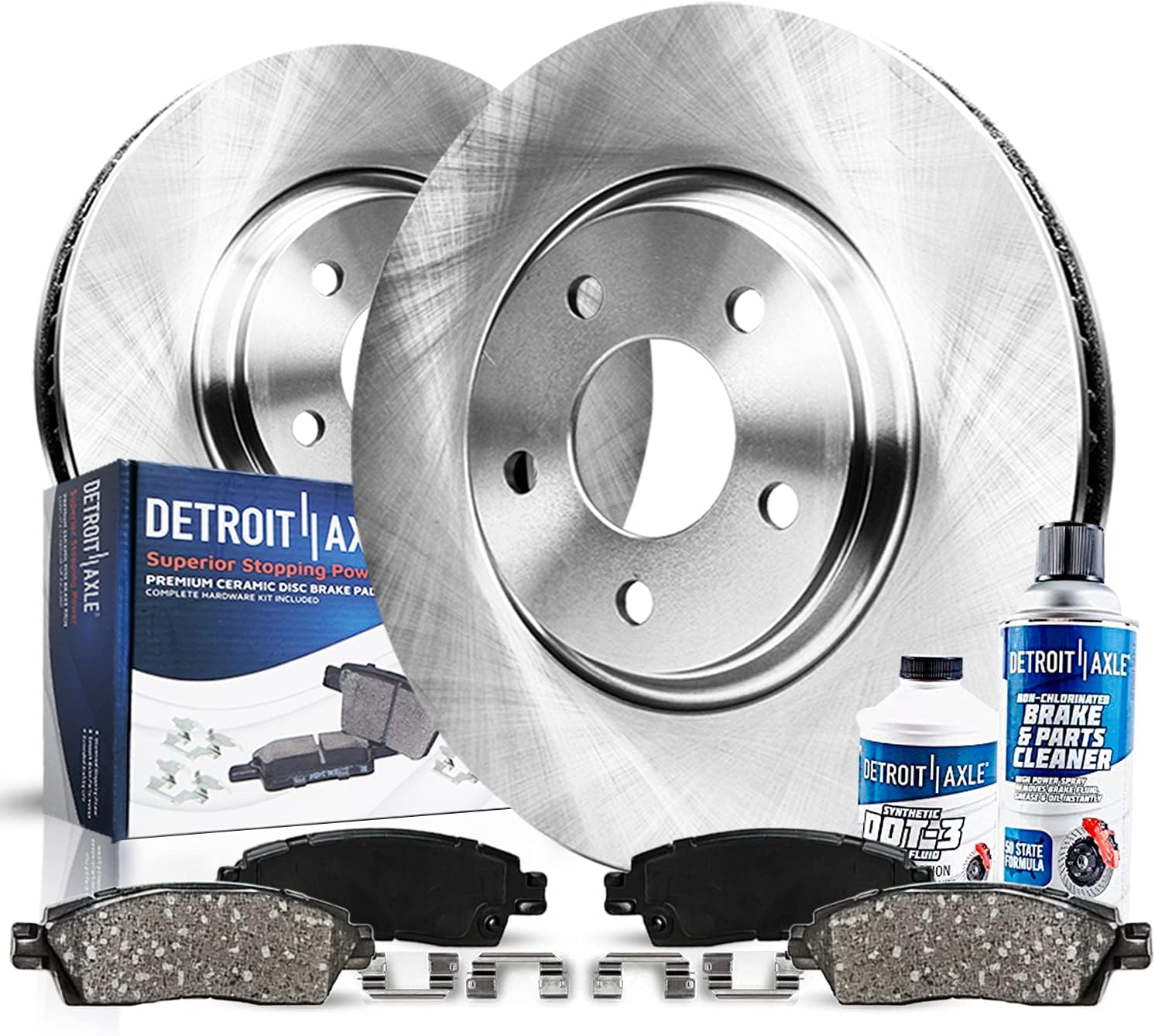
| Fitment | 2002–2004 Honda CR-V (11.10 inch front rotor) |
|---|---|
| Rotor type | Slotted and vented with zinc plating |
| Brake pads | Front ceramic pads with hardware included |
| Includes | Brake cleaner spray and brake fluid bottle |
| Manufacturer | Detroit Axle |
This Detroit Axle kit provides everything needed to replace the front rotors and pads on a 2002–2004 Honda CR-V with 11.10 inch rotors. The kit bundles two slotted/vented rotors machined with locating holes and zinc plating, two ceramic front pads with hardware, a 10 oz brake cleaner, and a 12 oz bottle of brake fluid so you can complete the job without sourcing extra consumables. Slotted rotors help dissipate heat and moisture for more consistent fade resistance under normal driving, and the zinc plating reduces surface corrosion while keeping wheel appearance cleaner. Ceramic pads run quietly and produce less dust than semi-metallic pads, which is convenient for daily driving. Some users report slightly less aggressive bite compared with performance pads and a few lone failure reports exist, so this is best for routine driving rather than heavy towing or demanding performance use. For a budget-focused DIY replacement that aims to match factory fit and reduce follow-up parts hunting, this kit covers the essentials and simplifies installation.
Best for: Buyers who need an affordable, all-in-one front brake replacement for routine daily driving and prefer a DIY-friendly kit that reduces trips to the parts store.
Less Ideal for: Drivers who frequently tow heavy loads, carry heavy payloads, or demand aggressive performance braking should choose heavy-duty or performance-specific parts instead.
- Complete kit includes rotors, ceramic pads, hardware, brake cleaner, and brake fluid so no extra parts are required for a standard front brake job
- Slotted and vented rotors improve cooling and help clear moisture for more consistent stopping under regular driving conditions
- Zinc plating on rotors helps resist surface corrosion and reduces visible wheel dust
- Ceramic pads offer low noise and low dust compared with semi-metallic compounds
- Ceramic pads are less aggressive than some performance or heavy-duty compounds, so stopping power may feel milder under heavy loads
- There are a small number of customer reports of early failures, indicating variable long-term durability
Verdict: If you want a budget-friendly, DIY-ready front brake service that includes rotors, pads, and necessary consumables for a 2002–2004 CR-V, this Detroit Axle kit gets the job done.
5. Motorevo Front Brake Kit with Geomet Coated Drilled & Slotted Rotors and Ceramic Pads for 2002–2004 CR-V

| Compatible vehicle | 2002–2004 CR-V SUV |
|---|---|
| Rotor diameter | 281.6 mm (11.1 in) |
| Included components | 2 rotors and 4 ceramic pads with hardware |
| Rotor coating | Geomet anti-corrosion coating |
| Orientation | Front |
This Motorevo front brake kit replaces the front rotors and pads on 2002–2004 CR-Vs with a matched set engineered for longer service life and consistent stopping. The rotors use a Geomet anti-corrosion coating and a drilled, slotted, vented design to speed heat dissipation and help prevent brake fade during repeated stops. The included ceramic pads are chamfered to reduce noise and generate low, non-staining dust for easier wheel cleanup. Installation is straightforward since the rotors are machined to fit the factory mounting points and the kit includes necessary hardware. In everyday driving the kit gives confident, quiet braking and should last longer than basic replacement parts thanks to the high-carbon alloy and coating. Be aware that drilled rotors can be more prone to cracking under extreme track abuse than solid or differently vented designs, so this kit is best for street use rather than aggressive racing. Also the claimed performance improvements are based on manufacturer testing so real-world gains will vary with vehicle condition and driving style.
Best for: Buyers prioritizing long-term, dependable street braking for a 2002–2004 CR-V who want low-noise, low-dust pads and rotors that resist corrosion.
Less Ideal for: Drivers who plan aggressive track days or frequent heavy braking events should consider a heavy-duty or track-specific rotor and pad package instead.
- Matched rotor and pad set for correct fit and easier installation
- Geomet anti-corrosion coating helps resist rust on non-friction surfaces
- Drilled, slotted, and vented rotor design improves heat dissipation and debris removal
- Ceramic pads offer low noise and produce minimal, easy-to-clean dust
- Drilled rotor pattern can be less durable than solid designs under extreme track or heavy repeated high-heat use
Verdict: A corrosion-resistant matched rotor and ceramic pad kit built for quiet, low-dust, reliable street braking on 2002–2004 CR-Vs.
6. Detroit Axle Front Brake Kit with Rotors and Ceramic Pads (11.10" Rotor)
| Brand Name | Detroit Axle |
|---|---|
| Manufacturer Part Number | R-31257FBK |
| Orientation | Front |
| Includes | 2 rotors, 2 pads with hardware, brake cleaner, brake fluid |
This Detroit Axle front brake kit supplies both rotors and pads plus hardware and small consumables so you can complete a front brake service in one purchase. The kit is built around 11.10 inch ventilated rotors with silver zinc plating and includes two ceramic pad assemblies, mounting clips, a can of brake cleaner and a small bottle of brake fluid. In practice the ventilated rotors aid cooling and the zinc plating helps resist surface corrosion during storage and initial use. Ceramic pads are quieter and produce less brake dust than semi-metallic options, which is helpful if you value a clean wheel appearance and low noise. The kit is intended for DIY or independent-shop installs and the included hardware and fluids reduce trips to the parts counter. Important limitations: fitment is specific to vehicles using the 11.10" front rotor diameter so confirm rotor size before ordering, and this is a front-axle kit only so rear components are not included. Professional brake inspection and proper bedding-in are still recommended after installation.
Best for: Buyers who want a bundled, ready-to-install front brake service for vehicles that match the specified rotor diameter and who value quiet operation, clean wheels and the reassurance of many prior buyer experiences.
Less Ideal for: Anyone who needs a full axle overhaul including rear brakes or users who cannot confirm their vehicle’s rotor diameter should look for a different kit or individual components.
- Complete kit contains rotors, ceramic pads, mounting hardware, brake cleaner and a small bottle of brake fluid for a single front-axle service.
- Ventilated rotor design helps dissipate heat for more consistent stopping under repeated braking.
- Silver zinc plating improves corrosion resistance and reduces visible wheel dust during early service life.
- Pads are ceramic, which typically means quieter operation and lower dust compared with many metallic compounds.
- Fitment limited to vehicles that use an 11.10 inch (282 mm) front rotor diameter; not a universal fit.
Verdict: A turnkey front-axle brake kit that pairs ventilated, zinc-plated rotors with ceramic pads for quiet, low-dust stopping on cars that use the 11.10" rotor size.
7. Callahan Front Brake Kit — Rotors with Ceramic Pads and Hardware

| Included components | Brake Rotors, Brake Pads |
|---|---|
| Fit type | Vehicle Specific Fit |
| Orientation | Front |
| Manufacturer warranty | 1 year manufacturer warranty |
This Callahan front brake kit supplies everything needed for a front axle brake job: two replacement rotors, four ceramic brake pads, and the pad hardware. It is intended as a direct, vehicle-specific replacement that matches factory rotor thickness and vane count so installation and braking feel closely mirror the original setup. The ceramic pads are slotted and chamfered to reduce noise and help with initial bite, while the rotors are precision machined and balanced to minimize vibration. Buyers will appreciate the complete kit approach because it streamlines a DIY or shop installation and reduces parts sourcing time. Limitations to note are that some buyers reported fitment mistakes on certain years or models, so confirming exact fitment for your CR-V is important before installation. The kit includes basic hardware but does not include calipers or additional fitment accessories, and sizing details are not called out in the listing so double-check measurements if your vehicle uses nonstandard rotor diameters.
Best for: Buyers looking for a budget-conscious, factory-style replacement brake kit for routine front brake maintenance on an early 2000s Honda CR-V who prioritize a complete, plug-and-play package over performance upgrades.
Less Ideal for: Those seeking high-performance or heavy-duty braking upgrades, or owners who need calipers or other suspension components as part of the repair, should look at more comprehensive or performance-focused options.
- Complete front axle kit with rotors, ceramic pads, and hardware for streamlined installation
- Rotors precision machined and balanced to reduce vibration and improve braking smoothness
- Ceramic pads are slotted and chamfered to help quiet operation and provide prompt brake response
- Matched to factory specifications for rotor thickness and vane count to minimize warping and fit issues
- Listing does not state rotor diameter or some sizing details which requires buyers to verify fitment
- Does not include calipers or additional components beyond pads, rotors, and basic hardware
Verdict: A practical, complete front brake kit that restores factory-style braking with ceramic pads and ready-to-install rotors for everyday driving on a 2002–2004 Honda CR-V.
Choosing the Right 2002-2006 Honda CR-V Brake Rotors: Key Factors to Consider
Fitment and OEM Specifications
Correct fitment is the top priority when selecting rotors for a 2002-2006 Honda CR-V. Rotors must match the CR-V's bolt pattern, hub bore diameter, and overall thickness to seat correctly and avoid runout. Even minor dimensional deviations can cause wheel vibration, uneven pad contact, or premature bearing wear.
Confirming that a rotor meets OEM or exact-equivalent specifications reduces installation time and prevents the need for additional machining. When swapping rotors, check hub surface condition and wheel bearing play because those factors affect rotor alignment. If the rotor does not specify exact fit measurements for the CR-V years, opt for parts with verified manufacturer tolerances to avoid compatibility issues.
Material and Casting Quality
Most replacement rotors are cast iron, but casting quality varies widely and directly impacts longevity. Higher-grade iron with controlled porosity resists cracking and warping under heat cycles, which is important on a compact SUV like the CR-V that may see extended highway braking or light towing.
Look for rotors with consistent surface finish and balanced weight distribution. Poor casting can lead to hotspots and uneven wear, increasing the chance of pulsation during braking. For environments with road salt or coastal humidity, coatings that inhibit corrosion extend service life and ease future removal if replacement becomes necessary.
Thickness, Minimum Spec, and How To Measure
Rotor thickness determines both stopping energy capacity and whether the rotor meets service limits. Before replacing pads, measure rotor thickness with a micrometer at several points to determine wear rate. Compare readings to the rotor's published minimum thickness specification to know if resurfacing is allowed.
Operators should measure thickness across the rotor face away from the hat and vent zones to get consistent values. Excessive taper or runout indicates uneven wear and usually means replacement is safer than resurfacing. Maintaining thickness above the minimum spec preserves heat capacity and structural integrity during repeated braking events.
Heat Dissipation and Ventilation
Effective heat management reduces brake fade and preserves pad life. For the 2002-2006 CR-V, rotors with good internal ventilation or optimized vane design dissipate heat faster during repeated stops or uphill descents. This matters if you do frequent city driving with heavy braking or drive in hilly terrain.
Poorly ventilated rotors will run hotter, increasing glazing and wear on pads and increasing the risk of warping. Consider rotor thickness, vane count, and overall mass when evaluating thermal performance for your typical driving patterns.
Surface Design: Slotted, Drilled, and Smooth Options
Surface design affects pad bite, water dispersal, and noise. Slotted rotors help clear pad material and gases from the contact patch, improving initial bite and reducing glazing during aggressive or repeated stops. Drilled rotors aid in water evacuation but can concentrate stress and are more prone to cracking under heavy thermal cycling.
For most CR-V owners focused on daily driving and occasional highway travel, a quality smooth or slotted rotor offers the best balance of longevity and consistent braking feel. Reserve drilled designs for specific use cases where water evacuation is a frequent problem and understand the tradeoff with long-term durability.
Serviceability and Resurfacing Versus Replacement
When a rotor shows minor scoring or light surface corrosion, resurfacing can restore a smooth contact surface if the remaining thickness stays above the minimum specification. However, repeated resurfacing reduces thickness and heat capacity over time. Knowing when to machine a rotor versus replace it is a key maintenance decision for CR-V owners.
If rotors exhibit runout, deep grooves, or thickness near the minimum, replacement is the smarter choice. Also consider the time and labor cost relative to the rotor's remaining usable life. For vehicles driven in corrosive conditions, replacement with a coated rotor is often more cost-effective than repeated resurfacing.
Common Brake Rotor Wear Symptoms on a 2002-2006 CR-V
Recognizing wear symptoms early helps prevent secondary damage to calipers, pads, and wheel bearings. Typical signs include a pulsating brake pedal or steering wheel vibration under braking, which points to uneven rotor surface or runout. Squealing or grinding noises often indicate severe scoring, worn pads contacting the rotor, or hard deposits on the rotor face.
Visual inspection can reveal rust buildup around the hat area, deep grooves, or noticeable lip on the rotor edge where wear has progressed. Reduced braking performance or longer stopping distances under identical pedal input may indicate rotor thinning or glazing. Addressing these symptoms promptly prevents more expensive repairs and restores consistent brake feel.
- Pulsation under braking often signals rotor runout or uneven thickness.
- Squealing that persists after pad replacement suggests rotor surface issues.
- Edge lips and deep grooves reduce effective pad contact area.
- Rust and corrosion near the hub can complicate rotor removal and alignment.
Measuring Rotor Thickness and Runout
Accurate measurement of rotor thickness and lateral runout is essential before deciding on resurfacing or replacement. Use a micrometer to measure thickness at multiple points around the rotor face and compare to the rotor's published minimum thickness. If measurements are close to the minimum, replacement is the safer option.
To check lateral runout, mount a dial indicator on the hub and rotate the rotor slowly. Excessive runout creates pedal pulsation and uneven pad wear. If runout exceeds manufacturer allowances, the rotor should be replaced or the hub inspected for damage or corrosion that prevents the rotor from seating correctly.
- Measure thickness at several evenly spaced points around the rotor face.
- Account for surface taper by comparing multiple measurements.
- Use a dial indicator to quantify lateral runout before resurfacing decisions.
Slotted Versus Drilled Rotors: Which Suits the CR-V?
For the typical driving regimen of a 2002-2006 CR-V, slotted rotors tend to provide better long-term service than drilled variants. Slots help keep the pad surface free of debris and gases, which improves bite consistency without introducing stress risers. This is useful for drivers who do frequent stop-and-go city driving.
Drilled rotors can help in wet climates by providing channels for water to evacuate, but drilled holes reduce material cross-section and can promote cracking under heavy, sustained heat. Unless you have a specific need for rapid water dispersal, choose designs that prioritize structural integrity and even wear.
- Slots aid pad cleaning and reduce glazing on repeated stops.
- Drilled holes improve wet-weather performance but increase crack risk.
- Smooth rotors offer the quietest ride and longest wear in everyday use.
Compatibility Tips: Ensuring the Right Rotor for Your CR-V
Compatibility goes beyond a simple fit claim. Confirm bolt pattern, hub bore size, rotor thickness, and whether your CR-V uses a one-piece or two-piece assembly. For the 2002-2006 model years, matching these dimensions prevents installation problems and vibration issues.
Also check whether parking brake components or shield clearances require a specific rotor hat profile. Some replacement rotors come pre-drilled for hub centering or include anti-rattle features that improve fit and reduce noise. Verifying these details avoids last-minute adjustments or the need for additional hardware.
- Verify bolt pattern and hub bore for precise centering.
- Confirm rotor thickness and hat profile for parking brake clearance.
- Check whether the rotor is compatible with common pad compounds used on the CR-V.
Maintenance Practices to Extend Rotor Life
Regular inspections, prompt pad replacement, and avoiding extended high-heat braking will extend rotor life. Replace pads in matched pairs and avoid running thin pads that can score rotors. When installing new rotors, clean the mating surfaces and torque lug nuts in the proper sequence to prevent distortion.
If you live in corrosive environments, consider rotors with protective coatings and use anti-seize on hub mating surfaces to ease future removal. Periodic measurement of thickness and runout during routine service visits helps identify issues before they require full replacement.
- Change pads before they reach the backing plate to prevent scoring.
- Use correct torque and sequence when installing wheels to avoid rotor warpage.
- Clean hub mating surfaces and apply anti-seize where appropriate.
Still looking for the perfect fit?
Select your Honda CR-V configuration to see the most relevant Brake Rotors recommendations
How We Chose the Best 2002-2006 Honda CR-V Brake Rotors
We started with rotors specifically rated to fit the 2002-2006 Honda CR-V chassis and then applied practical, road-focused filters to narrow the field. Key evaluation criteria included material and casting quality to gauge longevity and resistance to warping, dimensional fitment (bolt pattern, hub bore, and thickness) to ensure straightforward installation, and thermal performance under repeated stops to limit fade and glazing. Noise and vibration characteristics were assessed through reported user feedback and design features such as ventilation, slotting, and surface finish. Corrosion resistance and coating options were considered for owners in wet or salted-road climates.We excluded rotors with ambiguous fitment data, those requiring extensive machine work to install, and any products lacking clear manufacturing tolerances. Final choices favored rotors that balance durability, consistent heat dissipation, and compatibility with common pad types used on this CR-V. Where applicable, we also favored parts that reduce the chance of wheel shimmy and that minimize brake dust without sacrificing stopping power.
Our full evaluation process is outlined in our review methodology.
FAQ
How often should I replace brake rotors on a 2002-2006 Honda CR-V?
It depends on driving habits, but rotors often last between 50,000 and 80,000 miles under normal conditions. Inspect thickness and surface condition during pad changes and replace when measurements approach the minimum specification or when runout and scoring are evident.
Can I resurface the original rotors on my CR-V instead of replacing them?
Resurfacing is acceptable if the rotor thickness remains above the published minimum and there is no significant runout or cracking. Repeated machining reduces thickness and heat capacity, so replacement is preferable if the rotor is near the minimum or shows deep grooves.
Should I choose slotted, drilled, or smooth rotors for daily driving?
For most daily driving on the CR-V, slotted or quality smooth rotors are the best choice. Slotted rotors help reduce glazing and maintain bite, while smooth rotors typically provide the quietest operation and longest life. Drilled rotors are usually only necessary for specific wet-weather needs and come with durability tradeoffs.
How do I measure rotor thickness correctly?
Use a micrometer to take measurements at several evenly spaced points across the usable rotor face, avoiding the hat and vent sections. Compare the lowest reading to the rotor's minimum thickness spec; if it is below or close to the minimum, replace the rotor.
What causes brake pedal pulsation after installing new pads on my CR-V?
Pulsation is typically caused by rotor runout or uneven rotor surface. If new pads are installed on old rotors with lateral runout or thickness variation, the pedal will pulse. Verify rotor runout with a dial indicator and either machine or replace the rotor to correct the issue.
Are coated rotors worth it for a CR-V driven in salty conditions?
Coated rotors offer better corrosion resistance, making future removal easier and prolonging appearance and service life in salty climates. They can be a cost-effective choice if you regularly encounter road salt or coastal humidity.
Final Verdict
When replacing rotors on a 2002-2006 Honda CR-V, prioritize exact fitment to OEM dimensions, sufficient remaining thickness, and good thermal performance. Choose a rotor material and surface design that match your driving patterns: smoother or slotted faces for daily commuting and occasional highway use, and coated finishes where corrosion is a concern.Balance the tradeoffs between serviceability and longevity. If thickness measurements or runout are near limits, replace rather than resurface. Focusing on these criteria will help you restore consistent braking performance and minimize rework down the road.
Explore More:
- Check out all Honda CR-V parts & accessories
- Explore Brake Rotors Maintenance & Repair Guides
- Explore Brake System
- Browse all Auto Parts
