

Note: This article contains affiliate links. If you click on these links and make a purchase, I may earn a small commission at no extra cost to you. This helps support my research and content. Read my full affiliate disclosure here.
If you own a 2012-2016 Honda CR-V you depend on the braking system for safe everyday driving and highway confidence. Choosing the right brake pads affects stopping distance, pedal feel, noise, and how often you need rotor service. This guide focuses on the top brake pad options matched to the 2012-2016 CR-V platform, highlighting tradeoffs between material types, expected wear, and compatibility with stock rotors and calipers. We shortlisted seven top-performing pad choices for the 2012-2016 CR-V based on material composition, noise control, expected life, and ease of installation. Below you will find what to look for, practical installation considerations, and maintenance pointers that matter for this generation of CR-V. Read on to compare the characteristics that affect daily driving and long-term ownership.
Looking for other parts? See all Honda CR-V parts & accessories.
Top Picks at a Glance
| Best Overall The best all-around choice for most situations | Detroit Axle Ceramic Brake Pad Kit with Hardware and Brake Cleaner for 2012–2016 Honda CR-V (AWD) |  |
| Best Quality Built to a higher standard if you want something more solid | Bosch QuietCast Premium Ceramic Rear Brake Pad Set (BC1086) |  |
| Best Value The sweet spot between price and what you get | Detroit Axle Ceramic Front and Rear Brake Pads with Hardware for Honda CR-V (selected years) |  |
| Best Budget The cheapest option that still gets the job done reliably | PaiXingAuto Ceramic Front and Rear Brake Pad Set (8-piece) |  |
| Highest Rated A top-rated pick with lots of positive feedback | Bendix Premium SBC1521 Ceramic Rear Brake Pads |  |
| Most Popular A crowd favorite that many people choose with confidence | SCITOO Front Ceramic and Rear Semi-Metal Brake Pad Set for 2005–2006 and 2012–2016 Honda CR-V (FWD) |  |
| Best Seller A high-volume bestseller chosen again and again | Bendix Premium SBC1086 Ceramic Rear Brake Pads |  |
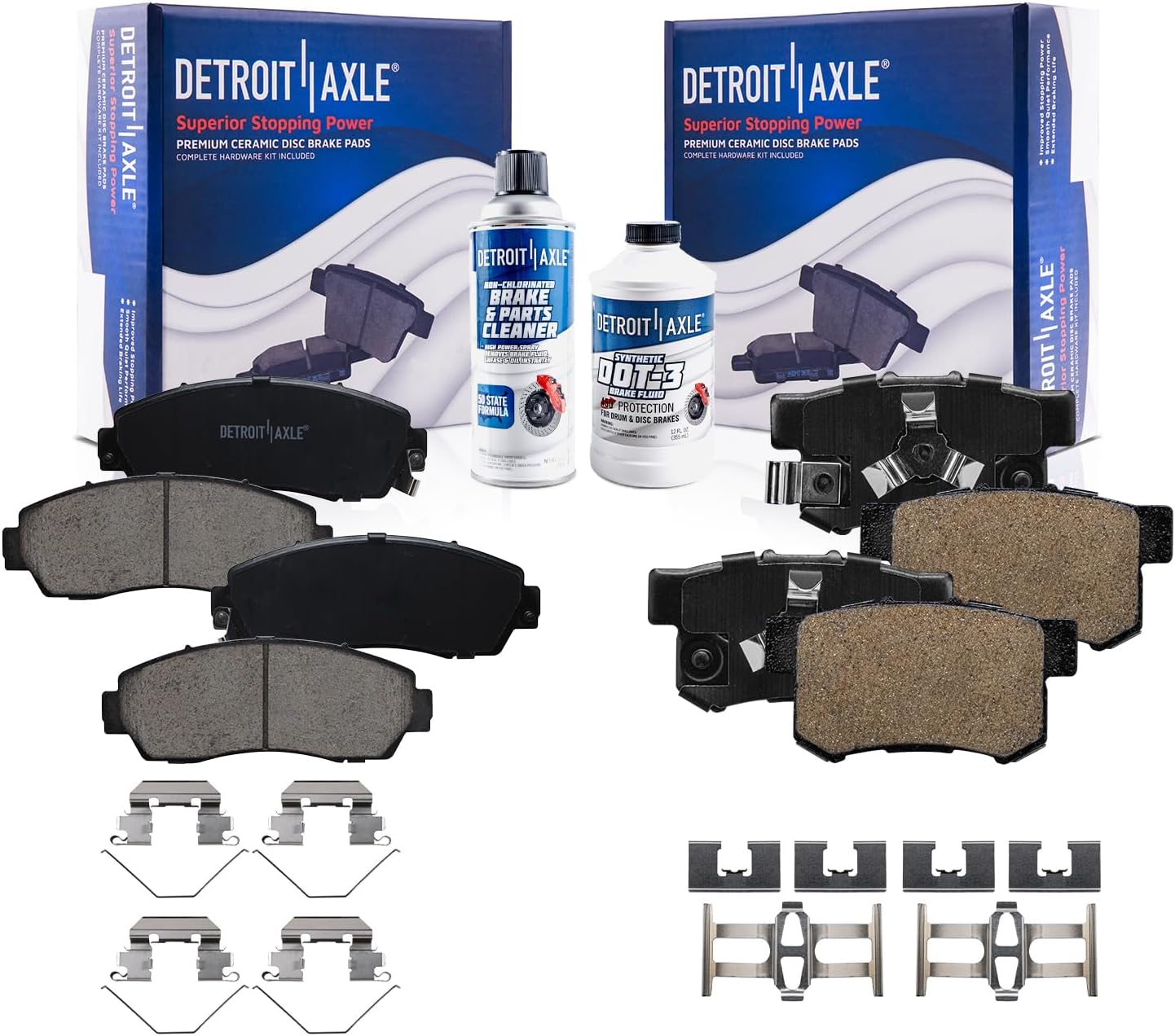
1. Detroit Axle Ceramic Brake Pad Kit with Hardware and Brake Cleaner for 2012–2016 Honda CR-V (AWD)
| Fitment | 2012-2016 Honda CR-V (AWD) |
|---|---|
| Material Type | Ceramic |
| Number of Items | 6 |
| Part Interchange Info | P-1521 P-1086 |
This Detroit Axle kit supplies both front and rear ceramic pads plus installation hardware and small bottles of brake cleaner and fluid so you get everything needed for a complete pad replacement on an AWD 2012–2016 Honda CR-V. The ceramic material and chamfered edges are designed to reduce vibration, lower noise, and limit dust compared with standard metallic pads, while the vendor says the compound resists fade at higher temperatures. Inclusion of new clips and shims simplifies installation and helps ensure proper fitment. Buyers should expect a quiet, factory-like pedal feel and improved rotor life when pads are kept clean. The kit is vehicle specific so fitment is straightforward, but quality control notes in some reviews mention occasional misaligned backing plates that require simple repositioning during install. Also the set is intended as a direct replacement pad rather than a performance or heavy towing upgrade, so drivers who want aggressive track stopping or extreme fade resistance should consider performance-oriented pads instead.
Best for: Drivers who want a quiet, low-dust, factory-quality pad replacement for routine street driving and light towing on a 2012–2016 CR-V AWD and value an all-in-one kit that simplifies DIY installs.
Less Ideal for: Drivers who frequently perform heavy towing, aggressive driving, or track use should choose a performance-specific pad designed for extreme fade resistance and higher friction levels.
- Complete kit with front and rear pads plus hardware and small bottles of brake cleaner and fluid.
- Ceramic compound with chamfers designed to reduce noise and brake dust compared with metallic pads.
- Vehicle-specific fitment for 2012–2016 CR-V AWD reduces installation hassle and fit issues.
- Includes replacement clips and shims to simplify proper installation and secure mounting.
- Not formulated for high-performance or heavy towing use compared with specialty performance pads.
- Some units reported minor quality-control issues like off-center backing plates that may need adjustment during install.
Verdict: A convenient, vehicle-specific ceramic pad kit that delivers quiet, low-dust, factory-style braking for everyday CR-V AWD owners.
2. Bosch QuietCast Premium Ceramic Rear Brake Pad Set (BC1086)

| Material | Ceramic |
|---|---|
| Auto Part Position | Rear |
| Specification Met | OEM |
| Manufacturer | Bosch Automotive |
The Bosch QuietCast BC1086 is a rear ceramic brake pad set designed to replace factory pads on select Honda and Acura vehicles. It pairs a proprietary ceramic friction compound with Bosch Molded Shim Technology and pre-attached multilayer rubber-core shims to reduce noise and vibration while maintaining strong stopping performance. The pads arrive ready to install and include a hardware kit where applicable and lubricant for slider contact points, which helps speed up a DIY replacement. In real-world use these pads are noted for quiet, consistent braking with less visible dust than semi-metallic alternatives, and powder-coated backing plates resist corrosion for longer service life. Fitment is vehicle-specific so confirm compatibility for 2012–2016 Honda CR-V rear brakes before buying. A minority of users reported missing a larger retainer shim in some kits, so keep the old shim if your caliper requires it. These are best for drivers who want near-factory feel, quieter stops, and lower dust without sacrificing stopping power.
Best for: Drivers who want a quiet, low-dust replacement that preserves factory braking feel and performance on a 2012–2016 Honda CR-V, and who prioritize drivability and comfort over aggressive track-oriented bite.
Less Ideal for: Not the best choice for drivers who need high-temperature fade resistance for track use or aggressive towing; those users should consider performance-oriented friction formulations.
- Ceramic compound provides smooth, responsive braking with reduced brake dust
- Pre-attached multilayer rubber-core shims and MST reduce noise and vibration
- Powder-coated backing plates resist rust for improved durability
- Includes hardware kit and lubricant to simplify installation
- Some kits have been reported missing a larger retainer shim needed on certain caliper brackets
Verdict: Choose these Bosch QuietCast rear pads if you want quiet, low-dust, factory-quality braking for a 2012–2016 Honda CR-V.
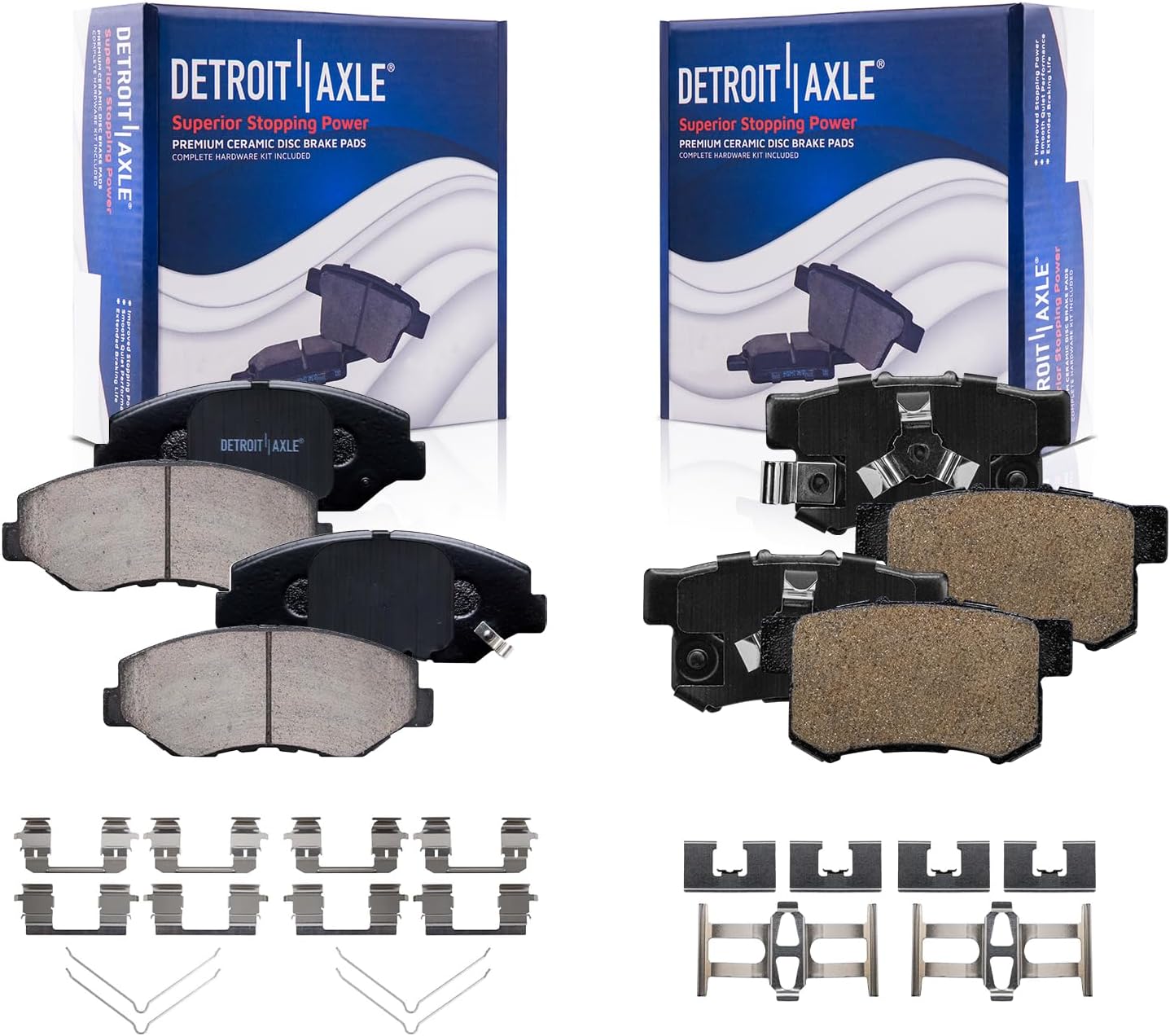
3. Detroit Axle Ceramic Front and Rear Brake Pads with Hardware for Honda CR-V (selected years)
| Compatible models | 2005-2006 and 2012-2016 Honda CR-V (FWD specified) |
|---|---|
| Material Type | Ceramic |
| Number of Items | 4 |
| Specification Met | OEM |
These Detroit Axle brake pads replace both front and rear pads on the listed Honda CR-V model years and come with the necessary hardware for a complete axle service. They use a ceramic friction compound that is formulated to run quieter, produce less dust, and resist high-temperature fade compared with many semi-metallic pads. The kit includes chamfered edges and multi-layer backing aimed at reducing vibration and noise for smoother stops during daily driving. Because the pads are vehicle specific, fitment is straightforward and they are intended to match factory braking feel without aggressive bite. Expect sensible longevity and rotor-friendly operation when they are kept clean of accumulated dust. Limitations are that ceramic pads can feel slightly less grabby under repeated heavy track-style braking and the kit is only labeled for the specified CR-V model years and configurations, so confirm fit before buying.
Best for: Buyers looking for a quiet, low-dust factory-style replacement that restores everyday braking performance on the specified CR-V years and prioritizes straightforward install and predictable behavior.
Less Ideal for: Drivers who frequently perform aggressive driving, towing, or track sessions should choose a higher-friction performance pad instead.
- Complete set includes both front and rear pads plus installation hardware for a direct replacement service.
- Ceramic formula designed for low noise and reduced dust compared with semi-metallic pads.
- High-temperature resistance to reduce brake fade during sustained street driving.
- Chamfers and multi-layer backing help reduce vibration and provide smoother, quieter engagement.
- Not intended for heavy track use where higher friction semi-metallic compounds are preferred.
Verdict: A convenient, vehicle-specific ceramic pad kit that restores quiet, low-dust, factory-style braking for the listed Honda CR-V model years.
4. PaiXingAuto Ceramic Front and Rear Brake Pad Set (8-piece)

| Compatible Models | 2005-2006 Honda CR-V; 2012-2016 Honda CR-V FWD ONLY |
|---|---|
| Material Type | Ceramic |
| Included Components | 8pcs front rear brake pad set |
| Manufacturer Warranty Description | 6 month |
These PaiXingAuto ceramic brake pads supply a full front-and-rear replacement for selected Honda CR-V model years. Designed as a vehicle-specific fit, the set replaces the listed part numbers and installs like a direct factory-quality replacement on compatible FWD 2012–2016 CR-Vs and 2005–2006 CR-Vs. The ceramic material aims for lower dust, quieter stops, and consistent braking feel during everyday driving and commuting. Because the kit includes eight pads, it covers both axles for one vehicle and simplifies a complete pad service. Expect stable braking performance and reduced rotor contamination compared with older semi-metallic pads, and the quieter operation is noticeable in city stop-and-go use. Limitations are that the fitment is vehicle-specific and this listing covers front-wheel-drive 2012–2016 CR-Vs and 2005–2006 CR-Vs only, so it is not a universal pad; buyers should confirm the OEM part numbers before purchasing. There is also a six month manufacturer warranty rather than a longer coverage some brands offer.
Best for: Buyers looking to do a complete, budget-friendly pad replacement for eligible Honda CR-Vs who prioritize low dust and quieter daily driving over performance racing characteristics.
Less Ideal for: Drivers who need pads for AWD CR-Vs, other model years, or those who demand track-capable or high-performance braking materials should look elsewhere.
- Full 8-piece set covers both front and rear pads for a single service.
- Ceramic compound formulated for lower dust and quieter braking in everyday driving.
- Vehicle-specific fit replaces listed OEM part numbers for straightforward installation.
- Includes manufacturer-stated equivalent part numbers to aid fitment verification.
- Fitment limited to specific CR-V years and front-wheel-drive models only.
- Warranty period is six months, shorter than some competitors.
Verdict: A cost-conscious, full front-and-rear ceramic pad kit that delivers quieter, lower-dust everyday braking for the specified Honda CR-V models.
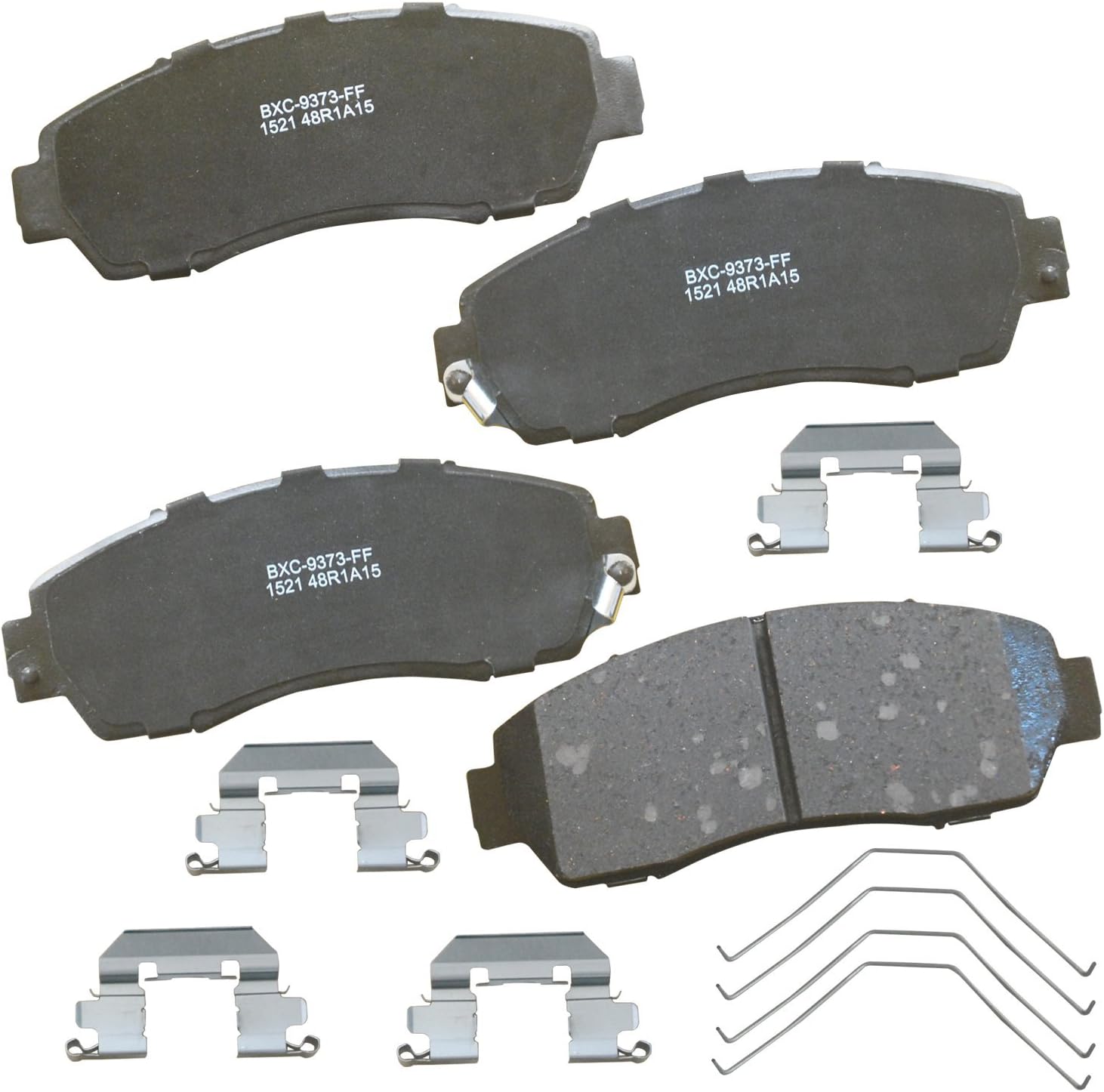
5. Bendix Premium SBC1521 Ceramic Rear Brake Pads
| Material | Ceramic |
|---|---|
| Auto Part Position | Rear |
| Specification Met | OEM |
| Automotive Fit Type | Vehicle Specific Fit |
Bendix Premium SBC1521 are ceramic replacement rear brake pads built to match the factory fit, form, and function for compatible vehicles. They are intended for everyday driving and commuting, giving a smooth, quiet pedal feel and consistent stopping power under normal use. Notable features include ceramic friction material that resists wear and reduces dust, painted backing plates for corrosion resistance, and vehicle-specific fitment to simplify installation. In practice these pads deliver predictable braking at city and highway speeds and many owners report low noise and good longevity when installed with properly prepared hardware. Limitations to consider are that ceramic pads prioritize low dust and comfort over aggressive bite, so they are less suitable for heavy towing or high-performance driving where semi-metallic compounds perform better. Also they ship as a single-item listing so verify you receive the correct quantity for a full axle service.
Best for: Buyers who prioritize dependable, low-noise braking for daily driving and want a factory-quality replacement that requires little fuss during installation.
Less Ideal for: Drivers who frequently tow heavy loads, drive aggressively, or need pads optimized for track use should choose a semi-metallic or performance-oriented compound instead.
- Factory-style fit for straightforward replacement and reliable alignment
- Ceramic compound reduces brake dust and runs quietly in everyday driving
- Painted backing plates resist corrosion for longer service life
- Vehicle-specific design streamlines installation and reduces fitment issues
- Designed for comfort and low dust rather than high-temperature, heavy-duty braking
Verdict: Choose these Bendix ceramic rear pads if you want a quiet, low-dust, factory-quality replacement that delivers reliable braking for everyday CR-V driving.
6. SCITOO Front Ceramic and Rear Semi-Metal Brake Pad Set for 2005–2006 and 2012–2016 Honda CR-V (FWD)

| Material (front) | Ceramic |
|---|---|
| Material (rear) | Semi-Metallic |
| Specification Met | OEM |
| Number of Items | 4 |
This SCITOO kit replaces the front and rear brake pads on compatible Honda CR-Vs with ceramic material up front and semi-metallic material at the rear. It is sold as a direct-fit, vehicle-specific set intended for straightforward installation into the factory calipers without modification. The ceramic front pads are formulated for quieter operation and reduced squeal while the semi-metallic rear pads provide durable stopping under load. The pads receive a scorch friction treatment to speed bedding-in and offer consistent friction over their service life. Buyers report generally good fitment and quiet operation, though a minority of buyers encountered mismatched pieces in a set that required replacement. This kit is best for drivers wanting a lower-cost replacement that aims for factory-like fit and quieter brakes; however double-checking the exact part numbers against your build and keeping a backup plan for returns or exchanges is advisable because occasional packaging or fitment errors have been reported.
Best for: A buyer who prioritizes proven user feedback and wants a cost-effective, direct-replacement pad set that leans toward quieter everyday braking on a 2012–2016 CR-V FWD.
Less Ideal for: Drivers seeking high-performance or track-focused brake compounds should consider performance-oriented pads instead of this everyday replacement kit.
- Vehicle-specific direct-fit design for straightforward installation
- Ceramic front pads aimed at quieter braking and reduced squeal
- Scorch friction treatment shortens break-in time and helps consistent life expectancy
- Includes both front and rear pads so you can replace an axle or the whole set
- Occasional packaging or fitment errors reported requiring replacement of a mismatched pad
Verdict: A practical, quiet-feeling direct-replacement brake pad set for 2012–2016 CR-V owners who value solid user reviews and easy installation.
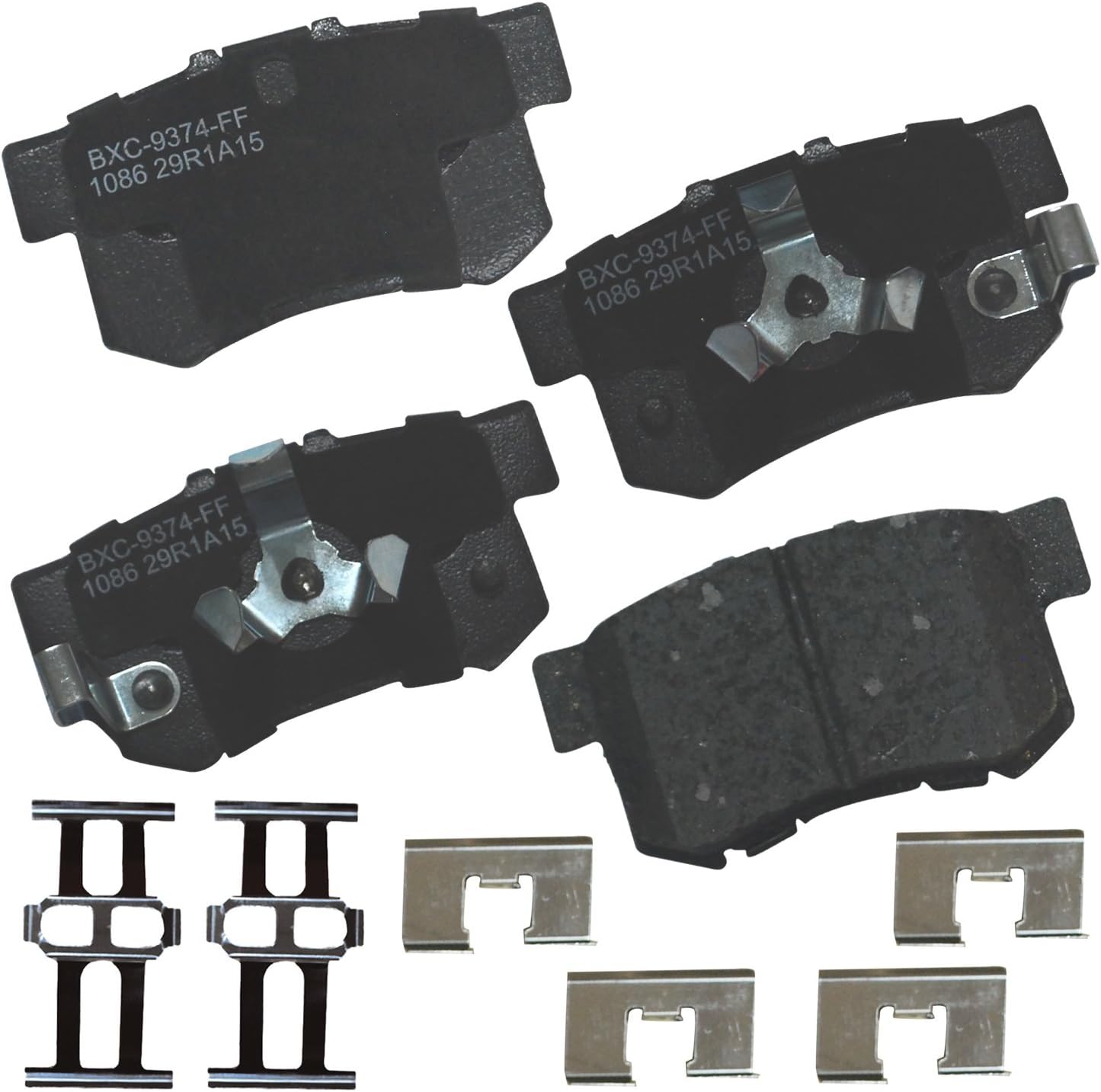
7. Bendix Premium SBC1086 Ceramic Rear Brake Pads
| Auto Part Position | Rear |
|---|---|
| Material Type | Copper |
| Included Components | Brake pad set with installation hardware |
| Automotive Fit Type | Universal Fit |
Bendix Premium SBC1086 Ceramic rear brake pads are a factory-quality replacement intended for daily-driven vehicles. They replace worn rear pads and install like a direct-fit part, and the set ships with installation hardware to simplify a standard brake job. The ceramic friction material is formulated to reduce noise and brake dust while providing consistent stopping power for commuting and light-duty use. Bendix highlights features such as multi-layer shims and burnishing strips to speed break-in and smooth pad-to-rotor contact, which helps deliver quiet, predictable pedal feel after initial bedding. Reviewers report good fit, included hardware that matches calipers, and low noise in normal driving. Expect a longer service life than thin performance pads but not the high-temperature fade resistance of aggressive track compounds. This kit is focused on street performance and does not include rotors or performance-specific upgrades, so plan a rotor check during replacement for best results.
Best for: Buyers who prioritize low-risk, factory-like replacements for everyday driving and want quiet, reliable braking with minimal fuss during installation.
Less Ideal for: Drivers who frequently tow, carry heavy loads, or do spirited driving and need high-temperature performance from track-grade or heavy-duty pads.
- Factory-style fit, form, and function for straightforward replacement
- Ceramic formulation reduces noise and brake dust for cleaner, quieter operation
- Includes installation hardware and shims to simplify installation and speed break-in
- Designed for consistent daily-driving stopping power and longer pad life
- Not tuned for high-temperature or track use so fade resistance is limited under extreme braking
Verdict: Choose these Bendix ceramic rear pads when you want a quiet, factory-quality replacement that delivers dependable daily-driving braking with easy installation.
Choosing the Right 2012-2016 Honda CR-V Brake Pads: Key Factors to Consider
Pad Material and Compound
Pad material is the primary determinant of braking behavior. Organic and ceramic compounds generally deliver quieter operation and gentler rotor wear, making them well suited for commuter-oriented vehicles like the 2012-2016 CR-V. Semi-metallic compounds offer stronger initial bite and better heat dissipation but can increase rotor wear and road noise.
For CR-V owners, consider the driving mix. If you do mostly city and highway driving, ceramic-style compounds typically balance noise reduction with acceptable life. If you tow frequently or drive aggressively, a higher-friction semi-metallic pad may provide better fade resistance. Always check the compound description for expected operating temperature ranges and bedding instructions to avoid glazing.
Noise and Vibration Control
Brake noise is a common complaint. Look for pads that include multilayer shims, chamfered edges, and bedding recommendations aimed at the 2012-2016 CR-V to reduce squeal and vibration. Properly designed shims and backing plates absorb vibration before it transmits to the caliper and firewall, which matters in a compact SUV where cabin noise is noticeable.
Vibration tolerance affects perceived pedal feel and owner satisfaction. Pads built without effective noise-reduction features can cause persistent squeal that is disruptive in everyday driving. When possible, choose pads with anti-rattle hardware and follow bedding procedures to minimize initial noise issues.
Wear Rate and Longevity
Expected wear rate affects maintenance intervals and long-term cost of ownership. Pads with harder compounds usually last longer but may be harsher on rotors. For the 2012-2016 CR-V, consider pads whose manufacturer provides an estimated mileage range or thickness spec so you can plan service intervals.
If you prefer longer stretches between services, choose a compound designed for longevity, but balance that with rotor preservation. Documented field reports and stated thicknesses give the best signals for realistic life expectancy on this model.
Rotor Compatibility and Bedding
Not all pads mate the same way with stock rotors. Some compounds require an aggressive bedding process to transfer a proper layer onto the rotor surface; others work well out of the box. For a CR-V owner keeping factory rotors, pick pads known to bed smoothly without glazing or excessive rotor wear.
Improper bedding or incompatible compounds can lead to uneven pad deposits, pulsation, and premature rotor scoring. Follow manufacturer bedding steps and, when replacing only pads, inspect rotors for thickness and runout to ensure a solid mating surface.
Fitment and Installation Hardware
Direct-fit compatibility with calipers and inclusion of necessary hardware simplify installation. For the 2012-2016 Honda CR-V, verify that the pad set matches the front or rear application and includes clips, anti-rattle springs, and wear indicators if applicable. Kits that omit hardware often require reuse of old clips, which can cause fitment issues or noise.
Ease of installation matters for owners doing DIY replacements. Clear pad orientation markers, pre-applied shims, and complete hardware reduce installation time and the chance of incorrect installation that could affect braking performance.
Dust, Corrosion Resistance, and Finish
Brake dust affects wheel appearance and ease of cleaning. Ceramic-based pads tend to produce less dust and lighter-colored residues. Additionally, backing plate coatings and corrosion-resistant hardware extend the usable life of the pad assembly, especially in regions with road salt or humid climates.
Consider coated backing plates and plated hardware to reduce stuck caliper slides and simplify future pad changes. While cosmetic, dust characteristics also impact wheel cleaning frequency and perceived maintenance burden for CR-V owners.
Front Versus Rear Brake Pad Roles on the CR-V
On the 2012-2016 CR-V, the front pads do the bulk of the stopping work because braking weight transfer increases front axle load. That means front pads typically wear faster and are formulated for higher initial friction and heat tolerance. Rear pads contribute to stability and emergency stopping but are sized and compounded differently to provide balanced overall braking feel.
When planning a service, consider replacing front pads first if wear is uneven. Also check rear pad thickness and hardware because rear components often include parking brake integration that affects selection and installation.
- Front pads typically show higher wear rates and need more robust heat tolerance.
- Rear pads influence stability and can include different hardware due to parking brake mechanisms.
- Replacing pads in axle pairs helps maintain balanced pedal feel and even wear.
Interpreting Brake Pad Thickness Specifications
Manufacturers list pad thickness specs that help you estimate remaining life. For the CR-V, new pad thickness and minimum service thickness indicate when you must replace the pads to avoid rotor damage or reduced braking performance. Measure the friction material, not the backing plate, when checking thickness.
A practical approach is to record thickness at each service interval and compare against driving style. If a pad approaches the minimum spec earlier than expected, inspect for caliper drag or rotor issues that may accelerate wear.
- Always measure the friction material thickness, not the backing plate.
- Compare recorded thickness against manufacturer minimums to schedule replacement.
- Premature thinning may indicate caliper or alignment problems.
Common Brake Pad Wear Symptoms and What They Mean
Several symptoms indicate pad wear or related issues. Squeal can signal glazing or missing shims, grinding typically means pads are at or below minimum thickness and metal is contacting the rotor, and a soft or spongy pedal often points to hydraulic issues rather than the pads themselves. Pay attention to vibration or pulsation that appears after a pad change, which can indicate uneven deposits or rotor runout.
Address symptoms promptly. Squeal may be mitigated by bedding or installing pads with better noise control. Grinding requires immediate inspection to prevent further rotor damage. Regular visual checks and listening for changes in pedal feedback help catch problems early on the CR-V.
- Squeal often points to vibration or glazing, not necessarily end-of-life.
- Grinding usually means metal-to-metal contact and needs urgent attention.
- Pedal feel changes can indicate hydraulic or pad-bed issues rather than compound failure.
Installation Tips for DIY CR-V Owners
If you plan to replace pads yourself, prepare the right tools, a safe jack and stands, and a C-clamp or caliper piston tool to retract the piston. Clean the caliper slides and apply appropriate lubricant to contact points. Replace or reuse hardware only when it is in good condition; worn clips or corroded pins can cause uneven wear and noise.
Follow a proper bedding-in procedure after installation to ensure an even transfer layer on the rotors. Perform short, controlled stops from moderate speeds rather than repeated heavy braking for the first few miles to avoid glazing the new pads.
- Retract caliper piston slowly and evenly to avoid damaging seals.
- Use specified lubricants on slide pins and contact points only.
- Perform a careful bedding sequence and test stops in a safe area before regular driving.
Maintaining Brake System Health Between Pad Changes
Regular inspections of rotor thickness, runout, and caliper operation extend pad life and preserve braking performance. Clean high-dust areas and check hardware for corrosion. Brake fluid condition affects pedal firmness and should be checked according to the vehicle maintenance schedule.
Address minor issues early. Slightly warped rotors can cause vibration that accelerates pad wear, while sticking caliper slides lead to uneven wear patterns. Preventative maintenance is more cost-effective than replacing rotors prematurely.
- Inspect rotors and calipers at each pad change.
- Replace corroded hardware to ensure proper pad seating.
- Monitor brake fluid and bleed as necessary to maintain pedal feel.
Still looking for the perfect fit?
Select your Honda CR-V configuration to see the most relevant Brake Pads recommendations
How We Chose the Best 2012-2016 Honda CR-V Brake Pads
Our selection process prioritized criteria that directly affect real-world braking performance and ownership costs for the 2012-2016 Honda CR-V. We evaluated material composition because compound type determines initial bite, heat tolerance, and typical wear rate. Noise and vibration control were measured by presence of shims, chamfers, and compound formulation that reduce squeal on this vehicle. Longevity and wear were assessed using rated thickness and typical life expectancies reported for similar compounds on comparable SUVs. We also considered rotor compatibility, since many CR-V owners retain factory rotors and need pads that mate well without excessive bedding-in or glazing. Pedal feel and modulation were reviewed because urban and highway driving demand predictable response. Installation and hardware needs were included, such as whether the pad set includes clips, anti-rattle hardware, and wear indicators compatible with CR-V calipers. Excluded items included performance-only race compounds and pads requiring aftermarket caliper upgrades because most CR-V owners want direct-fit service parts. We filtered out products that lack clear specification sheets or do not list thickness and material composition. The resulting picks emphasize balanced stopping, low noise, and durability appropriate for everyday use on the 2012-2016 Honda CR-V.
Our full evaluation process is outlined in our review methodology.
FAQ
How often should I replace brake pads on a 2012-2016 Honda CR-V?
It depends on driving style and conditions. Many owners see 25,000 to 60,000 miles, but frequent city driving, towing, or aggressive braking can shorten life. Inspect thickness periodically and follow the pad manufacturer minimum thickness guidance.
Are ceramic brake pads a good choice for the CR-V?
Ceramic-style pads often deliver quieter operation and less dust, which is well suited to daily driving in the CR-V. They may wear differently than semi-metallic pads and can be less tolerant of sustained heavy braking, so choose based on your driving patterns.
What causes brake pad noise on my CR-V and how can I stop it?
Noise can come from vibration, glazing, worn shims, or missing hardware. Installing pads with proper shims and chamfers, ensuring clean contact points, and following bedding procedures usually reduces squeal. Grinding requires immediate inspection as it often means pads are worn through.
Can I replace only the front or only the rear pads on my CR-V?
You can replace pads on one axle, but matching pad condition on the same axle is important for balanced braking. If fronts are worn significantly more than rears, replace the front pair and inspect rear components for uneven wear.
How do I check brake pad thickness on the CR-V?
Visually inspect the caliper area and measure the friction material from the backing plate to the outer surface. Compare the measurement to the pad minimum thickness spec. Record measurements at intervals to track wear over time.
Will different pad compounds affect rotor life on the CR-V?
Yes. Harder, semi-metallic compounds can increase rotor wear compared with ceramic-style compounds. Consider the tradeoff between pad longevity and rotor preservation when selecting a compound for the CR-V.
Final Verdict
Choose brake pads for the 2012-2016 Honda CR-V based on the balance you need between quiet operation, wear life, and rotor friendliness. Prioritize material and rotor compatibility if you plan to keep factory rotors, and favor pads with good noise-control features if cabin quiet is important. For drivers who demand stronger initial bite or tow occasionally, a compound with higher friction and heat tolerance may be appropriate. Ultimately, replace pads in matched pairs, include needed hardware, and follow proper bedding and inspection routines to get consistent, reliable braking performance from your CR-V.
Explore More:
- Check out all Honda CR-V parts & accessories
- Explore Brake Pads Maintenance & Repair Guides
- Explore Brake System
- Browse all Auto Parts
