

Note: This article contains affiliate links. If you click on these links and make a purchase, I may earn a small commission at no extra cost to you. This helps support my research and content. Read my full affiliate disclosure here.
If your Toyota Camry is running rich, showing reduced fuel economy, or throwing an emissions-related code, the downstream oxygen sensor is often a key component to inspect. You need a sensor that fits the Camry's exhaust layout, delivers stable readings over time, and resists contamination from heat and exhaust byproducts. This guide covers the top downstream options shortlisted for fitment and long-term performance on the Camry and explains the practical tradeoffs you should weigh.Below we summarize the best downstream oxygen sensors chosen for compatibility and reliability, then walk through the technical factors and installation considerations you should know before replacing the part.
Looking for other parts? See all Toyota Camry parts & accessories.
Top Picks at a Glance
| Best Overall The best all-around choice for most situations | AISIN Downstream Wideband Oxygen Sensor OXST-01093 |  |
| Best Quality Built to a higher standard if you want something more solid | Bosch 13355 Premium Fit Oxygen Sensor |  |
| Best Value The sweet spot between price and what you get | Wobiwina Oxygen Sensor Set 234-9304 / 234-9307 (2-Pack) |  |
| Best Budget The cheapest option that still gets the job done reliably | Marsflex Downstream Oxygen O2 Sensor 234-4622 |  |
| Highest Rated A top-rated pick with lots of positive feedback | Denso Oxygen (O2) Sensor 234-4622 – Replacement Downstream Sensor |  |
| Most Popular A crowd favorite that many people choose with confidence | nifeida 234-4260 Downstream Oxygen Sensor (heated) |  |
| Best Seller A high-volume bestseller chosen again and again | SDYYDS Upstream & Downstream Oxygen Sensor Set (Fits 2018–2024 Toyota Camry 2.5L) |  |
AISIN Downstream Wideband Oxygen Sensor OXST-01093
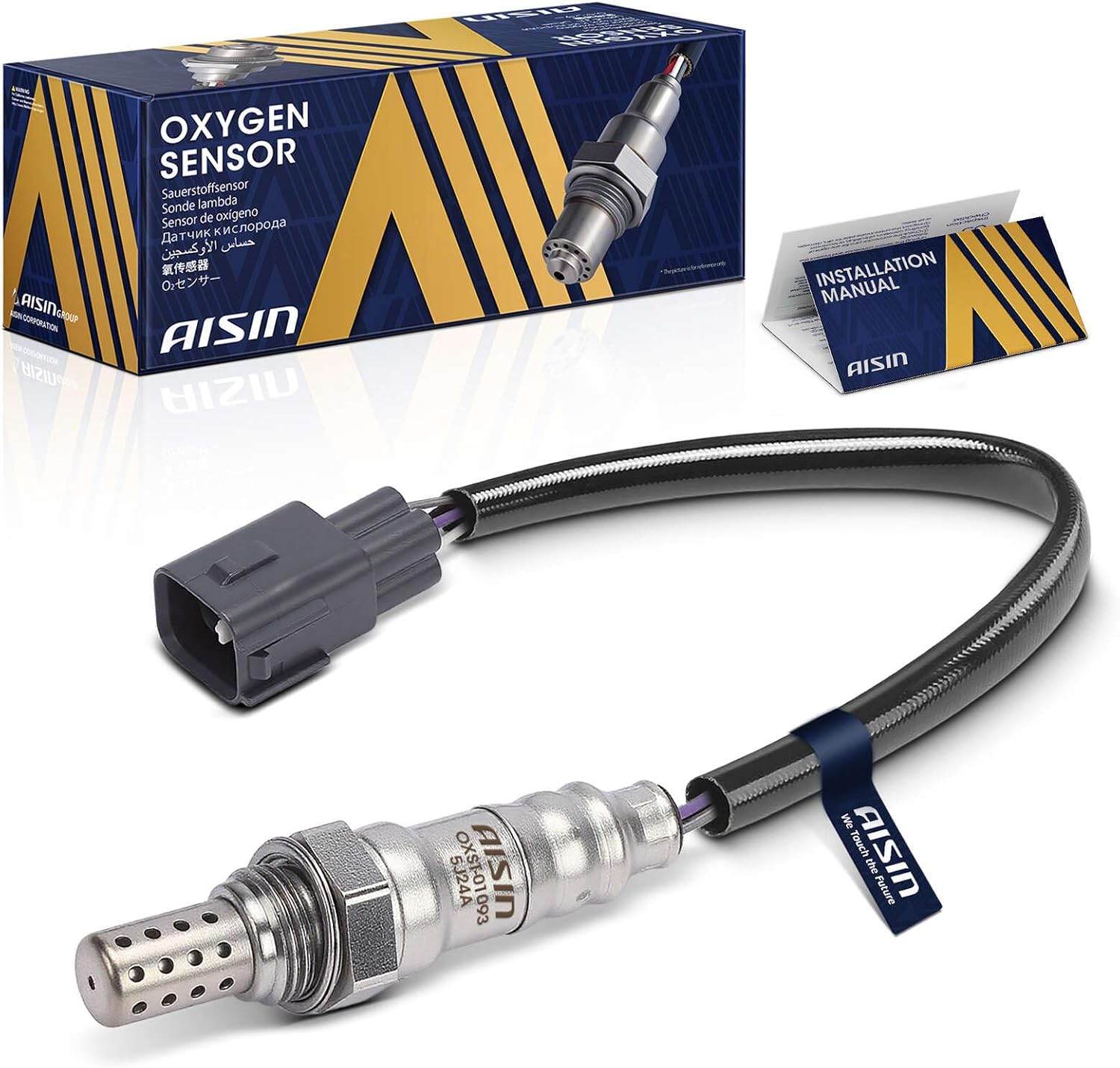
| Position | Downstream |
|---|---|
| Sensor Type | Wideband |
| Thread Size | M18 |
| Terminal Quantity | 4 |
| Connector Shape | Square |
This downstream wideband oxygen sensor from Aisin is built as a direct factory-style replacement for compatible Toyota and Lexus models. It measures exhaust oxygen after the catalytic converter to help the engine control module fine-tune air-fuel ratios and emissions control. Installation is straightforward: the part is described as plug-and-play with a four-pin female connector and an included manual, so it is suited to routine shop or competent DIY swaps. Aisin emphasizes manufacturer-grade engineering, which suggests reliable signal accuracy and durability in normal driving conditions. The sensor's wideband design provides a more precise output than narrowband units, which matters for modern ECUs and aftertreatment systems. Limitations to note are that fitment is restricted to the listed Camry, Tacoma, Highlander, Avalon, and Lexus ES350/LS600h model years and engine types, and electrical connector or wire routing differences across trims could require minor adapter work in rare cases. This unit replaces specific part numbers, making it a solid balanced choice for restoring proper emissions sensing on the specified vehicles.
Best for: Buyers who want a reliable, factory-style downstream sensor to restore accurate emissions sensing and fuel control on the specified Toyota and Lexus models without chasing the cheapest option.
Less Ideal for: Drivers who need a universal sensor for multiple makes or model years outside the listed compatibility should look for a different part or consult a specialist.
- Direct plug-and-play replacement for listed Toyota and Lexus models
- Wideband design offers more precise oxygen readings than narrowband sensors
- Manufacturer-brand engineering aimed at factory-quality fit and function
- Compatibility limited strictly to the listed model years and engine types
Verdict: Aisin's OXST-01093 is a dependable factory-style downstream wideband sensor for restoring proper emissions and air-fuel control on the specified Toyota and Lexus vehicles.
Bosch 13355 Premium Fit Oxygen Sensor

| Maximum Supply Voltage | 12 Volts (DC) |
|---|---|
| Mounting Type | Flange Mount |
| Output Type | electrical signal |
| Upper Temperature Rating | 1000 Degrees Celsius |
| Material Type | Stainless Steel |
The Bosch 13355 is a premium, direct-fit downstream oxygen sensor intended to restore correct air-fuel feedback and clear OBD-II emissions codes on compatible Toyota Camry applications. It uses a stainless steel, double laser-welded body and a fast-acting heater so the sensor reaches operating temperature quickly, which helps the engine control module get reliable readings sooner after startup. The unit ships ready to install with a flange-mount design, pre-coated threads, and a factory-style electrical connector for straightforward replacement without splicing. In real-world use it reliably cures rich/lean diagnostic trouble codes and can improve fuel trim stability after installation. Limitations include potential fitment differences between years and engine variants, so verify the Camry engine and sensor position before buying, and some buyers may still prefer dealer parts for exact OEM matching or long-term durability assurances under heavy use.
Best for: Enthusiasts who want a performance-minded, direct replacement to restore proper downstream oxygen sensing and clear codes quickly on a Toyota Camry while retaining factory-style installation.
Less Ideal for: Drivers seeking an exact dealer-branded sensor for warranty-matched long term coverage or those unwilling to confirm engine-specific fitment before purchase.
- Direct-fit connector and harness for straightforward installation without wiring modifications
- Fast-acting heater shortens warm-up time for accurate readings after cold starts
- Double laser-welded stainless steel body resists exhaust corrosion for longer service life
- Threads pre-coated with anti-seize to simplify removal and reduce risk of damage
- Fitment can vary by Camry year and engine; incorrect sensor position or plug can occur if not verified
Verdict: A ready-to-install, fast-heating downstream oxygen sensor that brings factory-style fit and reliable emissions readings back to a Toyota Camry.
Wobiwina Oxygen Sensor Set 234-9304 / 234-9307 (2-Pack)

| Brand Name | Wobiwina |
|---|---|
| Model | 234-9304 234-9307 |
| Included Components | 234-9304 234-9307 2PCS |
| Material Type | Metals And Ceramics |
This Wobiwina 2-pack of oxygen sensors (234-9304 and 234-9307) is a direct replacement option for affected 2.5L Toyota Camry, Avalon, RAV4 and Lexus ES300h model years listed by the manufacturer. The kit includes two sensors so you can replace both upstream and downstream positions during the same service, which is convenient when diagnosing a persistent check engine light or emissions issue. Construction uses metals and ceramic sensing elements consistent with typical replacement sensors, and multiple customers report straightforward fit and restored engine management without additional tuning. The practical benefits are cost savings compared with dealer parts and the convenience of getting both sensors together. Limitations to note are variability in long-term durability reported by some users and the usual need to verify exact vehicle fitment and connector compatibility before installation. For do-it-yourselfers comfortable with basic underbody work this set simplifies repair, but shops may prefer factory-branded parts for warranty-backed longevity.
Best for: Buyers who prioritize a practical, cost-conscious repair and want a ready-to-install pair of sensors to clear emissions-related faults and get the vehicle running properly again.
Less Ideal for: Those seeking dealer-backed parts or who require guaranteed long-term durability from a factory-branded sensor should consider OEM replacements instead.
- Includes two sensors so upstream and downstream can be replaced together
- Made with metal and ceramic sensing elements typical for oxygen sensors
- Reported to fit listed Toyota 2.5L and Lexus applications without modification
- Lower cost alternative to dealer replacement parts
- Some users report inconsistent long-term durability
- Not backed by manufacturer vehicle-specific warranty information in the listing
Verdict: A budget-friendly two-sensor replacement set that makes it easy to fix emissions faults on the specified 2.5L Toyota and Lexus models.
Marsflex Downstream Oxygen O2 Sensor 234-4622
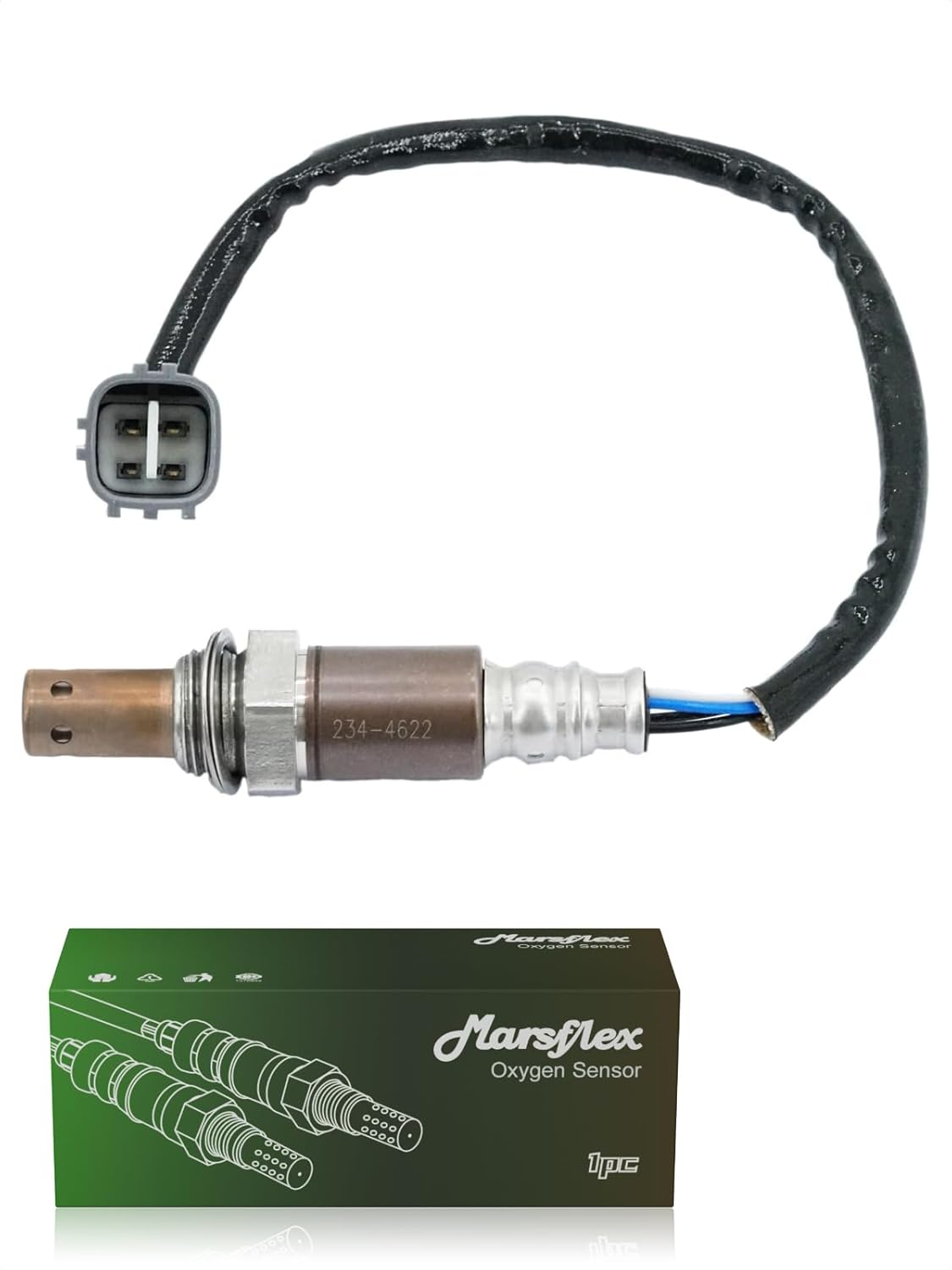
| Current Rating | 0.45 Amps |
|---|---|
| Maximum Supply Voltage | 15 Volts |
| Response Time | 8 seconds |
| Mounting Type | Flange Mount |
| Specific Uses For Product | Oxygen O2 Sensor |
This Marsflex downstream O2 sensor is sold as a direct-fit replacement for a range of Toyota Camry and related models and is intended to restore proper exhaust oxygen readings when a downstream sensor fails. It installs like a standard flange-mounted, heated sensor and uses the integrated heater to speed warm-up and improve closed-loop fueling behavior. Notable features listed include a relatively fast 8 second response time, wide operating temperature range, and electrical signal output compatible with factory wiring. The practical benefits are straightforward: it can clear a check-engine code tied to a bad downstream sensor, help the engine control unit maintain the correct air-fuel ratio, and avoid catalytic converter damage from prolonged sensor failure. Limitations to expect are variable fitment quality across vehicles and occasional reports of premature failure or new codes, so careful vehicle-compatibility checks and testing after installation are important. For buyers prioritizing low cost, this offers a budget alternative to factory parts but with some risk of inconsistent long-term reliability.
Best for: Buyers on a tight budget who want a low-cost replacement downstream O2 sensor to clear codes and restore running behavior without paying for a dealer part; suitable for do-it-yourselfers comfortable verifying fit and testing after installation.
Less Ideal for: Anyone who prioritizes guaranteed long-term reliability or who prefers factory-sourced parts and dealer-backed support should consider higher-end or OEM options instead.
- Designed as a direct-fit downstream replacement for specified Toyota and Lexus models
- Heated element reduces warm-up time so the sensor reaches operating temperature faster
- Measures wide lambda range and provides standard electrical signal output for ECU compatibility
- Compact flange-mount design simplifies installation for experienced DIYers or mechanics
- Some users report inconsistent reliability and post-installation codes on certain vehicles
- Not guaranteed to match OEM longevity or performance in every application
Verdict: An inexpensive downstream heated oxygen sensor option for Camry owners who need a budget-friendly replacement to clear codes and restore fuel control.
Denso Oxygen (O2) Sensor 234-4622 – Replacement Downstream Sensor

| Material | Stainless Steel, Zirconium |
|---|---|
| Mounting Type | threaded |
| Output Type | electrical |
| Maximum Supply Voltage | 12 Volts (DC) |
This Denso 234-4622 is a downstream (post-catalytic) oxygen sensor built as a direct replacement for compatible Toyota and Lexus applications. It installs into the threaded bung on the exhaust and connects to the factory wiring harness, restoring the vehicle computer’s ability to monitor catalytic converter efficiency and correct fuel trim. Notable features include a refined zirconia sensing element for responsive voltage readings, a PTFE filter to block contaminants, and corrosion-resistant stainless steel construction for longer life. In practice it functions like a factory-quality part so it clears check-engine codes tied to a failing downstream sensor and helps return fuel economy and emissions to expected levels. Installation can be tight under some vehicles and the old sensor may be seized from heat and corrosion, so expect to use an O2 socket, penetrating lube, and some effort for removal. A small number of buyers report occasional defective units, but the majority find fit and performance identical to the original part.
Best for: Buyers who prioritize dependable, factory-quality replacements to restore emissions and fuel-trim performance and want a long-lasting sensor built to OEM-level standards.
Less Ideal for: People looking for a generic universal sensor or a performance aftermarket upgrade; those who cannot access tight spaces for under-car repair without a shop should consider professional installation.
- Designed as a direct factory-style replacement for specified Toyota and Lexus downstream locations
- Refined zirconia element provides responsive sensor output for accurate fuel-trim and emissions control
- Stainless steel body and PTFE filter improve resistance to contaminants and corrosion
- Includes 4-wire harness and threaded mounting for straightforward electrical and mechanical connection
- Removal from the exhaust can be difficult when the original sensor is corroded or seized
- A small percentage of units have been reported defective by buyers
Verdict: Choose this Denso 234-4622 when you want a reliable, factory-style downstream oxygen sensor replacement that restores emissions and fuel-trim performance.
nifeida 234-4260 Downstream Oxygen Sensor (heated)

| Mounting Type | Flange Mount |
|---|---|
| Output Type | electrical signal |
| Sensing Distance | 400 Millimeters |
| Upper Temperature Rating | 800 Degrees Celsius |
This nifeida 234-4260 downstream oxygen sensor is a budget aftermarket replacement for the downstream (post-catalyst) O2 location on supported Toyota and Lexus V6 and V8 engines. It installs like a factory-replacement sensor and provides the electrical signal the engine control system uses to monitor catalyst efficiency and adjust fuel trim. The sensor is stainless steel, heated for faster operation at low temperature, and cross-references several OE part numbers so it can be swapped in without modifying wiring or mounts on compatible vehicles. In real-world use it will help clear catalyst-related codes, restore proper closed-loop monitoring, and improve fuel control when the original sensor has failed. Expect mixed longevity compared with premium branded sensors; some buyers report months of trouble-free service while others saw early heater or signal failures. Fitment and connector differences have also caused installation problems on a minority of vehicles, so verify the exact downstream left/right and plug shape before you install.
Best for: Buyers who prioritize a low-cost direct replacement to get a downstream oxygen sensor working again and who weigh other customers' experiences when choosing parts.
Less Ideal for: Anyone needing a long-term, guaranteed factory-quality part for high-mileage or demanding use should consider a higher-end branded sensor or dealer-sourced replacement.
- Heated design reduces warm-up time so the sensor starts reporting faster after cold starts.
- Stainless steel construction aimed at corrosion resistance in exhaust environments.
- Cross-referenced to multiple OEM part numbers for easier match to factory replacements.
- Direct flange-mount style intended for bolt-in installation without fabrication.
- Aftermarket quality is variable so long-term reliability may not match premium OEM-brand sensors.
- Some users report connector or fitment mismatches despite listed compatibility.
Verdict: A cost-conscious, heated downstream oxygen sensor option that installs like a factory replacement for the specified Toyota and Lexus models.
SDYYDS Upstream & Downstream Oxygen Sensor Set (Fits 2018–2024 Toyota Camry 2.5L)

| Fitment | 2018–2024 Toyota Camry 2.5L L4 |
|---|---|
| Mounting Type | Plug Mount |
| Output Type | electrical signal |
| Upper Temperature Rating | 500 Degrees Fahrenheit |
This SDYYDS kit supplies one upstream and one downstream oxygen sensor designed to replace the factory sensors on 2018–2024 Toyota Camry 2.5L models. The sensors come with plug-style connectors and factory-style wire lengths to simplify swap-in installation and keep the harness undisturbed. In use they restore O2 feedback to the engine computer so a check-engine light related to a failed sensor can clear and fuel trim behavior returns to normal. Buyers report an easy fit and correct electrical connectors for Camry models, and the sensors are built to resist heat and vibration encountered near the exhaust. The main limitations are variable longevity across units and some reports of early failures, so reliability may be inconsistent compared with higher-tier replacement brands. For a risk-averse buyer, this set is a practical, lower-cost repair option when the goal is to restore emissions sensing and get the Camry running normally again, but expect to monitor performance after installation and keep documentation in case a replacement warranty or return is needed.
Best for: Camry owners wanting a straightforward, budget-conscious repair that replaces both O2 sensors at once and focuses on restoring normal engine and emissions operation.
Less Ideal for: Drivers seeking the longest-term, highest-reliability aftermarket option or professional shops that prefer premium-brand sensors and extended proven lifespans.
- Includes both upstream and downstream sensors for a complete Camry repair
- Plug-style connectors and OEM-length wiring simplify direct replacement
- Designed to resist high temperature and vibration found in exhaust locations
- Multiple user reports confirm correct fitment for 2018–2024 Camry 2.5L
- Customer feedback shows inconsistent longevity with some sensors failing within months
- Aftermarket quality control may vary compared with premium sensor brands
Verdict: A cost-effective two-piece oxygen sensor set that makes replacing both Camry 2.5L sensors simple and restores emissions and fuel management quickly.
Choosing the Right Toyota Camry Downstream Oxygen Sensor: Key Factors to Consider
Fitment and Connector Type
Correct fitment is the top priority because the downstream sensor must match the Camry's exhaust geometry and factory wiring harness. A plug-and-play connector avoids cutting or splicing wires, which can introduce failure points and complicate diagnostics.
Mismatched threads or sensor lengths can leave the sensor too far from the exhaust flow or risk exhaust leaks. When selecting a sensor, confirm the thread pitch, hex size, and wiring connector style used on your Camry's bank and sensor location to guarantee a proper mechanical and electrical connection.
Signal Stability and Accuracy
Downstream sensors are primarily used for catalyst efficiency monitoring rather than fuel trim control, so a stable and accurate signal under varying temperatures and exhaust conditions is essential. Erratic voltage or slow response can cause false catalyst efficiency DTCs or intermittent check engine light events.
Look for sensors with proven signal conditioning and minimal noise. Stable output helps the vehicle's computer reliably compare upstream and downstream readings to confirm catalytic converter performance, which directly affects emissions compliance and inspection readiness.
Durability and Contamination Resistance
Exhaust sensors are exposed to soot, oil vapors, and high heat cycles. Downstream units must resist clogging and element degradation over time to avoid premature failures. Protective features such as sintered metal shields, robust ceramic elements, and durable wiring jackets extend service life.
Consider sensors engineered to withstand repeated thermal cycling and road-salt corrosion because the Camry may be driven in varied climates. A more durable sensor reduces the chance of recurrent replacements and keeps emissions monitoring reliable.
Compatibility With Diagnostic Procedures
Your choice should support accurate diagnostics and not interfere with common OBD-II tests. The downstream sensor must reproduce expected voltage characteristics and response patterns so the vehicle's computer can detect catalyst efficiency correctly.
Sensors that alter expected signals or produce false noise can make it difficult to confirm the cause of a check engine light oxygen sensor event. Choosing a sensor known to provide consistent, expected readings simplifies troubleshooting and testing after installation.
Wiring Quality and Harness Protection
Wiring and connector durability are as important as the sensor element. Heat-resistant jacketing, reinforced strain reliefs, and secure terminal connections prevent open or short circuits that could trigger codes like bank 1 sensor 1 faults.
Inspect the replacement's harness length and routing options to ensure it reaches the factory connector without tension. A well-protected harness reduces risk from heat, abrasion, and road debris, lowering the odds of failure after installation.
Warranty and Service Life Expectations
A clear warranty and documented service life give confidence in long-term use. Because downstream sensors influence emissions diagnostics rather than engine performance directly, replacement frequency affects inspection readiness and ownership costs.
Prioritize sensors with reasonable warranty terms and evidence of longevity under normal driving. This reduces the likelihood of repeat replacements and supports consistent emissions monitoring on the Camry.
Why the Downstream Sensor Matters on a Toyota Camry
The downstream oxygen sensor sits after the catalytic converter and helps the vehicle computer verify converter efficiency. On the Camry, accurate downstream readings are used during closed-loop diagnostics to confirm the catalyst is reducing emissions as designed. If the downstream sensor fails or produces inconsistent readings, the computer may log emissions-related codes and trigger a check engine light.
Replacing the downstream sensor can resolve false catalyst efficiency codes or intermittent emissions faults when the sensor itself is at fault. It is also an important step when diagnosing catalytic converter problems since the downstream device provides the comparator signal against which the upstream sensor is judged.
- Monitors catalyst performance rather than directly adjusting fuel trim.
- Helps the computer detect converter degradation or failures.
- A faulty downstream sensor can mimic catalyst problems in diagnostics.
Common Symptoms of a Failing Downstream Oxygen Sensor
Symptoms often include a persistent check engine light related to emissions codes, such as those indicating catalyst efficiency. You may also notice failed emissions tests despite normal engine performance. Unlike upstream sensor failures, downstream problems rarely cause noticeable drivability issues but they do affect diagnostic outcomes.
Other indicators include intermittent codes that clear and return, which point to degraded signal stability rather than a complete electrical failure. Because the downstream sensor is downstream of combustion, contamination from exhaust byproducts can slowly degrade performance over time.
- Check engine light focused on emissions or catalyst efficiency.
- Failed emissions tests with otherwise normal driveability.
- Intermittent or recurring emissions-related codes.
Basic Steps to Test a Downstream Oxygen Sensor
Testing should start with a visual inspection of the connector, wiring, and sensor body for corrosion, damage, or contamination. Confirm the wiring is intact and the connector seats firmly into the Camry's harness. Next, use a scan tool to monitor the downstream sensor voltage or waveform while the engine warms to operating temperature.
A healthy downstream sensor typically shows a steadier, less volatile signal than an upstream sensor since it is measuring post-catalyst oxygen levels. When diagnosing, compare the downstream readings to expected patterns rather than to the upstream sensor alone. If you suspect the sensor is faulty, confirm proper heater circuit operation and look for codes such as oxygen sensor heater faults before replacing the part.
- Visual inspection of harness and sensor body first.
- Scan tool monitoring for voltage stability while warm.
- Verify heater circuit operation and look for heater-related codes.
Installation Considerations for the Camry
Plan for a safe installation by letting the exhaust cool completely and using appropriate penetrating lubricant on the sensor threads if the original is tight or corroded. Confirm the replacement sensor threads, hex size, and connector match the Camry's original equipment to prevent leaks or fit issues. Use the correct torque and avoid overtightening to protect the sensor housing.
Protect the new sensor wiring from heat and abrasion by routing it along the factory harness path and securing it with clamps or heat-resistant ties where necessary. After installation, clear any stored codes and perform a drive cycle or use a scan tool to verify the downstream sensor is producing expected readings.
- Allow exhaust to cool before attempting removal.
- Match thread, hex size, and connector before installing.
- Protect and secure wiring; verify readings after installation.
When to Replace the Downstream Sensor Vs Inspecting the Catalyst
If diagnostics show a downstream sensor fault code and the sensor fails bench or live tests, replacement is warranted. However, if the downstream sensor appears to operate within expected parameters yet catalyst efficiency codes persist, the issue may be the catalytic converter itself. Use the downstream sensor as part of a broader diagnostic sequence rather than the sole determinant.
Replacing a suspect downstream sensor is a sensible first step when the sensor shows degraded output or heater faults because it is less costly and simpler than replacing a catalytic converter. If symptoms continue after a verified good downstream sensor is installed, then inspect the catalyst for physical damage, clogging, or chemical degradation.
- Replace sensor when tests show heater or signal degradation.
- Inspect catalyst when sensor tests as good but codes persist.
- Use sequential diagnostics to avoid unnecessary parts replacement.
Maintenance Tips to Extend Sensor Life
Preventive maintenance slows sensor degradation. Keep the engine well-tuned and avoid oil or coolant leaks that can foul oxygen sensors. Regularly address misfires and excessive oil consumption because these conditions deposit contaminants on the sensor element and shorten service life.
When replacing other exhaust components, ensure proper sealing to prevent leaks that can skew sensor readings. Using high-quality replacement parts for exhaust gaskets and heat shields reduces corrosion and vibration that can damage the sensor or its harness over time.
- Fix misfires and oil leaks promptly to prevent contamination.
- Ensure exhaust components seal properly after repairs.
- Protect wiring from heat and abrasion during routine maintenance.
Still looking for the perfect fit?
Select your Toyota Camry configuration to see the most relevant Oxygen Sensors recommendations
How We Chose the Best Toyota Camry Downstream Oxygen Sensor
We focused on criteria that matter specifically for downstream oxygen sensors on the Toyota Camry. First, fitment and connector compatibility with Camry exhaust harnesses were required to avoid splicing or adapter use. Second, signal stability over time and resistance to contamination were prioritized because downstream sensors influence catalyst monitoring and emissions diagnostics. Third, materials and sensor element protection—such as robust housing and heat-resistant wiring—were evaluated to reduce failure from exhaust heat and road contaminants. Fourth, electrical performance: response linearity and noise characteristics were considered since inconsistent outputs can trigger false diagnostics.We also assessed warranty coverage and documented longevity to favor sensors that provide predictable service life. Sensors that required vehicle modifications, nonstandard adapters, or that were known to produce intermittent codes were excluded. Finally, we emphasized options that balance reliable diagnostics with practical durability so Camry owners can restore proper emissions monitoring without unnecessary extra work.
Our full evaluation process is outlined in our review methodology.
FAQ
How long does a downstream oxygen sensor typically last on a Camry?
It often lasts several years under normal driving, but life depends on driving conditions, exposure to contaminants, and maintenance. High mileage, frequent short trips, or oil and coolant leaks can shorten service life.
Will a bad downstream sensor cause poor fuel economy?
Usually the downstream sensor does not directly cause significant fuel economy changes, since fuel trim is primarily controlled by the upstream sensor. However, a faulty downstream sensor can trigger emissions codes and inspection failures.
Can I test the downstream sensor without removing it?
Yes. A scan tool can monitor voltage or waveform patterns while the engine is running to check for stability and expected behavior. Also verify heater circuit operation with diagnostic tools before deciding to replace the sensor.
What does a bank 1 sensor 1 code indicate on a Camry?
Bank 1 sensor 1 refers to the upstream oxygen sensor on bank 1. While it is an upstream designation, similar numbering can appear in diagnostics. For downstream concerns, look for codes specific to the downstream bank sensor to guide replacement decisions.
Can installing a new downstream sensor clear the oxygen sensor P0135 code?
P0135 specifically indicates an oxygen sensor heater circuit fault for a particular sensor. If the code corresponds to the downstream sensor and testing shows a heater defect, replacing the sensor or repairing the heater circuit can clear the code.
Is a wideband sensor required for the downstream location on a Camry?
Most Camry downstream positions use a narrowband-style sensor for catalyst monitoring. Wideband sensors are typically used for precise air-fuel control and are not common as factory downstream devices.
Final Verdict
When choosing a downstream oxygen sensor for a Toyota Camry, prioritize correct fitment, stable signal characteristics, and robust wiring protection. These factors reduce the risk of false emissions codes and ensure reliable catalyst monitoring. Balance durability and diagnostic compatibility against replacement ease to avoid repeat visits.If the downstream sensor shows heater faults or unstable signals in testing, replace it first and confirm readings post-install. If emissions-related codes persist after a verified good sensor, then expand diagnostics to the catalytic converter. This approach keeps repairs focused and cost-effective while restoring proper emissions performance.
Explore More:
- Check out all Toyota Camry parts & accessories
- Explore Oxygen Sensors Maintenance & Repair Guides
- Explore Engine
- Browse all Auto Parts
