

Note: This article contains affiliate links. If you click on these links and make a purchase, I may earn a small commission at no extra cost to you. This helps support my research and content. Read my full affiliate disclosure here.
If your Toyota Camry is running rough, showing a check engine lamp, or using more fuel than usual, the bank 1 sensor 1 oxygen sensor is a common culprit. Choosing the right bank 1 sensor 1 oxygen sensor matters because fitment, response time, and durability directly affect emissions, driveability, and the engine control module's ability to trim fuel correctly. This guide shortlists the top options for Toyota Camry owners and explains the practical tradeoffs to consider for reliable operation.Below we cover the key performance and installation considerations used to narrow the field to the best candidates for this specific vehicle, then walk through maintenance, testing, and troubleshooting advice before the final guidance.
Looking for other parts? See all Toyota Camry parts & accessories.
Top Picks at a Glance
| Best Overall The best all-around choice for most situations | A-Premium Upstream Heated Oxygen Sensor (4-Pin) for Toyota 2.5L Engines |  |
| Best Quality Built to a higher standard if you want something more solid | BOSCH 15217 Premium Fitment Oxygen Sensor |  |
| Best Value The sweet spot between price and what you get | HHGKPVX Upstream Oxygen Sensor 234-9041 Compatible with Toyota Camry and Lexus RX350 |  |
| Best Budget The cheapest option that still gets the job done reliably | JOYOMSTW Upstream O2 Oxygen Sensor for Toyota Camry Avalon Sienna Solara Lexus ES300 3.0L |  |
| Highest Rated A top-rated pick with lots of positive feedback | Denso 234-9021 Upstream Heated Air/Fuel Ratio Sensor (Thread-In, 4-Wire) |  |
| Most Popular A crowd favorite that many people choose with confidence | TRQ Upstream Heated Oxygen Sensor (OSA61279) – Direct Fit Wideband |  |
| Best Seller A high-volume bestseller chosen again and again | Wobiwina Oxygen Sensor Set 234-9304 / 234-9307, Upstream and Downstream |  |
A-Premium Upstream Heated Oxygen Sensor (4-Pin) for Toyota 2.5L Engines

| Sensor Type | Heated |
|---|---|
| Wire Quantity | 4 |
| Mounting Type | Threaded |
| Connector Shape | Square |
| Package Quantity | 1x Oxygen Sensor |
This A-Premium upstream oxygen sensor replaces a failing Bank 1 Sensor 1 on compatible Toyota Camry and related 2.5L engines. It is a threaded, heated sensor with a 4-pin square connector intended for upstream installation and targets hybrid and gas variants where specified. Typical use is straightforward: swap the faulty upstream sensor to restore accurate air-fuel feedback and clear related check-engine codes. Notable features include a heated element for faster warm-up and a factory-style threaded mounting that fits into the exhaust manifold or header. Practical benefits are improved emissions control and smoother engine running once a degraded sensor is replaced, and many users report easy installation when using a deep-well O2 socket. Limitations to watch for are strict fitment requirements: this unit only fits 4-pin square connectors and upstream positions, and some vehicle engine types like non-hybrid variants may be incompatible, so confirm engine code and connector shape before ordering.
Best for: Buyers who want a practical, no-frills replacement sensor to restore proper engine management and emissions on supported Toyota/Lexus 2.5L vehicles and who value straightforward, repair-focused parts.
Less Ideal for: Drivers who need a downstream sensor, a 2-pin connector option, or a universal sensor for multiple vehicle types should look elsewhere or verify an exact match with their vehicle configuration.
- Heated sensor element reduces warm-up time for faster, more accurate readings at startup
- Threaded, direct-fit design matches factory mounting for straightforward replacement
- Designed specifically for upstream Bank 1 Sensor 1 applications on covered 2.5L Toyota/Lexus engines
- Compatible only with 4-pin square connectors and upstream installation, so it will not fit other connector types or downstream locations
Verdict: A-Premium’s upstream heated oxygen sensor is a focused direct-fit replacement for Bank 1 Sensor 1 on compatible Toyota/Lexus 2.5L engines to quickly restore correct air-fuel sensing.
BOSCH 15217 Premium Fitment Oxygen Sensor

| Maximum Supply Voltage | 0.5 Volts (DC) |
|---|---|
| Mounting Type | Flange Mount |
| Output Type | Electrical Signal |
| Response Time | 5 seconds |
| Material Type | Stainless Steel |
This Bosch 15217 is a direct-fit upstream oxygen (air-fuel) sensor intended to replace the factory unit and restore proper engine mixture control. It installs with pre-coated threads and a factory-style connector so the harness plugs in without modification, and the fast-acting heater helps the sensor reach operating temperature within seconds for quicker closed-loop operation. In practical terms this means faster recovery from cold start, more consistent fuel trim readings, and the ability to clear lean/rich fault codes that trigger a check engine light. The stainless steel body and factory testing promise durability in exhaust conditions, and builders will appreciate the true-fit connector that avoids splicing. Limitations are typical for any replacement O2 sensor: removal can be difficult on high-mileage exhaust bungs and may require specialty tools or shop labor, and long-term lifespan depends on driving conditions and emissions systems. For performance-minded owners who want reliable, factory-quality air-fuel feedback without modifying engine management, this Bosch sensor performs like a solid factory replacement.
Best for: Drivers focused on restoring or maintaining precise air-fuel control and engine responsiveness who want a factory-quality replacement that plugs in without modification.
Less Ideal for: Buyers seeking upgraded wideband datalogging sensors or standalone performance sensors for tuning should choose a dedicated performance or programmable unit instead.
- Direct-fit connector and pre-coated threads make installation straightforward with no wiring changes
- Fast-acting heater brings the sensor to operating temperature quickly for prompt closed-loop control
- Stainless steel, factory-tested construction designed for durability in exhaust environments
- Provides accurate air-fuel feedback to help clear engine codes and restore throttle response
- Sensor removal on older vehicles can seize in the exhaust bung and require special tools or professional service
- Packaging and protective cap have occasionally arrived compromised, exposing the sensing tip
Verdict: Choose the Bosch 15217 when you want a reliable, direct-fit oxygen sensor that restores factory air-fuel control and engine performance without wiring or calibration changes.
HHGKPVX Upstream Oxygen Sensor 234-9041 Compatible with Toyota Camry and Lexus RX350

| Brand | HHGKPVX |
|---|---|
| Mounting Type | Plug Mount |
| Output Type | electrical signal |
| Upper Temperature Rating | 1000 Degrees Celsius |
This upstream oxygen sensor replaces the bank 1 sensor 1 on compatible Toyota Camry and Lexus models and is meant as a straightforward, plug-and-play replacement. It ships pre-wired with sealed connections and a protective harness cover to resist corrosion and physical damage, and the seller notes anti-seize on the threads to simplify installation. In normal use it restores the engine control module's ability to read exhaust oxygen levels, which typically clears check-engine codes and returns fuel trim to normal. Buyers report quick fixes on most installs, though a small number of units have shown early heater failures, so longevity can vary. The sensor is an economical option for do-it-yourself repairs or for replacing a failed sensor without replacing the entire exhaust section. Expect a basic aftermarket build rather than a premium factory sensor, but the ease of fitment and sealed wiring make it a practical, cost-conscious choice for restoring drivability and emissions function.
Best for: Buyers who prioritize a practical, budget-conscious repair that gets a check-engine light cleared and restores normal fuel trims without spending on premium parts.
Less Ideal for: Drivers seeking a long-term, top-tier factory replacement for high-mileage vehicles or commercial use should consider higher-grade sensor options.
- Plug-and-play wiring with sealed connections for easier installation and corrosion resistance
- Pre-applied anti-seize on threads and included crush washer simplify fitment
- Protective harness cover reduces risk of wiring damage during installation and road use
- Compatible fitment for specified Camry and Lexus bank 1 upstream positions, reported to clear related check-engine codes
- Some buyers reported early heater circuit failures, indicating variable durability
- Aftermarket construction may not match long-term longevity of higher-end factory-quality sensors
Verdict: A cost-effective, easy-to-install upstream oxygen sensor that restores bank 1 sensing for compatible Camry and Lexus models.
JOYOMSTW Upstream O2 Oxygen Sensor for Toyota Camry Avalon Sienna Solara Lexus ES300 3.0L

| Material Type | Stainless Steel |
|---|---|
| Upper Temperature Rating | 650 Degrees Celsius |
| Specific Uses For Product | automotive |
| Unit Count | 1.0 Count |
This JOYOMSTW upstream oxygen sensor is a budget-focused replacement designed for Bank 1 Sensor 1 on select 3.0L V6 Toyotas and the Lexus ES300. It installs like a direct swap: unplug the old connector, thread the sensor in, and reconnect the wiring. The built-in heater and stainless steel construction mean it reaches operating temperature quickly and resists corrosion, which helps the engine control module get accurate oxygen readings sooner and can reduce rough idle or poor fuel economy caused by a failing sensor. The sensor claims OEM-style sensing elements and a plug-and-play connector to avoid wiring changes. Limitations are typical for economy replacements: long-term durability and sensor drift over many years are less certain than higher-end branded units, and buyers should confirm the connector and part number match their vehicle before ordering. For owners wanting an affordable fix to a check engine light or fuel trim issue on the specified Camry model, this is a practical, easy-to-install option.
Best for: Cost-conscious owners who need a straightforward replacement to clear a Bank 1 Sensor 1 code and restore normal fuel control on their specified 3.0L V6 Toyota or Lexus.
Less Ideal for: Buyers looking for an extended-lifespan, performance-grade sensor or factory-branded part should consider higher-end replacements instead.
- Built-in heater brings the sensor up to operating temperature quickly for faster closed-loop operation
- Stainless steel construction resists corrosion common in exhaust environments
- Plug-and-play connector and direct-fit design simplify installation without modifications
- Specifically listed for Toyota Avalon, Camry, Sienna, Solara and Lexus ES300 3.0L V6 applications
- Long-term durability and sensor stability may be less certain compared with premium OEM-brand sensors
Verdict: A budget-friendly plug-and-play upstream oxygen sensor that gets your Camry's Bank 1 Sensor 1 back to working order quickly and affordably.
Denso 234-9021 Upstream Heated Air/Fuel Ratio Sensor (Thread-In, 4-Wire)
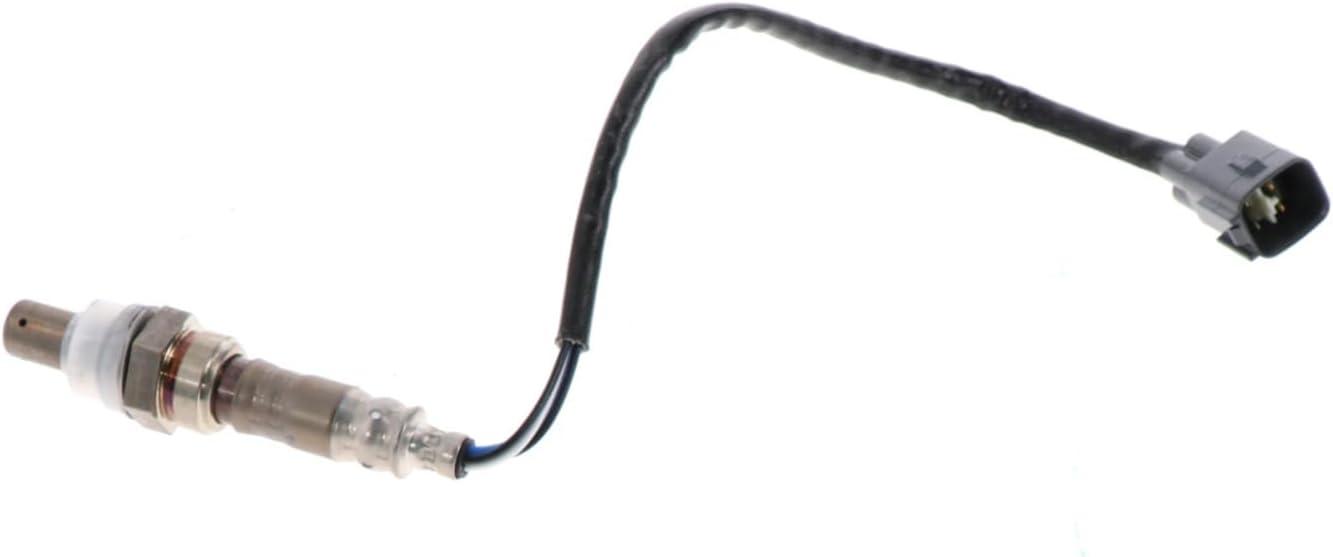
| Material | Zirconia |
|---|---|
| Mounting Type | Thread-In |
| Output Type | Electronic |
| Measuring Range | 0-20 AFR |
| Upper Temperature Rating | 1500 Degrees Fahrenheit |
This Denso 234-9021 is a factory-quality upstream air/fuel ratio sensor built to replace the bank 1 sensor 1 unit on compatible Toyota and Lexus V6 engines. It installs as a threaded, four-wire heated sensor and is used where the engine control system relies on a wide-band signal to manage fuel trims and emissions. Denso uses a planar zirconia sensing element with platinum electrodes for fast response and long life, and the sensor measures AFR across a usable 12:1 to 19:1 range so the engine computer can trim fueling across the RPM range. In practice this means clearer idle, more stable fuel trims, and the ability to clear related check-engine codes. The harness length and factory-style connector simplify swapping the old unit for a first-time fit. Limitations are straightforward: this part fits only the listed Toyota/Lexus applications and requires correct bank/location selection during replacement, and difficult access on some engines can make installation time-consuming without the right sockets and penetrating lubricant. For reliability-focused owners the Denso part provides a close match to factory performance and longevity.
Best for: A buyer who prioritizes long-term dependability and wants a factory-grade replacement to restore correct fuel control and emissions behavior on vintage Toyota V6s.
Less Ideal for: Someone seeking a universal or multi-vehicle sensor or a budget aftermarket alternative; this is intended as a vehicle-specific factory-style replacement.
- Manufactured to factory-quality standards for direct replacement and first-time fit.
- Wide-band planar zirconia element with platinum electrodes for fast response and long-term accuracy.
- Heated 4-wire design and included wiring harness simplify electrical connection and warm-up behavior.
- Measures air/fuel ratio across a broad range so ECU can correct fuel trims and reduce emissions.
- Only compatible with the specified early-2000s Toyota and Lexus V6 applications, so fitment is limited.
Verdict: Choose the Denso 234-9021 when you need a reliable, factory-quality upstream air/fuel ratio sensor to restore accurate fuel control on compatible Toyota and Lexus V6 engines.
TRQ Upstream Heated Oxygen Sensor (OSA61279) – Direct Fit Wideband

| Mounting Type | Flange Mount |
|---|---|
| Output Type | electrical signal |
| Specific Uses For Product | Oxygen Sensor |
| Style Name | OSA61279 |
This TRQ upstream heated oxygen sensor is a direct-fit replacement intended for Bank 1 Sensor 1 applications on Camry V6 3.5L engines in the stated fitment range. It installs like a factory-style unit with a flange mount and four-wire connector for heater control and signal output, so typical use is replacing a failing upstream O2 sensor to clear codes and restore proper fuel trim. Notable features include a pre-calibrated design, a double-layered 310S stainless steel shell for corrosion protection, and pre-applied anti-seize on the threads to simplify installation. In practical use the sensor responds to throttle changes and helps the engine computer relearn correct air-fuel ratios after a few drive cycles, improving drivability and emissions. Some buyers report quick, reliable fixes while others cite shorter lifespan on a minority of units, so expect factory-like fitment but variable long-term durability compared with higher-cost OE replacements. For a DIY swap it is economical and usually straightforward, but keep in mind persistent issues may require re-evaluation if symptoms return.
Best for: Buyers who want a low-friction, plug-and-play upstream sensor to clear codes and restore normal fuel control without paying OEM prices and who value validation from other owners' experiences.
Less Ideal for: Drivers who need guaranteed long-term durability or extended warranty coverage should consider higher-end or factory replacement parts instead.
- Direct-fit, pre-calibrated design for plug-and-play replacement on compatible Camry V6 engines
- Heated 4-wire connector provides faster warm-up and stable readings under varied conditions
- Double-layered 310S stainless steel housing for improved corrosion resistance
- Pre-applied anti-seize on threads and available installation videos make DIY fitment easier
- Some users report early failures, so long-term durability can be inconsistent
Verdict: A budget-friendly, direct-fit upstream wideband sensor that restores air-fuel monitoring and is a practical DIY fix for affected Camry V6 engines.
Wobiwina Oxygen Sensor Set 234-9304 / 234-9307, Upstream and Downstream

| Part Number | 234-9304 234-9307 |
|---|---|
| Included Components | 2PCS (upstream and downstream) |
| Material Type | Metals And Ceramics |
| Compatible Engines | 2.5L Toyota/Lexus listed models |
This Wobiwina two-piece oxygen sensor set supplies both upstream and downstream sensors intended to replace factory units on select 2.5L Toyota and Lexus engines. It is typically used to resolve check engine codes, poor fuel economy, or drivability issues by restoring accurate exhaust oxygen readings for the engine control system. The listing specifies compatibility with Camry 2018-2023 2.5L, Avalon 2020-2022 2.5L, RAV4 2019-2024 2.5L, and Lexus ES300h 2019-2020 2.5L, and includes two sensors with metal and ceramic construction. Buyers can expect a direct-replacement style part that fits like a factory sensor and is sold as a matched pair so both bank and downstream monitoring are addressed at once. Practical benefits are straightforward: it can clear OBD-II codes related to failing sensors and improve fuel trim response when the original units are degraded. Limitations include variable long-term durability reported by some users and the typical need for proper installation and torque to avoid exhaust leaks or connector issues.
Best for: A cautious buyer who wants a straightforward replacement to clear sensor-related fault codes and restore normal fuel control on a 2.5L Toyota Camry or similar 2.5L Toyota/Lexus vehicle.
Less Ideal for: Drivers who prioritize long-term warranty-backed parts or who prefer dealer-sourced factory parts for guaranteed longevity should consider alternatives.
- Sold as an upstream and downstream matched pair to address both sensor functions
- Listed compatibility covers common 2.5L Toyota Camry and RAV4 applications
- Metal and ceramic construction consistent with standard oxygen sensor design
- Reported by multiple buyers to fit and function like a direct replacement
- Some customers reported short lifespan or early failure in a minority of cases
Verdict: A convenient matched pair that offers an economical, direct-replacement option to clear oxygen-sensor faults and restore normal engine fuel management on specified 2.5L Toyota and Lexus models.
Choosing the Right Toyota Camry Bank 1 Sensor 1 Oxygen Sensor: Key Factors to Consider
Correct Fitment and Connector Type
A bank 1 sensor 1 oxygen sensor must match the Camry's thread pitch, length, and OEM connector to ensure a proper mechanical and electrical connection. Incorrect physical fit can cause exhaust leaks, poor sealing, or a loose connection that triggers intermittent codes and degraded sensor readings.
Connector compatibility matters because aftermarket wiring harnesses are often fragile; a proper plug avoids splices that can corrode or fail. Verify the sensor's thread size, sealing washer type, and harness plug orientation to prevent installation delays and to maintain reliable communication with the engine control module.
Response Time and Sensitivity
Upstream oxygen sensors directly influence fuel trim adjustments by reporting exhaust oxygen levels rapidly after combustion. Faster response times and higher sensitivity allow the ECU to correct air-fuel ratio more precisely, which helps reduce emissions, improve fuel economy, and steady idle behavior. Sensors with sluggish responses can cause rich or lean running and trigger persistent diagnostic trouble codes.
When assessing options, look for specifications or test data describing millisecond-level response and stable voltage swings across operating temperatures. For the Camry, consistent behavior during warm-up and transient throttle conditions is especially important.
Heater Circuit Reliability
The bank 1 sensor 1 position is typically upstream and relies on an internal heater to reach operating temperature quickly. A robust heater circuit minimizes time spent in a cold, less-sensitive state and reduces cold-start emissions. Heater failures are a common reason for sensor-related fault codes and can mimic other issues like poor idling or increased fuel consumption.
Choose sensors with proven heater durability and clear wiring ratings. Consider whether the replacement sensor provides the same heater voltage and current characteristics as the original to avoid overloading the Camry's wiring or causing long warm-up times.
Durability Against Contaminants
Oxygen sensors are exposed to combustion byproducts that can coat the sensing element, including carbon, fuel additives, oil, and coolant. For a Camry with higher mileage or known oil consumption, picking a sensor designed to resist contamination will extend service life and preserve accurate readings. Contaminated sensors show slower transitions and may hold incorrect voltage levels, leading to fuel-trim errors.
Materials, protective coatings, and robust sealing around the sensor tip help reduce the rate of fouling. Avoid options that lack information on contamination resistance or that are advertised only for short-term use.
Signal Stability and Emissions Performance
Stable voltage output across operating conditions supports reliable closed-loop operation of the engine management system. The upstream sensor needs to give clear, repeatable voltage swings so the ECU can maintain proper stoichiometry. Unstable or noisy signals can masquerade as other faults and complicate diagnostics.
Sensors with documented voltage ranges and minimal signal drift are preferable. For owners concerned about emissions testing, a stable upstream sensor helps the Camry meet regulatory thresholds by feeding consistent data to the ECU for lambda control.
Installation Accessibility and Serviceability
The upstream sensor's location on a Camry may require heat shields to be removed or limited access tools. A sensor designed for straightforward installation with an adequate lead length and a durable connector can reduce installation time and the risk of harness damage. Threaded sensors should include proper sealing features to prevent exhaust leaks after torqueing.
Consider whether the unit includes anti-seize where appropriate, or verify the manufacturer's guidance on lubrication. Also evaluate available replacement guides and connector repair options should future service be required.
Understanding Bank 1 Sensor 1 Function on the Camry
The bank 1 sensor 1 oxygen sensor is positioned upstream of the catalytic converter on the Camry and serves as the primary feedback device for the engine control module during closed-loop operation. It reports whether the exhaust is richer or leaner than stoichiometric, allowing the ECU to adjust injector pulse width and maintain the correct air-fuel ratio.
Because it influences fuel trims and the immediate combustion control loop, problems with this sensor commonly present as rough idle, increased fuel consumption, or diagnostic trouble codes that reference heater circuits or sensor response. Understanding its role helps you interpret symptoms and choose a replacement that restores proper ECU feedback.
- Reports oxygen content upstream of catalytic converter
- Directly affects fuel trims and idle stability
- Includes an internal heater for quick warm-up
Common Symptoms and Diagnostic Clues
Typical signs of a failing upstream sensor on a Camry include a persistent check engine indication, fluctuating idle, increased fuel use, and poor throttle response. Symptoms overlap with other engine issues, so targeted diagnostics are useful before replacing the sensor.
Use live-data readings from the oxygen sensor circuit to look for slow voltage transitions, a flat-lined output, or a heater circuit fault. Codes related to bank 1 sensor 1 provide a starting point, but confirm with voltage waveform checks and heater resistance tests.
- Erratic or slow voltage swings in live data
- Diagnostic trouble codes referencing bank 1 sensor 1 or heater circuit
- Worse fuel economy and rough idle
How to Test the Upstream Oxygen Sensor
Basic checks include reading the sensor voltage at operating temperature and verifying that it oscillates between lean and rich indications. The heater circuit can be tested by measuring resistance and ensuring the ECU supplies correct voltage during warm-up. For the Camry, confirm the connector pins are clean and corrosion-free before testing.
Advanced testing may use an oscilloscope to observe switching frequency and amplitude, which reveals slow response or contamination. If the sensor fails these tests, replacement with a properly specified unit is typically the prudent course.
- Measure heater resistance at ambient temperature
- Verify voltage oscillation when engine is warmed up
- Inspect connector and wiring for damage
Installation Tips for the Toyota Camry
Prepare by letting the exhaust cool, disconnecting the battery per shop practices, and clearing access to the sensor location. Use a proper oxygen sensor socket or crowfoot and follow torque recommendations for thread sealing. Ensure the replacement sensor's connector mates securely with the Camry harness to avoid signal issues.
If the sensor lead is longer than the original, route it away from hot manifolds and moving components. Avoid using excessive anti-seize on threads unless specified, as some sensors come pre-coated. After installation, clear codes and perform a short drive cycle to allow the ECU to re-establish fuel trims and monitor for recurring faults.
- Use correct socket and torque values
- Route wiring away from heat and moving parts
- Clear codes and run a drive cycle after install
Maintenance and When to Replace
Oxygen sensors have finite life and performance degrades over time due to contamination and heating cycles. For the Camry, consider replacement when persistent codes return, when live-data shows slowed response, or after any repair that could have contaminated the sensor, like head gasket failure or coolant leaks.
Preventive replacement can be considered at manufacturer-recommended intervals or when preparing for emissions testing if the current sensor shows marginal performance. Keep records of heater function and voltage behavior to make informed replacement decisions.
- Replace after repeated diagnostic codes
- Consider replacement following contamination events
- Monitor live-data trends to time replacement
Common Mistakes to Avoid
Replacing the upstream sensor without addressing underlying issues such as vacuum leaks, fuel system faults, or ignition problems can lead to repeat failures or unresolved driveability problems. Always perform basic diagnostics to rule out sources that might degrade a new sensor quickly.
Installing an ill-fitting sensor or damaging the wiring during removal and installation are frequent errors. Protect the harness and use the correct tools to avoid rounded threads and connector damage.
- Do not ignore related engine faults before replacing sensor
- Avoid over-torquing and damaged threads
- Confirm connector polarity and secure fit
Still looking for the perfect fit?
Select your Toyota Camry configuration to see the most relevant Oxygen Sensors recommendations
How We Chose the Best Toyota Camry Bank 1 Sensor 1 Oxygen Sensor
We narrowed candidates by focusing on attributes that matter for the Camry's upstream oxygen sensor location and engine management needs. Evaluation prioritized correct vehicle fitment and OE-equivalent connector and thread dimensions to prevent installation problems and false codes. Response time and sensitivity were included to reflect how quickly the sensor reports exhaust oxygen levels to the ECU, which affects fuel trims and idle quality. Durability criteria emphasized heating element lifespan and materials that resist contamination from oil and coolant, helping the sensor stay within specification under typical Camry operating conditions. Emissions compliance and signal stability under warm-up and steady-state conditions were considered to reduce the risk of persistent diagnostic trouble codes. We excluded parts lacking clear fitment documentation for Toyota Camry or those without proper sealing and connector specifications. Final selection balanced real-world reliability factors rather than gimmicks, with additional checks for warranty coverage and user-reported longevity trends.
Our full evaluation process is outlined in our review methodology.
FAQ
How long does a Camry bank 1 sensor 1 oxygen sensor typically last?
Sensor lifespan often depends on driving conditions and contamination levels; many last several years but may fail sooner if exposed to oil or coolant leaks. Monitor live-data and heater function to identify declining performance before a complete failure.
Will a bad bank 1 sensor 1 cause the check engine light on my Camry?
Often yes. Faulty response or heater circuit issues commonly trigger diagnostic trouble codes that illuminate the check engine lamp. Confirm with a scan tool and live-data checks before replacing the sensor.
Can I test the oxygen sensor without removing it from the Camry?
Yes. You can check heater resistance at the connector and monitor voltage output with the engine at operating temperature. Advanced waveform analysis may require specialized tools but basic tests are possible in-vehicle.
Does replacing the upstream oxygen sensor fix poor fuel economy?
It can help if the sensor was providing incorrect readings that caused rich or lean fuel trims. If other systems like fueling, ignition, or vacuum leaks are at fault, replacing the sensor alone may not restore economy.
Is the bank 1 sensor 1 position the same on all Camry engines?
The upstream sensor location is consistent in function but exact mounting and access can vary with engine type and model year. Verify the fitment details for your Camry's engine before ordering a replacement.
What should I do if a replacement sensor triggers the same code immediately?
Re-check wiring, connectors, and proper grounding. Ensure the replacement has the correct connector and thread fitment, and inspect for other underlying issues like exhaust leaks or damaged ECU inputs that could produce persistent codes.
Final Verdict
When replacing a bank 1 sensor 1 oxygen sensor on a Toyota Camry, prioritize correct fitment, heater reliability, and fast response to restore proper fuel trim behavior. Balance durability against contamination with signal stability to reduce the chance of recurring codes. If diagnostics show slow switching or heater faults, choose a replacement that matches the Camry's connector and electrical characteristics to get predictable results.Focus on resolving any underlying engine issues before fitting a new sensor to avoid premature failure. With the right fit and attention to installation, you can reliably restore emissions control, idle quality, and fuel economy for your Camry.
Explore More:
- Check out all Toyota Camry parts & accessories
- Explore Oxygen Sensors Maintenance & Repair Guides
- Explore Engine
- Browse all Auto Parts
