

Note: This article contains affiliate links. If you click on these links and make a purchase, I may earn a small commission at no extra cost to you. This helps support my research and content. Read my full affiliate disclosure here.
If your 2002-2006 Toyota Camry is running rough, showing lower fuel economy, or has a persistent check engine light, swapping the oxygen sensor is a common and effective fix. The right oxygen sensor restores accurate air-fuel readings, helps the engine management system make correct fuel trims, and reduces emissions. This guide covers the top shortlisted oxygen sensors chosen specifically for the 2002–2006 Camry, explains why each made the list, and highlights the installation and testing points that matter.Below you will find the top options selected for fit and performance plus clear decision criteria to help you pick the best replacement for your driving needs and maintenance budget.
Looking for other parts? See all Toyota Camry parts & accessories.
Top Picks at a Glance
| Best Overall The best all-around choice for most situations | VEIFNIY Upstream & Downstream Oxygen Sensor Set (234-9042 & 234-4261) for 2002–2008 Toyota/Lexus V6 (with gloves) |  |
| Best Quality Built to a higher standard if you want something more solid | Denso Air/Fuel Ratio Sensor 234-9049 |  |
| Best Value The sweet spot between price and what you get | Maxfavor MF-B2OS587 Oxygen Sensor (Upstream/Downstream) for 2002–2003 Toyota Camry/Solara 2.4L |  |
| Best Budget The cheapest option that still gets the job done reliably | AZHZ 234-4624 Heated Oxygen (O2) Sensor |  |
| Highest Rated A top-rated pick with lots of positive feedback | Denso Oxygen (O2) Sensor 234-4622 — Replacement Sensor with 4‑Wire Harness |  |
| Most Popular A crowd favorite that many people choose with confidence | SYKRSS Oxygen O2 Sensor 234-9041 Upstream |  |
| Best Seller A high-volume bestseller chosen again and again | QIYBONE Oxygen O2 Sensor Pair (Upstream & Downstream) for Toyota Camry 2.4L |  |
VEIFNIY Upstream & Downstream Oxygen Sensor Set (234-9042 & 234-4261) for 2002–2008 Toyota/Lexus V6 (with gloves)

| Model | 234-9042 &234-4261 |
|---|---|
| Manufacturer | VEIFNIY |
| Vehicle fitment | Toyota/Lexus V6 2002–2008 (3.0–3.3L) |
This VEIFNIY kit supplies an upstream and downstream oxygen sensor intended as direct, plug-and-play replacements for the factory sensors on 3.0–3.3L V6 Toyota and Lexus engines in the specified years. Installation is straightforward because the sensors use factory-style connectors and thread patterns, so most DIYers can swap them with common hand tools; the listing notes anti-seize is pre-applied and the kit often ships with thin installation gloves. In use the sensors monitor exhaust oxygen to help the engine control module correct air-fuel mixture, which typically clears related check-engine codes and can restore drivability and fuel economy. Build quality appears close to factory spec with heat-resistant wiring jacketing and a protective probe cover, though some buyers report variability in longevity and occasional mislabeling of sensor positions in listings. This makes the kit a practical, cost-effective option for balanced buyers who want a near-factory replacement without dealer pricing, while accepting some variability in long-term durability compared with higher-end branded sensors.
Best for: A buyer seeking a reliable, budget-conscious replacement that closely matches factory fit and function for routine repairs and to clear sensor-related drivability codes. They prioritize straightforward installation and balanced performance over premium longevity.
Less Ideal for: If you need a guaranteed long-term OEM-tier lifespan or professional fleet-level durability, choose a higher-end branded sensor or dealer-specified part instead.
- Direct-fit design with factory-style connectors for plug-and-play installation
- Matches factory part numbers 234-9042 (upstream) and 234-4261 (downstream) for correct fit
- Heat-resistant wiring jacket and pre-applied anti-seize on threads to simplify replacement
- Often includes disposable installation gloves which help keep the job cleaner
- Some buyers report inconsistent longevity for the upstream sensor compared with OEM brands
- A few listings and packages were mislabeled or included two of the same position rather than an upstream/downstream pair
Verdict: Practical, near-factory direct-fit upstream and downstream O2 sensors that restore performance and are a strong value choice for routine Camry/Lexus V6 repairs.
Denso Air/Fuel Ratio Sensor 234-9049

| Maximum Supply Voltage | 5 Volts |
|---|---|
| Measuring Range | 10:1 – 18:1 |
| Output Type | Push-Pull |
| Material Type | Stainless Steel, Zirconium |
The Denso 234-9049 is a wide‑band air/fuel ratio sensor made to replace the upstream sensor on compatible Toyota Camry engines from the 2003–2011 era listed by the manufacturer. In use it measures the engine air/fuel mixture across a broad range and sends a precise signal to the engine computer so fueling and catalytic converter control return to normal after a failed sensor. Notable features include a four‑wire connector with a long wiring harness, stainless steel/zirconium sensing element, and a supplied anti‑seize on the threads to simplify installation. For a performance‑minded Camry owner this sensor helps the ECU keep a stable, learnable target mixture which can reduce hesitation, correct drivability issues, and help the engine run smoothly after replacement. Installation can be tight and requires the correct sensor socket and care not to damage the connector, and a few users report fitment confusion on nonmatching emissions variants, so confirm exact engine and emissions configuration before buying.
Best for: Camry owners focused on restoring precise fuel control and drivability who expect a high‑quality, factory‑grade replacement that supports stable ECU mixture learning.
Less Ideal for: Drivers who prefer dealer parts for guaranteed match to a specific emissions configuration or who want a multi‑vehicle universal sensor are better off choosing an exact OEM part instead.
- Wide‑band design provides accurate air/fuel readings across a broad mixture range
- Built to factory standards with stainless steel and zirconium materials for durability
- Includes long 4‑wire harness and anti‑seize on threads to ease installation
- Restores proper fueling and can clear related driveability issues on compatible engines
- Some users report fitment differences for certain emissions variants so compatibility must be verified
Verdict: Choose the Denso 234-9049 for a performance‑oriented Camry when you need a precise, factory‑quality wide‑band air/fuel sensor to restore smooth fueling and drivability.
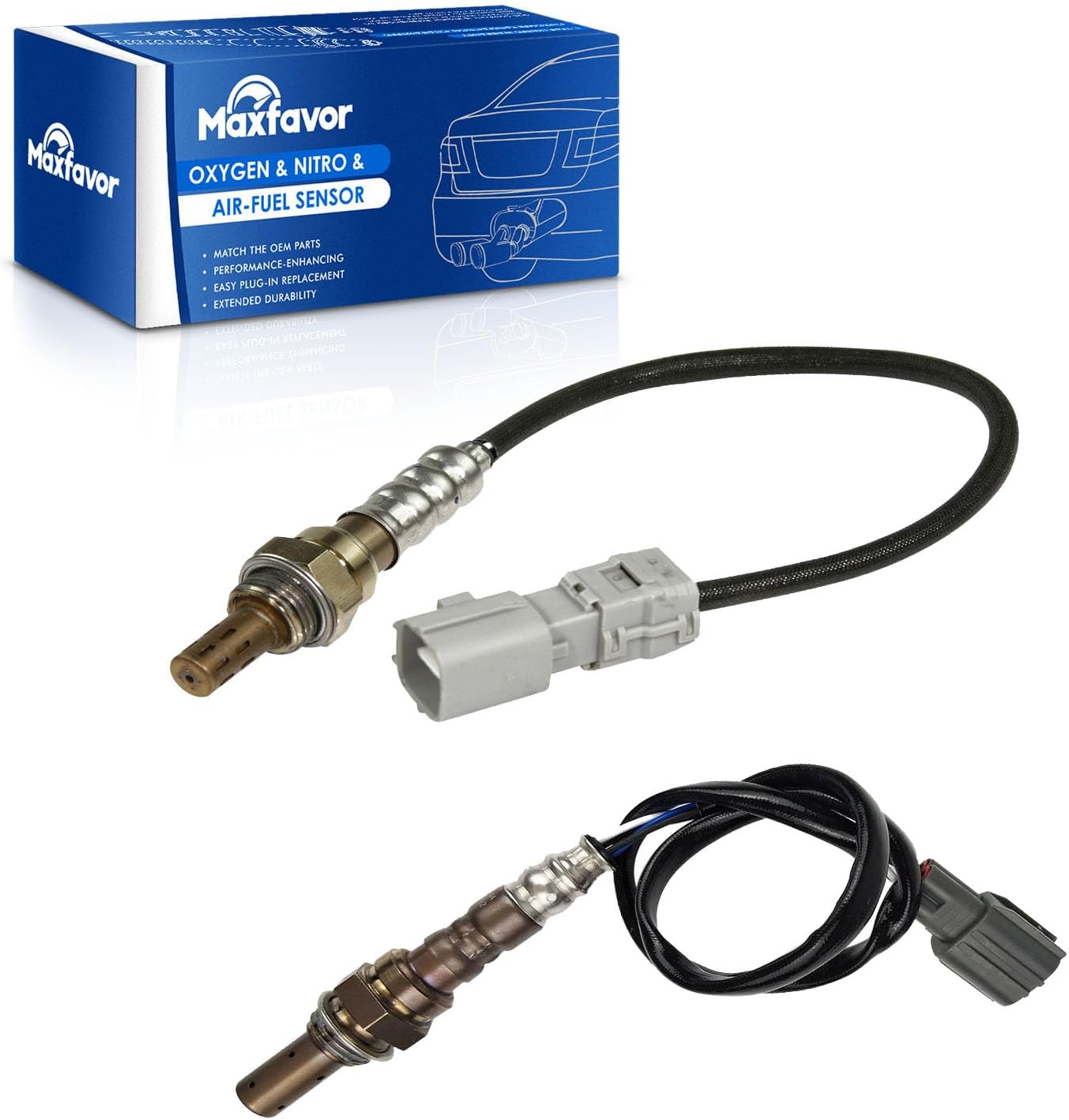
Maxfavor MF-B2OS587 Oxygen Sensor (Upstream/Downstream) for 2002–2003 Toyota Camry/Solara 2.4L
| Mounting Type | Flange Mount |
|---|---|
| Output Type | Electrical signal |
| Specific Uses For Product | Oxygen Sensor |
| Upper Temperature Rating | 899 Degrees Celsius |
This Maxfavor MF-B2OS587 kit supplies two oxygen sensors intended to replace the upstream and downstream units on 2002–2003 Toyota Camry and Solara 2.4L engines. It uses a flange-mount design, stainless steel housing, and protective layers such as an aluminum oxide trap and PTFE filter to resist contamination and heat. Typical use is direct replacement of a failing O2 sensor to restore correct air-fuel feedback and clear diagnostic codes. The practical benefits are straightforward: it arrives as a pair so you can swap both sensors at once, it claims factory-style fit and high temperature resistance, and the electrical output is compatible with standard engine management inputs. Limitations are that customer reports show inconsistent fitment and wiring length issues on some 2003 Camry installations, and several buyers experienced dead or improperly functioning units requiring return or replacement. If you choose this for a budget repair, be prepared to verify connector/pigtail length and test the upstream sensor immediately after install to confirm correct operation.
Best for: Buyers who prioritize a cost-effective, complete sensor replacement and are comfortable verifying fit and function after installation.
Less Ideal for: Drivers who need a guaranteed drop-in replacement with manufacturer support or who cannot troubleshoot electrical/fit issues should consider a more proven factory-quality sensor.
- Sold as an upstream and downstream pair so you can replace both sensors at once
- Flange-mount design with stainless steel housing and protective layers for durability
- Electrical output compatible with standard engine control inputs
- High reported upper temperature rating supports exhaust-system exposure
- Some units have arrived nonfunctional or failed quickly according to multiple user reports
- Wiring/pigtail length may be too short on certain 2003 Camry installations causing fitment problems
Verdict: A budget-friendly two-piece oxygen sensor kit for 2002–2003 Camry/Solara that lets you replace both sensors at once if you verify fit and function.
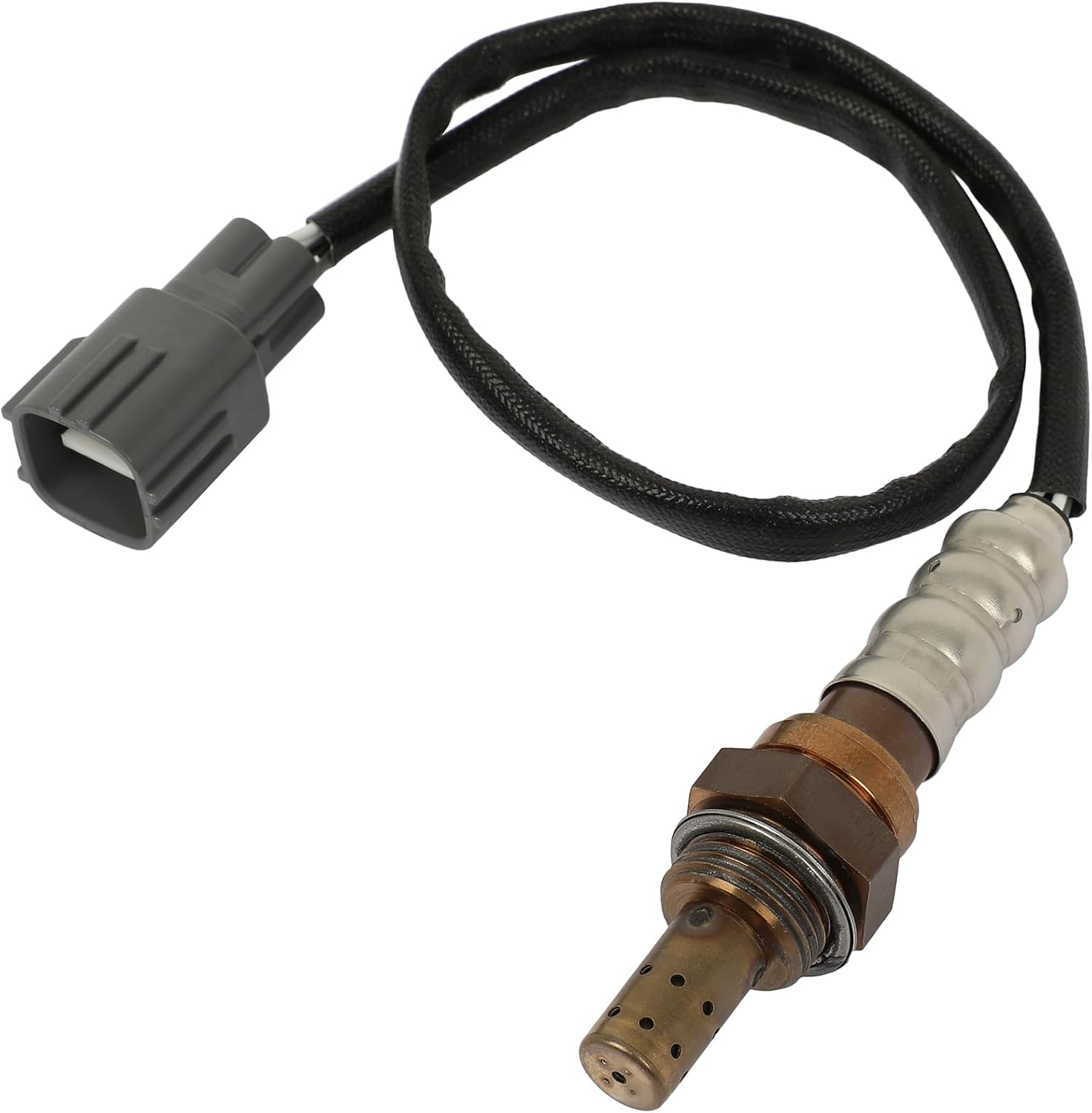
AZHZ 234-4624 Heated Oxygen (O2) Sensor
| Mounting Type | Plug Mount |
|---|---|
| Output Type | Push-Pull |
| Material Type | beaded |
| Wires | 4 |
| Heated | Yes |
This AZHZ 234-4624 is a heated oxygen sensor intended to replace a failed upstream or downstream O2 on compatible Toyota vehicles. It installs in place of the factory sensor using a plug-mount connection and includes a built-in heater to speed warm-up and stabilize closed-loop fuel control. Typical use is a direct swap when the vehicle shows a P0134/P0135 or similar O2-related code or when diagnostics point to a failed sensor. Concrete features in the listing include a four-wire connector, plug-mount design, and heat-welding sealing claimed for improved durability. For a budget repair this sensor can restore proper fuel trim and stop check-engine lights quickly, but fitment must be verified against your vehicle plug since reviewers report some connector mismatches and a few failures where wiring or connector quality caused issues. Expect aftermarket-level fit and finish rather than OEM engineering and compare the plug and wiring length before installation to avoid returns or extra wiring work.
Best for: Buyers prioritizing a low-cost repair to clear O2-related codes or restore fuel trim on an older Camry who are comfortable verifying plug compatibility and doing basic installation.
Less Ideal for: Drivers who want a long-term factory-quality replacement or who prefer parts with guaranteed vehicle-specific fit and dealer-level support should look at higher-end or OEM sensors.
- Heated design helps the sensor reach operating temperature faster for quicker closed-loop control
- Plug-mount with four-wire connector matches factory wiring on many compatible vehicles
- Affordable option for replacing a faulty O2 sensor and clearing related engine codes
- Manufacturer highlights enhanced sealing via high-heat welding to reduce leaks at the sensor base
- Fitment and connector shape are inconsistent for some vehicles so you must confirm plug compatibility before ordering
- Some reviewers reported wiring or connector failures that caused electrical faults after installation
Verdict: A low-cost heated replacement O2 sensor that can quickly fix O2-related codes on a 2003–2006 Camry when the plug and connector are verified to match.
Denso Oxygen (O2) Sensor 234-4622 — Replacement Sensor with 4‑Wire Harness

| Part number | 234-4622 |
|---|---|
| Material | Stainless Steel, Zirconium |
| Mounting type | threaded |
| Output type | electrical |
| Maximum supply voltage | 12 Volts (DC) |
This Denso 234-4622 oxygen sensor is a direct-replacement narrow-band sensor intended to restore proper air/fuel feedback on compatible Toyota Camry models from the listed years. It includes a four-wire harness and a threaded mounting for straightforward installation where access allows. Denso builds the sensor with a zirconia sensing element and a PTFE filter to resist contaminants, plus a machined stainless steel body for corrosion resistance. In practice the sensor restores closed-loop fuel control, clears related check-engine codes, and can improve fuel economy and drivability when the original sensor has degraded. Installation can be a DIY job but may require a 22 mm O2 socket, penetration fluid, and patience removing a seized sensor from the exhaust; some reviewers also advise disconnecting the battery and following warm/cool precautions. A small number of customers reported defective units, so bench-testing or confirming connector fit before final assembly is prudent.
Best for: Buyers who prioritize a reliable, factory-style replacement to clear emissions-related faults and restore normal fuel control on their Camry and prefer proven brand-name parts over generic substitutes.
Less Ideal for: Drivers looking for a universal or performance oxygen sensor or those who want a sensor for vehicles outside the 2002–2006 Camry scope should consider other options.
- Engineered as a direct factory-style replacement for compatible Toyota applications.
- Zirconia sensing element with PTFE filter helps resist contamination and maintain response.
- Stainless steel, machined body offers corrosion resistance for exhaust mounting.
- Includes a 4-wire harness for heated sensor operation and faster warm-up.
- Removal can be difficult if the old sensor is rusted to the exhaust pipe, requiring penetrating fluid or extra tools.
- A few reported defective pieces mean you may need to test the unit after receipt before full installation.
Verdict: Choose the Denso 234-4622 when you want a dependable, factory-quality replacement oxygen sensor to restore proper fuel control on a compatible Camry.
SYKRSS Oxygen O2 Sensor 234-9041 Upstream

| Measurement Accuracy | ±1.5% |
|---|---|
| Mounting Type | Exhaust Mount |
| Output Type | Push-Pull |
| Upper Temperature Rating | 1000 Degrees Celsius |
This SYKRSS upstream oxygen sensor is a direct replacement-style unit intended to measure exhaust oxygen and return that signal to the engine management system to help maintain proper air-fuel ratio. It is typically used when a failing sensor causes rough idle, poor fuel economy, or a check engine light with fuel-trim related codes. The sensor is stainless steel with high temperature resistance and an exhaust-mount design; the product lists measurement accuracy and a high upper temperature rating, which suggests it can survive typical underhood conditions. Buyers should expect to swap this into the upstream location in the exhaust and reinstall the connector and wiring; some users note differences in wire color and lead length, so double-check connector length and fit before installation. Real-world benefits include restored fuel control, potential fuel-economy gains, and resolution of oxygen-sensor-related trouble codes. Limitations: occasional reports of early failure appear in reviews and fitment/lead length can vary so verification of fit for 2002-2006 Camry applications is recommended before installing.
Best for: Buyers who prioritize evidence from other owners and want an affordable replacement to fix oxygen-sensor-related drivability or fuel-economy issues on the specified Camry-generation vehicles.
Less Ideal for: Those who need guaranteed factory-identical wiring or long-term proven brand reliability should consider OEM-branded sensors or higher-end aftermarket options instead.
- Stainless steel construction and high temperature rating for durability in exhaust environments
- Designed as upstream replacement to restore proper oxygen sensing and clear fuel-trim related codes
- Meets stated measurement accuracy and uses a push-pull output type for consistent signal
- Positive user reports of correct fit and code resolution on Toyota Camry and similar models
- Some reviewers report early failures, indicating variable long-term reliability
- Wire colors and lead length can differ from factory sensor, requiring fit verification before purchase
Verdict: A budget-friendly upstream replacement that can clear fuel-trim codes and restore proper oxygen sensing on compatible Camry-era vehicles when fitment is confirmed.
QIYBONE Oxygen O2 Sensor Pair (Upstream & Downstream) for Toyota Camry 2.4L

| Mounting Type | Plug Mount |
|---|---|
| Output Type | electrical signal |
| Specific Uses For Product | automotive, vehicle emission monitoring |
| Material Type | Stainless Steel |
| Unit Count | 2.0 Count |
This QIYBONE kit supplies both upstream and downstream oxygen sensors intended as direct-fit replacements for the 2.4L Camry and compatible RAV4 engines. The sensors are stainless steel with high-temperature resistant construction and come with pigtail connectors to match the factory plug for plug-and-play installation. In use they restore the vehicle's ability to monitor air/fuel mixture and catalytic efficiency, which helps clear fault codes, stabilize engine trim, and can improve fuel economy after a failed sensor. Practical benefits include an included pair for front and rear service and pre-applied anti-seize on the threads to simplify future removal. Limitations are typical for aftermarket sensors: long-term durability versus higher-cost factory-brand parts is not proven here, and buyers should confirm connector and thread type against their vehicle before installation. Installation is straightforward for anyone comfortable working under the vehicle and using a scanner to clear codes and verify operation.
Best for: Buyers who prioritize a low-risk, straightforward repair and want a ready-to-install replacement pair to restore proper emissions sensing and clear check-engine faults with minimal fuss.
Less Ideal for: Shoppers seeking a branded OEM sensor with an extended proven service life or those who prefer to source parts through dealer channels should consider factory-brand alternatives.
- Includes both upstream and downstream sensors to service front and rear positions in one purchase.
- Stainless steel, high-temperature materials and thread anti-seize improve installation and resist exhaust conditions.
- Plug-and-play design that matches factory connectors for quick replacement and minimal wiring work.
- Helps restore accurate air/fuel readings to clear codes and can improve fuel economy and engine performance once replaced.
- Long-term longevity compared with higher-priced factory-brand sensors is not established by the listing.
Verdict: A practical, plug-and-play two-piece oxygen sensor set that gets a 2.4L Camry back to proper air/fuel monitoring with minimal effort.
Choosing the Right 2002-2006 Toyota Camry Oxygen Sensor: Key Factors to Consider
Fitment and Connector Compatibility
Correct fitment is the foundation of a trouble-free oxygen sensor replacement. The 2002–2006 Toyota Camry has specific thread sizes, connector types, and wiring routing; an incorrect sensor can leave you with a loose connector, poor signal grounding, or the need for adapter harnesses.
Choosing a sensor that matches the Camry's connector and thread pitch makes installation faster and reduces the chance of exhaust leaks or wiring strain. Confirm that the sensor length and harness orientation align with the Camry's exhaust manifold or downpipe position so the sensor element sits in the gas flow correctly. When fitment is right, you avoid additional modifications that can compromise reliability.
Heater Circuit Functionality
Many Camry oxygen sensors use an internal heater to bring the sensor element up to operating temperature quickly after a cold start. A working heater reduces warm-up time so the engine control unit receives usable O2 readings sooner, improving cold-start fuel trims and emissions. Faulty heaters commonly trigger codes such as P0135 and can lead to prolonged open-loop operation.
Check that the replacement sensor includes an OE-equivalent heater and that the heater's resistance spec is compatible with the Camry's wiring and fuse rating. Sensors with robust heater designs resist early failure from repeated cold cycles and are especially important if the vehicle is often driven on short runs.
Narrowband Vs Wideband Output
The 2002–2006 Camry primarily uses narrowband oxygen sensors for closed-loop fuel control. Narrowband sensors report rich or lean conditions around stoichiometry, which is sufficient for stock engine management behavior. Wideband sensors provide a linear, precise air-fuel ratio reading across a broader range and are typically used in tuned or modified engines.
For most Camry owners replacing a factory-type sensor, a narrowband unit that reproduces the expected voltage swing and switching behavior is the correct choice. Consider a wideband only if you have aftermarket engine management or are monitoring AFRs for performance tuning; otherwise, a narrowband replacement maintains expected ECU operation and avoids triggering diagnostic confusion.
Response Time and Signal Stability
A sensor's response time determines how quickly the ECU can correct air-fuel mixture after changes in load or throttle. Faster switching and stable signal output improve idle control, transient throttle response, and long-term fuel trim behavior on the Camry. Sluggish or noisy signals can cause hunting fuel trims and inconsistent idle.
Look for sensors that specify response characteristics or demonstrate consistent voltage swings in documented tests. Good signal stability also reduces false diagnostic trouble codes and makes diagnostics such as checking bank 1 sensor 1 behavior more reliable during troubleshooting.
Durability Against Contaminants
Oxygen sensors fail prematurely when exposed to contaminants such as oil, coolant, or silicone vapors. The 2002–2006 Camry's engine bay conditions can expose sensor elements to these contaminants over time, accelerating wear and reducing sensitivity.
Select sensors with protective coatings, durable ceramic elements, and robust strain relief on the wiring to resist oil and grime. Sensors that resist contamination maintain accurate readings longer and reduce the frequency of replacement, especially on higher-mileage Camrys or those with minor oil consumption.
Ease Of Installation And Access
Some sensor locations on the Camry are easier to reach than others. Upstream sensors mounted near the exhaust manifold may be tight to access and benefit from anti-seize on the threads or a sensor designed for easier removal. Downstream sensors under the car can be affected by heat shields and hangers.
Prioritize sensors that come with installation-friendly features such as correct thread length, proper hex size for common oxygen sensor sockets, and durable wiring boots that protect the connector from road debris. Considering installation ease saves time and reduces the chance of cross-threading or connector damage during replacement.
Identifying Which Sensor Is Failing
On a 2002–2006 Toyota Camry, the check engine light and stored codes are the first clues to a failing oxygen sensor. Codes pointing to heater circuit faults or slow switching often identify the upstream sensor, commonly referred to as bank 1 sensor 1. Visual inspection for wiring damage, exhaust leaks near the sensor, and contamination can narrow down the issue.
You can monitor live sensor voltage with a scan tool while observing throttle changes. A healthy narrowband upstream sensor should switch rapidly between low and high voltages during throttle blips. A slow or flat response indicates degradation and usually merits replacement.
- Bank 1 Sensor 1 often affects idle and drivability
- Heater circuit codes indicate possible heater element failure
- Look for exhaust leaks or physical damage before replacing the sensor
Basic Steps To Test An Oxygen Sensor
Testing an oxygen sensor on the Camry can be done with a diagnostic scanner to view live data, a multimeter for heater resistance checks, and a visual inspection. Start by checking for diagnostic trouble codes that reference oxygen sensor circuits. Then verify heater resistance against the expected range for the replacement specification.
Next, observe the sensor's voltage output at operating temperature. Rapid switching during acceleration and deceleration indicates a functioning narrowband sensor. If the heater reads open or the voltage remains fixed, the sensor should be replaced.
- Check trouble codes for heater or sensor circuit faults
- Measure heater resistance with the sensor disconnected
- Monitor live voltage for switching behavior once engine is warm
Installation Tips For The 2002–2006 Camry
When installing a replacement oxygen sensor, allow the engine and exhaust to cool to avoid burns. Use the correct oxygen sensor socket and clear any corrosion from the bung before threading the new sensor. Apply a small amount of anti-seize on the threads only if the manufacturer does not supply pre-coated threads.
Route the wiring harness to avoid contact with hot components and secure the connector to the factory clip. After installation, clear any stored codes and perform a drive cycle so the ECU can relearn fuel trims with the new sensor readings.
- Use proper tools and take care not to cross-thread sensor threads
- Avoid contaminating the sensor tip with grease or silicone
- Clear codes and run a full drive cycle to confirm proper operation
Symptoms That Point To An Oxygen Sensor Problem
Common symptoms on the Camry include reduced fuel economy, rough idle, hesitation during acceleration, and a persistent check engine light that logs oxygen sensor-related codes. Often these symptoms develop gradually as the sensor ages, making them easy to misattribute to other issues.
Heater circuit failures tend to show up as cold-start problems and persistent codes such as P0135. If you notice these symptoms combined with unusual fuel consumption, the oxygen sensor should be high on the list of components to inspect.
- Lower MPG and richer-than-normal exhaust smell
- Hesitation or stumbling during throttle application
- Diagnostic codes indicating sensor heater or slow response
When To Consider Upgrading To A Different Sensor Type
Most owners of a 2002–2006 Camry will be best served by a direct-fit narrowband replacement that mirrors factory behavior. Consider a different sensor type only if you have modified the engine or use aftermarket engine management that requires a wideband signal.
Wideband sensors provide precise AFR data for tuning but require compatible electronics and are not a direct swap for the Camry's stock ECU. If you plan to monitor AFRs for performance tuning, add a dedicated wideband controller rather than replacing the stock narrowband sensor with an incompatible unit.
- Stick with narrowband for stock engines
- Choose wideband only with matching electronics and tuning needs
Still looking for the perfect fit?
Select your Toyota Camry configuration to see the most relevant Oxygen Sensors recommendations
How We Chose the Best 2002-2006 Toyota Camry Oxygen Sensor
We focused solely on sensors that fit the 2002–2006 Toyota Camry and evaluated each candidate across multiple, practical dimensions that matter to owners. Key evaluation criteria included fitment accuracy and connector compatibility for the Camry wiring harness, sensor response time and signal stability under typical Camry operating conditions, and resistance to common failure modes like heater circuit burnout and contamination from coolant or oil. We also assessed long-term durability factors such as corrosion-resistant threads and robust wiring boots, ease of physical installation including thread pitch and access in the Camry exhaust layout, and the presence of OE-equivalent heater circuits where applicable.We excluded any sensors lacking documented fitment for the 2002–2006 Camry, universal sensors that require custom wiring, and components without measurable heater performance. We prioritized sensors with clear specifications for output type (narrowband vs wideband) and heater resistance, plus those that provide consistent voltage behavior for bank 1 sensor 1 and bank 2 where relevant. The result is a shortlist focused on reliable operation, straightforward installation, and predictable engine management response for this specific Camry model range.
Our full evaluation process is outlined in our review methodology.
FAQ
How can I tell if my Camry's oxygen sensor is failing?
Signs include a persistent check engine light with oxygen-sensor-related codes, reduced fuel economy, rough idle, and sluggish acceleration. A live-data scan showing slow or no switching on the upstream sensor is a strong indicator of failure.
Can I test the oxygen sensor myself on a 2002–2006 Camry?
Yes. You can use a multimeter to check heater resistance and a scan tool to monitor live voltage output once the engine reaches operating temperature. Visual inspection for damaged wiring or contamination is also useful before replacing the sensor.
What does code P0135 mean on a Camry?
P0135 typically indicates a heater circuit malfunction for an upstream oxygen sensor. It often points to an open heater element, damaged wiring, or blown fuses rather than the sensor element itself in some cases.
Is it necessary to replace both upstream and downstream sensors at the same time?
Not always. Replace the sensor that is failing based on codes and diagnostic tests. However, if the vehicle has high mileage or multiple sensors show degraded performance, replacing both can be a practical preventive step to restore consistent emissions control.
Will a faulty oxygen sensor affect emissions testing for my Camry?
Yes. A degraded or failed oxygen sensor can cause improper fuel trims and higher emissions, which may lead to test failure. Replacing a bad sensor often resolves the issue if there are no other underlying engine problems.
How difficult is it to install an oxygen sensor on a 2002–2006 Camry?
Installation difficulty is moderate. Upstream sensors can be tight to access near the manifold but are straightforward with the right socket and basic hand tools. Downstream sensors under the car require vehicle support and attention to wiring routing.
Final Verdict
When replacing an oxygen sensor on a 2002–2006 Toyota Camry, prioritize correct fitment, a working heater circuit, and the proper output type for your engine management. Response speed and contamination resistance affect drivability and long-term reliability, so choose a sensor that matches the Camry's specifications and expected operating conditions.Balance cost against durability and installation ease: a well-matched, OE-equivalent narrowband sensor will restore fuel economy and emissions control for most Camry owners, while upgrades such as wideband solutions are only necessary for tuned or heavily modified engines.
Explore More:
- Check out all Toyota Camry parts & accessories
- Explore Oxygen Sensors Maintenance & Repair Guides
- Explore Engine
- Browse all Auto Parts
