

Note: This article contains affiliate links. If you click on these links and make a purchase, I may earn a small commission at no extra cost to you. This helps support my research and content. Read my full affiliate disclosure here.
If your Toyota Camry V6 is running rough, showing a check engine light, or burning more fuel than usual, a failing oxygen sensor is a common cause. Swapping in the correct oxygen sensor can restore driveability, improve fuel economy, and help the engine control module fine-tune air/fuel mixtures for this V6 application. This guide covers the top shortlisted oxygen sensors selected for Toyota Camry V6 owners, explaining why they made the list and what to expect from installation and performance. We evaluate each option for correct fitment, sensor responsiveness, and durability so you can pick the right replacement with confidence.Next you will find our recommended options followed by practical buying guidance, diagnostic tips, and installation considerations tailored to the Camry V6.
Looking for other parts? See all Toyota Camry parts & accessories.
Top Picks at a Glance
| Best Overall The best all-around choice for most situations | Carock Upstream/Downstream Oxygen Sensor Replacement for 2008–2011 Toyota Avalon, Camry, Lexus ES350 V6 (Left Side) |  |
| Best Quality Built to a higher standard if you want something more solid | Denso Oxygen (O2) Sensor 234-4260 — Replacement Heated Narrow-Band Sensor |  |
| Best Value The sweet spot between price and what you get | DrCax Heated Oxygen Sensor Pair (Upstream & Downstream) for Toyota Camry/V6 and Lexus ES |  |
| Best Budget The cheapest option that still gets the job done reliably | BOSJINLAI Upstream Oxygen Sensor for Toyota Camry V6 and Compatible Vehicles |  |
| Highest Rated A top-rated pick with lots of positive feedback | Denso Oxygen (O2) Sensor 234-4622 |  |
| Most Popular A crowd favorite that many people choose with confidence | TRQ Upstream Heated Wideband Oxygen Sensor OSA61279 |  |
| Best Seller A high-volume bestseller chosen again and again | VEIFNIY Upstream & Downstream Oxygen Sensor Set (234-9042 & 234-4261) for Toyota/Lexus V6 2002–2008 |  |
Carock Upstream/Downstream Oxygen Sensor Replacement for 2008–2011 Toyota Avalon, Camry, Lexus ES350 V6 (Left Side)

| Brand | Carock |
|---|---|
| Item model number | 234-9008 234-4260 |
| Manufacturer Part Number | 02CR-B2OS581-PX |
This Carock oxygen sensor set replaces the upstream and downstream O2 sensors on 3.5L V6 Toyota applications from 2008 through 2011 and the left-side 2009–2010 Venza 3.5L. Intended as a direct replacement, the sensors use a laser-welded stainless steel body and high-temperature materials to improve durability and response time compared with worn originals. Installation is typical for O2 sensors and usually done at the exhaust manifold or downstream bung with a sensor socket or wrench; buyers should verify the plug and connector match their vehicle before fitting. In use the sensors will restore proper air-fuel feedback to the engine control unit, reducing rough idle, CEL triggers, and poor fuel economy caused by failing sensors. The product lists multiple interchange numbers for cross-reference which helps confirm compatibility. Limitations include the need to confirm connector type and that the listing covers a specific left-side sensor fitment rather than a universal kit, so careful fitment checks are required before purchase.
Best for: Buyers who want a cost-effective, factory-replacement style oxygen sensor that restores engine control accuracy on mid-2000s Toyota V6 models and value straightforward, maintenance-focused repairs.
Less Ideal for: People seeking a universal or multi-vehicle sensor kit or those who prefer professional diagnostic confirmation and installation services instead of DIY replacement.
- Designed to replace upstream and downstream O2 sensors on specified 3.5L Toyota V6 applications
- Laser-welded stainless steel construction for corrosion resistance and longevity
- High-temperature materials intended to improve sensor response time
- Includes multiple interchangeable part numbers for easier compatibility checks
- Fitment is limited to left-side and listed model years so it may not replace all required sensors on every vehicle
- Requires buyer to confirm connector and plug match before installation
Verdict: A practical, durable direct-replacement oxygen sensor set for restoring proper fuel trim and engine performance on 2008–2011 Toyota V6 Camry-family vehicles.
Denso Oxygen (O2) Sensor 234-4260 — Replacement Heated Narrow-Band Sensor
| Manufacturer | Denso |
|---|---|
| Material | Stainless Steel, Zirconium |
| Mounting Type | Flange Mount |
| Output Type | electrical signal |
| Upper Temperature Rating | 982 Degrees Celsius |
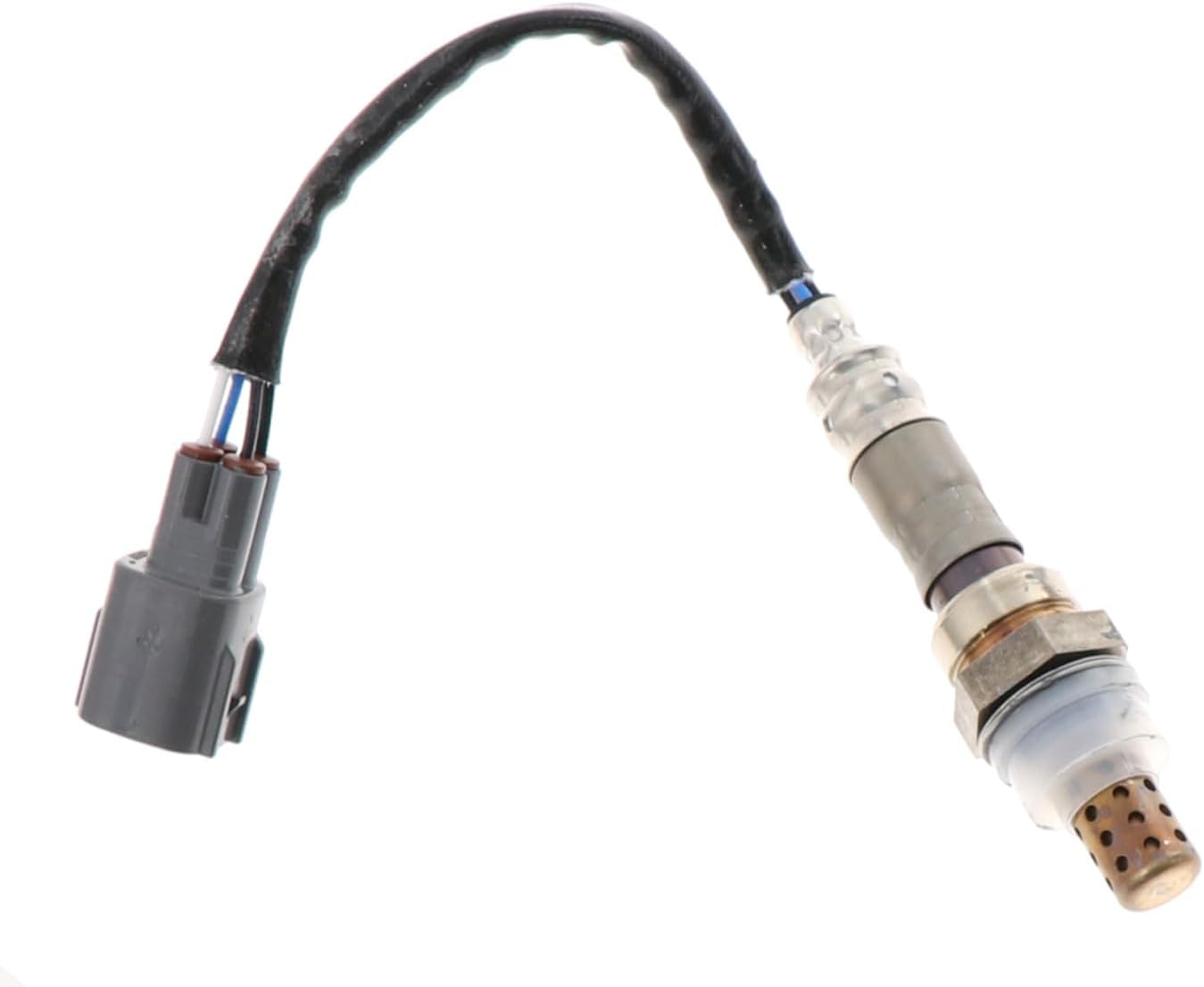
This Denso 234-4260 is a direct-fit heated narrow-band oxygen sensor intended to replace a worn downstream sensor on compatible Toyota V6 engines. It plugs into the factory harness and provides the electrical signal the engine control unit uses to monitor post-catalyst oxygen levels. Notable features include a corrosion-resistant stainless steel body, a refined zirconia sensing element for quick response, a PTFE filter to block contaminants, and a 4-wire harness with an approximate 9.45-inch lead for factory-style connections. In real-world use it restores proper sensor feedback, commonly clears running faults, and can help recover normal fuel trim and driveability after installation. Installation is straightforward for a mechanically comfortable DIYer but may require an O2 sensor socket and some under-vehicle access. Limitations include the fixed harness length that may be short in some chassis locations and the fact that this is a narrow-band downstream sensor, so it is not suitable where a wide-band or upstream sensor is required.
Best for: A buyer focused on restoring or maintaining accurate fuel control on a Toyota V6 who wants a factory-style replacement that fits and performs like the original component.
Less Ideal for: Drivers who need wide-band air/fuel monitoring for tuning or performance logging or those who require a longer harness for custom exhaust routing should look elsewhere.
- Factory-quality replacement fit for Toyota V6 downstream locations
- Refined zirconia element for fast, reliable sensing and improved engine feedback
- PTFE filter and stainless steel construction resist contaminants and corrosion
- Heated 4-wire design plugs into factory connectors for straightforward installation
- Fixed, relatively short harness length may not reach some routing locations without modification
- Narrow-band design means it cannot provide the richer data of a wide-band sensor
Verdict: Choose the Denso 234-4260 when you want a direct-fit, factory-quality downstream O2 sensor to restore correct fuel control on Toyota V6 vehicles.
DrCax Heated Oxygen Sensor Pair (Upstream & Downstream) for Toyota Camry/V6 and Lexus ES

| Brand | DrCax |
|---|---|
| Sensor Type | Heated |
| Included Quantity | 2 sensors |
| Manufacturer Part Number | DC-24225-24360-250903 |
This DrCax two-piece sensor set includes one upstream and one downstream heated oxygen sensor intended as direct replacements for compatible Toyota Camry and Lexus ES V6 engines. Installation is typical for oxygen sensors: unplug the old sensor, unthread it from the exhaust, and screw in the new unit using the factory connector. The sensors are factory-tested and claim OE-equivalent materials and construction, so they should quickly restore closed-loop fuel control, reduce a check engine light caused by a failed O2 sensor, and help recover fuel economy. The kit lists OEM-equivalent part numbers and covers both pre- and post-catalytic locations, which simplifies ordering the right positions. Expect typical aftermarket variability in long-term durability based on user reports; some buyers report reliable performance while others have early failures, so professional diagnostic verification before replacement is advisable. The pair is convenient when both sensors are aging, but buyers should confirm exact fitment for their year and engine using vehicle-specific references before purchase.
Best for: Buyers who prioritize restoring correct engine air-fuel control and emissions at a practical cost and prefer replacing both sensors at once to avoid repeat labor.
Less Ideal for: Those seeking guaranteed long-term OEM-level longevity or who prefer brand-direct warranty and dealer-sourced parts should consider other options.
- Includes both upstream and downstream heated sensors for complete replacement
- Sold as direct replacement with listed OEM-equivalent part numbers for easier cross-referencing
- Factory-tested claim and heated element supports faster warm-up and reliable closed-loop operation
- Comes as a matched pair which can save time when both sensors are due for service
- Some customers report premature failures, indicating inconsistent long-term durability
Verdict: A practical paired replacement set that restores oxygen sensing for compatible Toyota Camry and Lexus ES V6 models without fuss.
BOSJINLAI Upstream Oxygen Sensor for Toyota Camry V6 and Compatible Vehicles

| Brand | BOSJINLAI |
|---|---|
| Manufacturer Part Number | BJL01-TB-0021 |
| Compatible Engines | 2.5L/2.7L/3.5L L4 and V6 (listed models) |
| Replaces Part Numbers | 234-9022, 250-54059, 350-64070, 8946704070 |
This BOSJINLAI upstream oxygen sensor replaces a failing upstream O2 unit to restore accurate exhaust monitoring for compatible Toyota and Lexus V6 and L4 engines. It is intended for direct installation in the factory oxygen-sensor location and supplies the engine control system with stable, rapid-response voltage signals so the ECU can adjust fuel trim correctly. The listing highlights tested units and direct-fit manufacturing that suits both professional installers and experienced DIYers. In real-world use you can expect smoother idle and reduced long-term fuel trim drift compared with a worn sensor, and the part is offered as a straightforward replacement for specific part numbers. Limitations include the usual uncertainty around longevity compared with OE-brand sensors and the need to confirm fitment against your vehicle before buying, since compatibility is limited to specific years and engine sizes. It is a pragmatic replacement when you want functional restoration without premium pricing.
Best for: Buyers who need an affordable, functional replacement to get fuel control and drivability back to normal without paying for a premium branded sensor.
Less Ideal for: Those seeking a long-term OEM-level part or a backed replacement with a documented manufacturer warranty should consider higher-end or dealer-sourced options instead.
- Direct-fit design for listed Toyota and Lexus models to simplify installation
- Manufacturing and pre-shipment testing claimed to ensure stable signal output
- Rapid signal response to help the engine management correct air-fuel ratio quickly
- Manufacturer longevity compared to higher-end OEM sensors is not specified
Verdict: A cost-focused direct-fit upstream O2 sensor that restores proper air-fuel feedback on listed Toyota and Lexus V6 and L4 models.
Denso Oxygen (O2) Sensor 234-4622

| Material | Stainless Steel, Zirconium |
|---|---|
| Mounting Type | threaded |
| Maximum Supply Voltage | 12 Volts (DC) |
| Measurement Accuracy | ±1% |
This Denso 234-4622 oxygen sensor is a factory-quality narrow-band replacement intended to restore proper air/fuel feedback and clear related check-engine codes. It installs where the original downstream O2 sensor sits and is used to monitor exhaust oxygen so the engine computer can trim fuel correctly. The sensor uses a zirconia sensing element, a PTFE filter to block contaminants, and a threaded stainless-steel housing for a tight fit. In practice it delivers the main benefits you want from a replacement sensor: reliable fit, fast response that helps correct fuel trim, and corrosion resistance for longer life. Installation can be straightforward for a competent DIYer but access and seized fittings on older Camry exhausts can make removal difficult, so plan for a 22 mm sensor socket, penetrating oil, and a bit of patience. A few reports of early failures exist but the majority of users find it matches OEM performance and resolves codes quickly.
Best for: Buyers seeking a dependable, factory-style replacement sensor to restore correct fuel trim and clear OBD-II codes on their Camry V6 want a part that prioritizes fit and long-term performance.
Less Ideal for: Those who prefer universal or aftermarket multi-vehicle sensors or who need a heated wideband sensor for tuning should look at other options.
- Manufactured to strict factory-quality standards for first-time fit
- Zirconia sensing element with PTFE filter improves response and protects against contaminants
- Corrosion-resistant stainless steel housing for durability
- Direct threaded fit for specified Toyota and Lexus applications
- Some users report occasional early failures, so reliability is not guaranteed in every unit
- Removal from older exhaust pipes can be difficult due to seized or rusted fittings
Verdict: Choose the Denso 234-4622 when you want a factory-quality replacement that restores proper emissions feedback and fuel trim on your Camry V6.
TRQ Upstream Heated Wideband Oxygen Sensor OSA61279

| Mounting Type | Flange Mount |
|---|---|
| Output Type | electrical signal |
| Specific Uses For Product | Oxygen Sensor |
| Brand Name | TRQ |
| Warranty Description | 2 years |
This TRQ upstream oxygen sensor is a direct-fit, heated wideband unit intended to replace the factory upstream sensor on compatible 3.5L V6 Toyota Camry and similar vehicles. It installs like a factory replacement with a flange mount and pre-applied anti-seize on the threads, so installation is straightforward if you have basic tools and an O2 sensor socket. The sensor provides electrical output compatible with the vehicle ECU and is marketed as pre-calibrated to restore engine responsiveness, reduce emissions, and improve fuel economy. TRQ highlights stainless steel protection and includes wiring and a connector; some buyers reported the connector gender or wire length differed from their harness, so verify the plug before installation. Build quality appears good in many user reports and TRQ supplies step-by-step videos, but reviews show mixed long-term durability so expect variability versus higher-cost alternatives. For a DIY replacement that balances price and practical fitment for the Camry V6, this sensor is a reasonable choice with the usual caution about aftermarket longevity.
Best for: Buyers who prioritize an affordable, direct-replacement sensor with community validation and step-by-step installation help for DIY repairs on a Toyota Camry V6.
Less Ideal for: Drivers who need a long-term OEM-level warranty or guaranteed lifespan should consider higher-end or factory replacement parts instead.
- Direct-fit flange mount designed for plug-and-play replacement on specified 3.5L V6 applications
- Heated wideband design restores accurate air-fuel readings for improved drivability and emissions
- Pre-applied anti-seize and stainless steel construction for corrosion protection during installation
- Includes wiring and connector and TRQ provides installation videos to aid DIY repairs
- Mixed reports on long-term durability with some users experiencing early failures
- Connector gender and cable length can differ from factory harnesses, requiring verification or minor rewiring
Verdict: A budget-friendly direct-fit heated wideband upstream sensor that restores air-fuel sensing and is a solid DIY option for Camry V6 owners seeking a practical replacement.
VEIFNIY Upstream & Downstream Oxygen Sensor Set (234-9042 & 234-4261) for Toyota/Lexus V6 2002–2008

| Model | 234-9042 &234-4261 |
|---|---|
| Manufacturer | VEIFNIY |
| Manufacturer Part Number | OXY-Oxygen Sensor-35 |
| OEM Part Number | Upstream 234-9042 Downstream 234-4261 |
This VEIFNIY kit supplies both upstream and downstream oxygen sensors intended as direct factory-quality replacements for Toyota Camry, Camry Solara and Lexus ES models with the 3.0L–3.3L V6 (2002–2008). Install is plug-and-play using factory-style connectors and thread patterns so you can swap sensors with common tools and no wiring changes. The sensors are built with heat-resistant materials and come pre-treated with anti-seize on the threads to simplify removal and installation. In practice the kit restores proper air-fuel monitoring, clears related trouble codes, and can improve idle stability and fuel economy when original sensors are failing. User reports show generally good fit and immediate resolution of check-engine lights, though a few buyers reported premature failures or mislabeling between upstream/downstream parts in some shipments. The included gloves are a helpful convenience for DIY swaps. For a risk-averse buyer seeking a direct-fit replacement, this kit delivers factory-matching fit and straightforward installation but be aware that long-term durability varies across individual units.
Best for: Buyers who prefer low-risk, direct-fit parts that match factory connectors and want a straightforward DIY replacement to clear sensor-related codes and restore normal engine operation.
Less Ideal for: Shoppers who prioritize extended OEM-backed longevity or who need guaranteed professional-grade longevity should consider higher-tier branded sensors or dealer replacements.
- Direct-fit replacement matching factory thread patterns and connectors for straightforward installation
- Plug-and-play design eliminates wiring or programming when replacing sensors
- Heat-resistant construction aimed at durability under exhaust conditions
- Includes anti-seize on threads and gloves to simplify DIY installation
- Some buyers reported early failure of an upstream sensor in individual cases
Verdict: This VEIFNIY sensor kit is a convenient, direct-fit replacement that gets Toyota Camry V6 engines back to factory-style air-fuel control with minimal fuss.
Choosing the Right Toyota Camry V6 Oxygen Sensor: Key Factors to Consider
Correct Fitment and Connector Type
Exact fitment matters because the Camry V6 uses specific thread sizes, sensor placement (upstream vs downstream), and connector pinouts. Choosing a sensor with the proper thread and OEM-style connector avoids adapter splices, reduces installation time, and maintains sealing against exhaust leaks.
If you select a sensor marketed for this V6, confirm whether it is intended for bank 1 sensor 1 or the downstream position. Using the wrong location type can deliver misleading oxygen readings and trigger persistent check engine light oxygen sensor codes.
Heater Circuit and Warm-Up Time
A working heater brings the sensor up to operating temperature quickly so the engine control unit receives accurate readings during cold starts. For the Camry V6, rapid warm-up helps reduce cold-run enrichment and lowers emissions during the first minutes of operation.
Sensors with robust heater designs are less likely to fail early in stop-and-go driving or in colder climates. Confirm heater resistance specs when available and check that the sensor supports the vehicle's electrical circuit to avoid overloads or poor heater performance.
Response Time and Signal Stability
Response time defines how quickly the sensor reacts to changes in exhaust oxygen content. A faster response helps the engine control module make tighter air/fuel corrections, improving throttle response and fuel economy on the Camry V6.
Signal stability matters for both upstream and downstream sensors. Unstable or noisy signals can cause erratic fuel trims and intermittent check engine lights, so prefer sensors with documented voltage ranges and consistent output behavior.
Upstream Versus Downstream Placement
The Camry V6 has distinct roles for upstream (pre-catalyst) and downstream (post-catalyst) sensors. Upstream sensors primarily control air/fuel mixture, while downstream sensors monitor catalyst efficiency. Selecting the correct type ensures the engine control module interprets data correctly and avoids incorrect diagnostics.
Make sure the replacement explicitly states whether it is for the pre-cat or post-cat position. Using the wrong type can lead to persistent oxygen sensor codes or false catalyst efficiency faults.
Durability and Corrosion Resistance
Exhaust sensors are exposed to high heat, moisture, and road salts. For a Camry V6 that sees varied driving conditions, choose sensors with corrosion-resistant housings and sealed connectors to reduce the chance of premature failure.
Consider construction features like stainless housings, protective sleeves, and higher-grade wiring insulation. These elements help the sensor survive thermal cycling and roadside contaminants.
Diagnostic Compatibility and Ease Of Replacement
A replacement sensor should interface cleanly with the Camry V6's diagnostic system. That means correct connector pinout, expected voltage ranges, and heater circuit compatibility so diagnostic trouble codes are meaningful after install.
Also consider how accessible the sensor is on the Camry V6 exhaust path. Sensors that match the factory geometry allow easier installation and reduce the need for lifts or specialty tools, making oxygen sensor replacement quicker and less error-prone.
Which Sensor Goes Where on the Camry V6
The Camry V6 uses specific upstream and downstream sensor positions that serve different purposes. Upstream sensors (often called pre-catalyst) provide the engine control unit with real-time oxygen level data to regulate air/fuel mixture. Downstream sensors (post-catalyst) monitor converter performance and help detect catalyst degradation.
When replacing a sensor, identify whether you need bank 1 sensor 1 or a downstream sensor. Bank and sensor numbering matters because swapping an upstream sensor into a downstream location will change how the ECU interprets readings and can trigger persistent oxygen sensor-related trouble codes.
- Bank 1 Sensor 1 is typically the upstream sensor on the side of the engine with cylinder 1.
- Downstream sensors monitor the catalytic converter and do not typically drive immediate fuel trim adjustments.
Common O2 Sensor Symptoms on the Camry V6
You may notice rough idle, reduced fuel economy, hesitation on acceleration, or an illuminated check engine light. These are common O2 sensor symptoms and often precede stored fault codes related to oxygen sensor circuit lean/rich conditions or heater faults.
Intermittent performance issues can also be caused by wiring damage or connector corrosion, so diagnose both the sensor and its harness before assuming the sensor itself has failed.
- Persistent check engine light oxygen sensor codes may indicate a failing sensor or wiring issue.
- A sudden drop in fuel economy is often the first sign that the upstream sensor is providing faulty readings.
How To Test an Oxygen Sensor on the Camry V6
Basic testing begins with a visual check of the sensor and harness, looking for heat damage, rodent damage, or corroded connectors. Use a diagnostic scanner to read live sensor data and watch the upstream sensor voltage during warm idle and throttle blips; it should switch frequently between lean and rich ranges.
You can also test heater circuit resistance with a multimeter against the manufacturer specification and confirm voltage to the heater while cranking the engine. For intermittent faults, wiggle the connector to reproduce issues and isolate wiring faults before replacing the sensor.
- Check sensor voltage swings during idle; lack of switching commonly indicates a failed upstream sensor.
- Measure heater resistance to confirm the heater circuit is intact.
Installation Tips for Toyota Camry V6 Oxygen Sensor Replacement
Before you install a new sensor, allow the exhaust to cool and disconnect the negative battery terminal to protect vehicle electronics. Use penetrating oil on the old sensor thread if it is seized, and use a proper oxygen sensor socket to avoid damaging wiring during removal.
When installing the replacement, tighten to the torque specification and ensure the wiring is routed away from hot surfaces and moving parts. If the new sensor includes an anti-seize compound on the threads, use it sparingly and avoid contamination of the sensor tip.
- Disconnect battery before starting to reduce electrical risk.
- Route wiring harness away from heat and secure with factory clips where possible.
When to Replace Upstream Versus Downstream Sensors
Replace an upstream sensor if you see erratic fuel trims, slow or no voltage switching, or specific bank 1 sensor 1 diagnostic codes. Upstream sensors directly affect drivability and fuel economy and should be addressed promptly.
Replace a downstream sensor if catalytic efficiency codes appear or if downstream readings are not tracking expected post-catalyst values. Downstream sensors are diagnostic tools for the emission control system and may not cause drivability issues immediately, but leaving a faulty downstream sensor can mask exhaust system problems.
- Upstream sensor faults usually show as drivability and fuel economy issues.
- Downstream faults often trigger catalyst efficiency or emissions-related codes.
Wideband Vs Narrowband: Which Suits the Camry V6
Most factory Camry V6 systems use narrowband oxygen sensors for feedback and emissions monitoring. Narrowband sensors switch between lean and rich and are designed to work with the OEM engine control strategy.
Wideband sensors offer more precise air/fuel ratio readings across a wider range, but they usually require changes to the engine control strategy or aftermarket controllers. For direct replacements on the Camry V6, choose a narrowband unit specified for the vehicle unless you are performing a broader engine management upgrade.
- Narrowband: direct replacement, works with stock ECU logic.
- Wideband: higher accuracy but may require additional electronics or tuning.
Still looking for the perfect fit?
Select your Toyota Camry configuration to see the most relevant Oxygen Sensors recommendations
How We Chose the Best Toyota Camry V6 Oxygen Sensor
Our selection process focused on attributes that directly affect fitment and performance on the Toyota Camry V6. We prioritized OEM-equivalent connectors and thread sizes to ensure direct bolt-in compatibility with the Camry V6 exhaust ports. Signal responsiveness and accuracy were judged by available technical specs such as response time and output range because sluggish sensors can cause long-term fuel trim issues specific to the V6 engine. Durability factors included materials and heater circuit design, since the V6 exhaust heat profile and upstream sensor locations demand reliable heater elements for rapid warm-up.We also considered emissions-related performance by checking whether sensors meet or exceed vehicle emissions standards and whether they are designed for upstream (pre-cat) or downstream (post-cat) placement, matching the Camry V6 layout. Electrical reliability and connector sealing were included to minimize wiring faults common on this model. Exclusions: we did not include universal sensors that require splicing or extensive modifications, nor did we list sensors without clear Camry V6 fitment data. The final set balances correct fitment, signal fidelity, and long-term durability for everyday driving on the Toyota Camry V6.
Our full evaluation process is outlined in our review methodology.
FAQ
How long do oxygen sensors last on a Toyota Camry V6?
Sensor lifespan often depends on driving conditions and exposure to contaminants. Many last well over 60,000 miles, but heat cycling, road salt, or oil contamination can shorten service life.
Will a bad oxygen sensor cause the check engine light to come on?
Yes, a failing sensor commonly triggers the check engine light. Codes can indicate heater circuit failures, slow response, or out-of-range voltage readings related to the sensor.
Can I clear an oxygen sensor code and keep driving on the Camry V6?
Clearing a code may extinguish the light temporarily, but persistent faults will usually return. It is better to diagnose whether the issue is the sensor, wiring, or another component before relying on code clearing.
Is it necessary to replace both upstream and downstream sensors at the same time?
Not necessarily. Replace the sensor that is diagnosed as faulty. However, if one sensor has failed due to contamination or age, inspecting the other sensor and the catalytic converter is wise since related components can degrade under similar conditions.
How difficult is it to install an oxygen sensor on the Camry V6?
Installation difficulty is moderate. The job often requires basic hand tools, an oxygen sensor socket, and safe vehicle support. Some sensors are easier to access than others, and seized threads can complicate removal.
What does code P0135 mean on a Camry V6?
Code P0135 typically indicates a heater circuit fault in an O2 sensor, often bank 1 sensor 1. It can be caused by a failed heater element, blown fuse, or wiring issue and should be diagnosed by checking heater resistance and power supply.
Should I consider O2 sensor replacement if fuel economy drops slightly?
A gradual drop in fuel economy can be caused by many factors, but a failing upstream oxygen sensor is a common contributor. Confirm with diagnostic data and live sensor readings before replacing the sensor.
Final Verdict
Focus on fitment, heater performance, and signal responsiveness when selecting an oxygen sensor for the Toyota Camry V6. Prioritize sensors that match the Camry V6 connector and thread size, provide fast and stable voltage switching for upstream locations, and offer sealed, corrosion-resistant construction for long life. Balance immediate drivability needs against diagnostic goals such as catalyst monitoring when deciding between upstream and downstream replacements.Addressing the specific fault and matching the sensor to its intended location on the Camry V6 will resolve most common O2 sensor symptoms and restore efficient engine operation. Use the factors above to choose a durable, correctly specified sensor that meets your maintenance objectives.
Explore More:
- Check out all Toyota Camry parts & accessories
- Explore Oxygen Sensors Maintenance & Repair Guides
- Explore Engine
- Browse all Auto Parts
