

Note: This article contains affiliate links. If you click on these links and make a purchase, I may earn a small commission at no extra cost to you. This helps support my research and content. Read my full affiliate disclosure here.
If your Camry is running rich, throwing codes, or showing reduced fuel economy, the upstream oxygen sensor is often the first component to check. Choosing the right upstream oxygen sensor matters because it directly affects the engine control module's ability to balance air-fuel ratio, manage emissions, and maintain steady idle and drivability.This guide covers seven top upstream oxygen sensors shortlisted for Toyota Camry owners. We evaluated each option for correct fitment, quick sensor response, and reliability to help you restore proper fuel trim and reduce the chance of recurring check-engine codes. Read on to see the criteria we used and what to consider before you install a replacement sensor.
Looking for other parts? See all Toyota Camry parts & accessories.
Top Picks at a Glance
| Best Overall The best all-around choice for most situations | Wobiwina Oxygen Sensor Set (234-9304 / 234-9307) – Upstream and Downstream, 2-Pack |  |
| Best Quality Built to a higher standard if you want something more solid | AISIN Upstream Wideband Oxygen (O2) Sensor OXSAZ-01094 |  |
| Best Value The sweet spot between price and what you get | SYKRSS Oxygen O2 Sensor 234-9041 Upstream Replacement |  |
| Best Budget The cheapest option that still gets the job done reliably | JOYOMSTW Upstream Oxygen Sensor (Replace 234-9041) |  |
| Highest Rated A top-rated pick with lots of positive feedback | Denso Oxygen (O2) Sensor 234-4622 (Replacement) |  |
| Most Popular A crowd favorite that many people choose with confidence | Denso 234-9009 Air/Fuel Ratio Sensor |  |
| Best Seller A high-volume bestseller chosen again and again | QIYBONE Oxygen O2 Sensors (Upstream and Downstream) — 2-Pack |  |
Wobiwina Oxygen Sensor Set (234-9304 / 234-9307) – Upstream and Downstream, 2-Pack

| Brand Name | Wobiwina |
|---|---|
| Model | 234-9304 234-9307 |
| Included Components | 2PCS (upstream and downstream) |
| Material Type | Metals And Ceramics |
This Wobiwina oxygen sensor kit provides an upstream and downstream sensor sold together for direct replacement on compatible 2.5L Toyota applications. Installation is the usual threaded swap into the exhaust system and the set is intended to restore closed-loop fuel control and clear OBD-II check-engine codes tied to oxygen sensing. The listing notes metal and ceramic construction and includes both part numbers for fit verification. Buyers can expect a correct physical fit and normal sensor function in most cases according to user reports, with several customers reporting a cleared check-engine light and restored drivability. Quality feedback is mixed, so longevity may vary compared with factory-grade sensors; one reviewer reported early failure while others report many months of trouble-free operation. This kit is practical for owners who want a complete upstream/downstream replacement at once and for DIY installation, but those prioritizing long-term durability may prefer higher-end branded sensors or dealer parts.
Best for: Buyers who want a cost-conscious, complete upstream and downstream oxygen sensor replacement to fix check-engine codes and restore normal fuel control without needing separate purchases.
Less Ideal for: Drivers seeking the longest possible service life or professional shops that require OEM-sourced parts should consider higher-tier branded sensors or dealer replacements instead.
- Includes both upstream and downstream sensors for a complete replacement
- Designed to match the listed part numbers for direct fit on specified 2.5L Toyota models
- Multiple user reports of resolving check-engine codes and restoring proper engine operation
- Metal and ceramic construction consistent with standard oxygen sensor design
- Mixed durability in user reports with at least one early failure claim
Verdict: A budget-friendly two-piece oxygen sensor set that provides a straightforward upstream and downstream replacement to clear codes and restore fuel control on compatible 2.5L Toyota models.
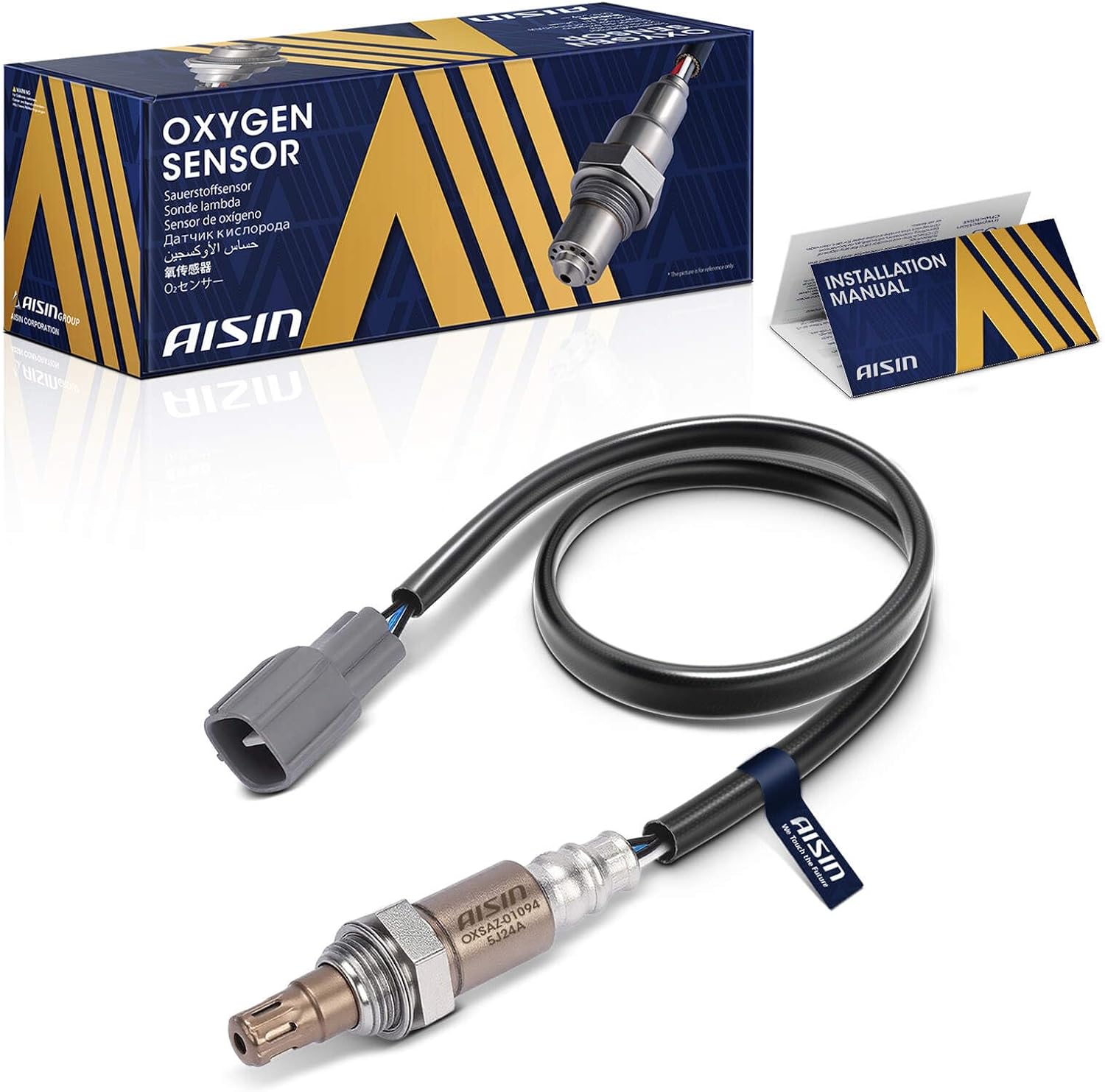
AISIN Upstream Wideband Oxygen (O2) Sensor OXSAZ-01094
| Position | Upstream |
|---|---|
| Sensor Type | Wideband |
| Thread Size | M18 |
| Terminal Quantity | 4 |
This Aisin upstream wideband O2 sensor is designed as a plug-and-play replacement for the listed Toyota and Lexus applications, supplying the engine computer with accurate air-fuel data. It installs in the upstream position and uses a four-pin square connector and M18 thread for a straightforward swap without splicing. As a wideband unit it delivers finer feedback than a narrowband sensor, which helps the ECU and aftermarket tuners hold tighter fuel trims and supports performance tuning or diagnostics. The sensor is made by a major OEM supplier and includes an installation manual to simplify fitment. Limitations are conventional for aftermarket sensors: you must verify exact engine and year fitment before ordering, and advanced users may want to compare response time specifications from multiple brands when chasing the fastest sensor for aggressive tuning. For most performance-minded Camry owners this unit offers a reliable, factory-quality upstream sensing option that integrates cleanly with stock or mildly modified engines.
Best for: Drivers who want a reliable, factory-compatible upstream sensor to support performance tuning or tighter fuel control without extensive wiring changes.
Less Ideal for: If you need a sensor for heavy custom engine builds with nonstandard controllers or if you require documented bench-test performance data, consider purpose-built performance sensors instead.
- Direct-replacement plug-and-play design for listed Toyota and Lexus models
- Wideband sensing provides more precise air-fuel feedback than narrowband units
- Factory-quality manufacturing from a major supplier supports long-term reliability
- Includes installation manual and uses common M18 thread and four-pin connector for easy install
- No published response-time or accuracy curve in the listing for direct performance comparison
Verdict: Aisin's upstream wideband O2 sensor delivers factory-fit, wideband feedback ideal for performance-oriented Toyota Camry tuning and tighter fuel control.
SYKRSS Oxygen O2 Sensor 234-9041 Upstream Replacement

| Measurement Accuracy | ±1.5% |
|---|---|
| Mounting Type | Exhaust Mount |
| Output Type | Push-Pull |
| Upper Temperature Rating | 1000 Degrees Celsius |
| Material Type | Stainless Steel |
This SYKRSS upstream oxygen sensor is a direct-style replacement meant to read exhaust oxygen and feed that data to the engine control system to improve fuel mixture and emissions. It is used in the exhaust pipe ahead of the catalytic converter to restore proper fuel trims and clear related diagnostic codes. Notable features include a stainless steel body, high temperature resistance (rated to 1000 C), push-pull output and advertised measurement accuracy of ±1.5 percent. In practice the part fits common Toyota Camry and RAV4 upstream locations and several Lexus and Scion applications, and many buyers report it clears lean and sensor-related codes when wiring and connector length match. The sensor is a budget aftermarket option so quality varies across units: several customers report easy installation and good fit while a small number reported early failures or different heater wire resistance compared with OEM. Installation can require cutting or modifying heat shields and the correct O2 socket for access. If you need a cost-effective upstream sensor that often resolves fueling codes and improves drivability, this SYKRSS unit is a practical choice but expect occasional variability versus factory-brand sensors.
Best for: Buyers who prioritize a practical, budget-conscious replacement to restore proper fuel trims and clear sensor-related codes on older Toyota Camry and similar vehicles. Ideal for owners who are comfortable verifying fitment and performing basic exhaust-area installation tasks.
Less Ideal for: Drivers who demand guaranteed factory-brand longevity or who cannot tolerate any risk of early failure should consider higher-end branded sensors or professional-sourced replacements.
- Stainless steel construction and high temperature rating for durability in exhaust environments
- Advertised ±1.5% measurement accuracy for reliable oxygen readings
- Designed as upstream replacement for many Toyota, Lexus and Scion engine applications
- Push-pull output and standard exhaust mounting make it straightforward to install where access allows
- Quality control appears inconsistent with a minority of units failing early
- Connector length and heater wire characteristics can differ from factory parts requiring verification before installation
Verdict: A cost-effective upstream oxygen sensor that often clears lean codes and restores fuel control on Toyota Camry applications when fitment is confirmed.
JOYOMSTW Upstream Oxygen Sensor (Replace 234-9041)

| Mounting Type | Flange Mount |
|---|---|
| Output Type | electrical signal |
| Upper Temperature Rating | 650 Degrees Celsius |
| Material Type | Ceramic, Stainless Steel |
This JOYOMSTW upstream oxygen sensor is a direct-replacement style sensor intended to restore proper air-fuel feedback to the engine control system. It installs in the upstream bank and includes an integrated heater to reach operating temperature faster, which helps the vehicle’s fuel trim stabilize sooner after cold starts. Typical use is in routine repair or when a failed O2 sensor triggers a check-engine code; installation follows standard sensor swap steps and requires matching the connector and thread to the original part. The sensor is built from ceramic and stainless steel and claims high measurement accuracy and an upper temperature rating of 650 C, which speaks to durability in the exhaust environment. Practical benefits are improved fuel economy and smoother idle compared with a degraded sensor, plus a low-power heater to limit load on the circuit. Limitations are that fitment must be confirmed against the vehicle connector and part numbers before purchase and the listing does not include extensive testing or a manufacturer warranty, so buyers should be prepared to verify compatibility and performance after install.
Best for: Buyers who need an affordable upstream O2 sensor replacement to restore drivability and reduce fuel waste without paying for a premium branded unit.
Less Ideal for: Users seeking a sensor with validated OEM-level warranty, brand-backed testing, or guaranteed multi-year coverage should consider higher-end or dealer-sourced options.
- Integrated heater for faster warm-up and improved emissions control early after start
- Stainless steel and ceramic construction rated to 650 C for exhaust-side durability
- Designed as a direct-replacement for specified Toyota and Lexus upstream positions
- Low power consumption reduces electrical load while maintaining heater function
- Compatibility depends on matching the connector and part number so it may not fit all vehicle variants
Verdict: A budget-friendly upstream oxygen sensor replacement that restores air-fuel sensing with a built-in heater for quicker warm-up.
Denso Oxygen (O2) Sensor 234-4622 (Replacement)

| Material | Stainless Steel, Zirconium |
|---|---|
| Mounting Type | threaded |
| Maximum Supply Voltage | 12 Volts (DC) |
| Measurement Accuracy | ±1% |
This Denso 234-4622 is a direct-fit narrow-band oxygen sensor built to replace a failing upstream sensor on compatible Toyota Camry and similar vehicles. It installs in the exhaust and feeds the engine computer real-time oxygen readings to restore correct air-fuel control and clear emissions codes. Notable features include a zirconia sensing element for fast response, a threaded stainless-steel body for corrosion resistance, and a four-wire harness with a factory-style connector for plug-and-play replacement. In practice it delivers the expected result: check-engine lights tied to a bad O2 sensor go away, idle and fuel economy normalize, and the sensor matches the original in appearance and wiring. Installation can be tight and may require an O2 sensor socket, penetrating oil, and some patience to release a seized old sensor. A few buyers reported occasional defective units, so expect the occasional DOA item, but most owners find this sensor reliable and long-lasting when installed correctly.
Best for: Buyers who prioritize a reliable, factory-quality upstream sensor replacement to clear emissions codes and restore proper engine operation with minimal diagnostic guesswork.
Less Ideal for: Drivers looking for a universal or adjustable sensor for custom exhausts or nonstandard engine management setups should consider other options tailored to modified vehicles.
- Direct-fit replacement matching factory connector and wiring for straightforward swap
- Zirconia sensing element and PTFE filter to improve response and resist contamination
- Corrosion-resistant stainless steel body suited for exhaust mounting
- Removal from a rusted or tight exhaust pipe can be difficult and may require specialty tools or assistance
- Occasional reports of defective units mean you may need to test or return a small percentage of sensors
Verdict: Choose the Denso 234-4622 when you need a dependable, factory-quality upstream oxygen sensor replacement to restore correct fuel control and eliminate emissions codes.
Denso 234-9009 Air/Fuel Ratio Sensor

| Brand | Denso |
|---|---|
| Part Number | 234-9009 |
| Material | Stainless Steel, Zirconium |
| Voltage | 12 Volts |
| Included Components | Air/Fuel Ratio Sensor |
The Denso 234-9009 is a direct-replacement air/fuel ratio sensor intended for upstream installation on compatible Toyota Camry V6 engines. It measures wide-band AFR values and sends precise signals to the engine control unit to help the ECU maintain optimal fuel mixture, which can clear lean/rich codes and improve drivability and fuel economy. Notable features include a planar zirconia sensing element for fast response, tarnish-proof platinum electrodes for longer life, a stainless-steel, water-resistant housing, and a PTFE filter to keep contaminants out. In practice this sensor is used where the factory-installed AFR sensor has failed or triggered check-engine codes; installation is typically bolt-in with the factory connector and may require an O2 sensor socket and basic hand tools. Limitations: it is a specific part for certain model years and Camry engine configurations so confirm fitment before ordering, and older seized sensors can be difficult to remove without penetrating oil or the proper removal tool. For buyers prioritizing reliable, factory-quality replacements, this Denso unit is built to match the original sensing characteristics.
Best for: Buyers who want a proven, factory-quality replacement to reliably clear upstream fuel-sensing faults and restore proper engine management on a Camry rather than gamble on cheaper alternatives.
Less Ideal for: Drivers seeking a universal sensor for multiple vehicle makes or someone who needs a downstream/catalyst-side sensor instead of an upstream air/fuel ratio sensor.
- Wide-band zirconia sensing element provides fast, accurate AFR readings for improved ECU control
- Tarnish-proof platinum electrodes increase durability and maintain measurement accuracy
- Stainless-steel, watertight housing resists corrosion and contamination
- Porous PTFE filter prevents water and particulates from reaching the sensing element
- Designed for specific Camry model years and engine configurations so it is not universally compatible
Verdict: Choose the Denso 234-9009 when you want a dependable, factory-quality upstream air/fuel sensor that restores proper fuel control on compatible Toyota Camry engines.
QIYBONE Oxygen O2 Sensors (Upstream and Downstream) — 2-Pack

| Mounting Type | Plug Mount |
|---|---|
| Output Type | electrical signal |
| Specific Uses For Product | automotive, vehicle emission monitoring |
| Material Type | Stainless Steel |
These QIYBONE oxygen sensors replace the upstream and downstream O2 sensors and are intended to restore accurate air-fuel monitoring on affected Toyota 2.4L engines. They are made from stainless steel and high temperature resistant materials and come as a plug-and-play pair that matches the factory connector for a straightforward swap. In use the sensors provide the fast voltage response needed for the engine computer to adjust fuel trim and can clear related fault codes and improve fuel efficiency when the original sensors fail. Practical benefits include receiving two sensors at once for front and rear positions, anti-seize on the threads to simplify future removal, and a design meant to match factory fit for quick installation without modifications. Limitations are that these are vehicle-specific fitment for the listed Camry and RAV4 2.4L applications only and long-term durability beyond initial reports is still dependent on driving conditions and exhaust system health.
Best for: Buyers who prioritize a reliable, straightforward replacement that restores proper engine fuel control and clears fault codes without fuss. Ideal for owners who prefer a low-risk, factory-style swap and want both upstream and downstream sensors together.
Less Ideal for: Drivers looking for a universal sensor or coverage for multiple engine types should look at other options; this pair is limited to the specified 2.4L Camry and RAV4 fitment and is not a multi-vehicle solution.
- Sold as an upstream and downstream pair so both positions are covered
- Stainless steel construction and high-temperature materials for durability in the exhaust stream
- Plug-and-play design with factory-style connector for simple installation
- Includes anti-seize on threads to ease future removal and reduce risk of galling
- Fitment is limited to specific 2.4L Toyota Camry and RAV4 model years so verification is required before purchase
Verdict: A practical two-piece, factory-style replacement that restores proper O2 sensing for the specified Toyota 2.4L engines, making it an easy low-risk fix.
Choosing the Right Toyota Camry Upstream Oxygen Sensor: Key Factors to Consider
Fitment and Connector Type
Correct fitment is the first and simplest requirement. The upstream oxygen sensor must match the Camry's thread pitch, mounting depth, and the OEM-style connector to avoid wiring splices or adapter harnesses. An incorrectly seated sensor or mismatched thread can cause exhaust leaks or false readings.
Also consider wiring length and routing. A plug that is too short may pull on the harness and stress the connector, while an overly long lead can be exposed to heat or chafe points. Proper mechanical fit minimizes installation time and reduces the chance of premature failure caused by vibration or heat-induced wire damage.
Sensor Response Time and Signal Stability
How quickly the sensor changes output when oxygen levels shift affects fuel trim adjustments. The ECM relies on rapid, repeatable signals from the upstream sensor to switch fuel maps, control injector pulse width, and maintain steady idle. Slower sensors can drive the engine to run rich or lean until the ECM adapts, creating drivability complaints and increased emissions.
Signal stability across temperature ranges is also important. A sensor that fluctuates or drops out during warm-up can trigger intermittent codes and make accurate calibration difficult. Prioritizing sensors with documented response characteristics helps retain original drivability and emissions performance.
Heater Circuit Reliability
Upstream sensors typically include an internal heater to bring the sensing element to operating temperature quickly. A reliable heater reduces cold-start enrichment and shortens the time the engine runs in open-loop mode. If the heater fails, the sensor remains slow until the exhaust warms enough, increasing fuel consumption and emissions.
Examine the sensor's stated heater specifications and design features that protect the circuit from heat soak and vibration. Sensors with reinforced heater leads and secure connectors reduce the likelihood of heater circuit failure and subsequent diagnostic trouble codes.
Durability and Corrosion Resistance
The upstream location faces high exhaust temperatures and exposure to moisture and road salts. Materials and coatings that resist corrosion and thermal cycling extend service life. A sensor that resists thread galling and electrode fouling will maintain consistent readings longer.
Cold climates and frequent short trips accelerate exposure-related wear. Choosing a sensor built with robust materials and protective features helps avoid early replacement and reduces the chance of intermittent faults that complicate diagnostics.
Diagnostic Compatibility and OBD-II Reporting
The upstream oxygen sensor plays a direct role in the Camry's closed-loop control and emissions monitoring. Ensure the replacement provides the expected voltage or current characteristics the ECM expects for bank 1 sensor 1 so on-board diagnostics interpret the signal correctly. Mismatched output behavior can cause persistent fault codes or prevent readiness monitors from completing.
Also consider whether the sensor reliably supports cold-start enrichment diagnostics and heater circuit checks. Sensors designed with consistent diagnostic signatures make it easier to clear codes and confirm repairs.
Installation Ease and Serviceability
Practical installation factors affect whether you can replace the sensor yourself or need a shop visit. Consider thread anti-seize preapplied or the need to use assembly lubricant, the accessibility of the upstream mounting point on the Camry, and whether additional exhaust disassembly is required. Some sensors include extended leads or angled connectors that simplify replacement in tight spaces.
Serviceability also includes the ability to test the sensor in the car. Sensors that allow straightforward bench or live testing reduce diagnostic time and help confirm whether a new sensor resolves the issue.
Why Upstream Sensors Matter On The Camry
The upstream oxygen sensor, often referred to as bank 1 sensor 1 on the Camry, provides the primary air-fuel feedback the engine control module uses to control injection timing and mixture. Because it is located before the catalytic converter, its readings directly influence fuel trim and closed-loop operation.
A healthy upstream sensor helps maintain steady idle, responsive throttle behavior, and efficient combustion. Failure or slow response here commonly triggers a check engine light with an oxygen sensor-related code and can lead to increased fuel use and higher emissions.
- Directly influences fuel trim and injector control
- Affects cold-start and warm-up behavior via the heater circuit
- Most likely sensor to trigger initial OBD-II oxygen sensor codes
Common Symptoms Of A Failing Upstream Sensor
Recognizing symptoms helps you decide whether a sensor replacement is needed. Typical signs on the Camry include a persistent check engine light, rough idle, reduced fuel economy, or hesitation on acceleration. Sometimes symptoms are subtle, like slightly higher fuel consumption that develops over time.
Be aware that other issues can mimic sensor failure. Exhaust leaks, vacuum leaks, or fueling problems can produce similar drivability complaints, so combine symptom recognition with targeted testing before replacing parts.
- Rough or unstable idle
- Sudden drops in fuel economy
- Intermittent or constant check engine light
Testing The Upstream Oxygen Sensor
Before replacing the upstream sensor, perform a few tests to confirm failure. A quick live-data scan of bank 1 sensor 1 voltage or current behavior will show whether the sensor oscillates appropriately when the engine is at operating temperature. Watch for slow transitions, a stuck high or low reading, or heater circuit fault codes.
You can also check the heater circuit resistance and verify supply voltage to the heater. A functional heater should warm the sensor element quickly after a cold start. If you decide to test with a multimeter or scan tool, follow safe procedures and consult vehicle-specific wiring diagrams.
- Monitor live data for rapid voltage switching once warm
- Check heater circuit voltage and resistance
- Rule out exhaust or vacuum leaks before replacing the sensor
Installation Tips For Toyota Camry Owners
Plan for safe access to the upstream sensor location. Depending on the Camry model year and engine configuration, the sensor may be on the exhaust manifold or close to heat shields. Let the engine cool before working on the exhaust and use penetrating lubricant on the sensor threads if the vehicle has high mileage.
Use the correct torque on the replacement sensor to avoid thread damage and consider applying anti-seize only where recommended. Route the wiring away from hot exhaust components and check for proper connector seating. After install, clear codes and perform a short drive cycle to confirm that the ECM reaches ready state and that fuel trims normalize.
- Allow exhaust to cool and use penetrating oil if needed
- Avoid over-tightening; use proper torque
- Route harness away from heat and secure the connector
When To Replace Vs. When To Diagnose Further
If a diagnostic scan shows bank 1 sensor 1 stuck at high or low voltage and heater circuit failure, replacement is often appropriate. However, intermittent codes or marginal sensor performance may indicate upstream exhaust leaks or transient wiring faults. In those cases, address leaks and wiring before replacing the sensor.
If you find multiple unrelated codes or unusual live-data behavior, invest time in targeted diagnostics. Replacing the sensor before ruling out other causes can lead to repeat trips and unnecessary expense.
- Replace when sensor outputs are out of expected range and heater is failed
- Diagnose further when codes are intermittent or multiple systems show faults
- Fix leaks and wiring issues before fitting a new sensor
Still looking for the perfect fit?
Select your Toyota Camry configuration to see the most relevant Oxygen Sensors recommendations
How We Chose the Best Toyota Camry Upstream Oxygen Sensor
We selected sensors based on criteria that directly affect engine management and long-term reliability for the Toyota Camry. First, fitment accuracy was required to match factory connector type, thread size, and wiring length so the sensor mounts and plugs in without modification. Second, sensor response time and signal stability were prioritized because a sluggish sensor causes poor fuel trim and drivability issues. Third, durability factors such as heater circuit reliability and corrosion-resistant materials were considered since upstream locations face high heat and exhaust exposure. Fourth, emission performance was evaluated by considering sensors designed to produce steady, accurate voltage or current signals across operating temperatures. Fifth, compatibility with on-board diagnostics was confirmed to ensure proper OBD-II reporting and to reduce false codes. Finally, ease of installation and serviceability—access to the sensor, harness routing, and whether a special adapter is needed—was taken into account.We excluded units that required irreversible vehicle modifications, non-OEM connector conversions, or lacked basic heater circuit specifications. The final shortlist reflects sensors that meet practical fitment requirements, deliver timely response for fuel control, and are built to tolerate the thermal and chemical environment found on the Camry's exhaust manifold and header pipes.
Our full evaluation process is outlined in our review methodology.
FAQ
How do I know if my Camry's upstream oxygen sensor is failing?
Often you will see a check engine light with an oxygen-related code, rough idle, reduced fuel economy, or hesitation. Confirm with live-data scanning to see whether bank 1 sensor 1 output is sluggish, stuck, or showing heater faults before replacing the sensor.
Can I install an upstream oxygen sensor myself on a Camry?
Many owners can perform the task with basic hand tools and safety precautions. Ensure the exhaust is cool, use proper torque, and route the harness away from heat. If access is tight or you are uncomfortable with diagnostics, a professional install is reasonable.
Should I clear codes immediately after replacing the sensor?
Yes, clear stored codes and perform a drive cycle so the ECM can re-evaluate fuel trims and readiness monitors. If the issue persists, live-data checks will help determine if the replacement resolved the problem.
What does bank 1 sensor 1 mean on my Camry?
Bank 1 sensor 1 refers to the upstream oxygen sensor located before the catalytic converter on the side of the engine containing cylinder one. It is the primary sensor the ECM uses for air-fuel control and emissions monitoring.
Will a bad upstream sensor cause catalytic converter damage?
A long-term rich condition caused by a faulty upstream sensor can accelerate catalyst wear due to excess fuel entering the converter. Address persistent fuel trim problems promptly to avoid potential downstream damage.
How do I test the heater circuit on the upstream sensor?
Test the heater by checking for supply voltage at the sensor connector with the ignition on and by measuring heater resistance against specifications. A lack of supply or open circuit indicates a heater or wiring issue that needs repair before sensor replacement.
Final Verdict
Prioritize correct fitment, fast sensor response, and a reliable heater circuit when selecting an upstream oxygen sensor for your Toyota Camry. Addressing exhaust leaks, wiring faults, and accurate testing before replacing parts reduces repeat failures and ensures the ECM regains proper fuel control. For most owners, focusing on sensors that match OEM fitment and offer documented response stability will restore fuel trim and lower emissions with minimal fuss.Weigh the tradeoffs between ease of installation and long-term durability. When in doubt about intermittent codes or unusual live-data behavior, perform targeted diagnostics first. A well-chosen upstream sensor, properly installed, will return the Camry to normal drivability and emissions performance.
Explore More:
- Check out all Toyota Camry parts & accessories
- Explore Oxygen Sensors Maintenance & Repair Guides
- Explore Engine
- Browse all Auto Parts
