

Note: This article contains affiliate links. If you click on these links and make a purchase, I may earn a small commission at no extra cost to you. This helps support my research and content. Read my full affiliate disclosure here.
If your Ford Explorer is showing alignment drift, uneven tire wear, or clunking at the rear suspension, the rear lower control arm is a common culprit. Choosing the right rear lower control arm matters because it directly affects steering stability, ride comfort, and suspension geometry. This guide shortlists the top rear lower control arms vetted for fit, bushing quality, and durability so you can make a confident replacement.Below we cover the factors that separate dependable options from short-lived parts and explain the evaluation criteria used to create the shortlist.
Looking for other parts? See all Ford Explorer parts & accessories.
Top Picks at a Glance
| Best Overall The best all-around choice for most situations | TRQ Rear Suspension Kit with Rear Lower Control Arms and Sway Bar Links |  |
| Best Quality Built to a higher standard if you want something more solid | TRQ Rear Lower Rearward Control Arm Set, Driver & Passenger Side (2-Piece) |  |
| Best Value The sweet spot between price and what you get | A-Premium Rear Lower Control Arm with Bushing, Rear Lower |  |
| Best Budget The cheapest option that still gets the job done reliably | MOOG RK642853 Rear Lower Forward Control Arm |  |
| Highest Rated A top-rated pick with lots of positive feedback | MOOG RK643093 Rear Lower Control Arm |  |
| Most Popular A crowd favorite that many people choose with confidence | Detroit Axle Rear Lower Forward Control Arms (pair) |  |
1. TRQ Rear Suspension Kit with Rear Lower Control Arms and Sway Bar Links

| Included Components | 2 Rear Lower Rearward Control Arms, 2 Rear Sway Bar Links |
|---|---|
| Fit Type | Vehicle Specific Fit |
| Auto Part Position | Rear |
| Pre-greased | Yes |
This TRQ rear suspension kit supplies two rear lower rearward control arms plus two rear sway bar links as a direct-fit replacement for affected Ford Explorer rear suspension components. Designed as application-specific parts, the components come pre-greased and feature an anti-corrosion coating to simplify installation and extend surface life. Typical use is to replace worn bushings and links that cause sloppy handling, uneven tire wear, or clunking over bumps. The included sway bar links help reestablish proper anti-roll performance while the control arms restore alignment geometry. Practical benefits include reduced install time from pre-assembled parts, improved road feel after replacement, and access to TRQ video instructions for DIY fitment. Limitations are that this is a kitted mechanical replacement rather than an adjustable performance arm, so alignment and any wheel adjustment still require a shop or alignment machine after installation. Fitment should be verified against the vehicle-specific compatibility chart before purchase.
Best for: Buyers who want a straightforward, do-it-yourself compatible replacement to restore factory handling and road feel on their Explorer without modifying suspension geometry.
Less Ideal for: Drivers seeking adjustable performance arms, ride-height changes, or motorsport upgrades should look at performance-oriented suspension parts instead.
- Kitted set includes both lower rear control arms and rear sway bar links for a complete rear suspension refresh
- Pre-greased and application-specific design reduces installation time and avoids modifications
- Anti-corrosion coating improves long-term surface durability
- Manufacturer provides step-by-step DIY videos to guide installation
- Not an adjustable or performance-oriented arm so it will not change alignment specs or lower the vehicle
Verdict: Choose this TRQ kit when you need a complete, direct-fit rear lower control arm and sway bar link replacement to quickly restore factory handling on a Ford Explorer.
2. TRQ Rear Lower Rearward Control Arm Set, Driver & Passenger Side (2-Piece)

| Quantity | 2 Piece |
|---|---|
| Manufacturer Part Number | PSA53048 |
| Fit Type | Vehicle Specific Fit |
| Auto Part Position | Rear Lower |
This TRQ two-piece rear lower rearward control arm set replaces the driver and passenger rear lower arms on compatible Ford and Lincoln models. It is sold as a matched pair and intended for direct-fit replacement, so installation is typical for a DIYer or shop replacing worn or damaged rear suspension arms. Notable features include vehicle-specific fitment, pre-assembled components to help speed installation, and TRQ's library of installation videos for guidance. In practice the arms restore rear suspension geometry, which helps steering stability, reduces uneven tire wear, and improves ride quality compared with worn stock arms. The set lists OEM equivalent part numbers for easier cross-referencing and includes both sides to ensure balanced handling after replacement. Limitations are that fitment is limited to the listed Ford and Lincoln models and years, and buyers should confirm exact vehicle compatibility before ordering; the product comes unfinished so buyers wanting a painted or corrosion-resistant finish may need to apply protective coating separately.
Best for: Buyers looking to restore rear suspension feel and alignment on supported Ford or Lincoln models who prioritize a direct-fit, performance-conscious replacement that improves stability and tire wear.
Less Ideal for: Drivers who need a corrosion-resistant or factory-finished part out of the box or those with vehicles outside the listed model years and fitment should consider other options.
- Matched two-piece set replaces both driver and passenger rear lower rearward arms for balanced handling
- Vehicle-specific direct-fit design reduces need for modifications during installation
- Pre-assembled components and extensive installation videos simplify DIY replacement
- Includes OEM equivalent part numbers for straightforward cross-referencing
- Sold unfinished so additional corrosion protection or painting may be required
Verdict: A matched, vehicle-specific rear lower control arm pair that restores rear suspension stability and handling for supported Ford and Lincoln models.
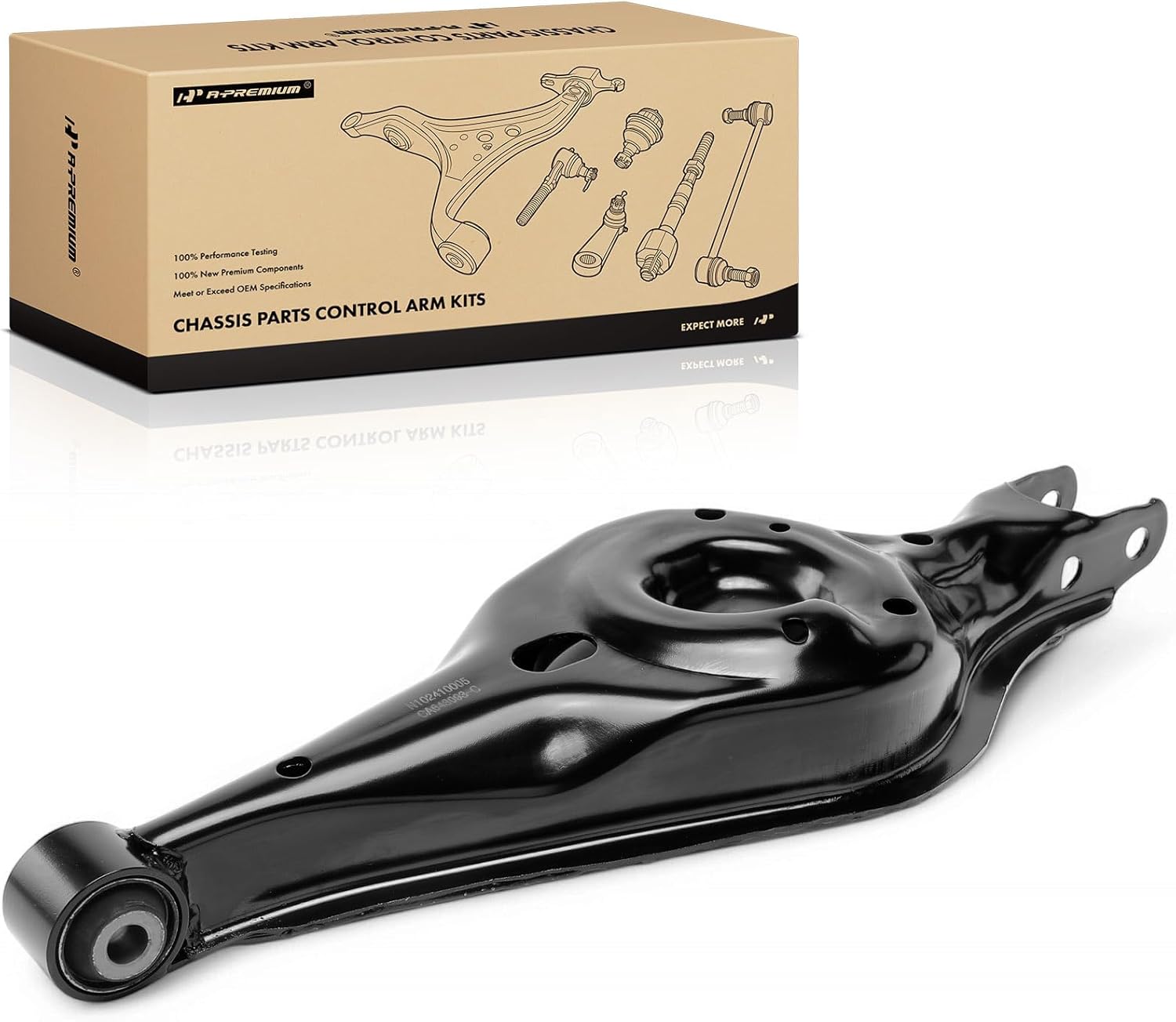
3. A-Premium Rear Lower Control Arm with Bushing, Rear Lower
| Position | Rear Lower |
|---|---|
| Material | Steel |
| Control Arm Bushing Included | Yes |
| Ball Joint Included | No |
| Exterior | Corrosion-Resistant Coating |
This rear lower control arm from A-Premium is a steel replacement part intended to restore rear suspension geometry and reduce common symptoms of worn arms such as clunking, steering wander, uneven tire wear, and vibration. It installs in the rear lower forward position on compatible Ford Explorer, Taurus, Flex, Police Interceptor and Lincoln MKS/MKT models and includes a pressed-in bushing but not a ball joint. The corrosion-resistant coating helps the arm resist rust in regular road conditions and the part ships ready to install aside from any vehicle-specific alignment or additional hardware. Expect a straightforward swap when matching the listed reference numbers, but note it is not pre-greased and does not include a ball joint so some vehicles or installers may need extra parts or lubrication. For routine repairs and restoring factory handling this arm gives a practical, budget-focused option with the basic features you need to get the rear suspension back to normal.
Best for: Buyers who want a no-frills, cost-conscious replacement to restore rear suspension function on specified Ford or Lincoln vehicles and who plan to have the part installed by a mechanic or perform a DIY swap with basic tools.
Less Ideal for: Drivers seeking a fully assembled, maintenance-free control arm or performance-tuned suspension upgrades should look for options that include ball joints, lubrication, or upgraded components.
- Direct-fit replacement for specified Ford and Lincoln rear lower positions
- Includes pressed-in control arm bushing for quicker installation
- Steel construction with corrosion-resistant coating for durability
- Addresses common suspension symptoms like clunking and uneven tire wear
- Ball joint is not included so additional parts may be required
- Part is not pre-greased which may require lubricant during installation
Verdict: A practical, factory-style rear lower control arm replacement for restoring rear suspension function on the listed Ford and Lincoln models.
4. MOOG RK642853 Rear Lower Forward Control Arm

| Fit Type | Vehicle Specific Fit |
|---|---|
| Auto Part Position | Rear |
| Material Type | Alloy Steel |
| Unit Count | 1.0 Count |
This MOOG RK642853 rear lower forward control arm is a direct-fit replacement designed to restore suspension geometry and steering response on specified Ford Explorer, Mercury Mountaineer, and Explorer Sport Trac model years. Built from alloy steel with enhanced structural strength and corrosion-resistant coatings, it aims to handle road impacts and repetitive loads while resisting corrosion at mounting studs. Typical use is a one-to-one replacement when a worn arm causes uneven tire wear, steering play, or noise under the vehicle. The package includes a single control arm intended for the rear lower forward position and is engineered for straightforward installation without custom modification. Practical benefits are improved stability, more predictable handling, and extended service life compared with cheaper, uncoated alternatives. Limitations include that fitment is vehicle-specific so you must confirm exact model years and position before buying, and installation may require wheel alignment and basic suspension tools if replacing at home.
Best for: Buyers who need a budget-conscious, durable factory-quality replacement to restore handling and tire wear on specified rear lower suspension of their vehicle and prefer a direct-fit part for straightforward installation.
Less Ideal for: Shoppers looking for multi-vehicle universal parts or those wanting a complete paired kit including both sides and hardware should consider other options.
- Direct-fit design for easier replacement on covered Ford Explorer/Mountaineer/Sport Trac models
- Alloy steel construction with heat-treated strength for durability under load
- Corrosion-resistant coatings on studs to help extend service life
- Engineered to restore steering response and suspension geometry after wear
- Vehicle-specific fit requires verifying exact year and position before purchase
- Sold as a single arm so buyers replacing both sides must order two units
Verdict: A cost-effective, factory-quality rear lower forward control arm that restores handling and durability for the supported Ford Explorer family models.
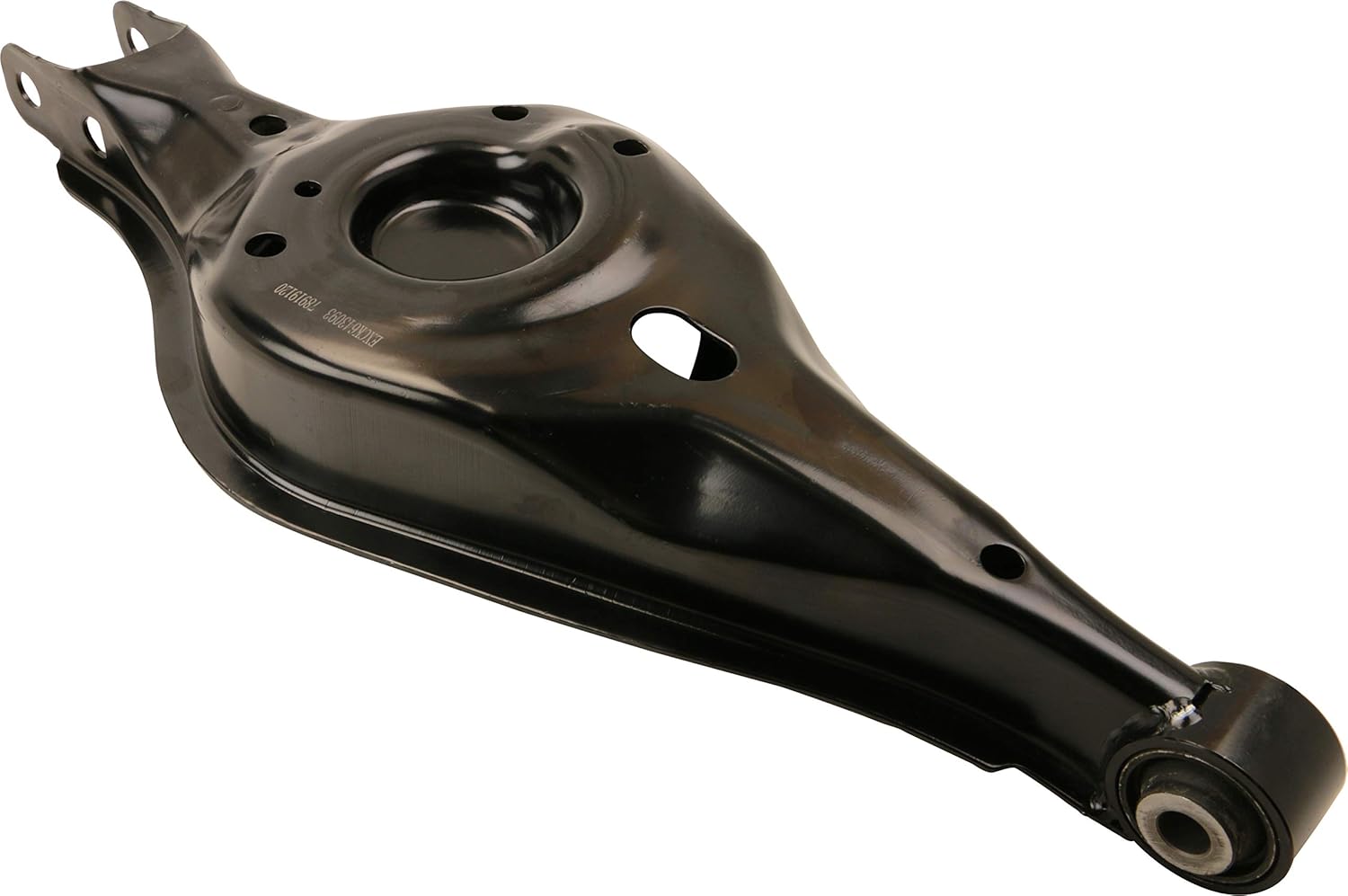
5. MOOG RK643093 Rear Lower Control Arm
| Material Type | Alloy Steel |
|---|---|
| Auto Part Position | Rear |
| Fit Type | Vehicle Specific Fit |
| Included Components | Control Arm |
The MOOG RK643093 rear lower control arm is a direct-fit replacement engineered to restore proper suspension geometry on affected rear assemblies. It is typically used when worn or damaged control arms cause pulling, uneven tire wear, loose steering feel, or noises from the rear suspension. MOOG highlights heat-treated structural components and corrosion-resistant coatings, which translate into stronger service life and less risk of premature corrosion in regions that use road salt. As a vehicle-specific fit, installation is straightforward for experienced DIYers or professional shops and returns factory-style handling and steering response. Limitations: this part is for rear lower mounting only and does not include additional hardware or bushings beyond the listed component, so check your vehicle for any ancillary parts that may need replacement during the job. For drivers prioritizing long-term reliability and a factory-like ride on compatible Ford Explorer rear suspensions, this control arm is a practical replacement option.
Best for: Buyers who prioritize a durable, factory-quality rear suspension repair and want a direct-fit replacement that restores handling on affected Explorers.
Less Ideal for: Drivers looking for a complete rear suspension overhaul with upgraded performance components or those who need a full hardware kit included.
- Vehicle-specific direct-fit design simplifies installation and maintains factory suspension geometry
- Heat-treated alloy steel construction for added structural strength under repetitive loads
- Corrosion-resistant coatings on studs and surfaces extend service life in harsh conditions
- Designed to restore steering response and reduce uneven inner tire wear when replacing a worn arm
- Sold as a single control arm and may require separate hardware or bushings during installation
Verdict: Choose this MOOG rear lower control arm when you want a durable, vehicle-specific replacement that restores factory handling and resists corrosion for long-term reliability.
6. Detroit Axle Rear Lower Forward Control Arms (pair)

| Fit Type | Vehicle Specific Fit |
|---|---|
| Auto Part Position | Rear Lower |
| Material Type | Alloy Steel |
| Unit Count | 2.0 Count |
| Manufacturer Warranty Description | 10-Year |
These Detroit Axle rear lower forward control arms replace the factory rear lower forward arms on compatible Ford Explorer, Mercury Mountaineer, and Explorer Sport Trac model years. Supplied as a two-piece kit, they mount in place of worn or damaged arms to restore suspension geometry and reduce wheel wander, uneven tire wear, and handling looseness. Made from alloy steel and marketed as vehicle-specific fit, the arms undergo impact and fatigue testing and come with a 10-year warranty for long-term peace of mind. In practical use they provide a direct-fit replacement that installs using existing mounting points and bushings, returning more predictable rear handling after a suspension refresh. Limitations include the unfinished surface that may require coating to resist corrosion and the listing does not include new bushings or ball joints so you should verify hardware needs before installation. Overall these arms are a solid factory-replacement style option for owners who want a durable, tested component to bring rear suspension performance back toward factory behavior.
Best for: Buyers who want a tested, direct-fit replacement to restore rear suspension control and who value long-term warranty coverage and social proof from other buyers.
Less Ideal for: If you need fully preassembled arms with new bushings and joints installed or require a corrosion-resistant finished surface out of the box, consider a different option or a professional rebuild.
- Sold as a matched pair for both rear lower forward positions
- Alloy steel construction for strength and durability
- Vehicle-specific fit to match factory mounting points
- Undergoes impact and fatigue testing and includes a 10-year warranty
- Unfinished surface may be prone to corrosion without protective coating
- Does not explicitly include replacement bushings or ball joints
Verdict: A durable, vehicle-specific pair of rear lower forward control arms that restore factory-style rear handling with long-term warranty backing.
Choosing the Right Ford Explorer Rear Lower Control Arm: Key Factors to Consider
Fitment and Mounting Accuracy
Correct fitment is the single most important factor because improper mounting points or wrong arm length will cause alignment issues and accelerate tire wear. Confirming that bolt patterns, bracket locations, and ball joint interfaces match the Ford Explorer specification prevents installation headaches and ensures factory geometry is maintained.
Even small dimensional differences can change toe and camber under load, so parts that specify direct fitment for the Explorer reduce the need for suspension adjustments after installation. For vehicles with optional equipment or different rear suspension setups, verify the part notes for trim-specific fitment.
Bushing Design and Material
Bushing quality determines how much road noise and vibration transfer into the cabin, and it influences how the suspension returns to alignment after impacts. Solid rubber bushings offer compliance and quiet operation, while polyurethane bushings are firmer and can improve steering feel but may transmit more road noise.
Consider the expected use of the vehicle: daily drivers typically benefit from resilient rubber bushings, while vehicles used for towing or heavier loads may benefit from firmer bushing compounds that resist deflection. Also review whether bushings are pressed in, replaceable, or serviceable to understand long-term maintenance options.
Construction and Corrosion Resistance
The arm itself must withstand bending and fatigue from repeated suspension loads. Look for robust construction such as reinforced stamped steel or well-designed cast components that distribute load without stress concentrations. Thicker gauge metal and proper weld quality reduce the chance of premature failure.
Because rear suspension components are exposed to road salt and debris, corrosion protection matters. Coatings, e-coating, or powder finishes extend service life and reduce the likelihood of seized fasteners during future repairs.
Ball Joint and Hardware Compatibility
Many rear lower control arms interface with ball joints and tie into the knuckle; compatibility with the existing ball joint or inclusion of a matched joint influences installation time and reliability. Confirm whether a control arm includes a pressed-in ball joint, a replaceable ball joint, or requires reuse of the factory joint.
Also verify included mounting hardware and torque specifications. Arms that include high-quality hardware and clear installation guidance reduce the chance of loose connections that cause noise or accelerate wear.
Durability Under Load and Usage
Consider how the Explorer is used. Frequent highway driving, towing, or carrying heavy loads increases the stress on rear suspension components. A control arm designed for higher load capacity and fatigue resistance will maintain alignment and handling longer under these conditions.
Look for parts with track records of longevity in similar use cases or those that cite testing for fatigue life. Pay attention to warranties or stated service life as an indicator of expected durability.
Installation and Adjustment Requirements
Some control arms allow for camber or toe adjustment while others are fixed. Adjustable arms can simplify alignment correction after installation, but they require careful setup. Fixed direct-fit arms are usually simpler to install and are preferable when they match factory geometry precisely.
Consider whether the arm requires a full wheel alignment after installation. While most rear control arm replacements do require alignment, parts that preserve factory settings minimize the scope of alignment work and associated labor.
Common Symptoms of a Worn Rear Lower Control Arm
Several driving cues point to a failing rear lower control arm on the Ford Explorer. Typical signs include clunking or popping noises from the rear suspension when driving over bumps or during direction changes, and vibration or looseness felt through the steering wheel or rear of the vehicle.
Uneven or accelerated tire wear along the inner or outer edges of the rear tires often indicates that the control arm is not holding the wheel in proper alignment. You may also notice the vehicle pulling to one side during straight-line driving, which signals geometry shift under load.
- Rear clunking or popping over bumps
- Uneven rear tire wear
- Pulling or drift during braking or straight-line driving
- Excessive rear suspension play when pushed by hand
How Bushing Choices Affect Ride and Noise
Bushing material and durometer directly affect how much vibration and noise reach the cabin. Softer rubber bushings absorb road impacts and reduce noise, giving a smoother ride at the expense of some compliance under heavy loads. Firmer polyurethane bushings resist deformation and help maintain alignment but can transmit more road noise.
When replacing bushings or choosing an arm with a different bushing type, account for expected driving conditions and your tolerance for NVH changes. If noise reduction is a priority, choose arms with resilient rubber bushings or integrated isolators designed to dampen vibration.
- Rubber: quiet, compliant, good for daily driving
- Polyurethane: firmer, better alignment retention, can increase NVH
- Replaceable bushings allow future tuning of ride quality
Installation Tips and Alignment Considerations
Replacing a rear lower control arm usually requires a wheel alignment afterward to correct camber and toe. Before installation, compare the new arm's mounting points and length to the factory arm and make sure all necessary hardware is on hand. If the new arm includes a ball joint, verify the joint matches the knuckle interface.
When tightening mounts, follow factory torque specs and consider rechecking after a short break-in period. If the arm offers adjustability, set it close to factory specifications before the first drive and complete a professional alignment to finalize settings.
- Compare mounting points and lengths pre-install
- Use factory torque specs and recheck after break-in
- Plan for a professional wheel alignment after replacement
When to Replace Bushings Versus the Whole Arm
If the arm structure itself is intact with no bends, cracks, or corrosion, replacing worn bushings can restore proper function and extend the arm's life. However, pressed-in or bonded bushings are sometimes difficult to service, and labor costs or the risk of damaging the arm during bushing removal may justify replacing the entire control arm assembly.
Assess the arm for corrosion, fatigue, or damaged ball joint interfaces before deciding. For vehicles with extensive mileage or arms showing metal wear or deformation, a full-arm replacement is often the more reliable long-term solution.
- Service bushings when arm structure is sound
- Replace whole arm if there is corrosion, bends, or joint wear
- Consider labor effort and tools required for bushing service
Maintaining Rear Suspension After Replacement
After installing a new rear lower control arm, monitor tire wear and steering behavior over the first few hundred miles. Check mounting hardware for proper torque and inspect bushings for unusual deformation. Keeping a maintenance log helps spot early problems and ensures any warranty conditions are met.
Regular underbody inspections for corrosion and fastener condition will extend service life. If you frequently travel on rough roads or in corrosive climates, consider corrosion-resistant components and periodic undercoating.
- Inspect torque and bushing condition after 100-300 miles
- Monitor rear tire wear patterns monthly
- Inspect for corrosion during routine maintenance
Still looking for the perfect fit?
Select your Ford Explorer configuration to see the most relevant Lower Control Arms recommendations
How We Chose the Best Ford Explorer Rear Lower Control Arm
We focused on criteria that matter for a rear lower control arm on the Ford Explorer and applied practical filters to narrow the field. First, fitment and correct mounting points were mandatory; any part without clear, vehicle-specific compatibility was excluded. We prioritized construction materials and manufacturing methods that influence long-term durability, such as stamped steel versus cast components and corrosion protection.Bushing design and material were a key evaluation axis because they affect NVH and alignment retention. We also considered load-bearing design and whether the control arm preserves correct suspension geometry under typical driving conditions. Installation practicality — including included hardware and compatibility with factory ball joints or recommended replacements — was assessed to reduce shop time and adjustment needs.We excluded parts that lack verifiable fitment documentation, have poor user feedback on durability, or require extensive vehicle modifications. The final list balances proven durability, bushing quality, and straightforward installation for common Explorer use cases.
Our full evaluation process is outlined in our review methodology.
FAQ
How do I know if my Ford Explorer needs a rear lower control arm replacement?
Common indicators include clunking or popping noises from the rear suspension, uneven rear tire wear, and a noticeable pull or drift when driving straight. A mechanic can check for excessive play at the arm bushings and ball joint to confirm the diagnosis.
Can I replace just the bushings instead of the entire rear lower control arm?
Sometimes yes. If the arm is structurally sound and bushings are serviceable or replaceable, swapping bushings can restore performance. However, pressed-in or bonded bushings may be difficult to service and could make full-arm replacement the more practical option.
Will replacing the rear lower control arm fix alignment problems on my Explorer?
Replacing a worn control arm can restore proper rear geometry, but a wheel alignment is usually required afterward to correct camber and toe. The new arm must match factory dimensions to minimize alignment adjustments.
How long does it take to replace a rear lower control arm on a Ford Explorer?
Labor time typically ranges from one to a few hours depending on whether the arm uses the existing ball joint or includes one, and whether seized hardware or corrosion complicates the job. Expect additional time for a post-installation alignment.
Do firmer bushings improve handling on the Ford Explorer?
Firmer bushings can reduce deflection and improve alignment retention under load, which may feel like sharper handling. They also tend to transmit more road noise and vibration, so there is a tradeoff between responsiveness and cabin comfort.
Are there warranty or durability indicators I should look for when choosing a rear lower control arm?
Look for clear statements about material and corrosion protection, stated fatigue testing, and reasonable warranty terms. Parts with documented testing or longer warranties often reflect higher confidence in durability.
Final Verdict
Prioritize correct fitment and bushing quality when choosing a rear lower control arm for your Ford Explorer. These two factors most strongly influence alignment retention, ride comfort, and long-term durability. Consider the vehicle's typical use—daily driving favors resilient bushings, while towing or heavy loads call for sturdier designs.Balance the benefits of replaceable components against the convenience of a direct-fit assembly. After installation, plan for a professional wheel alignment and a short monitoring period to confirm the suspension is performing as expected. With those steps you can restore handling and extend the life of rear suspension components.
Explore More:
- Check out all Ford Explorer parts & accessories
- Explore Lower Control Arms Maintenance & Repair Guides
- Explore Suspension & Steering
- Browse all Auto Parts
