

Note: This article contains affiliate links. If you click on these links and make a purchase, I may earn a small commission at no extra cost to you. This helps support my research and content. Read my full affiliate disclosure here.
If your 2011-2019 Ford Explorer is showing uneven tire wear, wandering steering, or clunks over bumps, the lower control arms are a likely suspect. Picking the right lower control arm matters because it affects alignment, ride quality, and long-term suspension wear. This guide shortlists seven top-rated options that fit the Explorer 2011 through 2019 window and walks through the tradeoffs between OE-style replacements and more durable aftermarket designs.We evaluate each pick for fitment accuracy, bushing quality, and build durability so you can choose an option that restores safe handling and reduces noise. Read on for the selection criteria and practical advice on installation and maintenance.
Looking for other parts? See all Ford Explorer parts & accessories.
Top Picks at a Glance
| Best Overall The best all-around choice for most situations | HHCM Front Lower Control Arm Kit with Ball Joints (K622215 K622216) |  |
| Best Quality Built to a higher standard if you want something more solid | Metrix Premium Chassis Parts Front Left & Right Lower Control Arm w/ Ball Joint Assembly Kit |  |
| Best Value The sweet spot between price and what you get | MOOG RK622216 Front Left Lower Control Arm with Pre-Installed Ball Joint |  |
| Best Budget The cheapest option that still gets the job done reliably | TadaMark Front Lower Control Arm with Ball Joint — Passenger Side |  |
| Highest Rated A top-rated pick with lots of positive feedback | Detroit Axle Front Lower Control Arms with Ball Joints (pair) |  |
| Most Popular A crowd favorite that many people choose with confidence | Detroit Axle Front Right Lower Control Arm with Ball Joint (Passenger Side) for 2011-2019 Ford Explorer |  |
| Best Seller A high-volume bestseller chosen again and again | Detroit Axle 4‑Piece Front Lower Control Arms Kit with Ball Joints and Sway Bar End Links |  |
1. HHCM Front Lower Control Arm Kit with Ball Joints (K622215 K622216)

| Fit Type | Vehicle Specific Fit |
|---|---|
| Auto Part Position | Front Lower |
| Unit Count | 2.0 Count |
| Exterior | Polished & Painted |
This HHCM kit supplies both front lower control arms with integrated ball joint assemblies intended as direct replacements for 2011–2019 Ford Explorer and 2013–2019 Police Interceptor Utility models. The arms are manufactured to automotive replacement standards from corrosion-resistant materials and arrive polished and painted, which helps resist environmental wear. Each arm includes a press-in ball joint preinstalled to reduce installation steps and speed alignment, and the seller notes precision tolerances for a close fit. In practice these will be used when a worn arm or failed ball joint is causing steering looseness, uneven tire wear, or front-end noise. The main practical benefits are getting both sides at once and the expectation of durability under routine driving conditions. Limitations are that the ball joints are press-in type rather than adjustable assemblies and professional installation or a shop press may be needed for removal and final fitment, so a DIYer without the right tools could need extra labor.
Best for: Buyers who want a complete, vehicle-specific front lower arm replacement that balances durability and straightforward fitment for routine driving and repair intervals.
Less Ideal for: People seeking adjustable aftermarket control arms for performance alignment adjustments or owners who prefer to reuse existing ball joints should consider other options.
- Sold as a matched pair including both left and right front lower control arms with ball joints
- Constructed with corrosion-resistant finish to improve longevity in road conditions
- Preinstalled press-in ball joints reduce parts-swapping and simplify replacement
- Manufactured to vehicle-specific fit for direct replacement on listed Ford models
- Ball joints are press-in type, which may require a press or professional installation for removal and fitment
Verdict: A practical matched-pair replacement that gives Explorer owners a durable, ready-to-install front lower control arm solution for routine repairs.
2. Metrix Premium Chassis Parts Front Left & Right Lower Control Arm w/ Ball Joint Assembly Kit
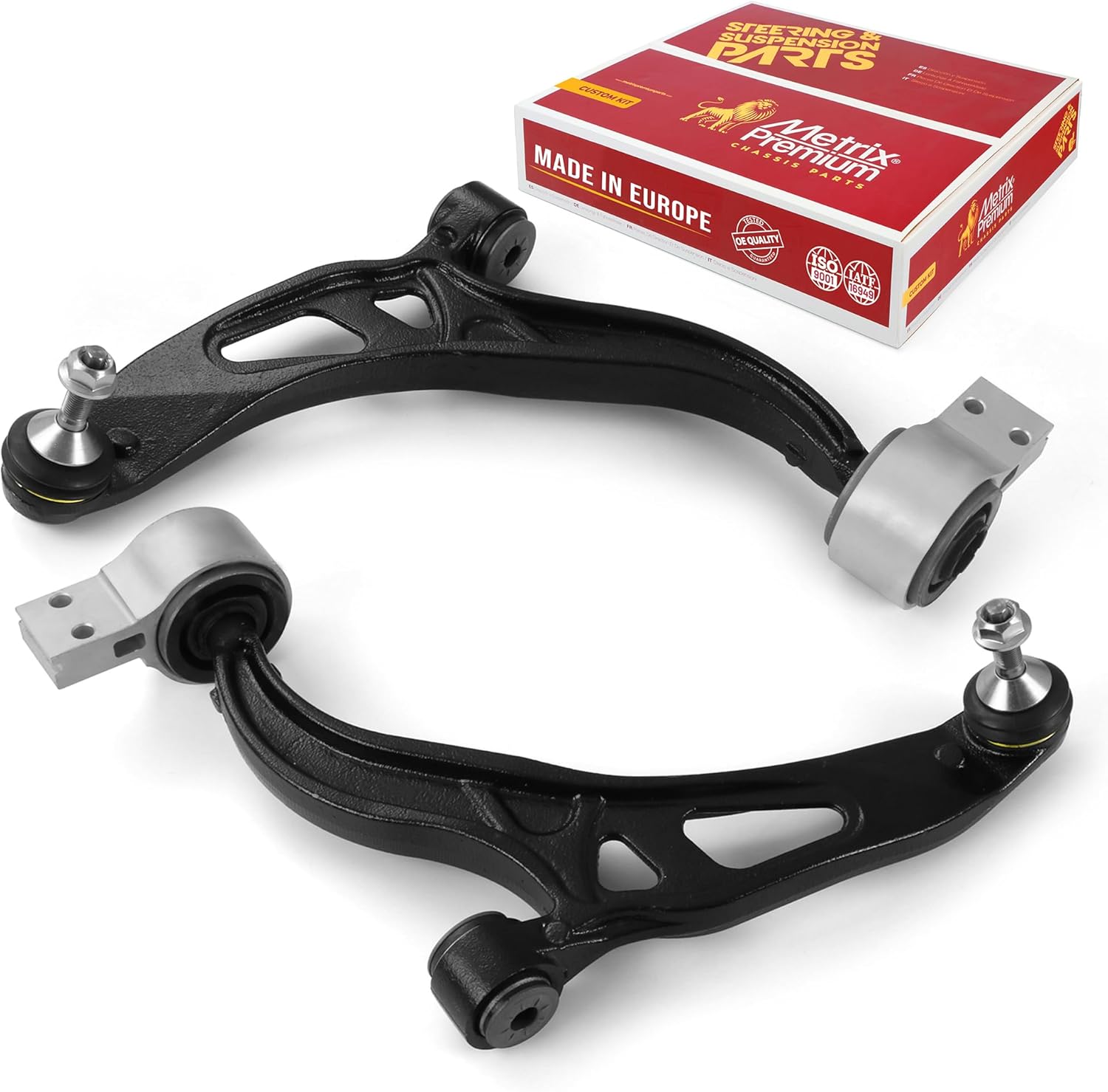
| Fit Type | Vehicle Specific Fit |
|---|---|
| Auto Part Position | Front Lower |
| Material Type | Cast Iron |
| Manufacturer Warranty Description | 3 Year / 36,000 miles Limited Warranty |
This Metrix kit replaces both front lower control arms and includes the integrated ball joint and bushings for the left and right sides of compatible Ford Explorer and Police Interceptor Utility models. Made from cast iron and supplied pre-greased, the assemblies are intended to be a direct vehicle-specific fit so installation is straightforward for a mechanic or experienced DIYer and wheel alignment is recommended afterward. Notable features include greasable joints for on-going maintenance, factory-style design claims backed by IATF 16949 and ISO 9001 certifications, and a 3 year/36,000 mile limited warranty. In real-world use the cast iron construction should provide durability and resistance to heat and road stress, while the greasable design helps preserve smooth articulation under heavier driving. The kit is focused on repair and restoring steering precision rather than lowering unsprung weight or performance tuning, so users seeking lighter aftermarket performance arms should look elsewhere. Expect improved handling and reduced play after replacement, with routine greasing extending service life.
Best for: Drivers who need a durable, direct-fit replacement to restore steering feel and front suspension stability after worn or damaged lower control arms and prioritize longevity and maintenanceability.
Less Ideal for: Buyers seeking lightweight performance upgrades or purposeful weight reduction for track use should consider aftermarket aluminum or performance-specific control arms instead.
- Vehicle-specific fit for 2011–2019 Explorer and 2013–2019 Police Interceptor Utility simplifies installation
- Pre-greased assemblies with greasable joints allow maintenance to extend service life
- Cast iron construction offers robustness for heavy use and heat resistance
- Includes both left and right arms with ball joints and bushings for a complete front replacement
- Cast iron design is durable but heavier than aluminum performance alternatives
Verdict: A tough, factory-style replacement kit that restores front steering precision and durability for 2011–2019 Ford Explorer models.
3. MOOG RK622216 Front Left Lower Control Arm with Pre-Installed Ball Joint

| Fit Type | Vehicle Specific Fit |
|---|---|
| Auto Part Position | Front Left Lower |
| Material | Alloy Steel, Iron |
| Manufacturer | MOOG Chassis Products |
This MOOG front left lower control arm is a direct-fit replacement engineered for 2011–2019 Ford Explorer applications and includes a pre-installed, sealed ball joint for maintenance-free operation. It is designed with heat-treated components and coated studs to add structural strength and resist corrosion, which helps extend service life in regions with road salt or wet conditions. Installation is straightforward thanks to precision tolerances and the factory-style fit, which reduces alignment headaches after swap-in. In use the arm aims to restore steering precision and eliminate symptoms of worn suspension such as pull, looseness, or inner tire wear. The assembly is heavier and built from alloy steel and iron, so it is clearly intended as a durable replacement rather than a lightweight performance upgrade. Buyers should expect a straightforward OEM-style repair part that prioritizes longevity and ease of installation over aftermarket customization or weight savings.
Best for: Buyers who want a durable, factory-style replacement to restore steering feel and suspension geometry on a 2011–2019 Ford Explorer and prefer a part that installs cleanly with minimal fuss.
Less Ideal for: Shoppers seeking a lightweight performance upgrade or custom suspension tuning should look to specialty aftermarket arms instead.
- Pre-installed sealed ball joint for maintenance-free fitment and simpler installation
- Heat-treated construction designed to improve structural strength and resist fatigue
- Coated studs and e-coated components provide added corrosion resistance
- Vehicle-specific direct-fit design reduces alignment adjustments and speeds replacement
- Heavier alloy steel and iron construction offers durability but not weight savings
Verdict: Choose this MOOG lower control arm when you need a durable, maintenance-free direct-fit replacement to reliably restore steering and suspension performance on a 2011–2019 Ford Explorer.
4. TadaMark Front Lower Control Arm with Ball Joint — Passenger Side

| Fit Type | Vehicle Specific Fit |
|---|---|
| Auto Part Position | Front Lower |
| Auto Part Orientation | Passengers Side |
| Material Type | Steel |
This TadaMark front lower control arm is a direct-fit replacement for the passenger-side front suspension on 2011–2019 Ford Explorer models and the Police Interceptor Utility. Constructed from stamped steel and supplied with a preinstalled ball joint, it restores the link between wheel and body to correct steering geometry and reduce uneven tire wear, rattles, and braking instability. Typical use is straightforward replacement during suspension repair or when worn bushings and ball joints cause play. The vehicle-specific fit and included ball joint simplify installation compared with buying separate components, and the one-piece assembly helps get the Explorer back on the road without custom work. As a budget-focused aftermarket option it provides decent durability for everyday driving but it is not presented as a heavy-duty performance upgrade, and professional installation and alignment are recommended after replacement. The product comes with a one-year warranty and is best for owners who need an affordable, practical repair part rather than an upgraded performance arm.
Best for: Buyers looking to fix worn front suspension on an Explorer on a tight budget who prioritize an affordable, direct-fit replacement that restores normal steering and tire wear.
Less Ideal for: Drivers seeking a heavy-duty or performance-oriented suspension upgrade or those who want forged or billet control arms for track use should look elsewhere.
- Vehicle-specific fit for 2011–2019 Ford Explorer and 2013–2019 Police Interceptor Utility
- Comes as a front lower control arm assembly with a preinstalled ball joint for simpler replacement
- Made from steel for sturdy, everyday durability
- Includes a one-year manufacturer warranty
- Aftermarket stamped-steel construction is aimed at economy repairs rather than heavy-duty performance
Verdict: A cost-conscious, vehicle-specific replacement that provides a ready-to-install front lower control arm with ball joint to get 2011–2019 Ford Explorers back to proper steering and tire wear.
5. Detroit Axle Front Lower Control Arms with Ball Joints (pair)

| Fit Type | Vehicle Specific Fit |
|---|---|
| Auto Part Position | Front Lower |
| Material | Alloy Steel |
| Unit Count | 2.0 Count |
These Detroit Axle lower control arms replace the front left and right arms on 2011–2019 Ford Explorer and 2013–2019 Police Interceptor Utility models. Supplied as a matched pair with preinstalled ball joints, they are intended for suspension restoration or routine front-end repairs. Constructed from alloy steel and described as vehicle-specific fit, the arms aim to restore proper steering geometry and suspension tracking after worn factory arms are removed. Practical benefits include a ready-to-install pair that reduces alignment surprises and saves time compared with sourcing separate components. The parts are backed by stated impact, wear, and fatigue testing and a long warranty period, which adds confidence for drivers prioritizing longevity. Expect professional-level fitment when matching the listed vehicle applications, though buyers should plan for a standard alignment after installation and verify ball joint torque specs. These are direct replacement style arms rather than performance uprated components, so drivers seeking enhanced handling or lightweight upgrades should look elsewhere.
Best for: Buyers who need a dependable, factory-style replacement to restore front suspension geometry and want parts that are ready to install with minimal sourcing hassle.
Less Ideal for: Drivers looking for performance‑oriented, adjustable, or lightweight control arms for upgraded handling or track use should consider specialty aftermarket options instead.
- Sold as a matched pair with preinstalled ball joints for faster installation
- Vehicle-specific fit for the listed Explorer and Police Interceptor Utility years
- Alloy steel construction intended for durability under normal driving loads
- Manufacturer states testing for impact, wear, and fatigue and includes a long warranty
- Not a performance or lightweight upgrade compared with specialty aftermarket arms
Verdict: A straightforward, durable pair of front lower control arms with ball joints that restores factory suspension function on 2011–2019 Ford Explorer and 2013–2019 Police Interceptor Utility vehicles.
6. Detroit Axle Front Right Lower Control Arm with Ball Joint (Passenger Side) for 2011-2019 Ford Explorer

| Fit Type | Vehicle Specific Fit |
|---|---|
| Auto Part Position | Front Lower |
| Auto Part Orientation | Passengers Side |
| Material Type | Alloy Steel |
| Manufacturer Warranty Description | 10-Year |
This Detroit Axle front right lower control arm replaces the passenger-side front lower arm on 2011–2019 Ford Explorer and Police Interceptor Utility vehicles. It comes as a single ready-to-install arm with an integrated ball joint meant to restore factory steering geometry and suspension pivoting after a worn or damaged original part is removed. Made from alloy steel and described as vehicle-specific fit, the arm is built to withstand normal road impacts and fatigue testing common to suspension parts. Practical benefits include a direct-replacement design that simplifies installation and the manufacturer backing of a long 10-year warranty for added confidence. Limitations are that it ships unfinished so buyers seeking a painted or powder-coated finish must apply corrosion protection themselves, and this listing covers only the right passenger-side arm so drivers needing both sides must purchase a matching left arm separately.
Best for: Buyers who value a proven, vehicle-specific replacement part and want the reassurance of a long warranty and wide user feedback when repairing a worn front suspension arm.
Less Ideal for: Drivers looking for pre-painted or cosmetic-finish control arms or those who want a matching pair included in one purchase should consider other options.
- Vehicle-specific design for direct fitment to 2011–2019 Ford Explorer and Police Interceptor Utility
- Integrated ball joint included so no separate component is required
- Constructed from alloy steel for durability under normal driving conditions
- Backed by a 10-year manufacturer warranty for long-term support
- Arrives unfinished and may require rust protection or painting before installation
Verdict: A durable, vehicle-specific passenger-side lower control arm that restores factory suspension function and comes with a long warranty for peace of mind.
7. Detroit Axle 4‑Piece Front Lower Control Arms Kit with Ball Joints and Sway Bar End Links

| Manufacturer | Detroit Axle |
|---|---|
| Position | Front Lower |
| Manufacturer Part Number | 4CS50727 |
This Detroit Axle kit replaces both front lower control arms (with preinstalled ball joints) plus two sway bar end links, making it a direct replacement suspension repair for the specified Explorer and Police Interceptor Utility years. Typical use is a like‑for‑like swap when worn bushings, loose ball joints, or clunking steering are present. The assemblies are manufactured and tested to handle regular driving loads and Detroit Axle backs the kit with an extended warranty. Preassembled ball joints simplify installation and reduce the need for press tools, and including end links lets you address common front‑end play with one purchase. Limitations are that this is a direct aftermarket replacement rather than an upgraded performance part, so drivers seeking heavier-duty components or track use should look elsewhere. Also professional alignment after installation is required to restore correct steering and tire wear. For owners who want a straightforward, warranty-backed factory-style replacement, this kit covers the common front suspension wear items in one package.
Best for: A buyer who wants a reliable, straightforward factory-style replacement to restore steering stability and eliminate suspension noise without modifying the vehicle.
Less Ideal for: Drivers who need heavy-duty, performance, or off-road upgraded suspension components should consider specialty options instead.
- Includes both lower control arms with preinstalled ball joints for faster, simpler installation
- Ships with two sway bar end links so common related wear items are replaced together
- Designed and tested for passenger vehicle suspension loads and backed by a long warranty
- Direct replacement fitment for the specified Ford Explorer and Police Interceptor Utility model years
- Aftermarket direct replacement rather than a heavy‑duty or performance upgrade
Verdict: A complete, warranty-backed front lower control arm kit that gives risk-averse owners a factory-style replacement and convenience of preinstalled ball joints and included end links.
Choosing the Right 2011-2019 Ford Explorer Lower Control Arm: Key Factors to Consider
Fitment and Year-Range Compatibility
Accurate fitment is critical because the 2011-2019 Explorer shares several suspension mounting details that affect ball joint angle, arm length, and mounting hole spacing. An arm that lists exact compatibility with 2011 through 2019 model years reduces the risk of interference with steering knuckles, sway bar links, or subframe mounting points. Installing a control arm with incorrect geometry can change alignment specs and accelerate tire wear.
When evaluating fitment documents, prefer parts that include vehicle-year diagrams, mounting hardware references, or factory part cross-references. If an arm requires additional brackets or adapters, factor that into the installation time and complexity.
Bushing Type and Material
Bushings control how the arm isolates vibrations and allows controlled movement. Rubber bushings offer quieter operation and absorb road noise, which suits daily-driven Explorers. However, rubber can degrade faster, especially with exposure to oil, heat, or road salt. Polyurethane bushings are firmer, improving steering response and alignment stability, but they may transmit more noise and require periodic lubrication.
Consider bushing bonding method and whether the bushing is replaceable. Units with pressed-in bushings that can be swapped later provide long-term service flexibility. Also check for abrasion-resistant coatings or sleeves where the bushing meets the metal to prevent premature wear.
Ball Joint Design and Serviceability
On many control arms the ball joint is either integrated or replaceable. Integrated ball joints simplify initial installation but mean the entire arm must be replaced when the ball joint wears. Replaceable ball joint designs let you service only the worn joint and can be more economical over the vehicle lifespan.
Evaluate whether the ball joint is stamped and riveted, bolted, or press-fit. Sealed, greasable ball joints offer longer life if you can periodically service them, while permanently sealed joints reduce maintenance but may fail unexpectedly and then require full arm replacement.
Construction Quality and Corrosion Protection
Control arms take continuous load and face road debris and moisture. Look for heavy-gauge steel or cast units with consistent welds and no visible weak points. Powder-coating, e-coating, or zinc plating improves corrosion resistance, which matters for Explorers used in wet or salted-road climates.
Poor finishes can lead to rust at weld seams and mounting points, weakening the arm over time. Also assess the quality of fasteners and any included brackets to avoid sacrificial components that corrode before the arm itself.
Alignment Retention and Geometry Stability
A properly designed control arm keeps suspension geometry within spec after installation, preserving camber and caster angles and preventing rapid toe changes. Arms that flex under load or have loose bushings will lead to inconsistent handling and uneven tire wear on the Explorer.
Check for reinforced sections or boxed designs that resist bending. If the arm offers adjustable mounting points for alignment, note the range and whether adjustments are compatible with standard alignment shops and equipment.
Installation Complexity and Required Tools
Some arms are direct bolt-in replacements that can be installed with standard hand tools and a torque wrench. Others require a press for bushings or ball joint removal, special alignment shims, or additional brackets. For owners planning DIY work, factor in whether a shop visit will be needed for pressing operations or an alignment after installation.
Also consider whether replacement includes new hardware or requires reusing OE bolts that may be torque-to-yield. Clear instructions and included fasteners reduce installation errors and shop labor time.
Common Symptoms of a Worn Lower Control Arm
Recognizing early signs of failure can prevent further suspension and tire damage. Typical symptoms on the 2011-2019 Explorer include clunking or knocking over bumps, a loose or wandering steering feel, and uneven tire wear concentrated on inner or outer edges.
Noise that changes with direction or load often points to a failing ball joint or bushing. Excessive vibration through the steering wheel at certain speeds can also indicate worn bushings. Addressing these symptoms early limits secondary damage to tie rods, wheel bearings, and tires.
- Clunking or knocking when driving over bumps
- Steering pull or wandering at highway speeds
- Uneven or rapid tire wear
- Vibration through the steering wheel
- Visible bushing deterioration or play at the ball joint
Front Versus Rear Lower Control Arms on the Explorer
On the Explorer, front lower control arms interact directly with steering knuckles and ball joints, making front arms more critical to steering precision and wheel alignment. Rear lower control arms, when present in the suspension layout, affect rear toe and lateral stability and are important for load-carrying and ride comfort.
When replacing front arms, expect an alignment after installation. Rear arm replacement may also require toe adjustment depending on the subframe design. Verify which arm you are replacing so you can source the correct orientation-specific part and hardware.
- Front arms influence steering and camber control
- Rear arms affect lateral stability and load response
- Both positions can use different bushings and ball joint types
Bushing Maintenance and When to Replace Them
Bushings are wear items that deteriorate with age, heat, and exposure to chemicals. Inspect rubber bushings for cracks, flattening, or splitting. Polyurethane bushings will show abrasion or separation from the metal sleeve if failing. Any visible movement between the bushing and the arm indicates service is needed.
In many cases bushings can be pressed out and replaced without changing the entire arm, but that requires the correct press and tools. If the arm shows rust, bent metal, or a failing ball joint, replace the entire arm rather than attempting a partial repair to ensure long-term reliability.
- Inspect bushings every 20,000 to 30,000 miles or during tire rotations
- Replace bushings at first sign of cracking or excessive play
- Use correct lubricants if installing polyurethane bushings
Installation Tips for a Smooth Alignment
Before removing the old arm, measure or note the existing alignment settings when possible to help the alignment tech get close on initial setup. Tighten suspension fasteners with the vehicle loaded or follow manufacturer torque procedures to avoid bushing pre-load issues. Replacing arms in pairs on the same axle helps maintain symmetric geometry.
After installation, always get a professional alignment. If the new arm includes adjustable features, bring documentation to the shop so they can make repeatable corrections. Inspect new hardware after a short break-in period and retorque bolts if the manufacturer recommends it.
- Replace arms in axle-matched pairs when possible
- Follow torque specs and load procedures to avoid bushing preload
- Schedule a professional alignment after installation
Durability Upgrades Worth Considering
For Explorers driven in harsh climates or over rough roads, consider arms with reinforced construction, thicker mounting flanges, or upgraded bushings. These changes can extend service life and resist deformation under load. Keep in mind that stiffer components may slightly change ride feel and transmit more road noise.
If you plan to carry heavier loads or tow, select arms with heavier-gauge construction and corrosion-resistant finishes. Those features reduce the likelihood of fatigue cracks and help maintain suspension geometry under repeated stress.
- Reinforced arms resist bending and maintain alignment
- Heavier-gauge construction improves fatigue life under load
- Corrosion-resistant finishes prevent premature material failure
Still looking for the perfect fit?
Select your Ford Explorer configuration to see the most relevant Lower Control Arms recommendations
How We Chose the Best 2011-2019 Ford Explorer Lower Control Arm
To assemble this list we applied a practical, vehicle-focused editorial filter centered on the needs of 2011-2019 Ford Explorer owners. We prioritized fitment accuracy for the specified year range and checked whether each option matched the suspension geometry and mounting points used across those model years. We rated bushing design and material because bushing wear is a primary failure mode on Explorers and strongly affects noise and alignment retention.Durability was judged by control arm construction, weld quality, and use of corrosion-resistant finishes, since many Explorers see road salt and rough conditions. We also considered serviceability factors such as whether the arm accepts OE ball joints or requires pressed-in components and whether the design allows for straightforward alignment after installation.Excluded from consideration were arms that lacked clear fitment documentation for 2011-2019 Explorers, units intended only for heavy-duty racing use, or options that sacrifice steering geometry. The final picks balance OEM-compatible fit, bushing quality, and robust construction to meet real-world driving needs for this vehicle.
Our full evaluation process is outlined in our review methodology.
FAQ
How long do lower control arms typically last on a 2011-2019 Explorer?
Life varies with driving conditions, but control arms often last over 60,000 miles under normal use. Exposure to rough roads, heavy towing, or corrosive environments can shorten service life, so inspect them regularly after heavy use.
Can I replace just the bushing instead of the whole lower control arm?
Sometimes bushings can be pressed out and replaced if the arm is otherwise straight and the ball joint is in good condition. That requires a press and the correct replacement bushings, so many owners opt to replace the whole arm for convenience and to restore geometry.
Will new lower control arms fix wheel alignment issues?
New arms can correct alignment problems caused by worn or distorted components, but an alignment is still required after replacement. If suspension or steering components beyond the arm are worn, those must be addressed too for alignment to hold.
What noise indicates a failing lower control arm on an Explorer?
A clunking, knocking, or popping sound when going over bumps or when steering is typical. Squeaks or creaks at low speeds can also point to degraded bushings. The noise often changes with vehicle load or steering angle.
Is it necessary to replace both lower control arms at once?
Replacing both arms on the same axle is recommended for balanced handling and even alignment geometry. If only one arm is replaced, the new unit may behave differently than the worn opposite arm and can lead to uneven tire wear.
Do replacement lower control arms need special tools to install?
Many direct-fit arms install with standard hand tools and a torque wrench, but pressing bushings or ball joints does require a hydraulic press or specialty tools. If the replacement includes pressed-in components, plan for shop assistance.
Final Verdict
Prioritize exact fitment, bushing quality, and solid construction when choosing lower control arms for a 2011-2019 Ford Explorer. Those elements most directly affect steering feel, alignment retention, and long-term durability. Balance the desire for firmer handling against potential increases in noise if you opt for stiffer polyurethane bushings.For most owners, selecting an OE-compatible or reinforced aftermarket arm, installing in axle-matched pairs, and following correct torque and alignment procedures will restore handling and minimize repeat visits. Focus on the factors discussed here to choose the right option for your driving conditions and maintenance preferences.
Explore More:
- Check out all Ford Explorer parts & accessories
- Explore Lower Control Arms Maintenance & Repair Guides
- Explore Suspension & Steering
- Browse all Auto Parts
