

Note: This article contains affiliate links. If you click on these links and make a purchase, I may earn a small commission at no extra cost to you. This helps support my research and content. Read my full affiliate disclosure here.
If your 2006-2010 Ford Explorer feels loose through corners or makes clunking noises over bumps, worn sway bar links are a common culprit. Choosing the right sway bar link affects steering response, ride stability, and long-term reliability on this vehicle. This guide highlights the top sway bar links selected for fitment, durability, and quiet operation specifically for 2006-2010 Ford Explorer.Below we cover the shortlist of seven top options and explain the criteria used to evaluate them, plus practical advice on symptoms, installation considerations, and maintenance to help you pick the right replacement.
Looking for other parts? See all Ford Explorer parts & accessories.
Top Picks at a Glance


1. Detroit Axle Front and Rear Sway Bar Link Kit (4-piece) for 2006–2010 Ford Explorer / Sport Trac / Mercury Mountaineer

| Fitment | 2006-2010 Ford Explorer, 2007-2010 Explorer Sport Trac, 2006-2010 Mercury Mountaineer |
|---|---|
| Kit contents | 2 front sway bar links, 2 rear sway bar links |
| Manufacturer | Detroit Axle |
| Manufacturer Part Number | 4S50161 |
This Detroit Axle kit supplies two front and two rear sway bar links matched for 2006–2010 Ford Explorer platforms and the related Sport Trac and Mercury Mountaineer models. Designed as direct-fit replacements, the links use premium alloy and a reinforced structure intended to resist corrosion and repeated impact loads. Installation is straightforward for anyone with basic suspension experience since the parts are made to match factory fit and mounting points. In use the kit should restore tighter roll control and reduce clunks or looseness that develop as original links age, and the higher rigidity promises longer life than cheaper stamped replacements. The parts are aftermarket replacements rather than dealer units, so buyers who prefer factory-branded components should compare fit and finish before ordering. Also, if your vehicle has upgraded performance sway bars or nonstandard suspension geometry, professional verification of compatibility is recommended.
Best for: Buyers who want a complete, value-oriented replacement to restore sway bar function and reduce chassis play on a 2006–2010 Explorer-family vehicle without pursuing dealer parts.
Less Ideal for: Drivers fitting upgraded sway bars, modified suspension geometry, or those who require original manufacturer branded components should consider alternative options.
- Direct-fit design for 2006–2010 Explorer, Sport Trac, and 2006–2010 Mountaineer simplifies installation
- Premium alloy construction aimed at improved corrosion resistance and wear life
- Includes both front and rear links in one 4-piece kit for a full suspension refresh
- Reinforced structure intended to handle repeated impact loads and restore handling
- Aftermarket unit may differ slightly in finish or hardware compared with factory-branded parts
Verdict: A straightforward four-piece direct-fit kit that refreshes front and rear sway bar links to restore handling and reduce suspension play on 2006–2010 Explorer-family vehicles.
2. MOOG K80898 Sway Bar Link Kit (Right)

| Auto Part Position | Right |
|---|---|
| Compatible with Vehicle Type | Car, Truck |
| Automotive Fit Type | Vehicle Specific Fit |
| Material Type | Rubber |
The MOOG K80898 sway bar link kit replaces a worn right-side link to restore steering precision and reduce body roll. It is a vehicle-specific kit intended for 2006–2010 Ford Explorer, 2007–2010 Explorer Sport Trac, and select Mercury Mountaineer years, so installation aligns with factory mounting points and hardware. MOOG emphasizes improved designs over factory parts, including machined finishes and rubber components to dampen noise while maintaining responsiveness. In practical use the link tightens up steering feel and limits lateral sway during cornering and spirited driving, which benefits performance-minded drivers who want firmer handling without swapping to aftermarket suspension arms. Installation is straightforward for anyone with basic tools, though access to the underside of the vehicle is required. The kit focuses on the single-link replacement rather than a full sway bar or upgraded end links with polyurethane bushings, so drivers seeking maximum stiffness or track-oriented behavior may want firmer aftermarket options instead.
Best for: Drivers who want a direct-fit replacement to restore factory steering response and reduce body roll on 2006–2010 Ford Explorer-family vehicles while keeping a street-friendly ride.
Less Ideal for: Drivers building a track-focused or heavily stiffened suspension who need firmer aftermarket end links or full sway bar upgrades.
- Vehicle-specific fit for correct alignment with factory mounting points
- Machined finish and rubber material to reduce noise and provide smooth operation
- Designed to improve steering feel and reduce body roll compared with worn links
- Single-side/link kit focused on street-oriented replacement rather than high-stiffness performance upgrades
Verdict: Choose this MOOG right-side sway bar link kit to regain factory-like steering precision and quieter operation on 2006–2010 Ford Explorer-family vehicles.
3. HHCM 4pc Front and Rear Sway Bar Link Kit (K7275 K80898) for Ford Explorer 2006–2010

| Manufacturer | HHCM |
|---|---|
| Model | K7275 K80898 |
| Compatible vehicles | Ford Explorer 2006-2010; Explorer Sport Trac 2007-2010; Mercury Mountaineer 2006-2010 |
| Package contents | 2 front links and 2 rear links |
This HHCM kit supplies two front and two rear stabilizer links meant as a direct replacement for the worn or failing links on a 2006–2010 Ford Explorer, Explorer Sport Trac, and Mercury Mountaineer. The links are supplied as a matched set so you can refresh both axles in one service, and the listing emphasizes corrosion resistance and precision tolerances to simplify installation and alignment. In practice the parts look and fit like a typical factory-replacement style link kit and are intended for routine suspension maintenance rather than performance upgrades. You get straightforward swap-in wear components that restore steering feel and reduce clunking or sway at low speeds. Expect the usual budget-kit limits: these are not adjustable performance links and longevity will depend on local conditions and installation quality. The set is best for owners seeking an economical, OEM-style repair that gets the vehicle back to normal handling without extra complexity.
Best for: Buyers who want a practical, no-frills repair to restore factory steering behavior and eliminate sway or clunks without spending on performance parts.
Less Ideal for: Not a good choice for drivers seeking adjustable aftermarket sway links for tuning or for heavy off-road use that exceeds typical street service.
- Complete front and rear set lets you replace all worn links in one job
- Manufactured to match factory interchange numbers for straightforward fit
- Corrosion-resistant finish aimed at longer service life in typical road conditions
- Precision tolerances intended to ease installation and minimize alignment issues
- Designed as a direct replacement rather than an adjustable or heavy-duty upgrade
Verdict: A cost-effective matched front and rear replacement kit that restores normal steering feel on 2006–2010 Ford Explorer-family vehicles.
4. KFVF Rear Sway Bar Link Kit (K80898) for Ford Explorer / Mountaineer

| Fitment | Ford Explorer 2006-2010, Explorer Sport Trac 2007-2010, Mercury Mountaineer 2006-2010 |
|---|---|
| Package Includes | 2 rear sway bar links (left and right) |
| Manufacturer | KFVF |
| Manufacturer Part Number | K80898 |
This KFVF rear sway bar link kit provides both left and right replacement links intended for the rear stabilizer bar on specified Ford Explorer, Explorer Sport Trac, and Mercury Mountaineer model years. It is built to factory-style fitment and is sold as a two-piece set so you can replace both sides at once. Typical installation is straightforward for a mechanically inclined owner or a local shop since the parts are supplied ready to install and aim to match factory tolerances for alignment. The kit is positioned for buyers who want an affordable, direct replacement that addresses clunks, looseness, or worn link bushings without upgrading the whole suspension. Important limitations are that this is a budget aftermarket part rather than an upgraded performance link, so durability may vary versus premium branded options and it does not include heavy-duty reinforcement or performance articulation features.
Best for: Buyers needing a low-cost, direct replacement to stop rear sway bar noise or restore handling on qualifying 2006–2010 Explorers and Mountaineers who prioritize value over upgraded durability.
Less Ideal for: Those seeking heavy-duty or performance suspension parts for towing, off-road use, or aggressive driving should consider reinforced or upgraded aftermarket links instead.
- Sold as a matched left and right two-piece kit for a complete rear replacement
- Built to match factory fitment for straightforward installation and alignment
- Affordable option for routine suspension maintenance or budget repairs
- Includes components intended for both Ford Explorer and Mercury Mountaineer model ranges covered
- Not a performance or heavy-duty upgrade so lifespan may be shorter under severe use
Verdict: A budget-friendly, factory-fit two-piece rear sway bar link kit that restores rear stabilizer function on 2006–2010 Explorers and Mountaineers without unnecessary extras.
5. BOXI Front and Rear Sway Bar Link Kit for Ford Explorer / Sport Trac / Mercury Mountaineer (2006–2010)

| Fitment | Ford Explorer 2006-2010; Sport Trac 2007-2010; Mercury Mountaineer 2006-2010 |
|---|---|
| Positions included | Front and Rear (left and right) |
| Manufacturer part numbers | K7275, K80898 |
| Brand | BOXI |
This BOXI kit supplies two front and two rear stabilizer links to replace worn sway bar end links on 2006–2010 Ford Explorer, 2007–2010 Sport Trac, and 2006–2010 Mercury Mountaineer vehicles. Built from a premium alloy and described as a direct-fit replacement, the parts are intended for straightforward installation without modification and match factory placement for left and right sides. In everyday use the links restore sway-bar connection and reduce clunks, body roll, and uneven handling that develop with aged components. The kit emphasizes corrosion resistance and reinforced structure to handle repeated impacts, which matters for vehicles exposed to potholes or heavy suburban driving. Expect the practical benefit of refreshed suspension feel and improved stability at a fraction of dealer part cost. Limitations include fewer manufacturer details about internal joint design and long-term durability compared with higher-end aftermarket brands, so owners wanting the highest-mileage lifetime may prefer upgraded specialty links or OEM replacements.
Best for: Buyers who prioritize dependable, factory-style replacements to restore handling and eliminate sway-bar noise on 2006–2010 Explorers and closely related models, and who want a straightforward install without custom work.
Less Ideal for: Drivers seeking performance-tuned or lifetime-guaranteed sway bar links for heavy track use or extreme off-road modifications should consider specialty options instead.
- Direct-fit design for specified 2006–2010 Explorer, Sport Trac, and Mountaineer models simplifies installation
- Includes both front and rear links so a full-vehicle replacement is possible with one kit
- Constructed from premium alloy for improved corrosion resistance and structural strength
- Reinforced build targets improved stability and reduced noise compared with worn originals
- Limited detail on joint/bushing construction and long-term wear characteristics compared with premium brands
Verdict: A full four-piece direct-fit kit that restores steering stability and quiets sway-bar noise for 2006–2010 Explorer-family vehicles without complex installation.
6. Detroit Axle Rear Stabilizer Sway Bar End Links (K80898) for 2006-2010 Ford Explorer / 2006-2010 Mercury Mountaineer

| Fitment | 2006-2010 Ford Explorer; 2006-2010 Mercury Mountaineer |
|---|---|
| Kit contents | 2x Rear stabilizer sway bar end links – K80898 |
| Manufacturer | Detroit Axle |
| Manufacturer part number | K80898 x2 |
This Detroit Axle kit supplies two rear stabilizer sway bar end links intended to replace worn or broken links on 2006–2010 Ford Explorer and 2006–2010 Mercury Mountaineer vehicles. The parts are described as direct-fit replacements, so installation is straightforward for anyone with basic suspension experience and common hand tools. Constructed from premium alloy with a high-strength design, the links aim to resist corrosion and repeated impact loads that occur during everyday driving and light off-road use. That improves lateral stability and reduces clunking or looseness from aging connections. The kit focuses on fit and durability rather than performance tuning, so drivers seeking firmer aftermarket handling or upgraded bushings may prefer a performance-specific link. Also the product listing emphasizes factory-quality fit and testing, which supports confidence for long-term road use. For repair or restoration of factory handling on the specified Explorer/Mountaineer years, these links deliver a practical, OEM-style replacement.
Best for: Buyers who prioritize a reliable, tested replacement that restores original steering and suspension feel and who want the reassurance of a parts kit designed specifically for these Explorer/Mountaineer model years.
Less Ideal for: Drivers looking for stiffer aftermarket sway bar links or performance-focused handling upgrades should consider performance-specific options instead.
- Direct-fit design for the 2006–2010 Ford Explorer and 2006–2010 Mercury Mountaineer simplifies installation
- Premium alloy construction and high-strength structure improve resistance to wear and impact
- Designed to restore factory-style handling and eliminate clunks from worn links
- Manufacturer testing and ISO production background support consistent quality
- Not aimed at performance tuning so offers no handling upgrades beyond restoring stock behavior
Verdict: A practical, factory-style rear sway bar end link kit that restores tight, quiet suspension behavior on 2006–2010 Explorer and Mountaineer models.
7. Detroit Axle Sway Bar End Link Kit — Front and Rear, 4‑Piece (2006–2010 Ford Explorer / 2006–2010 Mercury Mountaineer / 2007–2010 Explorer Sport Trac)
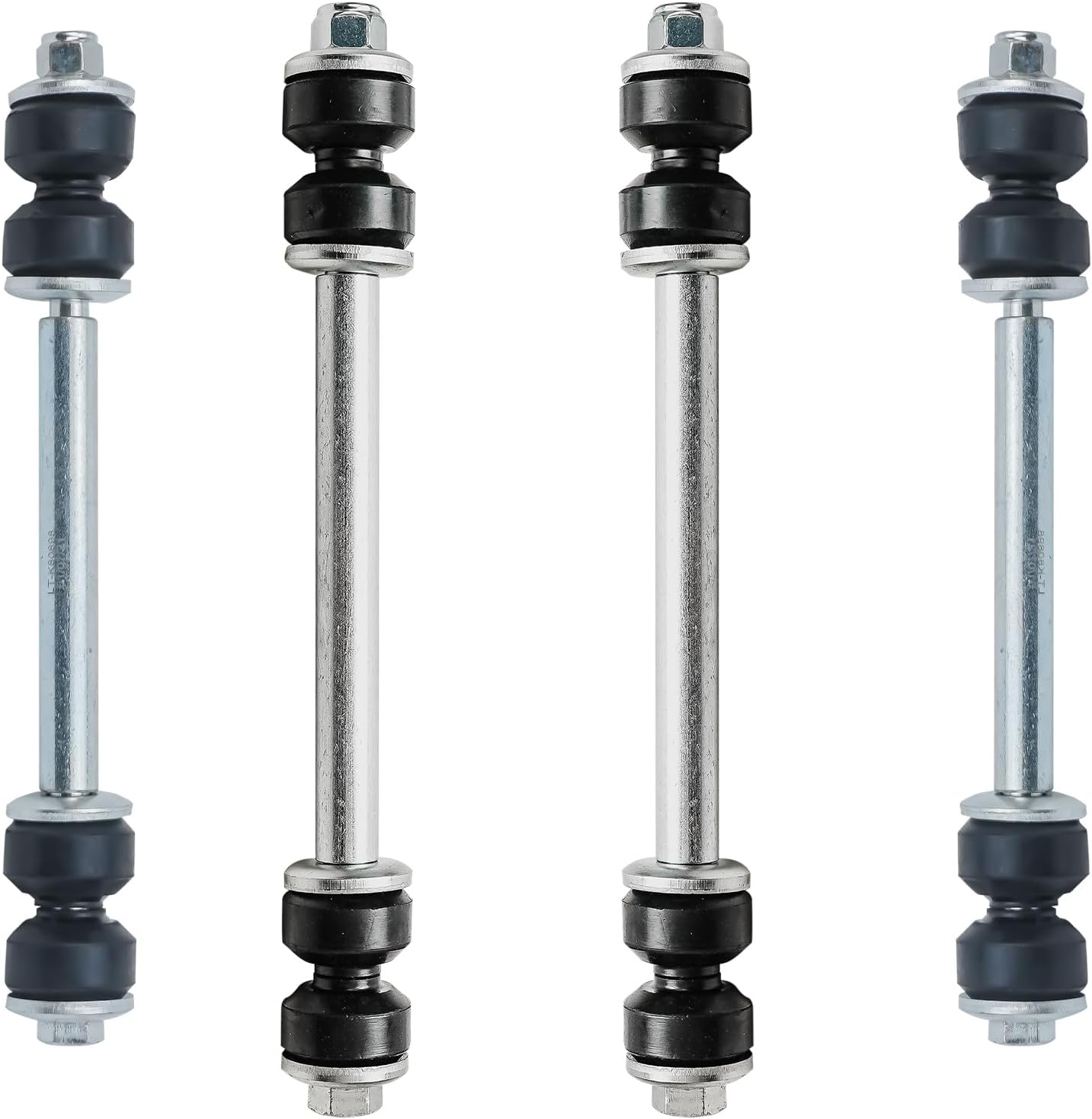
| Fitment | 2006–2010 Ford Explorer; 2007–2010 Explorer Sport Trac; 2006–2010 Mercury Mountaineer |
|---|---|
| Kit contents | 2 front and 2 rear stabilizer end links |
| Material | Premium alloy |
| Manufacturer part number | 4S3400318 |
| Warranty | 10-Year |
This Detroit Axle kit supplies two front and two rear sway bar end links intended as direct-fit replacements for 2006–2010 Ford Explorer, 2007–2010 Explorer Sport Trac, and 2006–2010 Mercury Mountaineer. The links are made from a premium alloy and the listing emphasizes enhanced structural strength for repeated impact loads, meaning the parts should resist rust and wear better than cheap stamped components. Installation is described as straightforward because the parts are built to match factory fitment, so a home mechanic with basic tools or a local shop can swap them in without modification. The practical benefits are restored steering stability and reduced sway or clunking from worn links, plus a lengthy 10-year warranty that supports long-term reliability. Limitations are typical of replacement link kits: they replace only the end links and not associated bushings or the sway bar itself, and long-term performance still depends on correct installation and road conditions. For a conservative buyer who prioritizes dependable, factory-quality replacements, this kit covers the core need without upgrades or aftermarket tuning features.
Best for: Buyers seeking a reliable, factory-style replacement to stop sway, noise, or looseness in the suspension and who prefer parts built to match original fit and function.
Less Ideal for: Drivers wanting performance upgrades or adjustable anti-roll components should look at sport or aftermarket link options instead.
- Direct-fit design for the specified 2006–2010 Explorer family and Mountaineer for straightforward installation
- Constructed from premium alloy for improved wear resistance and corrosion protection
- Engineered with enhanced structural strength to handle repeated impact loads
- Includes both front and rear links so all sway bar end links can be replaced at once
- Backed by a 10-year warranty for long-term coverage
- Only replaces end links and does not include sway bar bushings or other suspension components
Verdict: A straightforward, factory-quality four-piece link kit that restores steering stability and durability for the 2006–2010 Explorer lineup with minimal fuss.
Choosing the Right 2006-2010 Ford Explorer Sway Bar Link: Key Factors to Consider
Fitment and Year-Specific Compatibility
Correct fitment is the single most important factor when replacing sway bar links on a 2006-2010 Ford Explorer. The Explorer used slightly different suspension setups and mounting points across model years and trims, so you must confirm the part is listed specifically for 2006 through 2010 Explorer applications. A precisely fitting link avoids unnecessary modifications, ensures correct sway bar geometry, and prevents overstress of adjacent suspension components.
Poor fitment can cause binding, accelerated wear of the stabilizer bar bushings, or misalignment that changes handling characteristics. When shopping, verify whether a link is designated for front versus rear use and for the exact model years in the 2006-2010 range. If a link comes as a kit with installation hardware, that increases the chance of a trouble-free replacement on this vehicle.
Joint Type and Bushing Material
Sway bar links use either ball-joint-style ends, press-in bushings, or rubber/polyurethane isolators. For the 2006-2010 Ford Explorer, consider whether you want a link with a sealed ball joint for low maintenance or a link with replaceable polyurethane bushings for stiffer feel and easier long-term service. Rubber bushings provide quieter operation initially but tend to deteriorate faster, especially in hot or oily environments.
Polyurethane offers longer wear life and firmer response but can increase transmitted noise if not properly lubricated. Sealed metal ball joints often balance durability and quietness, but confirm the joint design includes corrosion protection and dust seals to keep contaminants out over time.
Corrosion Resistance and Finish
Road salt, moisture, and debris accelerate corrosion on suspension components. For Explorer owners who drive in winter conditions or on salted roads, a corrosion-resistant finish is critical. Look for links with zinc plating, powder coating, or additional protective coatings on the rod, threads, and hardware.
Corrosion can seize fasteners, damage threads, and weaken the link body, leading to premature failure. Even in milder climates, a protected finish extends service life and reduces the chance of noisy movement caused by rusted joints. Where possible, choose parts with plated hardware or stainless-steel components for the most durable outcome.
Strength and Construction
Sway bar links transmit lateral forces between the anti-roll bar and the control arms or strut assembly. For a mid-size SUV like the Explorer, links should be constructed from adequately thick steel or forged components to resist bending under load. Pay attention to the design of the rod and end fittings and whether critical joints are reinforced.
Higher-quality construction reduces the chance of bending during off-camber impacts or when carrying cargo. Reinforced studs, thicker-wall tubing, and robust attachment points all improve longevity and help preserve handling balance over the life of the vehicle.
Noise, Vibration, and Harshness Performance
One of the chief complaints with failing sway bar links is clunking or rattling during compression and rebound. When evaluating options for the 2006-2010 Ford Explorer, prefer designs and materials that dampen impact noise and isolate road vibration. Proper bushing selection, tight tolerances at ball joints, and secure fasteners all contribute to a quieter system.
Consider parts that include new retaining hardware or grease fittings when noise reduction is a priority. Also note that firmer materials may transmit more vibration, so balance NVH priorities against desired handling characteristics when making a choice.
Serviceability and Installation Considerations
Ease of installation can make a big difference for owners planning a DIY replacement on a 2006-2010 Explorer. Some links come as complete assemblies ready to install, while others require press-fit bushings or separate hardware. Kits that include new nuts, washers, and zerk fittings simplify the job and reduce the chance of reusing corroded fasteners.
Also consider whether the link length and thread engagement allow for straightforward torqueing to factory specs. If you plan to use a lift or jack stands, choose links that do not require specialty tools to compress or align. Clear instructions and included hardware reduce installation time and ensure safe reassembly.
Common Symptoms of Worn Sway Bar Links
Worn sway bar links on a 2006-2010 Ford Explorer typically present as clunking or knocking noises when driving over bumps or during corner transitions. You may also notice increased body roll, looser steering response, or a feeling that the vehicle leans more in turns than before.
Noise often appears from a single side first and may be more pronounced at low speeds or when the suspension is unloaded. In some cases, visual inspection reveals torn bushings, excessive play at the joint, or rusted fasteners that indicate replacement is needed.
- Clunking or knocking from front or rear suspension over bumps
- Noticeable increase in body roll during cornering
- Loose or vague steering feel at higher speeds
- Visible play, torn bushings, or corroded link components
Front Vs Rear Link Differences on the Explorer
Front sway bar links on the Explorer typically interface between the front stabilizer bar and the lower control arm or strut assembly. These links are frequently subjected to steering inputs and may experience higher articulation cycles compared with the rear links.
Rear links connect the rear stabilizer bar to the suspension and usually see different load patterns. When selecting parts, confirm whether the link is designated for the front or rear of the 2006-2010 Explorer, as lengths, mounting angles, and joint types can differ.
- Front links often face higher frequency movement due to steering and suspension travel
- Rear links may be shorter and see different load vectors
- Choosing correct front or rear specific links preserves intended handling balance
What To Inspect During a DIY Replacement
When replacing sway bar links on a 2006-2010 Ford Explorer yourself, take time to inspect related suspension parts. Check stabilizer bar bushings, control arm bushings, and mounting brackets for wear or corrosion that could affect the new link's performance. Replace any compromised components to avoid transferring stress to the new part.
Also inspect fasteners and threads; corroded nuts or studs should be replaced rather than reused. If a link includes grease fittings, apply the recommended grease during installation. Double-check clearances to ensure the new link does not contact brake lines or other components during full suspension travel.
- Inspect stabilizer bar bushings and mounting brackets
- Check control arm bushings for excessive play
- Replace corroded fasteners and apply grease if applicable
- Verify clearance through full suspension travel
Tools and Torque Tips for Installation
A straightforward installation on the Explorer usually requires standard hand tools, a torque wrench, and appropriate safety equipment. Bearings or ball joints may need retaining compound or thread locker on specific threads; consult factory service guidance for torque values and thread treatments.
Correct torque is important to prevent fasteners from loosening or joint preload from being incorrect. If you are doing the job yourself, have a torque wrench and reference the factory torque specs for sway bar link hardware for the 2006-2010 Explorer, as over- or under-torquing can affect joint life and noise performance.
- Use a torque wrench for final tightening to factory specs
- Have replacement hardware ready if originals are corroded
- Consider anti-seize or thread locker as specified by service guidance
Maintenance and Longevity Best Practices
To maximize the life of replacement sway bar links on your Explorer, periodically inspect joints and bushings for wear and corrosion. Clean exposed threads and apply appropriate grease to fittings if present. Keeping mounting points free of heavy rust extends part life and eases future servicing.
If you frequently drive on salted roads or in harsh conditions, consider links with enhanced finishes and check them more often. Early attention to noises or changes in handling can prevent related suspension damage and keep the vehicle safe and predictable.
- Inspect links and bushings every oil-change interval or at seasonal service
- Clean and grease fittings when available
- Replace corroded hardware promptly to avoid seizure
When To Move Beyond a Link Replacement
Sometimes noisy or loose handling is caused not just by the sway bar links but by worn bushings, control arm joints, or bent suspension components. If you replace the links and the issue persists, perform a broader suspension diagnostic focused on bushings, ball joints, and the stabilizer bar itself.
A visual and hands-on inspection that checks for play at adjacent joints, significant corrosion, or bent link mounts will reveal whether further component replacement is necessary to fully restore handling on a 2006-2010 Explorer.
- Persisting noise after link replacement suggests other worn suspension parts
- Check control arm and stabilizer bar bushings for damage
- Consider a professional inspection if multiple suspension components show wear
Still looking for the perfect fit?
Select your Ford Explorer configuration to see the most relevant Sway Bar Links recommendations
How We Chose the Best 2006-2010 Ford Explorer Sway Bar Link
We built our shortlist by focusing on the attributes that matter most for sway bar links on the 2006-2010 Ford Explorer. First, fitment accuracy was mandatory: components had to match the Explorer's front or rear mounting points and intended suspension configuration for those model years. Second, joint type and durability were assessed, including the use of serviceable ball joints, rubber or polyurethane bushings, and corrosion-resistant finishes that withstand road salt and wet conditions.Third, structural strength and materials were evaluated to ensure links resist bending and premature fatigue under typical loads experienced by the Explorer. Fourth, noise and NVH performance was considered, prioritizing designs that minimize squeaks and clunks over rough roads. Finally, ease of installation and availability of replacement hardware or kits influenced selection. We excluded any items without clear fitment information for 2006-2010 Ford Explorer or those lacking durable joint protection. The final list emphasizes fit, longevity, quiet operation, and installability rather than marketing claims.
Our full evaluation process is outlined in our review methodology.
FAQ
How do I know if a front or rear sway bar link is worn on my 2006-2010 Explorer?
Common indicators include clunking over bumps, increased body roll, and visible play or torn bushings at the link ends. Front wear often affects steering feel more, while rear wear usually shows as general looseness in cornering.
Can I replace a sway bar link on a 2006-2010 Explorer myself?
Yes, many owners can perform the replacement with basic tools and a torque wrench. Confirm correct part fitment for the front or rear location and follow factory torque specs. Replace corroded hardware and inspect related bushings while you are working.
Are polyurethane bushings a good choice for an Explorer's sway bar links?
Polyurethane bushings often last longer and provide firmer response but may transmit more noise or vibration. They are a good option if you prioritize reduced deflection and longer wear life, but expect slightly firmer NVH compared with rubber.
What causes a sway bar link to make a noisy clunk on this vehicle?
Noisy clunks usually result from worn bushings, loosened joints, or corroded fasteners that allow movement. Dirt and lack of lubrication in serviceable joints can also produce noise, so inspect seals, grease fittings, and hardware for issues.
Should I replace stabilizer bar bushings when I replace the links?
Often it is wise to inspect the stabilizer bar bushings and replace them if they show cracking, excessive wear, or deformation. Fresh bushings ensure the new links work into a healthy mounting system and can prevent premature wear of the replacement links.
How important are torque specs when installing sway bar links?
Torque specs are important to set correct clamp loads and joint preload. Under-torquing can allow movement and noise, while over-torquing can damage threads or bushing materials. Use the factory torque values for the 2006-2010 Explorer when tightening hardware.
Final Verdict
For the 2006-2010 Ford Explorer, prioritize correct fitment, durable joint design, and corrosion-resistant finishes when selecting sway bar links. Addressing related bushings and using proper torque and installation practices will reduce noise and restore handling balance.Choosing a link that matches the Explorer's front or rear requirements and offers robust construction gives the best combination of longevity and quiet operation. Prioritize the factors discussed here to make a confident replacement decision.
Explore More:
- Check out all Ford Explorer parts & accessories
- Explore Sway Bar Links Maintenance & Repair Guides
- Explore Suspension & Steering
- Browse all Auto Parts
