

Note: This article contains affiliate links. If you click on these links and make a purchase, I may earn a small commission at no extra cost to you. This helps support my research and content. Read my full affiliate disclosure here.
If you drive a 2006-2010 Ford Explorer, worn or damaged lower control arms can cause loose steering, uneven tire wear, and unsettling noises over bumps. Choosing the right lower control arm matters because fitment, bushing type, and construction influence ride quality, steering response, and long-term durability for this specific model. This guide shortlists the top options for the 2006-2010 Explorer and evaluates them against the needs owners commonly face: correct fitment, robust bushings, and dependable alignment stability.Below you will find our top picks followed by clear buying guidance so you can replace worn components with confidence and get the vehicle back to predictable handling.
Looking for other parts? See all Ford Explorer parts & accessories.
Top Picks at a Glance
| Best Overall The best all-around choice for most situations | TRQ Front Lower Control Arm and Ball Joint Set, 2-Piece |  |
| Best Quality Built to a higher standard if you want something more solid | MOOG RK80721 Front Left Lower Control Arm with Ball Joint |  |
| Best Value The sweet spot between price and what you get | A-Premium Front Right Lower Control Arm with Ball Joint and Bushing |  |
| Highest Rated A top-rated pick with lots of positive feedback | Detroit Axle Front Left Lower Control Arm with Ball Joint Assembly |  |
| Most Popular A crowd favorite that many people choose with confidence | Detroit Axle Front Lower Control Arms w/ Ball Joints (Pair) for 2006-2010 Ford Explorer & Mercury Mountaineer |  |
1. TRQ Front Lower Control Arm and Ball Joint Set, 2-Piece

| Included Components | 2 Piece Control Arm with Ball Joint Set |
|---|---|
| Fit Type | Vehicle Specific Fit |
| Auto Part Position | Front Lower |
| Auto Part Orientation | Drivers Side |
| Manufacturer Warranty Description | 2 years |
This TRQ kit supplies both left and right front lower control arms with pre-installed ball joints as a direct-fit replacement for 2006-2010 Ford Explorer, 2007-2010 Explorer Sport Trac, and 2006-2010 Mercury Mountaineer. It is intended for standard suspension repairs and routine front-end refreshes, letting you replace worn arms and worn ball joints in one job. Notable features include factory-style fitment, pre-assembled ball joints to simplify installation, and TRQ support materials and DIY videos to guide the repair. In practice the set restores steering stability and reduces uneven tire wear compared with badly worn stock components, and having both sides in one kit ensures matched geometry after installation. Trade-offs are typical for aftermarket arms: fit and finish depend on correct part matching to vehicle references and these are replacement parts rather than performance upgrades. For a balanced buyer seeking a straightforward, matched pair for a common Explorer-era suspension repair, this kit covers the bases without adding complexity.
Best for: Buyers who want a practical, matched pair to restore front-end stability and steering feel on a mid-2000s Explorer or Mountaineer without upgrading the suspension.
Less Ideal for: Owners seeking performance-tuned or heavy-duty suspension components for off-road or race use should consider specialized options instead.
- Includes both driver and passenger front lower control arms with ball joints for matched replacement
- Pre-assembled ball joints simplify installation and reduce installation time
- Vehicle-specific fit designed for 2006-2010 Ford Explorer family and Mercury Mountaineer
- Manufacturer provides installation videos and compatibility references to assist DIY repairs
- Aftermarket replacement rather than a performance or heavy-duty upgrade
Verdict: A practical, pre-assembled matched pair that gets a 2006-2010 Ford Explorer or similar back to factory-like steering stability with minimal fuss.
2. MOOG RK80721 Front Left Lower Control Arm with Ball Joint

| Fit Type | Vehicle Specific Fit |
|---|---|
| Auto Part Position | Front Left Lower |
| Material Type | Alloy Steel, Iron |
| Unit Count | 1.0 Count |
The MOOG RK80721 is a direct-fit front left lower control arm assembly that replaces a worn or damaged factory unit to restore steering feel and wheel alignment on compatible Explorers. It combines a stamped alloy-steel arm with an integrated ball joint, preassembled for straightforward swap-in installation and to reduce shop time. MOOG emphasizes structural strength and corrosion-resistant coatings, which helps the arm stand up to road impacts and seasonal exposure without immediate deterioration. In real-world use this part primarily improves steering precision and helps stop uneven inner tire wear when the old arm has loosened or the ball joint is worn. The preassembled design simplifies installation compared with separate-arm-and-joint replacements but means you replace the entire assembly if the ball joint alone fails. Fitment is vehicle-specific so confirm application before installation. For owners chasing firmer, more consistent steering and a factory-style replacement, this arm delivers durable, serviceable performance; drivers looking for adjustable alignment features or aftermarket performance tuning options will need to look elsewhere.
Best for: Buyers who want a durable, factory-style replacement that restores steering precision and ride quality on a 2006–2010 Ford Explorer while minimizing installation complexity.
Less Ideal for: Drivers seeking adjustable or performance-tuned lower control arms for cornering setup or alignment tweaks should consider aftermarket performance options instead.
- Direct-fit, preassembled control arm with integrated ball joint for faster installation
- Engineered for added structural strength to resist impacts and repetitive loads
- Corrosion-resistant coatings on studs to extend service life
- Restores correct suspension geometry to improve steering feel and reduce inner tire wear
- Non-adjustable design so alignment may require a professional after installation
Verdict: Choose this MOOG control arm when you want a durable, preassembled factory-quality replacement to restore steering and suspension geometry on a 2006–2010 Ford Explorer.
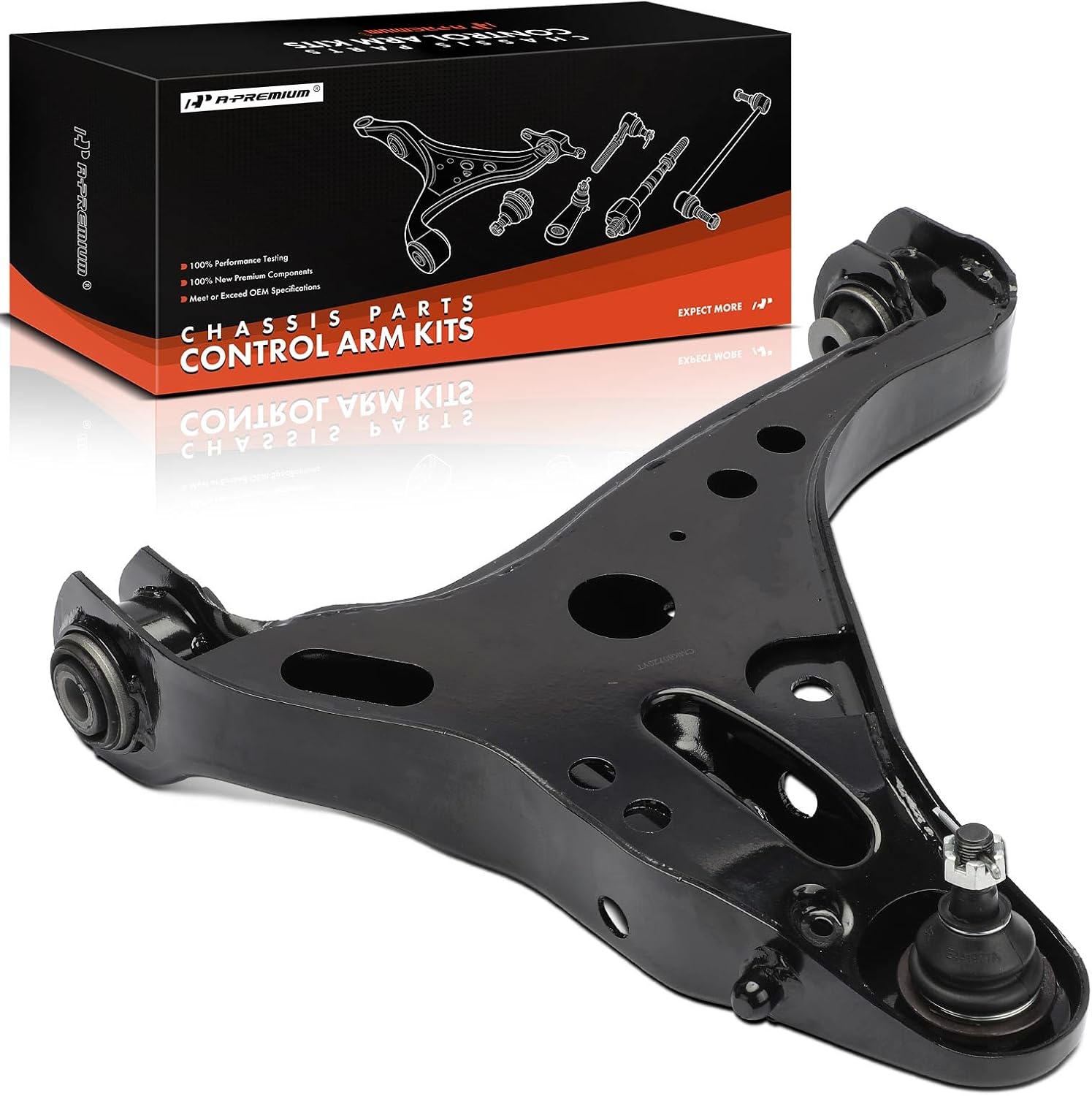
3. A-Premium Front Right Lower Control Arm with Ball Joint and Bushing
| Fit Type | Vehicle Specific Fit |
|---|---|
| Auto Part Position | Front Right Lower |
| Material Type | Alloy Steel |
| Unit Count | 1.0 Count |
This A-Premium front right lower control arm is a direct-fit replacement for late 2000s Ford Explorer, Explorer Sport Trac, and Mercury Mountaineer models and comes as a complete assembly with a pre-greased ball joint and bushing. It installs at the front right lower position to restore suspension geometry and address symptoms like clunking, steering wander, uneven tire wear, and excessive vibration. Built from alloy steel and shipped as a single unit, it saves time compared with replacing separate components and includes the hardware shown in the listing. The included ball joint and bushing mean fewer compatibility checks during installation, and the pre-greased joint simplifies initial break-in. Limitations are typical for aftermarket parts: long-term durability depends on driving conditions and installation quality, and the one-year item-only guarantee does not cover labor or secondary repair costs. Expect routine alignment after installation to fully correct handling and tire wear issues.
Best for: Buyers who want a practical, ready-to-install suspension replacement that restores handling and reduces noise without sourcing separate components or custom modifications.
Less Ideal for: Drivers planning heavy-duty or performance upgrades who need reinforced or adjustable suspension components should look at specialty aftermarket options instead.
- Complete assembly with ball joint and bushing reduces parts sourcing and simplifies installation
- Pre-greased ball joint out of the box for easier initial use
- Vehicle-specific fit for Ford Explorer/Explorer Sport Trac and Mercury Mountaineer ensures correct positioning
- Alloy steel construction aimed at providing strength comparable to factory replacements
- Warranty covers only the item cost and excludes labor or related repair expenses
Verdict: A ready-to-install, vehicle-specific front right lower control arm assembly that quickly restores handling and reduces suspension noise for 2006–2010 Explorer and Mountaineer models.
4. Detroit Axle Front Left Lower Control Arm with Ball Joint Assembly

| Fit Type | Vehicle Specific Fit |
|---|---|
| Auto Part Position | Front Left Lower |
| Auto Part Orientation | Drivers Side |
| Material Type | Alloy Steel |
This Detroit Axle front left lower control arm with integrated ball joint is built as a direct-fit replacement for 2006-2010 Ford Explorer (and compatible Sport Trac/Mountaineer) to restore steering stability and suspension geometry. It is typically used when a worn control arm causes uneven tire wear, loose steering, or noisy suspension; installation is intended to be straightforward because the arm is vehicle-specific and designed for a bolt-on fit. The part is made from alloy steel with a reinforced structure to resist impact and corrosion, and the integrated ball joint simplifies parts matching compared with sourcing separate components. Practical benefits include improved handling feel after replacement and a long service life thanks to higher rigidity and corrosion resistance. Important limitations are that this is a single arm for the driver side front left position and does not include matching passenger-side or additional suspension components, so comprehensive front-end work may require buying multiple parts. Fitment must be checked against the vehicle details before ordering.
Best for: Buyers who prioritize a reliable, long-lasting repair that restores original steering stability and prefer a direct-fit replacement to minimize installation hassle.
Less Ideal for: People looking to replace multiple front suspension components at once or those who need a matched pair included in a single purchase.
- Vehicle-specific direct-fit design simplifies installation and alignment
- Integrated ball joint reduces parts matching and installation steps
- Alloy steel construction and reinforced structure resist wear and impact
- Designed to restore factory-style steering feel and suspension geometry
- Sold as a single driver-side unit so additional purchases may be needed for full front-end service
Verdict: Choose this control arm if you want a durable, vehicle-specific direct-fit replacement that reliably restores factory steering and suspension performance on a 2006–2010 Ford Explorer.
5. Detroit Axle Front Lower Control Arms w/ Ball Joints (Pair) for 2006-2010 Ford Explorer & Mercury Mountaineer

| Fit Type | Vehicle Specific Fit |
|---|---|
| Auto Part Position | Front |
| Material Type | Alloy Steel, Stainless Steel |
This Detroit Axle kit supplies both front lower control arms with ball joint assemblies intended as direct-fit replacements for 2006–2010 Ford Explorer, Explorer Sport Trac, and Mercury Mountaineer. Installation is straightforward for a competent DIYer or technician because the arms are designed for vehicle-specific fitment and arrive ready with ball joints installed. Made from alloy and stainless steel with reinforced structure, the arms are built to resist rust and handle repeated impact loads, which should restore factory handling and reduce steering wander caused by worn components. The practical benefit is a relatively simple way to refresh front suspension geometry without extra parts or fabrication. Keep in mind these are aftermarket, not factory-sourced parts, so final fit and finish can vary slightly and alignment is required after installation. Also expect professional installation if you lack the tools to separate control arms and torque fasteners to spec.
Best for: Buyers who want a ready-to-install front suspension replacement that restores handling and confidence, and who prioritize proven seller feedback and conservative, serviceable fixes over OE sourcing.
Less Ideal for: People seeking exact factory-manufactured components or those who expect premium cosmetic finish may prefer to look at factory-brand replacements.
- Direct-fit design with preinstalled ball joints reduces installation time
- Constructed from alloy steel and stainless steel for corrosion resistance
- Engineered with enhanced structural strength to handle repeated impact loads
- Supplies both left and right lower arms in one kit for a complete front-end refresh
- Aftermarket fit and finish can vary compared with factory parts
Verdict: A practical, vehicle-specific pair of front lower control arms with ball joints that lets you restore steering and suspension performance with minimal extra parts or modification.
Choosing the Right 2006-2010 Ford Explorer Lower Control Arm: Key Factors to Consider
Fitment and Mounting Compatibility
Correct fitment is the first priority for a 2006-2010 Ford Explorer lower control arm because improper mounting points or subtle geometry differences can change wheel alignment and handling. Ensure the arm matches the vehicle's year range and original mounting locations so it does not introduce castor, camber, or toe changes that complicate alignment.
Pay attention to whether the arm is designed for the front or rear position and for any specific trim or suspension options within the 2006-2010 Explorer lineup. Some replacements are direct bolt-on assemblies that include ball joints and bushings, while others require transferring components from the original arm. Choosing the correct configuration reduces installation time and the risk of alignment issues after replacement.
Bushing Type and Durability
Bushing construction strongly influences ride quality, noise, and long-term wear. Rubber bushings provide better vibration isolation and a quieter ride but can deteriorate faster if exposed to oil, heat, or road contaminants. Polyurethane bushings last longer and maintain tighter steering feedback but may transmit more noise and harshness into the cabin.
For the 2006-2010 Explorer, prioritize bushings that are sealed or protected against road grime and that are compatible with factory mounting dimensions. Consider how the bushing material will interact with your typical driving conditions, such as highway commuting or rough roads, and whether you prefer a softer compliance or firmer steering feel.
Ball Joint and Hardware Quality
Many lower control arms for this Explorer integrate a ball joint or require a compatible ball joint. The ball joint is a safety-critical pivot that affects steering precision and suspension travel. Look for arms with heavy-duty ball joints rated for the expected load and with dust boots or seals to keep contaminants out.
Also inspect the quality of included hardware such as bolts, nuts, and alignment shims. Corrosion-resistant coatings and grade-appropriate fasteners help ensure long-term clamping force and serviceability. If hardware is not included, plan to replace old fasteners that may be stretched or corroded during removal.
Corrosion Protection and Material Construction
The 2006-2010 Ford Explorer often faces wet and salty conditions that accelerate rust. Control arms constructed from stamped steel with welded reinforcement or cast components with protective coatings resist corrosion better over time. Look for parts with zinc coating, powder coat, or e-coating to extend service life.
Thicker gauge steel and quality welds reduce the chance of fatigue cracking in high-stress areas. Corrosion protection matters not only for longevity but also for future removals and service; heavily corroded parts complicate disassembly and increase labor time.
Impact On Alignment And Tire Wear
Replacing a lower control arm affects toe and camber relationships, which in turn influence tire wear patterns and handling. A properly designed replacement arm will maintain factory geometry or provide adjustability if the vehicle has aftermarket components. Misaligned arms or units that have been poorly manufactured can accelerate inner or outer tire wear and create steering pull.
Plan on a professional alignment after installation. Choosing an arm that preserves factory pivot points reduces the scope of alignment correction needed and helps the tires wear evenly for their expected lifespan.
Ease Of Installation And Maintenance
Installation complexity affects total repair time and potential additional costs. Direct bolt-on assemblies that arrive with bushings and ball joints preinstalled minimize labor and simplify installation. Conversely, arms that require bushing or ball joint transfer increase installation time and may necessitate specialty tools.
Consider whether the arm offers serviceable components such as replaceable bushings or grease fittings on the ball joint. Serviceable designs can reduce long-term ownership cost by allowing targeted repairs rather than full-arm replacement.
Signs It's Time To Replace The Lower Control Arms
Several drive symptoms commonly point to failing lower control arms on a 2006-2010 Ford Explorer. Look for uneven tire wear, a loose or wandering steering feel, and clunking or popping noises when going over bumps. These symptoms often stem from worn bushings or ball joints that no longer control the wheel assembly precisely.
Addressing these signs early can prevent secondary damage such as accelerated tire wear or additional suspension component stress. Inspect the arm and its bushings for visible cracks, excessive play, or torn dust boots. If you detect movement beyond the normal tolerance when prying the joint, replacement is usually the correct course.
- Uneven inner or outer tire wear
- Clunking noise when hitting bumps
- Loose steering or steering wander
- Visible bushing cracks or separated rubber
- Excessive play at the ball joint
Front Versus Rear Lower Control Arm Considerations
The 2006-2010 Explorer uses different control arm designs for front and rear positions, and each location has distinct loads and motion patterns. Front lower arms are more directly involved in steering and carry significant lateral forces during cornering. Rear arms primarily control axle position and help maintain toe and camber under load.
When selecting a replacement, confirm whether you need a front lower control arm or a rear lower control arm. The front arm choice should prioritize precise ball joint performance and bushing compliance, while the rear arm should emphasize dimensional stability and resistance to axle torque.
- Front arms affect steering feel and alignment
- Rear arms influence axle control and ride stability
- Front arms typically integrate or interface closely with ball joints
- Rear arms may focus more on bushings and mounting strength
Installation Tips To Minimize Alignment Issues
Follow a methodical installation sequence to preserve factory geometry. Loosen suspension fasteners only when the vehicle is at normal ride height to avoid preloading bushings in a deflected position. If replacing both sides, do one side at a time or use proper alignment gauges to maintain reference points.
Always replace corroded bolts and torque fasteners to manufacturer specifications. After installation, obtain a four-wheel alignment to correct any toe or camber changes. Test-drive the vehicle over a variety of surfaces to confirm the new arms are functioning without noise or binding.
- Support the vehicle at normal ride height before loosening bolts
- Replace stretched or corroded fasteners
- Torque to spec and recheck after a short drive
- Get a professional alignment after installation
Bushing Maintenance And Longevity
Bushing life depends on material and exposure. Rubber bushings degrade from oil contamination, ozone, and heat while polyurethane resists abrasion and chemicals better but may transmit more NVH. Inspect bushings annually for cracks, separation, or excessive movement.
If the chosen arm uses a serviceable bushing or offers greaseable fittings, schedule regular lubrication as recommended. Proper maintenance can extend the component's service life and delay full-arm replacement.
- Inspect bushings visually and by feel at service intervals
- Use lubricant only if fittings are provided and compatible
- Replace bushings promptly if you detect separation or large gaps
What To Expect During A Replacement Job
A typical lower control arm replacement on the 2006-2010 Explorer involves lifting the vehicle, removing the wheel, separating the ball joint and mounting fasteners, and installing the new arm. Depending on whether the arm is preassembled, total labor time can vary from a couple of hours for each side to longer if components must be transferred.
Plan on a follow-up alignment and a short test drive to ensure there is no noise or steering irregularity. Keep replacement hardware and a torque wrench on hand to ensure fasteners are secure and meet service specifications.
- Wheel removal and suspension access required
- Ball joint separation often requires a puller tool
- Expect a professional alignment after installation
Still looking for the perfect fit?
Select your Ford Explorer configuration to see the most relevant Lower Control Arms recommendations
How We Chose the Best 2006-2010 Ford Explorer Lower Control Arm
We prioritized criteria that directly affect fitment, safety, and drivability for the 2006-2010 Ford Explorer. Primary evaluation factors included exact fitment to factory mounting points, bushing material and design, structural construction and corrosion protection, and impact on wheel alignment stability. We also considered the range of available hardware and whether the part required additional components such as ball joints or bolts for a complete installation.Practical durability was judged by the type and quality of bushings, presence of reinforced mounts, and evidence of protective coatings that reduce corrosion in road salt conditions. Ease of installation was assessed by bolt access, included hardware, and whether the arm arrives preassembled with bushings and ball joints versus requiring transfer from the old arm. Noise and vibration potential were evaluated by bushing design and how the component isolates road inputs.Exclusions: we excluded parts that do not match the 2006-2010 Explorer mounting pattern, arms intended only for custom or race applications that alter ride height or suspension geometry, and any listings lacking clear material or bushing specifications. The resulting shortlist favors items that restore factory geometry and prioritize longevity and predictable handling.
Our full evaluation process is outlined in our review methodology.
FAQ
How long do lower control arms typically last on a 2006-2010 Ford Explorer?
Lifespan varies with driving conditions and maintenance; many arms last well over 70,000 miles in mild climates, while exposure to rough roads and salt can shorten life significantly. Regular inspections of bushings and ball joints help catch wear early.
What are the most common symptoms of a worn lower control arm?
Common symptoms include clunking noises over bumps, uneven tire wear, and a loose or wandering steering feel. These issues often originate from deteriorated bushings or worn ball joints.
Can I replace a lower control arm myself on this Explorer?
Many mechanically inclined owners can perform the replacement with proper tools and safety precautions. However, ball joint separation and torque specs require care, and a post-installation alignment is recommended.
Do I need to replace the ball joint when changing the lower control arm?
It depends on the arm you choose. Some replacement arms come with the ball joint preinstalled, while others require transferring the existing joint. If the ball joint shows play or a damaged boot, replacing it during the job is advisable.
Will replacing lower control arms fix uneven tire wear?
Replacing worn arms can address one common cause of uneven wear, but you should also get a professional alignment and inspect tires for existing damage. If the geometry has been off for a long time, tires may already be compromised.
How soon should I get an alignment after replacing the lower control arms?
Arrange a four-wheel alignment as soon as possible after the replacement, ideally before significant driving. This ensures toe and camber are corrected and helps prevent premature tire wear.
Final Verdict
When selecting lower control arms for a 2006-2010 Ford Explorer, prioritize correct fitment, bushing durability, and quality ball joint and hardware construction. These elements determine how well the replacement restores steering precision, reduces noise, and resists premature wear.Balance your choice between ride comfort and durability based on typical driving conditions. After installation, a professional alignment is essential. With the right arm and proper post-installation setup, you can expect improved handling and longevity from the suspension.
Explore More:
- Check out all Ford Explorer parts & accessories
- Explore Lower Control Arms Maintenance & Repair Guides
- Explore Suspension & Steering
- Browse all Auto Parts
