

Note: This article contains affiliate links. If you click on these links and make a purchase, I may earn a small commission at no extra cost to you. This helps support my research and content. Read my full affiliate disclosure here.
If your 2002-2005 Ford Explorer is showing wandering steering, clunking over bumps, or uneven tire wear, the lower control arms are often the culprit. Getting the right lower control arm replacement matters because this part directly affects steering geometry, suspension travel, and bushing life. The shortlist below focuses on well-fitting options that match the Explorer's front suspension mounting points and bushing styles.This guide covers seven top-rated lower control arms selected for fitment, material quality, and bushing design. We explain what to look for, common symptoms that signal replacement is needed, and practical installation considerations to help you decide which option suits your goals. Continue for quick fitment notes and buying guidance before the product list.
Looking for other parts? See all Ford Explorer parts & accessories.
Top Picks at a Glance
| Best Overall The best all-around choice for most situations | TRQ Front Steering & Suspension 8-Piece Control Arm Kit with Ball Joints for 2002–2005 Ford Explorer |  |
| Best Value The sweet spot between price and what you get | Detroit Axle Front Left Lower Control Arm with Ball Joint Assembly |  |
| Best Budget The cheapest option that still gets the job done reliably | TRQ Front Left Lower Control Arm with Ball Joint for 2002–2005 Ford Explorer / Mercury Mountaineer |  |
| Highest Rated A top-rated pick with lots of positive feedback | Detroit Axle Front Right Lower Control Arm with Ball Joint |  |
| Most Popular A crowd favorite that many people choose with confidence | Detroit Axle Front Control Arm Kit with Ball Joints and Sway Bar Links (fits 2002–2005 Ford Explorer, 4‑Door) |  |
| Best Seller A high-volume bestseller chosen again and again | Detroit Axle Front Lower Control Arms with Ball Joints — Pair for 2002–2005 Ford Explorer / 2002–2005 Mercury Mountaineer (4‑Door) |  |
1. TRQ Front Steering & Suspension 8-Piece Control Arm Kit with Ball Joints for 2002–2005 Ford Explorer
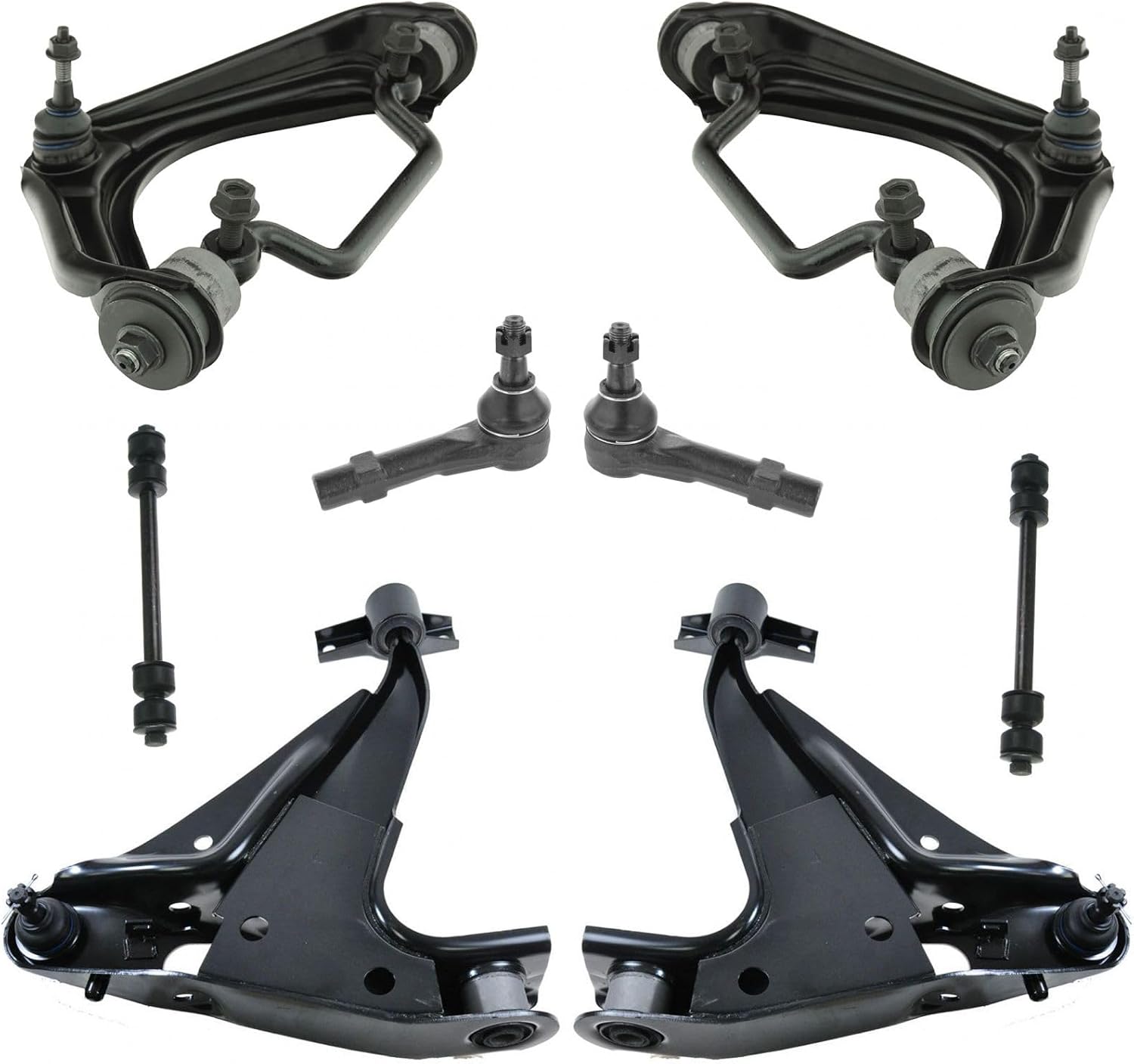
| Included Components | 8 Piece Steering & Suspension Kit |
|---|---|
| Auto Part Position | Front Upper |
| Material Type | Alloy Steel |
| Fit Type | Vehicle Specific Fit |
| Manufacturer Warranty Description | 2 years |
This TRQ eight-piece kit replaces the front lower and upper control arms with preinstalled ball joints and includes outer tie rods and sway bar links so you can refresh the Explorer's front steering and suspension in one go. Designed as a vehicle-specific direct-fit kit, the parts arrive pre-greased and anti-corrosion coated, which reduces initial prep and helps resist rust in wet climates. Typical use is a coordinated front-end overhaul when worn bushings, play in ball joints, or torn components are causing sloppy steering or uneven tire wear. The main benefits are convenience and matched components that simplify installation and alignment compared with buying individual parts. Expect factory-quality fitment where mounting points and geometry mirror the originals, but professional installation or alignment is recommended after replacement. This kit does not cover rear suspension or unrelated steering components and buyers should confirm exact vehicle fit using a compatibility chart before starting work.
Best for: Buyers who want a balanced, all-in-one front-end replacement that restores steering feel and handling without sourcing multiple parts separately and who plan to have the alignment set after installation.
Less Ideal for: If you only need a single small part or are repairing a different area of the suspension, this full eight-piece kit is more than necessary and a single-component replacement would be a better fit.
- Comprehensive kit includes upper and lower control arms with ball joints plus tie rods and sway bar links for a coordinated front-end rebuild
- Pre-greased ball joints and anti-corrosion coating reduce initial maintenance and improve durability
- Vehicle-specific direct-fit design simplifies installation and preserves factory steering geometry
- Kitted components eliminate compatibility guesswork when replacing multiple front-end parts
- Does not include items for rear suspension or additional steering components beyond the listed eight pieces
Verdict: Choose this all-in-one TRQ kit to efficiently restore front steering and suspension performance on a 2002–2005 Ford Explorer with matched, direct-fit components.
2. Detroit Axle Front Left Lower Control Arm with Ball Joint Assembly
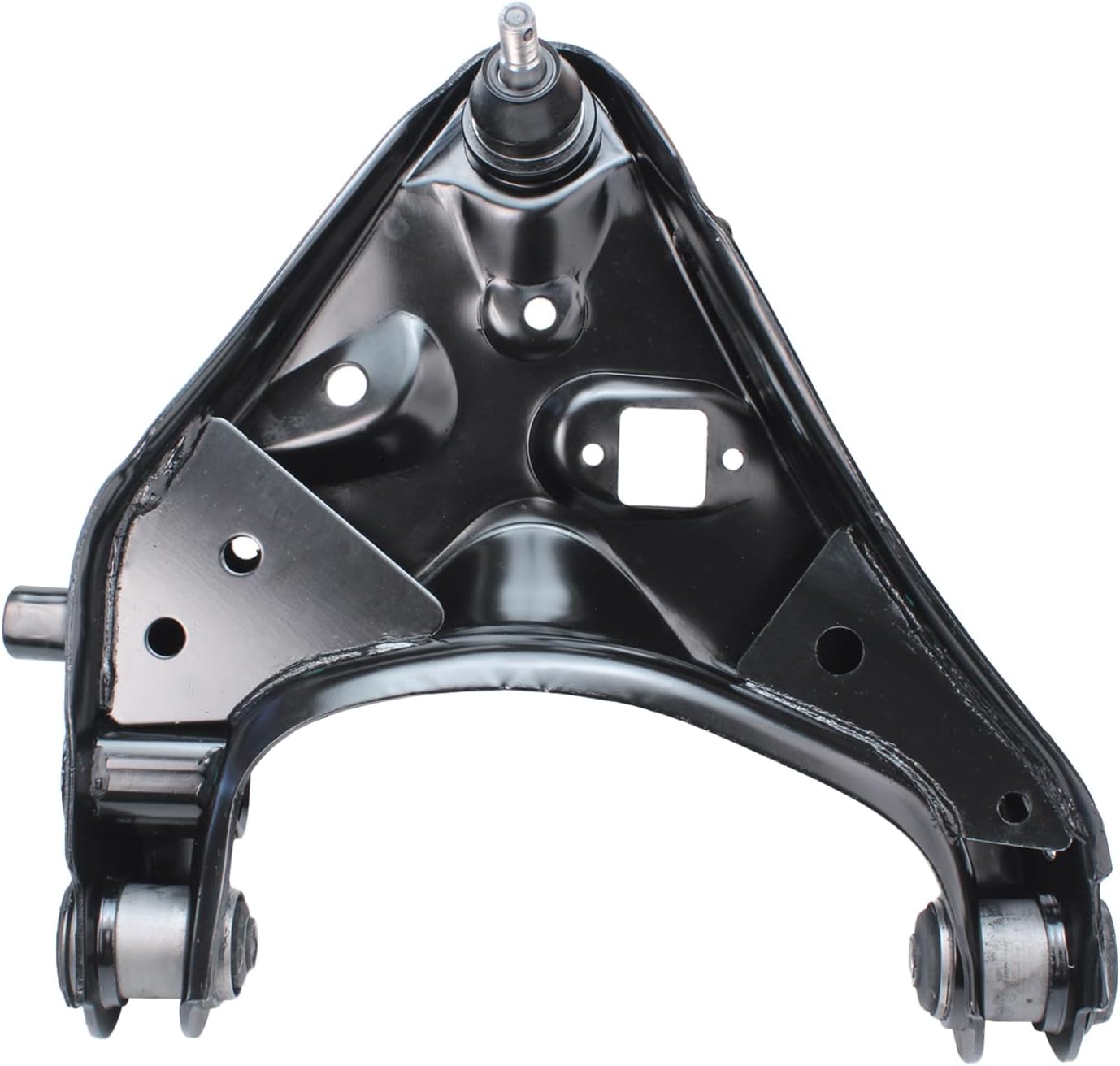
| Auto Part Position | Front Left Lower |
|---|---|
| Material | Alloy Steel |
| Fit Type | Vehicle Specific Fit |
| Manufacturer Part Number | K620319 |
This Detroit Axle replacement front left lower control arm comes with a preinstalled ball joint so you can swap a worn arm quickly without pressing a separate joint. It is a vehicle-specific fit made from alloy steel and intended for torsion-bar suspension variants of certain Ford Explorers, Rangers and related trucks. Typical use is a direct replacement during routine suspension repair to restore steering stability, reduce play, and eliminate clunking over bumps. The unit is unfinished steel so it will need corrosion protection if you want longer surface life, but the factory-style geometry and included ball joint simplify installation and alignment. Detroit Axle states the part undergoes impact and fatigue testing and the listing carries a 10-year warranty, which gives added confidence for long-term use. Buyers should verify year and suspension type before ordering because fitment is limited to torsion-bar front suspensions and the finish is not pre-coated.
Best for: Buyers who want a straightforward, budget-conscious replacement that restores steering feel and removes suspension play with minimal extra parts or fabrication. Ideal for DIY mechanics or shops prioritizing a direct-fit repair and long-term coverage.
Less Ideal for: Drivers seeking a finished or corrosion-resistant part straight from the box or owners of vehicles with non-torsion-bar front suspensions should look at other options.
- Includes preassembled ball joint for faster, simpler installation
- Vehicle-specific design aimed at restoring factory steering geometry
- Made from alloy steel and stated to undergo impact and fatigue testing
- Backed by a 10-year warranty for extended ownership confidence
- Unfinished steel finish means additional corrosion protection may be needed
Verdict: A ready-to-install, vehicle-specific lower control arm with preinstalled ball joint and long warranty that makes restoring factory steering quick and affordable for compatible Explorers.
3. TRQ Front Left Lower Control Arm with Ball Joint for 2002–2005 Ford Explorer / Mercury Mountaineer

| Fit Type | Vehicle Specific Fit |
|---|---|
| Auto Part Position | Front Left Lower |
| Auto Part Orientation | Drivers Side |
| Control Arm Material | Steel |
| Greaseable | No |
This TRQ front left lower control arm replaces the factory lower control arm and ball joint on 2002–2005 Ford Explorer and Mercury Mountaineer vehicles. It arrives pre-assembled with the ball joint and bushings included, so installation is simplified and usually requires no modification beyond standard suspension disassembly. Constructed from alloy steel with a press-in, non-greaseable ball joint, the arm is intended to restore steering stability, reduce uneven tire wear, and recover factory ride quality after a worn arm is removed. TRQ provides DIY installation videos which help owners doing the job themselves. The control arm is not adjustable and the ball joint cannot be re-greased, so long-term service means replacing the entire assembly if the joint wears. For budget-focused repairs this part offers a direct-fit replacement and an easier install compared with rebuilding separate components, though professional alignment after installation is still required to ensure proper handling and tire life.
Best for: Buyers looking for an affordable, direct-fit replacement to repair front suspension on 2002–2005 Explorers or Mountaineers and who prefer a straightforward DIY or budget repair path.
Less Ideal for: Drivers who want serviceable or adjustable suspension components or who prefer to rebuild individual parts rather than replace the whole control arm assembly.
- Pre-assembled with ball joint and bushings for quicker, straightforward replacement
- Vehicle-specific fit for 2002–2005 Ford Explorer and Mercury Mountaineer front left lower position
- Alloy steel construction aimed at restoring steering stability and ride quality
- Includes DIY installation videos to assist budget-minded owners performing the repair
- Ball joint is press-in and not greaseable so the entire arm must be replaced when the joint wears
Verdict: A practical, budget-friendly direct-fit replacement that gets a 2002–2005 Explorer or Mountaineer back to factory-like steering and ride with minimal fuss.
4. Detroit Axle Front Right Lower Control Arm with Ball Joint

| Fit Type | Vehicle Specific Fit |
|---|---|
| Auto Part Position | Front Right Lower |
| Auto Part Orientation | Passengers Side |
| Material Type | Alloy Steel |
| Manufacturer Warranty Description | 10-Year |
This Detroit Axle front right lower control arm comes as a complete assembly with an installed ball joint, made to directly replace the factory passenger-side lower arm on 2002–2005 Ford Explorer and Mercury Mountaineer. It is constructed from alloy steel and arrives ready to bolt in, so it is commonly used when a worn or damaged lower arm or ball joint produces steering looseness, uneven tire wear, or suspension noise. The assembled design speeds installation and removes the need to press in a separate ball joint. Detroit Axle markets a long 10-year warranty and the part carries vehicle-specific fit information to match factory mounting points. Expect factory-style fit and function for everyday driving and light-duty use, though this is an aftermarket replacement rather than an upgraded performance arm, so drivers seeking heavier-duty components for off-road or load-heavy use should consider reinforced alternatives. Overall the part is practical for restoring original handling and alignment without extra fabrication or modification.
Best for: Buyers who want a reliable, ready-to-install replacement to restore factory steering feel and alignment on a 2002–2005 Explorer or Mountaineer without custom work or extra parts.
Less Ideal for: Drivers who need reinforced, performance, or heavy-duty suspension parts for off-road, towing, or competition applications should look for specialized upgrades instead.
- Complete assembly with ball joint reduces installation time and avoids ball-joint pressing
- Vehicle-specific fit for direct replacement of the passenger-side front lower arm on 2002–2005 Explorer/Mountaineer
- Alloy steel construction for durability under normal driving conditions
- Long 10-year warranty backing the part
- Not marketed as a heavy-duty or performance-upgraded control arm for off-road or high-load use
Verdict: A practical, ready-to-install replacement lower control arm with ball joint that restores factory steering performance for 2002–2005 Ford Explorer passenger-side front suspension.
5. Detroit Axle Front Control Arm Kit with Ball Joints and Sway Bar Links (fits 2002–2005 Ford Explorer, 4‑Door)

| Fit Type | Vehicle Specific Fit |
|---|---|
| Auto Part Position | Front |
| Includes | 2 Upper, 2 Lower control arms + 2 sway bar end links |
| Manufacturer Part Number | 6CS1300427 |
This Detroit Axle kit supplies both front upper and lower control arms with integrated ball joints plus two sway bar end links to restore steering stability and suspension geometry on 2002–2005 Ford Explorer 4‑door vehicles. It is designed as a direct-fit vehicle specific replacement, so installation is straightforward for a professional or a competent DIYer with common tools. The parts are described as high-strength alloy with anti-rust treatment and factory-style fit to resist wear and repeated impact loads, which helps reduce wandering, uneven tire wear, and noisy steering compared with worn components. Because the kit replaces all four arms at once, it simplifies alignment and gives a consistent feel front-to-back. Limitations are typical for aftermarket suspension kits: you may still need a professional alignment after install and longevity depends on driving conditions; bushings and ball joints are not isolated as premium rebuildable assemblies. The kit is best when you want a complete, cost-effective refresh of the front suspension on the specified Explorer models rather than piecemeal repairs.
Best for: Buyers who value proven customer feedback and want a single-kit replacement to quickly restore handling and steering confidence on a 2002–2005 Explorer without sourcing multiple parts separately.
Less Ideal for: Shoppers seeking factory‑level, rebuildable components or performance-oriented suspension upgrades should consider specialty or OEM-matching alternatives instead.
- Complete kit replaces both upper and lower control arms plus sway bar links for a single install sequence
- Direct-fit, vehicle-specific design intended for straightforward installation
- High-strength alloy construction advertised for improved durability and corrosion resistance
- Includes integrated ball joints to replace worn pivot points and restore steering response
- Bushing and ball joint design is not presented as rebuildable or premium isolated units, so long-term serviceability may be lower than OE-style remanufactured parts
Verdict: If you need a single, vehicle-specific kit to restore front suspension geometry and steering feel on a 2002–2005 Ford Explorer, this Detroit Axle set offers a straightforward, proven replacement solution.
6. Detroit Axle Front Lower Control Arms with Ball Joints — Pair for 2002–2005 Ford Explorer / 2002–2005 Mercury Mountaineer (4‑Door)

| Fit Type | Vehicle Specific Fit |
|---|---|
| Auto Part Position | Front |
| Includes | 2x Front Lower Control Arms with Pre-Assembled Ball Joints |
| Warranty | 10-Year Warranty |
These Detroit Axle front lower control arms are a direct-fit replacement pair supplied with pre-assembled ball joints to simplify installation on 2002–2005 Ford Explorer and 2002–2005 Mercury Mountaineer 4‑door models. They are used to restore proper front suspension geometry and steering response after worn or damaged arms are removed. The parts are manufactured and tested to meet factory-style performance and include corrosion-resistant black coating and pre-pressed ball joints so you get a ready-to-install assembly. Practical benefits include replacing two worn arms at once for consistent alignment and reduced labor if you swap both sides together. The product carries a 10-year warranty which reflects the brand’s confidence and helps risk-averse buyers. Important limitations are that these are replacement control arms designed for stock suspension setups only and you should still check wheel alignment after installation; professional installation is recommended if you are not experienced with suspension work.
Best for: Buyers who want a straightforward, factory-style replacement that restores normal steering and suspension behavior with minimal uncertainty and long warranty coverage.
Less Ideal for: Drivers planning lowered, lifted, or performance-modified suspension setups should look for specialty or performance-oriented control arms instead.
- Pre-assembled ball joints speed up installation and reduce assembly errors
- Vehicle-specific fit for 2002–2005 Ford Explorer and 2002–2005 Mercury Mountaineer 4-door ensures correct alignment points
- Coated finish helps resist corrosion for longer service life
- Sold as a matched pair to restore consistent front-end geometry
- Intended as a direct replacement for stock suspension only and not designed for modified or performance setups
Verdict: A ready-to-install, vehicle-specific pair of front lower control arms with pre-assembled ball joints that restores factory suspension feel and gives risk-averse buyers long-term warranty protection.
Choosing the Right 2002-2005 Ford Explorer Lower Control Arm: Key Factors to Consider
Fitment and Mounting Points
Correct fitment is the top priority for a 2002-2005 Ford Explorer lower control arm. The arm must match the Explorer's factory mounting hole spacing and bushing bore dimensions so suspension geometry remains unchanged after installation. Incorrect or adjustable aftermarket arms can introduce camber or caster shifts that require additional alignment adjustments and could accelerate tire wear.
When assessing fitment, confirm whether the part is specified for the 2002-2005 model years and whether it is designed for the front lower control arm position. Differences between front and rear lower control arm designs mean you should avoid cross-applying parts. Proper fitment reduces installation time and the risk of unexpected handling changes.
Bushing Type and Material
Bushing design has a major impact on ride quality, steering feedback, and long-term durability. Rubber bushings provide more compliance and tend to absorb road vibration, making them suitable if comfort is a priority. Synthetic or polyurethane bushings increase steering precision and durability but can transmit more noise and harshness into the cabin.
Also note whether the bushings are pressed-in, replaceable, or bonded to the arm. Replaceable bushings lengthen service life because you can swap worn bushings without replacing the entire arm. For Explorers used in wet or salted conditions, choose materials and seals that resist swelling and premature failure.
Ball Joint Integration and Serviceability
Some lower control arms come with integrated ball joints, while others accept a separate serviceable ball joint. An integrated ball joint simplifies installation because the joint is pre-assembled and matched to the arm, but it means replacing the whole arm when the joint wears. Serviceable designs let you replace only the ball joint, which can be more economical long term and reduces waste.
Consider whether you want a pre-assembled unit to reduce labor, or a serviceable design if you plan to maintain components over time. Also check whether included ball joints are sealed and rated for the Explorer's load to avoid premature play that causes steering wander.
Construction and Corrosion Resistance
Material quality affects both strength and longevity. Stamped steel arms are common and offer good strength at reasonable cost. Forged or cast designs can increase stiffness and durability for heavier use. For Explorers exposed to road salt, look for parts with corrosion-resistant coatings or e-coating to reduce rusting at welded seams.
Weld quality and bushing seat tolerances also affect how the arm performs under load. Poorly finished welds or loose bushing bores can accelerate failure. Prioritize parts that clearly document their materials and finishing process to avoid early corrosion or structural issues.
Alignment and Suspension Geometry
A replacement lower control arm should preserve the Explorer's intended alignment settings. Even small differences in arm length or bushing offset can change static camber and toe, forcing corrective alignment after installation. Some aftermarket arms advertise adjustable features, but improper adjustment can compromise handling.
Plan for a professional alignment after installing lower control arms. Choosing a direct-fit arm minimizes the amount of alignment correction needed and reduces labor time and expense associated with alignment shops.
Installation Complexity and Compatibility
Consider the level of effort required to install the arm on a 2002-2005 Ford Explorer. Some units arrive ready to install with preassembled ball joints and new hardware, which reduces the need for specialized tools. Others require ball joint pressing or bushing replacement that may need a press, torch, or professional shop.
Also check whether the part includes new mounting hardware and if instructions or torque specs are provided. If you plan a DIY install, favor options labeled as direct-fit with complete hardware to avoid unexpected trips to the shop.
Common Symptoms That Indicate Replacement
Recognizing worn lower control arm signs early can prevent uneven tire wear and compromised handling. Typical symptoms on a 2002-2005 Explorer include clunking or knocking noises when driving over bumps, looseness in steering, and a tendency for the vehicle to pull to one side. These symptoms often start subtly and progress as bushings or ball joints wear.
Lower control arm noise that changes with steering input or load shifts is a strong indicator the bushings or ball joints are failing. Visual inspection can reveal cracked or missing bushing material, rusted mounting points, or play in the ball joint. If you notice these signs, replacement or bushing service is warranted to restore safe handling.
- Clunking at front suspension over bumps
- Steering wander or pull to one side
- Uneven or accelerated tire wear
- Visible bushing cracking or excessive play at the ball joint
Front Vs Rear Lower Control Arm Considerations
The 2002-2005 Ford Explorer's front lower control arms serve different functions than any rear arms in multi-link setups. Front arms manage steering pivot and absorb braking loads, so their bushings and ball joints are designed to handle lateral forces. Rear lower control arm choices focus more on locating the rear axle and maintaining toe under load.
When selecting replacement arms, confirm you are choosing the correct position. Front lower control arm replacements often require attention to ball joint condition, while rear units may emphasize bushing life and axle location. Using a part intended for the wrong position will degrade handling and may compromise safety.
- Front arms: steering pivot, higher lateral loads
- Rear arms: axle location, ride stability
- Confirm position-specific part numbers or fitment notes before purchase
Bushing Upgrades: Comfort Vs Performance
If your priority is a smoother ride, choose softer rubber-style bushings that absorb vibration. For owners who want crisper steering response and reduced deflection, firmer polyurethane bushings can be a worthwhile upgrade. Keep in mind the tradeoff: firmer bushings transmit more noise and harshness into the cabin.
Some arms allow you to replace bushings later, enabling a staged approach. Start with factory-equivalent bushings for comfort and swap to polyurethane later if you want tighter handling. Also consider bushing lubricant and installation technique, because dry polyurethane can squeak without proper fitting and lubrication.
- Rubber bushings for comfort and NVH control
- Polyurethane for sharper steering at the cost of more noise
- Serviceable bushing designs enable future upgrades
Installation Tips and Alignment After Replacement
Plan on a wheel alignment after installing lower control arms. Even direct-fit units can shift camber or toe enough to require correction. Tighten mounting hardware with the vehicle at ride height when possible to prevent bushing preload from altering geometry.
Use new mounting hardware if supplied and follow factory torque specifications. If the arm requires pressing a ball joint or bushing, ensure you have the correct tools or schedule professional help. Inspect adjacent suspension components during installation, since worn tie rods or upper control arms can mimic lower arm symptoms.
- Torque bolts to specified values with vehicle at ride height if possible
- Always perform a professional alignment post-install
- Replace mounting hardware if original fasteners are corroded or stretched
Maintenance and Longevity for Explorer Lower Control Arms
Regular inspections will prolong lower control arm life. Check for bushing splitting or oil contamination from nearby shocks and look for play at the ball joint during routine services. Rust-prone Explorers benefit from periodic cleaning and touch-up of protective coatings on control arms.
Addressing minor bushing deterioration early can prevent excessive movement that leads to accelerated wear of the ball joint. If you drive in rough conditions or use the vehicle for towing, expect shorter service intervals and consider higher-durability bushing constructions.
- Inspect bushings and ball joints during brake services
- Clean and apply corrosion inhibitors in rust-prone areas
- Consider heavier-duty bushings if vehicle is used for towing or off-road
Still looking for the perfect fit?
Select your Ford Explorer configuration to see the most relevant Lower Control Arms recommendations
How We Chose the Best 2002-2005 Ford Explorer Lower Control Arm
We prioritized parts that deliver correct fitment and dependable suspension behavior for the 2002-2005 Ford Explorer. Our selection criteria emphasized components that match the factory mounting points and geometry to avoid alignment complications after installation. We looked for durable construction such as stamped steel or forged arms, and bushing solutions that balance ride comfort with lateral control.Durability and corrosion resistance were core filters because these Explorers are often exposed to road salt and moisture. Bushing type and replaceability were weighted heavily since bushings dictate NVH and steering feel. We also evaluated whether the arm includes ball joint assemblies or allows serviceable joints, because that affects installation complexity and long-term maintenance.Excluded items include universal arms that require extensive fabrication, parts with unclear fitment data, and options that deviate from factory suspension geometry. Final picks focused on correct-fit arms that minimize alignment changes, offer robust bushings or upgradeable designs, and provide clear installation guidance for typical DIY or professional service.
Our full evaluation process is outlined in our review methodology.
FAQ
How can I tell if my Explorer needs a lower control arm replacement?
Look for clunking noises over bumps, steering wander, uneven tire wear, or visible bushing damage. A mechanic can check for ball joint play and bushing movement during a lift inspection.
Can I replace just the bushings instead of the whole lower control arm?
Often yes. Many lower control arms allow bushing replacement, which can be more economical. However, if the arm or ball joint shows corrosion or play, full-arm replacement may be the better long-term choice.
Do I need an alignment after replacing lower control arms on my 2002-2005 Explorer?
Usually. Even direct-fit arms can alter camber or toe slightly, so a professional alignment is recommended to prevent uneven tire wear and ensure proper handling.
Are polyurethane bushings a good upgrade for this Explorer?
Polyurethane bushings provide firmer steering feel and improved durability, but they can increase cabin noise and harshness. They are a good choice if you prioritize handling over ride comfort.
How long do lower control arm bushings typically last on an Explorer?
Bushing life varies widely with driving conditions. Under normal driving they can last many years, but exposure to salt, heavy loads, or rough roads can shorten life significantly. Regular inspections help catch wear early.
What are the risks of driving with a worn lower control arm?
Driving with worn arms can cause unstable steering, accelerated tire wear, and potential loss of control in extreme cases. Addressing worn components promptly preserves alignment and overall suspension safety.
Final Verdict
When replacing lower control arms on a 2002-2005 Ford Explorer, prioritize correct fitment, bushing type, and corrosion resistance. Decide whether you want a pre-assembled unit for easier installation or a serviceable arm that lets you replace bushings or ball joints later. Balance the tradeoff between comfort and steering precision when choosing bushing material.Ultimately, choose an option that preserves the Explorer's suspension geometry and plan for a professional alignment after installation. That approach minimizes follow-up maintenance and delivers predictable handling and tire life.
Explore More:
- Check out all Ford Explorer parts & accessories
- Explore Lower Control Arms Maintenance & Repair Guides
- Explore Suspension & Steering
- Browse all Auto Parts
