

Note: This article contains affiliate links. If you click on these links and make a purchase, I may earn a small commission at no extra cost to you. This helps support my research and content. Read my full affiliate disclosure here.
If you own a Subaru Forester, choosing the right rear brake pads affects braking feel, noise, and how often you service the brakes. Rear pads play an important role in overall stopping performance, especially during everyday driving and light towing or cargo loads. The right pads can reduce pedal vibration, minimize rotor wear, and extend replacement intervals.This guide shortlists the top rear brake pads for Subaru Forester across common materials and use cases. We evaluated candidates for stopping power, longevity, noise control, and rotor friendliness so you can narrow down options quickly. Read on to find pads suited to your driving habits and maintenance priorities.
Looking for other parts? See all Subaru Forester parts & accessories.
Top Picks at a Glance
| Best Overall The best all-around choice for most situations | Bosch Blue BE1808H Ceramic Rear Brake Pad Set with Hardware |  |
| Best Quality Built to a higher standard if you want something more solid | Bendix Premium SBC1114 Ceramic Rear Brake Pads (with Hardware) |  |
| Best Value The sweet spot between price and what you get | HUSCH Rear Ceramic Brake Pads Kit (4-Pack) |  |
| Best Budget The cheapest option that still gets the job done reliably | OETEX Rear Ceramic Brake Pads (D1114) for Subaru Rear Axles | 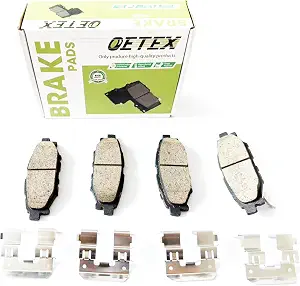 |
| Highest Rated A top-rated pick with lots of positive feedback | Subaru Rear Brake Pad Kit 26696AL020 (Rear) |  |
| Most Popular A crowd favorite that many people choose with confidence | Bendix Priority1 CFC1114 Rear Ceramic Brake Pads (Rear) for Select Subaru/Scion Models |  |
| Best Seller A high-volume bestseller chosen again and again | Bendix Priority1 CFC1808 Ceramic Rear Brake Pads |  |
1. Bosch Blue BE1808H Ceramic Rear Brake Pad Set with Hardware

| Material | Ceramic |
|---|---|
| Auto Part Position | Rear |
| Specification Met | OEM |
| Manufacturer | Bosch Automotive |
These Bosch Blue ceramic rear brake pads are built for everyday driving on Subaru Forester rear axles and arrive as a ready-to-install kit with hardware and lubricant. The platform-specific ceramic friction material is tuned to provide consistent stopping power with reduced fade and minimal dust compared with semi-metallic pads. Bosch includes multi-layer shims, slots, and chamfers that mirror factory design to cut noise and vibration, while a rust-inhibitive coating protects the steel backing plates from corrosion over time. Installation is straightforward for a DIYer or independent shop because the set is precision manufactured to fit the specified vehicles and comes with the necessary hardware. Expect quieter, cleaner braking and predictable pedal feel during normal commuting, highway driving, and light towing. These are not a performance racing pad, so drivers seeking maximum track friction or aggressive bite under extreme use should look at sport-specific compounds instead.
Best for: Buyers seeking a balanced, factory-quality replacement for rear brakes on a Subaru Forester who prioritize quiet operation, low dust, and reliable everyday stopping.
Less Ideal for: Drivers who frequently push the car on track or need maximum high-temperature friction should choose a sport or track-oriented brake compound instead.
- Platform-specific ceramic friction material for consistent stopping and reduced brake fade
- Multi-layer shims, slots, and chamfers reduce noise and vibration for quiet stops
- Rust-inhibitive coating on backing plates helps prevent corrosion and prolongs pad life
- Supplied hardware and synthetic lubricant make installation straightforward
- Ceramic compound delivers less aggressive bite than high-performance track pads
Verdict: A quiet, low-dust, factory-style ceramic rear pad set that gives Forester owners dependable everyday braking with easy installation.
2. Bendix Premium SBC1114 Ceramic Rear Brake Pads (with Hardware)

| Auto Part Position | Rear |
|---|---|
| Material Type | Ceramic |
| Included Components | Brake pad set with installation hardware |
| Automotive Fit Type | Universal Fit |
These Bendix Premium ceramic rear brake pads are a direct-fit replacement designed to match factory fit and function on compatible Subaru and Scion rear calipers. They are intended for daily-driven vehicles and aim to deliver consistent, low-noise braking thanks to the ceramic friction material and included installation hardware. In practice the ceramic compound typically offers smooth initial bite, reduced dust compared with semi-metallic pads, and predictable stopping for commuting and spirited street driving. Bendix emphasizes durability and resistance to wear and corrosion, so drivers who push their Forester on backroads should get steady performance without excessive fade during normal spirited use. Limitations: ceramic pads usually sacrifice a small amount of ultimate high-temperature stopping power compared with aggressive semi-metallic or performance-oriented compounds, so drivers who regularly tow heavy loads or run repeated high-speed track sessions may prefer a performance-specific pad. For routine spirited driving on a Forester these should improve refinement while keeping reliable braking feel.
Best for: Drivers who prioritize refined, predictable braking for daily use and occasional spirited driving on a Subaru Forester and want a low-dust, factory-style replacement.
Less Ideal for: Enthusiasts who need track-focused, high-temperature braking performance or owners who frequently tow heavy loads should consider a performance or heavy-duty pad instead.
- Factory-quality fit and form for direct replacement installation
- Ceramic material produces less brake dust and quieter operation than many semi-metallic pads
- Includes installation hardware for a straightforward rear pad swap
- Designed for consistent braking and reduced fade in normal spirited driving
- Manufactured to resist wear and corrosion for good longevity
- Ceramic compound is not optimized for sustained high-temperature track or heavy towing use
Verdict: Choose these Bendix Premium ceramic rear pads for a factory-quality, low-dust upgrade that delivers smooth, reliable braking for everyday and spirited Forester driving.
3. HUSCH Rear Ceramic Brake Pads Kit (4-Pack)

| Auto Part Position | Rear |
|---|---|
| Material Type | Ceramic |
| Number of Items | 4 |
| Automotive Fit Type | Vehicle Specific Fit |
| Manufacturer Warranty Description | 2 Year Manufacturer |
These HUSCH rear ceramic brake pads are a vehicle-specific replacement set sold as four pads for the rear axle. They are made from ceramic material and are intended to match factory braking feel while producing less brake dust and quieter operation than many semi-metallic pads. Typical use is a direct swap on compatible Subaru rear calipers during routine pad replacement; the kit includes the four pads needed for one axle. Notable features include a high reported friction coefficient for brisk initial bite, a ceramic compound that resists leaving black dust on wheels, and manufacturing tolerances aimed at reducing squeal. In practice you can expect cleaner wheels, reduced noise, and a braking response close to factory for everyday commuting and light hauling. Limitations are that ceramic pads can run hotter under sustained heavy track braking and may wear rotors differently than the factory compound, so they are best for street-driven Foresters rather than aggressive track use. Also verify exact model-year fitment before installation since this is a vehicle-specific kit.
Best for: Buyers who want a quiet, low-dust rear pad that matches factory braking behavior for regular driving and prioritizes clean wheels and straightforward replacement.
Less Ideal for: Drivers who frequently perform aggressive track sessions, heavy towing, or sustained high-speed downhill braking should choose a pad designed for high-temperature performance instead.
- Ceramic compound reduces visible brake dust and keeps wheels cleaner.
- High friction coefficient for strong initial bite and shorter stopping distance in normal driving.
- Manufactured to vehicle-specific fit which helps reduce noise and vibration.
- Sold as a complete four-pad rear kit for one axle, simplifying a rear pad service.
- Ceramic formulation is less suited to repeated high-temperature track use compared with performance or metallic pads.
Verdict: A practical rear replacement kit that delivers quieter, low-dust ceramic braking for everyday Subaru driving and easy installation.
4. OETEX Rear Ceramic Brake Pads (D1114) for Subaru Rear Axles
| Auto Part Position | Rear |
|---|---|
| Material Type | Ceramic |
| Unit Count | 4 Count |
| Automotive Fit Type | Vehicle Specific Fit |
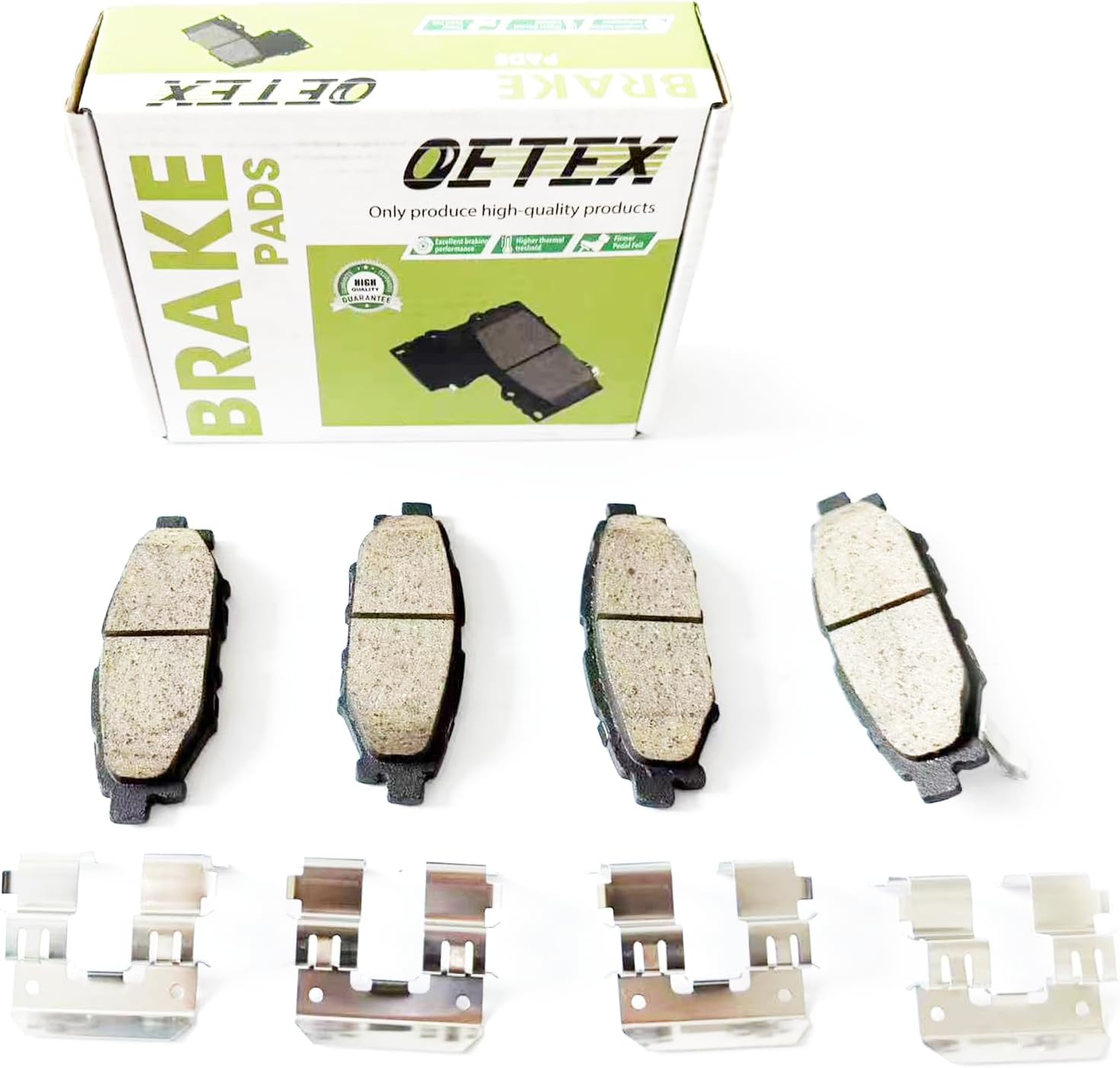
These OETEX rear ceramic brake pads are a direct-fit replacement for the rear of many Subaru models and are sold as a four-piece kit ready for installation. They use a ceramic friction compound with multi-layer rubberized shims and chamfered edges to reduce vibration and squeal, so you should notice quieter stops compared with many semi-metallic options. The ceramic material also produces less brake dust, keeping wheels cleaner over normal driving and light off-road use. OETEX supplies metal retaining clips to promote a secure fit and smoother pad movement, which helps even wear and reduces drag. Thermal stability is highlighted for wet, dry, and snowy conditions, but ceramic pads can wear faster under aggressive towing or heavy performance use compared with heavy-duty semi-metallic pads. Fitment is vehicle-specific, so confirm the D1114 application before buying and expect a straightforward DIY swap or standard shop install.
Best for: Drivers seeking an affordable, quiet rear pad replacement that keeps wheels cleaner and restores normal braking feel on everyday Subaru driving.
Less Ideal for: Drivers who routinely tow heavy loads, carry heavy payloads, or push brakes hard on track days should consider heavy-duty semi-metallic or performance pads instead.
- Direct replacement fit for listed Subaru rear applications using OEM-equivalent D1114 fitment
- Ceramic compound that reduces brake dust for cleaner wheels
- Multi-layer shims and chamfers reduce vibration and audible squeal
- Includes metal retaining clips for stable pad positioning and smoother operation
- Ceramic pads may not last as long as semi-metallic pads under heavy towing or aggressive driving
Verdict: A budget-friendly ceramic rear pad set that restores quiet, low-dust braking for daily-driven Subaru models with D1114 rear fitment.
5. Subaru Rear Brake Pad Kit 26696AL020 (Rear)
| Auto Part Position | Rear |
|---|---|
| Compatible with Vehicle Type | SUV, car |
| Automotive Fit Type | Vehicle Specific Fit |
| Included Components | Pad Kit, Rear |
| Material Type | Ceramic, Semi-Metallic |
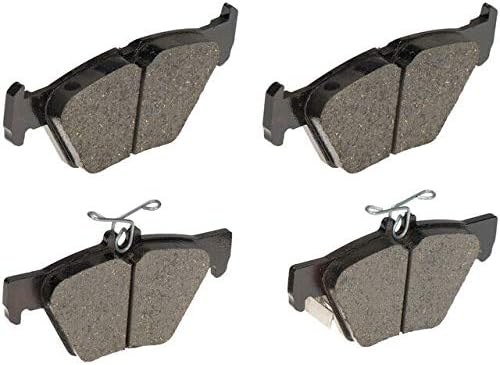
This Subaru rear pad kit provides a direct, vehicle-specific replacement for the rear brakes on compatible Subaru models. It is supplied as a single rear pad kit intended to match factory braking feel and fitment, using a ceramic and semi-metallic compound that balances low dust and stable performance. Installation is the same as other direct-fit replacement pads and is typically done at a routine brake service or during a rotor change. The pads are marketed as meeting factory specification which helps preserve pedal feel and ABS performance without the need for additional bedding procedures used by some aftermarket performance pads. Practical benefits include straightforward fitment, material choices that reduce dust, and a manufacturer-backed part number for easy identification. Limitations are typical of factory-style pads: they prioritize smooth, predictable braking over high-temperature capacity, so they are not aimed at aggressive track use or heavy towing where high-performance pads would perform better.
Best for: Buyers who prioritize reliable, factory-equivalent replacements and want predictable, low-dust performance that integrates cleanly with existing braking systems.
Less Ideal for: Drivers who regularly do track days, heavy towing, or need maximum fade resistance should choose a performance-oriented brake pad instead.
- Vehicle-specific fit for direct replacement and simplified installation
- Ceramic and semi-metallic compound offers a balance of low dust and consistent braking
- Meets factory specification for predictable pedal feel and compatibility with vehicle systems
- Not designed for high-temperature or aggressive track use where performance-oriented pads are better
Verdict: Choose this OEM Subaru rear pad kit when you want a hassle-free, factory-spec brake replacement that restores reliable everyday braking and low dust performance.
6. Bendix Priority1 CFC1114 Rear Ceramic Brake Pads (Rear) for Select Subaru/Scion Models

| Auto Part Position | Rear |
|---|---|
| Material Type | Ceramic |
| Included Components | (1) Bendix Premium Ceramic Brake Pad Set with Installation Hardware (Rear) |
| Automotive Fit Type | Vehicle Specific Fit |
These Bendix Priority1 rear ceramic brake pads are a direct-fit replacement designed for select Subaru and Scion models, including many Forester years in the fitment list. They come as a single pad set with installation hardware and are manufactured to match factory fit, form, and function. In everyday use they deliver quiet operation and predictable pedal feel thanks to the ceramic friction material, and the formulation is engineered for reduced brake fade during normal commuting and light-duty driving. The pads are corrosion resistant and built to a specification that meets OEM-style performance, so installation is straightforward for DIY mechanics and professional shops alike. A practical benefit is the inclusion of hardware, which simplifies a rotor-and-pad service. Limitations are that these are designed for passenger-car braking demands rather than heavy towing or track use, and compatibility is vehicle-specific so you must confirm the exact model years before buying.
Best for: Drivers who prioritize a reliable, factory-style rear pad replacement for daily driving and want the reassurance of a well-known brand and lots of positive user feedback.
Less Ideal for: Drivers who regularly subject their vehicle to heavy loads, frequent towing, or aggressive track braking should choose a higher-performance or heavy-duty friction option instead.
- Vehicle-specific fit engineered to match factory fit, form, and function
- Ceramic friction material for quiet operation and reduced brake dust
- Includes installation hardware for a smoother replacement process
- Formulation tested to meet industry and OEM-style specifications
- Not intended for heavy towing, high-performance track use, or extreme braking demands
Verdict: A dependable, factory-quality ceramic rear pad set that offers quiet, predictable braking for Forester drivers seeking a straightforward OEM-style replacement.
7. Bendix Priority1 CFC1808 Ceramic Rear Brake Pads

| Material | Ceramic |
|---|---|
| Auto Part Position | Rear |
| Specification Met | OEM |
| Automotive Fit Type | Vehicle Specific Fit |
The Bendix Priority1 CFC1808 rear brake pads are a vehicle-specific ceramic replacement engineered to match factory fit and braking feel for compatible Subaru models. They are used as direct replacement pads on the rear axle and include installation hardware and features like shims, slots, and chamfers aimed at reducing noise and improving bite. In everyday driving the ceramic friction compound delivers consistent stopping power with reduced dust compared with semi-metallic options, and the formulation is rated to resist fade under normal commuting and light towing conditions. The pads are machined on the exterior for a precise fit and are built to meet OEM fit, form, and function so they install easily for technicians or capable DIYers. Limitations: ceramic pads typically wear rotors a bit differently than semi-metallic pads and may not be the best choice for heavy performance driving or sustained high-heat use; they are optimized for passenger duty rather than track work.
Best for: Buyers who prioritize quiet, reliable daily braking and want a direct-fit, factory-quality replacement for their Subaru rear brakes with low dust and predictable performance.
Less Ideal for: Drivers who routinely do high-performance driving, heavy towing, or extended downhill braking should consider a high-temp semi-metallic or performance pad instead.
- Vehicle-specific design for a factory-quality fit
- Ceramic friction compound reduces dust and soiling on wheels
- Shims, slots, and chamfers help minimize noise and improve bedding
- Includes installation hardware for an easier swap
- Ceramic material is less suited to sustained high-heat or track use compared with performance semi-metallic pads
Verdict: A quiet, low-dust, vehicle-specific ceramic rear pad that provides dependable, factory-spec braking for everyday Subaru driving.
Choosing the Right Subaru Forester Rear Brake Pads: Key Factors to Consider
Stopping Performance
Stopping performance determines how effectively the rear pads contribute to overall braking. For the Forester, rear pads provide a portion of total braking force and help stabilize the vehicle during low- to moderate-speed stops. You should consider initial bite, modulation, and wet-condition performance because these affect pedal feel and how easily you can control stops in everyday traffic.
Different pad compounds trade raw stopping power for longevity or noise characteristics. If you frequently drive in hilly terrain or tow light loads, choose pads with reliable mid-range bite to reduce thermal fade. Conversely, if most driving is urban commuting, a compound tuned for smooth, predictable engagement and low dust may be preferable.
Material and Rotor Friendliness
Pad material—organic, semi-metallic, or ceramic—has the biggest impact on wear patterns for both pads and rotors. Ceramic-style rear pads tend to produce less dust and run quieter, which helps preserve wheel finish. Semi-metallic compounds may offer stronger bite and heat resistance but can accelerate rotor wear if they are aggressive.
For the Subaru Forester, consider rotor thickness, cooling, and replacement cost when choosing a material. A rotor-friendly compound reduces the risk of scoring and the need for earlier rotor machining or replacement. Evaluate whether you prioritize rotor longevity or slightly stronger stopping in demanding conditions.
Noise and Vibration Control
Noise, squeal, and vibration are common concerns with brake pads. For a daily-driven Forester, low-noise operation improves driving comfort and reduces the need for rework. Look for pads with chamfered edges, shims, and high-quality backing plates that damp vibration and limit squeal.
Some compounds are inherently noisier, especially under light braking or cold conditions. If you live in a climate with frequent short trips, choose pads with explicit noise-mitigation features. Proper installation, including clean hardware and correct torqueing, also plays a major role in minimizing noise.
Wear Life and Maintenance Intervals
Wear life affects how often you plan to service the rear brakes. Rear pads on a Forester typically last longer than front pads, but life varies widely by compound and driving style. Consider expected mileage per set and whether the pads come with wear indicators to help you monitor remaining life.
Longer-lasting compounds can lower maintenance frequency but might cost more up front. If you prefer less frequent brake service, prioritize pads with documented higher mileage life while balancing rotor impact. Regular inspection intervals and simple checks will keep the system performing reliably.
Fitment and Installation Quality
Correct fitment to the Subaru Forester rear calipers is essential for safety and optimal braking. Choose pads that provide complete fitment documentation and include necessary hardware or clearly state required hardware. High-quality backing plates, pre-applied friction coatings, and well-formed slots and chamfers make installation easier and reduce post-install noise issues.
Installation time, the need for caliper service, and whether additional parts like retaining clips or shims are required should factor into the decision. If you plan to install the pads yourself, look for kits that simplify the process and include clear instructions tailored to the Forester.
Dust, Corrosion Resistance, and Environmental Factors
Brake dust and corrosion affect wheel appearance and longevity of brake components. Ceramic-style and specially formulated low-dust compounds reduce cleanup and help preserve wheel finish. Additionally, coatings on backing plates and hardware resistance to road salt and moisture extend component life in wet climates.
If you drive in coastal or winter conditions, prioritize pads and hardware with proven corrosion protection. Reduced dust can also improve the appearance of alloy wheels and limit the accumulation of abrasive particles that might accelerate rotor wear.
How Rear Pads Affect Overall Braking Balance
Rear brake pads on the Subaru Forester contribute to pedal feel and stability rather than primary stopping force. While the front pads handle most of the stopping load, the rear pads influence how the vehicle settles during braking and how the brake system resists rear-end dive under heavier braking.
Choosing a rear compound that complements your front pads helps maintain balanced brake distribution. Mismatched characteristics between front and rear pads can cause awkward modulation or a change in pedal travel. For best results, select rear pads intended for compatible performance levels with the fronts.
- Rear pads help stabilize braking and prevent premature nose dive.
- Complementary front and rear compounds improve pedal consistency.
- Excessively aggressive rear compounds can upset braking balance.
Interpreting Brake Pad Wear Symptoms
Understanding common wear symptoms helps you decide when to replace rear pads. Squeal or intermittent noise can indicate glazing or vibration, while a persistent grinding often signals metal-on-rotor contact and immediate inspection is needed. Reduced pedal firmness or increased travel can also be a symptom of worn pads or hydraulic issues.
Visual inspection of pad thickness is the most reliable routine check. Many owners use thickness measurements or manufacturer wear indicators as the primary trigger for replacement rather than relying solely on noise.
- Squeal: often glazing or lack of shims.
- Grinding: possible backing plate contact with rotor; inspect immediately.
- Increased pedal travel: check pad thickness and brake fluid condition.
Installation Tips for the Subaru Forester Rear Brakes
Proper installation reduces the chance of noise and extends pad life. Before fitting new rear pads, clean the caliper slides, inspect hardware, and lubricate contact points with high-temperature brake grease where appropriate. Ensure the caliper pistons are retracted evenly and check for any signs of fluid leaks or damaged seals.
Torque guide adherence and following the vehicle-specific tightening sequence for caliper bolts help prevent vibration. If a pad kit does not include shims or hardware, reuse serviceable OEM components or obtain appropriate replacements to maintain proper pad alignment.
- Clean and lubricate slide pins and contact points.
- Compress pistons evenly to avoid caliper binding.
- Use correct torque values for caliper and wheel fasteners.
When to Replace Rear Pads on Your Forester
Replacement intervals vary, but typical rear pad life tends to be longer than the front due to load distribution. Inspect rear pad thickness at regular service intervals and consider replacement when thickness approaches the manufacturer recommended minimum. If you observe persistent vibration, grinding, or a notable drop in stopping performance, replace pads promptly.
Driving habits and environment affect replacement frequency. City driving with frequent stops shortens pad life, while highway cruising generally extends it. Use a combined approach of mileage tracking and visual checks to determine the right replacement schedule for your Forester.
- Inspect pads during every tire rotation or service interval.
- Replace immediately if you hear grinding or see metal contact.
- Track mileage but rely on thickness checks for final judgment.
Matching Pad Type to Driving Style
Select rear pad compounds based on how you use your Forester. For relaxed daily commuting and minimal dust, ceramic-style compounds often offer smooth engagement and low dust. For drivers who occasionally carry heavier loads or drive steep grades, a semi-metallic rear pad with better heat tolerance may be more appropriate.
Consider tradeoffs: quieter, cleaner-running pads may sacrifice some high-temperature resistance, while performance-oriented compounds may increase dust and rotor wear. Choose the option that balances comfort, maintenance frequency, and expected driving conditions.
- Ceramic-style: quieter, less dust, comfortable pedal feel.
- Semi-metallic: better heat resistance, potential for more dust and rotor wear.
- Match rear pad aggressiveness to your front pads for consistent modulation.
Still looking for the perfect fit?
Select your Subaru Forester configuration to see the most relevant Brake Pads recommendations
How We Chose the Best Subaru Forester Rear Brake Pads
We evaluated rear brake pads for the Subaru Forester using a practical, vehicle-focused framework that prioritizes the factors most relevant to everyday owners. Our primary criteria included stopping performance under normal driving loads and in wet conditions; pad material and its effect on wear rate; noise and vibration characteristics; and compatibility with common Subaru Forester rear caliper setups. We also weighed rotor impact by considering how aggressively a pad compound can wear rotors over time, and ease of installation including backing plate quality and available hardware.Excluded from consideration were pads intended exclusively for race use, OEM-only retrofit kits that require significant modification, and products with inadequate documentation about material or fitment. We favored pads with clear material specs, consistent user reports on durability, and manufacturers that provide fitment guidance for Subaru Forester rear calipers. Ultimately, the list reflects pads that balance braking confidence, acceptable noise levels, and reasonable service life for typical Forester use.
Our full evaluation process is outlined in our review methodology.
FAQ
How often should I inspect the rear brake pads on a Subaru Forester?
Inspect rear pads at every routine service or tire rotation, typically every 6,000 to 10,000 miles. Frequency depends on driving style; frequent city driving or towing may require more frequent checks.
Can I replace only the rear pads and leave the front pads as-is?
Yes, you can replace only the rear pads if the fronts still have sufficient life. However, ensure the rear pads you select have similar performance characteristics to the fronts to maintain balanced braking behavior.
What does a grinding noise from the rear brakes usually indicate?
Grinding often means the friction material is worn down and the backing plate is contacting the rotor. It requires immediate inspection and likely pad replacement to prevent rotor damage.
Are ceramic rear pads a good choice for the Forester?
Ceramic-style rear pads are often a good choice for Forester owners who prioritize low dust and quiet operation. They may have slightly less heat tolerance than some semi-metallic compounds but generally provide comfortable daily driving performance.
Will installing new rear pads affect brake pedal feel?
Yes. New rear pads can change pedal travel and initial bite, especially if the old pads were significantly worn. Proper bedding and ensuring compatible front/rear characteristics will help achieve consistent pedal feel.
Do I need new hardware when replacing rear pads?
Not always, but replacing worn or corroded hardware and using proper shims or anti-rattle clips improves longevity and reduces noise. Inspect hardware and replace if it shows signs of wear or corrosion.
Final Verdict
Prioritize rear pad choices that complement your Forester's typical driving conditions and front pad selection. Focus on stopping performance, rotor friendliness, and noise control to maintain balanced braking and minimize unexpected maintenance. For most owners, selecting a rotor-friendly compound with good noise mitigation and adequate wear life will provide the best overall value.Weigh the tradeoffs between quieter, lower-dust ceramic-style compounds and more heat-tolerant semi-metallic options based on your driving needs. Use regular inspections and thickness checks to time replacements confidently and preserve both pads and rotors.
Explore More:
- Check out all Subaru Forester parts & accessories
- Explore Brake Pads Maintenance & Repair Guides
- Explore Brake System
- Browse all Auto Parts
