

Note: This article contains affiliate links. If you click on these links and make a purchase, I may earn a small commission at no extra cost to you. This helps support my research and content. Read my full affiliate disclosure here.
If you drive a 2009–2013 Subaru Forester, worn or warped rotors are a common cause of vibration, reduced stopping performance, and uneven pad wear. Choosing the right brake rotors matters because they directly affect braking feel, fade resistance, and service life on this platform. This guide shortlists the top brake rotors suited to the Forester's front and rear braking systems and explains the practical tradeoffs between durability, heat dissipation, and maintenance.Below you will find vetted rotor options matched to the Forester, plus the criteria we used to evaluate them and clear guidance on installation, measurement, and when replacement is necessary.
Looking for other parts? See all Subaru Forester parts & accessories.
Top Picks at a Glance
| Best Overall The best all-around choice for most situations | Detroit Axle Front and Rear Brake Rotors and Ceramic Pads Kit for Subaru Forester/Impreza/Legacy/Outback |  |
| Best Quality Built to a higher standard if you want something more solid | MAX Advanced Brakes PerformanceMAX Drilled & Slotted Front and Rear Brake Kit for Subaru Forester |  |
| Best Value The sweet spot between price and what you get | PowerStop Rear Brake Kit KOE4631 — Z17 Ceramic Pads & OE Replacement Rotors |  |
| Best Budget The cheapest option that still gets the job done reliably | Detroit Axle Rear Brake Rotors, 11.26" (pair) |  |
| Highest Rated A top-rated pick with lots of positive feedback | Detroit Axle Front Brake Kit with 11.54" Rotors and Ceramic Pads |  |
| Most Popular A crowd favorite that many people choose with confidence | Detroit Axle Rear Brake Kit with 11.26" Rear Rotors and Ceramic Pads |  |
| Best Seller A high-volume bestseller chosen again and again | Bendix Premium PRT5811 Rear Brake Rotor |  |
1. Detroit Axle Front and Rear Brake Rotors and Ceramic Pads Kit for Subaru Forester/Impreza/Legacy/Outback
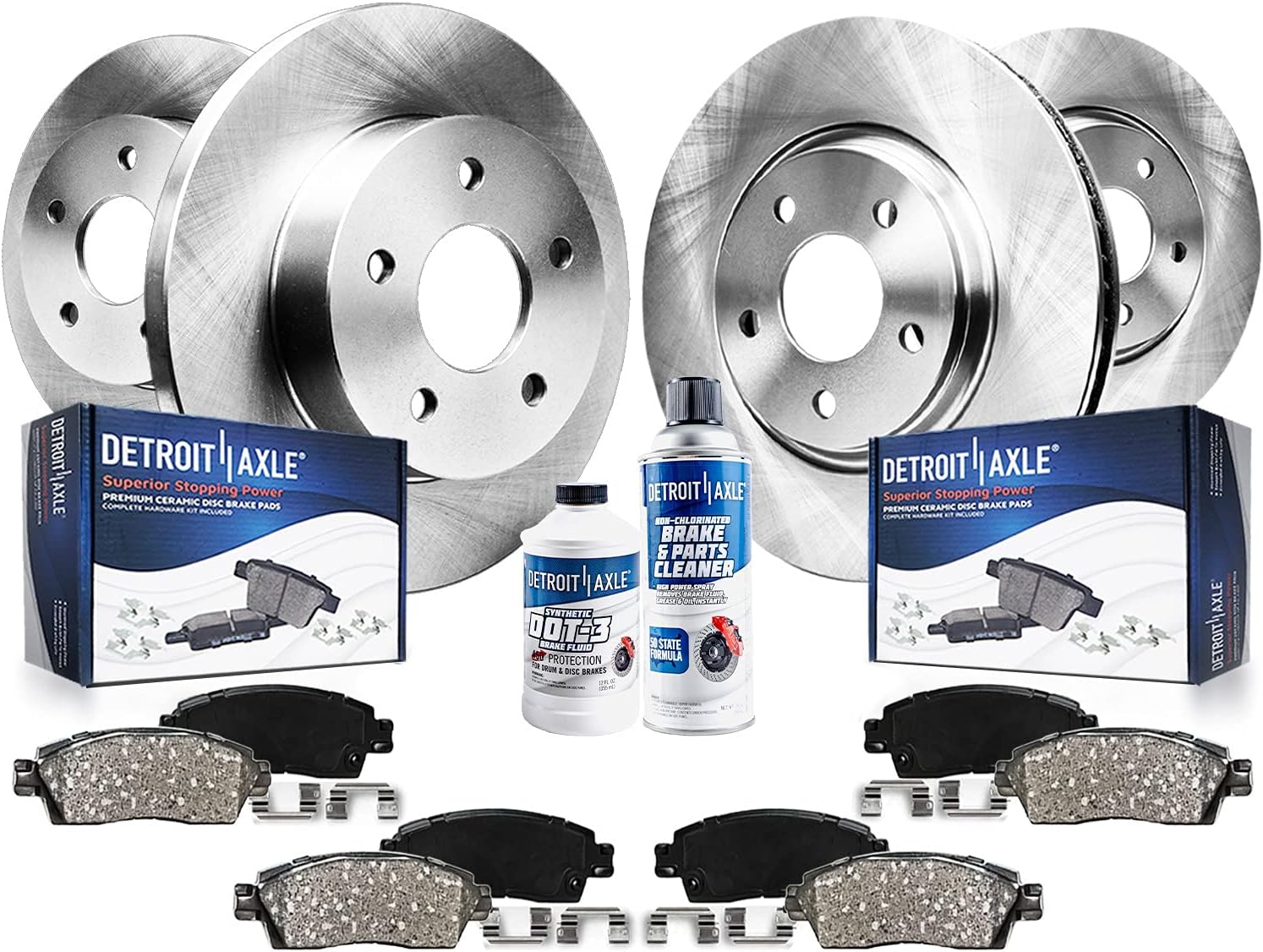
| Front rotor diameter | 11.54 inch (293mm) |
|---|---|
| Rear rotor diameter | 11.26 inch (286mm) |
| Brake pad type | Ceramic |
| Includes | 2 front rotors, 2 rear rotors, front and rear pads, brake cleaner, brake fluid |
| Manufacturer part number | 10PR2200130 |
This Detroit Axle kit supplies two front and two rear disc rotors plus matching ceramic pads and small service items to refresh the braking system on the specified Subaru models. The rotors are drilled and slotted and are described as built to exceed factory specification, which in practice helps with heat dissipation and consistent bite during spirited driving or repeated stops. Ceramic pads reduce dust and tend to be quieter than many semi-metallic compounds, making daily driving more pleasant. Including brake cleaner and fluid is convenient for a single-sitting job and reduces the need to source separate consumables. Fitment is specific to Forester/Impreza/Legacy/Outback models that use the listed rotor diameters, so installation is straightforward for a DIYer with basic tools or a shop doing a full axle service. The kit is heavier than single-axle sets and does not include hardware like replacement caliper bolts or pads wear sensors, so check your vehicle for any additional parts before starting the job.
Best for: Buyers who want a balanced, all-in-one brake refresh for the specified Subaru models that improves braking performance and reduces dust without committing to performance-only parts.
Less Ideal for: Drivers seeking high-performance race or track-specific brake components or those who need a parts-only option that includes detailed hardware and sensors.
- Complete front and rear kit includes rotors, ceramic pads, brake cleaner, and brake fluid for a one-stop refresh.
- Drilled and slotted rotors improve heat dissipation and help maintain consistent stopping under repeated use.
- Ceramic pads produce less dust and are typically quieter than many metallic options.
- Manufactured to meet or exceed factory fit and finish for direct replacement on listed Subaru models.
- Does not include pad hardware, caliper bolts, or wear sensors that some installs require.
Verdict: A convenient complete front-and-rear brake kit that upgrades heat management and reduces dust while providing everything needed for a single-session brake service on the covered Subaru models.
2. MAX Advanced Brakes PerformanceMAX Drilled & Slotted Front and Rear Brake Kit for Subaru Forester

| Included Components | Brake Rotors, Brake Pads, Hardware |
|---|---|
| Set Name | PerformanceMAX Series Automotive Replacement Brake Kit |
| Automotive Fit Type | Vehicle Specific Fit |
| Orientation | Dual |
This PerformanceMAX kit replaces both front and rear rotors and pads with slotted, cross-drilled e-coated rotors and carbon-ceramic pads intended for demanding driving. It is typically used as a full-system refresh when you need stronger, more consistent stopping power for towing, mountain driving, or spirited highway use. The drilled and slotted rotor design improves cooling and helps evacuate gas, water, and debris under repeated heavy braking while the black e-coating reduces corrosion and keeps wheels cleaner. The carbon-ceramic pads are formulated for low fade across a wide temperature range and include dual-layer rubberized shims to cut noise and vibration. The kit ships with installation hardware, anti-seize, and gloves to simplify fitment. Expect firmer initial bite, reduced brake fade under load, and less pad dust than many semi-metal options. Limitations are that drilled rotors can be noisier under certain conditions and may be less ideal for purely track-focused applications where solid or vented plain rotors are preferred; also long-term longevity compared with higher-end OEM performance rotors can vary depending on driving style.
Best for: Drivers who prioritize stronger, fade-resistant braking for towing, mountain runs, or aggressive street driving on a Forester and want a complete front-and-rear kit that reduces dust and improves cooling.
Less Ideal for: Drivers focused exclusively on dedicated track use or those who prefer the absolute longest service life from plain vented rotors under repeated extreme-temperature cycles should look at other specialty options.
- Drilled and slotted rotors improve cooling and help clear gas and water during heavy braking
- E-coated finish provides corrosion resistance for longer-looking rotors behind open wheels
- Carbon-ceramic pads offer strong stopping power with reduced fade across a wide temperature range
- Includes full hardware kit, anti-seize, and gloves for easier installation and complete front and rear coverage
- Drilled rotors can be more prone to cracking under extreme track heat compared with solid plain rotors
Verdict: A complete front-and-rear drilled-and-slotted rotor and carbon-ceramic pad kit that improves cooling and delivers fade-resistant stopping for performance-minded Forester drivers.
3. PowerStop Rear Brake Kit KOE4631 — Z17 Ceramic Pads & OE Replacement Rotors

| Position | Rear |
|---|---|
| Brake Pad Type | Z17 Ceramic |
| Exterior | Machined |
| Automotive Fit Type | Vehicle Specific Fit |
This PowerStop rear brake kit combines Z17 ceramic brake pads with mill-balanced replacement rotors and stainless-steel installation hardware to provide a straightforward, bolt-on rear brake refresh for compatible Subaru models. The Z17 ceramic pads are chamfered, slotted, and thermally scorched for a quick break-in, quiet operation, and reduced wheel dust compared with semi-metallic alternatives. The rotors are precision milled and balanced to help preserve a smooth pedal feel and minimize vibration after installation. Included rubberized shims and stainless hardware simplify installation and reduce rattles. This kit is aimed at daily-driven cars where quiet, clean braking and reliable stopping are priorities rather than track performance. Because the pads are ceramic, they give up some ultimate fade resistance and heat tolerance compared with aggressive performance compounds, so they are not intended for heavy towing or repeated high-temperature driving. Fitment is vehicle specific and the kit is supplied for rear application only, so front braking needs require a separate purchase.
Best for: Buyers who want a cost-effective, maintenance-minded rear brake refresh that prioritizes quiet daily driving, low dust, and an easy bolt-on install.
Less Ideal for: Drivers who frequently do track days, aggressive driving, or heavy towing and need pads and rotors rated for sustained, high-temperature braking.
- Low-dust ceramic pads keep wheels cleaner than semi-metallic pads
- Precision-milled rotors are balanced for smooth pedal feel and reduced vibration
- Complete kit includes pads, rotors, shims, and stainless hardware for bolt-on installation
- Chamfered and slotted pad design promotes quick break-in and quiet operation
- Ceramic pads offer less high-temperature fade resistance than aggressive performance compounds
Verdict: An easy, OEM-style rear brake refresh that delivers quiet, low-dust stopping for daily-driven Subaru Forester owners focused on practical, maintenance-friendly upgrades.
4. Detroit Axle Rear Brake Rotors, 11.26" (pair)

| Rotor diameter | 11.26 inch |
|---|---|
| Fitment | Vehicle specific fit for listed Subaru models |
| Exterior finish | Zinc |
| Material type | Ceramic |
These Detroit Axle rear brake rotors are a direct replacement pair intended for Subaru models that use 11.26 inch rear rotors. They mount like factory parts and are marketed as meeting or exceeding factory specifications, so installation is straightforward for anyone doing a rear rotor swap or a basic brake service. The rotors include a zinc exterior finish to resist corrosion and are listed with a ceramic material type, which suggests attention to heat resistance and reduced rust. For everyday driving and light towing the rotors should restore braking performance close to factory behavior and help reduce noise and vibration when paired with good pads. Expect the usual caveats of aftermarket rotors: they may require a short bedding-in period and surface cleaning before installation, and they are a plain drilled/slotted-free design so they will not provide the enhanced cooling or bite of performance rotors. For buyers watching costs, these rotors offer a practical, vehicle-specific option to replace worn rear discs without upgrading to specialty rotors.
Best for: Buyers needing an affordable, direct-fit replacement to restore rear braking on selected Subaru models and who prioritize reliable everyday braking over performance upgrades.
Less Ideal for: Not a good choice for drivers seeking track-capable rotors, heavy-duty towing upgrades, or those wanting slotted or drilled rotor features for aggressive cooling.
- Vehicle-specific fit for compatible Subaru rear disc applications
- Zinc exterior finish helps resist corrosion and surface rust
- Sold as a pair so both rear rotors are replaced at once
- Manufactured to meet or exceed factory fit and finish expectations
- Plain, non-drilled and non-slotted design limits cooling and performance under heavy track use
Verdict: A budget-friendly, vehicle-specific pair of rear rotors that restores factory-like braking for 2009–2013 Forester owners without extra performance frills.
5. Detroit Axle Front Brake Kit with 11.54" Rotors and Ceramic Pads

| Compatible with Vehicle Type | Car |
|---|---|
| Orientation | Front |
| Rotor diameter | 11.54 inch (293mm) |
This Detroit Axle front brake kit supplies two 11.54 inch rotors and a pair of ceramic brake pads intended as a direct-fit replacement for the front of compatible Subaru Forester and Legacy variants. The rotors are described as meeting or exceeding factory specifications and are finished for proper fit and installation, while the ceramic pads aim to deliver quieter, lower-dust braking compared with semi-metallic alternatives. Typical use is a full front pad-and-rotor service when the original parts are worn or scoring appears. The kit simplifies repairs by including both rotors and pads so you replace mating surfaces at once, which helps restore consistent pedal feel and stopping performance. Buyers prioritizing long-term reliability will appreciate the manufacturer's testing claims and the included 10-year warranty. Keep in mind ceramic pads can feel slightly less aggressive than performance-oriented materials under repeated hard stops, and the fit applies only to models that use 11.54" front rotors, so confirm rotor diameter before purchasing.
Best for: A buyer who wants a straightforward, factory-quality front brake refresh that emphasizes durable parts and low-maintenance operation for routine street driving.
Less Ideal for: Drivers seeking aggressive track-level braking or the highest heat tolerance under repeated hard stops should consider performance brake compounds instead.
- Complete front kit includes both rotors and ceramic pads for matched replacement
- Rotors stated to meet or exceed factory specifications and undergo durability testing
- Ceramic pads produce lower dust and typically quieter operation than many metal-based pads
- Includes parts sized to the common 11.54" rotor specification for correct fit on applicable models
- Fitment limited to vehicles that use 11.54" front rotors so not universal across all Forester years
Verdict: Choose this kit if you want a reliable, matched front rotor-and-pad replacement that restores factory-like braking and reduces dust for compatible Subaru Forester models.
6. Detroit Axle Rear Brake Kit with 11.26" Rear Rotors and Ceramic Pads

| Fit Type | Vehicle Specific Fit |
|---|---|
| Orientation | Rear |
| Kit Contents | 2 rotors, 2 ceramic pads, hardware, brake cleaner, brake fluid |
| Rotor Diameter | 11.26 inch |
This Detroit Axle rear brake kit supplies everything needed to replace the rear braking hardware on supported 2009–2013 Forester models (and other listed Subaru fitments) that use 11.26" rear rotors. The kit includes two vented rear rotors machined with locating holes and a silver zinc plating for corrosion resistance, plus two ceramic brake pads with hardware, a 10 oz brake cleaner, and a 12 oz bottle of brake fluid — useful for a DIY axle-out service. Vented rotors and ceramic pads aim for lower noise and improved cooling during repeated stops, and the machined fit points are intended to match factory mounting for a straightforward installation without modifications. The kit is packaged as a complete replacement, which saves time sourcing parts separately. Limitations to note are that these are aftermarket replacement parts rather than factory-brand components and the kit is specific to vehicles listed with the 11.26" rear rotor size, so confirming fitment for your exact model and trim is essential before buying.
Best for: Buyers who want a single-purchase rear brake replacement for a compatible Subaru and who prioritize having all necessary parts and fluids on hand for a DIY or backyard install with confidence from many user reviews.
Less Ideal for: Shoppers seeking factory-brand brake components or those who need fitment for rotor sizes other than the specified 11.26" rear rotor should look elsewhere.
- Complete kit: rotors, ceramic pads, hardware, brake cleaner, and brake fluid included for a single service job.
- Vented rotors with zinc plating improve cooling and resist visible corrosion compared with unplated rotors.
- Machined locating holes and factory-style fit aimed at straightforward installation without modification.
- Aftermarket replacement rather than factory-brand parts, which may differ slightly in feel or long-term durability compared with factory-quality components.
Verdict: A convenient, all-in-one rear brake replacement kit that matches the 11.26" rear rotor Subaru fitments and includes pads and fluids for a straightforward DIY swap.
7. Bendix Premium PRT5811 Rear Brake Rotor

| Material Type | Cast Iron |
|---|---|
| Exterior Finish | Machined |
| Included Components | (1) Bendix Rotor |
| Manufacturer Part Number | PRT5811 |
The Bendix Premium PRT5811 is a single rear brake rotor intended as a direct-fit replacement for compatible Subaru applications. Made from high-grade cast iron with a machined finish, the rotor is dynamically balanced and uses internal cooling vanes to manage heat during normal and spirited driving. It is typically used when replacing a worn or warped rear rotor during routine brake service and pairs with standard replacement pads. Notable features include factory-style fit, machining for reduced noise and vibration, and designs aimed at improved heat dissipation to reduce brake fade. Practical benefits are straightforward: easy bolt-on installation, predictable pedal feel that matches factory characteristics, and durability from the cast-iron construction. Limitations are that this is a single rotor sold individually rather than a paired set and it does not include mounting hardware or pads, so buyers should plan for a matching left/right rotor or additional components when doing an axle service.
Best for: Buyers who prioritize a conservative, factory-like replacement that restores original braking feel and durability on a Forester from the covered years.
Less Ideal for: Drivers wanting a performance upgrade, slotted or drilled rotors, or those who prefer to replace rotors in matched axle pairs without buying an additional unit.
- Factory-style fit and machining for straightforward replacement and consistent pedal feel
- High-grade cast iron construction for durability and heat tolerance
- Dynamically balanced and vented design to reduce vibration and help dissipate heat
- Sold as a single rotor rather than an axle pair
Verdict: Choose this rotor if you want a durable, factory-quality rear replacement that restores original braking behavior on your Forester.
Choosing the Right 2009-2013 Subaru Forester Brake Rotors: Key Factors to Consider
Fitment and Hub Compatibility
Correct fitment is essential for safe operation and easy installation. Rotors must match the Forester's bolt pattern, center bore, and thickness specifications to avoid hub-centric misalignment that causes runout, vibration, or accelerated pad wear. Mismatched hats or stepped bores can require machining or adapter rings, which adds cost and complication.
When evaluating fitment, check whether the rotor includes the required mounting hardware or if the stock hub design requires the rotor to be tightened to a specific torque sequence. Some aftermarket rotors have tighter runout tolerances, which reduces the chance of a warped-feel brake pedal after installation. Prioritizing direct-fit rotors saves installation time and reduces the risk of compatibility-related issues down the road.
Material and Manufacturing Quality
Rotor material and how it is cast or machined affect heat tolerance, cracking resistance, and lifespan. High-quality gray iron with uniform grain and balanced venting channels dissipates heat more consistently during repeated stops that are common in daily driving and towing.
Look for rotors with controlled internal metallurgy and balanced machining to minimize stress risers. Manufacturing controls that reduce porosity and ensure concentric machining help maintain thickness and reduce vibration. Surface finishes and protective coatings can slow corrosion, especially in wet or salted-road climates where Foresters often operate.
Thermal Performance and Venting
How a rotor manages heat determines its resistance to fade and warping. Vented rotors with effective internal vanes move more air through the rotor body and reduce peak temperatures during repeated heavy braking. For Forester owners who tow, drive in mountainous terrain, or do frequent stop-and-go commuting, improved venting reduces the risk of glazing and fade.
Consider vent design along with overall rotor mass. Heavier rotors can absorb more energy but may change unsprung weight and affect suspension feel. Effective thermal performance balances venting, mass, and material to maintain consistent braking under real-world Forester use cases.
Surface Finish and Feature Choice
Deciding between plain, slotted, or drilled rotors affects noise, pad wear, and wet-weather performance. Slotted rotors help clear pad debris and gas for a more consistent bite, while drilled rotors can shed water quickly but may be more prone to crack initiation under extreme thermal cycling. On a daily-driven Forester, slotted or plain rotors often offer the best balance of longevity and quiet operation.
Surface finishes such as zinc or ceramic coatings reduce surface corrosion and help maintain smooth contact with pads. However, highly aggressive slot or drill patterns can accelerate pad wear and may require more frequent pad replacement. Match the surface features to your driving style to avoid unnecessary maintenance.
Resurfacing Versus Replacement
Understanding when to resurface a rotor versus replacing it is important for cost-effective maintenance. Rotors can be turned or machined if they remain above the manufacturer minimum thickness and are free of deep scoring or cracking. However, repeated resurfacing reduces rotor thickness, which can diminish heat capacity and raise the risk of warping under stress.
For the 2009–2013 Forester, confirm the serviceable minimum thickness and measure runout before deciding. If a rotor requires frequent resurfacing or shows edge ridging and uneven wear, replacement is often the safer long-term choice to restore proper brake performance.
Noise, Vibration, and Harshness (NVH)
Brake rotor selection influences NVH characteristics that are particularly noticeable in an otherwise quiet Forester cabin. Rotor runout, surface finish, and hat flatness all contribute to pedal pulsation or steering wheel vibration under braking. Some aftermarket rotors include chamfers, slot edge treatments, or dampening features that reduce noise.
Balancing NVH performance with braking effectiveness is key. For daily driving, prioritize rotors with low runout tolerances and appropriate surface finishes that reduce squeal while maintaining consistent braking bite.
Understanding Rotor Specifications for Your Forester
Rotor specifications include outer diameter, thickness, minimum service thickness, vane type, and center bore dimension. Knowing these numbers for the 2009–2013 Forester ensures the replacement rotor will sit correctly on the hub and clear the caliper and wheel.
Measure existing rotors and compare stamped or boxed specifications to confirm fit. Pay attention to the minimum thickness stamp and the nominal thickness; some rotors share external size but differ in venting and mass, which affects brake feel.
- Outer diameter and thickness determine contact area and heat capacity.
- Minimum service thickness dictates how many times a rotor can be resurfaced.
- Vane style affects airflow and cooling efficiency.
- Center bore and bolt pattern must match the Forester hub for proper centering.
How to Measure Rotor Thickness and Runout
To measure rotor thickness use a micrometer at multiple points around the braking surface and record the smallest reading. Compare this measurement to the rotor's stamped minimum thickness to decide if resurfacing is possible.
Runout is measured with a dial indicator mounted to the hub while rotating the wheel or rotor. Excessive runout causes pedal pulsation and uneven pad wear. If runout exceeds the vehicle specification, the rotor or hub mating surface may need attention before replacement.
- Measure thickness at least three places around the rotor and use the lowest value.
- Measure runout at the rotor face near the hat to detect hub-centric issues.
- Document values and consult the Forester service manual for tolerance limits.
When to Resurface Rotors on a Forester
Resurfacing is appropriate when rotors show light scoring, glazing, or uneven wear but remain above minimum thickness. Resurfacing can restore a true contact surface and improve pedal feel, but it reduces rotor mass and life.
If the Forester experiences repeated warping or the rotor requires frequent machining, replacement is preferable. Also replace rotors when there is visible cracking, excessive radial runout after machining, or if the rotor no longer meets thickness specifications.
- Resurface only if thickness remains above manufacturer minimum.
- Avoid resurfacing if rotors have structural cracks or deep corrosion.
- After resurfacing, always measure runout to confirm improvements.
Matching Rotor Features to Driving Habits
Your driving style should guide feature selection. If you do a lot of highway commuting or light towing, prioritize rotors with good thermal capacity and corrosion resistance. For occasional spirited driving, consider mild slotting for improved pad bite without excessive pad wear.
If you drive primarily in wet or snowy conditions, a rotor with modest slotting can help prevent water build-up and maintain predictable bite. For mostly city driving, plain rotors with durable coatings often provide the quietest and longest-lasting service.
- Commuting and towing: focus on venting and mass for heat absorption.
- Occasional spirited use: consider moderate slotting for better bite.
- Wet climates: slots can reduce temporary loss of friction from water.
Installation and Break-In Best Practices
Proper installation is critical. Clean mating surfaces, torque lug nuts to specification, and follow the recommended torque sequence when mounting wheels. Replace any corroded hardware and ensure the rotor seats fully against the hub to minimize runout.
Follow a break-in or bedding procedure after installation to transfer an even layer of pad material to the rotor surface. A proper bedding process improves initial pedal feel and reduces the likelihood of early noise or uneven wear.
- Inspect hubs and bearings during rotor replacement.
- Use the specified torque values for lug nuts and caliper fasteners.
- Perform a progressive bedding routine to seat pads and rotors.
Still looking for the perfect fit?
Select your Subaru Forester configuration to see the most relevant Brake Rotors recommendations
How We Chose the Best 2009-2013 Subaru Forester Brake Rotors
We focused on criteria that matter specifically to 2009–2013 Subaru Forester owners and excluded products that lack documented fitment for this year range. Our selection filters prioritized correct fitment and hub compatibility, rotor material and manufacturing quality, thermal performance under repeated stops, and features that affect noise and vibration. We evaluated rotor thickness specifications, hat design and runout tolerances, and whether hardware or fitment accessories are required for a direct swap. Durability considerations included surface treatments that resist corrosion and resistance to glazing under heat. We also considered serviceability factors such as whether rotors can be resurfaced, and whether venting or slotting patterns improve cooling without excessively increasing pad wear.Excluded items included rotors without clear compatibility data for 2009–2013 Forester applications, specialty race-only components that compromise daily drivability, and multi-piece rotor systems that require hub or caliper modifications outside typical owner budgets. The final list emphasizes rotors that balance longevity, braking feel, and straightforward installation for typical Forester driving conditions.
Our full evaluation process is outlined in our review methodology.
FAQ
How do I know when my Forester's rotors need replacing?
Common signs include pedal pulsation, visible grooving, cracking, or a thickness measurement at or below the stamped minimum. Also replace rotors if repeated machining fails to eliminate vibration or if corrosion has compromised the braking surface.
Can I resurface my Forester rotors instead of replacing them?
Resurfacing is possible if the rotor remains above the minimum service thickness and is free of structural cracks. However, repeated resurfacing reduces heat capacity, and replacement is advisable when the rotor approaches its minimum or shows recurring issues.
Should I choose slotted or drilled rotors for my Forester?
Slotted rotors generally offer improved pad bite and debris removal with lower risk of cracking, making them a sound choice for mixed driving. Drilled rotors shed water well but can be more prone to stress-related cracking under heavy, repeated braking.
How do I measure rotor runout on my Forester?
Mount a dial indicator on a fixed point near the rotor face and rotate the rotor while recording variations. Measure near the braking surface close to the hat; runout above the vehicle specification indicates a seating or hub issue that should be corrected.
Are coated rotors worth it for a Forester in winter climates?
Protective coatings can slow surface corrosion and make future removal easier. While coatings do not change braking performance significantly, they help extend rotor life in salted or wet conditions common to winter driving.
Do I need to replace rotors and pads at the same time on my Forester?
It is often best to replace or at least inspect pads when installing new rotors. New rotors may require a bedding period, and pairing them with worn pads can lead to uneven transfer layers and premature wear. If pads have significant remaining life and match the rotor surface condition, separate replacement may be acceptable.
Final Verdict
For 2009–2013 Subaru Forester owners, prioritize rotors that match hub fitment and factory thickness specifications while offering sufficient venting to handle your typical driving demands. Decide between resurfacing and replacement based on measured thickness and the extent of wear; frequent resurfacing reduces thermal capacity and is not a long-term solution.Balance features like slotted surfaces and protective coatings against increased pad wear and noise. Choose rotors that provide consistent pedal feel, low runout, and the thermal performance your driving style requires to restore confident braking on the Forester.
Explore More:
- Check out all Subaru Forester parts & accessories
- Explore Brake Rotors Maintenance & Repair Guides
- Explore Brake System
- Browse all Auto Parts
