

Note: This article contains affiliate links. If you click on these links and make a purchase, I may earn a small commission at no extra cost to you. This helps support my research and content. Read my full affiliate disclosure here.
If you own a 2014-2018 Subaru Forester, choosing the right brake pads affects safety, noise, and maintenance frequency. The wrong pads can cause premature rotor wear, excess dust, or noisy braking that undermines daily driving confidence. This guide shortlists the top brake pads suited to the Forester's weight, typical driving conditions, and factory brake hardware.We evaluated candidates for stopping performance, noise and dust control, longevity, and fitment ease. The shortlist includes seven pads that cover commuting, light towing, and occasional spirited driving needs. Read on to understand how these pads differ and which decision factors matter most for your Forester's brakes.
Looking for other parts? See all Subaru Forester parts & accessories.
Top Picks at a Glance
| Best Overall The best all-around choice for most situations | Max Advanced Brakes ValueMAX Front & Rear Brake Kit for Subaru Forester (2014–2018) |  |
| Best Quality Built to a higher standard if you want something more solid | Subaru Front Brake Pad Kit 26296FJ020 (Front) |  |
| Best Value The sweet spot between price and what you get | CCTECHMASS Ceramic Brake Pad Set (8 pieces) for Front and Rear |  |
| Best Budget The cheapest option that still gets the job done reliably | KAX D1114 Ceramic Rear Brake Pads (set of 4) |  |
| Highest Rated A top-rated pick with lots of positive feedback | Bendix Premium SBC1539 Ceramic Front Brake Pads |  |
| Most Popular A crowd favorite that many people choose with confidence | Detroit Axle Brake Kit with Drilled & Slotted Rotors and Ceramic Pads for 2014–2018 Subaru Forester |  |
| Best Seller A high-volume bestseller chosen again and again | Bendix Premium SBC1078 Ceramic Front Brake Pads (front) | 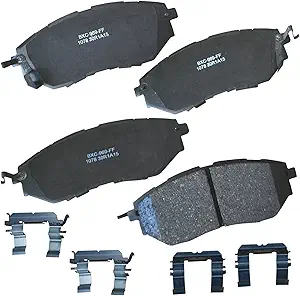 |
1. Max Advanced Brakes ValueMAX Front & Rear Brake Kit for Subaru Forester (2014–2018)

| Fitment | 2014–2018 Subaru Forester 2.5 H4 |
|---|---|
| Included components | Front and rear rotors, brake pads, hardware |
| Pad type | Carbon ceramic-style |
| Rotor material | Cast iron |
This ValueMAX kit from Max Advanced Brakes supplies both front and rear rotors, pads, and installation hardware for a full brake refresh on compatible Forester models. The kit pairs precision-machined cast-iron rotors with carbon ceramic-style pads and dual-layer rubberized shims to reduce noise and dust while delivering consistent stopping power for commuting and everyday driving. Rotors are machined with a non-directional finish to speed bedding and help cut vibration, and the included hardware makes the swap more straightforward for a DIYer or shop. Practical benefits include cleaner wheels, quieter stops, and a factory-replacement fit that keeps braking predictable under normal use. Expect good longevity for daily driving, but this kit is aimed at street use rather than aggressive or track driving where performance-oriented rotors and high-friction pads are preferred. Also note the warranty periods differ for combined kits versus individual components, so confirm coverage for the pieces you install.
Best for: Buyers who want a balanced, reliable brake overhaul for daily driving that prioritizes quiet operation, low dust, and a direct-fit replacement without chasing high-performance upgrades.
Less Ideal for: Drivers who need track-capable stopping power, heavy towing performance, or specialized high-friction compounds should consider performance-oriented rotor and pad options instead.
- Complete front-and-rear kit includes rotors, pads, and hardware for one-stop replacement
- Carbon ceramic-style pads with dual-layer shims reduce brake dust and cabin/road noise
- Precision-machined cast-iron rotors with non-directional finish help reduce vibration and speed bedding
- Designed for everyday street use and not optimized for heavy track or towing demands
Verdict: A full, vehicle-specific brake kit that delivers quiet, low-dust, factory-style stopping for everyday Subaru Forester use.
2. Subaru Front Brake Pad Kit 26296FJ020 (Front)

| Auto Part Position | Front |
|---|---|
| Model Number | 26296FJ020 |
| Manufacturer | Subaru |
| Material Type | Ceramic |
| Automotive Fit Type | Vehicle Specific Fit |
This is the factory front brake pad kit from Subaru made to replace the original front pads on compatible models. It is a ceramic pad set that installs like a direct replacement and is intended for standard street driving rather than track use. Buyers will appreciate the factory-spec fitment and simplified swap-in installation because the kit matches the manufacturer's part number and mounting configuration. Ceramic material helps deliver quiet operation and relatively low dust compared with semi-metallic alternatives, which keeps wheels cleaner during daily driving. The pads are vehicle specific, so you should expect correct alignment with the brake caliper and no need for modification. Limitations are that ceramic pads typically trade off some ultimate heat capacity and initial bite versus aggressive performance pads, so drivers who prioritize heavy track braking or very short stopping distances under repeated hard use may prefer a performance-oriented compound instead.
Best for: Buyers who want a direct, factory-quality front pad replacement that prioritizes quiet daily driving and low dust over extreme track performance.
Less Ideal for: Drivers who regularly do track days, heavy towing, or repeated high-speed braking should choose a dedicated performance or high-temperature brake pad instead.
- Factory replacement fit for correct alignment and easy installation
- Ceramic compound offers quieter operation and lower brake dust
- Includes full front pad kit with manufacturer part number for compatibility
- Ceramic material has lower sustained high-heat performance than aggressive performance compounds
Verdict: Choose this Subaru front ceramic pad kit when you want a direct factory-quality replacement that reduces noise and dust for everyday driving.
3. CCTECHMASS Ceramic Brake Pad Set (8 pieces) for Front and Rear

| Material Type | Ceramic |
|---|---|
| Auto Part Position | Front, Rear |
| Number of Items | 8 |
| Manufacturer Warranty Description | 1 Year manufacturer |
These CCTECHMASS ceramic brake pads are a full front-and-rear replacement kit supplied as four pairs (8 pieces) intended for compatible Subaru models including Forester years in the listed fitment. They use a ceramic-based friction compound that the maker says reduces dust and noise and maintains stable friction at high temperatures. In typical use the pads offer near-silent braking thanks to damping shims and chamfers, and the low-dust formulation helps keep wheels cleaner between services. The kit does not include hardware or lubricant, so you will want to reuse existing clips or buy a small hardware kit and grease to ensure proper installation. Claimed temperature stability and a factory-style backing plate with bonded spacer suggest predictable pedal feel and decent rotor protection for daily driving and occasional spirited use. Expect a normal break-in period and verify exact fit with your vehicle trim before ordering since this is a vehicle-specific fitment product.
Best for: Buyers who prioritize clean wheels, quiet daily driving, and a straightforward front-and-rear replacement for compatible Subaru Forester models.
Less Ideal for: Drivers who want a performance-oriented pad for track use or those who need a full installation kit with new clips and shims included.
- Ceramic compound that significantly reduces brake dust for cleaner wheels
- Designed with damping shims and chamfers to minimize squeal and vibration
- Supplied as a complete set of front and rear pads for one vehicle (8 pieces)
- Manufacturer claims high-temperature stability for consistent braking under heat
- Hardware and lubricant are not included so additional parts may be needed for installation
- Fitment requires confirmation with the vehicle tool to ensure correct trim compatibility
Verdict: A low-dust, quiet ceramic full-set replacement that fits compatible Forester models and is ideal for drivers seeking cleaner wheels and comfortable daily braking.
4. KAX D1114 Ceramic Rear Brake Pads (set of 4)
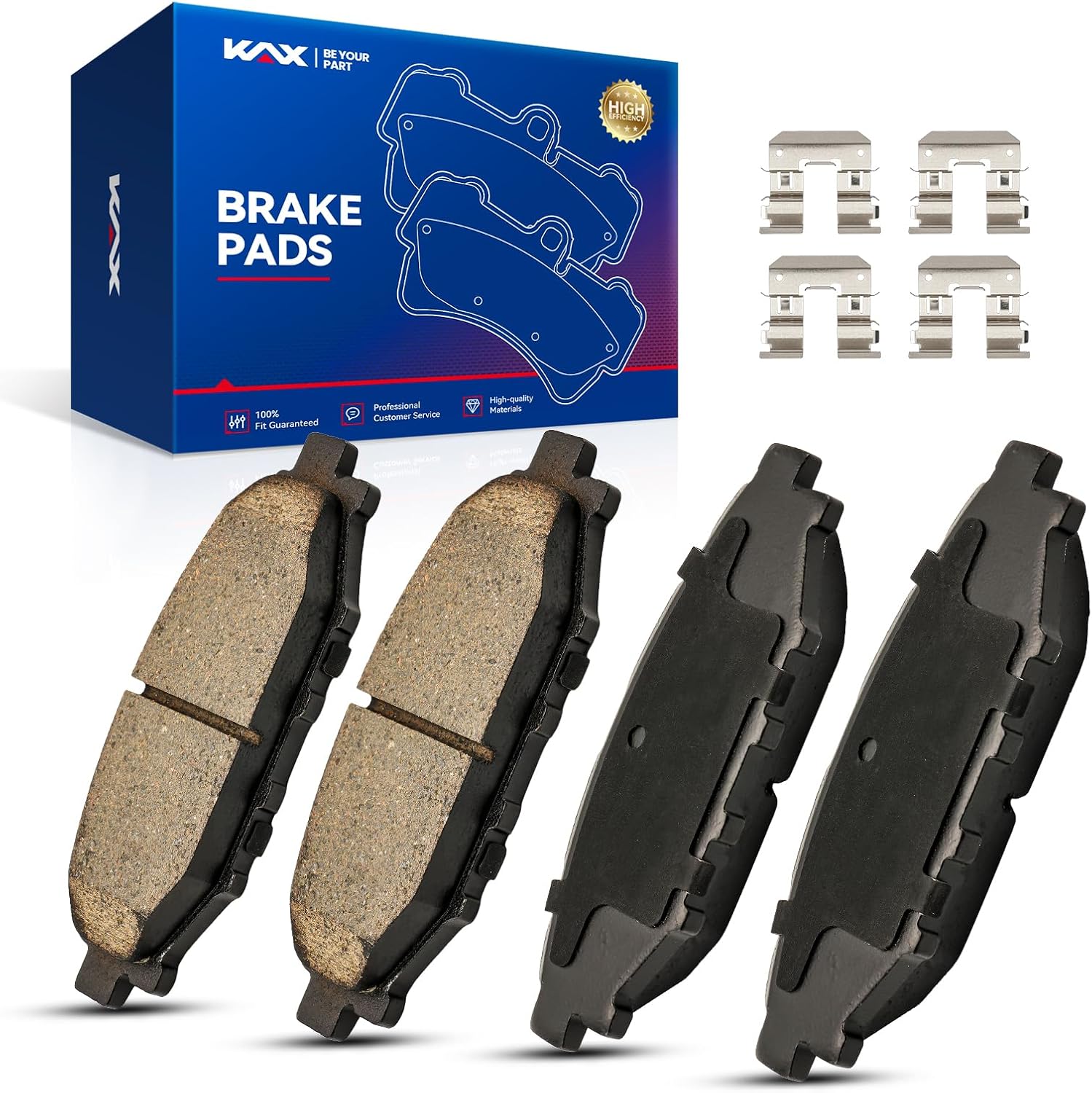
| Material Type | Ceramic |
|---|---|
| Auto Part Position | Rear |
| Number of Items | 4 |
| Included Components | 4x Rear brake pads – D1114 |
These KAX D1114 ceramic rear brake pads are a direct-fit replacement intended for Subaru models in the Forester/Crosstrek/Impreza/Outback/WRX/BRZ family within the listed years. They use a ceramic compound with chamfered edges, slots, and a noise-damping layer to reduce squeal, minimize dust, and manage heat during sustained braking. In normal city and highway driving they deliver quiet, consistent stopping power and are gentler on rotors compared with many metallic pads, which can help reduce rotor wear and long-term maintenance costs. The pads are vehicle-specific so installation is straightforward for DIYers comfortable with rear brake jobs, though proper bedding in is still recommended. Limitations include that ceramic pads are not aimed at high-performance track use or heavy towing where higher friction metallic compounds excel, and the manufacturer warranty covers only the cost of the part.
Best for: A budget-focused Subaru owner who wants a quiet, low-dust rear pad that installs as a direct replacement and reduces ongoing rotor maintenance work.
Less Ideal for: Drivers who do frequent hard-track braking, heavy towing, or demand maximum stopping power under extreme conditions should choose a performance-oriented metallic pad instead.
- Ceramic formulation produces much less brake dust for cleaner wheels
- Noise-damping shims and chamfers reduce squeal and vibration for a quieter ride
- Slotted and chamfered design improves heat dissipation and fit
- Less abrasive on rotors, which can extend rotor life and lower long-term costs
- Not optimized for high-temperature track or heavy towing applications where metallic pads offer higher friction
Verdict: Choose these ceramic rear pads if you want an affordable, quiet, low-dust factory-style replacement that is gentle on rotors for everyday Subaru driving.
5. Bendix Premium SBC1539 Ceramic Front Brake Pads

| Auto Part Position | Front |
|---|---|
| Compatible with Vehicle Type | Cars, SUV, Truck |
| Included Components | Brake pad set with installation hardware |
| Material Type | Copper |
| Specification Met | OEM |
These Bendix Premium SBC1539 ceramic front brake pads are a factory-quality replacement aimed at daily-driven Foresters from the 2011–2018 era and other compatible Subaru/Toyota models. They reproduce the fit, form, and function of the original pads so installation is straightforward and they work with the stock calipers and rotors. The ceramic friction material is formulated to reduce noise and dust versus many semi-metallic pads while still delivering predictable stopping power for commuting, errands, and light highway use. Bendix includes installation hardware, and the pads are built to resist wear and corrosion for longer service intervals. Expect consistent pedal feel and reduced brake fade in normal driving, though drivers who frequently tow, carry heavy loads, or demand aggressive track-level braking may prefer a higher-performance or semi-metallic compound. These pads meet OEM specifications and are a practical choice when you want low dust, quiet operation, and reliable everyday braking on a Forester.
Best for: Buyers who prioritize durable, quiet, low-dust brake pads for everyday driving and want a direct replacement that matches factory performance for a Subaru Forester.
Less Ideal for: Enthusiasts who need aggressive track-level stopping, heavy towing users, or drivers who require pads optimized for sustained high-temperature braking should consider performance or semi-metallic options instead.
- Vehicle-specific fit for straightforward replacement and proper alignment
- Ceramic compound reduces dust and noise compared with many semi-metallic pads
- Includes installation hardware for a complete front pad change
- Built to OEM-fit specifications to provide consistent pedal feel and predictable stopping
- Ceramic material offers less high-heat capacity than some semi-metallic or performance compounds
Verdict: A quiet, low-dust, factory-spec ceramic front pad that gives Forester drivers reliable everyday braking and an easy direct replacement.
6. Detroit Axle Brake Kit with Drilled & Slotted Rotors and Ceramic Pads for 2014–2018 Subaru Forester

| Fitment | 2014–2018 Subaru Forester (2.5L) |
|---|---|
| Rotor type | Drilled & slotted |
| Pad material | 100% ceramic |
| Kit contents | Front and rear rotors, front and rear pads, hardware, brake cleaner, brake fluid |
This Detroit Axle kit replaces both front and rear rotors and pads for 2014–2018 Subaru Forester applications, delivering a full-stop replacement set that includes brake fluid and cleaner for a single-shop install. The rotors are drilled and slotted, which helps dissipate heat and shed pad material during spirited driving or heavier highway braking, while the included 100% ceramic pads are designed for quieter operation and reduced dust versus semi-metallic compounds. The package comes with installation hardware and claims factory-quality fit from ISO-certified manufacturing and durability testing. Practical benefits include getting all wear items in one shipment and fewer compatibility headaches when swapping both axles at once. Limitations: ceramic pads typically provide gentler initial bite than performance metallic pads and can wear faster under sustained heavy towing or track use, and drilled rotors can be more prone to cracking under extreme thermal cycling compared with plain rotors. For routine street driving and confident daily braking on a Forester, this kit balances noise, dust, and stopping performance with the convenience of a complete set.
Best for: Buyers who prioritize a full, matched replacement with quieter, low-dust ceramic pads and want reassurance from a widely used aftermarket brand and many customer reviews.
Less Ideal for: Drivers who frequently tow heavy loads, carry sustained high loads, or do track days and need maximum fade resistance and extreme-duty rotor designs.
- Complete front-and-rear kit includes rotors, ceramic pads, hardware, brake cleaner, and fluid for one-stop replacement.
- Drilled and slotted rotors improve heat dissipation and help clear pad deposits under repeated braking.
- 100% ceramic pads produce lower dust and quieter operation than many semi-metallic pads.
- Manufactured in ISO-certified facilities and sold as a matched kit to reduce fitment guesswork.
- Ceramic pads trade some initial bite and high-temperature fade resistance compared with performance metallic compounds.
- Drilled rotors can be more susceptible to cracking under extreme track or prolonged heavy-duty use.
Verdict: Choose this kit if you want a convenient, matched front-and-rear replacement that prioritizes low dust and quiet ceramic braking for everyday Forester driving.
7. Bendix Premium SBC1078 Ceramic Front Brake Pads (front)
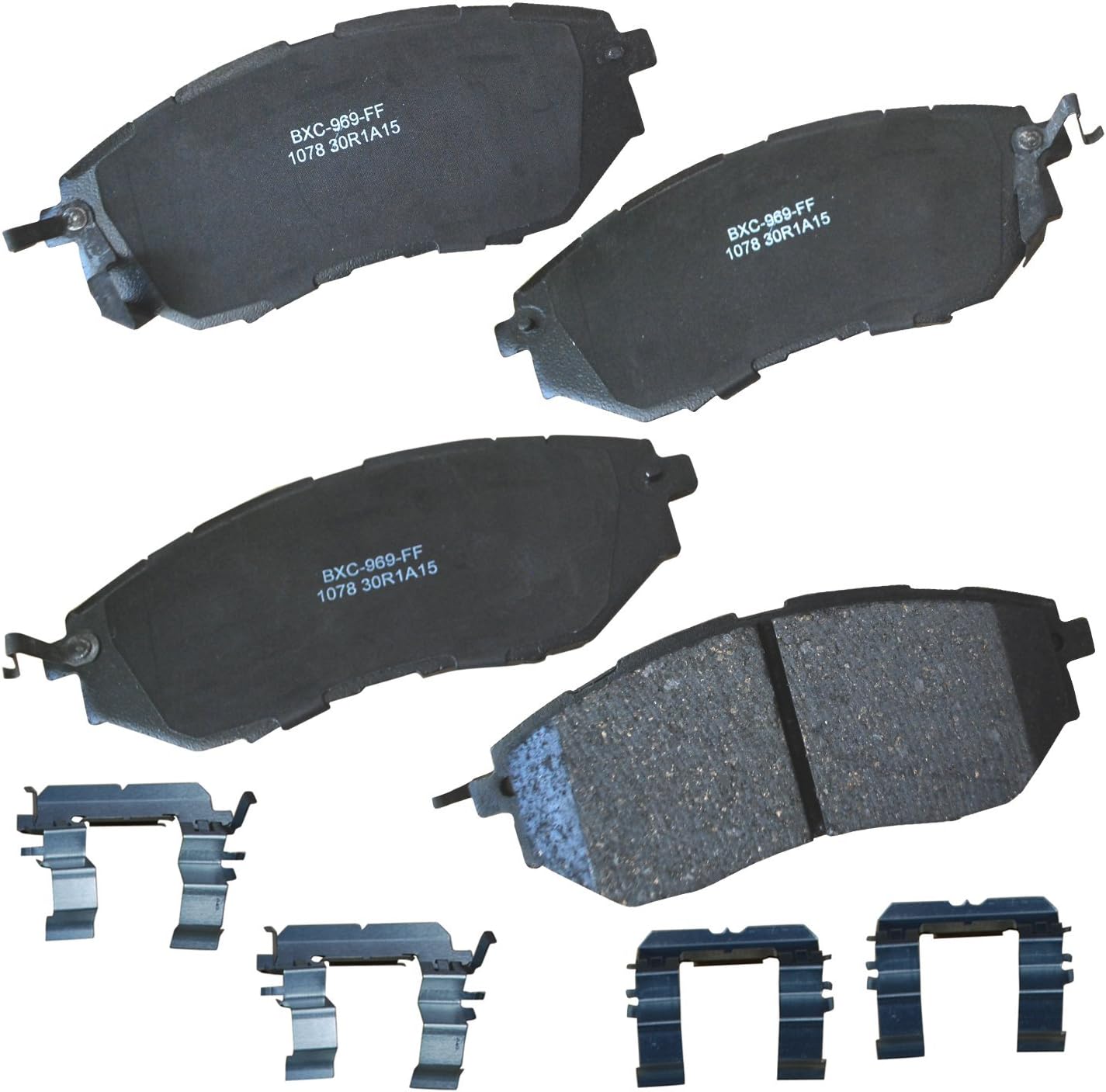
| Auto Part Position | Front |
|---|---|
| Material Type | Copper |
| Included Components | Pad set with installation hardware |
| Automotive Fit Type | Vehicle Specific Fit |
| Specification Met | OEM |
These Bendix Premium ceramic front brake pads are a direct-fit replacement designed to match the fit and braking feel of factory front pads on compatible Subaru models, including 2014–2018 Forester variants listed in the fitment. They are supplied as a single pad set with installation hardware and use a copper-based ceramic formulation intended to resist wear and reduce brake fade during daily driving. In use they deliver smooth, predictable stopping for commuting and family driving, with a quieter initial break-in compared with older semi-metallic pads. The pads are marketed as meeting OEM specifications and include a limited lifetime warranty from the manufacturer. Important practical notes: some Forester trims in the later years may use an electric parking brake or require a specific service procedure to complete pad replacement, so follow the vehicle service manual or have a qualified shop perform the job. These pads prioritize comfort and consistent performance over aggressive sport braking characteristics.
Best for: A cautious buyer who values a quiet, factory-like replacement for everyday driving on a 2014–2018 Forester and wants a direct-fit pad that matches factory performance and comfort.
Less Ideal for: Drivers who do frequent high-speed track sessions, heavy towing, or need maximum high-temperature stopping power should choose a performance-oriented friction compound instead.
- Vehicle-specific fit for compatible Subaru front applications including 2014–2018 Forester listings
- Ceramic copper-based material reduces brake fade and tends to run quieter than many semi-metallic pads
- Includes installation hardware for a complete front pad replacement
- Manufactured to match fit, form, and function of factory front pads
- Not formulated for high-temperature track or heavy towing use where aggressive friction is needed
Verdict: For 2014–2018 Forester owners seeking a quiet, factory-quality front pad replacement that balances everyday stopping performance and longevity, these Bendix Premium ceramic pads are a dependable choice.
Choosing the Right 2014-2018 Subaru Forester Brake Pads: Key Factors to Consider
Pad Material and Composition
Pad material determines initial bite, how the pad behaves as it heats, dust production, and overall life. Organic and ceramic compounds usually offer quieter operation and lower dust, which suits daily commuting and light-duty Forester owners. Semi-metallic blends provide stronger initial bite and better heat tolerance at the expense of higher dust and occasional noise.
Material choice also affects rotor wear. Harder metallic content can be more aggressive on rotors, increasing machine or replacement frequency. For a 2014-2018 Forester, pick a composition that matches your typical use: ceramic-like compounds for low-dust, quiet city driving and semi-metallic types if you need stronger braking for heavier loads or frequent steep descents.
Stopping Power and Fade Resistance
Consistent stopping power across temperature ranges is essential for predictable braking. Pads that maintain friction under repeated stops reduce fade, a key consideration if you tow, carry heavy loads, or often drive mountainous routes in your Forester. Look for pads rated for higher operating temperatures if your use includes sustained braking episodes.
Fade resistance is influenced by backing plate design, bonding process, and friction formulation. Pads that resist glazing and maintain a stable coefficient of friction provide shorter, more predictable stopping distances over time, improving safety during aggressive or repeated braking.
Noise and Vibration Control
Brake squeal and vibration are common complaints that affect ownership satisfaction. Noise results from pad material, backing plate stiffness, and absence of adequate shims or dampening layers. For everyday Forester driving, quieter pads improve cabin comfort and reduce the need for repeated inspections.
Choose pads with chamfered edges, bonded or multi-layer shims, and consistent backing plate flatness to minimize squeal. Also consider whether the pad design includes anti-rattle features to prevent vibration-related noise after installation.
Dust and Rotor Wear
Pad dust affects wheel cleanliness and may be an indicator of abrasive materials in the pad. High dust production requires more frequent wheel cleaning and can coat calipers and sensors. Ceramic-type formulations typically generate lighter, less adhesive dust than semi-metallic pads.
Rotor wear is linked to both pad hardness and embedded abrasive particles. Selecting a pad that balances braking performance with gentler rotor interaction can extend rotor life. For the Forester, where many drivers expect long service intervals, minimizing abrasive wear helps keep total brake service costs down.
Fitment Accuracy and Installation
Correct fitment matters for safety and ease of installation. Pads that precisely match the Forester's calipers reduce the risk of misalignment, uneven wear, or caliper drag. Look for pads that include necessary hardware or clearly state compatibility with the 2014-2018 Forester.
Ease of installation also ties to whether the pads require special tools, new shims, or different clips. Accurate fitment reduces installation time and the chance of post-install noise or brake pull caused by improperly seated pads.
Expected Service Life and Maintenance
Pad thickness, material, and driving habits determine how often pads need replacement. Heavier braking, frequent city stop-and-go driving, or towing will shorten pad life. Consider manufacturers' wear estimates and whether replacement pads are readily available.
Also factor in whether the pads need bedding-in and how quickly they reach optimal performance. Pads that achieve stable friction without a lengthy break-in period simplify maintenance and reduce the risk of early glazing or uneven wear on the Forester's rotors.
Understanding Front Vs Rear Brake Pad Roles
On the Forester, the front pads typically handle the majority of braking force because weight shifts forward under deceleration. That makes front pad selection critical for stopping performance and rotor longevity. Rear pads contribute to balance and stability but usually wear more slowly than front pads.
When planning a pad replacement, evaluate fronts and rears separately. If fronts are significantly more worn, replacing only the front pair can be acceptable for short-term use, but matching friction characteristics front-to-rear maintains consistent pedal feel and stability.
- Front pads absorb most braking energy; prioritize stopping power and heat tolerance for the front axle.
- Rear pads affect stability and parking brake performance; they can prioritize longevity and low noise.
- Replacing both axles ensures matched friction behavior and smoother braking response.
Ceramic Vs Semi-Metallic Options for the Forester
Ceramic-style pads are attractive for Forester owners who prioritize low dust and quiet operation. They tend to produce finer, lighter dust that is easier to clean and causes less wheel staining. They can be a strong match for daily commuting and family use.
Semi-metallic pads offer higher initial bite and better heat handling, which is beneficial if you frequently carry cargo, tow, or drive in hilly terrain. The trade-off is increased dust and potential for more audible noise under certain conditions. Choose based on your driving profile.
- Ceramic: quieter, less dust, comfortable pedal feel.
- Semi-metallic: stronger bite, better heat resistance, more dust.
Symptoms of Worn Brake Pads to Watch For
Recognizing early wear signs helps avoid rotor damage and unsafe braking. Common symptoms include reduced pad thickness, grinding sounds, longer stopping distances, and a pulsating pedal. Pay attention to changes after cold starts and after repeated stops.
If you notice brake pad noise grinding or a metallic scrape, inspect the pad thickness spec against the manufacturer recommendation. Addressing worn pads promptly prevents more costly rotor machining or replacement and maintains predictable braking performance.
- Visual check: pad thickness less than recommended thickness.
- Audible cues: squeal on initial stop, grinding under braking.
- Performance: increased stopping distance or pedal pulsation.
Fitment and Compatibility for 2014-2018 Forester
Confirming fitment is essential before purchase. The 2014-2018 Forester uses specific pad shapes and backing hardware; mismatched pads can cause uneven wear or caliper interference. Always reference the vehicle year range when checking compatibility statements and part numbers.
Some aftermarket pads include full hardware kits—clips, shims, and anti-rattle devices—that simplify installation and reduce post-install noise. If your vehicle still has original hardware, consider replacing worn clips and lubricating contact points during pad service to maintain correct movement and reduce vibration.
- Verify part listings explicitly state compatibility with 2014-2018 Subaru Forester.
- Prefer kits that include necessary shims and clips to avoid extra trips to the parts store.
- Lubricate contact points with high-temperature brake grease during installation.
Bedding-In and Break-In Procedures
Proper bedding-in helps transfer a thin, even layer of friction material to the rotor and establishes consistent braking behavior. A standard bedding procedure involves a series of controlled stops from moderate speeds with cooling intervals to avoid overheating the pads or rotors.
Skipping bedding-in can lead to glazing, uneven contact, and reduced effectiveness. Follow the bedding guidance supplied with the pads and avoid aggressive stops for the first few hundred miles to let the friction surface stabilize.
- Perform gradual stops from 30-40 mph, repeating several times with cooling periods.
- Avoid hard stops immediately after installation to prevent glazing.
- Check pedal feel after bedding; some slight change is normal as the pads seat.
Monitoring Pad Wear and When To Replace
Regular inspections of pad thickness and monitoring for wear symptoms are the best ways to decide replacement timing. How often to replace brake pads depends on driving habits: urban drivers with frequent braking will replace pads more often than highway drivers.
Measure pad thickness and compare to the pad thickness spec recommended for the Forester. When thickness approaches the minimum specification, replace the pads to avoid metal-to-metal contact and rotor damage. Also consider replacing both pads on an axle if wear is uneven.
- Inspect visually every oil change or at least twice a year.
- Measure pad thickness rather than relying solely on audible cues.
- Replace axle pairs together if one pad has worn significantly more than its mate.
Still looking for the perfect fit?
Select your Subaru Forester configuration to see the most relevant Brake Pads recommendations
How We Chose the Best 2014-2018 Subaru Forester Brake Pads
We focused on criteria that directly affect braking performance and ownership experience on the 2014-2018 Subaru Forester. Primary evaluation points included measured stopping power under normal and moderate-load conditions, pad material and backing design for noise and dust control, and expected pad life based on material composition and pad thickness. Fitment accuracy and ease of installation were weighted heavily, because correct fit reduces installation time and the chance of caliper or rotor rubbing. Heat tolerance and fade resistance were considered for drivers who tow, carry loads, or encounter repeated downhill braking. We also reviewed compatibility with stock caliper hardware and whether pads require additional shims or anti-rattle clips.We excluded options that demand substantial caliper modification, require performance rotors, or are intended solely for track use. We did not include pads that lack clear fitment information for the 2014-2018 Forester. The final list balances everyday drivability, acceptable noise levels, manageable dust, and predictable wear characteristics to help owners choose pads that match their driving habits.
Our full evaluation process is outlined in our review methodology.
FAQ
How often should I replace brake pads on a 2014-2018 Forester?
It depends on driving style and conditions. Many drivers replace pads every 30,000 to 60,000 miles, but frequent city driving or towing can shorten that interval. Inspect pad thickness regularly and follow the pad thickness spec to determine replacement timing.
Can I replace only the front pads if the rears are still thick?
You can in the short term if the rears are in good condition, but replacing both front and rear pairs at the same time ensures matched friction characteristics and more consistent pedal feel. Also consider matching pad material between axles for balanced performance.
Why are my new pads making a squeal after installation?
Squeal often arises from lack of shims or insufficient damping between the pad backing and caliper, or from glazing during bedding-in. Ensure shims and anti-rattle hardware are installed and follow the correct break-in procedure. Some materials are also inherently more prone to noise.
Are ceramic brake pads a good choice for daily Forester driving?
Yes. Ceramic-style pads are typically quieter and produce less dust, which suits commuters and family drivers. They generally offer predictable pedal feel, though if you routinely tow or face steep descents, consider a pad with stronger heat tolerance.
How can I check pad thickness without removing the wheel?
You can often inspect pad thickness through the wheel spokes using a flashlight. Compare the visible lining thickness to the recommended pad thickness spec. If you cannot see clearly, remove the wheel for an accurate measurement.
Will aftermarket brake pads fit the 2014-2018 Forester?
Many aftermarket pads are made to fit the Forester, but compatibility varies. Always verify the product listing states explicit fitment for 2014-2018 Forester and whether the pad set includes necessary hardware or requires additional clips.
Final Verdict
Prioritize the braking characteristics that match how you use the 2014-2018 Forester. If you value low dust and quiet operation for daily driving, ceramic-style pads are a practical choice. If you need stronger bite and better heat tolerance for towing or hilly routes, consider a more robust friction blend.Balance stopping power, noise control, and rotor friendliness when selecting pads, and confirm fitment and necessary hardware before installation. Regular inspections against the pad thickness spec and timely replacement will keep braking performance consistent and help avoid costly rotor damage.
Explore More:
- Check out all Subaru Forester parts & accessories
- Explore Brake Pads Maintenance & Repair Guides
- Explore Brake System
- Browse all Auto Parts
