

Note: This article contains affiliate links. If you click on these links and make a purchase, I may earn a small commission at no extra cost to you. This helps support my research and content. Read my full affiliate disclosure here.
If you own a 1998-2002 Subaru Forester, the right brake pads make a major difference in everyday safety and driving comfort. Worn or inappropriate pads reduce stopping power, increase noise, and shorten rotor life. This guide collects the top shortlisted brake pads suited to the Forester's braking system across normal commuting and occasional spirited driving.Each selection focuses on concrete criteria that matter to Forester owners: consistent stopping performance, longevity under mixed driving, pedal feel, and noise control. The guide covers front and rear pad considerations, expected wear signs, and installation fitment notes to help you pick the right option for your needs. Read on for the full evaluation and practical maintenance advice.
Looking for other parts? See all Subaru Forester parts & accessories.
Top Picks at a Glance
| Best Overall The best all-around choice for most situations | Detroit Axle Drilled & Slotted Brake Kit with Ceramic Pads and Hardware |  |
| Best Quality Built to a higher standard if you want something more solid | Bosch QuietCast Premium Ceramic Front Disc Brake Pad Set (BC721) |  |
| Best Value The sweet spot between price and what you get | Detroit Axle Ceramic Brake Pads Kit (Front and Rear) for 1998–2002 Subaru Forester |  |
| Best Budget The cheapest option that still gets the job done reliably | Auto Shack Front Ceramic Brake Pads for Subaru (2000–2002 Outback; 1998–2002 Forester; 1998–2003 Impreza) |  |
| Highest Rated A top-rated pick with lots of positive feedback | Detroit Axle Front Ceramic Brake Pads with Hardware Set (4-piece) |  |
| Most Popular A crowd favorite that many people choose with confidence | Detroit Axle Drilled & Slotted Brake Kit with Ceramic Pads for 1998-2002 Subaru Forester | |
| Best Seller A high-volume bestseller chosen again and again | Bendix Premium SBC721 Ceramic Rear Brake Pad with Hardware |  |
1. Detroit Axle Drilled & Slotted Brake Kit with Ceramic Pads and Hardware

| Fitment | 1998-2002 Subaru Forester (4-Wheel Disc) |
|---|---|
| Includes | Front and rear drilled & slotted rotors, front and rear ceramic pads, hardware, brake fluid, brake cleaner |
| Rotor finish | Zinc plated |
| Pad type | Ceramic |
This Detroit Axle kit supplies everything needed to refresh the braking system on 1998–2002 Subaru Forester models with four-wheel disc brakes: four drilled-and-slotted rotors, matching ceramic front and rear pads with hardware, plus a bottle of brake fluid and brake cleaner. The drilled and slotted rotors help dissipate heat and shed moisture for more consistent braking under repeated stops, while zinc plating reduces visible corrosion and wheel dust. Ceramic pads are quieter and produce less dust than many metallic compounds, making them a good fit for daily driving and occasional spirited use. The kit comes with machined locating holes for straightforward installation and includes cleaner and fluid so you can complete the job without sourcing extras. Downsides are that ceramic pads are less suitable for heavy towing or track use where high-temperature fade resistance matters, and buyers should confirm the four-wheel disc configuration before ordering. For a balanced, all-round replacement this kit covers parts and some consumables in one purchase.
Best for: Buyers who want a single, balanced kit to replace rotors and pads on a 1998–2002 Forester and value quieter, low-dust street performance with straightforward installation.
Less Ideal for: Drivers who regularly tow heavy loads or frequently run their vehicle on a racetrack should choose a heavy-duty or high-temperature brake compound instead.
- Complete kit includes drilled and slotted rotors, front and rear ceramic pads, hardware, brake fluid, and cleaner
- Drilled and slotted rotors improve heat dissipation and help remove moisture for more consistent stopping
- Zinc plating on rotors reduces visible corrosion and wheel dust
- Ceramic pads run quieter and produce less brake dust than typical metallic pads
- Machined locating holes designed for direct fit without modifications
- Ceramic pads are not optimized for heavy towing or high-temperature track use
Verdict: This all-in-one rotors-and-pads kit is the practical choice for Forester owners who want quieter, low-dust everyday braking and an easy, complete replacement.
2. Bosch QuietCast Premium Ceramic Front Disc Brake Pad Set (BC721)

| Material Type | Ceramic |
|---|---|
| Auto Part Position | Front |
| Manufacturer | Bosch Automotive |
| Included Components | Brake Pads, hardware kit (where available) |
The Bosch QuietCast BC721 front brake pad set is engineered as a direct-fit, vehicle-specific replacement for select 1998–2002 Subaru models. These ceramic pads use Bosch’s molded OE-style rubber core shims and a proprietary ceramic friction compound to reduce noise and produce less brake dust while maintaining solid stopping power. Pads come with powder-coated backing plates, OE-style slots and chamfers for reliable fit and a supplied hardware kit and synthetic lubricant for straightforward installation. In practice the QuietCast pads are best for drivers who want quieter, cleaner braking without sacrificing everyday performance; they form a protective transfer layer that helps rotor life and deliver consistent pedal feel in normal and spirited driving. Limits to note are typical of ceramic compounds: they can cost more than basic semi-metallic alternatives and may offer slightly different high-temperature behavior under extreme track use. For street and light performance driving on the specified Subaru models these pads provide a good balance of noise control, longevity, and stopping performance.
Best for: Drivers of the covered Subaru models who prioritize quieter, low-dust braking with dependable street performance and factory-quality fitment.
Less Ideal for: Drivers who regularly perform hard track sessions or require maximum fade resistance and aggressive bite should consider dedicated performance or semi-metallic race pads instead.
- Vehicle-specific fit for listed Subaru front applications for simpler installation
- OE-style multilayer rubber core shim for reduced noise and improved corrosion resistance
- Ceramic friction formula engineered for low dust and consistent everyday stopping power
- Powder-coated backing plates plus included hardware and lubricant help extend life and ease installation
- Ceramic pads may show different fade characteristics than semi-metallic pads under extended high-temperature track use
Verdict: Choose these Bosch QuietCast front pads if you want quiet, low-dust, factory-quality braking for 1998–2002 Subaru street driving with reliable everyday performance.
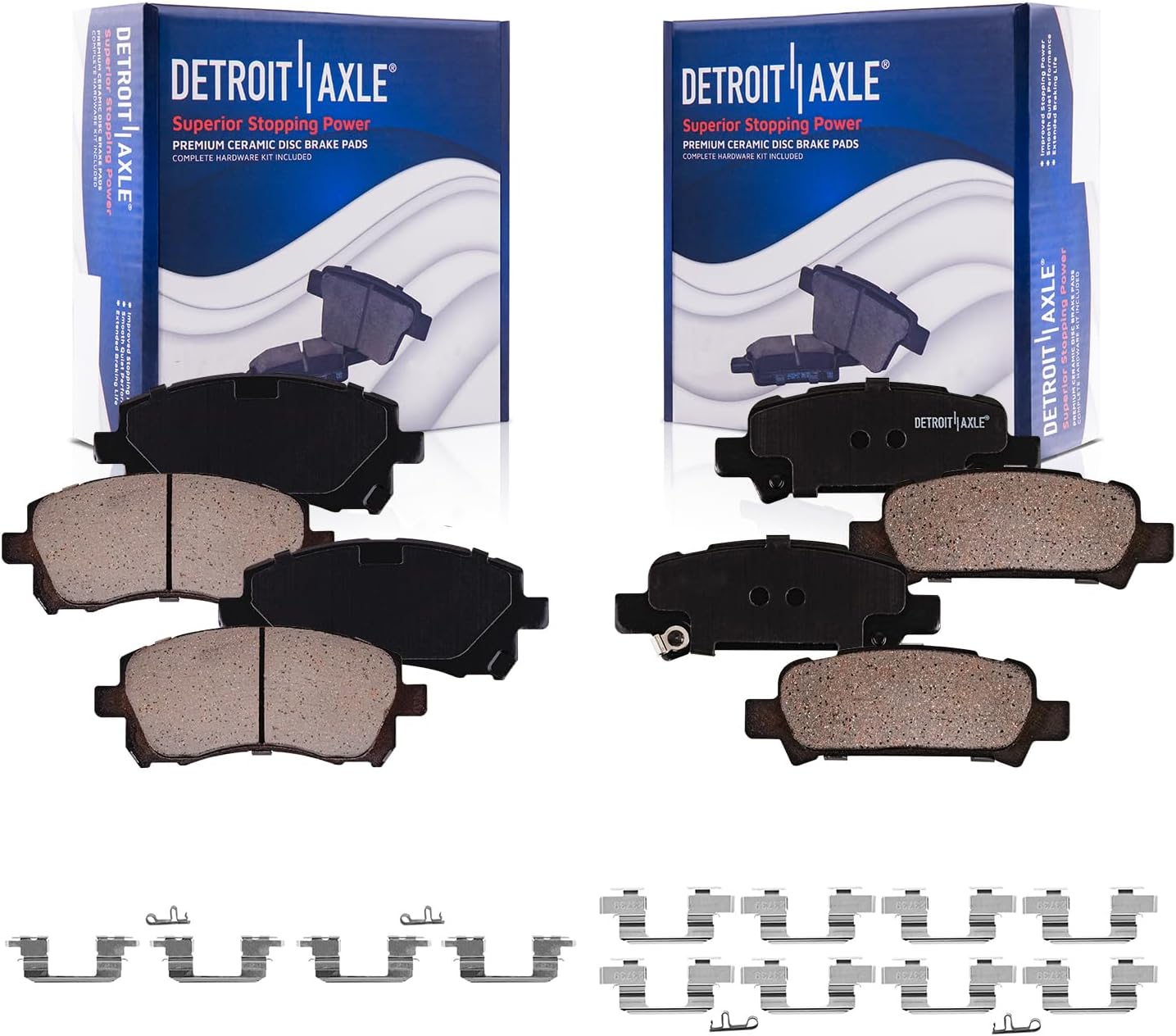
3. Detroit Axle Ceramic Brake Pads Kit (Front and Rear) for 1998–2002 Subaru Forester
| Fitment | 1998–2002 Subaru Forester (4-wheel disc brakes) |
|---|---|
| Material Type | Ceramic |
| Position | Front and Rear |
| Unit Count | 4 |
This Detroit Axle kit provides four ceramic replacement pads (two front, two rear) specifically for 1998–2002 Subaru Forester models equipped with 4-wheel disc brakes. The pads use a ceramic friction formula with chamfers and multi-layer backing to reduce noise, limit dust, and resist fade at high temperatures. Installation is typical of a pad swap and the kit includes hardware for front and rear, making it suitable for a one-stop pad replacement. In daily driving you can expect quieter stops and less rotor wear compared with many semi-metallic options, and the ceramic material helps keep wheel faces cleaner. The pads are marketed as vehicle-specific, so fitment is straightforward for the listed Forester applications, but ceramic pads can feel slightly less bite-heavy under heavy towing or spirited driving compared with some performance metallic compounds. For owners focused on longevity, low dust, and a quiet street ride, this kit is a practical replacement; drivers who need track-focused stopping power should consider a different compound.
Best for: Buyers who prioritize a quiet, low-dust, long-lasting street replacement for routine commuting and maintenance and want a straightforward, vehicle-specific pad swap.
Less Ideal for: Drivers who frequently tow, carry heavy loads, or regularly take the car to the track and need maximum high-temperature stopping power should look at performance-oriented metallic pads.
- Vehicle-specific fitment for 1998–2002 Forester with 4-wheel disc brakes simplifies installation.
- Ceramic formula reduces brake dust and rotor wear compared with many metallic pads.
- Designed chamfers and multi-layer backing lower vibration and audible brake noise.
- Includes front and rear pads plus hardware for a complete axle set replacement.
- Ceramic compound may deliver less initial bite during aggressive or track driving compared with performance metallic pads.
Verdict: A practical, vehicle-specific ceramic pad kit that delivers quieter, lower-dust stopping and easy front-and-rear replacement for 1998–2002 Forester owners.
4. Auto Shack Front Ceramic Brake Pads for Subaru (2000–2002 Outback; 1998–2002 Forester; 1998–2003 Impreza)

| Auto Part Position | Front |
|---|---|
| Compatible with Vehicle Type | Car,SUV |
| Included Components | Ceramic Brake Pad Set |
| Material Type | Ceramic |
These Auto Shack front ceramic pads are a direct-fit replacement for specific late 1990s and early 2000s Subaru models and are intended for drivers who want quiet, low-dust stopping without upgrading to performance compounds. Installation follows the same steps as any front pad change and the kit ships as a single front set. The ceramic material emphasizes consistent friction stability and reduced rotor wear, so you can expect cleaner wheels and steady braking feel during everyday commuting and light towing. The pads do not include clips, so you may need to reuse or source hardware depending on your caliper condition. The product carries a six month parts warranty and the listing notes OEM equivalent part numbers for cross-reference. For budget-focused owners who keep their Subarus mainly on-road, these pads balance noise control and rotor longevity, though they are not aimed at track use or heavy-duty braking scenarios.
Best for: Cost-conscious Subaru owners seeking a quiet, clean-running front brake pad that preserves rotors and provides dependable daily-street stopping.
Less Ideal for: Drivers who regularly track their car, carry heavy loads, or need aggressive high-temperature stopping should choose a performance or semi-metallic pad instead.
- Ceramic compound for quiet operation and low brake dust
- Designed to reduce rotor wear for longer rotor life
- Vehicle-specific fit for the listed Subaru models
- Includes a full front pad set and lists OEM-equivalent part numbers
- Does not include mounting clips or hardware in the package
Verdict: A practical, budget-friendly ceramic front pad set that keeps braking quiet and wheels cleaner for everyday Subaru driving.
5. Detroit Axle Front Ceramic Brake Pads with Hardware Set (4-piece)

| Auto Part Position | Front |
|---|---|
| Manufacturer Warranty Description | 6-Month |
| Number of Items | 4 |
| Material Type | Ceramic |
These Detroit Axle front ceramic brake pads are a direct-style replacement designed to restore braking performance on the specified Subaru Forester models. The kit includes two front ceramic pads plus hardware and brake cleaner, so installation is straightforward for a DIYer or mechanic. Ceramic construction means quieter operation and less dust than semi-metallic pads, and the listing states the pads meet OEM specifications and have passed impact, wear, and fatigue testing for durability. Buyers focused on dependable, long-lived stopping power will appreciate the hardware included and the manufacturer testing claims. Important limitations: compatibility must be verified against the fitment chart for 1998–2002 Forester years, and ceramic compounds can feel slightly less aggressive under hard repeated braking compared with some performance semi-metallic pads. These are best suited to daily driving and regular-use AWD Subarus where quiet, consistent braking and reduced rotor wear matter most.
Best for: A buyer who prioritizes reliable, quiet, and low-dust braking for everyday driving and wants a ready-to-install front pad kit that restores factory-like feel.
Less Ideal for: Not the best choice for drivers who regularly subject the vehicle to heavy track use or aggressive towing where maximum high-temperature friction is required.
- Includes installation hardware and brake cleaner for a complete front pad change
- 100% ceramic material produces low dust and quieter braking
- Manufactured to meet OEM specification with impact, wear, and fatigue testing
- Ceramic pads may have less initial bite under aggressive repeated heavy braking compared with some semi-metallic options
Verdict: Choose this kit if you want a quiet, low-dust, factory-quality front brake pad replacement with hardware for reliable everyday braking on a 1998–2002 Forester.
6. Detroit Axle Drilled & Slotted Brake Kit with Ceramic Pads for 1998-2002 Subaru Forester
| Fitment rotor sizes | Front 10.91 inch, Rear 10.47 inch |
|---|---|
| Pad type | Ceramic |
| Kit contents | Front and rear rotors, front and rear pads, hardware, brake cleaner, brake fluid |
| Vehicle type | Car (1998-2002 Subaru Forester with rear disc) |
| Warranty | 10 Year |
This Detroit Axle kit delivers a full front-and-rear brake service in one box: drilled and slotted rotors for both axles, matched ceramic pads with hardware, a brake cleaner spray and a bottle of brake fluid. It is built to match the specified rotor diameters for 1998–2002 Forester models with rear discs, so installation is straightforward for mechanically competent DIYers or independent shops. The drilled and slotted rotors help dissipate heat and shed moisture, which can reduce fade during spirited driving or repeated stops, while the zinc plating helps resist surface corrosion and wheel-dust staining. Ceramic pads offer quieter operation and lower dust than semi-metallic pads, but they are typically milder on rotor bite and may produce slightly longer stopping distances under extreme loads. The kit includes locating-hole machining and hardware to simplify fitment, and Detroit Axle backs the product with testing and a long warranty. If you want a single purchase that replaces rotors and pads together and prioritizes quieter, cleaner operation, this kit is a practical choice; if you need track-focused pad bite or a specialty compound, a performance-oriented pad would be better.
Best for: Buyers who want a single, well-packaged replacement that restores stopping components to factory-style operation and value practical, lower-noise braking supported by strong user feedback.
Less Ideal for: Drivers who expect aggressive, track-oriented stopping power or who need specialty compounds for heavy towing should look at performance-focused rotor and pad options instead.
- Complete kit includes front and rear drilled-and-slotted rotors, ceramic pads, hardware, brake cleaner and brake fluid
- Zinc-plated rotors resist corrosion and reduce visible wheel dust
- Drilled and slotted design improves cooling and helps remove moisture to reduce fade
- Ceramic pads run quietly and produce less brake dust than typical semi-metallic pads
- Machined locating holes and included hardware simplify fitment to the specified rotor sizes
- Ceramic pads prioritize low noise and low dust over aggressive initial bite for track use
Verdict: A convenient all-in-one rotor and ceramic pad replacement that restores quieter, lower-dust braking for 1998–2002 Forester owners who want reliable, factory-style stopping components.
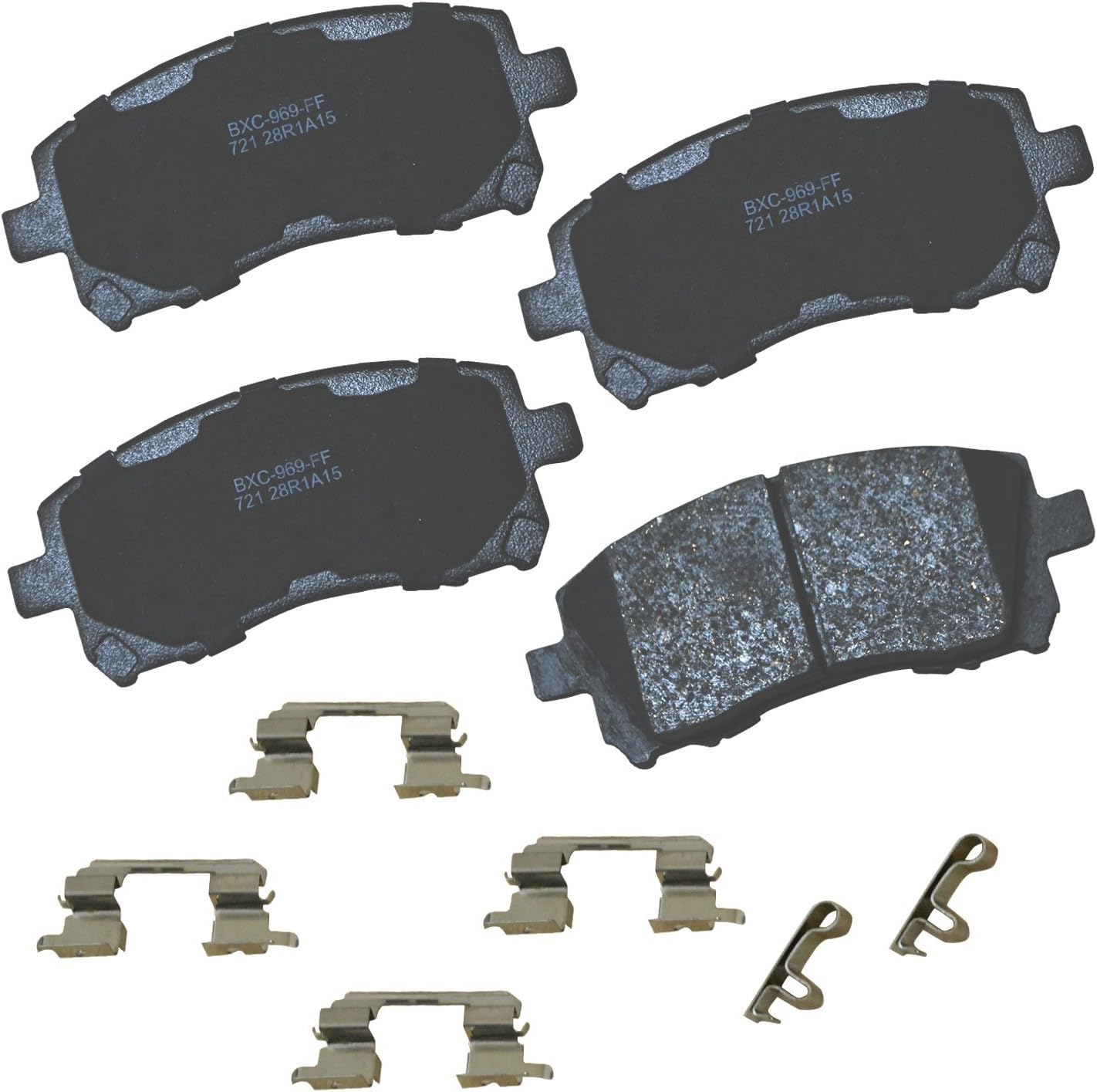
7. Bendix Premium SBC721 Ceramic Rear Brake Pad with Hardware
| Auto Part Position | Rear |
|---|---|
| Compatible with Vehicle Type | Cars, SUV, Truck |
| Model Number | SBC721 |
| Included Components | (1) Bendix Premium Ceramic Brake Pad Set with Installation Hardware |
| Material Type | Copper |
These Bendix Premium SBC721 rear brake pads are a vehicle-specific ceramic replacement intended to match factory fit and function for late 1990s and early 2000s Subaru models. Supplied as a single pad set with installation hardware, the copper-enhanced ceramic compound is built to resist wear and reduce brake fade for everyday driving. In practice they deliver quiet, stable stopping for commuting and light-duty use, and the included hardware simplifies a direct swap when doing pads at home or in a shop. Bendix emphasizes factory-quality specifications and industry testing, so you can expect predictable pedal feel and consistent performance after bedding in. Limitations: these are designed for routine street use rather than heavy towing or motorsport, and buyers should follow proper bedding procedures for best longevity and to avoid early noise. Fitment is vehicle-specific, so verify the SBC721 is the correct rear pad for the exact Subaru model and year before purchasing.
Best for: A cautious buyer who prioritizes a predictable, factory-quality replacement for routine street driving and wants reliable, low-noise braking on a daily-driven Subaru.
Less Ideal for: Drivers who regularly tow heavy loads, carry maximum payloads, or take their vehicle to the track should choose a heavy-duty or performance-oriented pad instead.
- Designed to match factory fit and function for direct replacement
- Ceramic compound reduces brake fade and tends to run quieter than semi-metallic pads
- Includes installation hardware for an easier swap
- Copper-enhanced material and industry testing aim for durable, consistent performance
- Intended for daily driving and not optimized for heavy towing or track use
Verdict: Choose these Bendix Premium ceramic rear pads when you want a factory-quality, low-noise replacement that restores predictable daily driving braking for 1998–2002 Subaru models.
Choosing the Right 1998-2002 Subaru Forester Brake Pads: Key Factors to Consider
Friction Material Type
The friction material determines stopping power, dust generation, heat tolerance, and comfort. Organic and ceramic-style formulations usually offer quieter operation and lower dust but may wear faster under heavy loads. Semi-metallic blends typically provide stronger initial bite and better heat dissipation, which helps on sustained descents, but they can be noisier and create more rotor wear.
For a 1998-2002 Forester, think about your typical driving: mostly city and highway commuting favors ceramic-style or low-metallic pads for quietness and low dust. If you frequently tow, drive in mountainous terrain, or perform spirited driving, choose a material with higher thermal capacity and fade resistance to maintain consistent braking performance.
Pad Thickness and Backing Plate Quality
Thickness at purchase affects service life and fitment. New replacement pads should match the manufacturer's thickness spec closely to ensure correct piston travel and brake balance. A robust backing plate reduces flex and helps maintain uniform pressure across the pad surface, improving wear patterns and pedal feel.
Inspect the replacement pad specifications for exact thickness values and backing plate construction. Thinner-than-expected pads can lead to premature wear and require earlier replacement. Backing plates with anti-rattle features or integrated shims also reduce noise on the Forester's brake system.
Noise and Vibration Control
Brake squeal, groan, and vibration are common complaints on older vehicles. Materials, pad geometry, and the presence of shims or damping layers all influence whether a pad will produce audible noise. Some materials transmit more vibration into the caliper and wheel hub, causing intermittent squeal under light braking.
For a Forester used for daily driving, prioritize pads with factory-style shims, chamfers, and damping compounds designed to minimize noise. Proper bedding and torque of caliper hardware during installation also mitigate vibration-related noise. If you are sensitive to sound, look for pads explicitly rated for low noise in their technical literature.
Wear Rate and Rotor Friendliness
How quickly a pad wears affects ownership cost and maintenance frequency. Some high-friction compounds deliver excellent bite but accelerate rotor wear, necessitating rotor turning or replacement. Others are formulated to be rotor-friendly, spreading wear more evenly and prolonging rotor life.
Match your pad choice to the condition of your Forester's rotors. If rotors are near service limits, choose a pad material known for gentler wear characteristics. Consider the balance between pad longevity and rotor preservation to minimize total brake system costs over time.
Fitment and Compatibility
Correct fitment ensures proper operation and prevents installation issues. The 1998-2002 Forester has specific front and rear pad shapes and caliper configurations, so replacements must be listed for those model years and axle positions. Incorrectly shaped pads can lead to uneven wear, noise, or even caliper damage.
Verify part numbers or fitment listings and double-check whether the pads are intended for front or rear use. Consider whether hardware kits, anti-rattle clips, or new shims are necessary for a proper installation to maintain reliable braking performance.
Thermal Performance and Fade Resistance
Thermal performance matters when braking repeatedly or on long downhill stretches. Pads that overheat can suffer from fade, where braking force diminishes as temperature rises. Materials with higher thermal capacity and stable friction coefficients will maintain pedal feel and stopping distances under sustained use.
If you drive routes with frequent descents or carry heavier loads, prioritize pads with demonstrated thermal stability. Also ensure bedding procedures are followed to stabilize the friction surface and improve heat transfer characteristics, which helps prevent premature fade on the Forester.
Front Versus Rear Pad Roles on the Forester
Understanding the distinct roles of front and rear pads helps set realistic expectations for wear and maintenance. The front brakes on the Forester handle the majority of braking effort and therefore commonly wear faster than the rears. This affects replacement intervals and how you plan inspections.
When servicing the braking system, check both axles. Rear pads contribute to vehicle stability during braking and are important for balanced pedal feel. If only the fronts show heavy wear, replacing fronts alone can be acceptable, but differing pad compounds between axles can alter brake balance and pedal modulation.
- Front pads typically wear faster and require more robust friction material.
- Rear pads support stability and should not be neglected even if wear appears minimal.
- Replacing both pads on an axle at once preserves consistent pedal feel and balance.
Signs You Need Brake Pads Replacement
Recognizing wear early prevents damage to rotors and maintains stopping performance. Common symptoms on the Forester include a fading pedal feel, longer stopping distances under repeated braking, and a high-pitched squeal at light braking when the wear indicator contacts the rotor.
Other signs include grinding noises, uneven pad wear visible through the wheel, and reduced parking-brake effectiveness if the rear pads are compromised. Regular visual inspections and listening for new noises are practical ways to spot problems before they worsen.
- Squeal during light braking often indicates wear indicator contact.
- Grinding usually means the pad is worn to the backing plate and needs immediate replacement.
- Uneven wear can point to caliper or guide-pin issues rather than the pad itself.
Bedding-In and Break-In Procedures
Proper bedding stabilizes the friction surface and establishes an even transfer layer on the rotors, which optimizes performance and reduces noise. A typical bedding routine involves progressive stops from moderate speeds to transfer material without overheating the pads or rotors.
Avoid hard repeated stops immediately after installation. Let the brakes cool between more aggressive stops, and check for any unusual noises or pedal feel changes during the first few hundred miles. Following the pad maker's recommended bedding steps improves longevity and helps prevent glazing or uneven transfer.
- Begin with a series of moderate stops to seat the pads.
- Allow cooling periods rather than frequent successive hard stops.
- Inspect rotors for uniform transfer after bedding is complete.
Routine Inspection and Maintenance Tips
Regular inspections extend pad and rotor life while maintaining safety. Measure pad thickness periodically and look for contamination from oil or grease that can reduce friction. Clean mounting surfaces and ensure hardware is free of corrosion that can impede caliper movement.
Keep caliper guide pins lubricated as specified and replace perished rubber components to ensure even pad retraction and prevent dragging. If you detect persistent noise or uneven wear, a thorough caliper and hardware check often resolves underlying causes.
- Check pad thickness every oil-change interval or at least twice a year.
- Clean and lightly lubricate guide pins when replacing pads.
- Replace anti-rattle clips and shims if they are bent or corroded.
Rotor Considerations When Replacing Pads
New pads mated to worn or damaged rotors can produce poor performance and noise. Inspect rotor thickness and surface condition when changing pads. Scored or heavily grooved rotors may need resurfacing or replacement to ensure proper contact and even wear.
If rotors are within thickness specifications and surface finish is acceptable, machining to restore a smooth surface can be a cost-effective option. Always confirm rotor thickness spec before resurfacing to avoid creating undersized rotors that compromise heat dissipation and structural integrity.
- Measure rotor thickness against factory specifications before resurfacing.
- Replace rotors that are cracked, deeply scored, or below minimum thickness.
- Consider rotor surface finish for bedding and long-term pad performance.
Still looking for the perfect fit?
Select your Subaru Forester configuration to see the most relevant Brake Pads recommendations
How We Chose the Best 1998-2002 Subaru Forester Brake Pads
We evaluated candidates against criteria directly relevant to 1998-2002 Subaru Forester braking demands. Primary evaluation factors included measured friction consistency under mixed city and highway conditions, material durability and pad life expectations, and compatibility with the Forester's caliper and rotor sizes. We also weighed noise tendencies, including propensity to squeal or groan during light braking, and the likelihood of dusty transfer to wheels. Thermal stability and fade resistance under heavier braking were considered for owners who encounter hilly roads.Additional filters excluded pads formulated exclusively for racing or oversized performance rotors that do not fit the Forester's stock setup. We prioritized pads with clear fitment information for the 1998-2002 Forester front and rear positions and straightforward installation. Finally, we reviewed technical specs such as pad backing plate quality, thickness tolerances, and recommended bedding procedures to ensure practical, long-term value for typical Forester use.
Our full evaluation process is outlined in our review methodology.
FAQ
How often should I check pad thickness on my Forester?
Check pad thickness at least twice a year or during routine service intervals. If you do a lot of city driving or frequent downhill runs, inspect pads more often because those conditions accelerate wear.
Can I replace only the front pads and leave the rears?
You can replace only the front pads if they are the only ones worn, but try to maintain similar friction characteristics front and rear to preserve balance. Replacing both pads on the same axle at once is generally recommended.
What does a grinding noise from the brakes usually mean?
Grinding typically indicates the friction material is worn down to the backing plate and metal is contacting the rotor. This needs immediate attention to avoid rotor damage and compromised stopping power.
Are ceramic-style pads a good choice for the Forester?
Ceramic-style pads often provide quieter operation and lower dust, which suits everyday commuting in the Forester. They may trade off some initial bite or heat tolerance compared with higher-metal-content compounds used for heavy-duty or mountainous driving.
Will a different pad compound affect my ABS performance?
ABS behavior is governed by wheel speed sensors and hydraulic modulation, not by pad material directly. However, dramatic changes in pad bite or modulation can change pedal feel and stopping distances, which might alter how ABS engages in specific situations.
How can I reduce brake squeal after installing new pads?
Ensure pads are properly bedded, use quality shims or damping layers, torque caliper bolts to spec, and confirm hardware is in good condition. Cleaning mating surfaces and applying recommended anti-squeal compounds where specified also helps.
Final Verdict
When selecting brake pads for a 1998-2002 Subaru Forester, prioritize a balance between consistent stopping power and longevity based on how you drive. For regular commuting, low-dust, quieter compounds often provide the most comfortable ownership experience. If you encounter hilly terrain or heavier loads, favor materials with higher thermal capacity to reduce fade and maintain pedal feel.Make sure replacements match the Forester's fitment and thickness specifications, follow proper bedding procedures, and address any rotor or hardware issues during installation. By focusing on material type, wear characteristics, noise control, and correct fitment, you can choose pads that deliver safe, predictable braking for years to come.
Explore More:
- Check out all Subaru Forester parts & accessories
- Explore Brake Pads Maintenance & Repair Guides
- Explore Brake System
- Browse all Auto Parts
