

Note: This article contains affiliate links. If you click on these links and make a purchase, I may earn a small commission at no extra cost to you. This helps support my research and content. Read my full affiliate disclosure here.
If your Honda CR-V is showing fading pedal feel, uneven pad wear, or dragging at the rear wheels, replacing the rear brake calipers can restore safe, predictable braking. The right rear calipers deliver solid clamping force, resist corrosion in wet climates, and rebuild consistent brake balance without costly follow-up repairs. This guide covers the top shortlisted rear brake calipers chosen for fitment, durability, and ease of installation specifically for the Honda CR-V.Below you will find the recommended options along with clear guidance on what matters when choosing a rear caliper, and practical tips for installation and maintenance.
Looking for other parts? See all Honda CR-V parts & accessories.
Top Picks at a Glance
| Best Overall The best all-around choice for most situations | A-Premium Rear Disc Brake Caliper Assembly with Bracket for Honda CR-V 2017–2022 (2-piece) |  |
| Best Quality Built to a higher standard if you want something more solid | A-Premium Rear Disc Brake Caliper Assembly with Bracket |  |
| Best Value The sweet spot between price and what you get | ECCPP Rear Left & Right Disc Brake Calipers with Bracket (pair) |  |
| Best Budget The cheapest option that still gets the job done reliably | cciyu Rear Left Brake Caliper Assembly with Bracket (19B2911) |  |
| Highest Rated A top-rated pick with lots of positive feedback | Detroit Axle Rear Right Brake Caliper Assembly with Bracket |  |
| Most Popular A crowd favorite that many people choose with confidence | TRQ Rear Driver and Passenger Side Brake Caliper Set (Rear, 2-piece) |  |
| Best Seller A high-volume bestseller chosen again and again | BDFHYK Rear Disc Brake Caliper Assembly (Left & Right) |  |
1. A-Premium Rear Disc Brake Caliper Assembly with Bracket for Honda CR-V 2017–2022 (2-piece)

| Vehicle fitment | Honda CR-V 2017-2022 Rear Left and Right |
|---|---|
| Piston count | 1x steel piston |
| Bleeder port size | M10 x 1.25 |
| Brake inlet port size | M10 x 1.0 |
| Includes | Caliper, bracket, installation hardware |
This A-Premium rear caliper assembly is a direct replacement unit that includes the caliper, mounting bracket, metal steel piston, and installation hardware for both left and right rear positions. It installs like a factory replacement and is intended for standard street use on 2017–2022 Honda CR-Vs. Notable features include a single steel piston per caliper, M10x1.0 brake inlet and M10x1.25 bleeder port sizes for straightforward hose and bleed-screw compatibility, and an anti-rust coating to help resist corrosion in wet climates. The kit arrives ready to bolt on, which saves time compared with rebuilding an old caliper, and the included hardware reduces parts hunting. Expect performance similar to a factory replacement for everyday driving and braking feel, though the single-piston design is better suited to stock braking demands rather than heavy towing or track use. Buyers should plan to transfer or replace pads and ensure proper bedding and bleeding during installation to get consistent pedal feel.
Best for: Buyers seeking a reliable, ready-to-install factory-style rear caliper replacement for routine driving on a 2017–2022 Honda CR-V who value ease of installation and corrosion protection.
Less Ideal for: Drivers who frequently tow heavy loads, carry sustained high-speed braking demands, or run the vehicle on track should consider heavier-duty or multi-piston options.
- Complete assembly including caliper, bracket and installation hardware for left and right rear positions
- Metal steel piston and anti-rust coating improve durability and corrosion resistance
- Brake inlet and bleeder port sizes match common Honda fittings for easy hose and bleed-screw hookup
- Direct-fit design meant to simplify replacement and reduce install time
- Single-piston design may not provide the same thermal capacity as multi-piston performance calipers
Verdict: A practical, ready-to-install factory-style rear caliper replacement that simplifies swapping worn units on 2017–2022 Honda CR-Vs while offering corrosion-resistant durability.
2. A-Premium Rear Disc Brake Caliper Assembly with Bracket

| Compatible Models | Honda CR-V 2007-2016 (2007-2011 Japan-built), Acura RDX 2013-2018, Crosstour 2012-2015 |
|---|---|
| Brake Piston Count | 1x Metal Piston |
| Brake Piston Diameter | 1.50 inch |
| Brake Inlet Port Size | M10 x 1.0 |
| Brake Bleeder Port Size | M10 x 1.25 |
This A-Premium rear caliper assembly replaces the entire rear caliper and mounting bracket so you can swap a worn or leaking unit quickly. It ships pre-assembled with a metal piston, bleeder and inlet ports sized to the vehicle, and includes installation hardware and anti-rust coating to extend surface life. Typical use is a direct replacement on compatible Honda CR-V, Acura RDX and Crosstour models where you want to restore braking performance without rebuilding the old caliper. Benefits include faster installation compared with rebuilding, included hardware and a ready-to-install bracket that reduces fitment hassle. Several buyers report good fit and factory-like fitment for Japanese-built CR-Vs, and reviewers note the part arrives lubricated and ready to bleed. Limitations are that there are model-specific fit differences (some AWD or non-Japan VINs may not fit) and you will still need to properly bleed and bench-bleed the system; pads and rotors are not included so expect additional work and parts for a full rear brake service.
Best for: Drivers who want to restore rear braking performance with a ready-to-install replacement caliper and prioritize a straightforward swap over rebuilding components.
Less Ideal for: People looking for a complete rear brake refresh out of the box or those with unclear VIN/drivetrain fitment needs should consider a different option or verify exact vehicle fitment first.
- Pre-assembled caliper and bracket for faster replacement
- Includes installation hardware and lubricated pins to simplify install
- Anti-rust coating for improved corrosion resistance
- Compatible inlet and bleeder port sizes and single metal piston match factory plumbing
- Fitment varies by VIN and drivetrain so confirm vehicle-specific compatibility before purchase
- Does not include brake pads or rotors so additional parts are required for a full rear brake job
Verdict: A-Premium offers a ready-to-install rear caliper assembly that gets a Honda CR-V back to factory-quality braking quickly for owners who value a fast, bolt-in repair.
3. ECCPP Rear Left & Right Disc Brake Calipers with Bracket (pair)

| Compatible positions | Rear Left & Right |
|---|---|
| Piston size | 38 mm (1.5 inch) |
| Bleeder port size | M10 x 1.25 |
| Inlet port size | M10 x 1.0 |
These ECCPP rear calipers come as a matched left and right pair with mounting brackets and are intended as direct replacements for the specified Acura RDX and Honda CR‑V/Crosstour rear positions. They use a single 38 mm iron piston with M10 inlet and bleeder ports and arrive without pads so you can reuse existing pads or fit new ones. In practice the calipers provide steady, responsive braking for daily driving thanks to their high‑strength construction and factory‑style fitment, and several user reports note straightforward installation and good fit. Because the kit excludes pads and hardware in some cases you may need to transfer small parts from the old unit or source fasteners separately. These are aftermarket parts built to match OEM specifications rather than a factory part, so expect typical variability in finish and the occasional need to adjust fit or bleed the system after installation. For routine replacement of worn or seized rear calipers on the listed Honda/Acura models this pair is a practical, budget‑focused option.
Best for: Buyers who want a cost‑effective, direct replacement rear caliper pair that restores normal braking performance on the specified Honda/Acura models with minimal fuss and a practical DIY installation mindset.
Less Ideal for: If you want a complete brake refresh including new pads and mounting hardware or require exact factory finish and packaging, choose a full caliper plus pad kit or a dealer replacement instead.
- Sold as a matched left and right rear pair with brackets for direct replacement
- Single 38 mm iron piston construction aimed at consistent, responsive braking
- Designed to match OEM specifications for straightforward bolt‑in installation on listed models
- Bleeder and inlet ports use common M10 thread sizes for easy bleeding and hose hookup
- Ships without brake pads so pads or pad hardware may need to be reused or purchased separately
- Aftermarket finish and fit can vary slightly compared with factory units requiring minor adjustments or hardware swaps during install
Verdict: A budget‑minded, matched rear caliper pair that restores reliable braking on the listed Honda and Acura models while keeping installation simple for hands‑on buyers.
4. cciyu Rear Left Brake Caliper Assembly with Bracket (19B2911)

| Position | Rear Left |
|---|---|
| Piston Size | 1.5 inch |
| Piston Material | Iron |
| Bleeder Port Size | M10 x 1.25 |
| Inlet Port Size | M10 x 1.0 |
This cciyu rear left brake caliper is a straightforward factory-style replacement for Honda CR-V rear driver side applications. It arrives as a single painted caliper with the mounting bracket and metal (iron) 1.5 inch piston already installed, so installation is usually a one-to-two hour job for a DIYer or quick for a shop. The caliper is built to match the OE mounting points and includes the bleeder and inlet threads sized to common Honda fittings, so it bolts up without modification in most installs. Buyers report solid braking feel, quiet operation, and included hardware like banjo bolt and copper washer in many kits. Because this is a single caliper without pads, plan to reuse or replace pads and rotors as needed. Quality control appears good overall but there are isolated reports of machining or weld cleanup required on some units, so inspect the sliding surfaces and piston area before fitting. For someone on a budget who needs a reliable replacement caliper that keeps the factory braking characteristics, this is a practical option.
Best for: Buyers looking to restore braking performance on a Honda CR-V while keeping costs down and who prefer a part that bolts in with minimal modification. Ideal for DIY mechanics or anyone replacing one damaged or seized rear caliper on a budget.
Less Ideal for: Drivers who want a complete brake service kit with new pads and rotors included or those unwilling to inspect and prep aftermarket parts before installation should consider a full kit or purchasing from a premium-brand remanufacturer.
- Direct-fit rear left replacement designed for Honda CR-V mounting and brake line thread sizes
- Includes mounting bracket and common hardware which simplifies installation
- Iron piston and painted finish for durability and corrosion resistance
- Meets or exceeds factory specifications according to product claims and customer reports
- Sold as a single caliper without brake pads or rotors so additional parts may be required
- Some customers reported cosmetic or weld imperfections that needed minor filing or cleanup before installation
Verdict: A budget-friendly, direct-fit rear left caliper that includes the mounting bracket and restores factory-style braking for Honda CR-Vs without major fuss.
5. Detroit Axle Rear Right Brake Caliper Assembly with Bracket
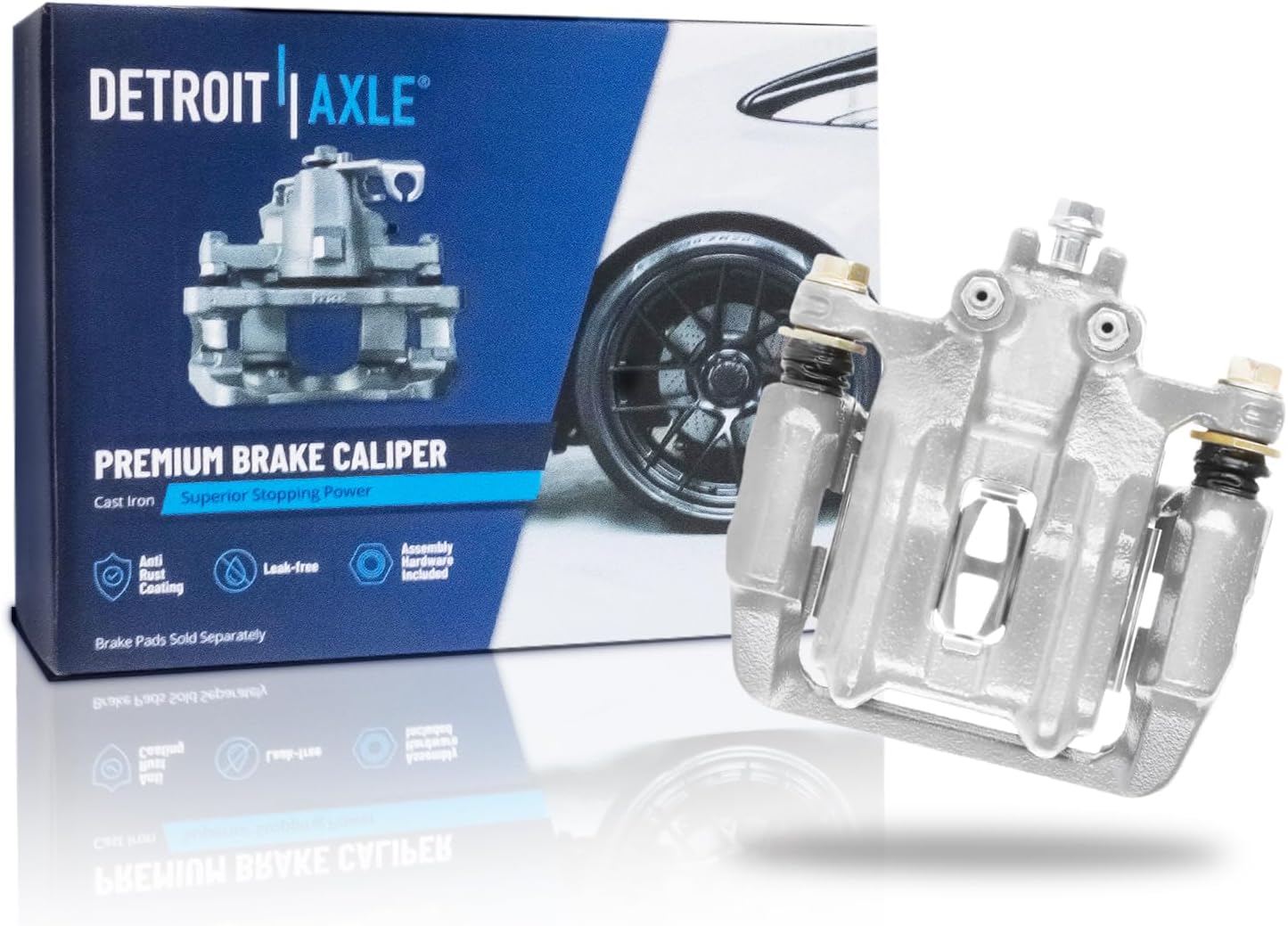
| Position | Rear Right |
|---|---|
| Piston Size | 1.50 inch (38.05mm) |
| Piston Material | Steel |
| Brake Caliper Bracket Included | Yes |
This Detroit Axle rear right brake caliper replaces the vehicle's factory unit and comes complete with the mounting bracket, a single 1.50-inch steel piston, and hardware-ready fit for the listed CR-V, RDX, and Crosstour applications. It is intended for direct replacement use during rear brake repairs or axle-side caliper swaps and is subjected to impact, wear, and fatigue testing to support durability claims. The included bracket simplifies installation because you do not need to transfer the old bracket, and the steel piston construction provides robust corrosion resistance and consistent braking force under normal driving. Limitations include a single-piston design, which is standard for many rear calipers but offers less clamping force than multi-piston options, and this unit ships without pads so you must confirm pad condition or purchase separately. Overall it is a straightforward, build-to-fit replacement that prioritizes long-term reliability for routine road use and brake servicing schedules.
Best for: Buyers who prioritize dependable, long-lasting factory-style replacements and want a direct-fit rear caliper that minimizes installation fuss and future brake maintenance.
Less Ideal for: Drivers seeking high-performance braking upgrades or heavier-duty multi-piston calipers for track or towing use should consider performance-specific options instead.
- Complete caliper assembly includes the mounting bracket for easier swap-in installation
- Steel 1.50-inch piston construction for durable, corrosion-resistant operation
- Designed and tested for impact, wear, and fatigue to support long-term reliability
- Ships without brake pads so pads may need inspection or separate purchase
- Single-piston design provides less clamping force than multi-piston calipers
Verdict: Choose this caliper if you want a tested, bracket-included, factory-style rear replacement built for reliable, long-term service on Honda CR-V family vehicles.
6. TRQ Rear Driver and Passenger Side Brake Caliper Set (Rear, 2-piece)

| Brand | TRQ |
|---|---|
| Model | CLA32400 |
| Position | Rear |
| Exterior | Machined |
| Package includes | Rear driver and passenger calipers with hardware |
This TRQ rear caliper set is intended as a direct replacement for the factory rear calipers and ships pre-assembled with hardware and abutment components to simplify installation. Typical use is a rear brake overhaul where you want to replace worn or leaking calipers without modifying mounting points. The calipers are zinc coated for rust resistance and use EPDM seals to resist thermal deterioration, and the kit includes new washers and a banjo bolt so you can reconnect the brake line during installation. Practical benefits include time saved by pre-assembly, the included hardware for a more complete repair, and a factory-style fit that many installers report matches OEM geometry. Caveats seen in real-world reports: some buyers experienced stuck pistons or fitment surprises where bracket mounting bolts differed and had to be sourced separately, and a few units from batches appeared to be rebuilt rather than fully new. If you plan to DIY, follow bleeding procedures carefully and verify bolt threads before beginning to avoid extra trips for fasteners.
Best for: Buyers who prioritize proven performance backed by many user reviews and want a near-complete, direct-fit rear caliper kit to repair rear brakes themselves or through a local shop.
Less Ideal for: Anyone who needs guaranteed brand support or immediate customer service assistance for warranty claims should consider alternatives with more accessible support channels.
- Direct-fit, pre-assembled calipers reduce installation time
- Zinc coating and EPDM seals improve corrosion and heat resistance
- Includes hardware, banjo bolt and washers for a more complete repair
- No core charge and 100% new components claimed
- Some users reported pistons that stick or require additional work to free
- Occasional mismatch in bracket-to-hub bolt thread requiring separate fasteners
- A few reviews indicate units that felt refurbished rather than new
Verdict: A well-reviewed, ready-to-install rear caliper pair that replaces factory units and comes with most hardware needed for a DIY or shop replacement.
7. BDFHYK Rear Disc Brake Caliper Assembly (Left & Right)

| Position | Rear |
|---|---|
| Brake Piston Count | 1 Piston |
| Piston Diameter | 1.5 inches |
| Inlet Port Size | M10 x 1.0 |
| Bleeder Port Size | M10 x 1.25 |
These BDFHYK rear caliper assemblies replace both left and right rear units and are intended as direct, factory-style replacements for compatible Acura RDX and Honda models. They include the mounting bracket, necessary hardware, and an installation guide so a technician can swap the assemblies without modifying the brake system. The calipers use a single piston design with a 1.5 inch piston diameter and standard M10 inlet and bleeder ports, which keeps bleeding and line connections straightforward during installation. In practice the assemblies are useful for restoring braking feel after a seized or leaking caliper and for doing a matched-pair replacement to avoid uneven rear braking. Expect polished exterior finish and a fit that matches the listed OEM part numbers. Limitations: these are replacement calipers without pads included, so you may need to buy brake pads or inspect rotors at the same time, and professional installation is recommended if you are not comfortable with brake work.
Best for: Buyers who want a direct, factory-style rear caliper replacement that minimizes fitment risk and restores braking function with minimal fuss.
Less Ideal for: Shoppers looking for a complete brake service kit that includes pads, or those wanting upgraded performance calipers for track use.
- Sold as a matched left and right pair for consistent rear braking
- Designed to match specified OEM part numbers for straightforward fitment
- Includes mounting bracket and hardware to simplify installation
- Standard inlet and bleeder port sizes make hose and bleeder fittings compatible with factory lines
- Does not include brake pads so pads must be purchased or reused separately
Verdict: A matched pair of factory-style rear calipers that make dependable, low-risk replacements for the listed Honda and Acura rear brake applications.
Choosing the Right Honda CR-V Rear Brake Calipers: Key Factors to Consider
Correct Fitment and Piston Type
Getting the right caliper for your Honda CR-V means matching the mounting pattern, piston diameter, and whether the caliper integrates the rear parking brake. A mismatched piston size changes hydraulic force and pedal feel, which affects stopping distance and modulation. Rear calipers on many CR-Vs also need to work with the vehicle's parking brake cable or integrated mechanism; choosing a caliper without the correct parking brake configuration can leave the brake inoperative or require adapter parts.
Confirming fitment reduces installation time and the risk of rinsing your replacement with returns or reworks. Check the number and orientation of bleeder screws and the location of the fluid inlet so hose routing and bleeding will be straightforward for your workshop or DIY setup.
Corrosion Resistance and Coating
The rear calipers on a CR-V are exposed to road salts, water, and debris that accelerate rust. Materials and finish matter: calipers with zinc plating, e-coating, or high-quality paint resist pitting and frozen guide pins longer than bare cast iron. Corrosion can seize sliding surfaces and cause uneven pad wear or sticking calipers that overheat the rotor.
Selecting calipers with proven surface protection minimizes maintenance and the chance of repeat replacement. Also consider the quality of hardware such as guide pin boots and dust seals; cheap or absent seals let moisture and grit into moving parts, shortening service life.
Seals, Pistons, and Leak Prevention
Piston seals and boots maintain hydraulic pressure and keep contaminants out of the cylinder bore. For the Honda CR-V, look for calipers with high-quality nitrile or EPDM seals that tolerate brake fluid and temperature cycles without swelling or cracking. Leaking seals cause brake fluid loss and spongy pedals and are a common reason owners replace calipers.
Caliper pistons should be smooth and free of casting flash that can cut seals. Some replacement calipers include new bleeder screws and dust caps, which reduce the chance of leaks developing right after installation.
Hardware and Included Components
Complete kits that include guide pins, mounting bolts, rubber boots, and bleeder screws save time and avoid compatibility issues. The CR-V's rear caliper assemblies often require specific-style sliding pins and boots; receiving only the bare caliper may force you to reuse worn hardware, which undermines the new caliper's performance.
Consider whether the kit includes new copper washers for banjo bolts and any anti-rattle clips for the pads. Having the correct hardware on hand reduces the chance of leaks, noise, and accelerated wear after installation.
Ease of Installation and Brake Bleeding
Installation complexity varies. Some rear calipers accept the existing hose and bracket without modification, while others may require bench-bleeding or an assistant when topping up fluid. If you plan a DIY job, choose a caliper with accessible bleeder screws and clear fluid inlet orientation so you can perform bleeding without draining the entire system.
Also factor in whether the caliper design allows for easy retraction of the piston if the parking brake mechanism requires it. Simpler installations reduce labor time and the risk of installation errors that can compromise safety.
Serviceability and Parts Availability
Even well-made calipers can need service over time. Choose units that allow replacement of wearable components such as piston seals, boots, and guide pins. Remanufacturable designs or those supported by rebuild kits keep long-term ownership costs down for CR-Vs.
Consider whether replacement parts like rubber seals or guide pins are commonly available and whether the caliper design is compatible with standard rebuild kits. Serviceability matters most if you plan to keep the vehicle for many years or perform periodic brake maintenance yourself.
Signs You Need Rear Caliper Replacement
Common indicators that the rear calipers on a Honda CR-V require attention include a soft or sinking brake pedal, uneven pad wear on the rear rotor, or a vehicle that pulls to one side during braking. You may also notice a grinding or metallic noise if a caliper mounting surface has corroded or a pad has shifted.
Other practical clues are visible brake fluid leaks near the caliper, a rear wheel that runs hotter after a short drive, or the parking brake failing to hold when engaged. Addressing these symptoms promptly helps avoid rotor warping and ensures consistent brake balance.
- Soft or spongy brake pedal
- Uneven rear pad wear
- Vehicle pulls during braking
- Visible brake fluid near the caliper
- Rear wheel runs hot after driving
- Parking brake not holding
Remanufactured Versus New Rear Calipers
Remanufactured calipers restore used cores with new seals, pistons, and hardware. They can be cost-effective and environmentally friendly when the core exchange process is properly managed. For CR-V owners, remanufactured units that specify corrosion-resistant coatings and include new sliding hardware are a practical choice when new parts are unavailable.
New calipers offer a fresh casting and typically come with full warranties and modern coatings. When deciding, weigh the condition of the original mounting hardware and the availability of rebuildable parts. The important detail is that either option should clearly document what is replaced so you know whether guide pins and boots are new.
- Remanufactured: often includes seals and pistons
- New: fresh casting and factory coatings
- Check included hardware regardless of type
- Evaluate corrosion protection on both options
Preparing the CR-V for Caliper Replacement
Before replacing rear calipers, park on a level surface, chock the front wheels, and relieve hydraulic pressure. Remove the rear wheels and inspect the brake hoses and mounting bracket for corrosion. Having the correct torque specifications and a clean work area reduces the risk of installation errors.
Drain or capture any brake fluid that may leak when disconnecting the hose, and be ready to bench-bleed the caliper if recommended by the part instructions. Replace any rubber copper washers or crush washers as needed to ensure a leak-free connection.
- Chock front wheels and lift vehicle safely
- Inspect hoses and mounting bracket condition
- Prepare fluid catch container and new washers
- Have torque specs and bleeding tools ready
Common Installation Challenges and Fixes
Stuck guide pins and corroded mounting brackets are frequent problems on older CR-Vs. If the mounting surfaces are pitted, clean and dress them to ensure a flat contact area. Replace pins and boots if they show rust or excessive play.
If the piston will not retract easily because of the integrated parking brake, follow the specific retraction method for the caliper style, which may require a special tool or rotating action. Finally, always bleed the brakes properly after installation to avoid air in the system and test for leaks before driving.
- Dress corroded mounting faces for flatness
- Replace seized pins and torn boots
- Retract piston using the correct method for parking brake
- Bleed system thoroughly and check for leaks
Maintaining Rear Calipers to Extend Life
Regular inspections every few oil changes can catch early signs of caliper wear. Look for torn boots, leaking seals, and excessive guide pin play. Lubricate sliding surfaces with high-temperature brake grease where appropriate and replace rubber components at the first sign of deterioration.
Also periodically inspect the brake fluid for contamination and change it at manufacturer-recommended intervals. Clean mounting surfaces and apply anti-seize to exterior hardware to help future removal while avoiding lubricant contamination on friction surfaces.
- Inspect boots and seals every service interval
- Lubricate guide pins with proper brake grease
- Change brake fluid per schedule
- Keep mounting surfaces clean and protected
Still looking for the perfect fit?
Select your Honda CR-V configuration to see the most relevant Brake Calipers recommendations
How We Chose the Best Honda CR-V Rear Brake Calipers
Our selections focused on factors that matter most to CR-V owners who need dependable rear calipers. We prioritized correct fitment and piston configuration to match the vehicle's parking brake and pad setup, material and corrosion protection for longevity in wet or salted-road conditions, and piston seal components that reduce the chance of leaks or sticking. We evaluated manufacturing quality indicators such as casting finish, hardware inclusion, and whether the calipers come with new guide pins or boots to limit additional purchases. Ease of installation was weighed, including whether the calipers accept standard mounting bolts and include hardware or bleeder fittings compatible with common shop tools. Durability criteria included resistance to galvanic corrosion and availability of replaceable components like boots, seals, and bleeder screws.We excluded options that required significant modification to the mounting bracket, altered the vehicle's parking brake mechanism, or lacked clear fitment information for the Honda CR-V. We also filtered out listings with insufficient corrosion protection or calipers that did not provide new sliding hardware, since those omissions commonly lead to premature failure on this model.
Our full evaluation process is outlined in our review methodology.
FAQ
How do I know if the rear caliper on my CR-V is sticking?
A sticking caliper often causes a hot rear wheel, uneven pad wear, or a dragging sensation while driving. You may also notice decreased fuel economy or a persistent brake smell after short trips. Visual inspection for seized guide pins or distorted boots usually confirms the issue.
Can I replace a rear caliper myself on a Honda CR-V?
Many owners can perform a rear caliper replacement with basic tools and a service manual, provided they follow proper safety, torque, and bleeding procedures. If the job requires bench-bleeding or adjusting an integrated parking brake, ensure you understand those steps or consult a professional.
Should I reuse the guide pins and boots from the original caliper?
Reusing guide pins and boots is not recommended if they show corrosion, pitting, or torn rubber. New hardware ensures proper sliding action and helps prevent premature failure of a new caliper.
How long do rear calipers typically last on a CR-V?
Caliper life varies with climate and maintenance but often lasts many years under normal conditions. Exposure to road salt, neglected seals, or repeated overheating shortens life. Regular inspection and replacing worn boots or seals early can extend service life.
Do remanufactured rear calipers work as well as new ones?
Remanufactured units can perform reliably when core components are replaced and the assembly receives proper corrosion protection. Confirm the remanufacturing process includes new seals, guide hardware, and protective coatings to match the durability you expect.
What should I do if the parking brake does not engage after replacing rear calipers?
If the parking brake fails after installation, verify the replacement caliper matches the CR-V's parking brake mechanism and that the cable or integrated actuator was reconnected correctly. Some designs require a specific piston retraction procedure before adjustment.
Final Verdict
When selecting rear brake calipers for a Honda CR-V, prioritize correct fitment, corrosion protection, and the inclusion of quality hardware. These factors most directly affect safety, longevity, and installation ease. Be realistic about tradeoffs: lower-cost options may save money upfront but could omit new pins or seals that lead to early problems. Focus on calipers that make maintenance and future rebuilds straightforward so you preserve brake balance and avoid repeat jobs.
Explore More:
- Check out all Honda CR-V parts & accessories
- Explore Brake Calipers Maintenance & Repair Guides
- Explore Brake System
- Browse all Auto Parts
