

Note: This article contains affiliate links. If you click on these links and make a purchase, I may earn a small commission at no extra cost to you. This helps support my research and content. Read my full affiliate disclosure here.
If your Honda CR-V feels soft at the pedal or shows uneven pad wear, the front brake calipers are a common culprit. Choosing the right front brake calipers matters because they directly control clamping force, pad alignment, and fluid sealing—all of which affect stopping distance and pedal feel. For CR-V owners who want reliable braking under daily driving and occasional heavier loads, this guide shortlists the top front calipers that match factory mounting, piston sizes, and corrosion resistance.The selections here are focused on parts that restore correct operation, reduce the chance of seizing, and simplify installation. The guide evaluates fitment, materials and coatings, seal quality, and ease of installation to help you pick the right caliper for routine service or a targeted upgrade. Read on to see the recommended options and why they made the list.
Looking for other parts? See all Honda CR-V parts & accessories.
Top Picks at a Glance
| Best Overall The best all-around choice for most situations | KAX Disc Brake Caliper Assembly, Front (pair) |  |
| Best Quality Built to a higher standard if you want something more solid | TRQ Performance Front Brake Caliper Set (Front, Painted Red) |  |
| Best Value The sweet spot between price and what you get | maXpeedingrods Front Brake Caliper Assembly (pair) for Honda/Acura fitments |  |
| Best Budget The cheapest option that still gets the job done reliably | Betthand Front Left Brake Caliper with Bracket (19B2958) |  |
| Highest Rated A top-rated pick with lots of positive feedback | KAX Front Brake Caliper (19B2662+19B2663) for Honda CR-V 2002–2004 / Honda Element 2003–2011 |  |
| Most Popular A crowd favorite that many people choose with confidence | Detroit Axle Front Brake Caliper Pair with Brackets |  |
| Best Seller A high-volume bestseller chosen again and again | Detroit Axle Front Brake Caliper Kit with Brackets (pair) |  |
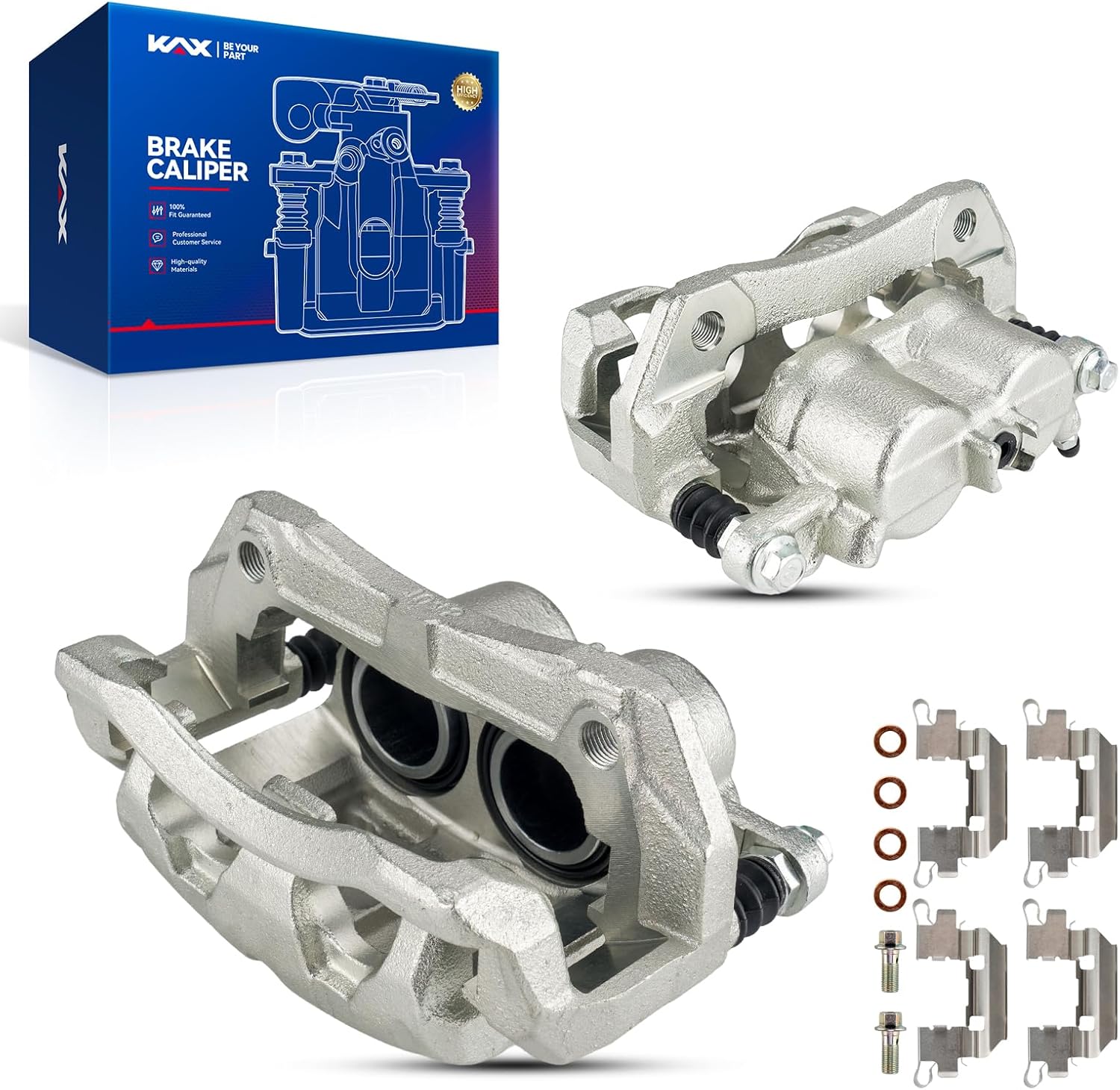
1. KAX Disc Brake Caliper Assembly, Front (pair)
| Position | Front |
|---|---|
| Item model number | 19B2958+19B2959 |
| Exterior | Machined |
| Manufacturer | KAX |
| OEM Part Number | 45019SHJA01, 45018SHJA01, 45018SHJA10, 45019T0G000, 45018T0G000 |
These KAX front disc brake caliper assemblies are built to replace worn or seized factory units and restore smooth, reliable braking on compatible Honda and Acura vehicles. Each assembly arrives with the caliper, phenolic piston, and installation hardware, so the unit bolts in and bleeds like a factory replacement for a straightforward swap. The calipers are machined and pressure tested at the factory to help ensure sealing and consistent piston movement. In practical use they provide firm, even stopping power and reviewers report straightforward fitment, functioning bleeder valves, and no leaks after installation. They do not include brake pads or mounting brackets, so you will reuse existing brackets and may need to service slide pins if corroded. Expect a good balance of build quality and value compared with dealer parts, but long-term durability will depend on installation, road salt exposure, and maintenance of associated hardware.
Best for: Buyers who want a practical, cost-conscious replacement that restores factory-style braking without modifying the vehicle and prefer a ready-to-install caliper assembly.
Less Ideal for: Drivers looking for an upgraded performance caliper or a complete brake kit with pads and new brackets should consider other options.
- Direct-fit assemblies made to match factory mounting and bleeder locations for straightforward installation
- Ships with phenolic piston and installation hardware so fewer separate parts are needed
- Factory pressure tested and machined finish reduce risk of leaks and sticking pistons out of the box
- Does not include brake pads or the mounting bracket, requiring reuse of existing hardware or separate purchase if damaged
Verdict: A solid, direct-fit front caliper pair that restores factory braking at a much lower cost than dealer replacements.
2. TRQ Performance Front Brake Caliper Set (Front, Painted Red)

| Brand | TRQ |
|---|---|
| Model | TRQ CLA41674 2 Piece Brake Caliper Set |
| Position | Front |
| Exterior | Machined |
These TRQ performance front calipers replace the factory front units with pre-assembled, direct-fit components aimed at drivers who want a sportier look and improved thermal durability. They install like a typical caliper swap and come as a paired driver and passenger unit so you can refresh both sides at once. Notable features include high-temperature EPDM seals to resist thermal deterioration and an electrostatic high-heat powder coat that helps resist rust and corrosion while giving the calipers a painted red appearance. In practical use they behave like factory-quality calipers, providing firm braking and even piston movement when properly installed; many buyers report easy installation and good fitment on compatible vehicles. Limitations to be aware of: the set ships without pads, paint chips have been reported on arrival, and one isolated review describes a piston leak when used outside of confirmed fitment—verify exact casting numbers or fitment before swapping. These are best for owners looking to upgrade appearance and heat resistance without changing braking hardware geometry.
Best for: Buyers who prioritize a performance-oriented look and improved heat resistance while keeping factory-style braking behavior; ideal for DIYers who want a straightforward, direct-fit front caliper replacement.
Less Ideal for: Drivers who need a complete brake kit with pads and rotors or those who cannot confirm exact casting fitment should consider alternatives or consult a specialist before buying.
- Direct-fit, pre-assembled pair simplifies replacement of both front calipers
- High-temperature EPDM seals improve resistance to thermal deterioration
- Electrostatic high-heat powder coat reduces corrosion and provides a durable painted finish
- Designed to provide even pressure distribution for consistent braking feel
- Ships without brake pads so additional purchase is required
- Some customers reported paint chips on arrival
- At least one report of piston leakage when used outside specified fitment list
Verdict: Choose these TRQ front calipers if you want a direct-fit, performance-looking upgrade that improves heat resistance and corrosion protection while keeping factory-style braking behavior.
3. maXpeedingrods Front Brake Caliper Assembly (pair) for Honda/Acura fitments

| Application | Acura RDX 2007-2012; Honda CR-V 2007-2011; CR-V 2012-2016 AWD; Accord Crosstour/Crosstour; Odyssey 2005-2010 |
|---|---|
| Bleeder port size | M10 x 1.25 |
| Inlet thread size | M10 x 1.0 |
| Piston diameter | 45.26 mm |
This maXpeedingrods front brake caliper assembly is a direct replacement intended to restore front braking performance on compatible Acura RDX and several Honda models including CR-V and Odyssey. It ships as a rebuilt-style caliper without pads and includes standard bleed and inlet thread sizes so it bolts onto the existing brake hose and bleeder fittings. Typical use is as a one-for-one replacement during brake jobs or when a leaking or seized caliper needs swapping; installation requires basic brake tools and a bleed afterward. Notable features from the listing include the advertised piston diameter and thread specifications which help match the factory connections, plus a polished exterior finish. Practical benefits are that it offers a cost-effective replacement option with clear fitment notes for AWD CR-V models and manufacturer support. Limitations are that pads, hardware, and hoses are not included so you may need extra parts for a complete service, and buyers should confirm match with the vehicle's steering knuckle and brake line fittings before purchase.
Best for: Buyers who want a lower-cost, factory-style replacement caliper to restore braking function on supported Honda and Acura models and who plan to install or service brakes themselves or with a mechanic.
Less Ideal for: Shoppers seeking a complete brake kit with pads and hardware or those who need upgraded performance calipers beyond factory-spec are better served by other options.
- Designed to match factory mounting and bleed/inlet thread sizes for easier installation
- Piston diameter specified to help ensure hydraulic compatibility
- Polished exterior finish for a cleaner appearance after install
- Manufacturer lists broad fitment including AWD CR-V and provides technical support
- Ships without brake pads or mounting hardware so additional purchases may be required
- Fitment excludes FWD CR-V 2012-2016 and requires verifying exact part numbers before ordering
Verdict: A practical, factory-style front caliper replacement for supported Honda and Acura models that restores braking function without paying for premium performance parts.
4. Betthand Front Left Brake Caliper with Bracket (19B2958)

| Brand | Betthand |
|---|---|
| Model | Front Left Brake Caliper – 19B2958 |
| Position | Front Left |
| Compatible models | Honda CRV 2007-2016; Odyssey 2005-2010; Crosstour 2012-2015; Accord Crosstour 2010-2011; Acura RDX 2007-2012 |
This Betthand front left brake caliper with bracket is a direct replacement intended to restore front braking on supported Honda and Acura vehicles. It installs where the factory caliper sat and is typically used when a leaking, seized, or damaged caliper needs swapping; the included bracket simplifies a like-for-like change. The listing emphasizes OE-standard fit and precise braking control, and buyers report the part fits and performs similarly to factory units when the correct application is selected. The caliper is offered as a single front-left unit without pads, so plan to reuse pads if serviceable or buy new pads and hardware separately. Build quality appears solid for the price and the manufacturer provides a one-year quality guarantee and customer support. Important limitations are strict vehicle fitment and variations across model years, so confirm fit for your CR-V year before ordering; buyers noted some 2012+ CR-Vs may not accept this exact casting. Expect a cost-effective repair option for budget-focused owners but verify compatibility and replace seals or pads as part of the job.
Best for: Drivers looking for an affordable, factory-style front caliper replacement to restore braking function on supported Honda or Acura models who prioritize cost savings over premium aftermarket upgrades.
Less Ideal for: People who want a complete brake overhaul in one purchase or who need a performance or upgraded caliper option should consider buying pads, hardware, or a different caliper designed for higher performance.
- Designed as a factory-style replacement for front-left brake caliper positions
- Includes bracket to match original mounting for straightforward installation
- Many buyers report fit and braking performance similar to OEM at a lower cost
- One-year quality guarantee and responsive seller support
- Sold as caliper only without brake pads or hardware included
- Fitment can vary by model year so some CR-V applications may not be compatible
Verdict: A budget-friendly, factory-style front-left caliper replacement that restores braking for supported Honda and Acura models when you confirm correct fitment.
5. KAX Front Brake Caliper (19B2662+19B2663) for Honda CR-V 2002–2004 / Honda Element 2003–2011

| Position | Front |
|---|---|
| Bleeder port size | M10x1.0 |
| Inlet port size | M10x1.0 |
| Piston diameter | 2.25 inch |
| Piston count | 1 |
These KAX front brake calipers replace the left and right units for the listed Honda CR-V and Element model years. They are single-piston steel-caliper assemblies with M10x1.0 bleeder and inlet ports and a 2.25 inch piston diameter, designed for a direct mechanical swap into the front positions. Typical use is as a factory-style replacement when original calipers are seized, leaking, or worn; installers will appreciate the machined exterior, standard port sizing and inclusion of both driver and passenger side units. Practical benefits include consistent braking feel after installation and a corrosion-resistant machined finish that helps longevity. Limitations are that pads and brackets are not included so you must transfer or buy pads and any hardware separately, and steel pistons can be heavier than some aftermarket alloy options. Overall this is a straightforward, reliability-oriented replacement that restores front braking performance on the specified vehicles when matched with correct pads and proper bleeding.
Best for: Buyers who prioritize a dependable, factory-style replacement to restore braking performance on specified Honda CR-V and Element years and want parts that fit without modifications.
Less Ideal for: Do not choose this if you need upgraded performance calipers, a complete pad-and-caliper kit, or are looking for the lightest possible caliper for weight reduction projects.
- Sold as a matched left and right front caliper pair for complete axle replacement.
- Factory-compatible port sizes and piston diameter simplify installation and brake-line connections.
- Machined exterior finish provides better corrosion resistance and a clean installed appearance.
- Built from steel pistons and tested manufacturing processes aimed at long service life.
- Does not include brake pads or hardware clips so additional parts may be required.
- Steel piston construction is heavier than some lightweight aftermarket alloy calipers.
Verdict: If you need a reliable, factory-fit front caliper pair to restore braking on the specified Honda CR-V or Element, these KAX units deliver a dependable direct replacement.
6. Detroit Axle Front Brake Caliper Pair with Brackets

| Position | Front Left & Right |
|---|---|
| Piston Size | 2.25 inch (57.10 mm) |
| Piston Material | Steel |
| Brake Caliper Bracket Included | Yes |
This Detroit Axle kit supplies two front brake calipers with brackets intended as a direct replacement for compatible Honda vehicles including CR-V models. Each caliper uses a single 2.25 inch steel piston, and the set includes mounting brackets so you can replace both left and right units in one job. In practice the calipers behave like a factory-style replacement: they bolt in using original mounting points and work with existing rotors and pads (pads are not included). The steel pistons and solid construction make them durable for daily driving and light towing, and the included brackets reduce parts-sourcing hassles. Installation is straightforward for a mechanically competent DIYer or a local shop, though you will need to bleed the brake system and ensure pad selection and rotor condition are suitable. These are not performance upgrades; buyers seeking upgraded stopping power or multi-piston calipers should look elsewhere. For buyers following others who value a reliable, factory-style swap, this kit offers an easy path back to full braking function without major modifications.
Best for: Buyers who prioritize a factory-quality, like-for-like front caliper replacement and want the reassurance of a widely reviewed product to restore safe braking on a Honda CR-V.
Less Ideal for: Drivers seeking performance upgrades, multi-piston setups, or a turnkey pad-and-rotor package should consider other options.
- Includes both left and right front calipers so both sides are replaced at once
- Comes with brake caliper brackets to simplify installation and alignment
- Steel 2.25 inch pistons offer durable, corrosion-resistant actuation for everyday driving
- Pads are not included so separate purchase and bedding are required
Verdict: If you need a dependable, factory-style front caliper replacement for a Honda CR-V, this pair with brackets restores braking function with minimal fuss.
7. Detroit Axle Front Brake Caliper Kit with Brackets (pair)

| Fitment | Front left and right for listed Honda/Acura models |
|---|---|
| Piston size | 1.78 inch (45.21 mm) |
| Piston material | Steel |
| Includes | 2x front calipers with brackets |
This Detroit Axle kit supplies both left and right front brake calipers with mounting brackets as a direct-fit replacement for several Honda and Acura vehicles. Each caliper uses two steel pistons (1.78 inch) and comes zinc plated to resist corrosion, so installation is straightforward for a brake job that restores clamping force without modification. The kit is built and pressure tested to limit leaks and the included brackets mean fewer parts to source separately. In practice this suits a homeowner or independent shop replacing worn or leaking calipers during a rotor and pad service. Expect factory-style braking feel and a finish that masks surface rust. A few customers reported quality-control misses on reman parts and there are isolated reports about returns and warranty handling in some regions, so inspect components on arrival and verify slide-pin isolators before final installation. These calipers do not include pads or rotors, so plan to reuse or replace those separately when refreshing the front brakes.
Best for: Buyers who want a conservative, factory-style replacement for worn or leaking front calipers and prioritize a direct-fit part that simplifies installation and restores braking performance.
Less Ideal for: Drivers seeking a performance or upgraded braking package with larger pistons, integrated pads, or drilled/slotted rotors should choose a different product; this is focused on replacement, not performance enhancement.
- Direct-fit front caliper pair with mounting brackets for easier installation
- Dual steel pistons per caliper for consistent clamping force
- Zinc plating to reduce visible corrosion during service life
- Pressure-tested construction to minimize risk of hydraulic leaks
- Does not include brake pads or rotors so additional parts needed
- Some buyers reported occasional remanufacturing quality issues requiring inspection on arrival
Verdict: A straightforward, factory-style front caliper pair that makes replacing worn or leaking Honda/Acura calipers simple and reliable for conservative buyers.
Choosing the Right Honda CR-V Front Brake Calipers: Key Factors to Consider
Fitment and Mounting
Correct fitment is critical for front calipers on the Honda CR-V because mounting point geometry, piston size, and brake line connections must match the vehicle to avoid installation issues. A caliper with the wrong piston diameter can change pad contact and pedal travel, leading to poor braking feel or premature wear.
Always verify caliper mounting bolt spacing, bracket compatibility, and whether the caliper is intended for the CR-V front axle. If the caliper uses a different bleeder location or requires adapter hoses, that adds installation complexity and potential leak points. Choosing a caliper with documented fitment for the CR-V reduces the chance of rework or returns.
Piston and Seal Quality
The piston and seal set determine how smoothly the caliper applies pressure and how well it resists leaks. High-quality pistons with a smooth bore finish lower the risk of seal abrasion, which delays seal failure and fluid loss. Seals that resist swelling and maintain elasticity under heat extend service life, especially for owners who tow or drive aggressively.
Pay attention to the materials used for seals (EPDM is common) and whether the caliper includes a dust boot to keep grit away from the seal. A caliper designed for easy seal replacement or backed by available rebuild kits improves long-term value.
Corrosion Resistance and Coating
Road salt and moisture accelerate corrosion on calipers, which can cause sliding components to seize and affect piston movement on a Honda CR-V. Calipers with a durable coating or plating resist rust and maintain function in humid or salted-road environments. Stainless hardware and protective finishes on exposed surfaces reduce the likelihood of frozen guide pins and stuck pistons.
Consider the local climate and typical road treatment when choosing a caliper. Calipers designed with corrosion-resistant finishes require less maintenance and are more likely to provide consistent braking performance over time.
Bleeder and Brake Line Accessibility
Bleeder screw placement and brake line connection orientation affect how straightforward bleeding and installation will be on the front end of a CR-V. Accessible bleeders make it easier to remove air from the system without special adapters, and correctly oriented banjo fittings avoid kinks in the brake hose.
If the bleeder is hard to reach once the caliper is bolted in, bleeding becomes more time-consuming and increases the chance of trapped air. Choosing calipers with service-friendly layouts reduces installation time and maintenance effort.
Serviceability and Parts Availability
Serviceability includes access to rebuild kits, replacement seals, and compatible hardware. For Honda CR-V owners planning long-term maintenance, calipers that support rebuild kits allow you to replace seals and pistons rather than swapping the whole unit. This is often more economical and environmentally friendly.
Check that seals, guide pins, and mounting hardware are readily available and that the caliper design does not require uncommon specialty tools for disassembly. Manufacturers or remanufacturers that document service procedures reduce the risk of incorrect reassembly.
Performance Under Load
Front calipers must maintain even pressure across the pads under repeated braking, particularly if you occasionally carry heavier loads or drive in hilly areas with your CR-V. Calipers with stable piston bores and minimal thermal expansion maintain consistent pad contact and braking force.
Consider calipers that are specified to handle higher thermal stress if you expect prolonged downhill runs or heavy cargo. While everyday driving rarely pushes a CR-V caliper to extremes, choosing a caliper with adequate thermal performance reduces fade and maintains predictable pedal feel.
Signs Your CR-V Needs Front Caliper Attention
Recognizing early symptoms saves time and prevents uneven pad wear or rotor damage. Common clues include a pulling sensation when braking toward one side, a soft or sinking brake pedal, or fluid leaks around the wheel hub area. Any of these signs warrant inspection of the front calipers.
Other practical indicators are uneven pad wear visible when looking through the wheel spokes, or a persistent squeal that does not respond to pad replacement. In some cases, a caliper piston that retracts poorly will cause higher temperature on the affected rotor after driving, which you can check carefully by touch once the vehicle has cooled.
- Pulling to one side under braking
- Uneven front pad wear
- Brake fluid leakage near caliper or wheel hub
- Higher-than-normal rotor temperature on one side
Remanufactured Vs New Calipers
Remanufactured calipers often provide a middle ground between replacing and rebuilding. They are rebuilt to a standard that replaces worn internal components, and reputable remanufactured units often include new seals and protective coatings. For CR-V owners, a remanufactured caliper can restore function while maintaining original mounting dimensions.
Factory-new calipers avoid worries about prior damage but may have different coating or materials. Evaluate remanufactured options based on documented refurbishing processes and parts replaced. Confirm that remanufactured units include fresh seals, correct piston bore work, and corrosion-resistant finishes to match the demands of CR-V service life.
- Remanufactured: refurbished internals, often lower waste
- New: fresh components, potentially different corrosion treatments
- Verify included seals and hardware
Tools and Prep for Swapping Front Calipers on a CR-V
Swapping front calipers requires basic mechanical tools plus a few caliper-specific items. Plan for a properly sized torque wrench, box wrenches for the mounting bolts, and a method for compressing the piston if reusing brake pads. Line fittings often require a flare or banjo bolt socket and a careful approach to avoid twisting the flexible hose.
Prepare for brake bleeding after installation. You will need a clear hose and a catch bottle, or a pressure or vacuum bleeder for faster results. Keep fresh DOT-spec brake fluid on hand and follow proper disposal for the old fluid. Always support the CR-V securely on jack stands and follow torque specifications for mounting bolts.
- Torque wrench and appropriate sockets
- Piston retraction tool or suitable alternative
- Brake bleeding equipment and DOT-spec fluid
- Penetrating oil for stuck bolts
When a Rebuild Kit Is the Right Choice
If the caliper housing is structurally sound and the bore surface is not scored, a rebuild kit can be cost effective. Rebuild kits typically include new seals, dust boots, and sometimes piston(s). For a CR-V with limited corrosion and a healthy caliper body, rebuilding preserves the original mounting and bracket fitment.
However, evaluate the bore condition carefully. Deep pitting or corrosion inside the bore means seals will fail quickly even after a rebuild. Availability of the correct rebuild kit for the CR-V front caliper model is essential; choosing a kit without precise dimensions can lead to leaks or binding.
- Rebuild kit best if bore surface is intact
- Ensure kit matches piston diameter and seal profile
- Not recommended if caliper housing is heavily corroded
Routine Maintenance to Extend Caliper Life
Simple maintenance steps help avoid premature caliper failure. Periodic inspection and cleaning of guide pins, applying high-temperature grease to sliding surfaces, and checking for boot damage will keep calipers operating smoothly on the front axle of a CR-V. Address surface rust early to avoid progressive corrosion.
Also monitor brake fluid condition and replace it at intervals recommended for your driving conditions. Moisture-laden fluid accelerates internal corrosion and seal degradation. Keeping the entire braking system well maintained reduces stress on front calipers and improves overall safety.
- Inspect guide pins and boots regularly
- Use high-temperature grease on sliding components
- Change brake fluid per severe-service intervals
- Address surface rust before it worsens
Still looking for the perfect fit?
Select your Honda CR-V configuration to see the most relevant Brake Calipers recommendations
How We Chose the Best Honda CR-V Front Brake Calipers
We prioritized criteria that matter to Honda CR-V owners replacing front brake calipers. Fitment accuracy was a top filter: only calipers that match factory mounting points, piston diameter, and line fittings for the CR-V were considered. Corrosion resistance and coating were evaluated next because salt and road moisture accelerate caliper failure on many CR-V models. We also considered piston and seal design, looking for calipers with robust sealing systems that limit fluid leaks and reduce the risk of sticking.Mechanical reliability was assessed through specification checks for metallurgy, bore finish, and quality-controlled remanufacturing where applicable. Ease of service was factored in, including whether bleeder ports and banjo fittings are accessible and whether calipers support standard pad hardware. Finally, we looked at warranty and availability of rebuild kits as a sign of long-term serviceability. Exclusions: units lacking documented CR-V fitment, one-off custom calipers without documented dimensions, and options without replaceable seals or support parts were not included.
Our full evaluation process is outlined in our review methodology.
FAQ
How do I tell if a front caliper is sticking on my CR-V?
A sticking front caliper often causes the vehicle to pull to one side during braking, uneven pad wear, or a persistently hot rotor on the affected side after driving. You may also notice reduced fuel efficiency or a burning smell. Visual inspection for seized guide pins or a piston that does not retract fully can confirm the issue.
Can I replace a front brake caliper myself on a CR-V?
Many mechanically inclined owners can replace a front caliper with standard tools, a torque wrench, and bleeding equipment. Ensure you follow safe lifting procedures, use the correct torque values, and fully bleed the brake system afterward. If you are unsure about brake safety or lack proper tools, have a qualified technician perform the work.
Is it worth rebuilding a caliper instead of replacing it on a CR-V?
Rebuilding can be worthwhile if the caliper housing is in good condition and bore surfaces are free of deep corrosion. Rebuild kits restore seals and boots but will fail sooner if the bore is pitted. Consider availability of correct kits and the long-term corrosion risk in your climate when deciding.
What are common symptoms that indicate brake caliper replacement is needed?
Common symptoms include pulling to one side while braking, visible fluid leaks at the caliper, uneven or rapid pad wear, and a soft or sinking brake pedal. Any of these signs, especially combined, indicates the caliper or its seals may need replacement.
Do remanufactured front calipers come with new seals for the CR-V?
Reputable remanufactured calipers typically include new seals, dust boots, and often a corrosion-resistant finish. Always verify the remanufacturer's documentation to ensure those components are included, since that affects reliability and service life.
How often should I inspect the front calipers on a Honda CR-V?
Inspect front calipers during routine pad and rotor service intervals or every 12,000 to 15,000 miles depending on driving conditions. Look for boot damage, guide pin play, and signs of leakage. More frequent checks are sensible in salted-road regions.
Final Verdict
For the Honda CR-V, prioritize calipers that match factory fitment, offer durable seals, and feature corrosion-resistant finishes. Those attributes most directly affect braking consistency, ease of installation, and long-term reliability. Be realistic about tradeoffs: rebuilding is cost effective when the housing is sound, while replacement or remanufactured units are better choices if corrosion or bore damage is present.Focus on fitment accuracy, seal quality, and serviceability when selecting front calipers to restore pedal feel and stopping power. With those priorities, you can select a caliper that balances longevity and maintainability for everyday driving and occasional heavier use.
Explore More:
- Check out all Honda CR-V parts & accessories
- Explore Brake Calipers Maintenance & Repair Guides
- Explore Brake System
- Browse all Auto Parts
