

Note: This article contains affiliate links. If you click on these links and make a purchase, I may earn a small commission at no extra cost to you. This helps support my research and content. Read my full affiliate disclosure here.
If your 2012–2016 Honda CR-V is showing overheating signs or persistent coolant loss, replacing the radiator is often the most effective repair. Choosing the right 2012-2016 Honda CR-V radiator matters because fitment, material construction, and cooling capacity affect engine temperature control and long-term reliability.This guide covers seven shortlisted radiators chosen for the 2012–2016 CR-V, explaining the attributes that matter for fit and performance. We evaluate build quality, thermal efficiency, and ease of installation to help you pick a unit that restores proper cooling and reduces the chance of repeat failures. Read on for practical buying considerations and maintenance tips before you install a replacement.
Looking for other parts? See all Honda CR-V parts & accessories.
Top Picks at a Glance
| Best Overall The best all-around choice for most situations | BDFHYK Aluminum Radiator for Honda CR-V (2012–2016) — 1-Row 16mm Core |  |
| Best Quality Built to a higher standard if you want something more solid | CSF Radiator Model 3782 for Honda CR-V 2.4L (2012–2016) |  |
| Best Value The sweet spot between price and what you get | Torchtree CU13314 Engine Radiator for 2012–2016 CR-V |  |
| Best Budget The cheapest option that still gets the job done reliably | YISHUEE Aluminum Radiator for 2012–2016 Honda CR-V 2.4L |  |
| Highest Rated A top-rated pick with lots of positive feedback | AUTOSAVER88 Radiator for 2012–2016 Honda CR‑V 2.4L |  |
| Most Popular A crowd favorite that many people choose with confidence | Readair Engine Coolant Radiator Assembly for Honda CR-V 2012–2016 L4 2.4L |  |
| Best Seller A high-volume bestseller chosen again and again | KAX CU13314 Replacement Radiator for 2012–2016 CR‑V |  |
1. BDFHYK Aluminum Radiator for Honda CR-V (2012–2016) — 1-Row 16mm Core

| Compatible vehicles | Honda CR-V 2012–2016 |
|---|---|
| Core type | 1-row tube-and-fin |
| Core thickness | 16 mm |
| Material | Aluminum |
| Includes | Radiator cap and brass petcock |
This BDFHYK radiator is a direct-fit replacement for Honda CR-Vs from 2012 through 2016 and is intended to restore factory-style cooling without modifications. It uses a one-row 16mm aluminum core with brazed tube-and-fin construction and reportedly increases heat dissipation compared with older cores. The unit includes a brass petcock drain and a radiator cap and is TIG welded at joints for durability. In practice this means straightforward swap-in installation, standard coolant flow, and a corrosion-resistant aluminum core that should improve day-to-day temperature stability and reduce overheating risk from a degraded factory radiator. The 1-row design keeps coolant volume and flow similar to stock, so it is best for daily driving and light towing rather than heavy-duty cooling demands. Buyers should note this is a single-row core which prioritizes compatibility and ease of fitment over maximum cooling capacity, and professional installation is recommended to ensure proper connections and bleed procedures.
Best for: Buyers who want a reliable, factory-style replacement to restore cooling performance on a daily-driven 2012–2016 Honda CR-V and prioritize ease of fitment and serviceability.
Less Ideal for: Drivers who regularly tow heavy loads, run high-performance tuning, or need maximum cooling headroom should consider a thicker or multi-row aftermarket performance radiator instead.
- Direct-fit design for 2012–2016 Honda CR-V for bolt-in replacement
- Aluminum tube-and-fin core with brazing for improved heat dissipation and corrosion resistance
- Includes brass petcock drain and radiator cap for easier servicing
- TIG-welded construction and OEM-style fittings aimed at long-term durability
- Single-row 16mm core offers less peak cooling capacity than multi-row or thicker radiators
Verdict: Choose this radiator if you want a direct-fit, corrosion-resistant aluminum replacement that restores factory cooling performance on a 2012–2016 Honda CR-V.
2. CSF Radiator Model 3782 for Honda CR-V 2.4L (2012–2016)

| Application | Honda CR-V 2.4L 2012–2016 |
|---|---|
| Part Number | 3782 |
| Material | Plastic (tank) / factory-style core |
| Included Components | Radiator |
This CSF Model 3782 radiator is a factory-style replacement for the 2.4L Honda CR-V (2012–2016) intended for drivers who want reliable cooling without complex modifications. It installs like a stock unit and uses reinforced, ribbed tanks plus through-pipe hose connections to reduce stress at fittings and cut down on premature failures. The construction and materials mirror factory designs so it works with standard coolant and the vehicle's existing mounting and hose layout. For performance-minded owners, the robust build and quality components provide confidence under harder driving and higher thermal loads compared with many low-cost aftermarket cores. Limitations are that this is not a dedicated high-capacity or race radiator, so cooling headroom beyond factory-plus levels is limited; anyone seeking significant temperature drops should look at larger or purpose-built performance cores. As a direct replacement it balances durability and fitment with straightforward installation and serviceability.
Best for: Buyers who want a durable, drop-in replacement that holds up better than economy radiators and keeps the CR-V running cool during daily driving and occasional spirited use.
Less Ideal for: Drivers planning extensive engine upgrades, forced induction, or frequent track sessions who need a larger-capacity or purpose-built performance radiator.
- Direct-fit design for 2012–2016 Honda CR-V 2.4L for simple installation
- Ribbed tanks and through-pipe hose connections reduce stress and common failure points
- Constructed to match factory-style materials and cooling compatibility
- Sturdier build suited to heavier use or spirited driving compared with basic budget radiators
- Not a high-capacity performance radiator so cooling margin is limited for heavily modified engines or track use
Verdict: A rugged, factory-style replacement radiator that gives Honda CR-V owners dependable cooling and stronger fittings than cheap aftermarket cores without changing fitment.
3. Torchtree CU13314 Engine Radiator for 2012–2016 CR-V

| Compatible vehicles | 2012-2016 CR-V |
|---|---|
| Manufacturer | Torchtree |
| Core thickness | 3/4 in |
| Inlet/Outlet diameter | 1-5/16 in |
This Torchtree radiator is a direct replacement designed to restore cooling performance on 2012–2016 CR-Vs. It uses an aluminum core with high-density multi-louver fins and plastic end tanks to improve heat dissipation and resist corrosion. Typical use is as a like-for-like swap for a failed or leaking factory unit; the listing shows core measurements and matching OEM part numbers so installers can confirm fitment before buying. The unit is pressure and leakage tested and packaged with foam corner supports and reinforced cardboard to reduce transit damage. Practical benefits include factory-style fit, improved cooling area from the fin design, and claimed IATF16949 quality checks that reduce the risk of defects. Expect professional installation for easiest fitment since some trimming of hoses or mounting procedures may be needed depending on vehicle condition. The radiator comes with standard inlet and outlet diameters and a core thickness suited to stock cooling needs, but it does not list any performance upgrades for heavy towing or racing use.
Best for: A practical buyer who wants an affordable, factory-style radiator replacement that restores stock cooling on a 2012–2016 CR-V with minimal fuss and reliable fitment checks.
Less Ideal for: Not the best choice for drivers seeking a high-performance or heavy-load cooling upgrade; those users should consider performance radiators designed for increased capacity.
- Direct-fit replacement that lists multiple matching OEM part numbers for straightforward vehicle matching
- Aluminum core with high-density multi-louver fins for improved heat dissipation
- Pressure, leakage, aging, and durability testing claims give extra confidence in quality
- Upgraded shockproof packaging reduces risk of shipping damage
- No claimed performance increase over factory radiator for heavy-duty or high-load applications
- Installation recommended for professionals which may add to total replacement cost
Verdict: Buy this radiator if you need an affordable, factory-matching replacement to reliably restore cooling on a 2012–2016 CR-V.
4. YISHUEE Aluminum Radiator for 2012–2016 Honda CR-V 2.4L

| Compatible models | 2012–2016 Honda CR-V 2.4L |
|---|---|
| Construction | Full aluminum core with plastic end tanks |
| Manufacturer | YISHUEE |
| Manufacturer part number | 127961-5429-1509284181 |
This YISHUEE radiator is a budget-focused replacement built with a full-aluminum core and high-grade plastic end tanks to match the factory cooling function on 2012–2016 Honda CR-V 2.4L models. It installs as a model-specific unit and is intended to be a like-for-like swap to recover cooling capacity after a failure or leak. The high-density, multi-louvered fins and multi-layer cooling design aim to improve heat dissipation compared with a degraded original, and the painted finish helps resist corrosion. Expect straightforward installation if the radiator matches the reference part numbers listed, though hose clips, mounting hardware, or sensors may need to be transferred from the original. As a lower-cost aftermarket option, fit and finish can vary compared with higher-end replacements, so double-check part numbers and inspect for leaks once installed. This part gives a practical way to get a CR-V back on the road without the premium price of a brand-name unit.
Best for: Buyers looking to replace a failed or leaking CR-V radiator on a budget and who prioritize restoring reliable cooling without paying for a premium-brand unit.
Less Ideal for: Shoppers seeking a factory-identical OEM part or the highest-precision aftermarket fit should consider dealer or premium-brand radiators instead.
- Full aluminum core for efficient heat transfer compared with older, corroded radiators
- High-density multi-louvered fins designed to increase cooling efficiency
- Model-specific design intended for direct-fit installation on 2012–2016 CR-V 2.4L
- Painted finish to help resist corrosion and extend service life
- Lower-cost aftermarket build may show variable fit and finish compared with premium replacements
Verdict: A cost-conscious, full-aluminum direct-fit replacement to restore cooling on 2012–2016 Honda CR-V 2.4L models without a premium price.
5. AUTOSAVER88 Radiator for 2012–2016 Honda CR‑V 2.4L
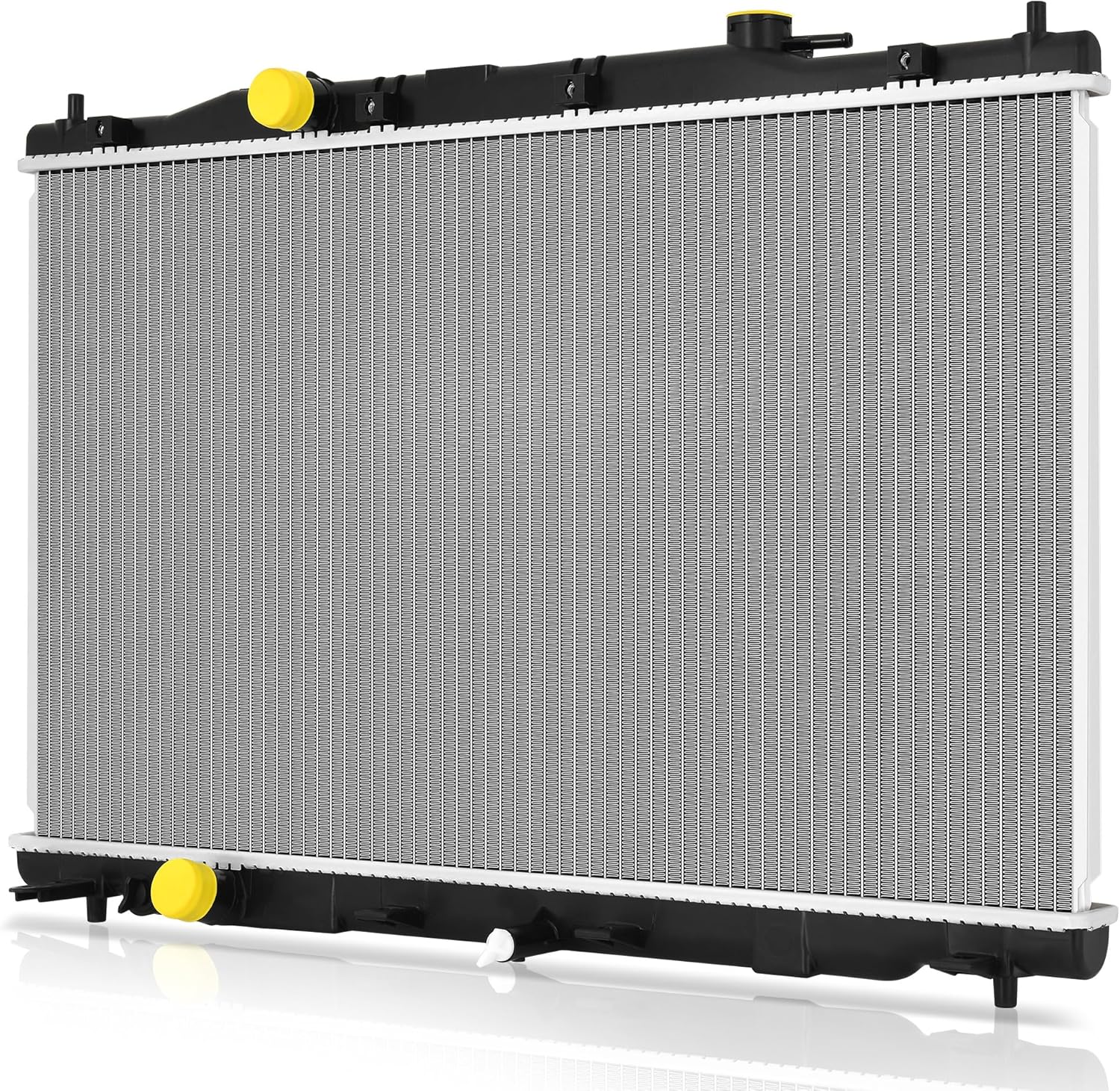
| Compatible models | 2012–2016 Honda CR‑V L4 2.4L |
|---|---|
| Core material | Aluminum core |
| Tanks | Plastic tanks |
| Replacement part numbers | 190105LAA51, 19010R5AA51, HO3010230 |
| Package includes | Complete radiator and user manual (cap not included) |
This AUTOSAVER88 radiator is a direct-fit replacement designed to match factory mounting points for 2012–2016 CR‑V 2.4L applications. It uses a high-density, multi-louvered aluminum core with plastic tanks to improve cooling efficiency and resists leaks through factory-style construction and leak testing. Typical use is a full radiator swap when the original unit is corroded, leaking, or performing poorly; the listing notes the radiator is delivered complete except for the radiator cap and recommends professional installation. Practical benefits include OEM-like fitment, good heat dissipation from the aluminum core, and reinforced packaging to lower arrival damage. Reported limitations are occasional variation in hose and transmission cooler fittings and a slightly thinner core than some OEM units, which may require careful alignment of fittings during installation and attention to torque on aluminum fittings to avoid damage. Buyers should expect a straightforward replacement that restores cooling performance but be prepared to reuse or adjust some hoses and fittings during installation.
Best for: Buyers prioritizing a reliable, factory-style replacement radiator to restore proper cooling on a 2012–2016 CR‑V and who prefer a ready-to-install complete unit over a core-only option.
Less Ideal for: Those seeking a full all-aluminum performance radiator or an upgraded heavy-duty cooling solution for modified engines should consider alternative aftermarket options.
- Direct-fit design matching factory mounting points for 2012–2016 CR‑V 2.4L.
- Aluminum core with multi-louvered fins for improved cooling efficiency.
- Leak-tested assembly with reinforced packaging to reduce shipping damage.
- Complete radiator assembly included so no core-only swap is required.
- Radiator cap is not included so you must source the cap separately.
- Some customers report weaker aluminum fittings and slight variation in hose or transmission cooler outlet sizes.
Verdict: A cost-effective, factory-style complete radiator replacement that reliably restores cooling for 2012–2016 Honda CR‑V 2.4L owners focused on dependable, OEM-like performance.
6. Readair Engine Coolant Radiator Assembly for Honda CR-V 2012–2016 L4 2.4L

| Compatible vehicles | Honda CR-V 2012–2016 L4 2.4L (manual transmission) |
|---|---|
| Transmission oil cooler | No |
| Engine oil cooler | No |
| Manufacturer part number | Radiator19010R5AA51 |
This Readair radiator is a direct replacement built to fit the 2012–2016 Honda CR-V with the 2.4L four-cylinder and manual transmission. It uses an aluminum core with TIG-welded joints and PA66 GF30 plastic inlet/outlet tanks, and the seller notes leak testing and a treated coating for corrosion resistance. Typical use is a like-for-like swap when the factory unit fails or begins to leak; installation should be straightforward for a professional shop or experienced DIYer because it is offered as a vehicle-specific assembly. The product omits a transmission oil cooler and engine oil cooler, so it matches the manual-transmission configuration listed. The construction and leak testing promise better longevity than cheap, untested cores, and the included manufacturer part numbers make verifying fitment easy. Expect a sturdy, no-frills replacement that focuses on compatibility and durability rather than added features. If you need a radiator for an automatic transmission or a unit with integrated coolers, this specific assembly will not meet that requirement.
Best for: Buyers who prioritize verified fitment and proven construction over added features and want a replacement radiator that matches factory specifications for a 2012–2016 CR-V manual-transmission.
Less Ideal for: Drivers who need a radiator with an integrated transmission or engine oil cooler or owners preferring a dealer-supplied factory part and full OEM backing.
- Direct-fit for 2012–2016 Honda CR-V 2.4L manual-transmission using listed factory part numbers
- Aluminum core with TIG-welded joints for improved strength and leak resistance
- Leak-tested assembly with treated coating to resist corrosion
- Clear fitment information and manufacturer part numbers simplify verification
- Does not include a transmission oil cooler or engine oil cooler, so it is not suitable for automatic-transmission CR-Vs
Verdict: A solid, direct-fit replacement radiator for risk-conscious buyers who want verified fitment and durable construction for 2012–2016 Honda CR-V 2.4L manual models.
7. KAX CU13314 Replacement Radiator for 2012–2016 CR‑V

| Vehicle fitment | 2012-2016 CR-V |
|---|---|
| Core material | Aluminum core |
| Tanks | Plastic water tank |
| Item model number | CU13314 |
| Manufacturer | KAX |
This KAX CU13314 radiator is sold as a direct replacement for 2012–2016 CR‑V models and is intended to restore cooling performance after a leak or failure. It uses an aluminum core with high-grade plastic tanks and is leak-tested at the factory, so it functions like a standard aftermarket radiator to move heat away from the engine and maintain normal operating temperature. Typical installation replaces the original unit using existing fan shroud and hose connections; the listing notes OEM-compatible part numbers to help confirm fitment. Practical benefits include aluminum construction for good thermal conductivity and shockproof packaging that helps prevent shipping damage. Reported issues in some reviews include occasional mismatched connector dimensions and weaker drain-plug hardware, so check hose fittings and the drain fitting during installation and be prepared to swap small fittings if needed. For a risk-averse buyer, pairing this with a careful fitment check or professional install reduces the chance of surprises.
Best for: Buyers who want an affordable, factory-style replacement radiator for a 2012–2016 CR‑V and prefer a straightforward swap to restore normal cooling without aftermarket performance modifications.
Less Ideal for: Those seeking a heavy-duty or upgraded cooling solution for towing, high-performance use, or who want components with reinforced drain fittings should consider performance or OEM dealer options instead.
- Made with aluminum core and plastic tanks for good heat transfer and corrosion resistance
- Marketed as a direct-fit replacement with matching OEM part numbers for easier vehicle compatibility checks
- Leak-tested at the factory to reduce early-life coolant leaks
- Packaged with foam corner protection to minimize shipping damage
- Some customers reported incorrect hose connector diameters requiring adaptation
- Drain plug reported as fragile or prone to breaking during refill
Verdict: A cost-conscious, direct-fit replacement radiator that restores factory-style cooling for 2012–2016 CR‑V owners who prioritize straightforward compatibility.
Choosing the Right 2012-2016 Honda CR-V Radiator: Key Factors to Consider
Fitment and Mounting Alignment
Correct fitment is the foundation of a successful radiator replacement for the 2012–2016 Honda CR-V. A radiator that matches the factory mounting points, inlet and outlet locations, and transmission cooler ports (if applicable) reduces installation time and the risk of stress on hoses and brackets.
Mismatched geometry can cause leaks, require bracket modifications, or interfere with the fan shroud. Confirming exact fitment prevents avoidable trimming and ensures the cooling fan and shroud sit at the correct distance from the core to maintain airflow efficiency. For owners, choosing a direct-fit radiator saves on labor and potential returns.
Core Design and Cooling Efficiency
The radiator core—tube count, fin density, and plate or brass/aluminum construction—determines how effectively heat transfers from coolant to airflow. For the 2012–2016 CR-V, adequate core surface area helps manage heat during highway loads and stop-and-go traffic where airflow is reduced.
Higher fin density can improve heat rejection but also increases susceptibility to clogging from road debris and dust. Balance core size and fin spacing with local driving conditions to maintain reliable cooling under the CR-V's typical operating loads.
Materials and Corrosion Resistance
Radiators are commonly made from aluminum cores with plastic or aluminum end tanks, or from all-aluminum constructions. Material choice affects weight, heat transfer, and long-term resistance to corrosion and electrolysis.
For CR-V owners in regions with road salt or hard water for topping off coolant, corrosion-resistant coatings and quality brazing or welding are important. Plastic tanks are lighter and less expensive, but metal end tanks offer better heat conduction and durability under repeated thermal cycles.
Transmission Cooler Integration
Some CR-V radiator assemblies incorporate a transmission fluid cooler section. If your vehicle's original radiator included this feature, ensure the replacement maintains the transmission cooler ports and correct routing to avoid transmission overheating or fluid contamination.
If the replacement omits the integrated cooler, you will need a separate transmission cooler or a different solution, adding complexity and potential leak points. Verifying this detail prevents drivetrain issues and extra labor.
Ease of Installation and Serviceability
A radiator that accommodates factory hoses, sensors, and mounting hardware makes a direct installation straightforward. Consider whether bleed ports, sensor bosses, and drain plugs are present and accessible for routine coolant changes and system bleeding on the CR-V.
Good serviceability reduces workshop time and the likelihood of air pockets after refill. Clear access to mounting bolts and compatibility with the stock fan shroud also lower the chance of installation errors that can lead to vibration or chafing.
Warranty and Quality Assurance
Warranty coverage and the manufacturer's quality control history are indicators of expected longevity. For the 2012–2016 Honda CR-V, a reasonable warranty period demonstrates confidence in construction and often correlates with better factory testing and leak checking.
Look for stated manufacturing tests, such as pressure testing, and transparent warranty terms. A strong warranty protects you against premature leaks and seam failures that can be costly and time-consuming to address.
Common Radiator Symptoms on the 2012–2016 CR-V
Recognizing the signs of radiator trouble helps you decide whether repair or replacement is required. Common symptoms include overheating at idle, visible coolant leaks beneath the vehicle, low coolant level without obvious external leaks, and steam from the engine bay after prolonged driving.
- Consistent high temperature gauge readings or frequent trips to the warning zone.
- Coolant puddles or damp areas around the front crossmember or beneath the radiator.
- Sweet smell of coolant in the engine bay or visible staining on radiator seams and end tanks.
- Engine temperature spikes during slow traffic or when towing a heavy load.
Assessing Whether to Repair or Replace
Minor leaks from hoses or clamps can sometimes be repaired, but radiator failures often indicate internal corrosion, cracked end tanks, or damaged cores that are not practical to fix. For the 2012–2016 CR-V, consider replacement when leaks are at seams, tanks are brittle, or fins are severely damaged.
- Small pinhole leaks in accessible areas can be temporarily patched but may recur.
- Cracked plastic tanks or separated seams are typically signs that a full replacement is the safer long-term solution.
- If the radiator is more than a few years old and the vehicle has a history of cooling issues, replacement can prevent repeated breakdowns.
Preparing Your CR-V for Radiator Replacement
Preparation reduces install time and helps avoid mistakes. Park the vehicle on level ground and allow the engine to cool completely before opening the cooling system. Drain coolant into a suitable container and dispose of or recycle it according to local regulations.
Label hoses and take pictures of the hose routing and mounting points to ease reassembly. Have replacement clamps and any necessary fittings on hand. Inspect the fan shroud, cooling fan, and radiator support for damage while the old radiator is out; replacing worn ancillary parts during the job can save time later.
- Wear safety glasses and gloves to avoid contact with hot coolant and sharp fins.
- Use a steady jack and stands if you need under-vehicle access but ensure the car is secure before beginning work.
- Have a torque wrench for reattaching brackets to the manufacturer's specifications.
Maintenance Tips to Extend Radiator Life
Regular coolant changes and periodic inspections reduce the risk of premature radiator failure. For the CR-V, follow the vehicle's coolant service intervals and use the recommended coolant type to limit corrosion and scale buildup.
Flushing the cooling system when changing coolant helps remove sediment that can obstruct the core. Keep an eye out for external damage from road debris and gently clean the fins if debris accumulates. Replace deteriorated hoses and clamps promptly to prevent extra stress on the radiator.
- Inspect the radiator, hoses, and clamps twice a year or after winter seasons.
- Perform a coolant pressure test if you experience unexplained overheating to pinpoint leaks.
- Use a soft brush or low-pressure water to clear debris from the fins; avoid high-pressure washing that can bend fins.
Still looking for the perfect fit?
Select your Honda CR-V configuration to see the most relevant Radiators recommendations
How We Chose the Best 2012-2016 Honda CR-V Radiator
We focused on factors that directly affect performance and long-term reliability for the 2012–2016 Honda CR-V. Selection filters included confirmed fitment for the CR-V 2012 through 2016 chassis, construction material and manufacturing method, and measurable cooling capacity or design features that influence heat dissipation. We prioritized radiators with reinforced end tanks, robust core designs, and corrosion-resistant finishes to ensure durability in varied climates. Serviceability and installation characteristics were also evaluated, including whether the unit accepts factory hoses and mounting points and how straightforward the bleed and refill process is for the CR-V cooling system.Excluded items included universal-fit cores that require significant modification and components that do not match the CR-V's inlet/outlet placements. We also screened out units with poor documented quality control or frequent reports of early leakage. Final considerations weighed warranty support and the presence of necessary fittings to minimize additional purchases at install time.
Our full evaluation process is outlined in our review methodology.
FAQ
How can I tell if my CR-V radiator is leaking or if another component is the problem?
Check for visible coolant pooling under the vehicle and inspect the radiator seams, end tanks, and hose connections for wetness. If the cooling system loses fluid but no external leak is evident, the issue could be an internal leak, a failed head gasket, or overflow tank problems; a pressure test helps isolate radiator leaks.
Is it necessary to flush the cooling system when installing a new radiator?
Flushing is recommended because it removes sediment and contaminants that could shorten the life of a new radiator. A clean system also ensures fresh coolant chemistry and reduces the chance of internal blockages that impair heat transfer.
Can I reuse the factory hoses and clamps on the replacement radiator?
You can often reuse hoses and clamps if they are in good condition, flexible, and free of cracks. However, replacing worn clamps and old hoses during the radiator swap is inexpensive and reduces the risk of future leaks.
Will a radiator replacement affect my CR-V's transmission if my original had a transmission cooler?
Yes. If your CR-V's original radiator included an integrated transmission cooler, the replacement must provide the same transmission ports and routing. If not, you will need to add an external cooler or other suitable solution to maintain transmission cooling.
What are the risks of skipping a radiator pressure test after installation?
Skipping a pressure test increases the chance of undetected leaks and trapped air pockets in the system. Both can lead to overheating and poor heat transfer, which may cause drivability issues or engine damage if not addressed promptly.
How long should a replacement radiator last in a CR-V under normal use?
Lifespan varies with material and operating conditions, but a well-made radiator properly installed and maintained typically lasts many years. Exposure to road salt, hard water, or infrequent coolant changes can shorten service life, so proactive maintenance helps maximize longevity.
Final Verdict
Prioritize fitment, material construction, and serviceability when choosing a replacement radiator for your 2012–2016 Honda CR-V. Confirming correct mounting points and transmission cooler compatibility avoids installation headaches and potential drivetrain issues. Balance core design and corrosion resistance against your local driving conditions to get dependable cooling performance.Ultimately, pick a radiator that offers the right combination of durability and ease of installation, backed by reasonable warranty coverage, so you restore reliable temperature control and minimize the chance of repeat repairs.
Explore More:
- Check out all Honda CR-V parts & accessories
- Explore Radiators Maintenance & Repair Guides
- Explore Cooling System
- Browse all Auto Parts
