

Note: This article contains affiliate links. If you click on these links and make a purchase, I may earn a small commission at no extra cost to you. This helps support my research and content. Read my full affiliate disclosure here.
If you own a 1997-2001 Honda CR-V, choosing the right water pump matters because it directly affects engine temperature control and long-term reliability. A failing water pump can cause overheating, coolant loss, and engine damage, so replacing it proactively or after symptoms appear is a practical way to protect your vehicle.This guide covers the top shortlisted water pumps for the 1997-2001 CR-V (1997–2001 chassis scope), explaining the reasons each made the list and the evaluation criteria used. We focus on fitment, seal and bearing durability, and installation practicality so you can pick the best option for repair or preventive maintenance.
Looking for other parts? See all Honda CR-V parts & accessories.
Top Picks at a Glance
| Best Overall The best all-around choice for most situations | Gates 41049 Premium Engine Water Pump |  |
| Best Quality Built to a higher standard if you want something more solid | Gates PowerGrip Timing Belt Kit with Water Pump (fits Honda CR-V 2.0L 1997–2001) |  |
| Best Value The sweet spot between price and what you get | A-Premium Engine Water Pump with Gasket for 1997-2001 Honda CR-V / 1996-2001 Acura Integra |  |
| Best Budget The cheapest option that still gets the job done reliably | MYSMOT Water Pump with Gasket for Acura Integra 1996–2001 / Honda CR-V 1997–2001 |  |
| Highest Rated A top-rated pick with lots of positive feedback | AISIN TKH-014 Timing Belt and Water Pump Service Kit |  |
| Most Popular A crowd favorite that many people choose with confidence | Gates PowerGrip Timing Belt Component Kit with Water Pump (TCKWP184) |  |
| Best Seller A high-volume bestseller chosen again and again | A-Premium Timing Belt Kit with Water Pump and Tensioner for Honda CR-V 1997–2001 / Acura Integra 1996–2001 L4 |  |
1. Gates 41049 Premium Engine Water Pump

| Brand | Gates |
|---|---|
| Model Number | 41049 |
| Compatible with Vehicle Type | Car, Truck |
| Material Type | Metal |
| OEM Equivalent Part Number | 19200P75003, 19200PT5000 |
The Gates 41049 is a vehicle-specific replacement water pump intended to restore engine cooling on compatible cars and trucks. It is built from metal alloy, undergoes 100 percent leakage and functional testing of seals, bearings, and castings, and is presented as a premium alternative to a standard pump. In typical use you would swap this unit in during a cooling-system service or when the original pump shows leaks, noise, or loss of coolant flow. The factory-quality fit claims and OEM-equivalent part numbers indicate it is aimed at direct replacement without extensive modification. Practical benefits include robust construction, pretested internals that reduce early failure risk, and a straightforward install when vehicle-specific fitment is correct. Limitations are that fitment is vehicle dependent so you must confirm compatibility for a 1997-2001 Honda CR-V and the listing does not include gaskets or ancillary hardware details, which may require purchasing a seal kit or thermostat housing gasket separately.
Best for: Buyers who want a tested, factory-quality replacement pump that restores cooling reliability and prefers components that come pre-validated for correct operation.
Less Ideal for: If you need a full overhaul kit with seals and hardware included or are looking for a universal or performance-modified pump, this single replacement unit is not the best choice.
- Constructed from metal alloy for durability and longevity.
- 100 percent leakage and functional testing of seals, bearings, and castings reduces risk of early failure.
- Manufactured to match factory fit and lists OEM-equivalent part numbers for direct replacement.
- Premium-grade construction intended to improve on standard pump performance.
- Listing does not specify included gaskets or mounting hardware so additional parts may be needed for installation.
- Fitment is vehicle specific so compatibility must be verified for a 1997–2001 Honda CR-V before purchase.
Verdict: Choose this Gates 41049 when you want a factory-fit, pretested water pump to reliably replace a failing unit on your 1997–2001 Honda CR-V.
2. Gates PowerGrip Timing Belt Kit with Water Pump (fits Honda CR-V 2.0L 1997–2001)

| Compatible vehicles | Honda CR-V 1997–2001 2.0L L4 |
|---|---|
| Engine type | Interference engine application |
| Brand | Sixity Auto (Gates PowerGrip belt included) |
This timing belt kit pairs a Gates PowerGrip timing belt with a water pump and the hardware needed for a full timing service on 1997–2001 Honda CR-V 2.0L interference engines. It is intended for a full timing-system refresh during routine maintenance or when replacing an aging belt; the package includes the belt, tensioning components and a water pump to reduce the chance of having to repeat labor later. In practice the kit simplifies a head-to-crank job by supplying parts that are designed to fit the CR-V engine and install with factory-style procedures. Buyers will appreciate the convenience of matching components and original-packaging parts labeling. Drawbacks to note are mixed user reports about early water pump seal failures and isolated belt defects, so quality control appears uneven across units; professional installation and inspection after initial break-in are recommended. This is a solid option if you want a one-stop replacement kit but verify parts on arrival and plan for careful installation.
Best for: Engineers and mechanically inclined owners who want a single-purchase timing service kit to replace the belt and water pump together and prioritize matching components for a performance-minded rebuild.
Less Ideal for: Drivers seeking guaranteed long-term reliability without inspecting incoming parts or those unwilling to have the kit fitted by a competent technician should consider alternatives with stronger quality-track records.
- Complete kit includes timing belt, tensioning hardware and water pump for a single service interval
- Designed to fit Honda CR-V 2.0L 1997–2001 interference engines, reducing compatibility guesswork
- Uses Gates PowerGrip timing belt profile that matches common factory replacement dimensions
- Some customers reported premature water pump seal failure within months of installation
- A few reviews cite belt damage discovered after limited mileage suggesting inconsistent quality control
Verdict: Buy this kit if you want a single-package timing belt replacement that includes a matching water pump for the 1997–2001 Honda CR-V 2.0L to minimize repeat labor.
3. A-Premium Engine Water Pump with Gasket for 1997-2001 Honda CR-V / 1996-2001 Acura Integra

| Compatible Vehicles | 1997-2001 Honda CR-V L4 2.0L; 1996-2001 Acura Integra L4 1.8L |
|---|---|
| Drive Type | Timing Belt |
| Housing Material | Aluminum |
| Impeller Material | Steel |
This A-Premium water pump is a direct replacement designed to circulate coolant via a timing-belt drive for 1997-2001 Honda CR-V 2.0L engines and compatible Acura Integra 1.8L applications. It ships with a gasket and uses an aluminum housing and steel impeller built to match the original mounting pattern and five bolt holes, so installation follows the factory layout. In use it restores coolant flow and pressure to prevent overheating and is suitable for routine engine repairs or gasket-and-pump jobs during timing belt service. The pump's factory-style impeller rotation and hub configuration mean it fits like a factory replacement for the listed vehicles. Limitations are typical of aftermarket pumps: longevity depends on correct installation, clean cooling system, and proper belt tension, and the one-year parts guarantee does not cover installation labor or related expenses. For projects where you need a vehicle-specific replacement pump with gasket included, this performs the expected role without extras.
Best for: Buyers who prioritize a cost-effective, vehicle-specific replacement when overhauling the cooling system or changing the timing belt and want a pump that matches factory mounting and drive characteristics.
Less Ideal for: Drivers seeking a performance or heavy-duty upgrade beyond factory-spec durability or those who prefer long-term warranties covering labor costs and consequential repairs.
- Vehicle-specific fit for 1997-2001 Honda CR-V and 1996-2001 Acura Integra, matching original mounting pattern
- Includes gasket for a complete pump replacement during timing belt or cooling system service
- Aluminum housing and steel impeller construction aimed at durability and heat dissipation
- Designed with the same drive type and impeller rotation as the factory unit to restore proper coolant circulation
- One-year guarantee covers only the cost of the part and excludes labor and related repair expenses
Verdict: A practical, vehicle-specific replacement pump that restores factory-style coolant circulation and includes a gasket for timing-belt or cooling-system repairs.
4. MYSMOT Water Pump with Gasket for Acura Integra 1996–2001 / Honda CR-V 1997–2001

| Compatible Vehicles | Acura Integra 1996-2001 L4 1.8L; Honda CR-V 1997-2001 L4 2.0L |
|---|---|
| Package Includes | 1x Water Pump with Gasket |
| OEM Equivalent Part Number | 135-1400, 19200P75003, 19200PT5000, others |
| Compatible with Vehicle Type | Car |
This MYSMOT kit supplies a direct-replacement water pump and gasket intended for 1.8L Acura Integra and 2.0L Honda CR-V engines from the listed years. It arrives as a single unit with the gasket included so you can swap the failed pump and reseal the housing in one job. The listing cites a set of OEM-equivalent part numbers, which helps confirm fitment if you cross-check your original part. For routine repairs it covers the basic needs: pump housing, impeller, and sealing surface are provided and the seller notes a three-year warranty. There is no installation hardware or instructions, so expect to provide bolts, coolant, and the labor or shop time yourself. The product is aimed at budget-focused repairs where buying a full-brand aftermarket assembly is not desired; it should get a cooling system back to serviceable condition without extras. If you need detailed installation guidance or upgraded performance components, plan for additional parts or professional help.
Best for: Buyers seeking a low-cost, direct-replacement pump to restore cooling on a 1997–2001 Honda CR-V who are comfortable arranging their own installation or paying a mechanic.
Less Ideal for: Anyone wanting premium or performance cooling upgrades, a plug-and-play kit with installation hardware, or step-by-step instructions should consider other options.
- Includes gasket with the pump for a single replacement job
- Lists multiple OEM-equivalent part numbers to help confirm fitment
- Backed by a three-year warranty coverage from the seller
- No installation instructions or fasteners included
- No mention of upgraded materials or performance over factory pump
Verdict: A budget-friendly, OEM-equivalent replacement pump and gasket that gets a 1997–2001 Honda CR-V cooling system back in service without extras.
5. AISIN TKH-014 Timing Belt and Water Pump Service Kit
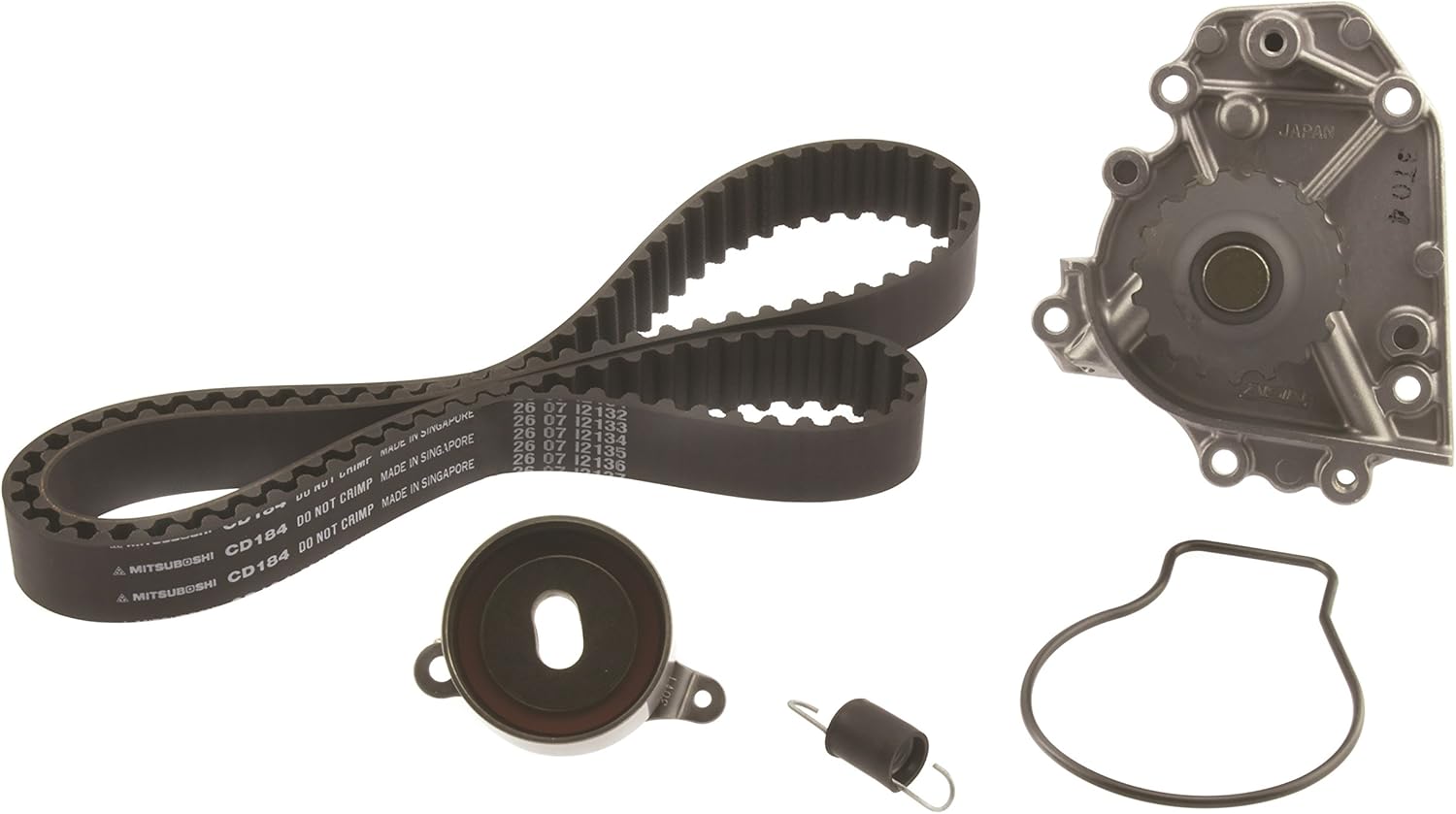
| Brand | AISIN |
|---|---|
| Model | TKH-014 |
| Position | Center |
| Item Weight | 1 pounds |
This AISIN service kit combines a machined water pump with a matched timing belt, tensioner, spring, gasket, and install instructions so you can replace all timing-related components in one job. It is intended for the 1997–2001 Honda CR-V (and certain Acura Integra engines) where the water pump and timing belt are typically replaced together to avoid repeating labor. The kit uses OE-matched components from known manufacturers such as Mitsuboshi and NTN and includes an Aisin diecast aluminum water pump with carbon ceramic seal for longer wear and better coolant sealing. For a DIYer or independent shop this reduces parts-sourcing hassle and ensures the replacement parts fit together. The kit does not include some peripheral seals and gaskets others might change while the engine is apart, so expect to buy camshaft or crank seals separately if needed. Overall this kit focuses on factory-quality components and convenience for a full timing service on compatible CR-V engines.
Best for: Buyers who prioritize long-term reliability and want factory-quality replacement parts in a single kit to minimize repeat labor and ensure correct component matching for a 1997–2001 Honda CR-V timing service.
Less Ideal for: If you need a comprehensive overhaul that includes every engine seal and valve cover components, choose a more complete rebuild kit or purchase the additional seals separately.
- Includes water pump plus timing belt, tensioner, spring, and gasket for a single-service replacement
- Uses OE-matched components from known suppliers (Aisin, Mitsuboshi, NTN) for factory-quality fit and materials
- Water pump features diecast aluminum housing and carbon ceramic seal intended for durability
- Packaged with installation instructions to help DIY installers and independent shops
- Does not include camshaft seals, crank seal, or valve cover gasket that many technicians replace while the timing cover is off
Verdict: Choose this AISIN kit when you want factory-matched timing components and a durable water pump bundled together for a reliable timing service on 1997–2001 Honda CR-V engines.
6. Gates PowerGrip Timing Belt Component Kit with Water Pump (TCKWP184)

| Brand Name | Gates |
|---|---|
| Model Number | TCKWP184 |
| Included Components | 1 Belt, 1 Tensioner, 1 Spring, 1 Water Pump, Seal Ring |
| Material Type | Aluminum |
| Compatible with Vehicle Type | Car, Truck |
This Gates PowerGrip kit supplies the core components needed when replacing a timing belt and the timing-driven water pump at the same service interval. The kit is intended for use where the water pump is driven by the timing belt and packages a timing belt, tensioner, tensioner spring and a water pump plus the rubber seal ring and installation instructions so you can complete the job without sourcing extra parts. In practice it simplifies maintenance by reducing compatibility checks and avoids reusing an old pump that could fail soon after belt replacement. Gates positions the pump and belt to match factory replacement intervals and the included hardware and instructions help an experienced DIYer or shop perform a correct install. Reported issues are mainly around occasional water pump defects and impeller differences versus some factory pumps, so inspect the pump on arrival and keep fasteners and any vehicle-specific gaskets on hand. The kit is a practical, time-saving choice when you want a single-box solution for a timing-belt-driven cooling system service.
Best for: Buyers who want a single kit to replace the timing belt and the timing-driven water pump together and prefer the convenience of a complete parts set along with instructions to shorten shop time and reduce follow-up failures.
Less Ideal for: If you only need a standalone timing belt or a non-timing-driven pump, or if you prefer to source an OEM-identical pump separately, this bundled kit is more than necessary.
- Complete single-box solution including timing belt, tensioner, spring and a timing-driven water pump
- Includes installation instructions and supporting hardware to simplify the replacement job
- Manufactured by a well-known belt specialist with parts sized for timing system service intervals
- Some users have reported defective water pumps or differences in impeller size compared with original pumps
Verdict: Buy this kit if you want a reliable, all-in-one timing belt and timing-driven water pump package to complete the service in one visit.
7. A-Premium Timing Belt Kit with Water Pump and Tensioner for Honda CR-V 1997–2001 / Acura Integra 1996–2001 L4

| Compatible engines | Naturally aspirated L4 1.8L and 2.0L |
|---|---|
| Kit contents | Timing belt, tensioner, water pump, camshaft seals, crankshaft seal, spring, rubber seal ring |
| Manufacturer | PremiumpartsWhosale |
| Manufacturer part number | APTBK024 |
This A-Premium kit supplies everything needed when replacing the timing belt and water pump on the specified 1997–2001 Honda CR-V 2.0L and compatible Acura Integra 1.8L four-cylinder engines. The package includes the timing belt, tensioner, water pump, camshaft and crankshaft seals, spring, and a rubber seal ring so you do not need to source separate parts. In normal use the kit restores belt-driven timing and cooling system integrity, helping valves and pistons remain correctly synchronized and reducing the risk of engine damage. Customers report good fit and complete contents; the included water pump lets you handle both wear-prone items in one service interval. Limitations to note are that this is an aftermarket kit so component finish and longevity may vary compared with factory parts, and one reviewer reported a slightly tight belt fit requiring careful installation. For a risk-averse buyer, the one-year unlimited-mileage guarantee offers extra reassurance, but have a trusted mechanic verify belt tension and pump alignment at installation.
Best for: Buyers who prioritize replacing the timing belt and water pump together to avoid repeat labor and want a ready-to-install kit with a warranty for peace of mind.
Less Ideal for: Do not choose this kit if you need OEM-branded parts or prefer sourcing individual premium components for a high-mileage rebuild.
- Complete kit includes timing belt, tensioner, water pump, cam and crank seals and necessary hardware
- Designed to match specified 1.8L and 2.0L naturally aspirated four-cylinder engines for direct fit
- One-year unlimited-mileage guarantee provides added reassurance for buyers
- Multiple reviewers report accurate fit and that the kit arrived with all listed components
- Aftermarket components may not match factory part longevity or finish exactly
- At least one user reported the belt felt slightly short and required careful installation
Verdict: If you want a single, warranty-backed kit to replace the timing belt and water pump on a 1997–2001 CR-V or compatible Integra, this A-Premium set delivers a complete, direct-fit solution.
Choosing the Right 1997-2001 Honda CR-V Water Pump: Key Factors to Consider
Fitment and Compatibility
Correct fitment is the foundation of a successful water pump replacement for a 1997-2001 Honda CR-V. The pump must match the OEM mounting pattern, pulley alignment, and inlet/outlet orientations so hoses and belts remain correctly routed. Incorrect fitment can cause leaks, belt misalignment, or interference with surrounding components.
When evaluating fitment, verify the pump profile, bolt pattern, and any required spacer or dowel locations. For this CR-V generation, attention to clearance with the timing/belt cover and adjacent brackets matters because small differences translate to installation difficulty or failure to seal properly.
Seal Design and Durability
The water pump seal prevents coolant from leaking where the shaft exits the housing, so seal material and design directly affect long-term reliability. Look for pumps using corrosion-resistant seal faces and high-temperature elastomers that tolerate coolant additives and heat cycles common in older engines.
Seal failure often shows as external seepage or coolant pooling. For the 1997-2001 CR-V, where many vehicles have seen years of coolant exposure, choosing a pump with proven seal durability reduces the chance of repeat replacement shortly after service.
Bearing Quality and Shaft Tolerance
Bearings support the pump shaft and spinner; if they wear, the shaft can wobble, causing noise, reduced flow, and premature seal wear. Bearings constructed from hardened steel with proper lubrication retain preload and resist wear longer than lower-grade components.
Because the 1997-2001 CR-V may already have age-related stresses, selecting a pump with robust bearings and tight shaft tolerances helps avoid water pump bearing noise and the need for a second service within a short period.
Impeller Type and Flow Efficiency
The impeller determines how effectively coolant circulates through the engine. Metal impellers can resist cavitation and deformation better than some molded plastics, but modern composite impellers may be acceptable if well engineered. Efficient impeller geometry maintains steady coolant flow at idle and highway speeds, which is essential for preventing hot spots in the head and block.
Consider how the impeller interacts with the rest of the cooling system on the 1997-2001 CR-V. A well-balanced impeller reduces vibration and bearing load, contributing to quieter operation and longer service life.
Corrosion Resistance and Materials
Material selection for the housing, impeller, and fasteners affects how the pump resists electrochemical corrosion and coolant chemistry exposure. Anodized or coated housings and stainless or plated fasteners can greatly extend service life, especially in vehicles that have seen varied coolant maintenance over decades.
For the 1997-2001 CR-V, choose pumps with clear material specifications that resist rust and pitting. Corrosion can compromise sealing surfaces and lead to water pump leak coolant issues that are hard to diagnose without removal.
Installation Completeness and Serviceability
A pump that comes with the correct gasket, O-rings, and mounting hardware simplifies installation and reduces the risk of installation-related leaks. Clear instructions and compatibility with common service tools matter for both DIYers and shops.
Also consider items such as whether the pulley or tensioner needs to be transferred, recommended torque specs, and whether coolant system flushing is advised during replacement. A pump that minimizes additional parts or unexpected steps lowers installation time and reduces the chance of installation errors.
Common Symptoms of a Failing Water Pump on a 1997-2001 CR-V
Recognizing early signs of a deteriorating water pump helps you avoid overheating and more costly repair. Typical symptoms include coolant puddles under the vehicle near the front, an unexplained drop in coolant level, or a visible weep hole leak at the pump housing. Engine temperature fluctuations or a rising temperature gauge during normal driving can also indicate reduced coolant circulation.
- Coolant pooling under the front of the vehicle
- Whining or grinding noise near the front accessory area
- Overheating under load or at idle
- Steam or strong coolant smell from the engine bay
Diagnosing Leaks and Verifying the Pump Is the Source
Not all coolant leaks originate at the water pump, so a careful diagnosis is important. Start with a visual inspection for wetness around the pump housing, gasket seams, and the weep hole. Use a clean rag to wipe suspected areas and then run the engine briefly to watch for fresh seepage. Pressure-testing the cooling system can reveal slow leaks and show whether pressure development forces coolant out of the pump seal.
- Perform a cooling-system pressure test to pinpoint slow leaks
- Inspect hoses, heater core lines, and thermostat housing as alternative leak sources
- Look for dried coolant residue or white/green deposits around the pump
Timing Belt and Water Pump Service Considerations
On many engines, including this generation Honda, replacing the water pump at the same time as timing belt service is common practice because labor overlaps. Coordinating these services prevents duplicative labor and ensures a fresh pump is installed before long-term belt tension and age-related failures occur.If the CR-V in question has the original timing belt or it is nearing the vehicle's recommended replacement interval, plan to perform both services together and verify all accessory bearings and tensioners during disassembly.
- Replace pump during timing belt service when labor and access overlap
- Inspect belt tensioner and idler bearings while the system is open
- Follow torque and alignment procedures to avoid premature wear
Coolant Types and System Maintenance for Older CR-Vs
Using the correct coolant type and maintaining proper coolant condition affects water pump longevity. For the 1997-2001 CR-V, residual corrosion inhibitors may be depleted in older coolant, so a complete flush and proper fill with the manufacturer-recommended coolant or equivalent is important after pump replacement.Regular coolant checks and periodic flushes reduce the risk of seal failure and internal corrosion that can shorten pump life. Also verify that the radiator cap and thermostat are functioning correctly, as pressure or flow issues can worsen pump wear.
- Perform a coolant flush when replacing the pump if coolant is old or contaminated
- Use the correct coolant specification and mixture ratio
- Check radiator cap pressure rating and thermostat operation
Tools and Prep for a Smooth DIY Replacement
Preparing the right tools and workspace shortens the job and reduces the chance of errors. Common needs include a reliable pressure cap removal method when cold, a jack and stands for safe access, a torque wrench, and a sealant-free gasket scraper. Having a drain pan sized for the CR-V coolant volume helps contain spills.Label hose positions and take reference photos during disassembly to ensure correct reassembly. If you plan to replace the timing belt or tensioner simultaneously, gather the necessary components and follow the recommended sequence to avoid misalignment.
- Torque wrench and correct socket sizes for mounting bolts
- Drain pan and clean rags to manage coolant
- Service manual or step checklist for torque specs and timing marks
Still looking for the perfect fit?
Select your Honda CR-V configuration to see the most relevant Water Pumps recommendations
How We Chose the Best 1997-2001 Honda CR-V Water Pump
Our selection process prioritized parts and features that matter for owners of 1997-2001 Honda CR-Vs. We focused on six concrete criteria: exact fitment to the 1997-2001 CR-V cooling system, seal material and design to resist coolant degradation, bearing quality and shaft tolerance for long service life, impeller type and balance for steady flow, overall construction materials to resist corrosion, and ease of installation including gasket and hardware completeness.We excluded any units with ambiguous fitment information, incomplete installation hardware, or known patterns of premature failure in this chassis. We also filtered out water pumps that required extensive manifold or accessory changes beyond standard replacement procedures for this generation CR-V.Sources included manufacturer technical specs, commonly reported failure modes for this vehicle generation, and documented installation notes to ensure the shortlisted items meet the practical needs of DIYers and professional installers alike. The resulting list favors reliable cooling performance, long-term sealing, and straightforward installation.
Our full evaluation process is outlined in our review methodology.
FAQ
How often should I replace the water pump on a 1997-2001 Honda CR-V?
Replacement often depends on condition and service history, but many CR-V owners align pump replacement with timing belt intervals or when symptoms appear. Inspect for leaks and bearing noise regularly and consider replacement if the pump shows age-related wear.
Can I replace the water pump myself on a 1997-2001 CR-V?
Many mechanically inclined owners can handle the job with basic tools and a service manual. The task requires draining the cooling system, removing accessory components, and following torque and gasket procedures. If you are uncomfortable with belt or tensioner work, seek professional help.
What causes a water pump bearing noise on this CR-V generation?
Bearing noise usually results from internal bearing wear or loss of lubrication, often accelerated by coolant contamination or long service life. If you hear whining or grinding near the pump, inspect and replace the pump to prevent seal and flow failure.
Will a small coolant leak at the pump get worse if I keep driving?
Small leaks tend to worsen because heat cycles and vibration can enlarge the failure point, leading to increased coolant loss and potential overheating. Address persistent leakage promptly to reduce the risk of engine damage.
Do I need to replace the thermostat when installing a new water pump?
It is good practice to evaluate the thermostat during pump replacement. If the thermostat is original or shows signs of sticking or age, replace it to ensure proper flow and temperature control after the pump is installed.
What signs indicate a failing water pump seal on a 1997-2001 CR-V?
Signs include visible coolant weeping around the shaft, coolant pooling beneath the vehicle, or dried coolant residue near the pump. A pressurized cooling system test can confirm whether the seal is the leak source.
Final Verdict
For 1997-2001 Honda CR-V owners, prioritize fitment accuracy, seal durability, and bearing quality when selecting a replacement water pump. Coordinate pump replacement with related services such as timing belt or coolant flushing to save labor and reduce the chance of follow-up repairs.Balance the tradeoffs between ease of installation and long-term durability: a pump that simplifies installation but uses higher-quality seals and bearings is usually the most cost-effective choice over the life of the vehicle. Choose a pump that aligns with those priorities to restore reliable cooling and minimize future downtime.
Explore More:
- Check out all Honda CR-V parts & accessories
- Explore Water Pumps Maintenance & Repair Guides
- Explore Cooling System
- Browse all Auto Parts
