

Note: This article contains affiliate links. If you click on these links and make a purchase, I may earn a small commission at no extra cost to you. This helps support my research and content. Read my full affiliate disclosure here.
If you drive a 2002-2006 Honda CR-V you know the cooling system is essential to dependable daily use and long engine life. A compromised radiator can cause overheating, loss of coolant, or intermittent heating problems that leave you stranded or facing costly repairs. Choosing the right radiator restores proper cooling performance and reduces the chance of recurring leaks or premature failure.This guide covers our shortlist of the top radiators for the 2002-2006 Honda CR-V. We evaluated options that match the vehicle's fitment, material construction, and cooling capacity so you can pick the radiator that best suits your repair or upgrade goals. Below we also explain the criteria we used and what to consider when replacing the radiator.
Looking for other parts? See all Honda CR-V parts & accessories.
Top Picks at a Glance


1. TRQ Radiator Aluminum Core, 1-Row Compatible with 2002–2006 Honda CR-V and 2003–2006 Element

| Core Row Quantity | 1 |
|---|---|
| Core Thickness | 0.63 in |
| Core Material | Aluminum |
| Transmission Oil Cooler | Included |
| Down Flow Or Cross Flow Type | Down Flow |
This TRQ radiator is a direct-fit replacement built around a single-row aluminum core and plastic tanks, intended to restore factory cooling for 2002–2006 Honda CR-V and 2003–2006 Element 2.4L engines. It installs using the stock upper and lower mounts and keeps inlet and outlet locations matching the factory layout for straightforward swap-in installation. Notable features include a 0.63 inch core thickness, integrated transmission oil cooler with concentric fittings, and a machined aluminum core for heat dissipation. In practical use it provides the expected cooling capacity for everyday driving and typical towing or light-duty loads while simplifying installation with preassembled fittings. Limitations are the single-row core, which is slimmer than some heavy-duty aftermarket radiators and may run warmer under extreme loads, and plastic tanks that are less impact-resistant than metal. TRQ supplies installation resources and the unit is a close factory-style replacement for drivers who want a reliable, easy-to-install radiator without upgrading to a performance or heavy-duty unit.
Best for: Buyers who want a reliable, factory-style replacement that restores cooling performance with minimal modification and straightforward DIY or shop installation.
Less Ideal for: Drivers seeking a heavy-duty or performance upgrade for frequent towing, racing, or extreme ambient heat should choose a multi-row or purpose-built performance radiator instead.
- Direct-fit design matches factory mounting and hose locations for simpler installation
- Aluminum single-row core offers good heat transfer for normal driving and commuting
- Integrated transmission oil cooler included so no separate cooler plumbing is required
- Preassembled components and online installation videos reduce DIY time and guesswork
- Single-row, 0.63 in core is less heavy-duty than multi-row performance radiators and may be marginal under sustained high-load use
Verdict: A practical, direct-fit aluminum-core radiator that restores factory cooling for 2002–2006 CR-Vs while keeping installation simple and DIY-friendly.
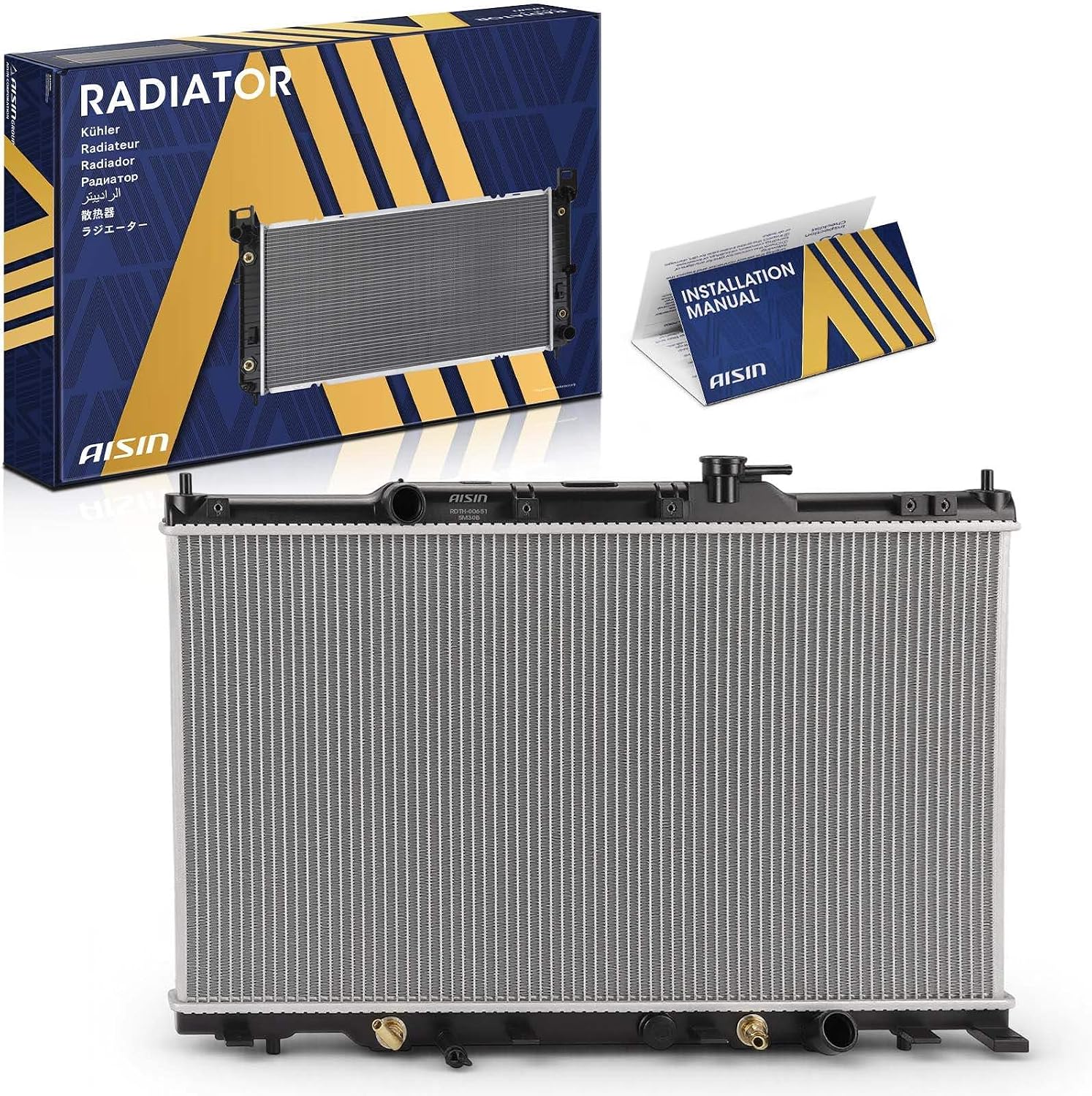
2. AISIN Radiator RDTH-00651 Compatible with Honda CR-V 2002–2006 L4 2.4L
| Compatibility | Honda CR-V 2002-2006, Element 2003-2006 L4 2.4L |
|---|---|
| Type | Down Flow |
| Material | Aluminum |
| Number of Rows | 1 |
| Transmission Oil Cooler | Included |
This AISIN radiator is a direct-replacement downflow unit engineered for the 2002–2006 Honda CR-V (2.4L L4) and similarly equipped Elements. It installs using standard hose clamp inlet and outlet connections and includes an integrated transmission oil cooler, so it handles both engine cooling and automatic transmission cooling without extra adapters. The single-row aluminum core keeps weight and thermal mass moderate while providing factory-style cooling performance suited to everyday driving and modestly demanding conditions. Reinforced end tanks and a leakproof design aim to improve long-term reliability, and AISIN supplies an installation manual to simplify fitment. The radiator is best for those wanting a dependable, vehicle-specific replacement with OEM-level fit and integrated transmission cooling. Limitations include the single-row core, which is less capable under extreme towing, heavy-duty off-road use, or aggressive performance modifications that generate higher sustained heat compared with multi-row or high-capacity performance cores.
Best for: Buyers who prioritize a factory-quality, vehicle-specific replacement that installs cleanly and restores stock cooling and transmission cooling functionality for daily driving and light-duty use.
Less Ideal for: Drivers planning heavy towing, frequent high-speed mountain driving, or engine performance upgrades that raise cooling demands should consider a larger or multi-row performance radiator instead.
- Direct-fit design tailored to 2002–2006 Honda CR-V and 2003–2006 Element for straightforward installation
- Integrated transmission oil cooler removes need for a separate cooler when vehicle originally used one
- Aluminum downflow core offers a balance of corrosion resistance and thermal conductivity
- Includes installation manual and reinforced connections aimed at reducing leaks and simplifying replacement
- Single-row core provides less sustained cooling capacity than multi-row or high-performance radiators
Verdict: Choose this AISIN radiator when you want a dependable, vehicle-specific replacement that restores factory cooling and built-in transmission cooling with straightforward installation.
3. DWVO Complete Radiator for 2002–2006 Honda CR-V and 2003–2006 Honda Element

| Compatible models | 2002–2006 CR-V; 2003–2006 Element |
|---|---|
| Core material | Aluminum |
| Transmission cooler | Brass integrated |
| Tanks | PA66 GF30 inlet/outlet, TIG-welded |
This DWVO complete radiator replaces the factory unit with a high-density, multi-louvered aluminum core and TIG-welded construction aimed at restoring cooling performance. It is sold as a full radiator assembly with molded inlet/outlet tanks, a brass transmission oil cooler, and treated coating to resist corrosion; the listing notes it fits both automatic and manual transmissions for the specified model years. Install is a typical swap for someone with basic mechanical skills or a shop, and the radiator ships with foam corner protection to avoid damage in transit. Buyers report generally good fit and cooling, though a few notes mention minor fitment adjustments may be needed on some vehicles. The unit does not include a radiator cap and professional installation is recommended if you are not confident with cooling system bleeding and routing. For a practical repair or budget-minded replacement this radiator offers core cooling efficiency and factory-style mounting, but expect occasional variation in fit that may require small trimming or repositioning during install.
Best for: Buyers seeking a cost-effective, full replacement radiator to restore proper cooling on a 2002–2006 CR-V or 2003–2006 Element who prioritize reliable cooling performance and a near-factory replacement without premium pricing.
Less Ideal for: If you want an upgraded high-performance racing cooler or a custom-fit aftermarket piece with guaranteed zero-fitment work, this standard replacement may not satisfy those needs.
- Direct-fit design for 2002–2006 Honda CR-V and 2003–2006 Honda Element to replace the factory radiator
- High-density multi-louvered aluminum core for improved cooling efficiency
- TIG-welded core with brass transmission cooler and protective coating for durability
- Ships as a complete radiator assembly so you avoid sourcing multiple parts
- Radiator cap is not included so a compatible cap must be supplied separately
- A few buyers reported minor fitment issues that required trimming or slight adjustments during installation
Verdict: A budget-conscious, factory-style complete radiator that restores cooling for 2002–2006 CR-Vs and 2003–2006 Elements with mostly straightforward fit and good core performance.
4. AutoShack Replacement Radiator for Honda CR-V 2002–2006 / Element 2003–2006, 2.4L

| Fitment | Honda CR-V 2002-2006, Element 2003-2006 L4 2.4L |
|---|---|
| Core Rows | 1 |
| Transmission Oil Cooler | Yes |
| Exterior | Aluminum, Plastic |
| Item model number | RK949 |
This AutoShack radiator is a budget-friendly, exact-fit replacement for 2002–2006 Honda CR-V and 2003–2006 Element 2.4L applications. It replaces the factory unit and includes a transmission oil cooler provision while omitting an engine oil cooler and the radiator cap. Constructed with an aluminum core and plastic tanks, it is intended to restore proper coolant temperatures for daily driving and highway use. Typical installation requires transferring at least one transmission fluid fitting from the original radiator and may need minor trimming of the reservoir hanger on some vehicles, so plan for basic mechanical work or professional installation. Buyers report straightforward fit and stable operating temperatures under normal conditions, though the package lacks detailed instructions and some supplied fittings may need swapping. For a cost-conscious repair this radiator brings factory-like cooling performance without the premium price, but be prepared to make small adjustments during installation and reuse specific hardware from the old radiator.
Best for: Buyers looking for an affordable, vehicle-specific replacement that restores normal cooling without paying for a premium brand; good for DIYers comfortable reusing small parts or for shops doing budget repairs.
Less Ideal for: Not the best choice for owners seeking a fully OE-identical plug-and-play swap without any adjustments or for those who want a high-end performance or heavy-duty racing radiator.
- Designed to match the original mounting and cooling layout for 2002–2006 CR-V/2003–2006 Element 2.4L.
- Aluminum core with plastic tanks balances cooling efficiency and lower cost.
- Includes transmission oil cooler provision for automatic and manual transmissions.
- Many buyers report good temperature control in everyday driving after installation.
- Radiator cap is not included so a compatible cap must be purchased separately.
- Some supplied transmission fitting and reservoir hanger may require swapping or light modification during installation.
- Instructions are minimal, which can complicate DIY installs for inexperienced users.
Verdict: A cost-effective, vehicle-specific replacement that restores reliable cooling for 2002–2006 CR-Vs and 2003–2006 Elements without the premium price.
5. Readair CU2443 Direct Fit Radiator for Honda CR-V 2002–2006 / Element 2003–2006

| Brand Name | Readair |
|---|---|
| Part Number | FRRAD2443E |
| Included Components | radiator |
| AT/MT | AT |
This Readair CU2443 radiator is a direct replacement intended to restore the cooling system on 2002–2006 Honda CR-V and 2003–2006 Element models. It installs in place of the factory unit and is used to circulate coolant and keep engine temperature in range; buyers report the fan alignment, mounting points, and inlet/outlet locations match factory positions so no modifications are needed in most installs. Notable features include a multi-row core sized to the original dimensions and transmission line fittings, and it ships well packaged to avoid bent fins. In practice the radiator performs the basic job reliably: reviewers report no leaks, proper cooling, and continued operation over thousands of miles. Limitations to be aware of are occasional differences in the finish of fittings compared with product photos and the usual installation complexity on some Hondas that may require partial front-end disassembly. For a reliability-first replacement, this unit offers a straightforward, factory-style option at a lower cost than dealer parts.
Best for: Buyers who prioritize a dependable, factory-style radiator replacement for a 2002–2006 CR-V and want a cost-effective part that restores original cooling performance.
Less Ideal for: People looking for upgraded performance radiators with larger cores, aftermarket cooling enhancements, or cosmetic brass fittings should consider purpose-built alternatives.
- Direct OEM-style fitment for 2002–2006 Honda CR-V and 2003–2006 Element, reducing modification during install
- Core and mounting layout match factory locations so fan and hoses align without trimming
- Robust packaging and build that arrives with straight fins and intact seals
- Reported long-term performance with no leaks and stable engine temps over thousands of miles
- Some units show different transmission line fitting material than pictured, which may affect appearance though not function
Verdict: A reliable, direct-fit factory-style replacement that restores proper cooling on 2002–2006 Honda CR-Vs without modification.
6. SCITOO 2443 Replacement Radiator for 2002-2006 Honda CR-V and 2003-2006 Honda Element 2.4L

| Applications | 2002-2006 Honda CR-V 2.4L; 2003-2006 Honda Element 2.4L |
|---|---|
| Transmission Oil Cooler | Included |
| Engine Oil Cooler | Not included |
| Inlet Diameter | 1.25in. |
| Outlet Diameter | 1.25in. |
This SCITOO 2443 radiator is a full replacement unit aimed at restoring cooling performance for 2002–2006 Honda CR-V and 2003–2006 Honda Element 2.4L engines. It includes a built-in transmission oil cooler and matching 1.25 inch inlet and outlet ports, so it integrates into stock cooling and transmission lines without modification on properly equipped vehicles. The aluminum construction and single core row prioritize efficient heat transfer while keeping the unit relatively light. Installation is intended to be bolt-in for the listed models, and the listing notes technical support from the seller if issues arise. Practical benefits include a direct-fit approach that minimizes additional parts or fittings and a factory-style layout for straightforward hose and bracket alignment. Limitations to expect are that this is a single-row core radiator, which may not provide the extra cooling margin of high-performance multi-row units in extreme towing or heavy-load scenarios, and fit depends on selecting the correct year/trim when ordering.
Best for: Buyers who want a model-specific replacement that restores factory-style cooling and removes fitment guesswork, and who prioritize proven compatibility and peer-verified performance.
Less Ideal for: Drivers seeking upgraded cooling for heavy towing, track use, or significant engine modifications should consider multi-row or high-capacity performance radiators instead.
- Direct-fit design for 2002–2006 Honda CR-V and 2003–2006 Honda Element 2.4L reduces installation complexity
- Integrated transmission oil cooler eliminates the need for a separate cooler on compatible vehicles
- Aluminum construction offers efficient heat transfer and corrosion resistance compared with some composite units
- Matching 1.25 inch inlet and outlet sizes align with factory hose connections
- Single-row core may limit peak cooling capacity versus multi-row or performance radiators
Verdict: A straightforward, model-specific aluminum replacement radiator with an integrated transmission cooler that restores factory-style cooling for 2002–2006 CR-V and 2003–2006 Element 2.4L owners.
7. KAX CU2443 Car Engine Radiator for 2002–2006 Honda CR-V and 2003–2006 Element

| Item model number | CU2443 |
|---|---|
| Manufacturer | KAX |
| Manufacturer Part Number | 7804RDT0095US |
| OEM Part Number | 19010PHM003, 19010PHM901, 19010PNB003, 19010PNLG01, 19010PPAA01, 19010PPAA02, 19010PPAA51, 19010PPAA52, 19010PPLA01, 19010PPLA51, 19010PZDA01, 19010PZDA51 |
| Core Thickness | 5/8 in |
The KAX CU2443 is a direct-replacement radiator built with an aluminum core and high-grade plastic water tanks intended to restore a vehicle's cooling system to factory-style performance. It installs like a factory unit for the specified CR-V and Element years and is typically used to replace a leaking or clogged original radiator. Notable features include a high-density multi-louver fin core for improved heat dissipation, leak and pressure testing during manufacture, and reinforced packaging to reduce shipping damage. In practice the radiator drops into place on correct-fit vehicles and provides dependable cooling for day-to-day driving and towing light loads. Some buyers report durable, trouble-free service while a few report leaks after extended use, so professional installation and careful post-install checks are recommended. The part carries manufacturer-listed OEM reference numbers to aid fitment and KAX offers after-sales support and a stated two-year quality assurance. This unit is a pragmatic choice when you want a close-to-factory fit without upgrading to performance cores.
Best for: Buyers who prioritize a straightforward, factory-style replacement that fits the specified CR-V years and minimizes installation hassle and downtime.
Less Ideal for: Drivers wanting a heavy-duty or performance cooling upgrade for aggressive towing or track use should choose a performance radiator instead.
- Direct-fit design for 2002–2006 Honda CR-V and 2003–2006 Element that simplifies installation
- Aluminum core with multi-louver fins for efficient heat dissipation
- Leak and pressure tested at manufacture to reduce early failures
- Reinforced shockproof packaging to protect the radiator during transit
- Some users report leaks after months of use, indicating variable long-term durability
Verdict: A near-factory direct-replacement radiator for 2002–2006 CR-V owners who want an easy, cost-effective way to restore reliable cooling.
Choosing the Right 2002-2006 Honda CR-V Radiator: Key Factors to Consider
Core Material and Construction
The radiator core material determines heat transfer efficiency and long-term durability. Aluminum cores are common because they provide good thermal conductivity and are resistant to rust compared with older copper-brass designs. Pay attention to whether the core is single-pass or multi-pass and how the tubes and fins are bonded.
Construction quality affects resistance to road debris and thermal stress. A well-made core with consistent brazing or solder joints reduces the chance of leaks. For the 2002-2006 CR-V, choose a construction that tolerates frequent short trips and stop-start traffic without developing stress fractures.
Fitment and Mounting Accuracy
Correct fitment is essential to avoid extra work and potential cooling issues. The replacement radiator must match the CR-V's inlet and outlet locations, mounting tab positions, and overall height and width so the fan shroud, hoses, and transmission cooler lines align properly.
Radiators that require trimming, adapter hoses, or modified mounts increase installation time and the risk of leaks or poor airflow. Prioritize radiators specified for the 2002-2006 Honda CR-V to ensure a direct fit and straightforward installation.
Cooling Capacity and Core Density
Cooling capacity is a function of core surface area, fin density, and coolant flow path. A radiator with adequate core density and proper flow will maintain stable engine temperatures during highway towing, hot-weather driving, or heavy traffic conditions.
For the CR-V, matching or slightly improving on the OEM core sizing helps manage heat without creating excessive backpressure in the cooling system. Consider whether the radiator is single or dual core and how that affects heat rejection versus airflow through the front end.
Corrosion Resistance and Coatings
Exposure to road salt, coolant additives, and varying temperatures can accelerate corrosion. Radiators with protective coatings, anodized aluminum, or corrosion-resistant tanks and fittings will typically last longer in harsh environments.
Internal corrosion can occur if the wrong coolant is used or if contaminants are present, so choosing a radiator with good internal finish and treated tanks reduces the chance of internal failure and coolant contamination.
Transmission Cooler Integration
Some CR-V radiators incorporate a transmission cooler or ports for automatic transmission fluid lines. If your vehicle has an automatic transmission, ensure the replacement radiator includes compatible cooler ports and maintains the correct spacing and connections.
Using a radiator without the proper transmission interface can cause transmission overheating or require additional adapter fittings, which add complexity and potential leak points. Confirm transmission compatibility before purchase.
Ease of Installation and Serviceability
A radiator that is easy to install reduces labor time and the chance of installation mistakes. Look for radiators that reuse OEM mounting points, have preinstalled bushings or grommets, and accept stock fan shrouds. Clear hose and fitting alignment makes bleeding the cooling system and reattaching hoses simpler.
Serviceability also includes how easy the radiator is to inspect and repair if minor damage occurs. Removable mounting hardware and accessible drain fittings make routine coolant changes and inspections less of a chore.
Signs Your CR-V Radiator Needs Replacement
Identifying radiator problems early prevents overheating and engine damage. Common symptoms include persistent coolant loss with no visible external leak, visible wetness or crusted coolant on or beneath the radiator, and a radiator temperature rise that coincides with heavy traffic or long climbs.
Other clues are repeated need to add coolant, discolored coolant, or steam from the engine bay. Pay attention to dashboard temperature spikes and heater performance changes, since a failing radiator can affect cabin heating and engine thermostat operation.
- Visible coolant on radiator fins or around hose connections
- Engine temperature climbs beyond normal range in traffic
- Coolant smells or discolored coolant suggesting internal corrosion
- White steam or vapor from under the hood after driving
Preparing for a Radiator Replacement
Before ordering a radiator for the 2002-2006 CR-V, confirm whether your vehicle has the automatic transmission cooler integrated into the radiator and note the hose routing and fan shroud attachment points. Gather basic tools, a proper coolant catch pan, replacement hose clamps, and fresh coolant specified for Honda engines.
Drain the cooling system safely and allow the engine to cool fully. Inspect hoses, thermostat, water pump, and clamps while the system is empty; replacing worn hoses and clamps at the same time reduces the chance of follow-up leaks. Label or photograph hose locations and electrical connectors to speed reassembly.
- Confirm transmission cooler integration if applicable
- Have replacement clamps and coolant on hand
- Inspect related cooling components while radiator is out
Compatibility Notes for 2002-2006 Honda CR-V
The 2002-2006 CR-V has specific inlet and outlet placements and mounting points that any replacement must match. Differences in fan shroud design or transmission cooler ports will affect compatibility, so only select radiators explicitly listed for the 2002-2006 Honda CR-V to avoid fitment problems.
If your vehicle has an automatic transmission, verify the cooler fittings and their orientation. For manual transmission CR-Vs there are typically no transmission lines to route through the radiator, simplifying replacement but still requiring precise hose alignment.
- Confirm presence or absence of transmission cooler ports
- Match fan shroud and mounting tab positions
- Check inlet/outlet locations before purchase
Maintaining Your New Radiator
After installation, perform a proper coolant bleed to remove air pockets that can cause hotspots and irregular temperature readings. Follow a regular inspection schedule for hoses, clamps, and visible corrosion, and top off coolant to the correct level with the recommended coolant type.
Periodically flushing the cooling system according to maintenance intervals removes deposits and helps the new radiator perform as intended. Address any cooling system symptoms immediately to prevent minor issues from escalating into radiator leaks or engine overheating.
- Bleed the cooling system after installation to eliminate air pockets
- Inspect hoses and clamps every service interval
- Flush coolant per maintenance schedule to prevent deposits
When to Repair Versus Replace
Small external leaks from a minor bent fin or an isolated solder joint can sometimes be repaired temporarily, but repairs often provide only short-term relief. Evaluate whether the leak source is accessible and whether the repair will restore full structural integrity.
Consider replacement if the radiator shows widespread corrosion, multiple leak sites, significant core damage, or if previous repairs have failed. A full replacement eliminates uncertainty and restores cooling capacity reliably for the 2002-2006 CR-V.
- Small isolated leaks can get temporary repairs
- Replace for widespread corrosion or multiple leaks
- Replacement preferred when long-term reliability is the goal
Still looking for the perfect fit?
Select your Honda CR-V configuration to see the most relevant Radiators recommendations
How We Chose the Best 2002-2006 Honda CR-V Radiator
We focused on criteria that matter most for the 2002-2006 Honda CR-V and for owners who need a dependable replacement. Core material and construction were primary filters because aluminum cores with robust soldering or brazing tend to resist corrosion and handle thermal cycling better. Fitment accuracy and correct inlet/outlet placement were mandatory; any radiator that required extensive modification or nonstandard hoses was excluded. Cooling capacity and core density were evaluated to ensure the replacement maintains OEM cooling performance under normal and heavy driving conditions. Corrosion resistance and protective coatings were considered to extend service life in varied climates. Ease of installation and compatibility with stock mounting points, transmission cooler lines where applicable, and fan shroud fit were also assessed to limit installation time and reduce the chance of installation errors.We excluded items with unclear vehicle fitment data, reports of consistent leaks, or unconventional construction that compromises long-term serviceability. Final selections emphasize parts that balance durability, correct fitment, and straightforward installation for typical CR-V owners.
Our full evaluation process is outlined in our review methodology.
FAQ
How do I tell if my 2002-2006 CR-V radiator is leaking internally or externally?
External leaks are visible as wet spots, drips, or dried coolant residue on the radiator or hoses. Internal leaks often present as contaminated or milky coolant, unexplained coolant loss with no visible leak, or white smoke from the exhaust if coolant enters the combustion chamber. A pressure test can confirm external leaks while a coolant system compression test helps diagnose internal failure.
Can I reuse my original fan shroud and hoses with a replacement radiator?
Often you can reuse the OEM fan shroud and hoses if the replacement radiator matches the original fitment and mounting points. Inspect the shroud and hoses for cracks, brittleness, or damaged tabs; replacing worn components at install time reduces the chance of future issues and simplifies the fitment process.
Does the radiator on an automatic CR-V include transmission cooler lines?
Many replacement radiators for the 2002-2006 CR-V intended for automatic transmissions include integrated cooler ports. Verify the listing or product specification for transmission cooler compatibility and port orientation before purchasing to ensure proper connection of the transmission lines.
How long should a replacement radiator last in a CR-V?
Longevity depends on material, driving conditions, and maintenance. A well-constructed aluminum radiator with good corrosion resistance and proper coolant maintenance can last many years, while exposure to road salt or poor coolant care can shorten its service life. Regular inspection and timely coolant changes extend lifespan.
Is a radiator flush necessary when I replace the radiator?
Yes, flushing the cooling system before installing a new radiator removes debris and old coolant that could contaminate or clog the new core. A thorough flush prevents premature clogging and helps the new radiator perform to design expectations.
Will a higher capacity radiator cause issues on my CR-V?
A radiator with modestly higher cooling capacity is usually beneficial and reduces temperature peaks. However, significant changes in core flow or pressure drop could affect thermostat operation or coolant circulation. Choose a radiator designed to match the CR-V's flow characteristics rather than an oversized core that alters system dynamics.
Final Verdict
When replacing the radiator in a 2002-2006 Honda CR-V, prioritize correct fitment, robust core construction, and corrosion resistance. Confirm whether your vehicle requires integrated transmission cooler ports and replace worn hoses and clamps during the service to reduce future leaks. Weigh durability against installation simplicity: a radiator that fits precisely and uses quality materials will minimize headaches and maintain reliable cooling performance. Choose the option that best matches your driving conditions and installation preferences to restore dependable cooling.
Explore More:
- Check out all Honda CR-V parts & accessories
- Explore Radiators Maintenance & Repair Guides
- Explore Cooling System
- Browse all Auto Parts
