

Note: This article contains affiliate links. If you click on these links and make a purchase, I may earn a small commission at no extra cost to you. This helps support my research and content. Read my full affiliate disclosure here.
If you own a Ford Explorer XLT and are facing emissions failures or diminished engine performance, choosing the right catalytic converter matters. A correct-fit converter restores emissions control, helps prevent check-engine warnings related to catalytic function, and can improve drivability when installed and matched to the vehicle's exhaust layout.This guide shortlists the top catalytic converters for the Ford Explorer XLT and explains the practical decision factors that matter for replacement, including fitment, emissions performance, durability, and installation considerations. Read on to see the selection criteria and what to check before you buy.
Looking for other parts? See all Ford Explorer parts & accessories.
Top Picks at a Glance
| Best Overall The best all-around choice for most situations | Anytek Catalytic Converter for Ford 3.5/3.7L Front Left/Right |  |
| Best Quality Built to a higher standard if you want something more solid | MagnaFlow Catalytic Converter 51218 (Front) – OEM Grade, Stainless Steel |  |
| Best Value The sweet spot between price and what you get | VEVOR Catalytic Converter 3.5L V6, Front Left/Right, 2-Pack |  |
| Best Budget The cheapest option that still gets the job done reliably | Weonefit Pair Left & Right Front Catalytic Converter Set for Ford 3.5L |  |
| Highest Rated A top-rated pick with lots of positive feedback | PREMIER MILES Front Catalytic Converter for 3.5T Turbocharged Ford (2010–2016) |  |
| Most Popular A crowd favorite that many people choose with confidence | PHILTOP Left and Right Catalytic Converter for Ford Explorer 2013–2019 |  |
| Best Seller A high-volume bestseller chosen again and again | NutsCata Direct-Fit Catalytic Converter Kit, Left and Right (Pair) | 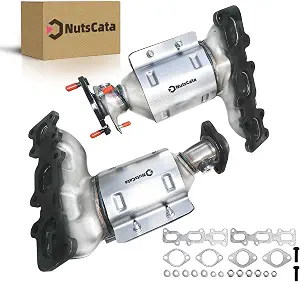 |
1. Anytek Catalytic Converter for Ford 3.5/3.7L Front Left/Right

| Manufacturer | Anytek |
|---|---|
| Manufacturer Part Number | 10080143-N |
| OEM Part Number | 641478, 16728, 674-255, 30584, 641479, 674-256, 30585, 674255, 674256 |
| Position | Front Left, Front Right |
This Anytek catalytic converter replaces the front left or right unit on several Ford and Lincoln models using 3.5L and 3.7L engines and is built to match factory fit and basic performance. It is used as a like-for-like replacement when a worn or damaged converter triggers check-engine lights or fails emissions checks in permitted states. The unit lists multiple OEM reference numbers and fits Explorer, Edge, Taurus, Flex, Police Interceptor, and several Lincoln models within the specified years. Noticeable features include machined exterior construction, manufacturer-supplied part numbers for easier matching, and a stated EPA-compliant certification for sale outside states with stricter rules. Practical benefits are straightforward installation for compatible vehicles and restoration of exhaust flow and emissions control to factory-style operation. Important limitations are state restrictions that make it illegal for sale or use in California, Colorado, New York, and Maine and the listing notes both a 1-year warranty in one place and a 5-year warranty elsewhere, so confirm coverage before purchase.
Best for: Buyers who want a straightforward, factory-style replacement for a front catalytic converter on supported Ford/Lincoln 3.5L or 3.7L vehicles and prioritize fitment and restored emissions function.
Less Ideal for: Drivers in states with stricter emissions rules or anyone who needs a California-compliant catalytic solution should look for a certified alternative.
- Direct-fit design matched to factory part numbers for easier installation and fitment.
- Machined exterior and factory-style construction aimed at restoring exhaust flow and emissions control.
- Fits a wide range of Ford and Lincoln front 3.5L/3.7L applications listed by OEM reference numbers.
- Not legal for sale or use in California, Colorado, New York, and Maine due to emissions regulations.
Verdict: A practical, factory-matched front catalytic converter option for Ford and Lincoln 3.5L/3.7L vehicles when you need a reliable direct replacement outside states with strict emissions rules.
2. MagnaFlow Catalytic Converter 51218 (Front) – OEM Grade, Stainless Steel

| Manufacturer | MagnaFlow |
|---|---|
| Exterior | Stainless Steel |
| Position | Front |
| Model | OEM Grade |
This MagnaFlow catalytic converter is a direct-fit replacement designed to restore or maintain exhaust flow and emissions control on compatible Ford Explorers. It uses 3D-scanned, spun-body manufacturing and a single laser fusion weld to match factory mating surfaces and reduce leaks, and the included hardware simplifies installation when replacing corroded factory parts. The design includes factory-style O2 port locations and a vibration-reducing flex section, which helps preserve sensor readings and reduces drivetrain buzz. Constructed from stainless steel with mandrel-bent piping, the unit aims for durable, corrosion-resistant performance while keeping backpressure close to stock. It is engineered to meet Federal/EPA standards for OBDII-equipped vehicles, though it is not legal for sale in certain states listed in the legal disclaimer. Buyers seeking stronger aftermarket performance gains should note this is an OEM-grade replacement focused on fit, durability, and emissions compliance rather than increased flow for high-power builds.
Best for: A buyer who prioritizes restoring factory-equivalent performance, emissions compliance, and a reliable direct-fit install on a Ford Explorer XLT rather than chasing power gains.
Less Ideal for: Not the best choice for tuners seeking a high-flow performance converter for modified engines or race applications.
- Direct-fit design using 3D scanning to replicate factory mating surfaces for easier installation
- Stainless-steel spun-body construction with mandrel-bent piping for corrosion resistance and durability
- Includes required hardware to replace corroded factory components without sourcing extra parts
- Factory-style O2 port locations and a flex section preserve sensor function and reduce vibration
- Meets Federal/EPA emissions standards for OBDII vehicles
- Not compliant for sale or use in some states as noted in the legal disclaimer
Verdict: Choose this MagnaFlow front catalytic converter when you want a durable, factory-grade direct replacement that preserves emissions compliance and near-stock exhaust behavior for your Ford Explorer XLT.
3. VEVOR Catalytic Converter 3.5L V6, Front Left/Right, 2-Pack

| Compatibility | Ford Explorer 3.5L 2013-2019 |
|---|---|
| Engine | 3.5L V6 |
| Replacement Position | Front, Left and Right |
| Material | T409 stainless steel |
| O2 Sensor Port | M18 |
This VEVOR catalytic converter is a bolt-on, flange-to-flange replacement aimed at restoring emissions control and resolving P0420 codes on 3.5L Ford Explorer engines. It uses a ceramic honeycomb carrier with a 600-molybdenum catalyst coating and a 400-cell structure to increase surface area and airflow, while an M18 oxygen sensor port accepts the factory sensor. Built from T409 stainless steel with heat-insulating padding, the unit is intended to resist high temperatures and vibration for longer life. Installation is straightforward for anyone comfortable with basic exhaust work because it includes gaskets and fits the front left and right positions. Expect reduced exhaust smell, quieter operation, and improved chance of passing emissions tests where CARB rules do not apply. Limitations include no CARB compliance for California and that long-term durability depends on correct fitment and installation quality, so sourcing professional install or careful alignment is recommended.
Best for: Buyers who want a practical, cost-effective replacement to restore emissions function and clear P0420 codes on a 3.5L Explorer without modifying the exhaust system.
Less Ideal for: Drivers who need a California-compliant catalytic converter or who prefer a certified OEM part with manufacturer-backed emissions certification.
- Direct bolt-on, flange-to-flange design with included gaskets for straightforward installation
- Ceramic honeycomb carrier and 400-cell structure increase catalyst surface area for better filtration
- Built from T409 stainless steel with heat insulation to resist high exhaust temperatures
- Integrated M18 O2 sensor port compatible with original oxygen sensors
- Not CARB compliant so it cannot be used in California and other CARB-mandated states
- Long-term durability depends on correct installation and exhaust alignment
Verdict: A straightforward, high-flow replacement that gets a 3.5L Explorer back to compliant emissions operation and fixes P0420-style issues outside CARB jurisdictions.
4. Weonefit Pair Left & Right Front Catalytic Converter Set for Ford 3.5L

| Manufacturer | Weonefit |
|---|---|
| Manufacturer Part Number | Weonefit 19533 19534 |
| OEM Part Number | 19533 19534 |
| Date First Available | February 28, 2023 |
This Weonefit pair replaces the left and right front catalytic converters on 3.5L Ford and Lincoln models and is intended as a budget-friendly factory-replacement option. Installation is typical of direct-fit converters: they bolt into the existing exhaust flange and restore emissions control when an original unit has failed. The set lists OEM reference numbers 19533 and 19534 for fitment guidance and includes a two-year warranty from the seller. Practical benefits are straightforward: a matched left/right pair simplifies sourcing both sides at once and the packaged units look and mount like factory replacements, which helps keep installation time and fabrication to a minimum. Limitations to consider are regulatory: the listing restricts sales to several states with stricter emission rules, so this will not be a legal option in those jurisdictions. Also, while the product is aimed at cost-conscious buyers, it does not provide detailed catalyst substrate specifications, so long-term durability and performance compared with higher-end branded converters is uncertain.
Best for: Buyers looking to replace failed front converters on a 3.5L Ford or Lincoln with a straightforward, lower-cost matched pair who prioritize getting the vehicle back on the road affordably.
Less Ideal for: Drivers in states with strict emissions requirements or anyone who needs a verified California-compliant or high-performance catalytic solution should look elsewhere.
- Sold as a matched left and right front converter set for convenience
- Direct-replacement design that bolts to existing exhaust flanges to simplify install
- Includes a two-year seller warranty for basic protection
- Targeted at budget-minded buyers as a lower-cost replacement option
- Cannot be shipped to states with stricter emissions rules, limiting legal use
- Manufacturer does not publish detailed catalyst substrate or efficiency specifications
Verdict: A cost-focused matched left/right front converter set that gets 3.5L Ford and Lincoln vehicles back on the road without the premium price of branded or emissions-certified units.
5. PREMIER MILES Front Catalytic Converter for 3.5T Turbocharged Ford (2010–2016)

| Compatible vehicles | Ford Taurus/Flex 2010–2015 3.5T SHO; Ford Explorer 2013–2016; Lincoln MKS/MKT 2010–2014 3.5T |
|---|---|
| Position | Front |
| Substrate | 400-cell ceramic |
| EPA compliance | Passed 25,000-mile EPA long-term test |
| Warranty | 5-year structural; 2.5-year/25,000-mile emissions performance |
This PREMIER MILES catalytic converter replaces the front unit on selected 3.5T turbocharged Ford and Lincoln vehicles and is built for long-term, emissions-compliant service. It uses a 400-cell ceramic substrate and precious-metal catalyst to keep exhaust flow efficient while converting pollutants to meet EPA testing, and the design aims to limit backpressure so engine performance and fuel economy are preserved. Typical use is direct replacement of a worn or failed factory converter on the listed vehicles; installation follows standard exhaust-shop procedures. Notable features include precision welding, factory-grade substrates, and EPA long-term testing that supports reliability claims. The unit comes with a multi-year structural and emissions performance warranty to back durability. Limitations are that it is not CARB compliant and therefore cannot be used where California emissions rules apply, and buyers should ensure exact fitment to the listed model years and turbocharged 3.5T configuration before ordering.
Best for: A buyer who prioritizes a dependable, emissions-tested replacement for the front catalytic converter on the listed 3.5T turbocharged Ford or Lincoln vehicles and values factory-quality construction backed by warranties.
Less Ideal for: Do not choose this if you need a CARB-compliant converter or if your vehicle is outside the specified model years or engine configuration.
- EPA-compliant with documented 25,000-mile long-term road test
- OEM-grade 400-cell ceramic substrate for balanced flow and emissions control
- Precise welding and factory-grade catalyst aimed at extended durability
- Front-position direct fit for the specified 3.5T turbocharged Ford and Lincoln applications
- Not CARB compliant so not legal for California or CARB-restricted areas
Verdict: Choose this EPA-tested front converter when you want a factory-quality, reliability-focused replacement for the 3.5T turbocharged Ford or Lincoln applications.
6. PHILTOP Left and Right Catalytic Converter for Ford Explorer 2013–2019

| Compatible vehicles | Ford/Lincoln 2013–2019 Explorer and listed models with 3.5L/3.7L engines |
|---|---|
| Position | Left, Right |
| Manufacturer | PHILTOP |
| EPA status | EPA-compliant |
This PHILTOP catalytic converter set replaces the left and right units on compatible 2013–2019 Ford Explorer and related Ford/Lincoln models. It uses a stainless steel/aluminized body and a high-temperature ceramic honeycomb substrate intended to increase flow and reduce backpressure, which can help restore engine breathing and modestly improve fuel economy compared with a clogged or failing original converter. The listing notes EPA compliance and includes OE-style gaskets and hardware to simplify installation without modification, typically taking a professional or DIY mechanic a few hours. Practical benefits include reduced exhaust noise from damaged converters and straightforward bolt-on fitment when the part numbers match. Important limitations are regulatory: EPA-compliant converters cannot be used in certain states that require CARB-certified parts, so confirm local rules before buying, and compatibility must be verified against your vehicle's emission label and the listed reference numbers.
Best for: Buyers who want a direct-fit replacement that restores catalytic function and reduces exhaust noise while relying on seller-provided fitment confirmation and user reviews to validate compatibility.
Less Ideal for: Drivers in states that require CARB-certified converters or anyone who needs a part specifically certified for California, New York, Colorado, or Maine emissions programs.
- Built with stainless steel/aluminized pipes for corrosion resistance and longer service life
- High-temperature ceramic honeycomb substrate designed to increase flow and reduce backpressure
- Includes OE-style gaskets and hardware for direct, no-modification installation
- EPA-compliant for federal emissions regions
- Not CARB-approved so it cannot be used in states that require California-certified converters
Verdict: A practical, direct-fit EPA-compliant replacement for restoring catalytic performance on 2013–2019 Ford Explorer models when CARB certification is not required.
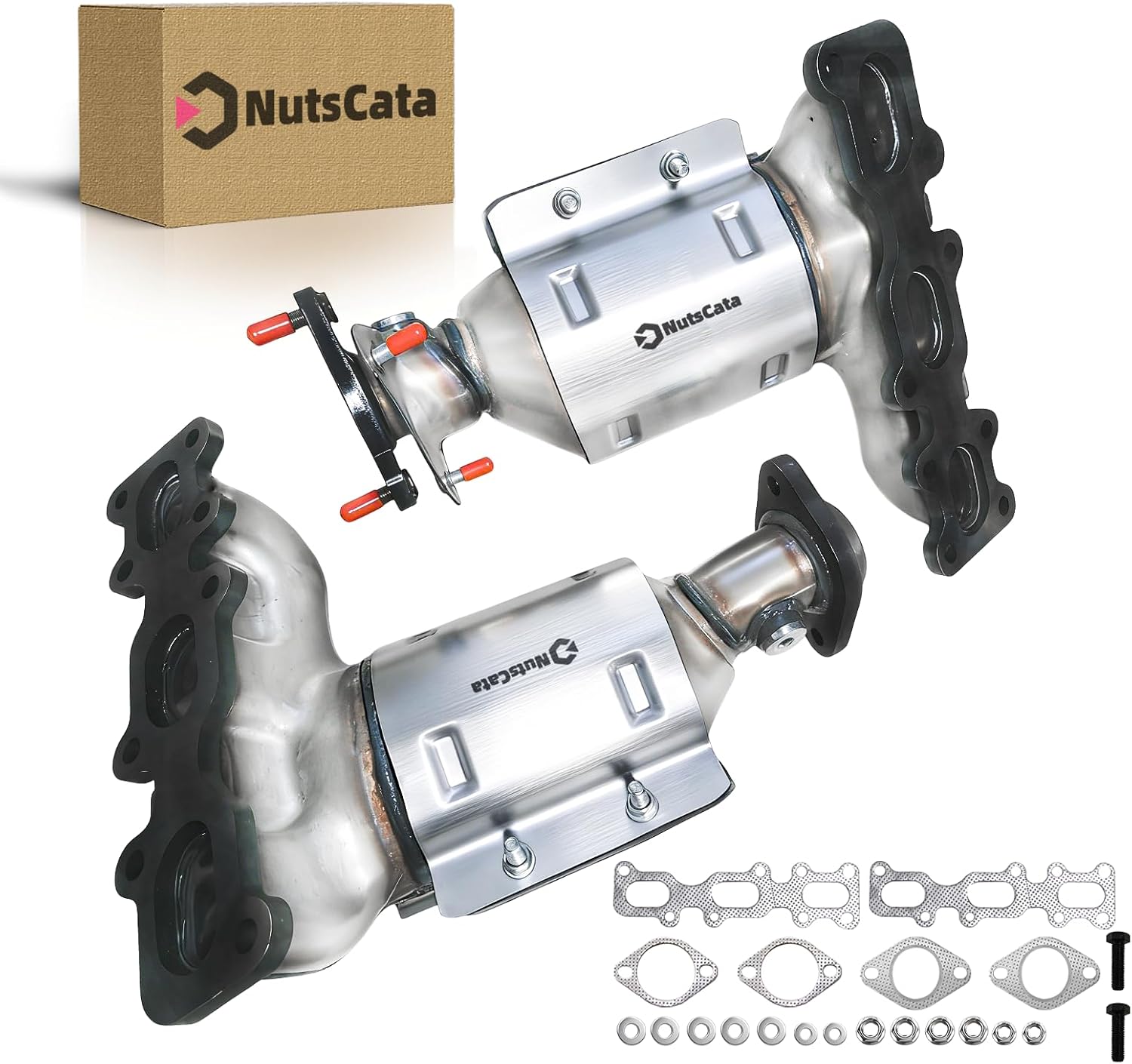
7. NutsCata Direct-Fit Catalytic Converter Kit, Left and Right (Pair)
| Applicable engines | 3.5L and 3.7L V6 |
|---|---|
| Fitment years | 2013-2019 (varies by model) |
| Compliance | EPA-compliant (federal only) |
| Coverage | 6 years / 60,000 miles |
This NutsCata kit provides two direct-fit catalytic converters intended as bolt-on replacements for compatible Ford Explorer and related V6 models. The converters use honeycomb ceramic substrates with high-content precious metals to restore emissions control and catalytic function, and the pair is sold as an EPA-compliant assembly for federal-spec vehicles. Typical use is straightforward replacement of worn or failed factory converters where the bolt-on design avoids cutting or welding in most installations. Practical benefits include restored emissions performance, a factory-style fitment approach that reduces installation complexity, and a six-year or 60,000-mile coverage period from the brand. Important limitations are regulatory: the unit is only for vehicles that meet federal emission rules and is prohibited for sale or use in several states with different regulations. Also buyers should confirm exact OEM reference numbers and fitment before purchase because compatibility is limited to specific Ford and Lincoln V6 models and years.
Best for: Buyers who prioritize a straightforward, factory-style replacement to restore emissions performance on qualifying Ford Explorer XLT and similar V6 vehicles and want a low-risk, direct-fit solution.
Less Ideal for: Drivers in states with non-federal emissions regulations or anyone who needs a custom or modified exhaust solution should look elsewhere.
- Direct-fit bolt-on design that generally avoids cutting or welding
- Honeycomb ceramic substrate loaded with high-content precious metals for effective emissions conversion
- Sold as a matched left/right pair for complete replacement
- EPA-compliant for federal emission standards
- Manufacturer-backed coverage for six years or 60,000 miles
- Not legal for sale or use in some states with stricter emissions rules
Verdict: Choose this NutsCata direct-fit pair if you want a low-risk, bolt-on replacement to restore emissions control on eligible Ford Explorer XLT V6 models.
Choosing the Right Ford Explorer XLT Catalytic Converter: Key Factors to Consider
Fitment and Flange Compatibility
Correct fitment is essential because the catalytic converter must mate cleanly with the Ford Explorer XLT exhaust geometry. A converter that matches the vehicle-specific flange pattern and pipe diameter reduces installation time, prevents exhaust leaks, and minimizes the need for cutting or adapter pieces.
Poor fitment can introduce leaks that trigger a check-engine light catalytic converter-related code or cause exhaust odors. For vehicles with factory heat shields or specific hanger locations, an exact-fit unit preserves those attachments and avoids stress on exhaust mounts. When evaluating fitment, confirm pipe diameter, inlet and outlet orientation, and mounting point alignment to ensure a bolt-on replacement where possible.
Emissions Conversion Efficiency
How well a catalytic converter reduces hydrocarbons, carbon monoxide, and nitrogen oxides determines whether the vehicle will meet emissions inspections. Look for converters with documented conversion efficiencies or design features such as optimized cell density and effective washcoat loading.
Higher conversion efficiency is particularly relevant if you failed an emissions test or are replacing a failed unit to clear codes. Consider products intended to meet or exceed original equipment emissions targets to reduce the risk of recurring faults tied to exhaust emissions catalytic converter performance.
Substrate and Durability
The internal substrate material and construction influence both performance and service life. Substrates with appropriate cell density and a high-quality washcoat hold catalytic metals more effectively and resist clogging from soot and oil contamination.
Durable casings and corrosion-resistant materials are important for vehicles driven in humid or salted-road environments. A longer-lasting converter reduces the chance of early catalytic converter failure signs, such as rattling from broken substrate or reduced flow from plugging. Evaluate the expected service life and warranty terms as proxies for durability.
Backpressure and Engine Performance
A replacement catalytic converter should maintain acceptable exhaust flow to avoid excess backpressure. Excessive restriction can reduce throttle response, lower fuel economy, and exacerbate performance-related codes on the Explorer XLT.
Manufacturers achieve low backpressure by balancing cell density and substrate length. For owners who prioritize normal everyday performance, choose a converter designed to match the stock flow characteristics. If a converter is overly restrictive, it can produce symptoms that mimic other engine problems, making diagnosis more complicated.
Installation Method and Serviceability
Installation method affects cost and convenience. Bolt-on converters that match factory flanges are faster to fit and easier to service. Weld-on or cut-and-fit units may require fabrication, additional parts, and shop time.
Consider whether oxygen sensors need to be transferred, repositioned, or extended. Accessibility for sensor placement and availability of replacement gaskets and hardware influence long-term serviceability. A unit that simplifies installation reduces labor time and the risk of post-installation exhaust issues.
Regulatory Compliance and Warranty
Ensure the catalytic converter complies with applicable emissions regulations for the Ford Explorer XLT. Converters intended for on-road use often carry certifications or are designed to meet local inspection standards.
Warranty coverage can indicate manufacturer confidence and provide protection against premature failures. Review what the warranty covers—substrate degradation, casing rust, or conversion failure—and the duration. Products without clear compliance or warranty information may carry higher long-term risk.
Common Symptoms of Catalytic Converter Problems
Recognizing early signs of a failing catalytic converter helps you decide whether replacement is necessary. Typical symptoms on the Ford Explorer XLT include reduced engine power under load, poor fuel economy, and an illuminated check-engine light catalytic converter-related code. A smell of rotten eggs from the exhaust or noticeable sulfur odors often indicate the converter is not processing exhaust gases effectively.
Rattling noises from under the vehicle during acceleration or startup can signal a broken substrate. In some cases, the vehicle may experience hesitation or stalling when the converter is severely restricted. Observing these symptoms promptly and correlating them with diagnostic trouble codes can prevent further damage to the exhaust system and engine.
- Diminished acceleration or power loss
- Rotten-egg smell from exhaust
- Rattling from undercarriage during acceleration
- Check-engine light catalytic converter-related codes
- Reduced fuel efficiency
Diagnosing Converter Issues on the Explorer XLT
Start diagnosis with an OBD-II scan to capture codes related to catalyst efficiency or oxygen sensor performance. Codes that indicate catalyst inefficiency do not always confirm a failed converter but are a reliable starting point. Live data from upstream and downstream oxygen sensors can show whether the converter is altering exhaust oxygen levels as expected.
A backpressure test can reveal excessive restriction. Mechanically inspect for exhaust leaks, damaged heat shields, or external impacts that may have compromised the converter. If a rattling substrate is suspected, a low-speed road test combined with a visual inspection from beneath the vehicle can help localize the noise source.
- Use OBD-II scan for catalyst efficiency codes
- Compare upstream and downstream O2 sensor traces
- Perform backpressure or flow checks if available
- Visual inspection for dents, rust, and heat shield damage
Fitment Checklist Before You Buy
Before purchasing a replacement for the Ford Explorer XLT, confirm the converter's inlet and outlet diameters, flange type, and whether it replaces a front, middle, or rear section. Check whether oxygen sensor ports are included or if your existing sensors must be transferred. Verify hanger point locations and clearances for factory heat shields to avoid interference during installation.
Also determine whether the unit is intended as a direct bolt-on or requires welding. If your vehicle has factory towing or accessory exhaust features, ensure the converter does not obstruct these components. Keeping a concise checklist reduces the likelihood of returns and additional shop labor.
- Match inlet/outlet diameters and flange pattern
- Confirm oxygen sensor port placement
- Verify hanger and heat shield clearances
- Determine bolt-on vs weld-on installation
Maintaining Your New Catalytic Converter
Proper maintenance helps extend converter life on the Explorer XLT. Address engine misfires, oil consumption, and fuel system faults promptly, because unburned fuel or oil entering the converter accelerates substrate deterioration. Regular tune-ups and keeping the fuel and ignition systems in good condition reduce the risk of premature converter failure.
Avoid frequent short trips that prevent the converter from reaching optimal operating temperature, because sustained low-temperature operation can promote clogging. If you tow or frequently drive in stop-and-go conditions, inspect the exhaust system more often for damage and secure mounts to prevent undue stress on the converter.
- Repair misfires and oil leaks quickly
- Maintain ignition and fuel systems
- Limit prolonged low-temperature short trips
- Inspect mounts and heat shields regularly
Installation Tips for a Smooth Replacement
When installing a replacement catalytic converter on the Ford Explorer XLT, prep the mating surfaces by cleaning flange faces and replacing gaskets to ensure a tight seal. If reusing oxygen sensors, check sensor threads and wiring harness condition before reinstalling. Use anti-seize on sensor threads sparingly and only where recommended.
If welding is required, align components carefully to avoid introducing stress into the exhaust system. After installation, check for exhaust leaks at seams and around sensors, and clear any diagnostic codes after verifying installation to confirm proper operation. A post-install road test helps identify any abnormal noises or drivability issues early.
- Clean flange faces and replace gaskets
- Inspect and transfer oxygen sensors carefully
- Use correct alignment if welding is necessary
- Verify no exhaust leaks and clear diagnostic codes
Still looking for the perfect fit?
Select your Ford Explorer configuration to see the most relevant Catalytic Converters recommendations
How We Chose the Best Ford Explorer XLT Catalytic Converter
We shortlisted catalytic converters for the Ford Explorer XLT by focusing on criteria that directly affect emissions compliance, fitment, and long-term reliability. Primary evaluation points included exact fitment to the Explorer XLT exhaust routing and flange pattern, measured or rated emissions conversion performance, and substrate construction that influences longevity under typical driving conditions. We also prioritized converters designed to minimize backpressure while meeting vehicle-specific thermal characteristics. Durability factors included substrate type, washcoat quality, and protective casing to resist rust and road debris. Installation practicality was considered, including whether the unit requires welding, bolt-on compatibility, or additional hardware. We excluded universal-fit units that require extensive modification and any converters not intended for road-legal emissions use in the stated vehicle scope. The resulting list represents options that balance correct fit, emissions effectiveness, reasonable service life, and straightforward installation for the Ford Explorer XLT.
Our full evaluation process is outlined in our review methodology.
FAQ
How long does a catalytic converter typically last on a Ford Explorer XLT?
Lifespan varies with driving conditions and maintenance, but converters often last many years under normal service. Factors like engine misfires, oil contamination, and road salt exposure can shorten life, so addressing related engine issues helps prolong service life.
Will a failing catalytic converter always trigger the check engine light?
Not always, but many failures do trigger catalyst efficiency or oxygen sensor codes that illuminate the check engine light catalytic converter-related warnings. Some mechanical failures, like minor substrate deterioration, may show symptoms before a code appears.
Can I replace only a section of the exhaust with a catalytic converter instead of the entire system?
Yes. Many replacements involve a front, middle, or rear converter section that matches the Explorer XLT exhaust layout. Choosing a section that matches the required inlet and outlet dimensions simplifies installation and reduces labor compared with full system replacement.
Do I need to replace oxygen sensors when installing a new converter?
Not always. If existing sensors are in good condition and properly functioning, they can be reused. However, if sensors show aging, poor response, or are chemically contaminated, replacing them during converter installation helps ensure accurate emissions monitoring.
What are quick checks to confirm converter fitment before purchase?
Measure inlet and outlet pipe diameters, note flange bolt pattern and orientation, and confirm oxygen sensor port locations. Also check hanger positions and clearance for heat shields to ensure the replacement aligns with factory mounting points.
Can a clogged catalytic converter damage the engine?
A severely clogged converter can increase backpressure and cause drivability problems such as loss of power and potential engine overheating under extreme conditions. Prompt diagnosis and replacement prevent secondary damage to engine and exhaust components.
Are there legal or regulatory considerations when replacing a catalytic converter on the Explorer XLT?
Yes. Replacements intended for on-road use should meet applicable emissions standards. Verify that your chosen converter is compliant with local inspection requirements and that installation does not remove required emissions control hardware.
Final Verdict
Prioritize a converter that matches the Ford Explorer XLT's flange, sensor placement, and exhaust routing while delivering reliable emissions conversion and adequate exhaust flow. Balance durability and ease of installation to reduce future repair needs. By focusing on fitment, emissions effectiveness, and substrate quality, you can choose a replacement that restores performance and helps keep the vehicle compliant.
Explore More:
- Check out all Ford Explorer parts & accessories
- Explore Catalytic Converters Maintenance & Repair Guides
- Explore Exhaust & Emissions
- Browse all Auto Parts
