

Note: This article contains affiliate links. If you click on these links and make a purchase, I may earn a small commission at no extra cost to you. This helps support my research and content. Read my full affiliate disclosure here.
If your 2002-2005 Ford Explorer is showing emissions issues or louder exhaust noise, the catalytic converter is a common source. Choosing the right catalytic converter for this Explorer generation matters because fitment, emissions compliance, and durability affect drivability and whether the vehicle will pass inspection. This guide shortlists seven top-rated catalytic converters compatible with the 2002-2005 Ford Explorer and explains the practical differences you should consider. We focus on fitment accuracy, emissions performance, and long-term reliability so you can pick the option that best restores compliance and reduces exhaust noise. Read on for the evaluation criteria and decision points that informed our top picks.
Looking for other parts? See all Ford Explorer parts & accessories.
Top Picks at a Glance
| Best Overall The best all-around choice for most situations | xinlidatech Catalytic Converter Compatible with Ford Explorer 2002–2005 4.0L V6 (50545) |  |
| Best Quality Built to a higher standard if you want something more solid | Walker Ultra 50545 Direct-Fit Catalytic Converter for Ford Explorer |  |
| Best Value The sweet spot between price and what you get | HIGHBRICK Catalytic Converter for 4.0L Ford Explorer / Sport Trac / Ranger (2001–2005) EPA Compliant |  |
| Best Budget The cheapest option that still gets the job done reliably | MAYASAF 2.5" Universal Catalytic Converter with O2 Port |  |
| Highest Rated A top-rated pick with lots of positive feedback | ACZCR Catalytic Converter for 2002–2005 Ford Explorer / 2002–2005 Mercury Mountaineer 4.0L |  |
| Most Popular A crowd favorite that many people choose with confidence | HIGHBRICK Catalytic Converter Compatible with 2002-2005 Ford Explorer 4.6L |  |
1. xinlidatech Catalytic Converter Compatible with Ford Explorer 2002–2005 4.0L V6 (50545)
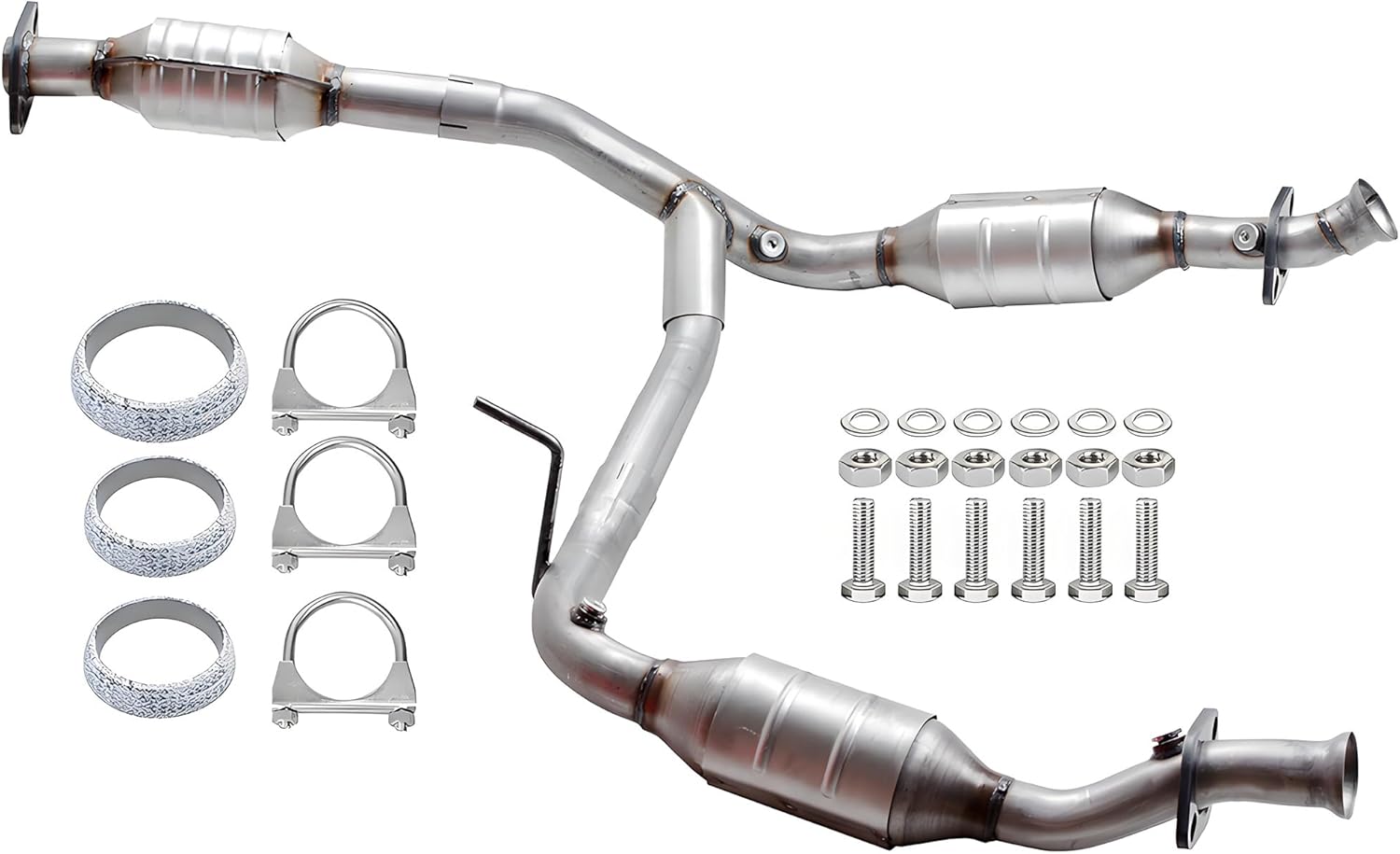
| Converter Type | Federal / EPA Direct-Fit |
|---|---|
| Substrate Material | Ceramic |
| Body Material | Stainless Steel |
| Inlet Type | 2 Bolt Loose Flange with Spherical Flare |
| California Certified | No |
This xinlidatech catalytic converter is a direct-fit replacement engineered for Ford Explorer and Mercury Mountaineer 2002–2005 4.0L V6 applications. It uses a ceramic substrate and stainless steel body, and arrives with installation accessories to enable a bolt-on swap using the supplied 2-bolt flanges. The unit is described as EPA compliant and built to resist high temperatures and exposure to rain and snow, so it should restore emissions function and clear P0420-style faults when installed alongside fresh O2 sensors. Notable practical points are the two inlet ports and single outlet that match the factory exhaust layout and the polished stainless finish that resists corrosion. Important limitations are that it is not CARB certified and therefore cannot be used in jurisdictions that require California-compliant parts, and mounting hardware is minimal so professional installation or additional gaskets may be needed for a perfect seal. For a balanced buyer wanting a direct replacement for mid-2000s Explorers this provides a straightforward, emissions-focused solution.
Best for: Buyers who want a practical, factory-style replacement to restore emissions performance on a 2002–2005 Explorer or Mountaineer without seeking a CARB-certified unit, prioritizing fitment and durability over specialty certifications.
Less Ideal for: Drivers in states that require California emissions parts or owners seeking a performance-oriented or high-flow aftermarket converter should look elsewhere.
- Direct-fit design with 2-bolt flanges for bolt-on installation on 2002–2005 4.0L V6 Explorers
- Made from stainless steel with ceramic substrate for temperature resistance and stable emissions performance
- Arrives with installation accessories to simplify replacement
- EPA compliant for federal emissions standards
- Not CARB certified so illegal for use in states that require California-compliant converters
Verdict: A straightforward federal-compliant direct-fit replacement for 2002–2005 Ford Explorer 4.0L V6 owners who need to restore emissions function with a durable stainless steel unit.
2. Walker Ultra 50545 Direct-Fit Catalytic Converter for Ford Explorer
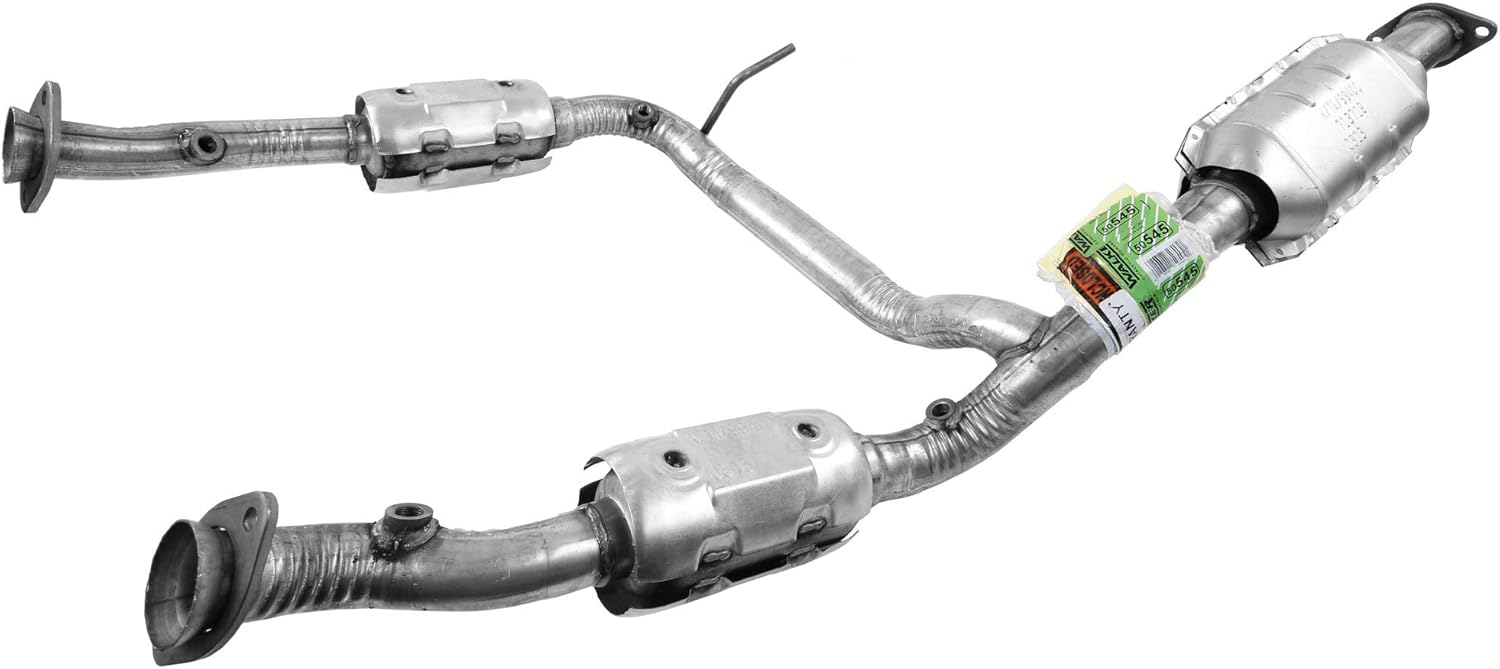
| Fits | 2002–2005 Ford Explorer; 2002–2005 Mercury Mountaineer |
|---|---|
| Inlet | 2.5" ID |
| Construction | Stainless steel |
| Item model number | 50545 |
The Walker Ultra 50545 is a direct-fit catalytic converter designed specifically for 2002–2005 Ford Explorer and compatible Mercury Mountaineer applications. It installs like a bolt-on factory replacement using OE-style hangers, flanges, brackets and heat shields so professional technicians can swap it in without fabrication or welding. Built from stainless-steel construction with a high-technology washcoat and optimized precious metal loading, it aims to restore emissions control and maintain exhaust flow back to factory performance while remaining EPA compliant on OBDII vehicles. Notable advantages are the robust flanges and brackets for durability and the inclusion of aluminized heat shields where required to protect undercarriage components. The main limitation is this is a direct replacement part focused on emissions and fitment rather than performance tuning or increased flow for high-output builds, so it will not provide power gains for modified engines that need freer-flowing aftermarket converters.
Best for: Buyers who need a reliable, emissions-compliant replacement that restores factory exhaust flow and fitment on 2002–2005 Explorer models and who prioritize correct fit and durability over performance gains.
Less Ideal for: Enthusiasts seeking a high-flow or performance-oriented converter for modified or high-output engines should consider purpose-built performance converters instead.
- Direct-fit design with OE-style hangers and flanges for straightforward bolt-on installation
- EPA compliant for OBDII vehicles and engineered to meet emissions reduction requirements
- Stainless-steel construction and thick flanges for improved durability over time
- Includes aluminized heat shields when originally equipped to protect underbody components
- Designed as a factory-style replacement so it does not increase exhaust flow or boost performance for tuned engines
Verdict: If you want a durable, EPA-compliant direct-fit replacement that restores factory emissions control and fitment on a 2002–2005 Explorer, this Walker Ultra converter is the practical choice.
3. HIGHBRICK Catalytic Converter for 4.0L Ford Explorer / Sport Trac / Ranger (2001–2005) EPA Compliant

| Vehicle compatibility | Ford Explorer Sport Trac 2001-2005, Explorer Sport 2002-2003, Ranger 2001-2003, 4.0L |
|---|---|
| EPA status | Federal EPA compliant |
| Construction | Stainless steel shell with ceramic substrate |
| Installation | Direct bolt-on replacement |
This HIGHBRICK catalytic converter is a direct bolt-on replacement intended to restore emissions control for 4.0L Ford Explorer, Sport Trac, and Ranger models from the 2001–2005 era. It is built with stainless steel and a ceramic substrate to withstand thermal stress and deliver long-term service life while meeting federal EPA emission standards. Installation is designed to be straightforward with matched mounting points, gaskets, and hardware so most technicians can install it without welding or cutting. The converter claims 140% compatibility with the original design, which suggests close fitment and proper flow characteristics for stock engines. Important limitations are that it is certified to federal EPA rules only and is not legal for sale or use in some states with stricter emissions rules, and buyers should still verify vehicle fitment before purchase. For owners looking to replace a failed or clogged unit with a factory-style, emissions-compliant assembly, this provides a practical, durable option.
Best for: Buyers who want a practical, factory-style replacement to restore emissions performance on early 2000s Ford 4.0L vehicles without custom fabrication and who prioritize durability and regulatory compliance under federal rules.
Less Ideal for: Drivers in states with stricter emissions laws or those seeking a high-performance or modified exhaust solution should look at state-compliant or performance-specific alternatives.
- Designed for direct bolt-on installation with matching mounting points and included hardware
- Constructed from stainless steel and ceramic substrate for thermal resistance and durability
- Meets federal EPA emission requirements for use outside states with stricter rules
- Claims close compatibility with the original part to preserve flow and fit
- Not legal for sale or use in certain states with stricter emissions regulations
- Fitment still requires verification for specific vehicle trims and model years
Verdict: A durable, direct-fit federal EPA-compliant replacement for restoring emissions control on 4.0L early 2000s Ford Explorer and related models.
4. MAYASAF 2.5" Universal Catalytic Converter with O2 Port

| Inlet/Outlet ID | 2.5 inches |
|---|---|
| Overall length | 11 inches |
| Exterior | Machined |
| Manufacturer | MAYASAF AutoParts |
This MAYASAF universal catalytic converter is a straightforward aftermarket replacement for exhaust systems that accept a 2.5-inch inside-diameter section and an 11-inch overall unit. It includes a provision for an oxygen sensor and is machined from stainless-steel for corrosion resistance. Typical installation involves cutting the old section and welding or clamping this unit into the exhaust line, so professional installation is recommended unless you have a welder and exhaust experience. For budget-focused buyers it delivers the basic emissions control function without brand-premium pricing and is compact enough to fit tight mid-pipe locations. It is not a direct-fit vehicle-specific converter, so fitment must be verified before purchase and extra fabrication may be needed to adapt flange spacing or hangers. Also note it may not meet some state-specific aftermarket regulations, so check local requirements prior to installation.
Best for: A buyer seeking an affordable replacement catalytic section willing to do or pay for basic exhaust fabrication and prioritizing a low-cost functional fix over a vehicle-specific direct-fit part.
Less Ideal for: Anyone who needs a guaranteed state-compliant or vehicle-specific direct-fit converter or who wants a no-modification OEM-style replacement.
- Built-in O2 sensor port for easy reusing of the vehicle sensor location
- Stainless-steel machined exterior for improved corrosion resistance
- Compact 11-inch length fits in many mid-pipe positions
- Universal 2.5" inlet/outlet works with common exhaust pipe sizes
- Universal design often requires cutting, welding, or adapters for a secure fit
- Not guaranteed to meet emissions rules in states with strict aftermarket converter regulations
Verdict: A cost-focused universal catalytic converter that provides a compact, stainless-steel replacement option when budget and basic fabrication are the priority.
5. ACZCR Catalytic Converter for 2002–2005 Ford Explorer / 2002–2005 Mercury Mountaineer 4.0L
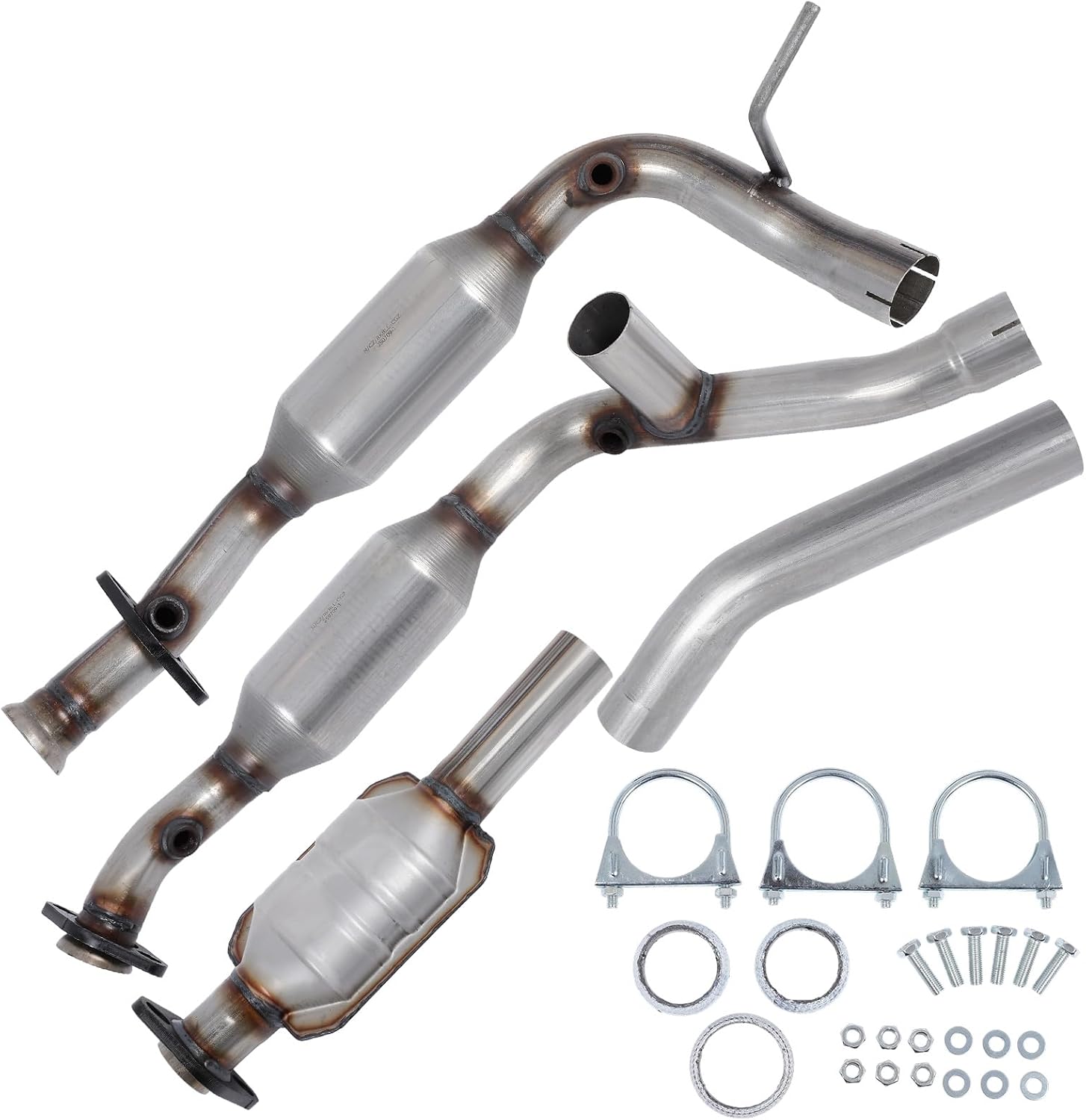
| Fitment | 2002–2005 Ford Explorer V6 4.0L; 2002–2005 Mercury Mountaineer V6 4.0L |
|---|---|
| EPA Compliant | Yes |
| Inlet Type | 2 Bolt Loose Flange With Spherical Flare |
| Outlet Type | 2 Bolt Welded Flange |
| Material | Stainless Steel |
This ACZCR catalytic converter is a direct-fit replacement for 2002–2005 Ford Explorer and Mercury Mountaineer 4.0L vehicles, built to meet EPA emissions rules. It installs in place of the factory unit using a two-bolt loose inlet flange with spherical flare and a welded two-bolt outlet flange, and the kit includes clamps and bolts to simplify installation. Constructed from stainless steel with a polished exterior, the converter aims to restore proper exhaust flow and emissions control after a failed or clogged original. The EPA-compliant design means it is intended for federal-spec vehicles but it is not CARB-approved and cannot be shipped to certain states. Expect typical use to be replacement after failure or to remedy emissions-related check-engine issues; professional installation or experienced DIY with a lift is recommended due to exhaust routing and flange connections. The product offers solid build materials and direct-fit dimensions, though limited state eligibility and the need to confirm exact fitment against reference numbers are important considerations before purchasing.
Best for: Drivers who prioritize a dependable, factory-style replacement to restore emissions function and avoid repeat trips to the shop; good for owners who value straightforward fitment and durable materials.
Less Ideal for: Anyone who needs a CARB-compliant converter for use in California, New York, Colorado, or Maine, or buyers seeking a universal or multi-vehicle aftermarket solution.
- Direct-fit design for 2002–2005 Explorer and Mountaineer models simplifies replacement.
- EPA-compliant construction suitable for federal emissions standards.
- Includes clamps and bolts to help with installation.
- Stainless steel construction and polished exterior resist corrosion and look like a factory-quality part.
- Not CARB-compliant and restricted from sale/delivery to several states.
- Requires verification against reference numbers to ensure exact fitment before installation.
Verdict: A durable, direct-fit EPA-compliant replacement that restores emissions control for 2002–2005 Explorer and Mountaineer 4.0L owners who want factory-style reliability.
6. HIGHBRICK Catalytic Converter Compatible with 2002-2005 Ford Explorer 4.6L

| Compatible vehicles | 2002-2005 Ford Explorer 4.6L; 2002-2005 Mercury Mountaineer 4.6L |
|---|---|
| Certification | EPA certified (federal) |
| Material | Stainless steel shell and ceramic substrate |
| Installation | Direct bolt-on with included hardware |
This HIGHBRICK catalytic converter is a direct bolt-on replacement intended for 2002–2005 Ford Explorer and Mercury Mountaineer 4.6L engines. It uses a three-way catalytic design with ceramic substrate material and stainless steel construction to reduce NOx, CO, and hydrocarbons while resisting thermal stress. Installation is straightforward because mounting points, gaskets, and hardware are designed to align with the factory locations so no welding or cutting should be necessary on vehicles within the stated fitment. The unit is EPA certified for federal emission compliance which makes it a suitable replacement outside states with stricter local rules. Practical benefits include improved exhaust flow compared with degraded originals, durable materials for longer service life, and minimal install time for a professional or experienced DIYer. Limitations are regulatory: it is not approved for sale or use in certain states with stricter emissions laws, and buyers should verify fitment against their vehicle trim and local regulations before purchasing.
Best for: Buyers who prioritize a tested, factory-style replacement to restore emissions performance and want a straightforward bolt-on swap with included hardware and clear regulatory compliance for federal use.
Less Ideal for: Drivers living in states with stricter emission laws or buyers seeking a universal or performance-modified converter should look for region-approved or specialized alternatives.
- Direct bolt-on design with factory-aligned mounting points and included hardware for easier installation
- EPA certified for federal emission standards to restore emission control on compliant vehicles
- Stainless steel shell and ceramic substrate intended for better thermal resistance and longer life
- Three-way catalytic process reduces NOx, CO, and hydrocarbons while maintaining exhaust flow
- Not approved for sale or use in certain states with stricter emissions regulations
Verdict: Choose this HIGHBRICK converter if you want an EPA-certified, direct-fit replacement to quickly restore emissions control on a 2002–2005 Explorer 4.6L with minimal installation hassle.
Choosing the Right 2002-2005 Ford Explorer Catalytic Converter: Key Factors to Consider
Fitment and Mounting
Correct fitment is essential for the 2002-2005 Ford Explorer because an imperfectly fitting catalytic converter can cause exhaust leaks, vibration, stress on hangers, and installation delays. Confirming flange type, inlet and outlet diameters, and the physical length of the assembly helps avoid modifications to piping or the need for custom adapters.
Some converters are direct-fit replacements that reuse factory mounting points and hardware, while others are universal or require welding. For this vehicle, prioritize direct-fit units or those that explicitly list 2002-2005 Explorer compatibility to minimize labor and ensure the exhaust system seals properly.
Emissions Certification and Substrate Type
Emissions compliance is a primary reason for replacing a catalytic converter. For the Explorer model years covered here, check whether a replacement lists federal or state-level certification where applicable and indicates the substrate type, such as ceramic or metallic monolith.
Substrate type affects how quickly the converter reaches operating temperature and how durable it will be against thermal stress. Ceramic substrates often provide excellent conversion efficiency but can be brittle under impact, while metallic substrates tolerate rapid temperature changes better. Choose based on local emissions requirements and expected driving patterns.
Durability and Construction Quality
A well-built catalytic converter will resist corrosion, thermal fatigue, and physical damage over time. Look for features such as thicker steel shells, quality welds, and anti-rust coatings that are especially important for Explorers driven in wet or salted-road conditions.
Internal design details like reinforced honeycomb structure and adequate washcoat application also influence longevity. Since the replacement should last many years, prioritizing construction quality can reduce the likelihood of repeat repairs and help maintain consistent emissions performance.
Heat Management and Flow Characteristics
Catalytic converters must operate at elevated temperatures to convert pollutants effectively. Heat management features, including thermal shielding or heat-resistant materials, help maintain optimal operating temperatures without overheating adjacent components.
Flow characteristics evaluate how restrictive the converter is relative to the stock unit. Excessive backpressure can reduce engine performance and fuel economy, while too little substrate surface area can compromise emissions conversion. Choose a unit that balances low restriction with sufficient catalytic surface area for the Explorer's engine and driving conditions.
Ease of Installation and Hardware
Ease of installation affects labor time and overall cost of replacement. Direct-fit units that include necessary gaskets, bolts, and flanges reduce installation complexity. For the 2002-2005 Ford Explorer, confirm whether the converter uses the factory O2 sensor locations or if additional sensor extensions are required.
Also consider whether modification will be needed at the hanger points or whether welding is necessary. Units designed for bolt-on installation will generally simplify the process and minimize downtime.
Warranty and Support
A clear warranty indicates manufacturer confidence and provides protection against premature failure. Look for units with multi-year coverage or warranty terms that specifically cover substrate failure and internal collapse.
Customer support and clear fitment documentation are also valuable. Good support reduces uncertainty during installation and helps resolve post-installation issues without unnecessary delays.
Common Catalytic Converter Symptoms On A 2002-2005 Explorer
Owners of 2002-2005 Ford Explorer vehicles typically notice several recurring symptoms when the catalytic converter is degrading. Frequent indicators include a persistent check engine light, loss of power under load, reduced acceleration, and a noticeable increase in exhaust noise due to internal substrate damage or bypassing flow.
Other signs are unusual exhaust odors, such as a rotten egg smell from unconverted sulfates, or reduced fuel economy if the engine management compensates for backpressure changes. Understanding these symptoms helps prioritize repair and decide whether a replacement converter or further diagnostics is needed.
- Check engine light codes related to catalyst efficiency are common triggers for inspection
- Rough idle or hesitations under acceleration can indicate restricted flow
- Loud exhaust or rattling noises may signal a broken internal substrate
How Fitment Affects Installation Time And Cost
Fitment accuracy directly influences installation complexity. A converter that matches factory flange geometry and O2 sensor locations can usually be bolted in using existing hangers and hardware, keeping labor minimal. Conversely, a universal converter or mis-sized inlet/outlet will often require welding or pipe modifications that add time and cost.
When planning a replacement for a 2002-2005 Explorer, review the unit's fitment notes and whether hardware is included. Preparing for common issues like seized bolts or corroded flanges can reduce surprises during the job.
- Direct-fit units minimize shop time and generally require no exhaust cutting
- Welding or adapters increase installation complexity and may need a muffler shop
Emission Testing And Compliance Considerations
Depending on local regulations, a replacement converter may need to meet specific emissions standards. For Explorer owners who must pass periodic inspections, choosing a unit rated for the required standards is essential. Some replacements are sold as federal-emissions compliant while others list state-level certifications.
Beyond paperwork, proper installation and intact oxygen sensor function are necessary for the vehicle to meet emissions thresholds. Ensure the replacement preserves sensor locations and that the vehicle's engine management system can read normal sensor values after installation.
- Confirm the converter's stated certification for the applicable inspection jurisdiction
- Preserve O2 sensor placement to maintain accurate emissions control readings
Practical Maintenance Tips To Extend Converter Life
Maintaining the engine in good mechanical condition directly benefits the catalytic converter. Address misfires, fuel delivery issues, or oil consumption promptly because unburned fuel or oil can damage the converter's substrate. Regular tune-ups, prompt repair of engine faults, and using the correct engine tune help prevent premature converter failure.
Avoid driving through deep water and minimize short-trip operation where the converter does not reach normal operating temperature. These habits reduce thermal stress and contamination, extending the effective life of the replacement unit.
- Fix engine misfires quickly to prevent substrate overheating
- Use scheduled maintenance to keep fuel trim and ignition timing within spec
Sensor Considerations And Diagnostic Steps
Oxygen sensors interact with the catalytic converter and can produce diagnostic codes that appear to implicate the converter. Before replacing a converter, verify sensor health, wiring, and connector integrity. A failing upstream sensor can cause incorrect air-fuel ratios that accelerate converter wear.
Simple diagnostic steps include reading OBD-II codes, checking sensor voltages and response times, and performing backpressure checks if a restriction is suspected. These steps help ensure the converter is the root cause rather than a secondary symptom of another issue.
- Scan for codes and monitor O2 sensor response before deciding on replacement
- Measure exhaust backpressure when symptoms suggest a restrictive converter
Still looking for the perfect fit?
Select your Ford Explorer configuration to see the most relevant Catalytic Converters recommendations
How We Chose the Best 2002-2005 Ford Explorer Catalytic Converter
We selected the seven catalytic converters on this list by applying a focused set of editorial filters tailored to the 2002-2005 Ford Explorer. Primary evaluation criteria included fitment accuracy for the stated model years and common engine configurations, verified emissions performance or OEM-equivalent substrate type, and construction quality such as shell thickness and weld integrity. We also considered durability factors like internal substrate design, corrosion-resistant coatings, and heat tolerance that influence lifespan under normal driving conditions.Additional criteria included ease of installation based on factory mounting points and flange compatibility, availability of hardware or gasket kits, and whether the unit was designed to meet federal or state emissions standards applicable to the Explorer. We excluded units that lacked clear fitment documentation for 2002-2005 Explorer applications, converters without stated emissions certification where required, and products whose construction details were insufficient for evaluation. The resulting list emphasizes accurate fit, certified emissions performance, durable materials, and straightforward installation for Explorer owners seeking a reliable replacement.
Our full evaluation process is outlined in our review methodology.
FAQ
What does a bad catalytic converter sound like on a 2002-2005 Explorer?
A failing converter often causes increased exhaust noise or a distinct rattling from a broken internal substrate. You may notice louder operation at idle or under acceleration, and the noise typically changes with engine speed.
Will a check engine light for the catalyst always mean the converter needs replacing?
Not always. Catalyst-related codes often indicate reduced efficiency, but the underlying causes can include faulty O2 sensors, engine misfires, or exhaust leaks. Proper diagnostics are recommended before replacing the converter.
How important is exact fitment for a 2002-2005 Ford Explorer catalytic converter replacement?
Exact fitment is important to avoid exhaust leaks, minimize installation time, and preserve oxygen sensor locations. Direct-fit converters that match flange and sensor positions reduce complications during installation.
Can a clogged catalytic converter cause reduced fuel economy in the Explorer?
Yes. A restricted converter increases backpressure and can alter engine efficiency, which may lead to reduced fuel economy and diminished throttle response, especially under load.
Should I replace oxygen sensors when replacing the catalytic converter?
It depends. If the sensors are older or showing slow response and diagnostic evidence of degradation, replacing them together can ensure accurate readings and protect the new converter. Otherwise, test sensors first and replace only if needed.
Are there maintenance steps to prevent premature catalytic converter failure?
Regular engine maintenance such as timely tune-ups, fixing misfires, and addressing oil or coolant leaks helps prevent contaminants from damaging the converter. Avoid frequent short trips that prevent the converter from reaching optimal operating temperature.
Final Verdict
When replacing a catalytic converter on a 2002-2005 Ford Explorer, prioritize accurate fitment, emissions certification, and durable construction. Balancing low backpressure with sufficient catalytic surface area will preserve engine performance while restoring emissions control. Consider sensor condition and installation complexity when planning the repair to avoid repeat work.Choose the option that best matches your local emissions requirements and installation preferences. Prioritizing documented fitment and solid construction will deliver the most reliable, long-lasting outcome for your Explorer.
Explore More:
- Check out all Ford Explorer parts & accessories
- Explore Catalytic Converters Maintenance & Repair Guides
- Explore Exhaust & Emissions
- Browse all Auto Parts
