

Note: This article contains affiliate links. If you click on these links and make a purchase, I may earn a small commission at no extra cost to you. This helps support my research and content. Read my full affiliate disclosure here.
If you rely on a Ford Explorer with the 4.6L V8, choosing the right catalytic converter matters for emissions compliance, drivability, and engine health. A failing converter can trigger diagnostic trouble codes, reduce exhaust flow, and cause rough running, so selecting a unit with correct fitment and proven emissions performance is critical. This guide shortlists the top options vetted for the Explorer 4.6L V8 and focuses on the attributes that affect real-world use: installation fit, catalytic efficiency, backpressure characteristics, and durability.Below you will find our top picks for this specific vehicle configuration and an explanation of how we evaluated them, plus practical buying considerations and installation tips to help you decide which converter best suits your needs.
Looking for other parts? See all Ford Explorer parts & accessories.
Top Picks at a Glance
| Best Overall The best all-around choice for most situations | JT Catalytic Converter for Ford Explorer/Mercury Mountaineer 4.6L V8 (2002–2005) |  |
| Best Quality Built to a higher standard if you want something more solid | AISIN Aftermarket Catalytic Converter CCTFD-00392 for Ford 4.6L V8 |  |
| Best Value The sweet spot between price and what you get | xinlidatech Catalytic Converter Direct-Fit for Ford Explorer/Mercury Mountaineer 4.6L (2002–2005) |  |
| Best Budget The cheapest option that still gets the job done reliably | ACZCR Catalytic Converter Complete Assembly for 2002–2005 Ford Explorer & Mercury Mountaineer 4.6L V8 |  |
| Highest Rated A top-rated pick with lots of positive feedback | A-Premium Center Catalytic Converter, EPA Compliant, Direct-Fit for 2002–2005 Ford Explorer V8 4.6L |  |
| Most Popular A crowd favorite that many people choose with confidence | HIGHBRICK Catalytic Converter for 2002–2005 Ford Explorer 4.6L / Mercury Mountaineer 4.6L (EPA Compliant) |  |
1. JT Catalytic Converter for Ford Explorer/Mercury Mountaineer 4.6L V8 (2002–2005)

| Fitment | Ford Explorer/Mercury Mountaineer 2002–2005 4.6L V8 |
|---|---|
| Compliance | EPA OBDII compliant |
| Substrate | Honeycomb ceramic, OEM grade |
| Exterior | Polished stainless steel |
| Manufacturer Part Number | FDFE122 |
This JT catalytic converter replaces the factory unit on 2002–2005 Ford Explorer and Mercury Mountaineer 4.6L V8 applications with a direct-fit, polished stainless steel housing and a honeycomb ceramic substrate. It is intended for bolt-in installation using a vehicle-specific design derived from 3D scanning, so most installers can swap it in without major modifications. JT says the substrate is OEM-grade and includes extra precious metals to boost conversion efficiency for passing emissions tests, and the unit is offered with EPA-compliant coverage and a limited mileage/years warranty on the substrate and shell. In practice this product is useful when you need a like-for-like replacement that prioritizes emissions performance and longevity compared with cheap universal converters. Expect proper fitment when the listing matches your year and engine, but installation may still require standard hardware and torque checks and you should confirm oxygen sensor locations before fitting. This is a no-frills factory-style replacement aimed at restoring emissions control rather than increasing performance or changing exhaust tone.
Best for: Buyers wanting a reliable, factory-style replacement to restore emissions control on a 2002–2005 Explorer or Mountaineer with the 4.6L V8 and who prioritize correct fit and compliance over performance upgrades.
Less Ideal for: Drivers seeking performance exhaust upgrades, tuners looking to change exhaust tone, or anyone needing a universal or multi-vehicle converter option.
- Direct-fit design based on 3D scanning for straightforward bolt-in installation on specified models
- EPA OBDII compliant construction aimed at meeting emissions requirements
- OEM-grade honeycomb ceramic substrate with added precious metals to improve conversion efficiency
- Stainless steel shell for corrosion resistance and longer service life
- Not intended to increase engine performance or alter exhaust sound
Verdict: A direct-fit, EPA-compliant factory-style replacement for 2002–2005 Explorer and Mountaineer 4.6L V8s when you need reliable emissions performance and long service life.
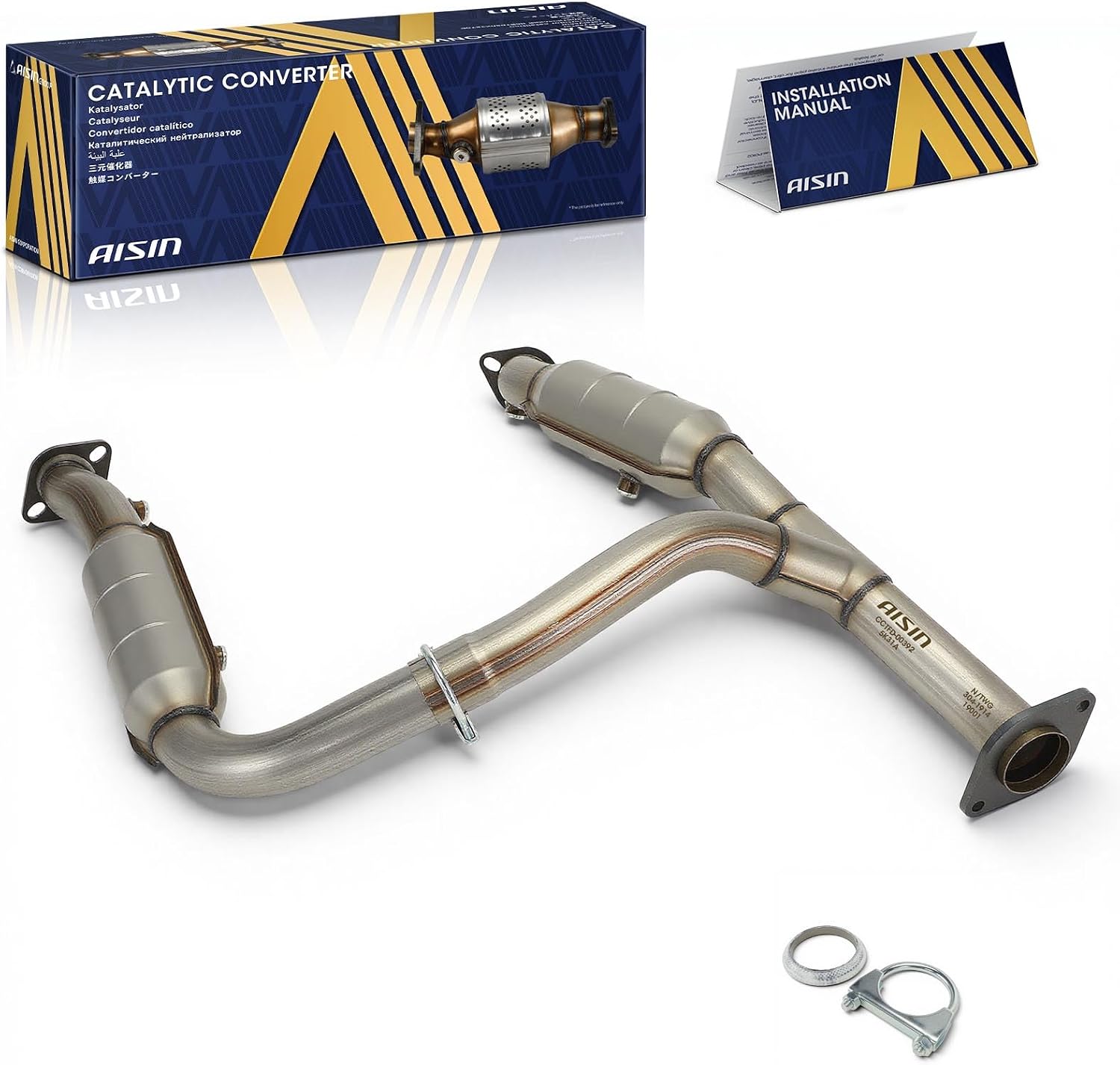
2. AISIN Aftermarket Catalytic Converter CCTFD-00392 for Ford 4.6L V8
| Manufacturer | AISIN |
|---|---|
| Manufacturer Part Number | CCTFD-00392 |
| Compatibility | Ford Explorer 2006-2010, Explorer Sport Trac 2007-2010, Mercury Mountaineer 2006-2010 – V8 4.6L |
| Special Features | Located at the Exhaust Side |
| EPA Compliance | E.P.A. Compliant for OBDII vehicles (1996+) |
This Aisin catalytic converter is a direct-fit replacement engineered for the 4.6L V8 Explorer/Sport Trac/Mountaineer applications and intended for straightforward installation where the original unit needs replacement. It installs at the exhaust side and is built to meet EPA emissions requirements for OBDII vehicles, which makes it usable in federal-emissions states. Typical use is on vehicles with worn or damaged converters or when restoring emissions performance after repairs. The unit emphasizes factory-quality engineering and a precise structural design to reduce installation hassles and movement after fitting. Practical benefits are solid fitment, compatibility with multiple reference part numbers, and the backing of a major OEM supplier. Important limitations are regulatory: it is not legal for sale or use in California, Colorado, New York, or Maine and therefore is restricted for vehicles that require California emissions compliance. Fitment is limited to the listed Ford/Mercury 4.6L V8 models and will not replace converters for other engines or configurations.
Best for: Buyers who want a performance-conscious, factory-quality replacement converter to restore emissions control and maintain driveability on 4.6L V8 Explorers and related models.
Less Ideal for: Drivers in states that require California emissions compliance or anyone needing a converter for a different engine or vehicle configuration.
- Direct-fit design for 4.6L V8 Explorer/Sport Trac/Mountaineer for easier installation
- EPA-compliant for federal OBDII emissions making it suitable for non-California-regulated states
- Manufactured by Aisin with factory-quality engineering and known reference part numbers
- Structural design intended to prevent movement or detachment after installation
- Not legal for sale or use in California, Colorado, New York, or Maine which limits where it can be used
Verdict: Aisin's direct-fit, EPA-compliant converter is the practical choice for restoring emissions performance on 4.6L V8 Explorers while keeping OEM-level fit and durability.
3. xinlidatech Catalytic Converter Direct-Fit for Ford Explorer/Mercury Mountaineer 4.6L (2002–2005)

| Converter Type | Federal / EPA Direct-Fit |
|---|---|
| Body Material | Stainless Steel |
| Substrate Material | Ceramic |
| Inlet Type | 2 Bolt Loose Flange with Spherical Flare |
| Fitment | Ford Explorer / Mercury Mountaineer 2002-2005 4.6L V8 |
This xinlidatech catalytic converter is a direct-fit replacement for the 4.6L V8 Ford Explorer and Mercury Mountaineer (2002–2005) that restores emissions control while using a bolt-on flange connection and included installation hardware. Built from stainless steel with a ceramic substrate, it is described as temperature resistant and designed for reliable flow and long service life in normal driving and adverse weather. The unit is Federal EPA compliant and comes with two inlet ports and a single outlet for the correct exhaust routing; inlet and outlet flange types match factory-style bolt patterns for straightforward installation. Important limitations are that it is not CARB approved and cannot be used in California, Colorado, Maine, or New York, and O2 sensors should be replaced during installation to avoid false P0420 codes. Buyers should also verify engine issues that caused the original converter failure before installing a replacement to protect the new unit.
Best for: Buyers who want a practical, factory-style replacement that restores emissions control and fits without custom exhaust work, focusing on sound fitment and dependable everyday performance.
Less Ideal for: People in states that require CARB-certified parts or buyers seeking a high-performance or modified exhaust upgrade should consider alternatives designed for those needs.
- Direct-fit design with bolt-on flanges and included mounting hardware simplifies installation
- Made from stainless steel with ceramic substrate for temperature resistance and stable emissions performance
- Federal (EPA) compliant for legal use outside states with CARB restrictions
- Dual inlet and single outlet configuration matches original exhaust routing
- Manufacturer reports fast airflow design to minimize backpressure
- Not CARB certified so illegal for sale or installation in certain states
- Replacement O2 sensors are required to avoid false diagnostic codes
Verdict: A straightforward stainless steel, direct-fit EPA catalytic converter that restores emissions control for 2002–2005 4.6L Explorers and Mountaineers without exhaust modification.
4. ACZCR Catalytic Converter Complete Assembly for 2002–2005 Ford Explorer & Mercury Mountaineer 4.6L V8

| Fitment | 2002–2005 Ford Explorer / Mercury Mountaineer 4.6L V8 |
|---|---|
| Emissions | EPA compliant (not CARB) |
| Material | Stainless Steel |
| Inlet Type | 2-bolt loose flange with spherical flare |
| Bolts Included | Yes |
This ACZCR catalytic converter is a full direct-fit assembly for the Ford Explorer and Mercury Mountaineer 4.6L V8 from 2002 to 2005. It installs in place of the factory unit using the included bolts and flange connections, so it is typically used as a like-for-like replacement when the original converter is damaged or clogged. The unit is stainless steel with a polished exterior and claims EPA compliance for federal emissions, which makes it suitable for most states outside restricted CARB areas. Practical benefits include a complete assembly that reduces fitment guessing and hardware sourcing, plus a design that aims to match factory performance. Important limitations are that it is not CARB approved and cannot be shipped to certain states, and fitment is strictly for the 4.6L V8 so it will not work for other engine variants. Buyers should also check for exact reference numbers and flange types before purchase to ensure a correct match.
Best for: Drivers who need an affordable, ready-to-install replacement catalytic converter for a 2002–2005 Explorer or Mountaineer 4.6L V8 and prioritize a straightforward swap over premium certification.
Less Ideal for: Buyers in states requiring CARB-compliant parts or owners of Explorers/Mountaineers with any engine other than the 4.6L V8 should look for a different, compliant unit.
- Direct-fit complete assembly with included bolts and flanges reduces installation hassle
- Stainless steel construction and polished exterior resist corrosion
- EPA compliant for federal emissions where CARB is not required
- Designed to match factory performance for the 4.6L V8 application
- Not CARB compliant and restricted from sale to several states
- Fitment limited to the 4.6L V8 model and will not fit other engine variants
Verdict: A budget-friendly, direct-fit catalytic converter option for 2002–2005 Explorer and Mountaineer 4.6L V8 owners who need a complete replacement that installs with minimal fuss.
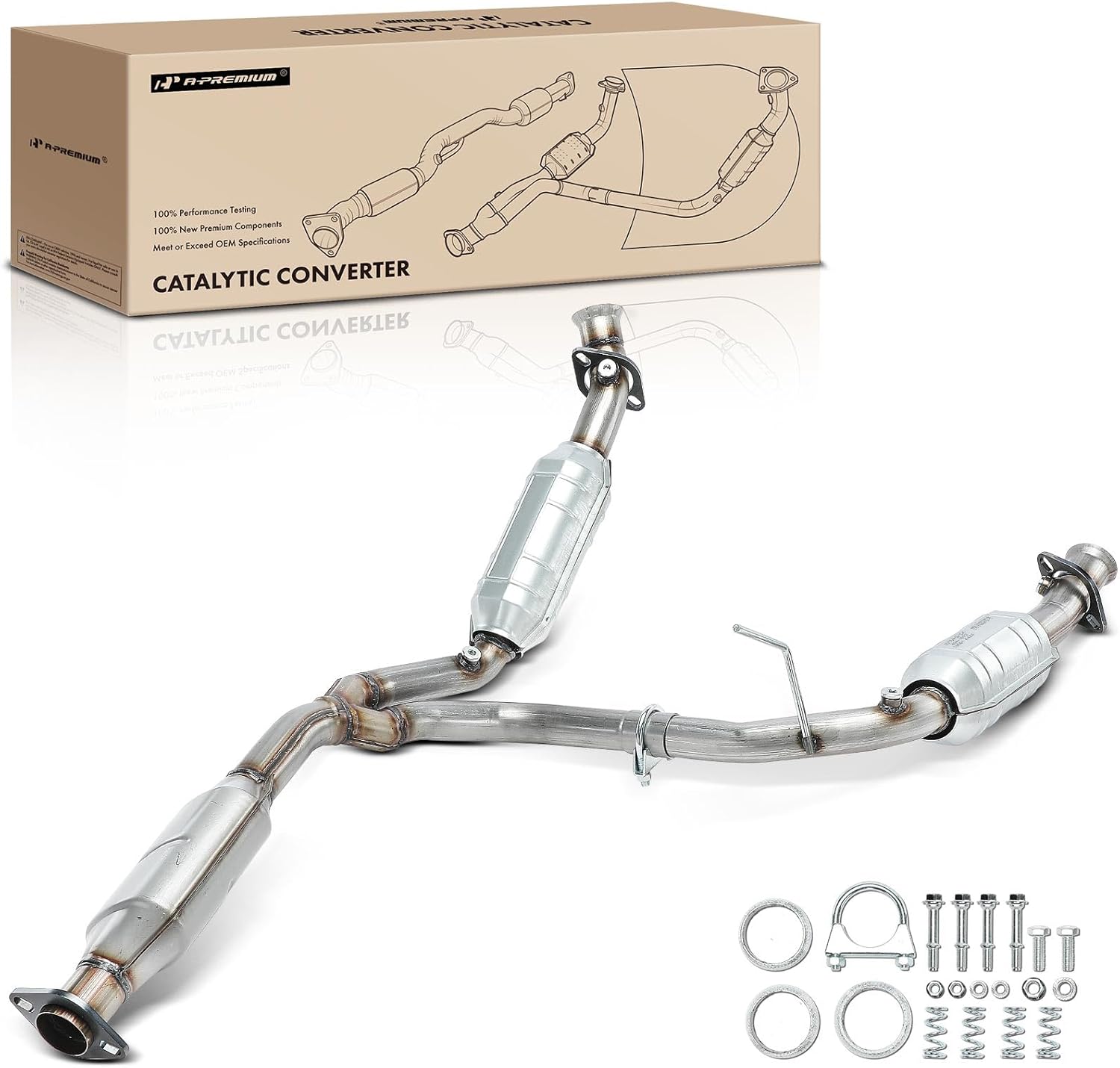
5. A-Premium Center Catalytic Converter, EPA Compliant, Direct-Fit for 2002–2005 Ford Explorer V8 4.6L
| Fitment | 2002–2005 Ford Explorer, Mercury Mountaineer V8 4.6L |
|---|---|
| Position | Center |
| Material | Stainless Steel |
| Oxygen Sensor Ports | 4 |
| EPA Compliant | Yes |
This center catalytic converter is a complete direct-fit assembly intended to replace the factory unit on 2002–2005 Ford Explorer and Mercury Mountaineer with the 4.6L V8. It installs in the center position and includes four oxygen sensor ports to match factory sensor locations, which simplifies installation and keeps the vehicle's emission monitoring functioning. The housing is stainless steel and the part is marketed as EPA compliant for federal emissions, so it is suitable where federal converters are required. In practice you can expect a close fit and restored exhaust flow and emissions control when replacing a failed or clogged converter. The unit carries a one-year unlimited-mileage guarantee from the maker. Important limitations: the listing notes restrictions for certain states and explicitly excludes some state-specific requirements, so confirm local regulations before buying, and professional installation may be needed because of sensor alignment and fitment nuances.
Best for: Buyers who prioritize a dependable, factory-like replacement that restores emissions control and minimizes installation surprises for a 2002–2005 4.6L V8 Explorer or Mountaineer.
Less Ideal for: Drivers living in states with specific aftermarket catalytic converter restrictions or anyone seeking a converter certified for California-specific regulations.
- Direct-fit full assembly designed for 2002–2005 Ford Explorer and Mercury Mountaineer 4.6L V8, reducing modification at installation
- Stainless steel body for corrosion resistance and longer service life
- Four oxygen sensor ports match factory sensor locations to preserve emission monitoring
- EPA-compliant for federal emissions, suitable where federal specification converters are required
- One-year unlimited-mileage guarantee from the manufacturer
- Not suitable for states with stricter aftermarket converter rules; check state regulations before purchasing
Verdict: Choose this direct-fit, stainless-steel center converter when you want a reliable, factory-style replacement that restores emissions control on a 2002–2005 Explorer 4.6L V8.
6. HIGHBRICK Catalytic Converter for 2002–2005 Ford Explorer 4.6L / Mercury Mountaineer 4.6L (EPA Compliant)

| Vehicle compatibility | 2002-2005 Ford Explorer 4.6L; 2002-2005 Mercury Mountaineer 4.6L |
|---|---|
| Compliance | EPA certified (federal only) |
| Material | Stainless steel with ceramic catalyst media |
| Installation | Direct bolt-on replacement with included hardware |
This HIGHBRICK catalytic converter is designed as a bolt-on replacement for 2002–2005 Ford Explorer and Mercury Mountaineer 4.6L V8 models, delivering three-way catalytic conversion to reduce HC, CO, and NOx emissions. It uses stainless-steel construction and ceramic catalyst media to resist thermal stress and cracking, and the listing emphasizes direct-fit mounting with hardware and gaskets that align to factory points so installation typically requires no welding or cutting. The unit is EPA certified for federal emissions compliance, which makes it suitable for vehicles outside states that require additional local approval. Practical benefits include straightforward installation for professional shops or experienced DIYers, improved exhaust flow compared with damaged originals, and a build meant to hold up under high-heat conditions. Limitations to note are the state-level compliance restriction and that fitment must be confirmed against your vehicle trim and O2 sensor locations before purchase; buyers seeking California-compliant parts or a guaranteed match to every trim should verify local regulations and exact part routing first.
Best for: Buyers who want a factory-style, emission-compliant replacement for a 2002–2005 4.6L Explorer or Mountaineer and prefer a unit that installs without major modifications and has supporting product reviews.
Less Ideal for: Drivers who need parts that meet stricter state-specific certifications or users who prefer dealer-sourced parts with manufacturer-backed warranties should consider other options.
- EPA certified for federal emissions compliance
- Designed for direct bolt-on replacement with included hardware and gaskets
- Stainless-steel construction and ceramic catalyst media for improved thermal durability
- Three-way catalytic design to reduce hydrocarbons, carbon monoxide, and nitrogen oxides
- Not approved for sale or use in certain states with stricter rules such as California
- Fitment still requires verification against vehicle trim and sensor routing before purchase
Verdict: Choose this HIGHBRICK converter if you need a federal EPA–compliant, direct-fit replacement for a 2002–2005 4.6L Explorer or Mountaineer that installs without welding.
Choosing the Right Ford Explorer 4.6L V8 Catalytic Converter: Key Factors to Consider
Correct Fitment and Mounting
Proper fitment is the first and most important factor for the Ford Explorer 4.6L V8 because exhaust geometry and mounting points vary across model years and trims. Choosing a converter with matching flange style, pipe diameter, and sensor bosses avoids cutting or splicing the exhaust, which reduces installation time and potential leak points.
Incorrect fitment can lead to exhaust leaks, rattles, or stress on adjacent components. For this V8, ensure the converter lines up with existing hangers and that pipe lengths accommodate the factory routing to preserve ground clearance and prevent interference with suspension parts.
Emissions Conversion Efficiency
Catalyst efficiency indicates how effectively the converter reduces hydrocarbons, carbon monoxide, and nitrogen oxides. For an Explorer 4.6L V8, a higher substrate cell density and quality washcoat generally translate to better emissions control and improved chances of passing emissions inspections.
While lab test numbers are not always available for every unit, look for units that specify substrate type and loading or that meet required standards for your region. Better conversion efficiency also reduces the likelihood of recurring check engine light catalytic converter codes after installation.
Backpressure and Engine Performance
Catalytic converters introduce some flow restriction. For a 4.6L V8, excessive backpressure can reduce throttle response and torque, particularly under load or towing. Selecting a unit with an appropriate internal cell structure balances catalytic surface area with flow to preserve driveability.
Manufacturers sometimes use larger-diameter pipes or staged substrate designs to lower backpressure while maintaining conversion efficiency. Consider how you use the Explorer; if you frequently tow or carry heavy loads, prioritize lower-flow designs that still meet emissions targets.
Durability and Thermal Management
Exhaust components on the Explorer 4.6L V8 are exposed to high temperatures and road debris, so the converter's shell strength, weld quality, and internal retention systems are critical to longevity. Robust construction prevents premature failure from cracking or core fallout.
Thermal shielding or thicker insulation helps protect nearby components and reduces heat soak into the cabin. Also consider the converter's ability to withstand repeated cold starts and the rapid temperature swings common in daily driving.
Sensor Compatibility and OBD II Considerations
Modern Ford Explorers rely on upstream and downstream oxygen sensors for closed-loop fuel control and emissions monitoring. A replacement converter must either include the correct sensor bung locations or preserve the factory sensor locations to avoid triggering a check engine light catalytic converter code.
Some units provide generic sensor bosses, while others come pre-drilled in OEM positions. Confirm downstream sensor placement and signal integrity to ensure the vehicle's emissions systems and diagnostic checks operate normally after installation.
Installation Complexity and Support
Installation for the Explorer 4.6L V8 can vary from simple bolt-on swaps to units that require welding or minor exhaust modification. Consider whether you will have access to welding and exhaust tools or if you need a bolt-on solution.
Availability of clear fitment guides, included gaskets, and instructions can reduce shop time. Warranties, return policies, and technical support are also relevant to ensure you can address fitment questions and potential defects without undue hassle.
Signs You Need a New Catalytic Converter
Several symptoms commonly indicate the catalytic converter on a Ford Explorer 4.6L V8 is deteriorating. You may notice a drop in engine power, especially under acceleration or when towing, because a clogged substrate raises backpressure and chokes exhaust flow. Another common indicator is a sulfur or rotten-egg smell from the exhaust, which points to incomplete conversion.
Electrical and diagnostic symptoms include a persistent check engine light catalytic converter-related trouble code. These faults often result from reduced conversion efficiency or from downstream sensor readings that fall outside expected ranges. Rattling noises from beneath the vehicle when cold can indicate internal breakdown and loose substrate material.
- Reduced acceleration or hesitation under load
- Persistent check engine light with converter-related codes
- Sulfur or rotten-egg exhaust odor
- Rattling noise from beneath the vehicle at idle
How Replacement Affects Emissions and Inspections
Replacing a failing catalytic converter restores the Explorer 4.6L V8's ability to reduce hydrocarbons, carbon monoxide, and NOx, which helps the vehicle meet emissions test limits. Choosing a converter with documented emissions performance or that meets regulatory standards decreases the risk of failing a tailpipe or onboard diagnostic emissions check.
When preparing for an emissions inspection, ensure the replacement maintains proper sensor placement and does not introduce leaks. Small exhaust leaks upstream of sensors can skew readings and lead to a failed inspection even if the converter itself is functioning properly.
- Confirm the unit meets local emissions requirements
- Maintain correct oxygen sensor positioning
- Check for exhaust leaks after installation before testing
Installation Tips for the Explorer 4.6L V8
Before starting, lift the vehicle safely and allow the exhaust to cool completely. Inspect the existing hangers, flanges, and sensor wiring to identify any additional repairs needed. If the replacement is bolt-on, clean mating surfaces and use new gaskets and hardware to ensure a leak-free seal.
For weld-in installations, align the converter carefully to preserve original pipe routing and hanger geometry. After installation, check for exhaust leaks and verify downstream sensor readings with a scan tool if available. A short test drive under varying loads will reveal issues with backpressure or fitment before an emissions test.
- Use new gaskets and sealed fasteners on bolt-on swaps
- Verify sensor wiring and secure heat shielding
- Perform a post-install leak check and scan for codes
Fitment Variations Across Model Years and Trim Levels
The Ford Explorer 4.6L V8 appeared in multiple model years and may have slight exhaust routing and flange differences depending on year and factory options. When selecting a converter, reference the vehicle's VIN or model year-specific fitment guides to confirm pipe diameters, hanger locations, and sensor boss placements match the original equipment layout.
If a unit lists compatibility with the 4.6L V8 but lacks a detailed fitment chart, ask for measurements or templates. Avoid assuming universal compatibility because even small differences in pipe bend or hanger offset can complicate installation and require additional modification.
- Check VIN-specific fitment data when available
- Compare flange type and pipe diameter to the old part
- Request measurements if the fitment chart is incomplete
Maintaining Your New Converter to Extend Service Life
Routine engine maintenance helps protect a catalytic converter. Address ignition or fueling issues promptly because misfires, worn spark plugs, or rich-running conditions can overheat and damage the catalyst. Using the correct spark plugs and maintaining the fuel and ignition systems reduces the risk of early converter failure.
Avoid driving through deep water or exposing the exhaust to sudden thermal shocks when the converter is extremely hot. Periodically inspect for physical damage, loose heat shields, and secure hangers to prevent stress and cracks that lead to core deterioration.
- Fix misfires and fueling issues immediately to avoid catalyst damage
- Inspect hangers and heat shields during routine service
- Avoid prolonged idling and rapid cooling after high-load driving
Still looking for the perfect fit?
Select your Ford Explorer configuration to see the most relevant Catalytic Converters recommendations
How We Chose the Best Ford Explorer 4.6L V8 Catalytic Converter
We prioritized candidates that match the Ford Explorer 4.6L V8 flange and pipe layout and that are designed to meet or exceed emissions standards for this engine. Key evaluation criteria included physical fitment and mounting points, catalyst substrate type and washcoat loading, backpressure characteristics that affect drivability, and emissions reduction performance typically reported for this application. Durability factors such as shell construction, internal mat retention, and resistance to thermal stress were also considered because Explorer V8 exhausts run hot and can accelerate wear.We also assessed ease of installation, including whether the unit supports OEM-style welds or bolt-on connections, and compatibility with upstream oxygen sensors and exhaust routing. Thermal management and shielding options were reviewed to reduce heat soak to nearby components. Units lacking clear fitment data for the 4.6L V8, or those with poor build-quality indicators, were excluded. We did not include products without documented substrate type or those that would require major exhaust modification. The final list focuses on converters that balance emissions control, longevity, and straightforward installation for the Ford Explorer 4.6L V8.
Our full evaluation process is outlined in our review methodology.
FAQ
What common catalytic converter symptoms should I look for on my Explorer 4.6L V8?
Common signs include reduced engine power, a persistent check engine light with converter-related codes, a sulfur or rotten-egg smell from the exhaust, and rattling noises that suggest internal core breakup. These symptoms often indicate reduced conversion efficiency or physical damage.
Will replacing the catalytic converter turn off the check engine light immediately?
Sometimes the check engine light will clear after the vehicle completes its readiness cycles and the ECU verifies correct sensor readings. In other cases you may need to clear codes with a scan tool and then confirm no new codes return during a drive cycle.
Can I install a new converter on the Explorer myself, or should I use a shop?
Installation difficulty varies. Bolt-on converters with matching flanges are often straightforward for a competent DIYer with basic tools. Weld-in units or those requiring exhaust modification are better handled by a shop with exhaust equipment. Consider your access to tools and welding skills before attempting installation.
How important is sensor compatibility when replacing the converter?
Sensor compatibility is critical because incorrect sensor placement can trigger diagnostic trouble codes and affect fuel control. Choose a replacement that provides correct upstream and downstream sensor bosses or retains factory sensor positions to maintain proper OBD II operation.
Will a replacement catalytic converter affect towing performance?
A converter that introduces high backpressure can reduce power under load, which may affect towing performance. If you tow frequently with your Explorer 4.6L V8, prioritize units designed to balance flow and conversion efficiency to preserve torque and throttle response.
Are there maintenance steps to extend a new converter's lifespan?
Yes. Maintain ignition and fuel systems to prevent misfires and rich running, keep exhaust hangers and heat shields secure, and avoid thermal shock situations. Promptly address any engine issues that could introduce unburned fuel into the exhaust stream.
Final Verdict
For the Ford Explorer 4.6L V8, prioritize a catalytic converter that matches factory fitment and preserves sensor placement to avoid diagnostic issues and exhaust leaks. Balance conversion efficiency with acceptable backpressure so the vehicle retains power and throttle response, especially when towing or under load. Consider durability factors and installation complexity when choosing between bolt-on and weld-in options.Ultimately, select a unit that meets emissions requirements for your area, provides clear fitment data for the 4.6L V8, and offers construction and thermal protection suited to the Explorer's operating conditions. That approach will give you reliable emissions control and long-term service life.
Explore More:
- Check out all Ford Explorer parts & accessories
- Explore Catalytic Converters Maintenance & Repair Guides
- Explore Exhaust & Emissions
- Browse all Auto Parts
