

Note: This article contains affiliate links. If you click on these links and make a purchase, I may earn a small commission at no extra cost to you. This helps support my research and content. Read my full affiliate disclosure here.
If you own a 1997-2006 Jeep Wrangler you know exhaust integrity affects driveability, emissions, and whether the check engine light stays off. Replacing the catalytic converter on these model years often solves emissions failures, rough idle caused by clogged catalysts, and failed inspections. This guide covers the top shortlisted catalytic converters chosen for fit and emissions performance across the 1997 through 2006 Wrangler range, including attention to common TJ, LJ, and TJU era fitment variations. Read on to understand why correct fitment, emissions substrate type, and installation considerations matter for your Wrangler, and what to expect when you swap in a replacement converter.
Looking for other parts? See all Jeep Wrangler parts & accessories.
Top Picks at a Glance
| Best Overall The best all-around choice for most situations | MagnaFlow HM Grade Direct-Fit Catalytic Converter 23227 for 1997–1999 Jeep Wrangler |  |
| Best Quality Built to a higher standard if you want something more solid | MagnaFlow HM Grade Direct-Fit Catalytic Converter 93649 for 2004–2006 Jeep Wrangler |  |
| Best Value The sweet spot between price and what you get | PHILTOP Front Catalytic Converter for Jeep Wrangler 2004–2006 4.0L (EPA Compliant) |  |
| Best Budget The cheapest option that still gets the job done reliably | PHILTOP Direct-Fit Catalytic Converter for Jeep Wrangler (1997–2000) |  |
| Most Popular A crowd favorite that many people choose with confidence | PHILTOP Catalytic Converter Kit, Direct-Fit Stainless Steel (EPA Compliant) | |
| Best Seller A high-volume bestseller chosen again and again | HIGHBRICK Catalytic Converter for 2000–2003 Jeep Wrangler 4.0L (EPA Compliant) |  |
1. MagnaFlow HM Grade Direct-Fit Catalytic Converter 23227 for 1997–1999 Jeep Wrangler
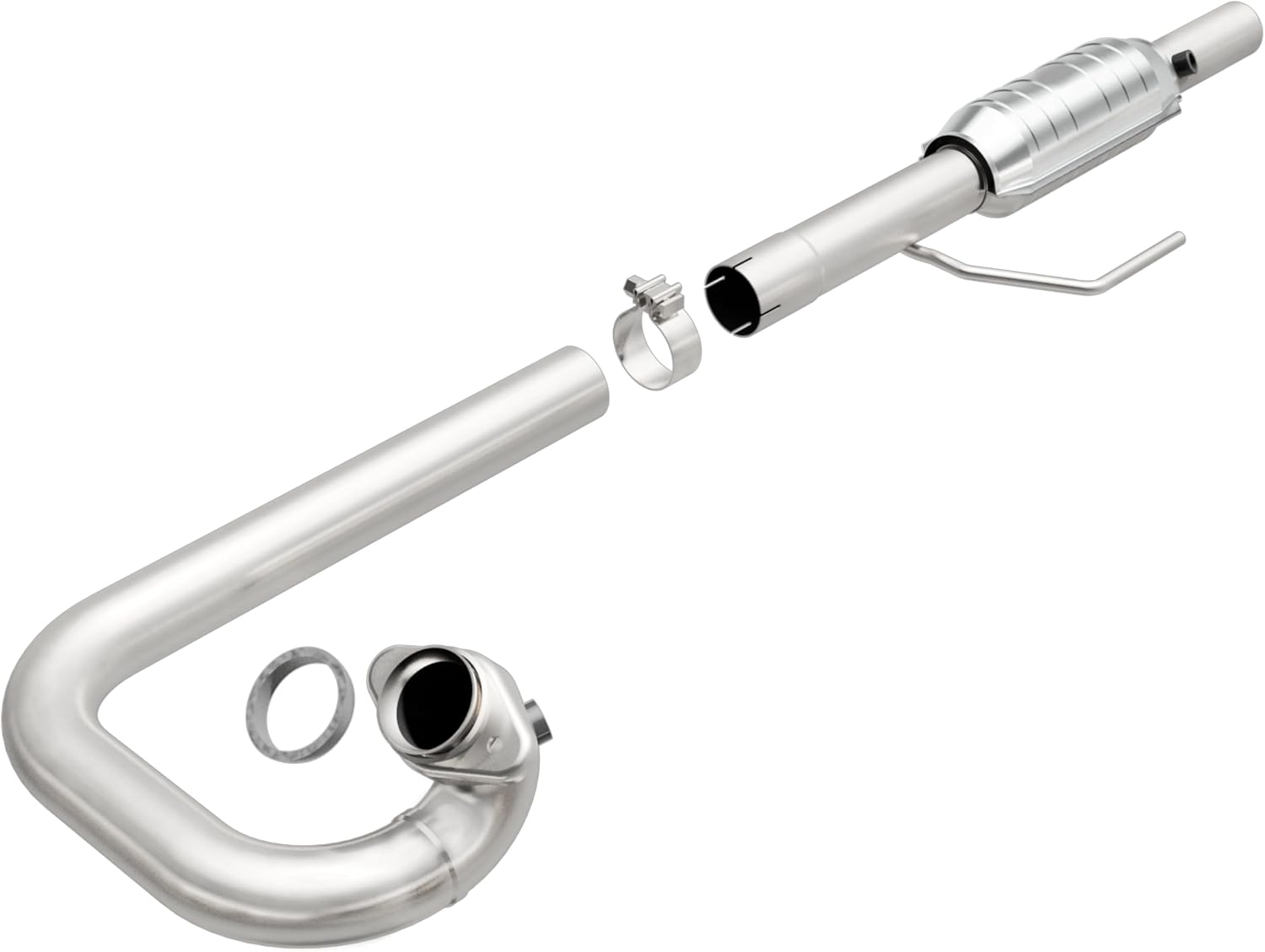
| Type | Direct-Fit Federal/EPA Compliant |
|---|---|
| Body Material | Stainless Steel |
| Oxygen Sensor Location | Pre-and-Post Converter |
| Series | HM Grade |
| Clamp Included | Yes |
This MagnaFlow 23227 is a direct-fit catalytic converter built for 1997–1999 Jeep Wrangler models and intended to replace a failing factory unit while keeping emissions legal in federal jurisdictions. It uses a spun stainless-steel body, mandrel-bent tubing, and a ceramic substrate formulated to improve conversion efficiency compared with basic replacements. The part includes gaskets and mounting hardware and locates pre- and post-converter oxygen sensor ports so the vehicle computer will stay happy after installation. Typical use is a bolt-on replacement when your old converter is clogged, rattling, or triggering a check engine light. Benefits include corrosion-resistant construction, a design that aims to match factory fitment to simplify DIY install, and an EPA-compliant emissions spec for federal vehicles. Limitations are state-level restrictions that make this illegal in certain states and occasional fitment quirks reported by owners that can require minor flange drilling or welding on older, corroded exhaust systems.
Best for: Buyers wanting a reliable, factory-quality replacement that balances emissions compliance, durability, and relatively straightforward installation for a 1997–1999 Jeep Wrangler.
Less Ideal for: Drivers who need a California- or state-legal converter or those unwilling to address older exhaust hangers, flange alignment, or occasional welding during installation.
- Direct-fit design with included gaskets and hardware simplifies installation for do-it-yourself mechanics.
- Stainless-steel spun body and mandrel-bent tubing improve corrosion resistance and flow compared with stamped replacements.
- Pre- and post-converter oxygen sensor ports maintain proper O2 sensor placement for OBDII monitoring.
- Meets Federal/EPA emissions standards for compliant vehicles and is built to HM Grade for improved conversion performance.
- Not legal for sale or installation in some states including California and Colorado and New York.
- Some users report minor alignment or hanger issues that may require drilling, welding, or additional shop work on older exhausts.
Verdict: A durable, EPA-compliant direct-fit replacement that gives Wrangler owners a factory-like fit and better corrosion resistance while keeping emissions systems functioning.
2. MagnaFlow HM Grade Direct-Fit Catalytic Converter 93649 for 2004–2006 Jeep Wrangler

| Vehicle fitment | 2004–2006 Jeep Wrangler |
|---|---|
| Compliance | Federal/EPA Compliant |
| Material | Stainless Steel |
| Series | HM Grade |
| Oxygen sensor location | Post Converter |
This MagnaFlow HM Grade direct-fit catalytic converter replaces the factory units on 2004–2006 Jeep Wranglers and is built to meet Federal EPA emissions standards. It uses a spun-body stainless-steel design, mandrel-bent piping, and factory-style O2 sensor locations so installation generally bolts in without cutting or welding; hardware and heat shielding are included. The HM Grade substrate adds extra catalyst material for improved conversion efficiency, which can help clear check-engine codes caused by failed cores and can restore drivability and fuel use. Buyers should expect a professional-level, do-it-yourself install with some patience in tight spaces and to check flange orientation before tightening. The unit is not for sale in certain states with unique emissions rules. Some users report internal debris or minor fitment issues on specific trims, and one-piece factory converters may differ, so weld or clamp preferences and new fasteners can be worth planning for.
Best for: A buyer focused on restoring performance and drivability on a 2004–2006 Wrangler who wants a factory-quality replacement that keeps emissions systems functioning and avoids check-engine lights.
Less Ideal for: Owners in states with stricter emissions laws or buyers who need a California-compliant converter should look for state-specific parts designed for those regulations.
- Direct-fit design with included mounting hardware reduces installation hassle.
- Stainless-steel spun-body construction and mandrel-bent piping for corrosion resistance and smooth flow.
- HM Grade substrate increases catalyst loading to improve emissions conversion and reduce check-engine codes.
- OEM-style O2 sensor locations and integrated welds help maintain factory sensor operation.
- Not legal for sale in states with stricter emissions regulations like California, Colorado, and New York.
Verdict: Choose this MagnaFlow HM Grade direct-fit converter when you want a durable, factory-quality replacement that restores emissions function and drivability on a 2004–2006 Jeep Wrangler.
3. PHILTOP Front Catalytic Converter for Jeep Wrangler 2004–2006 4.0L (EPA Compliant)

| Vehicle fitment | Jeep Wrangler 2004–2006 4.0L |
|---|---|
| Position | Front |
| Material | Aluminized stainless steel body |
| Catalyst carrier | High-flow ceramic honeycomb |
| Includes | OE-style gaskets and hardware |
This PHILTOP catalytic converter is a factory-replacement style front unit built for 2004–2006 Jeep Wrangler 4.0L engines and intended to restore exhaust flow and emissions compliance. It uses a high-flow ceramic honeycomb carrier inside an aluminized stainless steel body, which reduces backpressure compared with a clogged or damaged converter and can improve throttle response and fuel economy. The kit ships with OE-style gaskets and hardware so it installs in the factory location without major modification on properly matched vehicles, and PHILTOP states EPA compliance for federal emissions. Practical buyers will appreciate the machined exterior and included mounting pieces that make a shop or competent DIY swap straightforward in a few hours. Expect some vehicles or exhaust systems to need minor adjustments at the flange during installation, and this EPA unit is not legal for sale or installation in certain states with stricter rules, so confirm local regulations before buying.
Best for: Buyers who want a practical, factory-style replacement to restore emissions performance and normal exhaust flow on a 2004–2006 Wrangler 4.0L without chasing custom parts, prioritizing ease of installation and value.
Less Ideal for: Do not choose this if you need a California or state-compliant converter or if you prefer a fully custom-fit performance exhaust where exact flange geometry differs from factory mounting.
- Built for direct front-end replacement on 2004–2006 Wrangler 4.0L with OE-style gaskets and hardware included
- High-flow ceramic substrate to reduce backpressure and improve engine breathing
- Aluminized stainless steel body resists rust for longer service life
- EPA-compliant federal emissions design when used outside states with stricter rules
- May require flange or pipe modification on some exhaust systems despite advertised direct-fit
- Not legal for sale or installation in certain states with tighter emissions regulations
Verdict: A practical, OEM-style front converter that restores emissions function and improves exhaust flow for 2004–2006 Wrangler 4.0L owners seeking a straightforward replacement.
4. PHILTOP Direct-Fit Catalytic Converter for Jeep Wrangler (1997–2000)

| Position | Rear |
|---|---|
| Manufacturer | PHILTOP |
| Model | Wrangler 1997-1999 Catalytic Converter |
| OEM Part Number | 15841, 10161, 645893, 0793078, 0793147, 52018933, 52018934, 05083055AA |
This PHILTOP catalytic converter is a direct-fit replacement intended for Jeep Wrangler models from the late 1990s and the 2.5L 2000 variant. It uses a stainless aluminized shell and a double-layer ceramic substrate to increase flow and catalytic surface area, which the manufacturer says improves power and fuel economy while lowering backpressure. The unit ships with OE-style gaskets and mounting hardware for a bolt-on installation that many owners complete in a few hours without welding or modification. It is EPA-compliant for federal emissions but not for states that require California standards. Real-world feedback is mixed: several buyers report straightforward installs and restored check-engine light clearance, while others saw persistent emissions codes or gasket failures, so expect possible gasket replacement or tuning if your vehicle has aged sensors. This converter is aimed at routine replacement on older Wranglers where a factory-quality fit and emissions compliance under federal rules matter, but it may require attention to installation details to avoid leaks or sensor alerts.
Best for: Buyers replacing a failed converter on an older Wrangler who prioritize a low-cost, factory-style replacement that installs without major modification and meets federal emissions rules.
Less Ideal for: Drivers in states that require California emissions compliance or those who need a guaranteed emissions fix without potential follow-up sensor or gasket work.
- Direct-fit design with OE-style gaskets and hardware for bolt-on installation
- Stainless aluminized construction resists rust and aims for long service life
- Double-layer ceramic substrate and high-flow design to reduce backpressure and help engine breathing
- EPA-compliant for federal emissions standards where applicable
- Not CARB-compliant and therefore illegal for use in states with California emissions requirements
- Some customers reported gasket failures or post-install emission codes requiring additional parts or troubleshooting
Verdict: A budget-friendly, bolt-on replacement for late-1990s Jeep Wranglers that restores emissions function under federal rules and keeps installation simple.
5. PHILTOP Catalytic Converter Kit, Direct-Fit Stainless Steel (EPA Compliant)
| Compatible vehicle | Jeep Wrangler 2.5L 1997-1999, 2000 |
|---|---|
| Material | Stainless steel |
| Position | Rear |
| Manufacturer part number | 2343EXP00C9US |
| OEM reference numbers | 15841,10161,645893,0793078,0793147,52018933 |
This PHILTOP kit is a direct-fit replacement catalytic converter built from stainless steel and supplied as a multi-piece assembly with gaskets and mounting hardware. It is designed to install within a few hours without modification and claims EPA federal emissions compliance for use outside states with stricter rules. The internal high-flow ceramic substrate aims to cut backpressure for smoother breathing and may slightly improve efficiency while also reducing rattles or noise from a failing old converter. Practical strengths are the factory-style fitment, included OE-style hardware, and the option to clamp or weld the sections during install. Real-world reports show generally good fitment and value but some buyers experienced alignment or sealing issues with the weld/flange clocking and a few isolated seam leaks after extended use. Some installations required welding rather than relying on the supplied clamps to ensure a leak-free, long-lasting joint. If passing emissions and restoring quiet operation are your goals this kit offers a budget-conscious option, though installation care and inspection of flange orientation are important to avoid exhaust leaks or check-engine lamp triggers.
Best for: Buyers who prioritize documented fitment and social proof over lowest-cost unknown parts and want a ready-to-install replacement that restores emissions compliance and reduces exhaust noise.
Less Ideal for: Do not choose this if you need a California or other state-specific certified converter or if you prefer an exact factory-manufactured OEM unit from a dealership.
- Direct-fit design with gaskets and hardware for bolt-on installation
- Stainless steel construction and welded connections for corrosion and heat resistance
- High-flow ceramic substrate reduces backpressure compared with a damaged converter
- Includes hardware so installation can be completed without modification
- EPA federal emissions certified for use where federal converters are allowed
- Multi-piece assembly can arrive with flange clocking or fitment variance requiring adjustment or welding
- Some customers reported seam leaks or premature internal blockage in isolated cases
Verdict: A budget-friendly stainless steel direct-fit replacement that restores emissions function and quiets a failing converter while requiring careful installation to avoid fitment or sealing issues.
6. HIGHBRICK Catalytic Converter for 2000–2003 Jeep Wrangler 4.0L (EPA Compliant)
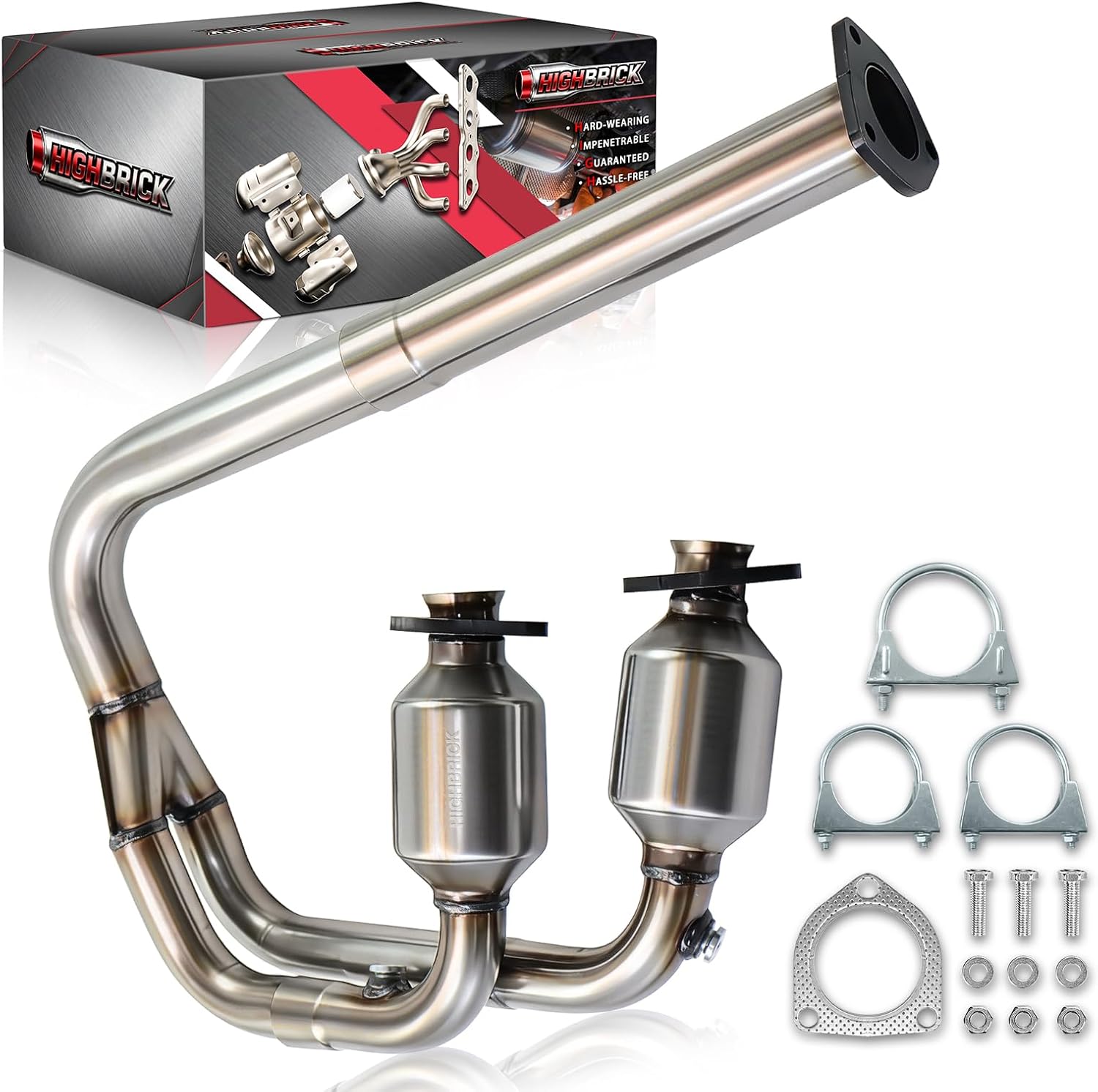
| Vehicle compatibility | 2000–2003 Jeep Wrangler 4.0L |
|---|---|
| EPA compliance | Meets federal EPA standards |
| Material | Stainless steel |
| Includes | Gaskets and installation hardware |
This HIGHBRICK catalytic converter is offered as a direct bolt-on replacement for 2000–2003 Jeep Wrangler 4.0L models and is built to meet federal EPA emissions requirements. It uses a three-way catalytic design and a ceramic substrate to lower harmful exhaust emissions while maintaining exhaust flow. The unit is made from stainless steel with polished exterior finishes and includes mounting points, gaskets, and hardware intended to align with the factory locations for a no-weld installation. In practice buyers report straightforward installs when hardware matches, and that it can clear check-engine codes tied to a failed converter. However some users encountered fitment issues with the supplied gaskets or bolts and a few reported P0420 catalyst-efficiency codes after installation, so results vary with sensor condition and exact vehicle history. For a risk-averse buyer this converter provides EPA certification and factory-style fitment but confirming part numbers and preparing to reuse OEM bolts or source replacement gaskets improves the odds of a trouble-free swap.
Best for: Buyers who want a factory-style, EPA-compliant replacement for a 2000–2003 Wrangler 4.0L and prefer a unit meant to bolt in without welding and meet federal emissions standards.
Less Ideal for: Shoppers who cannot tolerate any risk of post-install diagnostic codes or who need a converter approved for California or other states with separate rules should look elsewhere.
- EPA-certified to meet federal emissions requirements
- Designed as a direct bolt-on replacement with matching mounting points
- Stainless steel construction for improved resistance to thermal stress
- Includes gaskets and hardware to simplify installation
- Some buyers reported supplied bolts or gaskets did not fit and required replacements
- A few users experienced P0420 catalyst-efficiency codes after installation
Verdict: A factory-style, EPA-certified direct-fit converter for 2000–2003 Wrangler 4.0L buyers who prioritize emissions compliance and straightforward bolt-on installation.
Choosing the Right 1997-2006 Jeep Wrangler Catalytic Converter: Key Factors to Consider
Exact Fitment and Flange Type
Fitment is the single most important factor for 1997-2006 Jeep Wrangler catalytic converters because the TJ, LJ, and TJU era exhaust layout varies by engine and year. A converter that does not match the flange pattern or pipe diameter can require cutting, adapter pieces, or new hangers, adding labor and potential leak points. Confirming bolt hole spacing, flange style, and inlet/outlet diameter reduces installation time and preserves exhaust geometry. Fitment affects backpressure and can influence engine performance and emissions readiness. Where possible, choose a unit specified for the Wrangler years and listed with exact fitment specs to avoid additional fabrication.
Substrate Type and Conversion Efficiency
The internal substrate controls how effectively the converter removes hydrocarbons, carbon monoxide, and NOx. Substrates differ in material and cell density, which affect light-off temperature, flow restriction, and longevity. Higher cell density substrates can convert pollutants more completely at the cost of increased restriction, while lower cell density units favor flow with slightly reduced conversion. For these Wrangler years, balance conversion efficiency with expected driving patterns, noting that low-temperature city driving demands a substrate that reaches light-off quickly.
Oxygen Sensor Compatibility
Oxygen sensors monitor catalyst performance and trigger the check engine light when readings fall out of range. Your replacement must match O2 sensor thread size and maintain correct sensor positioning relative to the converter. Incorrect sensor spacing or thread type can lead to inaccurate readings, false catalyst fault codes, and persistent check engine lights. Ensure the unit accommodates the Wrangler's sensor count and locations without requiring aftermarket sensor relocation or splicing.
Durability and Construction Quality
Jeep Wranglers are often exposed to moisture, road salts, and off-road debris, so shell thickness, quality of welds, and corrosion-resistant coatings matter for long-term reliability. Thicker shells and robust welding reduce the risk of cracks from vibration and heat cycling. Look for units with protective finishes or stainless steel components to resist rust. Durable construction minimizes future exhaust leaks and preserves emissions performance over time, making initial investment worthwhile for vehicles used in harsh conditions.
Emissions Certification and Inspection Readiness
Whether you need a converter that helps the vehicle pass emissions testing depends on local regulations, but for the 1997-2006 Wrangler owners aiming for inspection compliance, choosing a unit with documented conversion performance is important. Converters that restore proper catalyst function help the vehicle complete readiness monitors and avoid inspection failures. Check the replacement's stated emissions capability relative to your local testing procedures and whether it supports OBD-II readiness strategies used by the Wrangler in this year range.
Installation and Maintenance Considerations
Installation complexity affects labor cost and the chance of installation-related issues. Some units bolt directly into OEM flanges while others need cutting or welding. Consider whether hangers can be reused and whether front or rear driveshaft removal is required for access on your Wrangler. Maintenance factors include sensor accessibility for diagnostics and the ease of future replacement. Choosing a converter designed for straightforward installation reduces the chance of leaks and makes future service simpler.
Understanding TJ, LJ, and TJU-Generation Fitment Notes
The 1997-2006 Wrangler falls within the TJ, LJ, and TJU generation for much of that range, and that influences exhaust layouts and converter interfaces. Some years and engine variants used differing inlet shapes and flange bolt patterns that affect direct-fit replacement options.
When reviewing options, check whether a candidate lists TJ, LJ, and TJU or explicitly cites 1997 through 2006 Wrangler fitment. Photographs of mating flanges and inlet/outlet diameters are especially helpful for confirming compatibility before purchasing.
- Confirm inlet and outlet pipe diameters match your vehicle.
- Verify flange bolt hole spacing against your existing exhaust.
- Look for units that show sensor bungs in the same locations as your converter.
Common Catalytic Converter Symptoms on These Wranglers
Catalytic converter symptoms frequently cited by Wrangler owners include a persistent check engine light, reduced power during acceleration, and poor fuel economy. A clogged catalyst tends to increase exhaust backpressure, which can cause rough idle and loss of throttle response.
Unusual exhaust odors and a sulfur-like smell can indicate a failing substrate. Addressing symptoms early can prevent secondary damage to the exhaust or engine management systems.
- Check engine light codes often reference catalyst efficiency or O2 sensor discrepancies.
- Observable power loss under load can signal internal restriction.
- Rattling noises when cold may indicate broken internal substrate pieces.
Preparing Your Wrangler for Catalytic Converter Replacement
Before replacing the catalytic converter, gather the Wrangler-specific details: engine type, year, and where the O2 sensors are mounted. Having exact measurements of flange spacing and pipe diameters lets you choose a matching part and avoid on-car modification.
Ensure the vehicle is safely supported and the exhaust cooled before attempting removal. If your Wrangler has significant rust or previous repairs, expect additional labor to separate old flanges or cut sections of pipe. Planning for these contingencies reduces installation surprises.
- Record O2 sensor locations and thread sizes.
- Measure flange bolt spacing and pipe diameters.
- Inspect surrounding exhaust hangers and hardware for corrosion.
Checklist for OBD-II Readiness and Emissions Testing
Restoring catalyst function is often necessary to complete OBD-II readiness monitors and pass emissions testing. After replacing the catalytic converter, allow the vehicle to complete its drive cycle so sensors can relearn and the readiness monitors can set.
If the check engine light persists, verify sensor wiring and clear codes only after ensuring the new converter is installed correctly. Persistent codes may point to sensor damage or incorrect sensor placement rather than the converter itself.
- Complete a varied drive cycle including highway and city driving.
- Avoid clearing codes until the system has had time to relearn.
- Check wiring and connectors at O2 sensor locations if faults persist.
When to Repair Versus Replace the Converter
Minor external damage such as small dents may not affect conversion function and can be left alone if internal substrate and emissions performance are intact. However, rattling internal pieces, severe corrosion, or melted substrate require replacement to restore emissions control.
Consider replacement when the check engine light indicates catalyst efficiency below threshold or when an emissions test fails because a repaired shell rarely returns a failing converter to compliance. For many Wrangler owners, a direct-fit replacement is the most reliable path to restoring emissions performance.
- Replace if internal rattles, severe corrosion, or failed emissions tests are present.
- Repair only for cosmetic damage that does not affect the substrate or sealing surfaces.
Still looking for the perfect fit?
Select your Jeep Wrangler configuration to see the most relevant Catalytic Converters recommendations
How We Chose the Best 1997-2006 Jeep Wrangler Catalytic Converter
We evaluated candidate catalytic converters for the 1997-2006 Jeep Wrangler using specific, vehicle-relevant criteria to identify reliable replacements. First, fitment and flange configuration were primary filters because the Wrangler years in this range include TJ, LJ, and TJU-generation exhaust differences that require exact bolt patterns and pipe diameters. Second, emissions performance was assessed by substrate type and cell density data where available, since proper conversion efficiency directly impacts tailpipe emissions and readiness monitors. Third, durability factors like shell construction, weld quality, and heat-resistant coatings were weighed to estimate service life under typical off-road and street use. Fourth, compatibility with O2 sensor locations and OEM sensor thread sizes was required to avoid additional modifications. Fifth, installation practicality such as whether the unit allows reuse of existing hangers or requires minimal cutting was considered. We excluded parts lacking clear vehicle-specific fitment specs, converters without documented substrate information, and universal units that demand extensive fabrication. The result is a curated set focused on correct fit, emissions effectiveness, and dependable service for the 1997-2006 Jeep Wrangler.
Our full evaluation process is outlined in our review methodology.
FAQ
How do I know if my Wrangler's catalytic converter is failing?
Common signs include a persistent check engine light with catalyst-related codes, reduced acceleration, and a rotten-egg exhaust smell. Rattling from under the vehicle when cold can also indicate a broken substrate. Diagnosis often combines code reading with a visual inspection.
Can I replace the catalytic converter myself on a 1997-2006 Wrangler?
If you have the right tools and a safe lift or jack stands, replacing a direct-fit unit is feasible for experienced DIYers. Expect challenges if flanges are rusted or welds must be cut. Plan for sensor handling and ensure the replacement matches the Wrangler's fitment.
Will replacing the converter turn off the check engine light immediately?
Not always. The engine control module may need several drive cycles to see normal catalyst readings and clear readiness monitors. If the light persists, check O2 sensor function and wiring to confirm sensors are operating correctly.
Do all replacement converters restore emissions test readiness?
It depends. Units that match the Wrangler's required conversion efficiency and maintain correct sensor placement are more likely to restore readiness. Universal or poorly specified units may fail to meet local inspection thresholds or allow monitors to set properly.
What should I check before buying a replacement catalytic converter?
Confirm flange type and pipe diameters, verify O2 sensor thread locations, and review substrate information when available. Also check construction quality for corrosion resistance to ensure the part will last under typical Wrangler use.
Are there common installation pitfalls for TJ, LJ, and TJU era Wranglers?
Yes. Corroded flange bolts, mismatched pipe diameters, and incorrect sensor placement are frequent issues. Having replacement hardware, anti-seize for sensor threads, and a plan for cutting or welding makes the job smoother.
Final Verdict
Prioritize correct fitment, sensor compatibility, and substrate performance when selecting a catalytic converter for a 1997-2006 Jeep Wrangler. Matching flange patterns and pipe diameters reduces installation time and the risk of leaks, while appropriate substrate choice balances emissions conversion and exhaust flow. Remember that installing a properly specified unit and allowing the vehicle to complete drive cycles are key steps toward restoring OBD-II readiness and emissions compliance. Focus on these tradeoffs and you will make a confident, practical replacement choice for your Wrangler.
Explore More:
- Check out all Jeep Wrangler parts & accessories
- Explore Catalytic Converters Maintenance & Repair Guides
- Explore Exhaust & Emissions
- Browse all Auto Parts
