

Note: This article contains affiliate links. If you click on these links and make a purchase, I may earn a small commission at no extra cost to you. This helps support my research and content. Read my full affiliate disclosure here.
If you own a 1997-2006 Jeep Wrangler and notice decreased power, louder operation, or exhaust smells, the exhaust manifold is a likely culprit. This guide focuses on exhaust manifolds that fit the 1997–2006 Wrangler generation, commonly associated with the TJ, LJ, and TJU chassis code, and explains what matters when replacing this critical part. We shortlisted seven top options that address common issues for these Wranglers and evaluated each on fit accuracy, thermal durability, and sealing performance. Below you will find practical guidance to diagnose problems, understand compatibility, and pick the right manifold for street or light off-road use.
Looking for other parts? See all Jeep Wrangler parts & accessories.
Top Picks at a Glance
| Best Overall The best all-around choice for most situations | A-Premium Front & Rear Exhaust Manifold Kit for 4.0L I6 Jeep (2 pcs) |  |
| Best Quality Built to a higher standard if you want something more solid | AccuPart Cast Iron Exhaust Manifold — Direct-Fit Replacement for 4.0L Jeep Inline-Six |  |
| Best Value The sweet spot between price and what you get | A-Premium Rear Side L6 4.0L Exhaust Manifold with Gasket |  |
| Best Budget The cheapest option that still gets the job done reliably | A-DCWMool Stainless Steel Exhaust Manifold & Gasket Kit for 4.0L Jeep 1991–1999 |  |
| Highest Rated A top-rated pick with lots of positive feedback | JDMSPEED Stainless Steel Exhaust Manifold and Gasket Kit for 4.0L Jeep Engines (1991–1999) |  |
| Most Popular A crowd favorite that many people choose with confidence | Dorman 674-196 Exhaust Manifold Kit with Gaskets and Hardware |  |
| Best Seller A high-volume bestseller chosen again and again | A-Premium Stainless Steel Exhaust Manifold Kit with Gaskets for Jeep 4.0L |  |
1. A-Premium Front & Rear Exhaust Manifold Kit for 4.0L I6 Jeep (2 pcs)

| Fitment | Jeep 4.0L I6: Grand Cherokee 1999-2004, Cherokee 2000-2001, TJ/Wrangler 2000-2006 |
|---|---|
| Material | Cast iron |
| Includes | 2 exhaust manifolds, 2 gaskets, 4 bolts, 4 nuts |
| Port shape | Square |
| Fitment type | Direct replacement |
This kit provides both the front and rear exhaust manifolds for Jeep 4.0L inline-six applications, sold with gaskets, bolts, and nuts to simplify a full replacement. Made from cast iron, the manifolds are built to handle high under-hood temperatures and come packaged in a reinforced box to protect components during shipping and storage. Fitment is targeted to Jeep Grand Cherokee (1999–2004), Cherokee (2000–2001) and TJ/Wrangler (2000–2006) 4.0L engines and the parts are described as direct replacements to match factory mounting locations. For a balanced buyer looking for a straightforward repair, this kit reduces parts-sourcing and includes the common fasteners needed for reinstallation. Limitations to note are that heat shields are not included and professional installation or careful mechanic work is recommended because manifold replacement involves exhaust alignment and torque sequencing. The product also lists a one-year unlimited-mileage guarantee from the brand.
Best for: Drivers seeking a complete, factory-style manifold replacement for a 4.0L Jeep who value a single kit that covers both front and rear manifolds and reduces parts hunting.
Less Ideal for: If you want an upgraded performance manifold, a lighter material, or an aftermarket design for increased flow, this factory-style cast iron replacement is not the best choice.
- Includes both front and rear manifolds so you can replace the entire exhaust manifold set at once
- Cast iron construction for high temperature resistance and durable service life
- Comes with gaskets and basic bolts and nuts to reduce the need to buy separate hardware
- Heat shields are not included which may be required on some models or during reassembly
Verdict: A complete, cast-iron front-and-rear manifold kit that makes replacing factory manifolds on 4.0L Jeep models convenient and parts-complete.
2. AccuPart Cast Iron Exhaust Manifold — Direct-Fit Replacement for 4.0L Jeep Inline-Six
| Position | Front |
|---|---|
| Manufacturer | AccuPart |
| Model | Exhaust Manifold |
| Exterior | Machined |
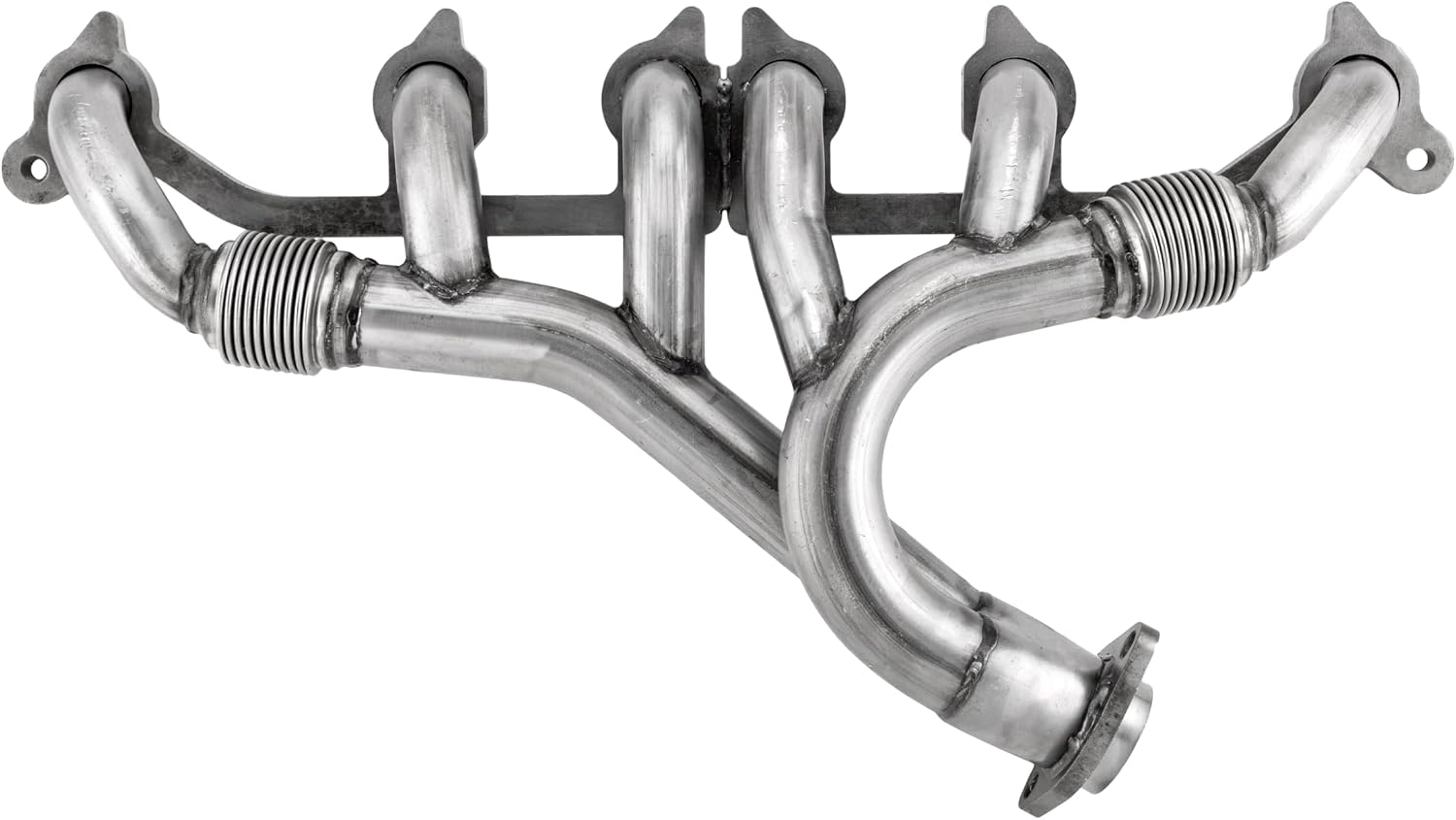
This AccuPart cast iron exhaust manifold is a bolt-on replacement that restores the factory exhaust path on 4.0L inline-six Wranglers and Cherokees. It matches factory bolt pattern, port alignment, and collector outlet so installation uses existing mounting points and standard hand tools without welding or fabrication. The thick cast iron construction is aimed at durability under high exhaust temperatures and repeated thermal cycling, helping prevent the cracks and warping that cause ticking noises, performance loss, and leaks into the cabin. For a home mechanic replacing a cracked OEM manifold, it brings back designed scavenging and backpressure for proper engine performance and emissions readings. Limitations are inherent to cast iron: it is heavier than aftermarket tubular headers and does not provide the flow gains wanted by someone chasing peak horsepower, and it will require proper gasket and hardware care during install to avoid leaks. Expect a straightforward swap that prioritizes longevity and stock-like behavior rather than outright performance gains.
Best for: Owners who want a durable, factory-style replacement to stop leaks and restore original engine performance with a straightforward bolt-in install.
Less Ideal for: Drivers seeking maximum horsepower or weight savings should consider performance headers or lighter aftermarket options instead.
- Direct-fit design matches factory bolt pattern and port alignment for a bolt-on installation
- Thick cast iron construction resists cracking and warping from thermal cycling
- Restores proper exhaust sealing and backpressure to recover engine performance and emissions
- Installs with standard hand tools using factory mounting locations
- Heavier and less free-flowing than aftermarket tubular headers, so limited performance upside
Verdict: Choose this cast-iron direct-fit manifold if you need a durable, factory-quality replacement that reliably stops leaks and restores stock exhaust performance.
3. A-Premium Rear Side L6 4.0L Exhaust Manifold with Gasket

| Fitment | Jeep 4.0L L6 rear side (1999-2006 Grand Cherokee; 2000-2006 Wrangler/TJ; 2000-2001 Cherokee) |
|---|---|
| Material | Cast Iron |
| Package contents | 1 manifold, 1 gasket, 2 nuts, 2 bolts |
| Manufacturer part number | APEMD198 |
| OEM part number | 674-468 / 53010199 |
This A-Premium rear-side exhaust manifold is a direct-replacement cast iron unit intended for 4.0L inline-six Jeep models from the late 1990s to mid 2000s. It ships with a manifold gasket and a small set of nuts and bolts to simplify installation and is packaged to survive shipping. In use it performs the basic task of routing exhaust from the rear cylinder bank into the collector and can restore a leaking or damaged factory manifold. Cast iron construction helps with heat resistance but several user reports describe cracking and fitment geometry issues, which can cause exhaust leaks or require additional modification at the collector. There is no heat shield included and the part is a budget option, so expect variable casting quality and the possibility of extra machine work or returns if bolting surfaces or angles are off. For a practical replacement to get a running vehicle back on the road this is economical, but buyers seeking long-term durability or perfect alignment may prefer a higher-grade aftermarket or factory-quality unit.
Best for: A practical buyer who needs an affordable, immediate replacement to restore exhaust function on a 4.0L inline-six Jeep and is willing to accept occasional fit or finish issues to save money.
Less Ideal for: Those who want a long-term, high-reliability factory-quality replacement or a perfect drop-in fit without any post-purchase adjustments should consider higher-end aftermarket or OEM manifolds instead.
- Includes manifold gasket and basic nuts and bolts for installation
- Cast iron construction provides heat resistance suited for exhaust service
- Packaged in a stronger box to reduce shipping damage
- Multiple customer reports of cracking and poor casting quality
- Some units show dimensional misalignment at the collector requiring adjustment or replacement
Verdict: A budget-friendly cast iron replacement that will get a 4.0L Jeep back on the road fast, but expect variable fitment and durability.
4. A-DCWMool Stainless Steel Exhaust Manifold & Gasket Kit for 4.0L Jeep 1991–1999

| Engine fitment | Jeep 4.0L L6 (1991-1999) |
|---|---|
| Material | Stainless Steel |
| Includes | Manifold, gaskets, downpipe hardware, heat shield |
| Design feature | Integrated flex bellows |
This A-DCWMool manifold kit replaces the factory exhaust manifold on Jeep 4.0L inline-six engines and is sold as a complete bolt-on package. It uses stainless steel primary tubes and internal mandrels to resist corrosion and smooth exhaust flow, while integrated flex bellows reduce stress that typically causes factory manifold cracks. The kit includes gaskets, downpipe hardware, and a heat shield to simplify installation, making it practical for a DIY swap or a quick shop replacement. In everyday use you can expect improved longevity over cast manifolds and slightly reduced backpressure that helps the engine run smoother and quieter. The polished finish looks clean under the hood but does not affect performance. Keep in mind this is a direct-fit for 1991–1999 4.0L applications only, so buyers with later Wrangler models in the 1997–2006 article scope should verify year overlap for their chassis before purchasing.
Best for: Practical buyers looking for a complete, longer-lasting replacement that they can install themselves or hand to a local shop to fix a cracked or corroded 4.0L manifold without buying separate parts.
Less Ideal for: Drivers seeking a performance-focused or vehicle-specific tuned header for later-model Wranglers or for plans that require custom exhaust routing should consider dedicated performance headers instead.
- Stainless steel construction resists rust and withstands high exhaust temperatures
- Integrated flex bellows help prevent the cracking common to factory manifolds
- Includes gaskets, downpipe hardware, and a heat shield for simpler installation
- Mandrel-bent tubes promote smoother exhaust flow and lower backpressure
- Fitment listed for 1991–1999 4.0L engines only, which may exclude some Wrangler years in a 1997–2006 roundup
Verdict: A complete, corrosion-resistant direct-replacement manifold kit that fixes cracking issues and simplifies installation for budget-minded Jeep 4.0L owners.
5. JDMSPEED Stainless Steel Exhaust Manifold and Gasket Kit for 4.0L Jeep Engines (1991–1999)

| Engine fitment | 4.0L inline-six (1991–1999 listings) |
|---|---|
| Includes | Manifold, gaskets, downpipe hardware, heat shield, flex bellows |
| Material (pipes) | Stainless steel pipes with steel flanges/flex joints |
This JDMSPEED kit replaces the cracked or leaking stock manifold with a stainless steel runner assembly and the hardware needed for installation. It is intended as a direct replacement for Jeep 4.0L inline-six applications and is commonly used to stop exhaust ticking, eliminate fumes in the engine bay, and restore proper exhaust flow. The kit includes flex bellows and an integrated heat shield, and reviewers report the smooth interior and upgraded pipes deliver quieter operation and good high-rpm flow. Fitment is generally reported as close to factory, and installation is straightforward for someone with basic mechanical skills. Expect variable weld quality and occasional issues with gasket packaging, so many buyers fit an aftermarket gasket for best sealing. Some users also noted occasional quality-control failures where a piece was misformed, so inspect the flange and welds before installation.
Best for: Buyers who prioritize a long-lasting fix for a noisy or cracked manifold and want a near-direct replacement that restores quiet operation and flow without major modifications.
Less Ideal for: Anyone wanting a show-quality, perfect-fit performance manifold or an option backed by stricter factory-quality control should consider higher-end branded replacements.
- Stainless steel piping reduces rust risk compared with plain steel collectors
- Includes gaskets, downpipe hardware, and a heat shield for a near-complete repair kit
- Built-in flex bellows accommodate thermal expansion to reduce cracking
- Smooth internal runners designed to improve exhaust flow at higher RPMs
- Widely reported to install with factory-like fit on compatible 4.0L engines
- Some units show inconsistent weld quality or dimensional errors requiring return or inspection
- Included gaskets have mixed quality reports so replacement gaskets may be needed
Verdict: A practical, mostly factory-fit stainless steel replacement that stops leaks and quiets a failing 4.0L Jeep manifold for buyers focused on reliable, long-term repair.
6. Dorman 674-196 Exhaust Manifold Kit with Gaskets and Hardware

| Compatible models | Select 1991–1999 Jeep Cherokee, Wrangler, Comanche and 1993–1998 Grand Cherokee/TJ listed |
|---|---|
| Material Type | Iron |
| Includes | Gaskets and downpipe hardware |
| Manufacturer Part Number | 674-196 |
This Dorman exhaust manifold is a direct replacement-style unit designed to restore exhaust routing and seal for compatible Jeep models. It comes with the manifold, gaskets and downpipe hardware so you can complete a single-shop repair without sourcing extra parts. The iron construction aims for durability and the design incorporates flex joints to reduce the cracking issues common to older stock manifolds. In practice the part installs like a factory-replacement unit on listed Cherokees, Wranglers and Grand Cherokees from the 1990s; many installers report good fit and smoother engine operation after install. Quality reports are mixed: several buyers praise the build and fit, while a minority found weld or flatness defects and recommend using a higher-quality donut or intake gasket. Because it ships as a full kit, it is a practical option for DIY mechanics or shops doing a timed repair, but some technicians choose to replace the supplied gaskets or hardware for a more reliable long-term seal.
Best for: Buyers who prioritize a ready-to-install replacement that restores exhaust function on late 1990s Jeep models and prefer a kit that includes necessary hardware for a single repair.
Less Ideal for: If you need a long-term high-performance or guaranteed crack-proof upgrade, or you want a stainless or custom high-flow manifold, this plain cast-iron kit is not the best match.
- Complete kit includes manifold, intake/donut gaskets and downpipe hardware for one-stop replacement
- Iron construction and flex joints designed to resist warping and reduce cracking compared with older units
- Generally good fitment on the specified Jeep models so it aligns with existing bolt patterns and flanges
- Some buyers reported weld quality or flatness issues on individual units
- Included gaskets are considered lower quality by some installers and may be replaced for a better seal
Verdict: A practical, all-in-one cast-iron manifold kit that delivers factory-style fit and a convenient repair solution for late 1990s Jeep models.
7. A-Premium Stainless Steel Exhaust Manifold Kit with Gaskets for Jeep 4.0L

| Fitment | Jeep 4.0L inline-six models listed (1991–1999/1997–1999 variants) |
|---|---|
| Material | Stainless steel |
| Includes | Manifold, manifold gasket, flange gasket, bolts, nuts, washers |
| Part numbers | 674-196, 674196, 33007072, 4883385 |
This stainless steel manifold kit replaces the factory exhaust manifold on Jeep 4.0L inline-six models and ships with a manifold gasket, flange gasket, and basic fasteners. It is built from stainless steel with welded joints and designed to follow the original mounting locations so installation is straightforward for a mechanically experienced DIYer or a shop. Buyers report generally good port alignment and a solid flange that seals well when paired with a quality gasket. The included hardware and gasket quality varies across units, so plan to have replacement manifold bolts or a higher-grade exhaust gasket on hand if you want a worry-free install. The kit is offered as a standard replacement rather than a high-performance header, so expect factory-like flow and durability rather than horsepower gains. Overall it is a budget-friendly repair option that restores exhaust routing and stops leaks when installed correctly, but minor prep and possible hardware or gasket upgrades may be needed for a trouble-free long-term result.
Best for: Buyers who prioritize a reliable, budget-conscious factory-style replacement to stop exhaust leaks and restore normal operation without chasing performance upgrades.
Less Ideal for: If you want a performance header, long-term race use, or an entirely bolt-on horsepower solution, choose a purpose-built performance manifold instead.
- Stainless steel construction resists corrosion better than mild steel replacements
- Designed to match original mounting locations for straightforward fitment on 4.0L engines
- Includes manifold and flange gaskets to simplify the repair job
- Strong flange and clean welds reported by users for reliable sealing
- Included hardware and gaskets are inconsistent in quality so replacements may be required
Verdict: A practical, stainless-steel direct-replacement manifold that restores sealing and durability for Jeep 4.0L owners seeking a low-risk repair option.
Choosing the Right 1997-2006 Jeep Wrangler Exhaust Manifold: Key Factors to Consider
Fitment and Port Alignment
Correct fitment is the single most important factor for a 1997–2006 Jeep Wrangler exhaust manifold. A manifold that matches the cylinder head port spacing and flange dimensions prevents leaks and reduces installation time. Poor alignment can force gaskets to deform or require excessive torque on bolts, which increases the risk of stripped threads or warped flanges. For TJ, LJ, and TJU Wranglers, check manifold-to-head contact surface and the position of the oxygen sensor bung when evaluating fit. Proper fit also ensures the downstream exhaust piping mates cleanly without bending or stressing the connection.
Material and Heat Resistance
Manifolds are exposed to rapid temperature cycles and high combustion temperatures, so material choice affects longevity. Cast iron offers robustness and good thermal damping but can be heavier; certain stainless steels provide better resistance to cracking and corrosion. Heat resistance matters for preventing thermal fatigue and warping, especially if the vehicle is used for long highway runs or extended idling on trails. Consider manifolds with thicker walls or reinforced flanges to handle heat cycles typical of the 1997–2006 Wrangler TJ, LJ, and TJU engines.
Sealing Method and Gasket Compatibility
How the manifold seals to the head determines the likelihood of leaks. Multi-layer steel gaskets compress predictably and are common, but bead-style or graphite gaskets may be used depending on the manifold flange design. A properly matched gasket reduces the chance of an exhaust manifold leak that can cause symptoms such as ticking noises, exhaust smell in the cabin, or a drop in performance. Verify that replacement gaskets are specified for your TJ, LJ, and TJU engine and that bolt torque specifications are followed to achieve a long-lasting seal.
Crack Resistance and Structural Reinforcement
Exhaust manifold cracks are a frequent failure mode on older Wranglers due to vibration, heat cycling, and occasional off-road stress. Look for manifolds with reinforced flanges, chamfered port edges, and minimized stress concentrations. Designs that incorporate thicker mounting surfaces or gussets at the junction points reduce the chance of a manifold crack developing. For vehicles that see rough terrain, prioritize manifolds tested for thermal cycling and mechanical resilience to avoid premature failure.
Compatibility With Sensors and Accessories
Ensure the manifold accepts the stock oxygen sensor(s) and that any EGR or secondary fittings match the TJ, LJ, and TJU engine configuration. Missing or incorrectly placed sensor bungs will cause check-engine lights and affect engine operation. Some replacement manifolds change the oxygen sensor location or orientation. Confirm that sensor wiring length and connector access remain usable without modification. Also verify clearance to steering components and the starter to prevent interference during installation.
Serviceability and Installation Considerations
Ease of installation matters for owners doing the job at home or for shops aiming to keep labor time reasonable. Manifolds that allow reuse of factory mounting hardware, or that come with correct hardware and gaskets, cut install time and reduce error risk. Consider bolt access and whether heat shielding or other components must be removed. Manifolds that require minimal exhaust system alteration simplify future exhaust manifold replacement or a swap. If welding or cutting is necessary, account for additional labor and potential alignment issues.
Common Symptoms of Exhaust Manifold Problems on TJ, LJ, and TJU Wranglers
Exhaust manifold issues often start with audible and performance signals. Typical symptoms include a sharp ticking or popping noise on cold start that may grow louder with throttle, the smell of exhaust in or near the cabin, and a noticeable loss of low-end torque. These symptoms are especially common on older TJ, LJ, and TJU Wranglers with heat-cycled manifolds.
A leaking manifold can also trigger higher under-hood temperatures and may affect oxygen sensor readings, which can alter fuel trim. Pay attention to where the sound originates; a crack or failed gasket usually produces noise near the front of the engine, while downstream exhaust leaks sound deeper in the system.
- Sharp ticking or popping on cold start
- Burning or exhaust odor near the engine bay
- Reduced low-end torque and throttle response
- Possible change in fuel trim or check-engine light activation
How to Diagnose an Exhaust Manifold Leak Safely
Diagnosing a leak requires caution because the exhaust system gets very hot and can produce harmful fumes. A simple start is a visual inspection: look for soot or black streaks around the flange and gasket areas, which point to escaping gases. Also inspect for hairline cracks or rust-through holes, especially around bends and mounting points.
Another noninvasive check is to listen with a length of hose or a stethoscope near the manifold while the engine is running to localize a hissing or ticking leak. When the engine is cold, hand-feel for small gaps around the flange after ensuring the engine is off and cool. If you suspect a leak but cannot clearly locate it, seek a professional inspection to avoid exposure to exhaust fumes.
- Visual soot or black streaks at flanges
- Tapping or listening to localize ticking noises
- Careful hand-feel checks only when engine is cold
- Use a smoke test or professional help if uncertain
Gasket Choices and When to Replace Them
Gaskets serve to compensate for minor flange irregularities and to maintain a high-temperature seal. When replacing an exhaust manifold on a 1997–2006 Wrangler TJ, LJ, and TJU, always use gaskets specified for that engine and flange type. Multi-layer steel gaskets are common for their resilience and ability to maintain a seal under repeated heating cycles.
Replace the gasket whenever the manifold is removed or if you see any signs of blow-by such as black soot, compressed or flaked gasket material, or persistent ticking after re-torqueing bolts. Replacing the gasket during a manifold swap is inexpensive insurance against early leak recurrence.
- Use gaskets specified for TJ, LJ, and TJU flange type
- Replace gasket whenever manifold is removed
- Inspect for soot and gasket material failure during replacement
When a Swap or Upgrade Is Appropriate
Some owners choose to swap manifolds or upgrade to a heavier-duty design to address chronic leaks or to prepare the engine for higher-performance modifications. A swap can be sensible when the original manifold is cracked beyond repair or when improved thermal performance is desired for higher output setups.
However, swaps often require matching downstream piping and may change sensor locations or require different gaskets. For the 1997–2006 TJ, LJ, and TJU Wrangler, ensure the replacement manifold maintains proper clearance to steering and exhaust routing to avoid additional fabrication.
- Consider swap if manifold is cracked beyond repair
- Upgrades can improve heat control for modified engines
- Verify downstream piping and sensor compatibility before swapping
Installation Tips to Avoid Common Pitfalls
Before installing a replacement manifold, clean the head flange mating surface thoroughly to remove old gasket material and corrosion. Use a straightedge to check for flange warping; significant unevenness can prevent a good seal and may require machining. Apply recommended torque in the sequence specified by the vehicle service manual to avoid uneven flange stress.
Use new fasteners if original studs or bolts are corroded, and consider anti-seize on threads where recommended. If heat shielding was removed, reinstall it to preserve under-hood temperatures and to protect wiring and hoses. After installation, recheck torque after a few heat cycles to ensure bolts remain properly seated.
- Clean flange surfaces and inspect for warping
- Follow factory torque sequence and specifications
- Use new hardware if existing bolts are corroded
- Re-torque after several heat cycles to confirm seal
Still looking for the perfect fit?
Select your Jeep Wrangler configuration to see the most relevant Exhaust Manifolds recommendations
How We Chose the Best 1997-2006 Jeep Wrangler Exhaust Manifold
We started by filtering for exhaust manifolds explicitly designed to fit the 1997–2006 Jeep Wrangler TJ, LJ, and TJU chassis to ensure bolt-on compatibility and correct port alignment. Key evaluation criteria included flange and port fitment accuracy, material quality and thermal resistance, sealing method and gasket compatibility, and ease of installation for owners and independent shops. We prioritized manifolds made from heat-resistant materials and designs that minimize stress at the mounting points to reduce the chance of cracks or warping. We assessed exhaust routing and clearance to avoid interference with steering, suspension, and body mounts common to the TJ, LJ, and TJU. Corrosion resistance and flange flatness were also weighed since they affect long-term sealing. We excluded crude universal headers and manifolds without explicit fitment for the 1997–2006 Wrangler TJ, LJ, and TJU. We also eliminated options that required extensive fabrication or modification to the exhaust system. The remaining candidates were chosen for their combination of fit, durability, and serviceability for typical street and light off-road use.
Our full evaluation process is outlined in our review methodology.
FAQ
What are the first signs my 1997–2006 Wrangler has a manifold leak?
Often the earliest signs are a sharp ticking noise on cold start and a persistent exhaust smell near the engine bay. You may also notice reduced low-end torque or a change in idle quality. Visual soot at the flange is a strong indicator of a leak.
Can I drive with a small exhaust manifold crack?
You can drive short distances to get the vehicle home or to a shop, but prolonged driving with a crack increases heat and vibration damage and can allow exhaust fumes into the cabin. It is best to repair or replace the manifold promptly.
Will replacing the gasket fix all exhaust manifold noise?
Replacing the gasket will fix noise caused by a failed gasket, but it will not resolve issues from a warped or cracked manifold. Inspect the flange and manifold body when replacing the gasket to ensure there is no additional damage.
How hard is it to install a manifold on a TJ, LJ, and TJU Wrangler?
Difficulty varies with access and rust condition. Many owners with moderate mechanical skills can complete the job with common hand tools, but seized bolts or hard-to-reach fasteners can make the job time-consuming. Plan for extra time and the possibility of replacing hardware.
Do sensor locations change with replacement manifolds?
Some aftermarket manifolds relocate oxygen sensor bungs or omit secondary ports. Always confirm the sensor bung placement matches the original TJ, LJ, and TJU configuration to avoid needing wiring extensions or adapter fittings.
How can I tell if a manifold crack is repairable?
Minor surface cracks near a flange can sometimes be welded and reinforced, but cracks in load-bearing areas or heavily corroded sections are often better addressed with a replacement manifold. A qualified shop can assess weldability and long-term reliability.
Final Verdict
Prioritize proper fitment, material durability, and a reliable sealing method when choosing an exhaust manifold for a 1997–2006 Jeep Wrangler TJ, LJ, and TJU. Addressing flange flatness and gasket compatibility will prevent most common leaks and noise problems, while reinforced designs reduce the chance of cracks under thermal cycling. Weigh the tradeoff between repairing a damaged factory manifold and installing a heavier-duty replacement that improves longevity. Focus on options that match sensor locations and exhaust routing to minimize additional work and ensure a durable installation.
Explore More:
- Check out all Jeep Wrangler parts & accessories
- Explore Exhaust Manifolds Maintenance & Repair Guides
- Explore Exhaust & Emissions
- Browse all Auto Parts
