

Note: This article contains affiliate links. If you click on these links and make a purchase, I may earn a small commission at no extra cost to you. This helps support my research and content. Read my full affiliate disclosure here.
If you own a Jeep Wrangler 3.8L and are dealing with emissions issues or a persistent check engine light, choosing the right catalytic converter matters. A correct-fit converter keeps exhaust emissions within legal limits, prevents driveability problems, and reduces the chance of repeated fault codes that can mask other issues.This guide covers our six shortlisted catalytic converters specifically selected for the Jeep Wrangler 3.8L. We evaluated candidates for correct fitment, emissions effectiveness, and long-term reliability so you can pick a unit that restores compliance and keeps your Wrangler running smoothly. Read on for the criteria we used and practical guidance to help you choose and install the right converter.
Looking for other parts? See all Jeep Wrangler parts & accessories.
Top Picks at a Glance
| Best Overall The best all-around choice for most situations | KAX Catalytic Converter Kit for Jeep Wrangler 3.8L (2007–2009) |  |
| Best Quality Built to a higher standard if you want something more solid | MagnaFlow OEM Grade Direct-Fit Catalytic Converter for Jeep Wrangler (Part 49689) |  |
| Best Value The sweet spot between price and what you get | Anytek Front Catalytic Converter for Jeep Wrangler JK 3.8L |  |
| Best Budget The cheapest option that still gets the job done reliably | Harborace High-Flow Catalytic Converter for 2007–2009 Jeep Wrangler 3.8L V6 |  |
| Highest Rated A top-rated pick with lots of positive feedback | CAT CLEAN Catalytic Converter for 2007–2009 Jeep Wrangler 3.8L V6 |  |
| Most Popular A crowd favorite that many people choose with confidence | SPEEDFusion Catalytic Converter for Jeep Wrangler 2007–2009 3.8L V6 |  |
1. KAX Catalytic Converter Kit for Jeep Wrangler 3.8L (2007–2009)

| Fitment | Jeep Wrangler V6 3.8L 2007-2009 |
|---|---|
| Material | 409L stainless steel |
| Substrate | Ceramic honeycomb |
| Function | Resolves P0420/P0430, reduces CO HC NOx |
This KAX catalytic converter kit is a direct replacement built to match factory specifications for Jeep Wrangler V6 3.8L (2007–2009). It installs in the same location as the original unit and is intended to resolve P0420/P0430 fault codes and restore proper emissions efficiency. The converter uses a ceramic honeycomb substrate with rare-metal catalysts to reduce CO, HC, and NOx while the 409L stainless-steel body and precision welding aim to resist corrosion and leaks. In real-world use you can expect smoother acceleration and a reduction in exhaust odor when the old failed converter is replaced, plus a likely improvement in fuel economy compared with a clogged unit. Installation requires typical exhaust tools and correct fitment verification; a few reported listings and reviews show occasional fitment confusion, so confirm the part numbers match your vehicle before buying. This is a practical option for owners wanting a factory-style replacement without extensive modifications, but it depends on correct fit and proper installation to deliver the claimed emissions fixes.
Best for: Buyers who want a balanced, factory-style replacement to fix emissions faults and restore drivability on a 2007–2009 Jeep Wrangler 3.8L without upgrading to performance-modified components.
Less Ideal for: Do not choose this if you plan to install a performance or high-flow aftermarket converter or if you need a one-size-fits-all solution for multiple vehicle models.
- Direct-fit design engineered to match factory specifications for the Jeep Wrangler 3.8L (2007–2009).
- High conversion ceramic honeycomb with rare-metal catalysts to reduce CO, HC, and NOx emissions.
- 409L stainless-steel construction and precision welding for improved corrosion and heat resistance.
- Designed to address P0420/P0430 codes and restore engine and emissions system performance.
- Fitment accuracy depends on matching OEM/reference part numbers; some buyers reported receiving incorrect parts in other listings.
Verdict: A factory-style, direct-fit replacement that restores emissions performance and drivability for 2007–2009 Jeep Wrangler 3.8L owners.
2. MagnaFlow OEM Grade Direct-Fit Catalytic Converter for Jeep Wrangler (Part 49689)

| Series | OEM Grade |
|---|---|
| Material | Stainless Steel |
| Energy Specifications Met | EPA |
| Built-In Media | 1 Torca Clamp |
| Oxygen Sensor Location | Pre-and-Post Converter |
This MagnaFlow OEM Grade direct-fit catalytic converter is built as a factory-style replacement for Jeep Wrangler 3.8L systems, designed to restore emissions function and clear related diagnostic codes. It uses stainless steel construction and mandrel-bent tubing to preserve exhaust flow and resist corrosion, while included clamps and mounting hardware simplify installation for shops or experienced DIYers. The unit replicates factory geometry to limit fitment problems and places oxygen sensor ports before and after the substrate so your vehicle control system sees correct signals. Buyers focused on performance will appreciate the low-mass, free-flowing design that can slightly improve throttle response and maintain fuel economy compared with a clogged or damaged original. Not every installation is bolt-perfect for every lift or exhaust configuration, and some reviewers reported requiring additional fitting or lowering cross members during install, so plan for a careful install or professional help if your Wrangler is modified off-road or has aftermarket exhaust piping.
Best for: Jeep owners wanting a factory-style replacement that restores emissions function while preserving exhaust flow and may yield a small performance benefit; suitable for those who prioritize maintaining legal emissions compliance and drivability.
Less Ideal for: Drivers seeking a high-flow competition or off-road-only converter for heavily modified engines or those requiring California-specific emissions certification should look elsewhere.
- Stainless steel mandrel-bent tubing for improved exhaust flow and corrosion resistance
- Designed to meet Federal/EPA emissions requirements and keep check engine light off
- Includes clamps and mounting hardware to simplify installation
- Pre- and post-converter oxygen sensor ports to maintain correct engine controls
- Some users needed cutting, bending, or cross member removal to achieve fitment on lifted or modified Wranglers
Verdict: A factory-style, EPA-compliant replacement that restores emissions function and maintains exhaust flow for performance-minded Jeep Wrangler owners.
3. Anytek Front Catalytic Converter for Jeep Wrangler JK 3.8L

| Vehicle fitment | Jeep Wrangler JK 2007–2009 3.8L |
|---|---|
| Body material | 409L stainless steel shell |
| Manufacturer part number | 10080146-ANK |
| OEM part numbers referenced | 50482, 645269, 19308, 20398, 52059930AH |
This Anytek front catalytic converter is a budget-focused factory-replacement designed to restore emissions performance on the Jeep Wrangler JK 3.8L (2007–2009). It installs in place of the original front cat and uses a 409L stainless steel shell with high-temperature welding intended to resist corrosion and heat. Typical use is as a like-for-like replacement when a failed converter causes a check engine light or an emissions test failure. Buyers report it fits with minimal modification on matching Wrangler applications and can help the vehicle pass inspections. Notable features include claimed original-standard manufacturing, a one-year warranty, and state restrictions where the unit is not legal for sale in certain emissions states. Practical benefits are lower cost compared with dealer parts and straightforward replacement for do-it-yourself or independent-shop installs. Limitations to expect are variable heat shield alignment and occasional need for slight adjustment or welding to clear underbody brackets on some vehicles, and it is not compliant in several states with stricter emissions rules.
Best for: Buyers who prioritize a practical, cost-effective replacement to get a 3.8L Wrangler back to emissions compliance quickly, and who are comfortable with minor fitting or shop adjustments during installation.
Less Ideal for: Owners in states with strict emissions rules should avoid this unit and seek a certified, state-compliant catalytic converter; those wanting perfect bolt-and-shield alignment out of the box may prefer OEM-sourced parts.
- Designed as a direct front-replacement for Wrangler JK 3.8L to restore emissions function
- 409L stainless steel shell and high-temperature welding for corrosion and heat resistance
- Lower-cost option compared with dealer or aftermarket branded converters
- One-year warranty and seller support noted in product details
- Not legal for sale or use in California, Colorado, New York, and Maine due to emissions regulations
- Some users reported misaligned heat shields, offset bolts, or minor fitment adjustments required
Verdict: A budget-minded, factory-style front catalytic converter that restores emissions compliance on 3.8L Wrangler JKs with acceptable fitment for owners willing to do minor adjustments.
4. Harborace High-Flow Catalytic Converter for 2007–2009 Jeep Wrangler 3.8L V6

| Brand | Harborace |
|---|---|
| Vehicle fitment | 2007–2009 Jeep Wrangler 3.8L V6 |
| Material | Stainless steel |
| Position | Bottom |
| Model | Jeep0308-JHYH |
This Harborace catalytic converter is a direct-fit replacement tailored for the 2007–2009 Jeep Wrangler with the 3.8L V6. Constructed from stainless steel with a premium substrate and washcoat, it prioritizes corrosion resistance and heat tolerance for long-term use under exhaust temperatures. The high-flow design reduces restriction compared with a clogged unit, which helps recover lost engine power and can improve fuel economy while maintaining emissions conversion. Installation is intended to be straightforward since the listing specifies vehicle fitment and a bottom position; most buyers will swap it in using factory mounting points and common exhaust tools. Important limitations: it is not allowed for use in California, New York, Colorado, or Maine, so buyers in those states must choose a compliant unit, and this product is an emission-system replacement rather than a performance upgrade. Expect practical benefits for everyday driving—better throttle response and restored emissions function—without needing extensive modifications.
Best for: Buyers looking to replace a failing or clogged catalytic converter on a 2007–2009 Jeep Wrangler 3.8L who prioritize a budget-friendly, direct-fit unit that restores emissions function and everyday drivability.
Less Ideal for: Drivers who need a state-certified converter for California, New York, Colorado, or Maine or those seeking a race-focused performance exhaust upgrade.
- Made from stainless steel for improved corrosion and heat resistance
- High-flow design reduces exhaust restriction to help restore power and fuel economy
- Listed as a direct fit for 2007–2009 Jeep Wrangler 3.8L V6 to simplify installation
- Not legal for use in California, New York, Colorado, or Maine which limits suitability for some buyers
Verdict: A practical, budget-minded direct-fit catalytic converter to restore emissions control and everyday performance on 2007–2009 Jeep Wrangler 3.8L V6s.
5. CAT CLEAN Catalytic Converter for 2007–2009 Jeep Wrangler 3.8L V6
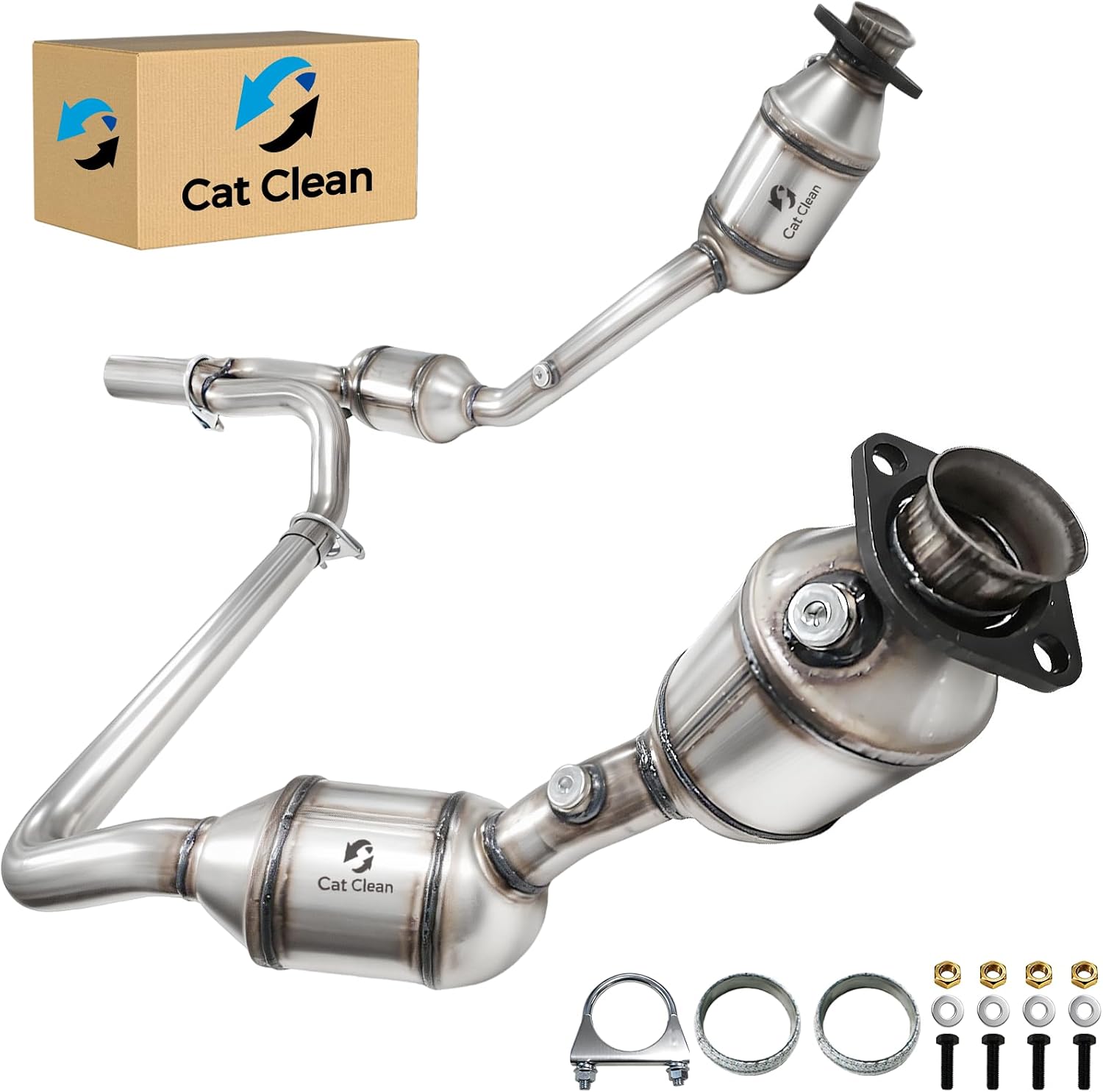
| Vehicle fitment | 2007–2009 Jeep Wrangler 3.8L V6 |
|---|---|
| Construction material | 409L stainless steel body |
| Catalyst type | Pt/Rh/Pd loaded ceramic substrate |
| Compliance | EPA compliant (federal) |
This CAT CLEAN catalytic converter is built as a direct-bolt replacement for the 2007–2009 Jeep Wrangler 3.8L V6 and is intended to restore emission control and resolve P0420/P0430 codes. It uses a high-density, large-area honeycomb ceramic substrate loaded with platinum, rhodium, and palladium to support efficient catalytic reactions, and the 409L stainless steel body and high-temperature internal pad help protect the carrier for longer service life. The converter is EPA compliant for federal emissions regions and is offered with a six-year/50,000-mile performance warranty. Installation is straightforward when bolt holes and flanges match, so most installs require no welding or cutting. Limitations to note are regional restrictions where it cannot be sold or used, and some buyers reported incomplete hardware in the kit or occasional fitment gaps on nonstandard exhaust setups, so confirm flange alignment before installation.
Best for: Buyers who prioritize restoring reliable emissions performance and long-term durability for a 2007–2009 Jeep Wrangler 3.8L V6 will appreciate this direct-fit, factory-style replacement.
Less Ideal for: Users located in states with stricter vehicle emissions laws or drivers who need parts guaranteed for California-equivalent compliance should look at region-approved converters instead.
- Direct bolt-on design simplifies installation without welding on compatible factory exhaust flanges
- EPA-compliant catalyst formulation with Pt/Rh/Pd-loaded ceramic for improved conversion efficiency
- 409L stainless steel shell and high-temp internal pad for corrosion and heat resistance
- Backed by a six-year/50,000-mile performance warranty
- Not legal for sale or use in certain states with stricter regulations
- Some kits may ship with insufficient installation hardware requiring additional fasteners or gaskets
Verdict: If you need a durable, direct-fit catalytic converter to reliably restore emissions performance on a 2007–2009 Jeep Wrangler 3.8L V6, this CAT CLEAN unit is built for that purpose.
6. SPEEDFusion Catalytic Converter for Jeep Wrangler 2007–2009 3.8L V6

| Vehicle fitment | Jeep Wrangler 2007–2009 3.8L V6 |
|---|---|
| Material | 409L stainless steel |
| Substrate | OEM-grade 400-hole ceramic with Pt/Rh/Pd |
| Certification | EPA compliant |
This SPEEDFusion catalytic converter is a direct-fit replacement for the 2007–2009 Jeep Wrangler 3.8L V6 intended to restore emissions control and clear malfunction indicators caused by a failing converter. Constructed with 409L stainless steel and an OEM-grade ceramic substrate loaded with platinum, rhodium, and palladium, it aims to improve catalytic conversion rates over a damaged unit. Installation is typical of a bolt-in converter and many buyers report an easy fit and included hardware, though a professional install is recommended for sensor placement and heat shield alignment. The unit is EPA certified for federal emissions but not CARB approved, so it is only legal in states that follow federal rules. Practical benefits include corrosion-resistant shell and claimed performance to keep codes P0420/P0430 from returning when matched with correct sensors and installation. Some reviewers note heat shield fitment quirks and a small number of compatibility or longevity complaints, so confirm fit and monitor for codes after installation.
Best for: Buyers who want a factory-style replacement that restores emissions performance and avoids check-engine codes while prioritizing proven, install-ready fitment and EPA compliance.
Less Ideal for: Do not choose this if you need a CARB-approved part or if you plan to register the vehicle in a state with stricter emissions rules; also avoid if you prefer lifetime guaranteed aftermarket parts.
- Direct-fit design for Jeep Wrangler 2007–2009 3.8L V6 for faster installation
- 409L stainless steel shell for corrosion resistance in underbody conditions
- OEM-grade 400-hole ceramic substrate with platinum, rhodium and palladium for improved conversion efficiency
- EPA compliant for federal emissions standards
- Not CARB compliant so illegal to sell or install in certain states
- Some users reported heat shield or sensor-location fitment adjustments required
Verdict: A solid EPA-compliant, direct-fit replacement that restores emissions control on the 2007–2009 Jeep Wrangler 3.8L V6 without major modifications.
Choosing the Right Jeep Wrangler 3.8L Catalytic Converter: Key Factors to Consider
Fitment and Flange Compatibility
Correct fitment is the single most important factor for the Jeep Wrangler 3.8L. A catalytic converter that matches the factory inlet and outlet diameters, flange type, and overall length reduces the need for exhaust bending, adapter pieces, or re-routing oxygen sensors. Poor fitment increases installation time, raises the risk of exhaust leaks, and can change backpressure characteristics in ways that trigger fault codes.
When dimensions are off, you may need welding or adapter flanges that can compromise the integrity of the exhaust system and lengthen repair costs. Always confirm bolt patterns and sensor port placement so oxygen sensors read accurately and engine management operates as intended.
Emissions Conversion Efficiency
Emissions conversion efficiency describes how effectively the catalyst substrate converts hydrocarbons, carbon monoxide, and nitrogen oxides. For the 3.8L application, look for documented substrate cell density and washcoat information that indicate a balanced capacity for conversion without excessive flow restriction.
Higher conversion efficiency helps the vehicle pass inspections and reduces tailpipe pollutants. However, excessively dense substrates can increase backpressure and hurt engine responsiveness, so weigh conversion claims against flow characteristics appropriate for the Wrangler's engine output.
Substrate and Shell Durability
Durability affects how long the catalytic converter will function correctly in the Jeep Wrangler's typical environments, including off-road exposure, salt, and temperature swings. Substrate construction (ceramic versus metallic), catalyst loading, and the thickness and material of the outer shell all influence resistance to thermal shock and corrosion.
A converter with a robust shell and a substrate designed to tolerate vibration and rapid temperature changes will last longer and resist cracking that leads to failure symptoms. Corrosion-resistant materials and proper mounting design also reduce the chance of exhaust leaks as the vehicle accumulates miles.
Oxygen Sensor and Backpressure Considerations
The Wrangler's engine management relies on oxygen sensor readings to adjust fuel trim. A replacement converter must position upstream and downstream oxygen sensor ports in the correct locations to preserve accurate sensor feedback. If sensor placement is wrong, the ECU may set long-term fuel trims improperly or trigger a check engine light related to catalyst efficiency.
Backpressure behavior is also critical. Some converters add more restriction than the factory unit, which can reduce low-end torque or cause the engine to run hotter. Choose a converter designed to match the factory backpressure profile or one engineered to balance flow and conversion for the Wrangler's 3.8L output.
Heat and Environmental Resistance
Jeep Wrangler owners often expose their vehicles to high-load conditions like towing or extended highway travel, and off-road use can kick up debris and water exposure. Catalytic converters rated for higher thermal loads and protected against rust will better survive these conditions.
Heat-resistant internal components reduce the chance of substrate melt-down under extreme conditions. Protective external coatings and strong mounting brackets help prevent physical damage that could lead to cracks or leaks, keeping emissions control functioning over time.
Ease of Installation and Maintenance
Since many Wrangler owners perform DIY maintenance, ease of installation is a practical factor. Direct-fit converters that match flange types and sensor locations minimize time in the garage and the need for specialty tools. Units that include gaskets, correct hardware, and clear instructions reduce the risk of improper sealing and future leaks.
Consider accessibility under the Wrangler and whether additional lifting or removal of crossmembers is required. Also think about future serviceability; a converter that allows straightforward access to sensor ports and fasteners will simplify diagnostics if a check engine light related to the catalytic converter appears.
Common Signs Your Jeep Wrangler 3.8L Needs a New Catalytic Converter
There are practical symptoms that commonly indicate catalytic converter problems on the 3.8L engine. A persistent check engine light with a stored code related to catalyst efficiency is a primary indicator, but other signs often appear before full converter failure. Reduced acceleration or poor fuel economy can result from internal substrate clogging that increases backpressure, while unusual sulfur or rotten-egg odors can point to an overloaded catalyst that is no longer converting gases effectively.
- Persistent check engine light with catalyst efficiency codes
- Noticeable drop in power or throttle response
- Strong sulfur or rotten-egg smell from the tailpipe
- Rattling noises from under the vehicle indicating a damaged substrate
Diagnostic Steps Before Replacing the Converter
Diagnosing catalytic converter issues for the Jeep Wrangler 3.8L begins with reading fault codes and monitoring live oxygen sensor data. Verify that front and rear sensor voltages show the expected oscillation and switching behavior; a lack of downstream response may indicate a degraded catalyst, while upstream sensor anomalies could reflect a separate engine management issue.
If sensor data and codes indicate a catalyst problem, inspect visually for exhaust leaks, damaged heat shields, or obvious physical damage to the converter shell. A temperature test across the converter—measuring inlet versus outlet temperature—can indicate whether the catalyst is actively converting; a significantly higher outlet temperature often suggests conversion is taking place, while similar temperatures may indicate poor function.
- Scan for catalyst efficiency and oxygen sensor codes
- Compare upstream and downstream O2 sensor voltages
- Inspect for exhaust leaks, damaged shields, or physical damage
- Consider inlet/outlet temperature differential testing
Fitment Tips for a Smooth Installation
Plan the replacement by confirming flange types, sensor port positions, and overall unit length against the factory routing on the Jeep Wrangler 3.8L. Have the correct gaskets and hardware ready and consider replacing corroded bolts or rusted clamps to avoid problems during installation.
Use penetrating lubricant on fasteners before attempting removal and support the exhaust so you can lower and raise sections safely. If the converter requires welding, ensure a qualified technician completes that work to maintain exhaust sealing and structural integrity. After installation, clear related fault codes and perform a short drive cycle to let the engine management re-evaluate fuel trims and catalyst efficiency.
- Confirm flange type and overall length before purchase
- Have new gaskets and hardware available
- Support exhaust during removal and use penetrating lubricant on rusted bolts
- Clear codes and run a drive cycle after installation
Maintaining Converter Health on the Wrangler
Protecting the catalytic converter prolongs its life and protects emissions performance. Keep the engine properly tuned and address misfires, oil burning, or coolant leaks immediately because these conditions can foul the catalyst quickly.
Avoid unnecessary idling and minimize prolonged heavy-load operation when the vehicle is not warmed up. Inspect underbody components and heat shields regularly, and rinse off road salt after winter or off-road excursions to reduce corrosion risk. Promptly replace faulty oxygen sensors and fix exhaust leaks to prevent accelerated catalyst degradation.
- Address engine misfires, oil or coolant burning promptly
- Inspect heat shields and underbody after off-road use
- Replace faulty oxygen sensors to avoid catalyst fouling
- Rinse salt and debris from undercarriage to limit corrosion
Legal and Emissions Considerations
Replacing a catalytic converter on the Jeep Wrangler 3.8L has emissions compliance implications. Use a converter that meets local and regional emissions rules and has appropriate documentation if required for inspections. Some jurisdictions limit the types of replacements allowed, so verify local regulations before purchasing and installing a unit.
Ensure sensor ports and emissions-related components remain functional and that any replacement does not disable required monitoring systems. Keeping records of replacement parts and installation can help during inspection or resale situations.
- Confirm compliance with local emissions regulations
- Retain installation and parts documentation for inspections
- Keep oxygen sensor and emissions monitors functional after replacement
Still looking for the perfect fit?
Select your Jeep Wrangler configuration to see the most relevant Catalytic Converters recommendations
How We Chose the Best Jeep Wrangler 3.8L Catalytic Converter
We focused on replacements and direct-fit catalytic converters designed for the Jeep Wrangler 3.8L engine. Our selection process prioritized components that meet emissions certification or sensible substrate specifications, proper inlet and outlet dimensions, and materials engineered for corrosion resistance in typical off-road and road use.Key evaluation criteria included fitment accuracy, emissions conversion efficiency, substrate and shell durability, ease of installation, and compatibility with factory oxygen sensor locations. We also considered heat resistance for sustained highway and towing use and construction that minimizes exhaust restrictions to protect engine performance.Exclusions: we excluded universal or heavily modified converters that require extensive piping or fabrication, as well as units that lack documentation on substrate content or do not match factory flange types. The final list favors direct-fit options or near-direct-fit units where adapting hardware is minimal and documented.Our approach emphasizes measurable specs and installation practicality rather than brand claims. That way owners get replacements that restore emissions behavior and avoid repeat failures due to misfit or underspecified materials.
Our full evaluation process is outlined in our review methodology.
FAQ
What are the common catalytic converter symptoms on a Jeep Wrangler 3.8L?
Common symptoms include a persistent check engine light with catalyst-related codes, reduced acceleration, decreased fuel economy, unusual sulfur odors, and rattling noises from a damaged substrate. These signs often point to reduced conversion efficiency or physical damage.
Will a clogged catalytic converter cause a check engine light?
Yes. A clogged or degraded catalytic converter often triggers catalyst efficiency codes and can cause the check engine light to illuminate. However, similar codes can result from oxygen sensor faults or engine problems, so proper diagnosis is important.
Can I replace the catalytic converter myself on a Wrangler 3.8L?
Many owners with mechanical experience can perform the replacement if the unit is direct-fit and the necessary tools are available. Prepare by verifying flange compatibility, having correct gaskets and hardware, and using proper safety supports. Welding or complex modifications should be handled by a professional.
How long does a catalytic converter typically last on this vehicle?
Lifespan varies widely depending on driving conditions, engine health, and environment. With normal driving and good engine maintenance, converters often last many years, but repeated misfires, oil or coolant contamination, and heavy off-road use can shorten that lifespan significantly.
Will fixing other engine issues improve converter life?
Yes. Addressing misfires, rich running conditions, and oil or coolant leaks reduces the contaminants that can foul the catalyst. Maintaining proper ignition and fuel delivery helps preserve conversion efficiency and extends the converter's service life.
How can I tell if the converter is physically damaged?
Physical damage often presents as rattling noises from under the vehicle, visible dents or corrosion on the shell, or exhaust leaks at flanges. A visual inspection during a lift is a good first step, followed by diagnostic testing if needed.
Final Verdict
For the Jeep Wrangler 3.8L, prioritize a catalytic converter that matches factory fitment and preserves correct oxygen sensor placement. Balance emissions conversion capability with flow characteristics to avoid unnecessary backpressure and preserve engine responsiveness. Consider durability in the materials and mounting to withstand off-road and environmental exposure.In short, choose a direct-fit or near-direct-fit converter with documented substrate and shell specifications, confirm that it meets local emissions rules, and address any underlying engine issues before installation. That approach will restore emissions compliance and minimize the likelihood of repeat failures.
Explore More:
- Check out all Jeep Wrangler parts & accessories
- Explore Catalytic Converters Maintenance & Repair Guides
- Explore Exhaust & Emissions
- Browse all Auto Parts
