

Note: This article contains affiliate links. If you click on these links and make a purchase, I may earn a small commission at no extra cost to you. This helps support my research and content. Read my full affiliate disclosure here.
If your Jeep Wrangler 4.0L is showing reduced performance or a persistent check engine light, the catalytic converter could be the cause. Choosing the right Jeep Wrangler 4.0L catalytic converter matters because fitment, emissions effectiveness, and durability directly affect drivability, compliance with emissions inspections, and how often you need repeat repairs.This guide covers the top shortlisted catalytic converters for the 4.0L Wrangler and explains the practical differences you should consider. We evaluated fitment specifics, emissions reduction capability, and installation concerns to help you pick the right replacement. Read on for the key tradeoffs and what to expect during and after installation.
Looking for other parts? See all Jeep Wrangler parts & accessories.
Top Picks at a Glance
| Best Overall The best all-around choice for most situations | DNA MOTORING Factory-Style Catalytic Converter Y-Pipe for 2004–2006 Wrangler 4.0 |  |
| Best Quality Built to a higher standard if you want something more solid | MagnaFlow HM Grade Direct-Fit Catalytic Converter 50899 for 2004–2006 Jeep Wrangler | 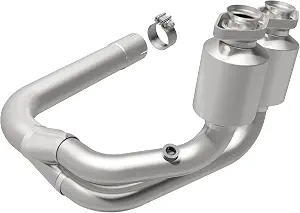 |
| Best Value The sweet spot between price and what you get | SAROTIN Catalytic Converter Compatible with Jeep Wrangler 4.0L (2004–2006) |  |
| Best Budget The cheapest option that still gets the job done reliably | PHILTOP Direct-Fit Catalytic Converter Kit for Jeep 4.0L (1993–1995) |  |
| Highest Rated A top-rated pick with lots of positive feedback | MagnaFlow HM Grade Direct-Fit Catalytic Converter 93649 for 2004–2006 Jeep Wrangler |  |
| Most Popular A crowd favorite that many people choose with confidence | PHILTOP Front Catalytic Converter Kit for Jeep Wrangler 2004–2006 4.0L (EPA Compliant) |  |
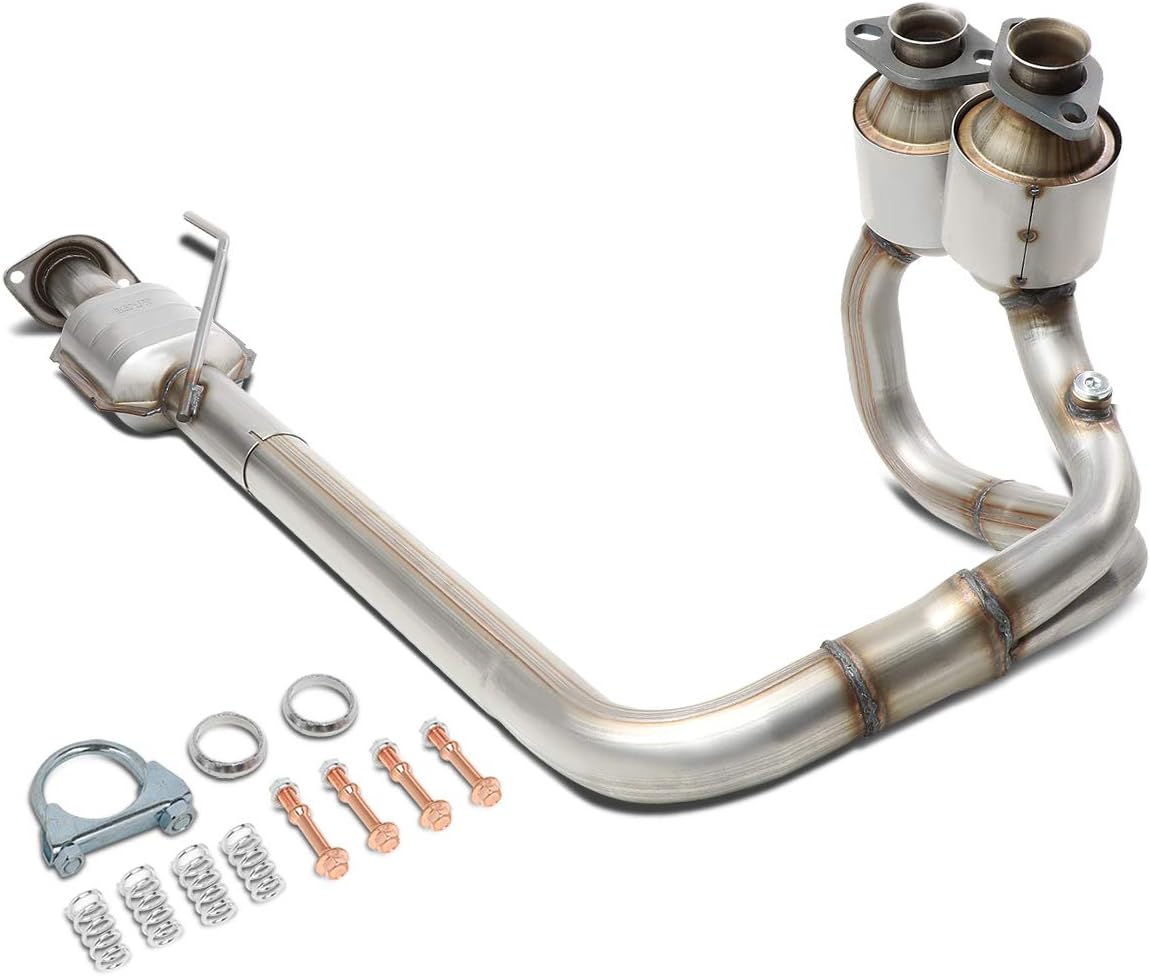
1. DNA MOTORING Factory-Style Catalytic Converter Y-Pipe for 2004–2006 Wrangler 4.0
| Compatible vehicle | 2004–2006 Wrangler 4.0 |
|---|---|
| Material Type | Stainless Steel |
| Installation Type | Bolt-On |
| Automotive Fit Type | Vehicle Specific Fit |
This DNA MOTORING Y-pipe is a bolt-on replacement catalytic converter built to match the factory layout for 2004–2006 Wrangler 4.0 engines. Constructed from stainless steel with mandrel bends and a preinstalled catalyst core, it is intended to restore exhaust flow and emissions control when the original unit is damaged or failing. Typical use is as a direct replacement during exhaust repairs; installation requires basic exhaust disassembly and likely professional assistance. Notable features include multiple oxygen sensor bungs, a factory-style collector, and vehicle-specific fitment. In practice it provides a budget-friendly way to clear check engine codes and recover drivability, and several users report immediate improvements in idle and RPM behavior. However fitment can be hit-or-miss: some buyers needed to adjust bracket angles, reorient or re-weld an O2 bung, or replace supplied gaskets and hardware to achieve a proper seal. Longevity reports are mixed, so expect variable durability compared with higher-end factory-quality units.
Best for: Buyers who want an affordable, vehicle-specific replacement to restore emissions control and drivability on a 2004–2006 Wrangler 4.0 and are comfortable making minor fitment adjustments or paying for professional install.
Less Ideal for: Drivers who prioritize guaranteed factory-level fit and long-term reliability without any modification should consider higher-end or OEM replacement options.
- Designed as a direct bolt-on replacement for 2004–2006 Wrangler 4.0L for straightforward swap-in
- Stainless steel construction with mandrel bends for improved strength and exhaust flow
- Includes multiple O2 sensor ports to match factory sensor locations
- Comes with necessary gaskets and mounting hardware for basic installation
- Fitment and mounting bracket angles are inconsistent across units, requiring modification or extra parts
- O2 sensor bung placement may be off and could require reorientation or welding
- Mixed reports on long-term durability and catalytic efficiency leading to possible recurrence of codes
Verdict: A cost-effective, direct-fit replacement for 2004–2006 Wrangler 4.0 owners willing to accept occasional fitment tweaks in exchange for a much lower price than factory units.
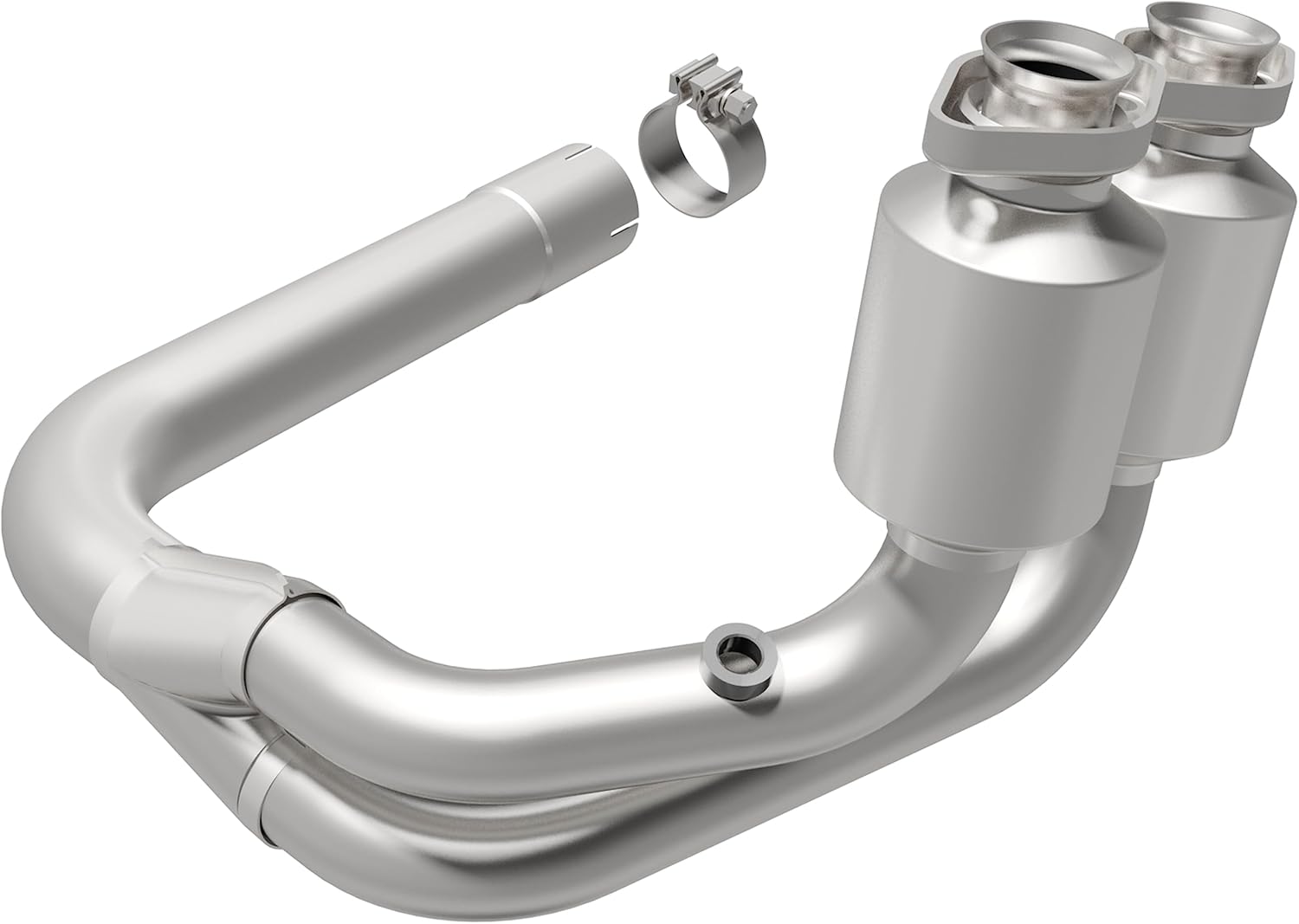
2. MagnaFlow HM Grade Direct-Fit Catalytic Converter 50899 for 2004–2006 Jeep Wrangler
| Vehicle fit | 2004–2006 Jeep Wrangler |
|---|---|
| Series | HM Grade |
| Main piping diameter | 2.5" |
| Substrate material | Ceramic |
| Clamp included | Yes |
The MagnaFlow 50899 HM Grade direct-fit catalytic converter replaces the factory unit on 2004–2006 Jeep Wrangler 4.0L applications with a stainless steel, spun-body design aimed at keeping the check-engine light off while improving exhaust flow. It installs using included mounting hardware and Torca clamps so no cutting or welding is intended for a correct installation, though some buyers report minor alignment adjustments may be needed on certain trims. The mandrel-bent tubing and ceramic substrate are built to match factory flow dynamics while offering higher corrosion resistance than mild steel. For a performance-minded Wrangler, the slightly larger 2.5" piping and low-mass design can reduce backpressure and help the engine breathe better without sacrificing emissions compliance in federal states. Expect solid durability and easier future service thanks to bolt-on attachment and included clamps, but be aware this federal-grade converter is not legal for sale or use in some states and some users have reported occasional fitment or flange longevity issues over extended use.
Best for: Buyers who want a durable, factory-replacement catalytic converter that restores emissions compliance while providing a modest performance gain and easier bolt-on installation for a 2004–2006 Wrangler.
Less Ideal for: Drivers in states with stricter emissions laws or those seeking a California-compliant or aftermarket high-flow race-only converter should look elsewhere.
- Direct-fit design with included hardware and Torca clamps simplifies installation.
- Stainless steel construction and mandrel-bent tubing resist corrosion and preserve exhaust flow.
- 2.5" main piping and low-mass spun body reduce backpressure for improved engine breathing.
- Designed to meet Federal/EPA emissions so it keeps OBDII emissions systems compliant in eligible states.
- Not legal for sale or use in California, Colorado, and New York due to state emissions rules.
Verdict: For 2004–2006 Jeep Wrangler owners wanting a factory-compliant replacement that improves exhaust flow and installs with minimal modification, the MagnaFlow 50899 is a practical performance-minded choice.
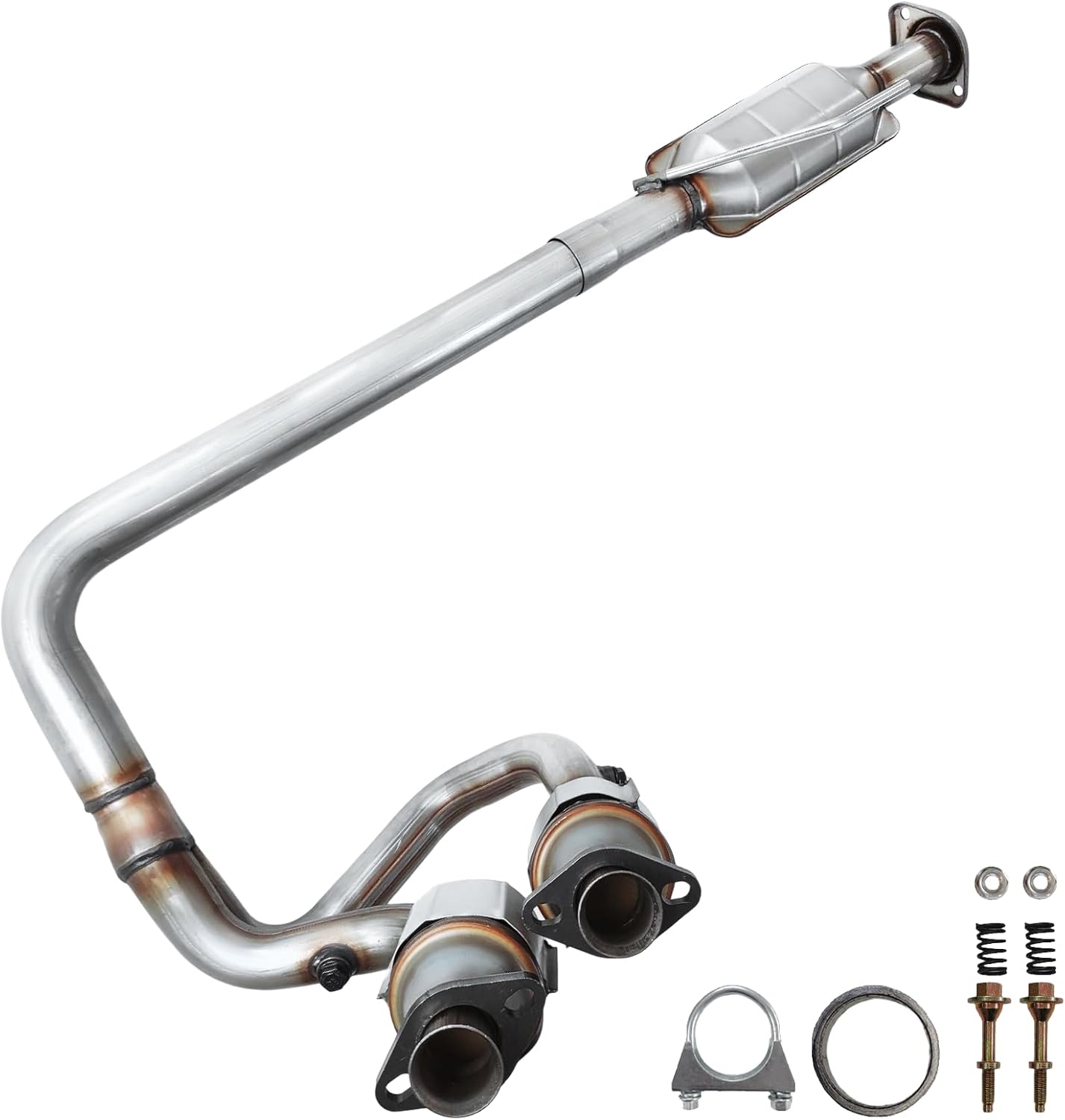
3. SAROTIN Catalytic Converter Compatible with Jeep Wrangler 4.0L (2004–2006)
| Fitment | Jeep Wrangler 2004-2006 4.0L |
|---|---|
| Body Material | 409 stainless steel |
| Substrate Material | Cordierite ceramic carrier |
| O2 Sensor Ports | 2 O2 sensor ports |
| Position | Front Inner |
This SAROTIN catalytic converter is a direct-replacement front inner unit made for the 2004–2006 Jeep Wrangler 4.0L. It uses a cordierite ceramic substrate with a stainless steel 409 housing and two O2 sensor ports, so installation routes through the factory sensor locations. The unit is EPA compliant and intended to address codes like P0420 and restore proper emissions and exhaust quieting. Fitment is direct so you should not need cutting or welding on a non-modified Wrangler, though removing the old rusted assembly can be time consuming on older vehicles. Hardware in the kit is minimal so expect to source quality bolts or springs locally. Buyers report solid welds and factory-like fit, and the precious-metal coated substrate should improve conversion efficiency compared with very cheap knockoffs. Note this part is not CARB compliant and therefore not legal for sale or use in states that require CARB parts.
Best for: A practical buyer who needs a factory-style replacement to clear emissions codes and return a Wrangler 4.0L to compliant running condition without major exhaust modifications.
Less Ideal for: Drivers in states that require CARB-compliant parts or those seeking a lifetime-high-end performance converter should look elsewhere.
- Direct-fit design for 2004–2006 Jeep Wrangler 4.0L reduces modification during install
- Includes two O2 sensor ports so factory sensors can be retained
- 409 stainless steel housing and welded outlets resist corrosion better than mild steel
- EPA compliant to resolve emissions codes and restore proper exhaust function
- Ceramic cordierite substrate with precious-metal coating improves conversion efficiency over uncoated cores
- Not CARB compliant so not legal in CARB-restricted states
- Installation can be difficult on rusted, original exhaust systems and may require extra hardware
Verdict: Choose this direct-fit SAROTIN converter if you want an EPA-compliant, factory-style replacement to fix emissions issues on a 2004–2006 Wrangler 4.0L.
4. PHILTOP Direct-Fit Catalytic Converter Kit for Jeep 4.0L (1993–1995)
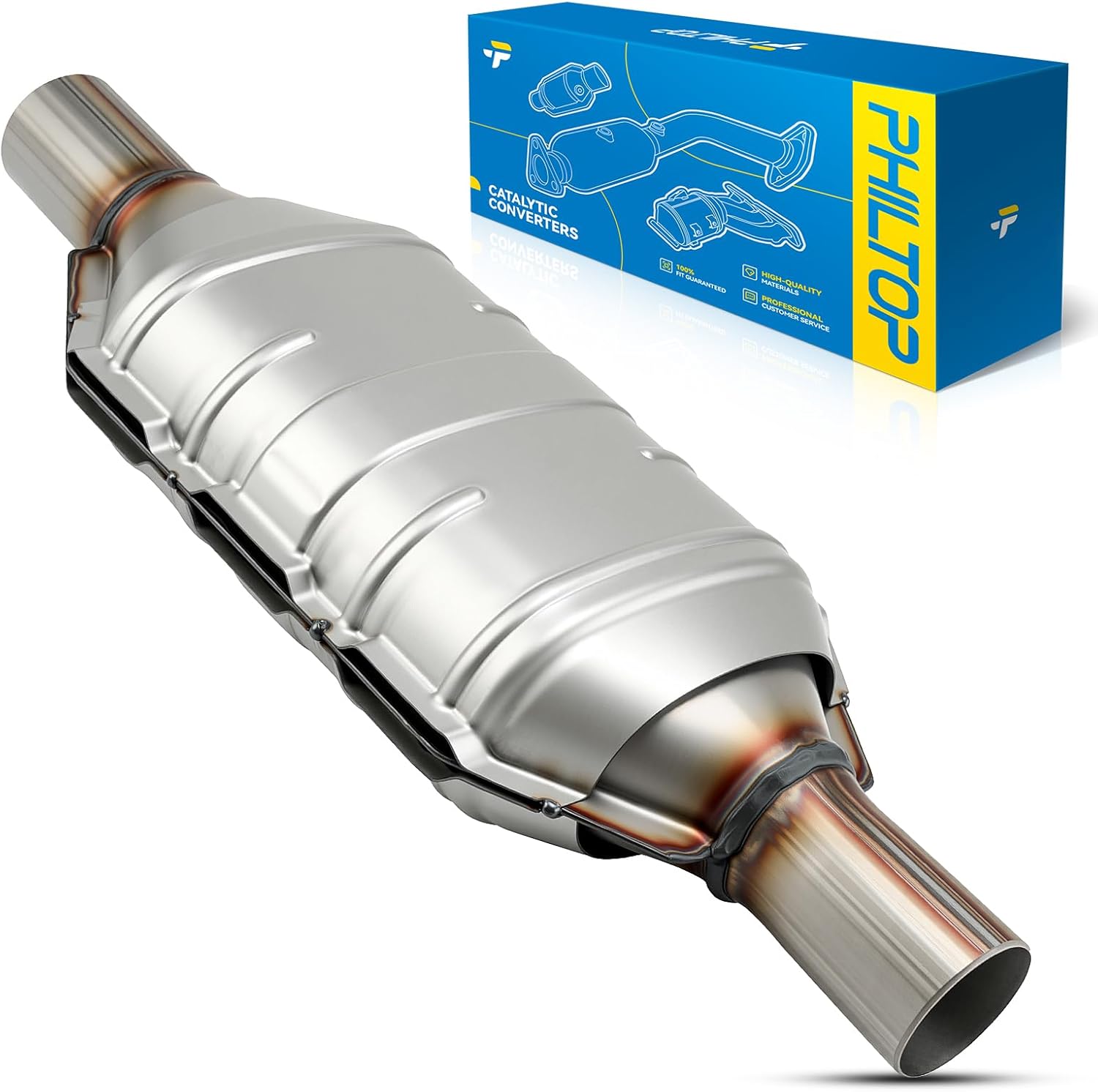
| Vehicle fitment | Jeep 4.0L 1993–1995 Wrangler/Cherokee/Grand Cherokee |
|---|---|
| EPA status | EPA compliant (federal only) |
| Included hardware | OE-style gaskets and mounting hardware |
| Substrate type | High-flow ceramic honeycomb |
This PHILTOP kit replaces the factory catalytic converter on 4.0L Jeep Wrangler, Cherokee, and Grand Cherokee models from 1993 to 1995. It is a multi-piece, direct-fit assembly that arrives with OE-style gaskets and mounting hardware so you can install it without modifying the exhaust or welding, although some owners prefer to weld the joints for a more permanent seal. The converter uses a high-flow ceramic honeycomb carrier and aluminized stainless piping aimed at reducing backpressure to help restore power and improve fuel economy versus a clogged unit. Buyers report it can cure emissions failures and quiet rattling from a failing original. Quality appears generally good for the price, but fitment can be sensitive; a few installers found flange clocking or seam issues that caused leaks and required return or welding. This unit is EPA-approved for federal use only and not legal for sale in some states, so check local regulations before purchasing.
Best for: Buyers looking to replace a failed catalytic converter on a 1993–1995 4.0L Jeep without spending on an OEM unit and who prioritize passing emissions and straightforward installation.
Less Ideal for: Drivers in states with stricter aftermarket converter rules or anyone who needs a guaranteed OEM-exact sensor response for a check-engine-light-free swap.
- Direct-fit design with included gaskets and hardware for bolt-on replacement
- High-flow ceramic substrate aimed at reducing backpressure and improving fuel economy
- Stainless aluminized piping resists rust for longer service life
- EPA-compliant for federal emissions standards
- Some units show alignment or seam issues that can cause exhaust leaks and may require welding or return
- Not legal for sale or installation in certain states with stricter emissions rules
Verdict: A cost-effective, direct-fit replacement that restores emissions compliance and breathing for 1993–1995 4.0L Jeeps without the OEM price.
5. MagnaFlow HM Grade Direct-Fit Catalytic Converter 93649 for 2004–2006 Jeep Wrangler

| Series | HM Grade |
|---|---|
| Body Material | Stainless Steel |
| Inlet Attachment | Bolt-On |
| Oxygen Sensor Location | Post Converter |
| Heat Shield Included | Yes |
This MagnaFlow HM Grade direct-fit catalytic converter replaces the factory unit on 2004–2006 Jeep Wrangler 4.0L models and is engineered to restore emissions control while keeping the check engine light off. It uses a spun-body stainless-steel design, mandrel-bent piping, and OEM-like oxygen sensor locations so installation is straightforward using the included hardware and no cutting or welding for most installs. The HM Grade substrate contains extra catalyst material for improved conversion efficiency and the compact, low-mass design improves thermal response. In practice buyers report easier fitment than cheaper aftermarket options, quieter cabin noise compared with clogged originals, and smoother running once the failed units are replaced. Important limitations are legal: this unit is not for sale or use in certain states and it is a federal-compliant part only, so check local emissions rules before buying. Some installers prefer welding the clamps or replacing flange hardware for a longer-lasting leak-free seal in high-mileage cars.
Best for: A buyer who prioritizes a durable, factory-quality replacement to fix failed converters and keep emissions systems operating correctly on their 2004–2006 Wrangler 4.0L, preferring a part that fits without major modification and reduces check-engine lamp issues.
Less Ideal for: Do not choose this if you need a California-compliant or state-specific emissions part or if you want a custom performance-oriented exhaust solution.
- Designed as a direct-fit for 2004–2006 Jeep Wrangler 4.0L for easier installation
- Stainless-steel spun-body and mandrel-bent piping for corrosion resistance and durability
- Includes mounting hardware and factory-style O2 port locations to simplify replacement
- Meets Federal/EPA emissions requirements and HM Grade substrate for strong conversion efficiency
- Not legal for use in certain states so it may not meet local emissions rules
Verdict: Buy this if you want a durable, federal-compliant direct-fit replacement that restores emissions function and minimizes check-engine light problems on a 2004–2006 Jeep Wrangler 4.0L.
6. PHILTOP Front Catalytic Converter Kit for Jeep Wrangler 2004–2006 4.0L (EPA Compliant)

| Vehicle fitment | Jeep Wrangler 2004-2006 4.0L |
|---|---|
| Position | Front |
| Construction | Aluminized stainless steel |
| Substrate | Double-layer ceramic honeycomb |
| EPA compliant | Yes |
This PHILTOP catalytic converter is a front-position replacement built for Jeep Wrangler 2004–2006 4.0L applications and arrives as a complete kit with gaskets and mounting hardware. Its stainless steel aluminized body and double-layer ceramic honeycomb core are intended to increase flow and reduce backpressure, which can improve engine breathing and potentially restore fuel efficiency and performance if the original unit was clogged. The listing notes EPA compliance and includes OE-style hardware for a bolt-on install; many buyers report a straightforward swap that takes a few hours. Some users did need shop adjustments or pipe modifications for non-exact fits on other models, so expect to verify fitment carefully before installation. The converter may also reduce rattling or loud exhaust noise caused by a failing unit. It is not for use where stricter state emissions rules apply and buyers aiming for a factory-quality match should confirm exact flange and header compatibility to avoid extra welding or labor costs.
Best for: Buyers who prioritize proven customer experiences and want a ready-to-install replacement that restores emissions function and engine smoothness without paying dealer rates.
Less Ideal for: Drivers in states with stricter aftermarket emissions rules or owners who need an exact factory-match part without any possibility of fitment work should look elsewhere.
- Made from aluminized stainless steel for corrosion resistance and longer service life.
- High-flow double-layer ceramic honeycomb substrate to reduce backpressure and support catalytic efficiency.
- Includes OE-style gaskets and mounting hardware for a bolt-on replacement in most cases.
- EPA-compliant design for federal emissions standards where allowed.
- May require pipe or flange modification on some vehicles, adding installation time and cost.
Verdict: A budget-friendly, EPA-compliant front converter that restores flow and emissions function for 2004–2006 Wrangler 4.0L engines while including necessary hardware for most bolt-on installs.
Choosing the Right Jeep Wrangler 4.0L Catalytic Converter: Key Factors to Consider
Fitment And Flange Type
Correct fitment is the foundation of a hassle-free replacement. The Jeep Wrangler 4.0L has specific flange angles, pipe diameters, and sensor locations that determine whether a catalytic converter will bolt in or demand exhaust modification. A converter that matches the factory flange and pipe diameter minimizes exhaust leaks and avoids the need for cutting, welding, or adapter pieces.
Improper fitment can create exhaust leaks that trigger check engine lights or allow unfiltered emissions to escape. For owners who want a straightforward swap, prioritize direct-fit units that retain stock sensor ports and mounting points. If a direct-fit option is not available, check whether the unit includes clear instructions and compatible hardware for a secure installation.
Emissions Conversion Efficiency
Catalytic converters differ in substrate design, cell density, and washcoat chemistry, all of which determine how effectively they convert hydrocarbons, carbon monoxide, and nitrogen oxides. For a Jeep Wrangler 4.0L used on public roads, effective conversion is central to passing emissions inspections and reducing visible exhaust smoke.
Higher conversion efficiency often requires a well-designed substrate and sufficient catalyst volume. Owners who need inspection compliance should prioritize converters with tested emissions performance or those that are explicitly matched to stock engine management and oxygen sensor feedback to maintain proper air-fuel ratios.
Backpressure And Engine Performance
The internal design of a catalytic converter affects exhaust flow and backpressure. Excessive backpressure can reduce throttle response and fuel economy, and in some cases amplify engine knock or sensor-triggered diagnostics. On the Jeep Wrangler 4.0L, which is tuned around a particular exhaust flow profile, maintaining similar flow characteristics to the original part helps preserve driveability.
When selecting a replacement, consider whether the converter design is high-flow or optimized for stock-like backpressure. High-flow units can benefit modified engines but may provide no advantage for otherwise stock vehicles. For everyday driving and towing on a Wrangler 4.0L, a balance between conversion efficiency and moderate flow is typically the best tradeoff.
Thermal Durability And Substrate Construction
Catalytic converters operate at high temperatures, especially under heavy loads or when driving off-road. Substrate material and the strength of the washcoat adhesion influence how well a converter resists thermal degradation and poisoning. A converter built with robust materials will better tolerate repeated heat cycles, preventing premature failure and loss of catalytic activity.
For Jeep Wrangler 4.0L owners who do off-road work, the unit should tolerate temperature spikes and occasional impacts. Look for converters with reinforced substrate supports, corrosion-resistant housings, and coatings that reduce the risk of rust-related failures over time.
Oxygen Sensor Compatibility And Diagnostics
Modern engine management relies on upstream and downstream oxygen sensors to monitor combustion and catalyst performance. A replacement catalytic converter must provide the correct sensor bungs in the expected locations and not interfere with sensor readings. Incorrect placement or lack of provision for the downstream sensor can cause persistent check engine lights and poor closed-loop fueling behavior.
Ensure the unit accepts the factory sensor threads and positions the sensors at the correct distance from the catalyst surfaces. This supports accurate diagnostics and prevents false failure codes that could otherwise lead to unnecessary troubleshooting or repairs.
Corrosion Resistance And Long-Term Reliability
Road salt, moisture, and mud are common exposures for Jeep Wrangler 4.0L owners. The external housing material, weld quality, and protective coatings determine how resistive the converter will be to corrosion. Rapid rust-through can shorten service life and lead to exhaust leaks or structural failure.
Choose converters with stainless steel housings or corrosion-resistant coatings when long-term durability is a priority. Also consider the warranty and common failure modes; units designed to resist both internal substrate breakdown and external corrosion will typically deliver longer service intervals on vehicles driven in harsh conditions.
When To Suspect The Catalytic Converter
Several practical signs point toward catalytic converter issues on a Jeep Wrangler 4.0L. Common symptoms include a persistent check engine light, noticeable loss of power under acceleration, reduced fuel economy, a rotten egg smell from the exhaust indicating sulfur buildup, and increased exhaust noise if internal collapse has occurred.
Diagnosing the root cause requires considering other systems first, but if you see multiple symptoms at once—especially after rough running or an engine misfire—the converter is a likely suspect. Monitoring live oxygen sensor data and simple backpressure testing can help confirm the diagnosis before ordering a replacement.
- Rotten egg or sulfur odor
- Reduced acceleration or power
- Check engine light codes related to catalyst efficiency
- Rattling noises from under the vehicle indicating substrate breakage
Installation Considerations For The Wrangler 4.0L
Plan for an installation that respects the Wrangler 4.0L exhaust routing and sensor locations. Even direct-fit units sometimes require new gaskets, bolts, or heat shielding. Prepare basic hand tools, penetrating oil for rusted fasteners, and a safe method for lifting and supporting the vehicle.
If the existing flange or exhaust piping is rusted, you may need to cut out the old piece and weld in the new converter. A direct-fit converter that uses the factory flanges and sensor bungs will reduce labor time and the need for welding.
- Inspect all exhaust fasteners and gaskets; replace as needed
- Account for oxygen sensor placement and wiring reach
- Consider professional installation if welding or custom fitting is required
Emissions Testing And Compliance For The 4.0L
When replacing a catalytic converter on a Jeep Wrangler 4.0L, confirm local emissions rules and whether the replacement must meet specific certification standards. Some regions require converters that match OEM emissions performance to pass inspection. Choosing a unit designed for equivalent conversion efficiency helps avoid inspection failures.
Keep documentation of part specifications and installation details handy for emissions testing. Proper sensor operation and a free-running engine without misfires are also necessary to ensure the catalyst performs as intended during inspection.
- Verify local certification requirements before purchase
- Ensure no active misfire codes exist before emissions testing
- Keep records of the replacement and installation
Maintenance Tips To Extend Catalyst Life
Preventative maintenance reduces the likelihood of premature converter failure. Regularly addressing ignition system issues, fuel trim irregularities, or persistent misfires prevents unburned fuel from entering the catalyst, which can overheat and damage the substrate. Keep the engine tuned and promptly replace worn spark plugs, wires, or ignition components.
Also inspect the exhaust system for leaks and ensure the engine runs at correct air-fuel ratios. Avoid fueling issues and oil burning, as both can contaminate the catalyst. Following these steps helps the catalytic converter remain effective for a longer service life on the Jeep Wrangler 4.0L.
- Fix misfires and ignition faults promptly
- Monitor for oil or coolant consumption that could contaminate the catalyst
- Inspect exhaust system periodically for leaks and corrosion
Options For Off-Road Use And Durability
Wrangler owners who use their vehicles off-road should prioritize converters with tougher housings and better thermal shock resistance. Protective shielding and higher-grade materials reduce the risk of physical damage from rocks, debris, and high engine loads that are common during off-road driving.
Consider units with reinforced mounting points and corrosion-resistant finishes. These features help prevent damage during trail use and extend the usable life of the catalytic converter under harsher operating conditions.
- Look for reinforced housings and welded heat shields
- Prefer corrosion-resistant materials for trail-prone vehicles
- Check mounting strength if your driving includes frequent vibration or impacts
Still looking for the perfect fit?
Select your Jeep Wrangler configuration to see the most relevant Catalytic Converters recommendations
How We Chose the Best Jeep Wrangler 4.0L Catalytic Converter
We applied a focused editorial framework to identify catalytic converters suited to the Jeep Wrangler 4.0L. Primary evaluation criteria included fitment accuracy to the Wrangler 4.0L exhaust routing, emissions conversion efficiency as shown by substrate design and oxygen sensor compatibility, thermal durability for typical off-road and highway temperature cycles, and materials and construction that affect longevity. We also assessed ease of installation including whether the unit accepts stock sensor locations, flange type compatibility, and whether common tools can complete a swap without extensive fabrication.Secondary criteria included backpressure characteristics that influence engine performance, warranty coverage, and corrosion resistance for vehicles frequently exposed to salty or wet environments. We excluded universal or highly modified units that require custom fabrication or significant exhaust re-routing. Units that did not support the Wrangler 4.0L sensor placements or that relied on nonstandard flanges were removed from consideration. The final list balances real-world installation practicality with emissions performance and service life expectations specific to the Jeep Wrangler 4.0L.
Our full evaluation process is outlined in our review methodology.
FAQ
What codes indicate a catalytic converter issue on a Jeep Wrangler 4.0L?
Codes that reference catalyst efficiency or O2 sensor performance often point to converter problems. P0420-style codes for catalyst efficiency low are common, but the exact code may vary. Confirm that upstream misfires or sensor faults are not causing the code before replacing the converter.
Can I drive my Wrangler with a failing catalytic converter?
You can usually drive short distances, but prolonged driving with a failing converter can harm engine performance and may trigger emissions failures. Severe internal collapse can cause increased backpressure and engine damage, so address recurring symptoms promptly.
Will replacing the catalytic converter clear the check engine light?
Replacing a faulty converter can clear related catalyst efficiency codes, but the light may remain if underlying issues like O2 sensor faults or misfires are not corrected. After installation, a complete drive cycle and code reset may be necessary for the engine computer to verify proper operation.
Do I need special tools to replace the catalytic converter on a Wrangler 4.0L?
Basic hand tools, penetrating oil, and a jack with stands will cover many installations. However, if flanges are rusted or the pipe must be cut, welding equipment or professional services may be required. Assess the condition of the existing exhaust hardware before deciding to DIY.
How long should a replacement catalytic converter last on this vehicle?
Lifespan varies with driving conditions and maintenance. Properly installed and used under normal conditions, a well-made converter can last many years, but exposure to severe off-road use, coolant or oil contamination, and corrosion can shorten service life.
Are there fitment differences I should watch for on the 4.0L model?
Yes. The Jeep Wrangler 4.0L has specific sensor locations and flange orientations. Choose a converter that matches those details to avoid extra modifications. Confirm sensor bung locations and pipe diameter before purchase.
Final Verdict
For the Jeep Wrangler 4.0L, prioritize a catalytic converter that balances verified emissions conversion with correct fitment and sensor compatibility. Address ignition and fueling issues first so the new catalyst is not exposed to unburned fuel or contaminants that can shorten its life. Consider durability features like corrosion resistance and reinforced housings if the Wrangler sees off-road or salt-exposed use.Ultimately, choose a unit that matches the Wrangler 4.0L flange and sensor layout, offers reliable conversion performance, and fits your typical driving conditions. That approach minimizes installation headaches and helps you maintain emissions compliance and dependable driveability.
Explore More:
- Check out all Jeep Wrangler parts & accessories
- Explore Catalytic Converters Maintenance & Repair Guides
- Explore Exhaust & Emissions
- Browse all Auto Parts
