

Note: This article contains affiliate links. If you click on these links and make a purchase, I may earn a small commission at no extra cost to you. This helps support my research and content. Read my full affiliate disclosure here.
If you drive a Subaru Forester XT, the cabin air filter plays a quiet but important role in comfort and HVAC performance. A clogged or low-quality filter can reduce airflow, let in dust and pollen, and allow odors to circulate when you run the heater or air conditioner. This guide shortlists the top cabin air filters for the Forester XT and explains the factors that matter for fit and indoor air quality.We evaluated options that prioritize particle filtration, maintain adequate airflow for the blower motor, and fit the Forester XT without modification. Below you will find the shortlisted picks and clear criteria to help you pick the right cabin pollen filter for your driving conditions and maintenance habits.
Looking for other parts? See all Subaru Forester parts & accessories.
Top Picks at a Glance
| Best Overall The best all-around choice for most situations | Subaru Cabin Air Filter 72880FG000 (Genuine OEM) |  |
| Best Quality Built to a higher standard if you want something more solid | Bosch 6038C HEPA Premium Cabin Air Filter |  |
| Best Value The sweet spot between price and what you get | Forccord Cabin and Engine Air Filter Kit for Subaru Forester (2009–2018) |  |
| Best Budget The cheapest option that still gets the job done reliably | Puroma Cabin Air Filter with Activated Carbon (CAF930S) |  |
| Highest Rated A top-rated pick with lots of positive feedback | SPEARHEAD Breathe Easy BE-930 Cabin Air Filter with Activated Carbon |  |
| Most Popular A crowd favorite that many people choose with confidence | EPAuto CP930 Cabin Air Filter (replacement for Subaru 72880-FG000) |  |
| Best Seller A high-volume bestseller chosen again and again | RVgolf Engine and Cabin Air Filter Set for Subaru Forester 2.5L (2019–2024) |  |
1. Subaru Cabin Air Filter 72880FG000 (Genuine OEM)

| Material Type | Paper |
|---|---|
| Air Filter Construction | Pleated |
| Brand Name | Subaru |
| Manufacturer Part Number | 72880FG000 |
This is the factory Subaru cabin air filter (part 72880FG000) intended as a direct replacement in compatible Subaru models. It uses pleated paper media and installs in the vehicle's passenger compartment intake to trap dust, pollen, and road particulates before they enter the cabin. Because it is a genuine Subaru part built to factory specifications, fit and fitment clarity are the main strengths, simplifying installation and avoiding trim or fit issues common with some aftermarket parts. The pleated construction gives adequate filtration for everyday driving and seasonal pollen; it is best suited for routine maintenance intervals rather than heavy-duty allergen control. Note the legal disclaimer about model exclusions so confirm fitment for your Forester XT year; this listing does not cover Outback, Legacy, Ascent, or newer Impreza/Crosstrek model years called out. Expect dependable, OEM-style performance but without enhanced activated carbon or specialty allergen layers found on some aftermarket options.
Best for: Buyers who want a straightforward, factory-equivalent replacement for routine cabin filtration on compatible Subaru models and prioritize exact fit and predictable performance.
Less Ideal for: Drivers seeking advanced odor removal, heavy allergen filtration, or aftermarket performance filter features should consider specialty filters with activated carbon or HEPA-style media instead.
- Genuine Subaru part so fit and installation match factory expectations
- Pleated paper construction provides effective basic filtration for dust and pollen
- Made to Subaru manufacturing standards for consistent quality
- Single-count packaging simplifies replacement planning
- Standard paper media lacks activated carbon or specialized allergen layers for advanced odor or fine particle control
Verdict: Choose this genuine Subaru cabin filter when you want a factory-quality, no-surprises replacement that fits and performs like the original for compatible Forester XT models.
2. Bosch 6038C HEPA Premium Cabin Air Filter

| Material Type | multi-layer |
|---|---|
| Air Filter Construction | Pleated |
| Unit Count | 1 Count |
| Product Grade | new |
The Bosch 6038C is a HEPA-style cabin air filter built to trap fine particulates and help keep the Forester XT cabin air clean during spirited driving and daily use. It uses a melt-blown electrostatic layer plus an added static cotton layer and pleated construction to increase particle capture and capacity while structural ribs keep the filter from collapsing under HVAC airflow. For performance-minded Subaru drivers this means less dust, pollen, and soot entering the ventilation system during commutes, canyon runs, or dusty conditions without relying on chemical odor neutralizers. Fitment notes list select Forester model years so verify the exact year and trim before buying. The filter is intended for annual replacement or roughly every 12,000 miles; heavier dusty use will require more frequent changes. Expect factory-quality fit and strong filtration at the cost of a thicker, denser media that can slightly reduce cabin airflow compared with low-resistance economy filters, which could be noticeable on older blower motors.
Best for: Subaru Forester drivers who prioritize the cleanest possible cabin air and protection from fine particulates during spirited or frequent dusty driving.
Less Ideal for: Drivers who prioritize maximum HVAC airflow or want the lowest possible blower load for older ventilation systems should consider lower-resistance alternatives.
- HEPA-class filtration rated 99.97% at 0.3 microns for capturing fine particulates
- Multi-layer melt-blown and static cotton media increases dust holding capacity
- Pleated construction with structural ribs preserves shape and airflow under load
- Designed without chemical odor neutralizers for neutral, clean air
- Denser media can slightly reduce airflow compared with low-resistance filters
Verdict: Choose this Bosch HEPA cabin filter when your priority is removing the smallest airborne particles from a Forester XT's cabin for healthier, cleaner air.
3. Forccord Cabin and Engine Air Filter Kit for Subaru Forester (2009–2018)

| Compatible vehicles | Subaru Forester 2009-2018 H4 2.5L; 2014-2018 H4 2.0L |
|---|---|
| Cabin filter replace part | CF10930 |
| Engine filter replace part | 16546AA090 |
| Unit count | 2 Count |
This Forccord kit bundles a cabin air filter and an engine air filter sized to fit Subaru Forester 2009–2018 H4 2.5L and 2014–2018 H4 2.0L applications. The cabin filter uses a five-layer HEPA-style construction with melt-blown layers and activated media aimed at trapping pollen, dust, and fine particulates, while the engine filter uses an HV filter paper for higher filtering precision. In practice the kit is a straightforward preventive-maintenance buy: the cabin filter improves in-car air quality and reduces dust in vents, and the engine filter helps keep intake dirt out of the engine and MAF sensor. The listing claims extended service life compared with standard filters, and the parts are vehicle-specific for easier fit and installation. Limitations are that the performance claims are vendor-stated rather than third-party verified and you should confirm exact Subaru part cross-reference and fitment before buying for XT models or nonstandard trims. Installation is typical for DIY owners and requires only basic panel removal tools.
Best for: Buyers who prioritize practical maintenance value and want a matched cabin-plus-engine filter set that simplifies routine servicing for Forester vehicles.
Less Ideal for: Customers seeking filters validated by independent lab tests or performance upgrades beyond factory-quality filtration should consider premium branded or certified alternatives.
- Includes both cabin and engine filters in one kit for simultaneous service
- Cabin filter uses multilayer HEPA-style and melt-blown media to reduce fine particulates and odors
- Engine filter uses higher-precision HV filter paper for improved contaminant capture
- Vehicle-specific fitment for Subaru Forester models simplifies installation
- Extended life and 99.9% filtration claims are manufacturer provided and not independently tested
Verdict: A practical, vehicle-specific cabin and engine filter pair that streamlines routine Forester maintenance with upgraded multi-layer cabin filtration.
4. Puroma Cabin Air Filter with Activated Carbon (CAF930S)

| Compatible Devices | Subaru Crosstrek, Subaru Forester, Subaru Impreza, Subaru WRX, Subaru WRX STI, Subaru XV Crosstrek |
|---|---|
| Filter Mounting Type | Snap In |
| Filter Shape | Rectangular |
| Air Filter Construction | Pleated |
This Puroma cabin air filter is a pleated, activated-carbon replacement intended for Subaru Forester, Crosstrek, Impreza, WRX and WRX STI models listed in the fitment. It traps dust, pollen and microscopic pollutants with a close-meshed nonwoven layer while the activated carbon layer helps absorb odors and reduce mild cabin smells. The filter is shaped for a snap-in installation and includes an airflow arrow to make fitment straightforward; most owners should be able to change it in about 10 minutes without tools. In regular use it can help keep the HVAC system cleaner, reduce window fogging, and slightly lower cabin noise thanks to the carbon layer. As a budget-focused aftermarket option it offers good filtration and odor control for the price, though it is a replacement aftermarket filter rather than a factory-branded part and long-term durability can vary with driving conditions. Replace according to driving environment to preserve airflow and HVAC efficiency.
Best for: Buyers who prioritize low cost and practical cabin air improvement for Subaru Forester and other listed Subaru models and want an easy DIY replacement that also reduces odors.
Less Ideal for: Those who need OEM-branded replacement parts for warranty or prefer a high-end multi-stage filter certified for allergen or pollen-specific claims should consider other options.
- Activated-carbon layer reduces odors and helps limit light cabin smells.
- Pleated nonwoven construction captures dust, pollen and fine particles.
- Snap-in rectangular design with airflow arrow for quick, tool-free installation.
- Formulated to support HVAC performance by maintaining airflow and reducing fogging.
- Aftermarket product so fit and long-term durability may vary compared with factory-branded filters.
Verdict: A budget-friendly, easy-to-install activated-carbon cabin filter that improves cabin air quality and odor control for the listed Subaru models.
5. SPEARHEAD Breathe Easy BE-930 Cabin Air Filter with Activated Carbon
| Material Type | Activated Carbon, Electrostatic Media |
|---|---|
| Air Filter Construction | Pleated |
| Unit Count | 1 Count |
| Compatible Vehicles | Crosstrek, Forester, Impreza, WRX, WRX STI, XV Crosstrek (specified years) |
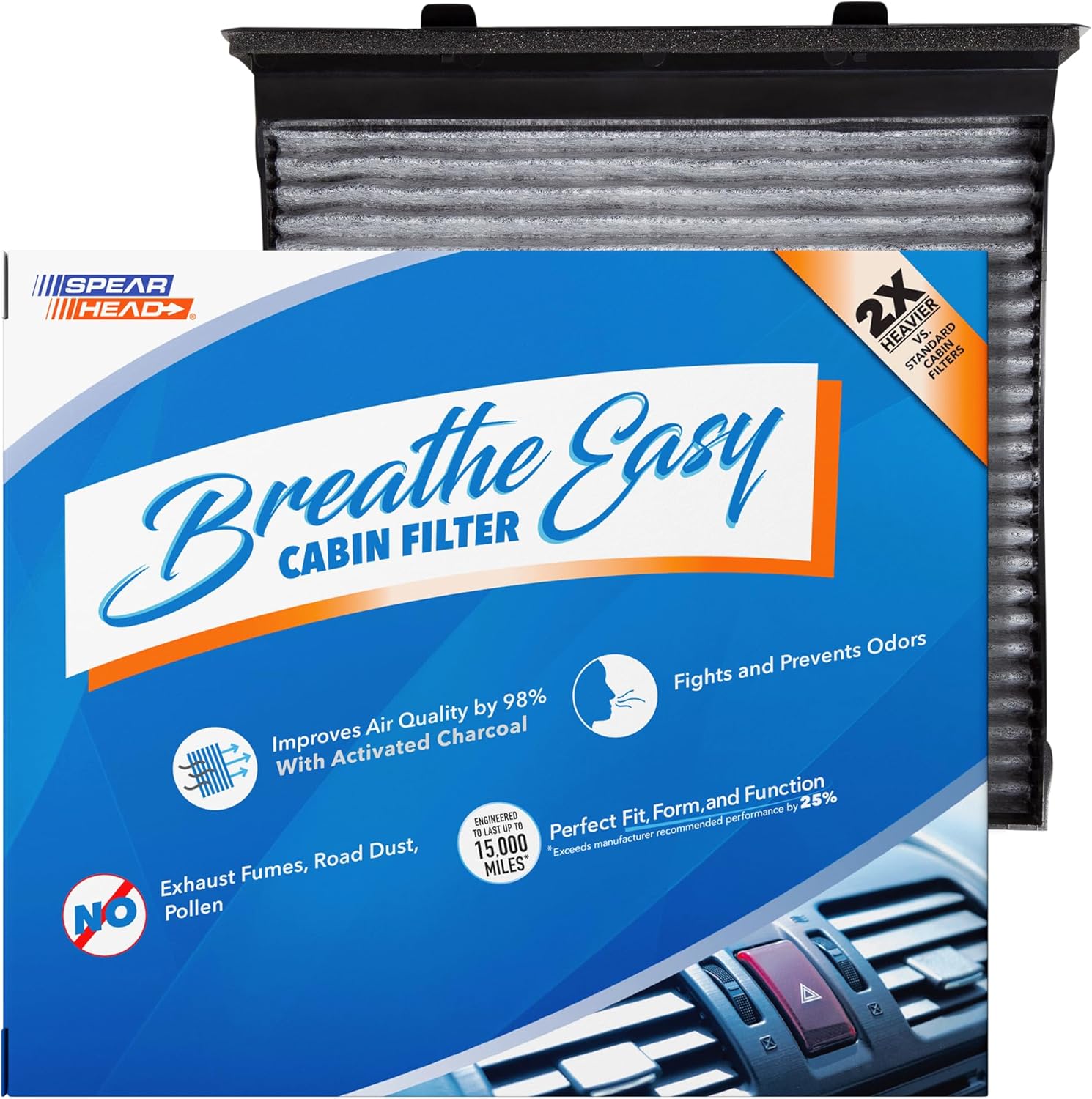
The SPEARHEAD Breathe Easy BE-930 is a replacement cabin air filter built for longer life and stronger odor and particle control in compatible Subaru vehicles. It uses pleated electrostatic media to capture fine dust and pollen while a coconut-shell activated carbon layer adsorbs exhaust smells and VOCs. Intended for DIY replacement, the rigid frame and precision-cut pleats make it straightforward to install and hold up well in city commutes and dusty conditions. The maker claims up to 15,000 miles between changes, about 25 percent longer than a standard 12,000-mile filter, which suits owners who prefer fewer maintenance interventions. The denser media improves filtration but will modestly reduce airflow compared with the thinnest economy filters, and heavier construction means it is bulkier than some factory replacements. For reliability-focused buyers who prioritize consistent filtration performance and odor control over minimal airflow restriction, this filter provides a clear upgrade in longevity and cabin comfort.
Best for: Subaru owners who want a dependable, longer-lasting cabin filter that reduces odors and fine particles and prefer fewer maintenance interventions.
Less Ideal for: Drivers who prioritize maximum HVAC airflow or who need the absolute thinnest, lowest-restriction factory-style replacement should consider other options.
- Activated carbon layer absorbs odors and harmful gases for noticeably fresher cabin air
- Electrostatic pleated media captures fine particles like pollen and dust
- Rigid frame and precision cutting simplify DIY installation
- Longer claimed service life up to 15,000 miles reduces replacement frequency
- Denser media can slightly restrict airflow compared with the lightest economy filters
Verdict: Choose this filter if you want a reliable, longer-life cabin filter for your Subaru that improves particle removal and odor control with minimal fuss.
6. EPAuto CP930 Cabin Air Filter (replacement for Subaru 72880-FG000)

| Manufacturer | EPAuto |
|---|---|
| Item model number | FC-033-1 |
| OEM Part Number | 72880-FG000, 72880-FJ000 |
| Recommended replacement | 12 months or 12,000 miles |
The EPAuto CP930 is a cabin air filter built as a direct replacement for specific Subaru applications, featuring activated carbon to help trap dust, smog, and odors. Installation is straightforward: drop the glove box, remove the cover behind it, slide out the old filter, and insert the new one — a task most DIYers can finish in minutes without tools. The carbon layer helps reduce odors and gaseous contaminants while the pleated media captures pollen and larger particulates, which improves HVAC performance and cabin air quality between annual changes. EPAuto recommends replacement every 12 months or 12,000 miles, making this a simple routine-maintenance item. Limitations to note are that fitment is specific to earlier Forester and other Subaru model years listed, so verify compatibility for your exact year and trim before buying, and the product listing does not claim any extended-life or high-MERV rating compared with specialty filters. For typical drivers focused on cleaner cabin air and easy installation, it covers the essentials well.
Best for: Buyers who prioritize proven, easy-to-install cabin filtration with odor control and want the reassurance of many user reviews and clear fitment guidance for Subaru models.
Less Ideal for: Drivers seeking maximum particle filtration for heavy allergy sufferers or filters rated for extended service intervals should consider premium or higher-MERV alternatives.
- Activated carbon layer helps reduce odors and gaseous contaminants
- Pleated media captures dust, pollen, and larger particulates to improve cabin air quality
- Designed for direct fitment to listed Subaru models for tool-free replacement
- Simple installation process with glove box access that most owners can do themselves
- Compatibility limited to specific Subaru model years so it is not universal
- No claim of extended life or higher filtration rating compared with premium specialty filters
Verdict: A practical, carbon-equipped cabin filter that delivers easy, reliable OEM-style replacement and odor control for the listed Subaru Forester and related models.
7. RVgolf Engine and Cabin Air Filter Set for Subaru Forester 2.5L (2019–2024)

| Applicable vehicle | Subaru Forester 2.5L 2019–2024 |
|---|---|
| Engine air filter reference | 16546AA16A |
| Cabin air filter reference | 72880-FL000 |
This RVgolf kit includes both the replacement engine air filter and cabin (AC) filter for Subaru Forester 2.5L models from 2019 through 2024. The engine filter uses a high-fiber media that the brand says captures fine particulates and reduces intake resistance, which should help keep the engine breathing clean while minimizing noise. The cabin filter uses multi-layer filtration to trap pollen, dust, and suspended particles and is designed for low airflow resistance to keep blower noise down. Installation is straightforward and intended for quick, driver-level replacement at typical service intervals of about 12 months or 12,000 miles. Practical benefits are improved cabin air quality and engine protection without complicated installation or special tools. Limitations are that filtration claims are manufacturer-stated rather than independently certified in the listing and the kit is aftermarket so fitment should be confirmed against your vehicle reference numbers before purchase.
Best for: A cautious buyer who wants a straightforward, factory-style replacement set to maintain engine health and improve in-cabin air quality with minimal fuss.
Less Ideal for: People seeking filters with lab-verified performance data, specialized allergy-grade filtration, or OEM-branded parts may prefer other options.
- Includes both engine and cabin filters in one kit for matched replacement
- High-fiber and multi-layer media aimed at trapping fine particulates
- Low-resistance design to reduce intake and blower noise
- Simple, user-friendly installation for routine maintenance
- Filtration performance claims are provided by the manufacturer without independent test data shown
Verdict: Buy this kit if you want an easy, matched replacement set that improves cabin air and protects the engine with a low-resistance, user-friendly design.
Choosing the Right Subaru Forester XT Cabin Air Filter: Key Factors to Consider
Filtration Efficiency
How well a filter captures particles directly affects cabin air quality and allergy protection. Look for filters that specify micron ratings or particulate capture levels, especially for pollen, dust, and soot. Higher-efficiency media will remove smaller particles, but extremely dense media can restrict airflow if not properly engineered to the Forester XT's blower capacity.
Consider your driving environment when weighing efficiency. Urban drivers exposed to fine soot and diesel particulates may prioritize finer filtration, while rural drivers might favor a balance that keeps airflow high. Also note that carbon or activated charcoal layers help reduce odors and VOCs but do not change the particulate capture rating.
Fitment and Seal
A correct fit and a tight seal are essential for effective filtration and consistent HVAC performance. Filters designed specifically for the Forester XT will match the cabin air filter size and sealing surface so that unfiltered air cannot bypass the media. Poorly fitting filters can allow gaps where dust and pollen enter the cabin, negating any advantage from higher media efficiency.
Check the frame rigidity and gasket design. A rigid frame resists collapse during airflow surges or when damp, and a continuous gasket helps maintain pressure across the entire perimeter. For a Forester XT, filters must align with the vehicle's orientation and housing features; avoid universal filters that require trimming.
Airflow and HVAC Load
Cabin filters affect how hard the blower motor must work to move air through the HVAC system. Excessive restriction can reduce vent performance and cause the blower to run louder or less efficiently. A well-designed filter balances particulate capture with minimal pressure drop to preserve airflow in the Forester XT's HVAC system.
If you frequently use recirculation or run the fan at high speeds, choose a filter that maintains low resistance at higher flow rates. Filters with pleated, high-surface-area media often deliver good filtration with lower pressure drop compared with densely packed flat filters.
Moisture Resistance and Durability
The cabin filter sits in a location where it may be exposed to humidity and occasional water intrusion. Materials and frame construction determine whether a filter will hold up when damp. Moisture-resistant media and corrosion-resistant frames reduce the risk of collapse, microbial growth, and premature deterioration.
Consider if you frequently drive in wet climates or park outdoors. A sturdier filter that resists sagging and supports the media under wet conditions will last longer between replacements and preserve the cabin air quality for the Forester XT.
Odor Control and Carbon Layers
Activated carbon or specialized odor-adsorbing layers help remove smells from outside sources, such as exhaust, smoke, and road chemicals. If you are sensitive to odors or drive frequently in tunnels or heavy-traffic areas, a carbon-enhanced cabin pollen filter can noticeably improve in-cabin comfort.
Remember that carbon affects only gaseous compounds and odors, not particulate matter. Carbon layers may add some flow resistance depending on the design, so balance the desire for odor control with ventilation requirements for the Forester XT.
Service Interval and Cost of Ownership
How often you replace the cabin air filter affects long-term cost and the consistency of air quality. Many filters recommend replacement every 12,000 to 15,000 miles, but conditions like high pollen seasons or dusty roads may shorten that interval. Consider the expected lifespan when choosing a filter to avoid frequent replacements.
Evaluate the overall cost of ownership rather than just the unit price. A lower-cost filter that clogs quickly can reduce HVAC performance and necessitate more frequent changes. Conversely, slightly higher initial cost for a longer-lasting filter or one with better moisture resistance can be more economical over time.
When To Replace Your Forester XT Cabin Air Filter
Regular replacement keeps the HVAC system running efficiently and maintains in-cabin air quality. Typical signs that it is time to replace the cabin air filter include reduced airflow from the vents, increased dust on the dashboard, musty or persistent odors, and worsening allergy symptoms while driving.
Inspect the filter visually at least once a year or according to your maintenance schedule. If you drive often on dusty roads, in areas with heavy pollen, or in urban environments with soot and smoke, shorten the inspection and replacement interval accordingly.
- Reduced fan airflow at normal settings
- Visible debris or heavy discoloration on the filter
- Musty or chemical odors when using the HVAC
- Increased dust accumulation inside the cabin
DIY Replacement Basics for the Forester XT
Replacing the cabin air filter on the Forester XT is usually straightforward and can be completed with minimal tools. Familiarize yourself with the filter location in your vehicle and always check the orientation arrow on the filter for correct airflow direction during installation.
Before you start, park on level ground, turn off the vehicle, and consult the vehicle manual for any model-specific access information. Wear gloves if the old filter is dirty, and keep the housing clean by vacuuming out loose debris before inserting the new filter.
- Locate the cabin air filter housing (often behind glovebox or under cowl panel)
- Remove retaining clips or screws carefully to avoid damaging the housing
- Extract the old filter and note the airflow direction arrow
- Install the new filter with correct orientation and reassemble the housing
How Carbon and HEPA Options Compare
Carbon-enhanced filters add odor and gas adsorption capability, which is useful if you frequently encounter traffic fumes or smoke. HEPA-style media offers high particulate removal, capturing very fine particles that standard cabin pollen filters may not trap.
However, HEPA or dense media variants can increase airflow restriction if not designed with enough surface area. For the Forester XT, choose carbon or HEPA options that specify low pressure-drop designs to avoid compromising blower performance and ensure reliable climate control.
- Carbon: targets odors and some VOCs; may slightly increase resistance
- HEPA-style: superior fine particle capture; check for low-pressure-drop construction
- Pleated media: balances filtration and airflow with expanded surface area
Common Installation Pitfalls to Avoid
A few simple mistakes can reduce filter effectiveness after installation. Avoid forcing a filter into the housing if it seems too large; this often indicates an incorrect filter size or orientation. A misaligned gasket or folded media can allow bypass and reduce particle capture.
Also take care when handling the new filter so you do not damage the media or crush pleats. Re-tighten any housing clips or fasteners securely to maintain a proper seal and prevent water ingress that could degrade the filter prematurely.
- Do not trim filters to fit; choose correct size for Forester XT
- Ensure the airflow arrow matches the vehicle's airflow direction
- Check and replace any degraded housing seals during service
Maintaining Indoor Air Quality Between Replacements
Small habits help extend filter life and maintain cabin comfort. Use the recirculation mode sparingly in heavily polluted areas to limit intake of outside particulates. Regularly vacuuming the cabin and wiping surfaces reduces settled dust that can circulate when the blower runs.
If you notice seasonal allergy spikes, consider inspecting the cabin filter at the start of high-pollen months. In wet seasons, verify that drainage channels and cowl seals are intact to prevent water from reaching the filter housing and causing early deterioration.
- Vacuum cabin regularly to reduce dust recirculation
- Use recirculation selectively to limit pollutant intake
- Inspect cowl drains and seals to prevent water intrusion
Still looking for the perfect fit?
Select your Subaru Forester configuration to see the most relevant Cabin Air Filters recommendations
How We Chose the Best Subaru Forester XT Cabin Air Filter
We applied a focused, vehicle-specific editorial framework to identify the top cabin air filters for the Subaru Forester XT. Primary evaluation criteria included filtration efficiency for common urban and allergy-related particulates, fitment accuracy for the Forester XT filter housing, and airflow restriction under typical HVAC loads. We also considered build quality of the media and frame, moisture and odor control features such as carbon layers, and the expected service life based on recommended replacement intervals.To keep the list practical, we prioritized filters that install without modification and that match the Forester XT cabin filter size and orientation. We excluded any filters that required trimming, adapters, or unproven claims about lifetime performance. Additional filters were screened out if they lacked clear material specifications or if their design indicated a high risk of collapsing when wet. Our final selection emphasizes real-world durability, balanced particle removal versus blower strain, and filters suited to city driving and seasonal allergy exposure.
Our full evaluation process is outlined in our review methodology.
FAQ
How often should I change the cabin air filter in my Forester XT?
It often depends on driving conditions but a common interval is every 12,000 to 15,000 miles or annually. If you drive in heavy-pollen seasons, dusty roads, or urban pollution, inspect and replace it more frequently.
What are common cabin air filter symptoms I should watch for?
Common symptoms include reduced airflow from vents, musty or persistent odors, increased dust inside the cabin, and worsening allergy symptoms while driving. Any of these signs merits an inspection of the filter.
Can I use a generic or universal cabin filter in the Forester XT?
Generic filters may fit physically but can fail to seal properly or require trimming. For reliable performance, choose a filter that matches the Forester XT cabin air filter size and housing orientation to avoid bypass and fitment issues.
Does a carbon cabin pollen filter help with odors in the Forester XT?
Yes. Carbon-enhanced filters adsorb many common odors and some volatile compounds, which improves in-cabin smell. Keep in mind carbon addresses gases and smells, not particulate removal, so it is best combined with appropriate particulate media.
Will a denser filter reduce my HVAC airflow?
Denser media can increase pressure drop and reduce airflow if it is not designed with sufficient surface area. Look for pleated or low-resistance designs that balance filtration efficiency with airflow suitable for the Forester XT blower.
Is replacing the cabin air filter a difficult DIY task?
Usually it is straightforward and requires minimal tools. Access varies slightly by model year, so consult the vehicle manual for the exact location and removal steps. Inspect the housing and replace seals if needed during the service.
Final Verdict
Prioritize a cabin air filter that balances effective particle capture with low airflow restriction and a reliable seal for the Forester XT. Your driving environment should guide whether to choose carbon layers for odor control or higher-efficiency media for fine-particle removal. Regular inspections and timely replacement preserve HVAC performance and in-cabin air quality.Focus on fitment, moisture resistance, and the expected service interval when deciding. These tradeoffs will help you select a cabin filter that keeps your Forester XT comfortable and reduces airborne irritants over time.
Explore More:
- Check out all Subaru Forester parts & accessories
- Explore Cabin Air Filters Maintenance & Repair Guides
- Explore HVAC
- Browse all Auto Parts
