

Note: This article contains affiliate links. If you click on these links and make a purchase, I may earn a small commission at no extra cost to you. This helps support my research and content. Read my full affiliate disclosure here.
If you drive a Subaru Forester Sport, the cabin air filter plays a small but important role in comfort and health. A clean filter keeps dust, pollen, and road grime from circulating through the HVAC system, helps prevent unpleasant odors, and can reduce wear on the blower motor over time. This guide covers the top cabin air filters shortlisted for the Forester Sport, focusing on filtration performance, fitment reliability, and expected service intervals. Whether you are replacing a clogged pollen filter or upgrading for better allergen protection, the following sections explain what matters and prepare you to pick the right option.
Looking for other parts? See all Subaru Forester parts & accessories.
Top Picks at a Glance
| Best Overall The best all-around choice for most situations | RVgolf 2‑Pack Cabin Air Filter for Subaru Forester (72880‑FL000) |  |
| Best Quality Built to a higher standard if you want something more solid | Bosch 6038C HEPA Cabin Air Filter |  |
| Best Value The sweet spot between price and what you get | Femota MERV 13 Cabin Air Filter with Activated Carbon (CF10930) |  |
| Best Budget The cheapest option that still gets the job done reliably | EPAuto CP800 Cabin Air Filter Replacement for Subaru (fits Forester 2019-2025, WRX 2023-2025) |  |
| Highest Rated A top-rated pick with lots of positive feedback | K&N VF2054 Washable Cabin Air Filter |  |
| Most Popular A crowd favorite that many people choose with confidence | SPEARHEAD Breathe Easy Cabin Air Filter with Activated Carbon (BE-277) |  |
| Best Seller A high-volume bestseller chosen again and again | RVgolf Engine and Cabin Air Filter Set for Subaru Forester 2.5L (2019–2024) |  |
1. RVgolf 2‑Pack Cabin Air Filter for Subaru Forester (72880‑FL000)

| Compatible Vehicles | Subaru Forester 2.5L 2019–2024, WRX 2022–2026 |
|---|---|
| OEM Part Number | 72880‑FL000 |
| Unit Count | 2 |
| Material Type | Cloth |
This RVgolf two-pack cabin air filter replaces part 72880‑FL000 and is marketed for Subaru Forester 2.5L (2019–2024) and compatible WRX years. It uses multi-layer filtration cloth to capture particles and improve in-cabin air quality while claiming odor control and low airflow resistance for quiet operation. Installation is straightforward through the glovebox access and is intended as a driver-serviceable, annual maintenance item. The filter's claimed 99% filtration efficiency and double lifespan promise mean fewer replacements over time, and the low-resistance design helps maintain HVAC performance and reduce blower noise. Limitations include reliance on manufacturer fitment claims rather than vehicle-specific testing data and that performance details such as exact particle size capture and filter media composition are not specified. For buyers focused on balanced value and routine upkeep, this set provides a budget-friendly way to refresh cabin air, but those seeking verified high-performance or allergy-specific certification may want more documented specs.
Best for: Drivers who want an affordable, straightforward cabin air filter replacement that balances filtration, quiet operation, and ease of installation for regular maintenance.
Less Ideal for: People seeking hospital-grade, allergy-certified filtration or rigorously tested aftermarket performance filters should consider higher-spec alternatives.
- Fits Subaru Forester 2.5L (2019–2024) and listed WRX years per the part number 72880‑FL000.
- Multi-layer filtration media aimed at capturing particles and improving cabin air quality.
- Low-resistance design reduces blower noise and helps maintain HVAC airflow.
- Two filters in the package give immediate spare for the next service interval.
- Manufacturer does not list detailed particle size ratings or the exact filter media composition.
Verdict: A practical two-pack replacement that delivers solid in-cabin particle filtration and quiet airflow for Forester owners seeking dependable, value-minded maintenance.
2. Bosch 6038C HEPA Cabin Air Filter

| Material Type | multi-layer |
|---|---|
| Air Filter Construction | Pleated |
| Unit Count | 1 Count |
| Filtration Efficiency | 99.97% at 0.3 microns |
The Bosch 6038C is a HEPA-grade cabin air filter engineered to trap very fine particles down to 0.3 microns, making it a good choice for drivers who want the cleanest possible air inside their Forester Sport. It uses a melt-blown electrostatic layer plus an additional static cotton layer and pleated construction to increase dust-holding capacity while structural ribs help the filter keep its shape and airflow over time. In everyday use it reduces pollen, fine dust, and many airborne particulates that can aggravate allergies or reduce HVAC performance. Because Bosch does not add chemical odor neutralizers, it delivers filtration without extra fragrances. The filter is intended to be replaced roughly once a year or per mileage interval; the dense media that gives high efficiency can also restrict airflow more than a lower-efficiency paper filter so expect slightly greater resistance in heavy dust conditions. Installation follows the same cabin-filter access steps as factory replacements and fits select Subaru fitments listed by the manufacturer.
Best for: Drivers who prioritize the cleanest in-cabin air and respiratory protection for daily driving and occasional dusty or pollen-heavy conditions in their Forester Sport.
Less Ideal for: Drivers who prioritize maximum HVAC airflow or who change filters very frequently for performance airflow reasons may prefer a lower-restriction replacement.
- HEPA-class filtration rated 99.97% at 0.3 microns for very fine particle removal
- Multi-layer media with electrostatic and cotton layers increases particle capture and capacity
- Structural ribs and pleated construction maintain shape and airflow over the service life
- Denser HEPA media can create higher airflow resistance compared with standard cabin filters
Verdict: Choose this Bosch HEPA filter if your top priority for a Forester Sport is hospital-grade particulate filtration and cleaner in-cabin air.
3. Femota MERV 13 Cabin Air Filter with Activated Carbon (CF10930)

| MERV Rating | 13 |
|---|---|
| Common Applications | Odor Reduction |
| Material Type | MERV 13 Filter Media |
| Air Filter Construction | Pleated |
| Unit Count | 1 Count |
This Femota cabin air filter uses four filtration layers including MERV 13 media and activated carbon to capture fine particulates and help reduce odors inside the cabin. It is designed as a direct replacement for the listed Subaru models and installs like a factory filter with airflow direction markings to ensure correct fit. The MERV 13 rating and an ASHRAE-tested arrestance over 99% mean it balances filtration efficiency with acceptable airflow for HVAC systems, which helps maintain ventilation performance while improving interior air quality. Practical benefits include easier DIY replacement and noticeably fresher air when switching from a heavily loaded filter. Limitations are that effectiveness depends on correct fit and periodic replacement—the manufacturer recommends changing the filter about every 12 months or 12,000 miles—and that activated carbon will eventually saturate and lose odor-control performance over time.
Best for: Drivers who prioritize cleaner cabin air and straightforward, cost-effective maintenance for their Subaru and want a filter that balances particle filtration with preserved airflow.
Less Ideal for: People who need specialized medical-grade HEPA filtration or long-term heavy-duty odor removal without frequent replacement should consider higher-spec or commercial solutions.
- High-efficiency MERV 13 media captures very fine airborne particles.
- Activated carbon layer helps reduce cabin odors and VOCs.
- Pleated, multi-layer construction provides large surface area for longer service life.
- Direct-fit design matches factory dimensions for straightforward DIY installation.
- Activated carbon effectiveness declines with time and heavy pollution exposure.
Verdict: Choose this Femota MERV 13 cabin filter for a practical, direct-fit upgrade that meaningfully improves particle removal and cabin odor control on supported Subaru Forester models.
4. EPAuto CP800 Cabin Air Filter Replacement for Subaru (fits Forester 2019-2025, WRX 2023-2025)
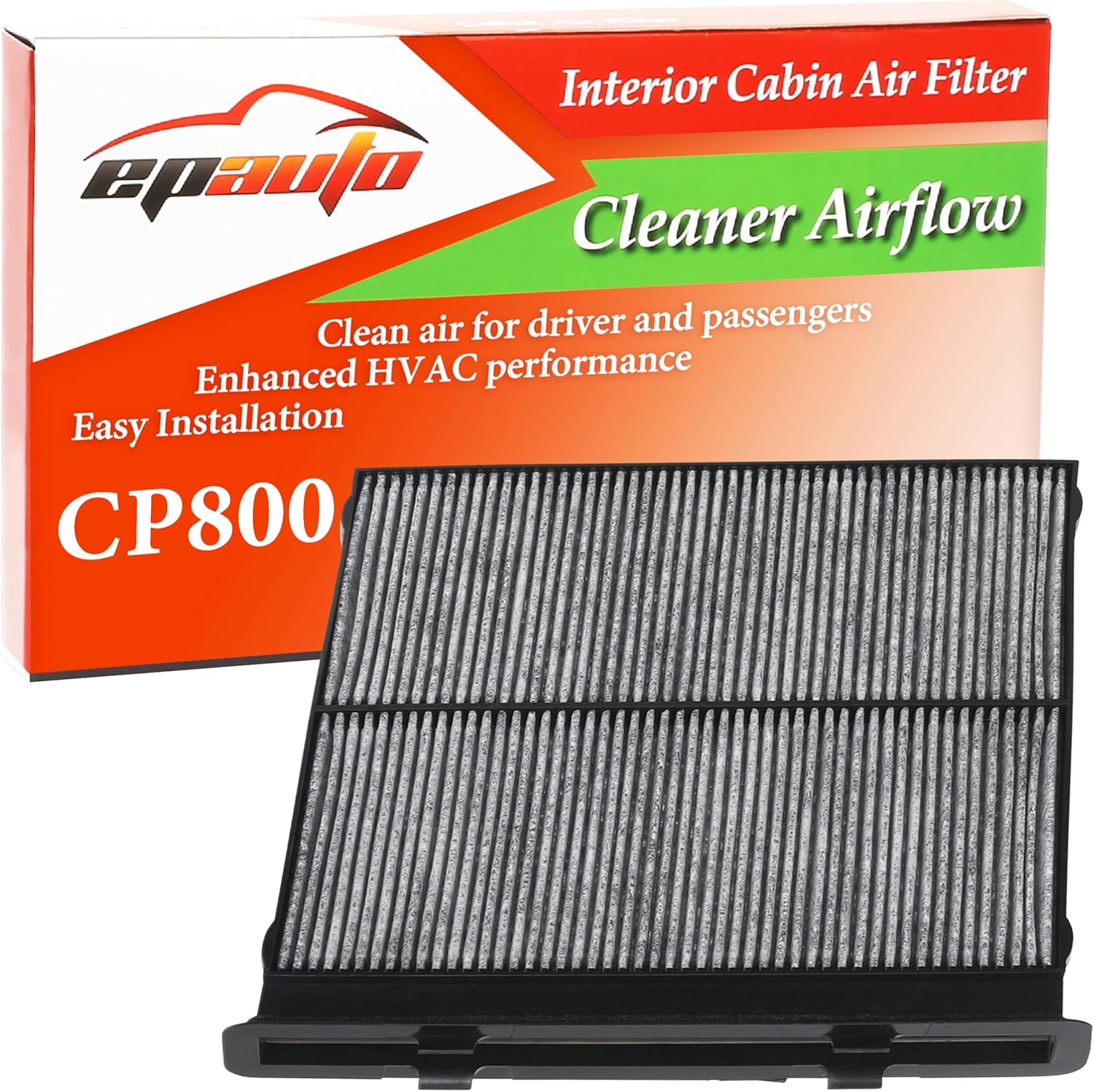
| Fit Type | Vehicle Specific Fit |
|---|---|
| OEM Equivalent Part Number | 72880-FL000 |
| Model Number | FC-058-1 |
| Unit Count | 1 Count |
The EPAuto CP800 is a direct-fit replacement cabin air filter made to match Subaru part 72880-FL000 and similar aftermarket references. It installs in the factory cabin intake and is intended to refresh interior air quality by trapping dust, pollen and other particulates while the activated carbon layer reduces odors. Typical use is straightforward: swap the filter during routine service, roughly every 12 months or 12,000 miles, to maintain HVAC flow and cabin comfort. Notable features include vehicle-specific fit and a carbon-infused media that can make a tangible difference in reducing smells compared with basic paper filters. Practical benefits are easy DIY installation, improved passenger comfort, and maintained blower performance when changed regularly. Limitations are minimal for the price point: it is a replacement-grade aftermarket part rather than a premium OEM or high-efficiency HEPA filter, so extreme allergen filtration or very long service intervals are not advertised.
Best for: A Forester buyer prioritizing value who wants an affordable, easy-to-install replacement that improves cabin odor control and basic particulate filtration during routine maintenance.
Less Ideal for: Drivers with severe allergy or air-quality needs who require a certified high-efficiency or HEPA-level cabin filter should consider a specialized alternative.
- Vehicle-specific fit designed to match Subaru cabin intake for easy installation
- Activated carbon layer helps reduce odors in addition to trapping dust and pollen
- Simple DIY replacement recommended every 12 months or 12,000 miles to maintain HVAC performance
- Not marketed as a high-efficiency or medical-grade filter, so very fine particle capture may be limited
Verdict: Choose this filter if you want an inexpensive, vehicle-specific replacement that improves basic cabin air quality and odor control without paying for premium filtration.
5. K&N VF2054 Washable Cabin Air Filter

| Part Number | VF2054 |
|---|---|
| Material | Polyurethane |
| Item Package Quantity | 1 |
| Warranty Description | 1,000,000 Miles |
The K&N VF2054 cabin air filter replaces the disposable factory cabin filter with a washable, reusable element intended to last the vehicle’s lifetime. It fits into the standard cabin air box and is pretreated to help control odors; cleaning requires only low-pressure water so you can refresh it at regular service intervals instead of buying new filters. K&N emphasizes higher airflow compared with disposable paper filters, which can help the HVAC system reach set temperatures faster and reduce blower strain. The polyurethane media is durable and straightforward to reinstall, making swaps quick and tool-free for routine maintenance. The main compromise is that reusable filters need periodic cleaning to maintain performance, and if neglected they will lose airflow and filtering effectiveness like any filter. For a reliability-minded Forester owner who will follow a maintenance schedule, this filter offers long-term consistency and less chance of unexpected clogged-filter problems than disposable replacements stacked with unknown replacement histories.
Best for: Drivers who prioritize long-term reliability and predictable HVAC performance and who will perform or schedule periodic maintenance rather than relying on disposable replacements.
Less Ideal for: Buyers who prefer zero-maintenance disposable filters or who will not commit to cleaning intervals should choose a standard replaceable cabin filter instead.
- Washable and reusable design eliminates repeated purchases and reduces waste
- Pretreated media helps control odors inside the cabin
- Higher airflow profile compared with disposable paper filters can ease HVAC load
- Durable polyurethane construction designed to last for the life of the vehicle
- Requires periodic cleaning to maintain filtration and airflow; performance drops if neglected
Verdict: If you want a long-lasting, washable cabin filter that reduces the chance of unexpected clogged filters and you will maintain it, this K&N unit is a reliable choice.
6. SPEARHEAD Breathe Easy Cabin Air Filter with Activated Carbon (BE-277)

| Compatible Vehicles | Forester 2019-2024, Forester 2025 Wilderness trim, WRX 2022-2025 |
|---|---|
| Material Type | Precision-woven & Coconut Shell Activated Carbon |
| Air Filter Construction | Pleated |
| Unit Count | 1 Count |
| Model Number | BE-277 |
The SPEARHEAD Breathe Easy BE-277 is a replacement cabin air filter built to trap fine particles and reduce odors for Subaru Forester (2019–2024 and 2025 Wilderness) and WRX (2022–2025). It uses precision-woven, electrostatic pleated media combined with coconut shell activated carbon to capture pollen, dust, soot and many exhaust and road odors before they reach the cabin. The filter is marketed to last up to 15,000 miles, about 25% longer than a typical 12,000-mile standard, which reduces replacement frequency for regular commuters or owners who drive in dusty or urban environments. Its rigid frame and OEM-style shape make do-it-yourself swaps straightforward using the vehicle filter access, and the heavier media improves particle capture without changing airflow noticeably in normal driving. The main limitations are that fitment is specific to the listed Forester trims and WRX years and the lifespan claim depends on driving conditions, so drivers in heavy-pollution or very dusty areas may need to change it sooner than stated.
Best for: Forester or WRX owners who prioritize cleaner, less odorous cabin air and want a longer-lasting replacement that is easy to install themselves, backed by strong customer feedback.
Less Ideal for: Drivers who change filters frequently for severe off-road or extreme dust conditions or people seeking a basic low-cost disposable filter without odor control.
- Multi-layer pleated media with electrostatic charge improves capture of fine particles like pollen and soot
- Coconut shell activated carbon layer reduces cabin odors and adsorbs gaseous pollutants
- Rated for up to 15,000 miles, offering longer service interval than many standard filters
- Rigid, precision-cut frame that simplifies DIY installation and fits factory filter housing
- Fitment is limited to specific Forester trims and WRX years so verification is required before purchase
- Longevity claim depends on real-world conditions and may be shorter in very dusty or polluted environments
Verdict: Choose this filter if you want noticeably cleaner, less smelly cabin air in your Forester or WRX with a longer recommended service interval and easy DIY installation.
7. RVgolf Engine and Cabin Air Filter Set for Subaru Forester 2.5L (2019–2024)

| Applicable vehicle | Subaru Forester 2.5L 2019-2024 |
|---|---|
| Engine air filter ref | 16546AA16A |
| Cabin air filter ref | 72880-FL000 |
| Manufacturer | RVgolf |
This RVgolf kit includes both the engine air filter and cabin air filter specifically matched to the Subaru Forester 2.5L (2019–2024). The engine filter uses a high-fiber media aimed at capturing fine particulates and reducing intake resistance, which can help maintain engine breathing and reduce intake noise. The cabin filter uses multi-layer media to trap pollen, dust, and other suspended impurities to improve in-car air quality and reduce odors. Installation is straightforward and intended for a quick owner-performed replacement during routine maintenance intervals. Practical benefits include improved filtration for both engine longevity and passenger comfort plus a quieter HVAC airflow thanks to the low-resistance cabin design. Limitations are that this is an aftermarket part so exact fit and long-term durability may vary from factory parts, and the vendor recommends routine replacement at roughly 12 months or 12,000 miles to retain performance.
Best for: Buyers who prioritize predictable, maintenance-oriented replacements and want to restore factory-quality intake and cabin filtration with minimal fuss.
Less Ideal for: Drivers seeking OE-branded parts with manufacturer backing or those looking for multi-vehicle compatibility beyond the specified Forester 2.5L fitment.
- Includes both engine and cabin filters in one kit for coordinated maintenance
- High-fiber, multi-layer filter media designed to capture fine particulates
- Low-resistance design aimed at reducing intake/HVAC noise and improving airflow
- Straightforward, driver-friendly installation for routine service
- Aftermarket fit and long-term durability can vary compared with factory-brand parts
Verdict: A convenient matched engine and cabin filter kit that restores clean intake and cabin air for Forester 2.5L owners who want a straightforward, maintenance-focused replacement.
Choosing the Right Subaru Forester Sport Cabin Air Filter: Key Factors to Consider
Filtration Efficiency
How well a cabin air filter captures particles directly affects in-cabin air quality. Higher-efficiency media trap pollen, dust, soot, and some fine particulates, which matters if you or passengers have allergies or respiratory sensitivities. For the Forester Sport, look for filters that specify micron ratings or MERV-equivalent performance so you can compare how much fine particulate is removed.
Keep in mind that very dense media can restrict airflow, so select a filter that balances particle capture with acceptable airflow for the vehicle's HVAC system. Effective filtration reduces visible dust in the cabin and can lower the load on HVAC components by preventing debris buildup.
Fitment and Seal
A filter that does not fit the Forester Sport housing precisely can allow unfiltered air to bypass the media. Proper dimensions and a secure seal are essential to ensure all incoming air passes through the filter. Check for features like molded frames, pre-formed seals, or gasketed edges that help maintain contact with the housing surfaces.
Poor fitment can also cause rattles or vibration noise when the blower is running. In addition, a correct fit simplifies installation and reduces the likelihood of improper seating that would compromise filtration performance.
Moisture Resistance and Odor Control
Cabin filters in the Forester Sport may be exposed to humid air, condensation, and occasional damp debris. Media that resist moisture are less likely to sag, deteriorate, or harbor mold and mildew over time. Some filters include activated carbon or odor-absorbing layers to reduce smells from exhaust, smoke, or road sources.
If you park in damp environments or frequently drive in rainy seasons, favor filters with moisture-tolerant construction and treated layers. Effective odor control is a plus for those sensitive to vehicle interior smells, but these layers should not compromise particle filtration or airflow.
Airflow and HVAC Impact
All filters create some resistance to airflow. In the Forester Sport, excessive restriction can reduce cabin ventilation, increase HVAC noise, and put extra load on the blower motor. Choose a filter that provides good filtration with minimal pressure drop. Manufacturers sometimes publish airflow or pressure-drop figures; when available, use these to compare options.
A balance is important: ultra-high efficiency materials can clog faster and restrict flow sooner. Consider expected driving conditions and maintenance intervals to select a filter that maintains acceptable airflow between changes.
Service Interval and Longevity
How often you need to replace the cabin air filter affects long-term convenience and cost. Filters with higher dust-holding capacity or thicker pleats often last longer before performance degrades. For Forester Sport owners who do a lot of driving on dusty roads, shorter intervals may be necessary.
Check manufacturer recommendations and consider seasonal factors like pollen peaks or winter road debris. Easy access and straightforward replacement make more frequent service less burdensome, so weigh longevity against installation convenience and expected environmental exposure.
Installation Ease and Accessibility
Replacing the cabin air filter in the Forester Sport is often a routine maintenance task, so ease of installation matters. Filters designed to align with the vehicle's housing, with clear orientation markings and robust frames, reduce installation time and the risk of incorrect fit.
Consider whether you will change the filter yourself or have it done during service. If you plan DIY replacement, prioritize filters that come with simple instructions and fit guides to ensure correct seating and orientation in the HVAC compartment.
Understanding Cabin Air Filter Types
Cabin air filters use different media to address particulates and odors. Basic electrostatic or synthetic pleated filters trap larger particles like dust and pollen. More advanced multilayer filters add fine-fiber media to capture smaller particulates and sometimes include activated carbon for odor reduction. For Forester Sport owners, choosing the right type depends on local air quality and personal sensitivity to allergens.
When selecting a type, consider seasonal factors and common driving environments. If you drive frequently in high-pollen seasons, a filter with enhanced pollen capture is beneficial. For urban or smoky conditions, activated carbon layers can help control odors and volatile compounds.
- Pleated synthetic: good balance of cost and particle capture
- Fine-fiber media: better at trapping small particulates
- Activated carbon: reduces odors and some gases
When to Replace the Cabin Air Filter
Typical replacement intervals vary by environment and usage. Visual inspection can help: a dark, clogged element or reduced airflow from vents indicates it is time to replace the filter. Many owners check the filter every 12 months or around service intervals, but dusty or pollen-heavy conditions may require more frequent changes.
Symptoms of a clogged filter include reduced vent airflow, unusual odors when the HVAC runs, or increased dust settling on the dash. Addressing the filter promptly maintains cabin comfort and protects HVAC components.
- Inspect annually or every 12,000–15,000 miles as a baseline
- Replace sooner if you see heavy debris, odors, or airflow loss
DIY Replacement Tips for Forester Sport Owners
Replacing the cabin air filter in the Forester Sport is typically straightforward with a few common steps: locate the filter housing, remove the cover, extract the old filter, check the housing for debris, and install the new element with correct orientation. Keep a flashlight handy to inspect the compartment and confirm a proper seal when installing the new filter.
Use gloves if the old filter is dirty, and avoid pushing debris deeper into the HVAC housing. Make note of any orientation arrows on the filter media and ensure the frame seats evenly to prevent bypass. If the housing shows signs of moisture or mold, clean it before installing the new filter.
- Confirm filter direction with airflow arrows
- Check housing for leaves and debris before installing new filter
- Test HVAC airflow after installation to ensure proper seating
Matching Filter Size and Part Numbers
Accurate filter sizing is critical for the Forester Sport. Filters that list clear dimensions or vehicle fitment for the Forester Sport reduce the risk of buying the wrong size. Measure your existing filter if in doubt and compare physical dimensions rather than relying solely on vague compatibility claims.
Part numbers can help cross-reference options, but always verify the actual measurements and frame style to ensure the element will seat correctly in the housing and form a full seal around the intake opening.
- Measure length, width, and thickness of your current filter
- Prefer listings that provide exact dimensions rather than generic fit claims
Addressing Cabin Air Filter Odors and Mold
Persistent musty smells or visible mold around the HVAC intake often indicate a filter that has retained moisture or allowed debris to build up. In the Forester Sport, choose filters with moisture-tolerant media and consider more frequent replacement in humid climates. If odors persist after changing the filter, inspect and clean the housing and drain pathways to remove trapped moisture.
Activated carbon layers can help mask some odors, but they do not replace the need to address underlying moisture or mold. Regular inspection during seasonal changes helps prevent odor buildup.
- Inspect the housing for moisture before installing a new filter
- Use moisture-tolerant or treated media in damp climates
Still looking for the perfect fit?
Select your Subaru Forester configuration to see the most relevant Cabin Air Filters recommendations
How We Chose the Best Subaru Forester Sport Cabin Air Filter
We evaluated candidates using criteria that matter specifically for Subaru Forester Sport owners. Our primary filters were assessed for particle filtration efficiency, including removal of pollen, dust, and fine particulates common in urban and rural driving. We prioritized fitment accuracy, since a precise seal in the Forester Sport's HVAC housing prevents bypass and ensures consistent airflow. Durability and moisture resistance were next, because cabin filters in this vehicle encounter humid and variable climates that can accelerate degradation or promote odor. We also considered airflow restriction, balancing filtration performance with HVAC efficiency to avoid excess blower strain. Installation ease and access to service intervals rounded out the evaluation, since many Forester owners perform filter changes themselves.We excluded products that lacked clear sizing data or did not list filtration media specifications. Filters without consistent customer reports of correct Forester Sport fitment or with ambiguous compatibility claims were removed. The resulting shortlist reflects options that combine documented fit, effective particle capture, reasonable longevity, and straightforward installation for this model.
Our full evaluation process is outlined in our review methodology.
FAQ
How often should I replace the cabin air filter in my Forester Sport?
It often depends on driving conditions. A common baseline is every 12 months or 12,000–15,000 miles, but inspect more frequently if you drive on dusty roads or through heavy pollen seasons.
What are common signs of a clogged cabin pollen filter?
Typical symptoms include reduced airflow from vents, musty or stale odors when the HVAC is running, and more dust settling on interior surfaces. You may also notice increased blower noise as the system works harder.
Can I install a cabin air filter myself in the Forester Sport?
Yes. The replacement is generally straightforward and involves accessing the filter housing, removing the old element, and installing the new one with correct orientation. Follow basic precautions to avoid pushing debris into the HVAC system.
Does a higher-efficiency filter affect HVAC performance?
Higher-efficiency media can increase airflow resistance, which may reduce vent flow slightly and put more load on the blower if the filter is not changed regularly. Choose a filter that balances filtration with acceptable airflow for your usage patterns.
Should I buy an activated carbon filter for the Forester Sport?
Activated carbon helps reduce odors and some gases, which is useful in urban or smoky environments. It is a reasonable option if odor control is a priority, but ensure the filter still provides adequate particle filtration and fitment.
How do I find the correct cabin air filter size for my vehicle?
Verify the dimensions on your existing filter or consult fitment information that explicitly lists the Forester Sport. Measuring the old filter's length, width, and thickness ensures you select a properly sized replacement.
Final Verdict
Prioritize a cabin air filter that balances effective particle capture with secure fitment for the Subaru Forester Sport. Filtration efficiency, moisture resistance, and manageable airflow restriction are the main tradeoffs: choose higher-efficiency media if allergy control or fine-particle removal is important, but ensure the filter seats properly and does not overly restrict ventilation. Regular inspection and timely replacement keep cabin air fresh, protect HVAC components, and maintain comfortable airflow. With those priorities in mind, you can confidently select the right filter for your driving conditions and maintenance habits.
Explore More:
- Check out all Subaru Forester parts & accessories
- Explore Cabin Air Filters Maintenance & Repair Guides
- Explore HVAC
- Browse all Auto Parts
