

Note: This article contains affiliate links. If you click on these links and make a purchase, I may earn a small commission at no extra cost to you. This helps support my research and content. Read my full affiliate disclosure here.
If you drive a 1998-2002 Subaru Forester, a clean cabin air filter matters more than you might think. A fresh filter helps keep pollen, dust, and road debris out of the cabin, supports HVAC performance, and can reduce odors that build up over time. For older Foresters, choosing the right replacement means matching fit, filtration level, and durability to the vehicle's ventilation system.This guide shortlists the top five cabin air filters suitable for the 1998-2002 Forester and explains the evaluation factors we used. You will find practical notes on filtration efficiency, fitment considerations, and maintenance so you can decide which filter type best meets your health and comfort priorities. Read on for guidance before you replace your cabin pollen filter.
Looking for other parts? See all Subaru Forester parts & accessories.
Top Picks at a Glance
| Best Quality Built to a higher standard if you want something more solid | PartCatalog Cabin Air Filter for Subaru Forester 1998–2002 |  |
| Best Value The sweet spot between price and what you get | GV Auto Parts VIC-19466 Particulate Cabin Air Filter for Subaru Forester (1997–2002) |  |
| Best Budget The cheapest option that still gets the job done reliably | ECOGARD XC11961 Premium Cabin Air Filter |  |
| Highest Rated A top-rated pick with lots of positive feedback | Pentius UltraFLOW Cabin Air Filter for Subaru Forester (2001–2002) |  |
| Most Popular A crowd favorite that many people choose with confidence | Premium Guard PC6111 Cabin Air Filter for 1998–2002 Subaru Forester 2.5L |  |
1. PartCatalog Cabin Air Filter for Subaru Forester 1998–2002

| Brand | PartCatalog |
|---|---|
| Manufacturer Part Number | PC-2425614 |
| Fits | Subaru Forester 1998-2002 |
| Includes | 1 Cabin Air Filter |
This PartCatalog cabin air filter is a direct replacement designed to match the factory performance of the original cabin filter in 1998–2002 Subaru Forester models. It installs the same way as the factory unit and is intended for routine use in the vehicle HVAC system to trap pollen, dust, and road debris before they enter the cabin. The listing emphasizes OE-level fit and manufacturing to original specifications, which should make install straightforward and reduce gaps that can allow unfiltered air. For a performance-minded buyer this filter helps maintain HVAC airflow and cabin air quality without altering system behavior. It does not advertise any specialty media such as activated carbon or high-efficiency filtration beyond factory-spec performance, so buyers seeking upgraded odor control or finer particle filtration should look for filters that specify those technologies. The product comes as a single replacement element and relies on correct fitment for optimal function.
Best for: Buyers who want a reliable, factory-quality replacement that preserves stock HVAC airflow and cabin air cleanliness without modifying ventilation performance.
Less Ideal for: Drivers focused on reducing odors, allergens, or very fine particles who prefer upgraded or specialty filters with activated carbon or HEPA-style media.
- Manufactured to match factory specifications for a direct fit in 1998–2002 Forester models
- Designed to trap common cabin contaminants like pollen, dust, and road debris
- Straightforward one-piece replacement that simplifies installation
- Promotes consistent HVAC airflow by fitting snugly with original housing
- No mention of activated carbon or enhanced filtration for odors and fine particulates
Verdict: Choose this filter if you want a straightforward, factory-spec replacement that preserves stock HVAC performance on a 1998–2002 Subaru Forester.
2. GV Auto Parts VIC-19466 Particulate Cabin Air Filter for Subaru Forester (1997–2002)

| Brand Name | GV Auto Parts |
|---|---|
| Model Number | VIC-19466 |
| Filter type | Particulate Filter |
| Unit Count | 1 Count |
This GV Auto Parts VIC-19466 is a direct-replacement particulate cabin air filter made to fit Subaru Forester 1.6 and 2.0 model years roughly 1997 through 2002. It installs in the vehicle's HVAC intake to trap dust, pollen, and other particulates before they enter the passenger compartment. Typical use is straightforward: remove the cabin filter cover, swap the old element for this one, and reassemble—no special tools required. The listing includes a long cross-reference of equivalent part numbers, which helps confirm compatibility with many aftermarket and factory identifiers. As a particulate-type filter it focuses on basic allergen and dust capture rather than active odor or gas adsorption. That makes it a practical, low-cost maintenance item that restores airflow and cabin air cleanliness, but drivers wanting activated carbon or enhanced filtration for smoke and fumes should look for a different model. Fitment is specific to the Forester years shown, making it a simple maintenance choice for owners who prioritize straightforward replacement and reliable particulate filtration.
Best for: Buyers who want a straightforward, cost-effective replacement to restore cabin air filtration and airflow in a 1998–2002 Forester with minimal fuss.
Less Ideal for: Drivers seeking odor removal, smoke filtration, or upgraded HEPA-level protection should choose a carbon or high-efficiency alternative instead.
- Made for Subaru Forester 1.6 and 2.0 (1997–2002) for easy direct replacement
- Particulate filter media captures dust and pollen to improve cabin air quality
- Extensive cross-reference list of compatible part numbers simplifies identification
- Simple, tool-free installation restores HVAC airflow quickly
- Not specified as activated carbon so it will not absorb odors or gaseous pollutants
Verdict: A practical, factory-fit particulate cabin filter that makes routine replacement quick and dependable for 1998–2002 Subaru Forester owners.
3. ECOGARD XC11961 Premium Cabin Air Filter

| Compatible Devices | HVAC System |
|---|---|
| Product Grade | new |
| Material Type | Paper |
| Unit Count | 1 Count |
The ECOGARD XC11961 is a paper-element cabin air filter sized to replace the factory unit in late 1990s Subaru Forester and Impreza models. It captures fine dust, pollen, pet dander, and other airborne particles to improve interior air quality and reduce musty odors. Installation is straightforward and typically takes only a few minutes behind the glovebox, so it is an easy do-it-yourself maintenance item that helps maintain steady airflow through the HVAC system. The filter claims high particle capture efficiency and supports blower performance by preventing clogging that can strain HVAC components. As a paper media filter, it offers a low-cost way to refresh cabin air but will need regular replacement according to mileage or heavy-dust exposure since it is not a washable or long-life high-performance media. For routine seasonal maintenance or replacing a degraded OEM cabin filter, this unit provides practical filtration at an accessible value.
Best for: Buyers who want an inexpensive, easy-to-install cabin filter to restore interior air quality on older Subaru Forester or Impreza models and who prioritize straightforward seasonal maintenance.
Less Ideal for: Those seeking a reusable, high-flow performance or activated-carbon filter for odor removal and long service life should consider other filter types.
- Designed to fit specified 1998–2000 Subaru Forester and compatible Impreza models for direct replacement
- Claims high particle capture for dust, pollen, pet dander and common road pollutants
- Simple, quick installation suitable for DIY replacement behind the glovebox
- Helps maintain steady HVAC airflow and reduces strain on blower components
- Paper media is disposable and requires periodic replacement rather than cleaning or long-term reuse
Verdict: A budget-friendly, OEM-replacement style cabin filter that restores interior air quality and HVAC airflow on late 1990s Subaru Forester and Impreza models.
4. Pentius UltraFLOW Cabin Air Filter for Subaru Forester (2001–2002)

| Compatible Devices | SUBARU Forester(01-02) |
|---|---|
| Product Grade | Replacement Part |
| Material Type | Fiberglass, Paper |
| Unit Count | 1 Count |
The Pentius UltraFLOW cabin air filter is a direct replacement intended for 2001–2002 Subaru Forester models to keep the passenger compartment air cleaner by trapping dust, pollen, and other particulates. It installs in the factory cabin intake location and is used as a routine maintenance item, recommended for replacement about every six months to preserve airflow and interior air quality. The filter uses fiberglass and paper media and is manufactured to meet or exceed factory-quality specifications under ISO9001 processes, so it should fit and perform like a stock unit. Practical benefits include noticeably reduced visible dust on vents and HVAC intake smells when replaced on schedule, plus straightforward swap-in installation with no modifications. Limitations are typical for basic replacement filters: it does not advertise advanced activated carbon or allergen-specific layers, so odor control and fine particle filtration may not match premium multi-layer designs.
Best for: Buyers who prioritize a reliable, factory-quality replacement to restore or maintain cabin air cleanliness on a 2001–2002 Subaru Forester and want a straightforward, maintenance-focused part.
Less Ideal for: Drivers seeking premium odor control, heavy allergen filtration, or advanced multi-layer filters should consider upgraded cabin filters with activated carbon or HEPA-like media instead.
- Direct replacement fit for 2001–2002 Subaru Forester for easy installation
- Manufactured to ISO9001 standards and built to meet or exceed factory-quality specs
- Simple construction effectively removes common contaminants like dust and pollen
- Recommended replacement interval provided to help maintain airflow and cabin air quality
- Uses fiberglass and paper media only and lacks specialized activated carbon or HEPA layers for stronger odor or fine particle removal
Verdict: A dependable, factory-quality direct replacement that restores clean cabin airflow on 2001–2002 Subaru Forester models.
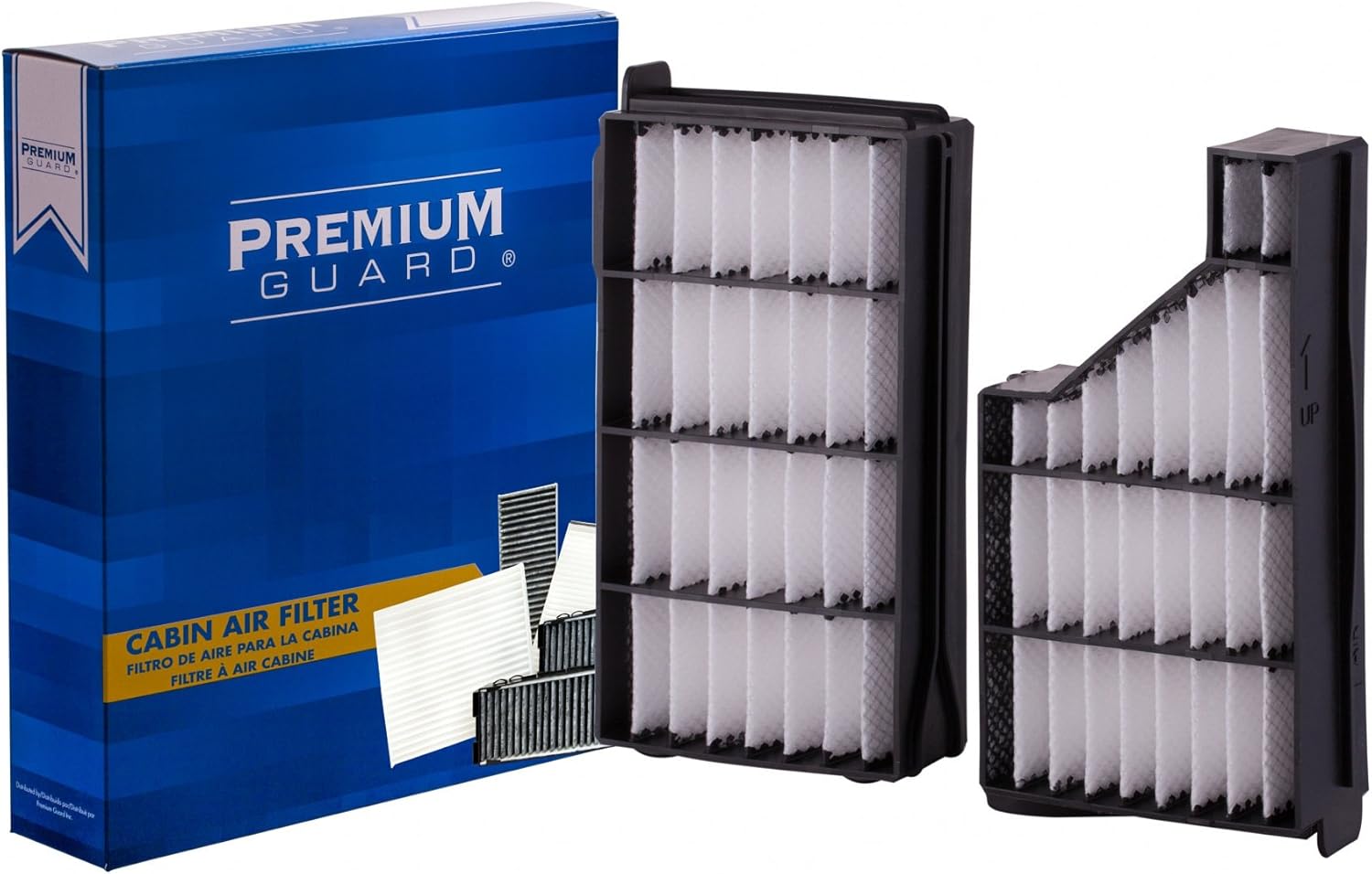
5. Premium Guard PC6111 Cabin Air Filter for 1998–2002 Subaru Forester 2.5L
| Compatible Devices | Air Conditioner, Subaru |
|---|---|
| Product Grade | new |
| Material Type | Particulate Media |
| Unit Count | 1 Count |
The Premium Guard PC6111 is a direct-fit cabin air filter for 1998–2002 Subaru Forester 2.5L intended to improve in-cabin air quality by trapping fine dust, pollen, and other airborne particles. Installation is straightforward since the filter is engineered to fit the factory housing and comes with basic instructions. The filter uses particulate media that balances filtration efficiency with airflow so the HVAC system does not feel restricted during normal use. In practical terms this means cleaner smelling, less dusty air without noticeable loss of heater or A/C performance. It replaces a number of common aftermarket part numbers, which makes it easy to cross-reference for fitment. Limitations are typical for single-stage particulate filters: it does not include activated carbon for odor or gas removal and performance depends on regular replacement to avoid reduced airflow as the media loads with contaminants.
Best for: Buyers who prioritize reliable, evidence-backed air filtration for daily driving and want a straightforward, factory-style replacement that improves cabin air quality with minimal fuss.
Less Ideal for: Drivers who need odor or chemical vapor removal or who want a high-flow performance filter for modified HVAC systems should consider alternatives with carbon or specialized media.
- Designed to fit 1998–2002 Subaru Forester 2.5L for simple, tool-free replacement.
- Captures up to 99% of airborne particles like dust and pollen for noticeably cleaner cabin air.
- Media formulation balances particle capture with maintained airflow so HVAC performance is not significantly impacted.
- Replaces many common aftermarket part numbers making fitment verification easier.
- Does not include activated carbon or specific odor-absorbing media for gas and smell control.
Verdict: If you want a proven, direct-fit cabin filter to reduce dust and pollen in a 1998–2002 Subaru Forester without impacting HVAC airflow, this is a simple, reliable choice.
Choosing the Right 1998-2002 Subaru Forester Cabin Air Filter: Key Factors to Consider
Filtration Efficiency
Filtration efficiency determines how effectively a cabin air filter removes airborne particles like pollen, dust, and fine particulates. For Forester owners who suffer from allergies or frequently drive in dusty conditions, higher efficiency media captures smaller particles and can noticeably reduce in-cabin allergen levels.
However, very dense media can increase airflow resistance. On older Foresters with aging blower motors, excessive restriction may reduce ventilation performance or blower speed. Balance filtration efficiency with acceptable airflow for the vehicle to maintain defogging and heating performance.
Fit and Seal
A correct fit and a consistent seal prevent bypass of unfiltered air around the filter frame. The 1998-2002 Forester uses a specific filter footprint and mounting orientation; a replacement that matches those dimensions ensures proper sealing against the housing and avoids gaps that undermine filtration.
Pay attention to frame shape, thickness, and whether the filter requires any clips or retaining tabs. A well-fitting filter also reduces vibration noise and stays in place during normal vehicle movement.
Filter Media Type
Different media types are available, including pleated paper, electrostatically charged fibers, and activated carbon layers. Pleated paper provides a good baseline for dust and pollen. Electrostatic media can attract and trap finer particles without as much airflow restriction. Activated carbon adds odor and vapor adsorption capability, useful if you frequently encounter smoke or strong road odors.
Choose a media type that matches your needs for particle capture versus odor control, keeping in mind the effect on airflow and expected service life.
Moisture Resistance and Mold Growth
The cabin filter sits in a location that can accumulate moisture from condensation or wet debris. Filters treated to resist moisture or that use materials less prone to retaining dampness will lower the risk of mold and mildew forming on the media, which can cause unpleasant smells and potential health concerns.
For a Forester that sees wet climates or infrequent use, favor filters with coatings or media compositions designed to shed moisture and resist biological growth.
Service Interval and Durability
Service interval expectations affect long-term maintenance. Some filters are designed for longer life with denser media and sturdier frames, while others are economical with shorter recommended replacement intervals. Consider how often you will inspect and replace the filter when selecting a product.
Durable frames and pleats that resist collapsing will perform better over time, especially if you drive on rough roads where vibration could otherwise deform the filter.
Installation Ease and Access
The cabin filter location and how easy it is to access matters for routine replacement. The Forester's filter should be reachable without extensive disassembly; filters designed for straightforward, tool-free swaps reduce the time and effort required.
Check whether the replacement filter requires trimming, additional clips, or special orientation. Clear installation alignment markers and a robust frame make DIY replacement more reliable and reduce the risk of improper installation.
Where the Cabin Filter Sits in the Forester HVAC System
Understanding where the cabin filter is placed helps you diagnose airflow and odor issues. The cabin pollen filter is positioned upstream of the blower intake so it intercepts outside air before it enters the HVAC system. Knowing this helps explain why a clogged filter can reduce airflow to vents and slow defogging.
Because the filter is on the fresh-air side of the system, it is the primary defense against outdoor contaminants entering the cabin. Routine inspection is the simplest way to spot heavy debris, leaves, or signs of water ingress that can shorten filter life.
- Filter location affects how quickly particulates accumulate.
- A clogged filter can reduce blower effectiveness and increase HVAC strain.
Signs Your Forester Needs a New Cabin Filter
Recognizing symptoms of a failing cabin filter helps you decide when to replace it rather than following a fixed timetable. Common signs include reduced airflow from vents, persistent musty or stale odors when the fan runs, and increased visible dust on the dash or vents.
Owners should also watch for increased allergy symptoms while driving and a noticeable drop in HVAC performance during defrosting. Regular visual checks will confirm whether buildup or moisture is present.
- Reduced vent airflow or weaker fan output
- Musty or mildew-like odors when ventilation is active
- Visible dust or debris in the filter compartment
Activated Carbon Vs Particle-Only Filters
Filters with an activated carbon layer offer dual benefits: they trap particulates and adsorb odors and some volatile organic compounds. This can be valuable for Forester owners exposed to highway fumes, smoke, or strong outdoor odors.
Particle-only filters focus on capturing pollen and dust and typically have lower airflow resistance. If odor control is not a priority, a high-quality particle filter can provide strong allergen removal with less impact on blower performance.
- Carbon layers improve odor control and can reduce cabin smells.
- Particle-only media often offers lower resistance and solid pollen capture.
Measuring and Confirming Filter Size
Before purchasing a replacement, confirm the exact cabin air filter size to ensure proper fit. Measure the filter housing opening and compare pleat count and frame thickness where possible. Incorrect sizing leads to gaps or the need for trimming, which can compromise the seal.
Manufacturers sometimes list dimensions; if not available, measure the removed filter and note length, width, and thickness. Keeping a record of the correct cabin air filter size prevents repeat purchases of ill-fitting parts.
- Record length, width, and thickness of the original filter.
- Check pleat orientation and frame shape to ensure a proper seal.
Routine Maintenance Tips for Long Filter Life
Inspect the cabin filter every 12 months or sooner if you drive in dusty or urban environments. Lightly tapping or blowing debris off a filter is only a temporary measure; full replacement restores designed filtration performance.
Keep the filter compartment free of leaves and large debris, and check for source issues such as clogged drainage that can introduce moisture. Document replacement dates to maintain a predictable service rhythm.
- Inspect annually or after heavy dust exposure.
- Clear leaves and debris from the intake area to reduce clogging.
Still looking for the perfect fit?
Select your Subaru Forester configuration to see the most relevant Cabin Air Filters recommendations
How We Chose the Best 1998-2002 Subaru Forester Cabin Air Filter
We evaluated candidate cabin air filters for the 1998-2002 Subaru Forester using criteria focused on real-world owner priorities. Primary evaluation criteria included filtration efficiency for common urban and rural particles, measured as the ability to remove pollen, dust, and fine particulates. Fit and dimensional accuracy were tested against the Forester's OEM filter footprint and mounting method to ensure reliable installation and sealing. Durability and media construction were assessed to estimate service life under typical driving conditions. Resistance to moisture and mold growth was considered because older HVAC housings can trap damp air. Finally, ease of installation and access to the filter compartment were factored in to reflect homeowner maintenance effort.We excluded products that lacked clear sizing information for the 1998-2002 Forester or that required vehicle modifications. Filters that compromised airflow excessively for marginal filtration gains were deprioritized. Our selections favored filters that balance particle capture, fitment reliability, and reasonable service intervals, while removing items with unclear specifications or poor documented fit for this vehicle.
Our full evaluation process is outlined in our review methodology.
FAQ
How often should I replace the cabin pollen filter in a 1998-2002 Forester?
Replacement frequency varies by driving conditions, but many owners change the filter every 12 to 18 months. If you regularly drive on dusty roads or notice reduced airflow or odors, inspect and replace it sooner.
What are common symptoms of a clogged cabin air filter in this Forester?
Typical symptoms include reduced airflow at vents, persistent musty smells when the fan runs, slower windshield defogging, and increased dust accumulation inside the cabin. These signs often indicate the filter needs inspection or replacement.
Can I clean and reuse the cabin air filter instead of replacing it?
Some basic pleated filters can be gently vacuumed to remove loose debris, but cleaning rarely restores original filtration performance. For reliable particle capture and moisture resistance, replacement with a new filter is usually recommended.
Does an activated carbon filter help with smoke and odors in the Forester?
Yes, activated carbon filters adsorb many odors and some gaseous contaminants more effectively than particle-only filters. They are a good choice if you frequently encounter smoke or strong roadside smells, though they may have slightly higher airflow resistance.
Is installation difficult for a Forester cabin air filter replacement?
Installation is typically straightforward and can be done with minimal tools. Accessing the filter compartment and noting the correct orientation are the main tasks. Clear instructions or an owner's manual illustration make the process quicker.
How do I confirm the correct cabin air filter size for my 1998-2002 Forester?
Remove the existing filter and measure its length, width, and thickness, and note pleat direction and frame shape. Cross-check those dimensions against the replacement listing to ensure an accurate fit and proper sealing.
Final Verdict
When choosing a cabin air filter for a 1998-2002 Subaru Forester, prioritize a balance between filtration efficiency and airflow. Match the correct filter size and frame design to ensure a good seal, and consider activated carbon media if odor control matters to you. Regular inspection and timely replacement prevent HVAC strain and maintain in-cabin air quality.Focus on filters that offer reliable particle capture without excessive airflow restriction and that are built for moisture resistance. With those tradeoffs in mind, you can confidently pick a replacement that keeps your Forester's cabin cleaner and more comfortable.
Explore More:
- Check out all Subaru Forester parts & accessories
- Explore Cabin Air Filters Maintenance & Repair Guides
- Explore HVAC
- Browse all Auto Parts
