

Note: This article contains affiliate links. If you click on these links and make a purchase, I may earn a small commission at no extra cost to you. This helps support my research and content. Read my full affiliate disclosure here.
If you drive a 2014-2018 Subaru Forester, the cabin air filter plays a big role in interior comfort, windshield defogging, and allergy control. A clogged or wrong-fit filter reduces HVAC airflow and can let pollen, dust, and exhaust odors into the passenger compartment. This guide narrows the field to seven strong options that suit the Forester's HVAC housing and common use cases like city commuting, allergy reduction, and occasional off-road dust.Each shortlisted cabin air filter was evaluated for filtration efficiency, fitment accuracy, airflow impact, and durability so you can pick the balance you need between clean air and consistent ventilation. Read on to compare the filters and find the right replacement for your Forester's climate and driving style.
Looking for other parts? See all Subaru Forester parts & accessories.
Top Picks at a Glance
| Best Overall The best all-around choice for most situations | Subaru Cabin Air Filter 72880FG000 (Genuine OEM) |  |
| Best Quality Built to a higher standard if you want something more solid | K&N VF2055 Washable Cabin Air Filter |  |
| Best Value The sweet spot between price and what you get | SCREW RHINO Engine and Cabin Air Filter Combo for Subaru (CA9997 & CF10930) |  |
| Best Budget The cheapest option that still gets the job done reliably | HYR Cabin Air Filter with Activated Carbon (CF10930) |  |
| Highest Rated A top-rated pick with lots of positive feedback | SPEARHEAD Breathe Easy BE-930 Cabin Air Filter with Activated Carbon |  |
| Most Popular A crowd favorite that many people choose with confidence | EPAuto CP930 Cabin Air Filter (compatible with select Subaru models) |  |
| Best Seller A high-volume bestseller chosen again and again | Puroma Cabin Air Filter with Activated Carbon for Subaru (CAF930S) |  |
1. Subaru Cabin Air Filter 72880FG000 (Genuine OEM)

| Material Type | Paper |
|---|---|
| Air Filter Construction | Pleated |
| Manufacturer | Subaru |
| Model Number | 72880FG000 |
This genuine Subaru cabin air filter is a factory-quality replacement intended to restore interior air filtration to factory performance. It uses pleated paper media and installs in the passenger compartment filter housing to capture pollen, dust, and larger airborne particles before they reach the cabin. Typical use is routine maintenance during a service interval or when occupants notice increased dust or odors; replacement is straightforward for anyone comfortable with basic vehicle maintenance. The main benefit is fit and filtration that match Subaru standards, so you avoid fitment hassles and uneven sealing common with some aftermarket parts. Because it is paper-based, it provides reliable particle capture but does not offer specialized activated-carbon odor control or extended-life synthetic media. If you prioritize a direct factory replacement that maintains the vehicle as intended, this filter delivers consistent, no-frills performance.
Best for: Buyers who want a dependable, factory-quality cabin filter that restores original filtration without guessing about aftermarket fit or performance and prefer straightforward maintenance.
Less Ideal for: Those seeking long-life synthetic filters or carbon-impregnated media for odor and gas removal should consider specialized aftermarket options instead.
- Factory genuine Subaru part so fitment matches the original filter housing
- Pleated paper construction effectively captures pollen and dust
- Designed to meet Subaru manufacturing standards for replacement parts
- Simple direct-fit replacement that is easy to install during routine service
- Paper media lacks activated carbon so it does not reduce odors or vehicle exhaust gases
Verdict: Choose this genuine Subaru cabin filter when you want a simple, guaranteed-fit factory replacement that restores original interior air filtration.
2. K&N VF2055 Washable Cabin Air Filter

| Brand | K&N |
|---|---|
| Model | VF2055 |
| Compatible vehicles | 2014-2018 Subaru Forester (listed among compatible Subaru models) |
| Reusable | Yes |
The K&N VF2055 is a washable cabin air filter built to replace the disposable factory element and provide lasting filtration for compatible Subaru vehicles. It installs in the factory cabin air box in minutes with no tools and is pretreated to help reduce unpleasant odors. Because it is washable and reusable, you simply rinse it with low-pressure water and let it dry before reinstalling, which reduces recurring filter purchases and landfill waste. Notable features include higher airflow compared with many disposable filters and a design meant to last the life of the vehicle, which can help the HVAC system run more efficiently under load. The main trade-off is that washable filters require periodic maintenance and proper drying to avoid mold or odor problems, and they do not come with the disposable convenience of a throwaway filter. For someone focused on sustained airflow and long-term running cost savings, this is a practical upgrade for the Forester cabin filtration system.
Best for: Buyers who prioritize sustained airflow and performance from their cabin filter and are willing to perform occasional maintenance to reduce long-term running costs.
Less Ideal for: Drivers who prefer a maintenance-free, disposable filter they can replace quickly without washing and drying.
- Washable and reusable design eliminates frequent replacement purchases
- Engineered to increase airflow, which can improve HVAC heating and cooling efficiency
- Treated to help reduce odors that cause musty cabin smells
- Simple drop-in installation that usually requires no tools
- Requires regular cleaning and thorough drying to maintain performance and avoid smells
Verdict: A performance-focused, washable cabin filter that boosts airflow and cuts recurring filter costs for Forester owners willing to do basic maintenance.
3. SCREW RHINO Engine and Cabin Air Filter Combo for Subaru (CA9997 & CF10930)
| Compatible Part Numbers | CA9997, CF10930 |
|---|---|
| Fit Type | Vehicle Specific Fit |
| Product Grade | Replacement Part |
| Manufacturer Warranty | 2 Year Manufacturer |
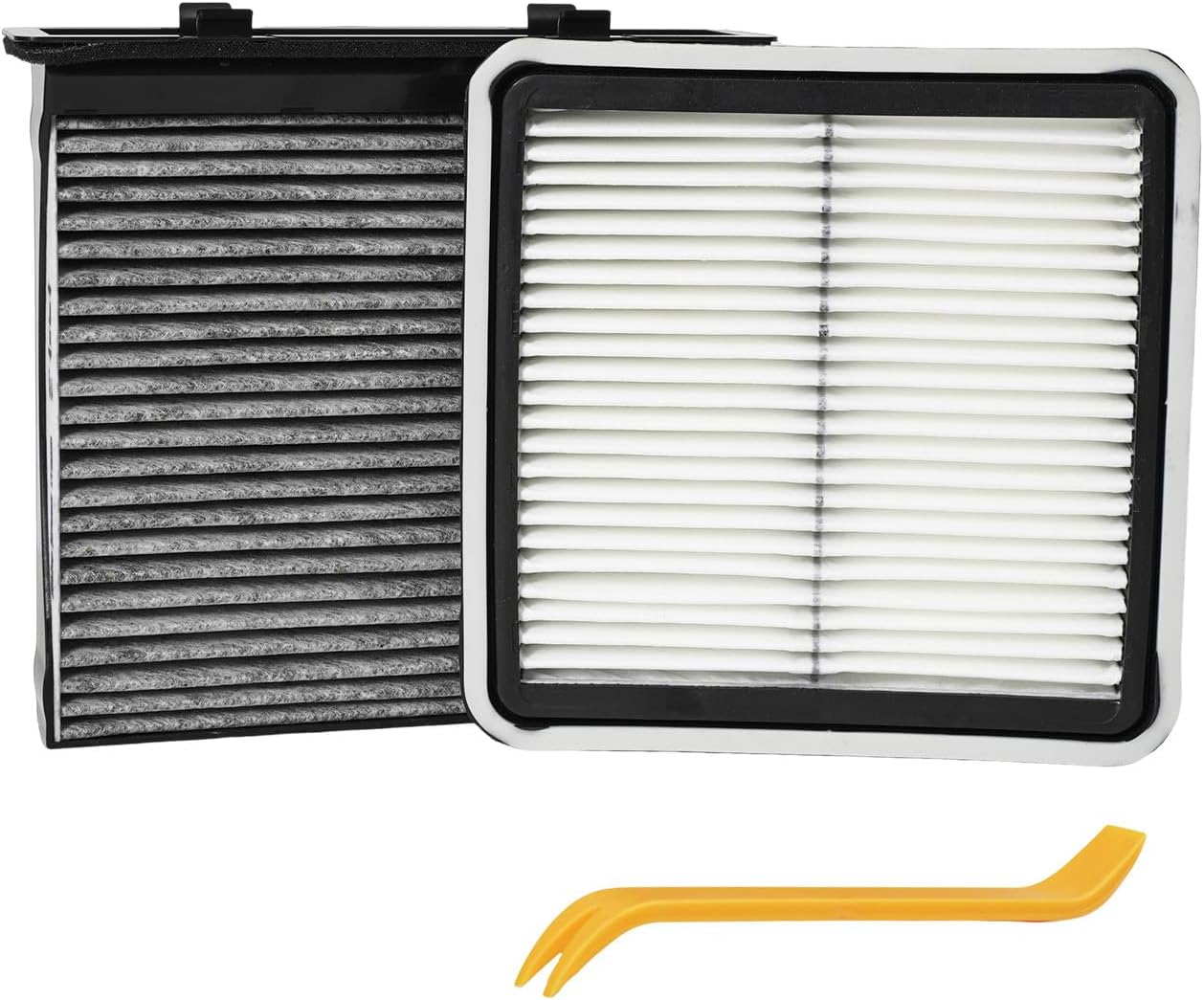
This combo pack includes a replacement engine air filter (CA9997 equivalent) and a cabin air filter (CF10930 equivalent) tailored for Subaru models including Forester within the 2009–2018 range. The cabin filter uses multi-layer media with an activated carbon layer to trap fine particles and reduce odors, while the engine filter protects the intake from larger dust and debris. Installation is straightforward for routine maintenance and matches common OEM part numbers so it slips into the factory housings without modification. The thicker, reinforced construction and polyurethane sealing rim should help maintain a tight fit and resist collapse over time. Recommended service interval is about once a year or every 12,000–15,000 miles depending on conditions. Keep in mind this is a replacement-grade aftermarket option rather than a premium OE-brand part, so long-term durability and exact filtration efficiency may vary versus higher-end filters, and buyers should confirm exact fitment against their vehicle VIN or owner manual before ordering.
Best for: Buyers who prioritize practical, cost-effective maintenance for a 2014–2018 Forester and want a straightforward replacement that restores filtration and cabin air quality without fuss.
Less Ideal for: Drivers seeking top-tier, specialized filtration for severe allergy sufferers or those wanting manufacturer-branded parts should consider higher-end or OEM options.
- Includes both engine and cabin filters for one maintenance stop
- Multi-layer cabin media with activated carbon for particle capture and odor reduction
- Designed to match common Subaru part numbers for direct fit into factory housings
- Polyurethane sealing rim and reinforced center line improve fit and durability
- Aftermarket replacement-grade product may not match filtration performance of premium factory-brand filters
Verdict: A convenient, budget-minded engine and cabin filter pair that restores factory-fit filtration and reduces cabin odors for 2014–2018 Subaru Forester maintenance.
4. HYR Cabin Air Filter with Activated Carbon (CF10930)

| Vehicle fitment | Subaru Crosstrek 2016-2017; Forester 2009-2018; Impreza 2008-2016; WRX 2012-2021; XV Crosstrek 2013-2015 |
|---|---|
| Location | Behind glove box |
| Activated carbon | Yes |
| Unit count | 1 |
This HYR cabin air filter is a direct-fit replacement designed to sit behind the glove box and filter incoming air for compatible Subaru models. It uses a four-layer media pack with an activated carbon layer to capture dust, pollen, and odors before they reach the cabin, so it is useful for improving interior air quality on daily commutes or during allergy season. Installation is the same basic glove-box access replacement as other factory-quality cabin filters, and the single-count boxed unit keeps the swap straightforward. The filter is not reusable or washable, so expect routine replacement rather than cleaning. Its simple construction and clear vehicle fit list make it an economical option for owners who want better odor and particulate control without buying a premium branded filter. If you prioritize long service life or washable media you will need a different product because this is intended as a disposable replacement.
Best for: Cost-minded Subaru owners who want an affordable, factory-style cabin filter that reduces odors and common particulates during everyday driving.
Less Ideal for: Drivers seeking a long-term washable filter or professional shops that prefer multi-pack or heavy-duty commercial filters.
- Activated carbon layer for improved odor and gas adsorption
- Four-layer filtration to help trap dust and pollen
- Boxed single-unit makes replacement simple and convenient
- Non-washable and not reusable, so replacements are ongoing
Verdict: A budget-friendly, activated-carbon disposable cabin filter that refreshes cabin air and matches Subaru glove-box fitment for straightforward replacement.
5. SPEARHEAD Breathe Easy BE-930 Cabin Air Filter with Activated Carbon
| Compatible Vehicles | 2014-2018 Forester (see full chart for other models) |
|---|---|
| Material Type | Activated Carbon, Electrostatic Media |
| Air Filter Construction | Pleated |
| Unit Count | 1 Count |
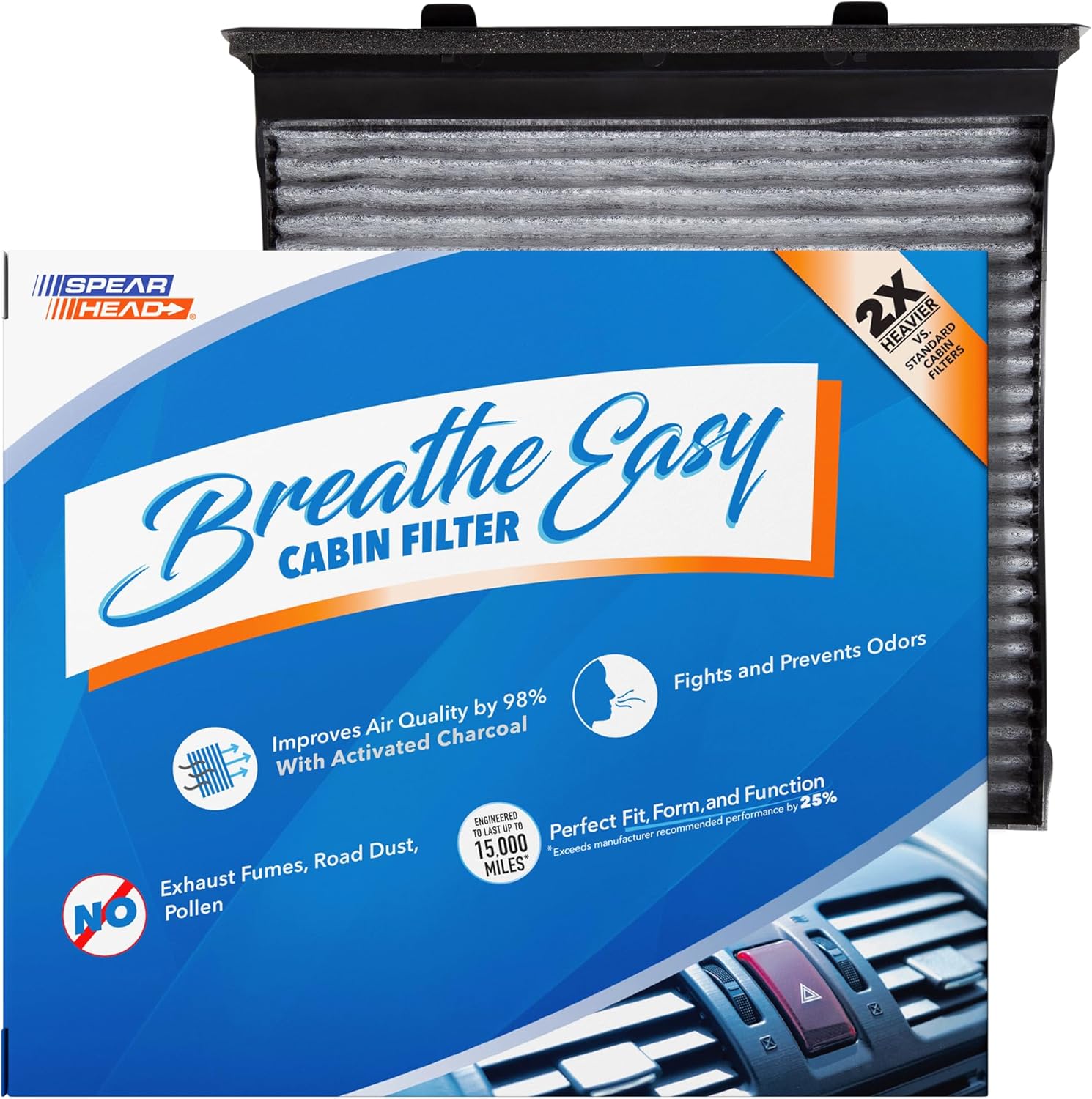
The SPEARHEAD Breathe Easy BE-930 is a direct-fit cabin air filter that replaces the factory unit in compatible Subaru Forester, Crosstrek, Impreza, WRX and XV Crosstrek models. It uses thick electrostatic pleated media plus a layer of coconut-shell activated carbon to capture fine particles, pollen and many odors before they enter the cabin. The filter is designed for DIY swaps and has a rigid frame and precision-cut pleats that make installation straightforward and help maintain airflow. SPEARHEAD claims up to 15,000 miles of service life, roughly 25% longer than standard filters, which reduces the frequency of replacements for drivers who prioritize low maintenance. The heavier media improves filtration efficiency but can modestly restrict airflow compared with very low-resistance economy filters, so drivers should expect slightly increased blower load in extreme cases. For routine city and highway use, it offers a tangible balance of filtration, odor control and durability for allergy-sensitive occupants.
Best for: Drivers who want a durable, low-maintenance cabin filter that prioritizes reliable particle and odor removal for everyday commuting and family use.
Less Ideal for: Drivers seeking the absolute lowest airflow restriction for maximum HVAC performance or those who prefer replacement intervals shorter than the claimed service life.
- Activated carbon layer reduces odors and some gases for fresher cabin air.
- Electrostatic pleated media captures fine particles like pollen and dust.
- Rigid frame and precision-cut pleats simplify DIY installation and preserve airflow.
- Longer claimed service life (up to 15,000 miles) reduces replacement frequency.
- Denser media can slightly increase resistance to airflow compared with ultra-low-resistance filters.
Verdict: Choose this filter if you want a longer-life, activated-carbon cabin filter that reliably reduces particles and odors in 2009–2018 Subaru Forester and related models.
6. EPAuto CP930 Cabin Air Filter (compatible with select Subaru models)

| Manufacturer | EPAuto |
|---|---|
| Item model number | FC-033-1 |
| Manufacturer Part Number | FC-033-1 |
| OEM Part Number | 72880-FG000, 72880-FJ000 |
| Recommended replacement | 12 months or 12,000 miles |
The EPAuto CP930 cabin air filter is a straightforward replacement that cleans incoming cabin air using a charcoal-infused media to reduce dust, odors, and some airborne pollutants. It is intended for periodic maintenance in compatible Subaru Forester and other Subaru models from the listed years and installs behind the glovebox using the vehicle's factory access points. Notable features include activated soda and carbon layers for odor control and a pleated design to capture particulates. The practical benefits are improved HVAC air quality and potentially fresher vents after several months of use, and the filter follows normal maintenance intervals of roughly every 12 months or 12,000 miles. Limitations are that it is a vehicle-specific fit and will only work for the Forester model years covered in the product compatibility list, and it does not provide advanced allergen or HEPA-level filtration. For buyers focused on a reliable, easy-to-install replacement with odor reduction, this model delivers predictable, factory-style performance without specialized filtration claims.
Best for: Buyers who prioritize a proven, easy-to-install cabin filter that improves vent smell and particulate trapping for regular maintenance on supported Subaru Forester model years.
Less Ideal for: Drivers who need hospital-grade or HEPA-level filtration for severe allergies or those who want a universal filter for multiple different vehicle makes.
- Activated carbon layer helps reduce cabin odors and some gaseous pollutants
- Pleated filter media captures dust and common particulates
- Designed to drop into the factory cabin filter slot for straightforward glovebox access
- Recommended replacement interval provided (12 months or 12,000 miles) supports routine maintenance
- Not a HEPA or medical-grade filter, so it will not remove the smallest allergens or viruses
Verdict: A reliable factory-style replacement that improves cabin air quality and reduces odors for the specified 2014–2018 Forester maintenance needs.
7. Puroma Cabin Air Filter with Activated Carbon for Subaru (CAF930S)

| Compatible Devices | Subaru Crosstrek, Subaru Forester, Subaru Impreza, Subaru WRX, Subaru WRX STI, Subaru XV Crosstrek |
|---|---|
| Filter Mounting Type | Snap In |
| Filter Shape | Rectangular |
| Material Type | Carbon Fiber |
| Air Filter Construction | Pleated |
This Puroma cabin air filter replaces the factory cabin filter in compatible Subaru models and combines a close-mesh nonwoven layer with activated carbon to cut odors, smoke, pollen, and other fine particulates. It is installed as a snap-in rectangular unit using the arrow-marked airflow direction and typically takes about ten minutes to fit. In everyday use it improves in-cabin air freshness, can modestly reduce window fogging, and helps maintain HVAC airflow by keeping contaminants out of the system. The pleated construction supports decent airflow while the activated carbon layer targets smells and some gaseous pollutants. Practical benefits include straightforward fitment for the listed Subaru models and a noise-dampening effect from the carbon layer. Limitations are that fitment is specific to the compatible year ranges and models listed, and activated carbon filters need regular replacement in high-pollution or dusty environments to keep performance strong.
Best for: Buyers who want a straightforward, factory-style cabin filter that improves in-cabin air quality and is easy to install without custom work.
Less Ideal for: Drivers who need broad, multi-vehicle compatibility or a heavy-duty commercial dust solution should look for other options.
- Activated carbon layer reduces odors and some gaseous pollutants
- Pleated, close-mesh construction captures fine particulates like pollen and smoke
- Snap-in shape with airflow arrow makes installation quick and user-friendly
- Helps maintain HVAC airflow and can reduce window fogging
- Compatibility limited to specific Subaru models and year ranges
- Requires more frequent replacement in heavily polluted or dusty conditions
Verdict: A simple, easy-to-install activated-carbon cabin filter that refreshes cabin air and fits the specified Subaru Forester and related models reliably.
Choosing the Right 2014-2018 Subaru Forester Cabin Air Filter: Key Factors to Consider
Filtration Efficiency and Particle Rating
How well a filter captures pollen, dust, mold spores, and fine particulates directly affects cabin air quality and allergies. Filters rated for smaller particle sizes will reduce visible dust and sneezes, but higher-efficiency media can increase resistance to airflow.
For Forester owners living in high-pollen regions or urban areas, selecting a filter with proven micron-level capture or a stated MERV-equivalent performance helps ensure a measurable improvement in air quality. However, extremely dense media may cut HVAC performance, so balance efficiency with airflow when the vehicle is used for daily commuting and when fast defogging is important.
Fitment and Seal Integrity
A filter that matches the Forester's cavity dimensions and seals properly prevents bypass of unfiltered air. Even a high-efficiency filter will perform poorly if the edges do not compress to the housing or if the orientation is incorrect.
Look for filters with the correct nominal size and a rigid frame or gasket that maintains contact under vibration and temperature changes. Proper fitment reduces rattles and ensures the cabin intake draws exclusively through the filter media, which matters for odor control and particle capture.
Airflow Resistance and HVAC Performance
Filters add some resistance to airflow; excessive resistance can reduce blower effectiveness, delay cabin warm-up, and slow windshield defogging. For Forester drivers in cold or humid climates, rapid defogging is a safety concern and should be preserved.
Choose a filter that strikes a practical balance between trapping contaminants and maintaining acceptable airflow. Manufacturers sometimes state pressure drop at a given flow rate; lower pressure drop is better for preserving blower performance. If you frequently use heavy climate control settings, prioritize filters designed to minimize airflow restriction.
Moisture Resistance and Durability
The 2014-2018 Forester is commonly driven in wet and snowy conditions where the intake area can be exposed to moisture. Filters that resist collapse, mold growth, and media degradation extend service life and avoid musty odors.
Materials that shed water and resist biological growth are preferable for owners in coastal, rainy, or winter-salt regions. Look for reinforced frames and media treatments that maintain structural integrity through repeated wet-dry cycles.
Dust-Holding Capacity and Service Interval
A filter with higher dust-holding capacity will stay effective longer between changes, reducing maintenance frequency. For Forester owners who drive on dirt roads or in construction zones, a larger holding capacity delays performance decline.
Consider your driving environment: urban commuters may change filters less often than rural drivers. A longer service interval can justify a slightly higher upfront effort during installation, but replace the filter sooner if you notice reduced airflow or increased interior dust.
Odor and VOC Reduction
Some filters include activated carbon or odor-adsorbing layers to reduce exhaust and interior odors. This can significantly improve perceived cabin comfort, especially during traffic or when parked near idling vehicles.
If you frequently experience strong external smells or spend long hours in the vehicle, consider filters with an odor-control layer. Note that carbon layers add thickness and can slightly affect airflow, so weigh odor control against ventilation needs.
Understanding the Forester's Cabin Intake and Access
The Forester's cabin air intake and filter location impact how you approach replacement and what fitment features matter. The intake typically draws in air from below the windshield cowl, so filters must withstand exposure to road moisture and stop leaves and larger debris from entering the HVAC box. Ensure the replacement filter's frame and gasket are designed for stable seating in that housing.
When accessing the filter, verify orientation markings and the correct face-up direction to maintain seal integrity. Properly seated filters reduce the chance of water tracking into the cabin and improve the HVAC system's ability to clear the windshield quickly.
- Check the intake cowl for debris before installing a new filter
- Orient the filter according to airflow arrow to prevent bypass
- Replace any retaining clips or worn access covers that could affect the seal
When to Replace Your Cabin Air Filter on a Forester
Replacement frequency depends on driving conditions. For city-only driving on paved roads, the filter often lasts the manufacturer recommended interval. If you drive dusty gravel roads, park near trees that shed pollen, or notice reduced airflow, change the filter sooner. Symptoms like persistent odors, increased dust inside the cabin, or reduced vent flow indicate it is time to replace the filter.
Keeping a simple visual inspection schedule—every 12 months or 12,000 miles, adjusted for conditions—helps prevent performance drops. Always compare the new filter to the old one to confirm better media condition and proper frame fit before reassembly.
- Inspect yearly and after long trips on unsealed roads
- Change earlier if you notice cabin air filter symptoms such as odors or reduced airflow
- Keep the old filter as a reference to verify correct replacement size
Installation Tips to Avoid Common Mistakes
Even correctly sized filters can underperform if installed incorrectly. Clean the filter box and remove leaves or debris before seating the new element. Confirm the airflow arrow on the filter matches the direction indicated in the housing. Compress gaskets gently to form a continuous seal without bending the frame.
If you find resistance while closing the cover, re-check the filter orientation and frame seating. Avoid over-torquing fasteners that can warp the access cover and create gaps. After installation, run the blower and check for unusual noises that could indicate a misaligned filter.
- Clean the housing cavity before installation
- Match airflow arrow and orientation marks carefully
- Avoid forcing the filter into the housing; it should fit with slight compression only
Balancing Allergy Control and HVAC Efficiency
If you prioritize pollen and allergen reduction while preserving HVAC performance, choose media rated for fine particle capture but with engineered pleat spacing to limit pressure drop. Activated carbon layers help with odors but may slightly increase resistance to airflow, so consider your primary need.
For drivers with severe allergies, prioritize filtration efficiency and plan for more frequent blower use or earlier replacement. For those who prioritize quick defogging or strong climate control response, favor lower-resistance media and replace it more often to preserve air quality.
- Prioritize high-efficiency media for allergy sufferers
- Select lower-resistance designs if defogging speed is a top priority
- Combine frequent replacement with moderate-efficiency media for balanced performance
Environmental Considerations and Waste Reduction
Cabin filters are disposable, so consider options that extend service life to reduce waste without compromising air quality. Filters with higher dust-holding capacity or corrosion-resistant frames last longer in harsh climates and cut the number of replacements over a vehicle lifetime.
Proper disposal of used filters is important because they can contain trapped pollutants. Check local regulations for particulate-laden material disposal and consider keeping a replacement schedule to avoid frequent premature changes that generate excess waste.
- Choose longer-lasting filters if you want fewer disposals
- Keep used filters in sealed bags until proper disposal to limit dust release
- Consider recycling programs where available for filter materials
Still looking for the perfect fit?
Select your Subaru Forester configuration to see the most relevant Cabin Air Filters recommendations
How We Chose the Best 2014-2018 Subaru Forester Cabin Air Filter
We focused on attributes that matter specifically for 2014-2018 Subaru Forester owners and applied practical editorial filters to keep the list useful and reliable. Primary evaluation criteria included filtration efficiency for common particles such as pollen and fine dust, fitment accuracy for the Forester's HVAC housing, and airflow impact to ensure proper heating, cooling, and defogging performance. Durability and moisture resistance were assessed to address the Forester's exposure to wet climates and occasional dusty roads. We also considered dust-holding capacity and maintenance interval expectations to estimate how often a typical owner will need to replace the filter.Excluded items included filters that required HVAC housing modification, non-passenger-cabin applications, or unclear fitment claims for the 2014-2018 Forester. We prioritized filters with clear sizing and installation orientation, as well as those with supportive testing data or manufacturer specifications about particle capture. Finally, we gave weight to units that balance filtration and airflow rather than maximizing one at the expense of the other, since the Forester's defogging and climate control rely on consistent air movement.
Our full evaluation process is outlined in our review methodology.
FAQ
How can I tell if my Forester's cabin air filter needs replacing?
Common signs include reduced airflow from vents, persistent musty or exhaust odors, increased dust on the dashboard, and slower windshield defogging. A visual inspection of a darkened or clogged filter also indicates replacement is needed.
Where is the cabin air filter located on a 2014-2018 Forester?
The cabin intake sits under the windshield cowl, and the filter is accessible behind the glove box or through a service panel depending on the model year and trim. Refer to your owner's manual for the exact access method and orientation.
Can I replace the cabin pollen filter myself?
Yes, many Forester owners can replace the cabin pollen filter with basic hand tools and a clean workspace. Follow the airflow direction, clean the housing, and ensure the frame seats properly to avoid leaks.
How often should I replace the cabin air filter in wet climates?
In wet or coastal climates, change intervals may be shorter because moisture and biological growth can degrade the media. Inspect the filter every 6 to 12 months and replace sooner if you notice odors or reduced airflow.
Will a higher-efficiency filter reduce my Forester's heating or cooling performance?
Higher-efficiency filters can increase airflow resistance, which may slightly affect blower performance. Choosing a balanced design with reasonable pressure drop preserves most heating and cooling capability while improving filtration.
Are activated carbon layers worth it for a Forester owner?
Activated carbon helps reduce odors and certain gaseous compounds, which is useful if you frequently encounter traffic exhaust or strong smells. Consider the modest impact on airflow and choose based on odor sensitivity.
Final Verdict
Prioritize the factors that matter most for how you use your Forester: choose higher-efficiency media if allergy and particle removal are top concerns, or favor lower-resistance designs when quick defogging and strong HVAC response matter more. Ensure any replacement matches the Forester's housing dimensions and seals correctly to avoid bypass and maintain consistent ventilation.Balancing filtration, airflow, and durability will guide confident selection. Replace the filter on a schedule that reflects your driving conditions, and inspect it periodically for moisture or clogging to keep the cabin air fresh and the HVAC system working efficiently.
Explore More:
- Check out all Subaru Forester parts & accessories
- Explore Cabin Air Filters Maintenance & Repair Guides
- Explore HVAC
- Browse all Auto Parts
