

Note: This article contains affiliate links. If you click on these links and make a purchase, I may earn a small commission at no extra cost to you. This helps support my research and content. Read my full affiliate disclosure here.
If you own a 2009-2013 Subaru Forester, choosing the right cabin air filter affects comfort, HVAC performance, and allergy control on every drive. A properly fitted filter reduces pollen, dust, and road debris while preserving blower efficiency and preventing musty odors.This guide narrows the field to seven shortlisted cabin air filters suited to the Forester s ventilation system. We evaluated options for fitment, filtration efficiency, airflow impact, and durability so you can pick a replacement that matches your driving conditions and maintenance preferences. Read on for what to look for and practical tips on replacement and troubleshooting.
Looking for other parts? See all Subaru Forester parts & accessories.
Top Picks at a Glance
| Best Overall The best all-around choice for most situations | Subaru Cabin Air Filter 72880FG000 (Genuine OEM) |  |
| Best Quality Built to a higher standard if you want something more solid | K&N VF2055 Washable Cabin Air Filter |  |
| Best Value The sweet spot between price and what you get | AirTechnik CF10930 PM2.5 Cabin Air Filter with Activated Carbon |  |
| Best Budget The cheapest option that still gets the job done reliably | Puroma Cabin Air Filter with Activated Carbon (CAF930S) |  |
| Highest Rated A top-rated pick with lots of positive feedback | EPAuto CP930 Cabin Air Filter with Carbon Media |  |
| Most Popular A crowd favorite that many people choose with confidence | SPEARHEAD Breathe Easy Cabin Air Filter with Activated Carbon (BE-930) |  |
| Best Seller A high-volume bestseller chosen again and again | RVgolf Engine and Cabin Air Filter Replacement Set (fits select Subaru models) |  |
1. Subaru Cabin Air Filter 72880FG000 (Genuine OEM)

| Material Type | Paper |
|---|---|
| Air Filter Construction | Pleated |
| Unit Count | 1 Count |
| Manufacturer Part Number | 72880FG000 |
This genuine Subaru cabin air filter (part 72880FG000) is a direct-fit replacement designed to refresh the cabin air on compatible Forester, WRX, STI, Impreza, and Crosstrek model years listed by Subaru. It uses pleated paper construction to capture dust, pollen, and other common particulates before they enter the passenger compartment. Installation is straightforward for a basic DIY job: the filter sits in the glove box or passenger side housing on supported Forester years and can be swapped without special tools. Because it is a factory part, fit and sealing match Subaru factory tolerances, which reduces bypass and ensures the HVAC blower only moves filtered air. The paper media is effective for general driving and seasonal allergy reduction but does not claim active odor or heavy particulate filtration beyond typical cabin-use performance. Buyers who want upgraded allergen or activated-carbon odor control should consider specialty aftermarket filters, but for reliable, factory-quality replacement this Subaru filter is a practical, no-frills choice.
Best for: Buyers who prioritize a factory-quality, straightforward replacement to restore original cabin filtration performance on their Subaru and prefer an exact-fit OEM part over aftermarket upgrades.
Less Ideal for: Drivers seeking activated carbon odor control or higher-efficiency allergy-grade filtration should consider aftermarket specialty filters instead of this standard paper OEM unit.
- Genuine Subaru part for factory-fit and sealing
- Pleated paper media captures dust and pollen for cleaner cabin air
- Simple direct-fit installation suitable for basic DIY replacement
- Uses basic paper media so it does not provide enhanced odor or high-efficiency particulate filtration
Verdict: Choose this genuine Subaru cabin filter when you want a direct-fit, factory-quality replacement to restore original cabin air filtration on supported Forester model years.
2. K&N VF2055 Washable Cabin Air Filter

| Model | VF2055 |
|---|---|
| Compatible vehicles | 2009-2013 Subaru Forester (and similar listed models) |
| Washable | Yes |
| Installation | Drop-in, no tools required |
The K&N VF2055 is a washable replacement cabin air filter designed for 2009–2013 Subaru Forester applications and similar compatible models. It replaces the factory cabin filter and is pretreated to help control odors and maintain airflow for the HVAC system. Typical use is straightforward: remove the factory filter, drop in the VF2055, and periodically rinse it under low-pressure water when it becomes dirty rather than replacing it. Notable features include washable, reusable construction that reduces recurring filter purchases and a design aimed at preserving heating and cooling efficiency. In practice the filter should maintain better airflow versus heavily clogged disposable filters and can help reduce musty smells from a saturated cabin filter. Limitations are that long-term filtration efficiency compared with high-efficiency disposable filters depends on cleaning frequency and technique, and it requires occasional maintenance instead of a simple swap-and-forget disposable replacement.
Best for: Buyers who prioritize long-term value and want a performance-minded, reusable cabin filter for a 2009–2013 Forester that maintains airflow and reduces odors.
Less Ideal for: Drivers who prefer a maintenance-free disposable filter or who want the absolute highest particulate filtration regardless of replacement frequency.
- Washable and reusable construction reduces recurring filter purchases.
- Designed to improve airflow which can help HVAC heating and cooling efficiency.
- Pre-treated media helps control odors and unpleasant cabin smells.
- Simple drop-in installation with no tools required for quick replacement.
- Requires periodic cleaning and proper drying to maintain performance over time.
Verdict: If you want a reusable cabin filter that preserves airflow and cuts long-term costs for a 2009–2013 Forester, the K&N VF2055 is a practical performance-oriented choice.
3. AirTechnik CF10930 PM2.5 Cabin Air Filter with Activated Carbon

| Compatible Devices | Subaru Crosstrek 2016-2017; Forester 2009-2018; Impreza 2008-2016; WRX 2012-2021; WRX STI 2013-2021; XV Crosstrek 2013-2015 |
|---|---|
| Material Type | activated carbon |
| Product Grade | new |
The AirTechnik CF10930 is a replacement cabin air filter that combines a particulate layer, activated carbon, an electrostatic layer, and a reinforcement layer to block road dust, exhaust particles, and fine PM2.5 pollution. It installs in the vehicle HVAC intake like a factory filter and is intended for routine yearly replacement to keep the cabin air cleaner and reduce odors. The activated carbon helps absorb fumes and smells while the electrostatic layer improves capture of very small particles, which is useful in urban or high-traffic conditions. Packaging claims a long service life and the company includes installation instructions for a straightforward swap. Limitations include the need to confirm exact fitment for your Forester year and model variant before ordering and the fact that higher-efficiency medical-grade filters may capture ultrafine particles even better; this is a solid, cost-effective upgrade over a worn filter but not a full substitute for specialized filtration systems.
Best for: Buyers who want a practical, year-round replacement that improves cabin air quality and reduces odors without paying for premium specialty filters.
Less Ideal for: People seeking hospital-grade or HEPA-level filtration for severe allergy or contamination concerns should consider higher-specification filters or add-on purification systems instead.
- Four-stage construction (particulate, activated carbon, electrostatic, reinforcement) for broad protection against dust, odors, and fine particles
- Electrostatic layer specifically targets PM2.5-sized particulates common in urban pollution
- Activated carbon reduces cabin odors and light exhaust fumes for a more pleasant interior
- Designed for direct replacement of the factory cabin filter and includes installation instructions
- Requires verifying vehicle fitment since Subaru model years and trims can differ
- Not marketed as a medical-grade or HEPA-level filter for ultrafine particle removal
Verdict: A budget-friendly, four-stage replacement filter that noticeably improves cabin air and reduces odors for Forester drivers seeking practical, year-round filtration.
4. Puroma Cabin Air Filter with Activated Carbon (CAF930S)

| Compatible Devices | Subaru Crosstrek; Forester; Impreza; WRX; WRX STI; XV Crosstrek |
|---|---|
| Filter Mounting Type | Snap In |
| Filter Shape | Rectangular |
| Air Filter Construction | Pleated |
| Unit Count | 1 Count |
The Puroma CAF930S is a replacement cabin air filter built to fit Subaru models in the stated compatibility list, including the Forester covered by this article goal. It uses a multi-layer pleated construction with an activated carbon layer to trap dust, pollen, smoke, and odor-causing gases while maintaining airflow to the HVAC system. Installation is straightforward with a snap-in mounting type and a clear airflow arrow, so a basic DIY swap usually takes under 10 minutes. In practice this filter improves cabin air freshness and can help reduce window fogging and HVAC strain when changed on the recommended schedule. The activated carbon adds odor control that standard paper-only filters lack, and the pleated media increases particle-holding capacity compared with flat filters. Downsides are that material type is listed as carbon fiber in the spec sheet which may confuse shoppers, and long-term durability and exact filtration efficiency are not quantified by a MERV rating or equivalent, so performance versus higher-end OE-equivalent filters may vary.
Best for: Buyers looking for an affordable, easy-to-install replacement that improves cabin air freshness and odor control on the specified Subaru Forester model years.
Less Ideal for: Drivers who need verified, high-efficiency filtration backed by published ratings or who prefer dealer-sourced factory replacement parts.
- Activated carbon layer reduces odors and some gaseous contaminants.
- Pleated multi-layer media captures dust, pollen, smoke and fine particles while maintaining airflow.
- Snap-in rectangular design with airflow arrow makes DIY installation quick and simple.
- No stated filtration rating (MERV or micron) so exact particle removal performance is unspecified.
Verdict: A budget-friendly cabin filter that adds activated carbon odor control and straightforward snap-in installation for the covered Subaru Forester years.
5. EPAuto CP930 Cabin Air Filter with Carbon Media

| Manufacturer | EPAuto |
|---|---|
| Item model number | FC-033-1 |
| OEM Part Number | 72880-FG000, 72880-FJ000 |
| Recommended replacement interval | 12 months or 12,000 miles |
The EPAuto CP930 is a direct-fit cabin air filter replacement for many Subaru models, including 2009-2018 Forester, and uses activated carbon to help reduce odors and airborne contaminants. It installs behind the glove box and is intended as an annual maintenance item to keep the HVAC system supplying cleaner air to the cabin. Notable features include a charcoal/soda layer for odor control and a pleated filter media to trap dust, pollen, and smog particles so occupants notice fresher air during commutes. The filter is lightweight and shaped to match factory filter housings, so installation is straightforward for DIYers and quick at a shop. Limitations are that it is a basic replacement filter without specialized high-efficiency HEPA rating and that longevity depends on driving conditions, so heavy urban or dusty use may require more frequent changes than the recommended 12 months or 12,000 miles. For routine maintenance it provides a practical balance of filtration and odor control at an accessible size.
Best for: Buyers who prioritize reliable, easy-to-install cabin filtration for routine maintenance and want improved odor control and particulate removal without specialty filters.
Less Ideal for: Drivers seeking medical-grade filtration for severe allergies or environments with heavy smoke and ultrafine particles should choose a higher-efficiency or HEPA-rated option.
- Activated carbon layer reduces odors and some gaseous contaminants
- Direct-fit shape for straightforward replacement behind the glove box
- Pleated media captures dust, pollen, and common particulates
- Lightweight and easy for DIY installation
- Not a certified HEPA filter so it may not capture the finest ultrafine particles
Verdict: A practical, carbon-enhanced cabin filter that delivers reliable particle capture and odor control for routine maintenance on compatible Subaru Forester models.
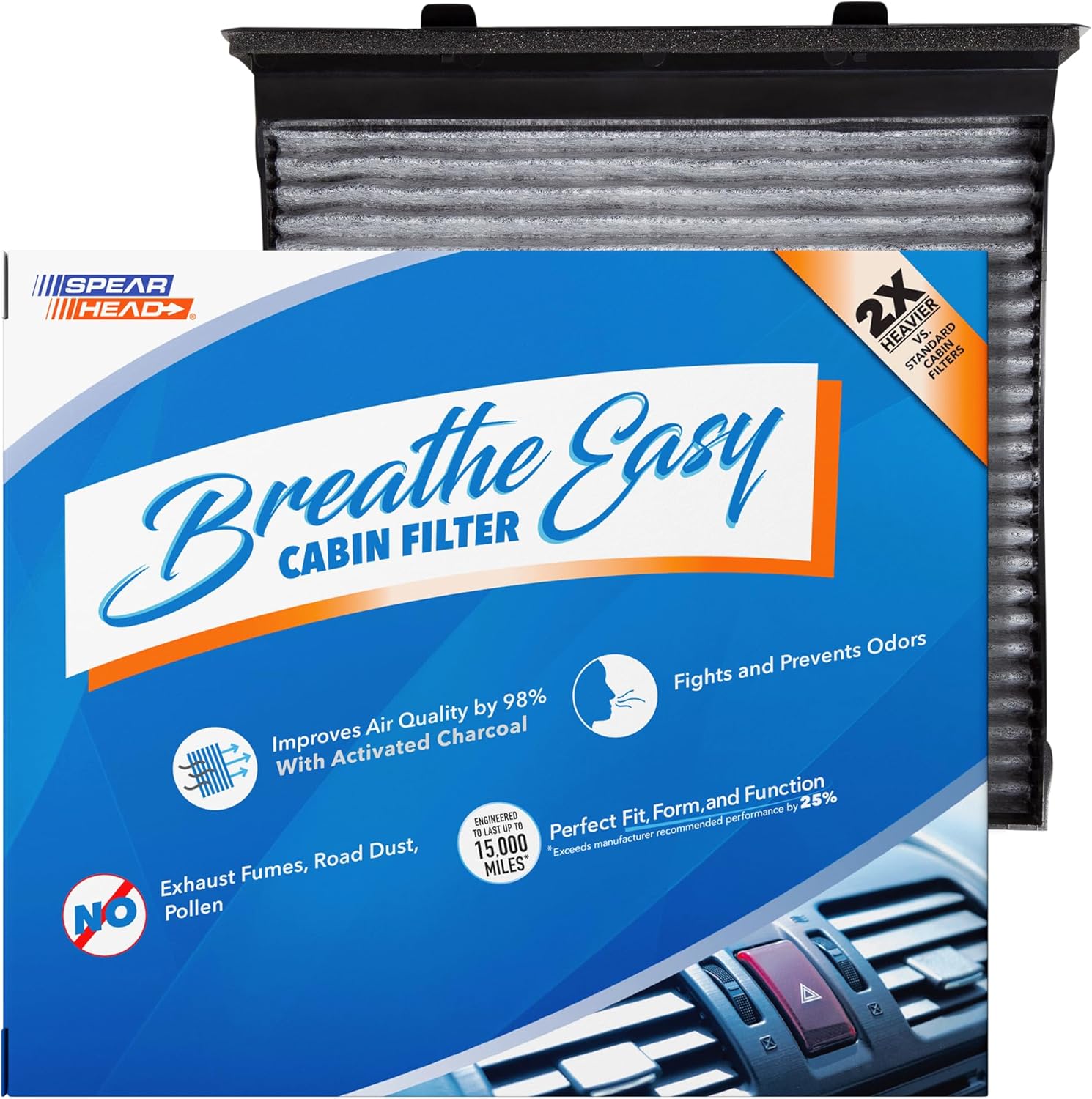
6. SPEARHEAD Breathe Easy Cabin Air Filter with Activated Carbon (BE-930)
| Compatible Devices | Automobile Cabin |
|---|---|
| Product Grade | High |
| Material Type | Activated Carbon, Electrostatic Media |
| Air Filter Construction | Pleated |
The SPEARHEAD Breathe Easy BE-930 is a replacement cabin air filter built with pleated electrostatic media and a layer of coconut-shell activated carbon to capture fine particles, pollen, and cabin odors. It is intended for DIY swaps and fits Forester model years within the listed compatibility range; the rigid frame and precision pleats make installation straightforward. The thicker electrostatic media increases particle attraction compared with standard filters, while the activated carbon layer helps adsorb exhaust and road odors for a fresher cabin. SPEARHEAD advertises up to 15,000 miles of service life, which reduces how often you need to replace the filter versus a typical 12,000-mile baseline. Practical benefits include improved in-cabin air quality for allergy-sensitive passengers and lower maintenance frequency. Be aware this is a single-unit aftermarket replacement so longevity claims depend on local driving and pollution conditions, and heavier media can slightly reduce airflow compared with very low-resistance economy filters.
Best for: Buyers who prioritize proven performance and social proof from other owners and want a longer-lasting, odor-reducing cabin filter for routine Forester use.
Less Ideal for: Drivers seeking the absolute lowest airflow restriction or those who replace filters very frequently due to extreme dusty conditions may prefer a different specification.
- Multi-layer construction combines electrostatic media and real coconut-shell activated carbon for particle capture and odor control
- Heavier, denser media intended to extend service life up to about 15,000 miles
- Pleated design with a rigid frame for easy DIY installation and consistent fit
- Targets fine particulates and common cabin odors, helpful for allergy-sensitive occupants
- Denser media may introduce slightly higher airflow resistance than basic economy filters
- Stated mileage life can vary with dust, city pollution, and driving conditions
Verdict: Choose this filter if you want a higher-grade, longer-lasting cabin filter that reduces both fine particles and cabin odors for your Forester.
7. RVgolf Engine and Cabin Air Filter Replacement Set (fits select Subaru models)

| Manufacturer | RVgolf |
|---|---|
| Item model number | RV00072 |
| Manufacturer Part Number | RV00072 |
| Applicable models | Select Subaru Impreza/WRX/Forester/Crosstrek years listed |
This RVgolf filter set includes both an engine air filter and a cabin air filter sized to match several Subaru applications, and is meant to be a direct replacement for the factory units. The engine filter uses a high-fiber construction to trap fine particles while maintaining a low-resistance profile that helps airflow and can reduce intake noise. The cabin filter uses multi-layer media to capture pollen, dust, and other suspended particles to improve in-cabin air quality. Installation is straightforward and can be completed during a routine maintenance interval without special tools. The product claims high filtration efficiency and recommends replacement around every 12 months or 12,000 miles. Take note that fitment must be confirmed against the listed reference numbers and specific model years before purchase, and the listing does not include detailed performance test data versus factory or premium alternatives.
Best for: A cautious Subaru owner seeking a straightforward, factory-style replacement to maintain engine breathing and improve cabin air quality with an easy at-home installation.
Less Ideal for: Buyers who want independently verified lab filtration performance or who need one-size-fits-many universal filters should consider alternatives.
- Includes both engine and cabin filters for coordinated maintenance
- High-fiber and multi-layer media designed to capture fine particles
- Low-resistance design intended to preserve intake efficiency and reduce noise
- Easy, no-special-tools installation for routine filter changes
- Fitment requires confirming reference part numbers rather than universal fit
- Manufacturer claims filtration rates but provides no independent test data in the listing
Verdict: A convenient paired engine and cabin filter set that offers a factory-style replacement for Subaru owners who prioritize easy, risk-free maintenance and improved in-cabin air cleanliness.
Choosing the Right 2009-2013 Subaru Forester Cabin Air Filter: Key Factors to Consider
Fit and Compatibility
Correct fit is essential because the Forester s cabin filter housing relies on a secure seal to force air through the media. A filter that is slightly undersized or warped will allow unfiltered air to bypass the media, reducing protection against pollen and dust.
When assessing fit, check the stated vehicle fitment for the 2009-2013 Forester and whether any trimming or adapters are required. Filters that promise exact-fit dimensions minimize installation time and reduce the risk of gaps. For owners who do not perform frequent maintenance, a consistent fit also prevents premature wear on the HVAC blower caused by debris ingestion.
Filtration Efficiency
Filtration efficiency determines how well the filter captures particles such as pollen, dust, soot, and road debris. Filters with higher-rated media or multi-layer construction generally trap smaller particles, which is valuable for allergy sufferers and those who drive in dusty environments.
Consider whether the filter specifies a MERV rating, micron capture size, or describes multi-layer or electrostatically charged media. While higher efficiency often means better air quality, it can also increase airflow resistance, so balance filtration needs with blower performance for this Forester.
Airflow and Blower Load
Airflow resistance affects HVAC performance, heater/AC effectiveness, and the load on the blower motor. A highly restrictive filter can reduce cabin air delivery and cause the blower to work harder, which may lead to noise or extra wear over time.
Look for filters designed to maintain adequate airflow while still providing effective filtration. Product specifications or tests that report pressure drop or designed-for-low-resistance media are helpful. For owners who frequently run the HVAC at high fan speeds, prioritizing lower resistance helps maintain system responsiveness in the Forester.
Moisture Resistance and Durability
The Forester is often exposed to wet conditions, road spray, and seasonal humidity. Filters that resist moisture and maintain structural integrity prevent sagging, mold growth, and premature failure. Waterproof backing layers or treated fibers can improve longevity in damp climates.
Durability also ties to how often you want to replace the filter. Longer-lasting media can stretch replacement intervals but be mindful that heavy contamination in dusty or urban environments still necessitates more frequent changes to preserve air quality and HVAC efficiency.
Odor Control
Activated carbon or odor-control layers reduce vehicle interior smells from exhaust, smoke, or environmental odors. For Forester owners who encounter smoky conditions, animal odors, or heavy road smells, a carbon layer can significantly improve perceived air quality.
Keep in mind that carbon layers are primarily for odor adsorption and do not replace particulate filtration. If both odor control and high particulate removal are required, look for multi-layer filters that combine electrostatic or dense particle media with activated carbon.
Ease Of Installation And Maintenance
Most Forester owners perform cabin filter replacement during routine maintenance, so a filter that installs quickly without tools is a practical advantage. Clear filtration direction markings and rigid frames simplify the job and reduce the chance of incorrect installation.
Also consider availability of replacement intervals and whether the filter needs periodic inspection. Some media types shed fibers initially or compact with use, so choosing a filter with stable construction reduces the need for early follow-up checks.
When To Replace Your Forester S Cabin Air Filter
If you notice reduced airflow, increased dust on interior surfaces, lingering odors, or worsening allergy symptoms, the cabin filter may be clogged and due for replacement. Typical intervals vary with driving conditions; dusty roads, heavy pollen seasons, and urban pollution accelerate contamination.
Routine visual inspection every 12,000 to 15,000 miles, or yearly, is a reasonable starting point for the 2009-2013 Forester. Replace sooner if the filter appears dark, caked with debris, or emits a musty smell after exposure to wet weather.
- Check the filter during oil changes or cabin maintenance visits.
- Replace immediately if you detect mold growth or severe saturation.
- Shorten intervals when driving in dusty or high-pollen areas.
Symptoms Of A Failing Cabin Filter
Common cabin air filter symptoms include weaker HVAC airflow, increased dust in the cabin, obstructed defogging performance, and unpleasant smells. The blower motor may run louder or seem less effective at higher settings when airflow is restricted.
Allergy symptoms such as sneezing or watery eyes after driving can also indicate reduced filtration efficiency. Addressing these symptoms promptly helps maintain comfort and prevents secondary HVAC issues related to moisture buildup.
- Decreased cabin air circulation and slower defogging
- Noticeable dust buildup on vents and dashboard
- Persistent odors or damp smells inside the cabin
How Replacement Affects HVAC Performance
Installing a clean, properly sized filter restores designed airflow, which improves heater and air conditioner response times and ensures faster windshield defogging. Conversely, a clogged filter reduces system efficiency and can force the blower to operate longer to reach target temperatures.
Choosing a filter that balances filtration with low resistance preserves blower longevity and consistent cabin comfort. For most Forester owners, a moderate-efficiency filter that maintains airflow is preferable to an overly dense one that chokes the system.
- Fresh filters can reduce blower runtime to achieve set temperatures
- Lower resistance reduces motor strain and noise
- Better filtration maintains cleaner evaporator cores and ducting
Measuring Filter Performance Without Lab Tests
You can assess a filter s practical performance through a few simple checks. Inspect the media for fiber density and any electrostatic or layered construction. Heavier, multi-layer filters generally trap more particles but may show higher initial resistance.
Track cabin dust levels, airflow speed at the vents, and how quickly the windshield clears to judge whether a chosen filter meets your needs. Over several weeks, note any changes in interior dust accumulation or odor reduction to validate performance.
- Visual media inspection to confirm layer construction
- Monitor vent airflow and defogging speed after installation
- Watch interior dust levels and odor presence over time
Practical Tips For Forester Owners Doing The Swap
The cabin filter on the 2009-2013 Forester is accessible behind the glove box. Before starting, turn off the HVAC system and remove any loose items from the glove box to prevent obstruction. Keep the replacement filter s orientation marked so you insert the airflow arrow correctly.
Wear gloves if the old filter is very dirty, and check the housing for accumulated leaves or debris. Inspect the housing seal and wipe the interior with a damp cloth if needed, then slide the new filter into place making sure it sits flat and sealed.
- Turn off the HVAC and remove glove box contents
- Note the airflow direction on the old filter before removal
- Clean housing area of leaves or debris before installing new filter
Carbon Layers And Allergy Considerations
Activated carbon layers help adsorb odors and volatile organic compounds but do not replace particle filtration. For Forester drivers who face smoke, strong road odors, or persistent cabin smells, a carbon-enhanced filter can noticeably improve perceived air quality.
Allergy sufferers should prioritize filters that capture fine pollen and particulates while optionally combining carbon for odor control. Verify that any carbon layer does not overly increase resistance, and balance the two needs based on typical driving environments.
- Carbon helps with smells but not particulate capture
- Combine high particulate filtration with carbon if needed
- Check airflow impact when choosing carbon-enhanced filters
Still looking for the perfect fit?
Select your Subaru Forester configuration to see the most relevant Cabin Air Filters recommendations
How We Chose the Best 2009-2013 Subaru Forester Cabin Air Filter
We focused on attributes that matter specifically for the 2009-2013 Subaru Forester s HVAC system and owner priorities. Primary evaluation criteria included fit and part compatibility to ensure the filter seats correctly in the Forester s housing and maintains a proper seal. Filtration performance was assessed by filter media type and stated MERV or micron ratings to gauge pollen, dust, and particulate capture. Airflow resistance was considered to avoid excessive strain on the blower motor while still providing meaningful filtration. Durability and moisture resistance were reviewed for filters used in varied climates, since the Forester often sees wet and dirty conditions. Ease of installation and whether the filter required trimming or adapters was noted because many owners prefer a straightforward, tool-free swap. Lastly, odor control and activated carbon layers were considered for drivers who encounter smoke, road odors, or heavy pollen.We excluded generic filters that lack clear fitment information for the 2009-2013 Forester, items with unverifiable filtration specifications, and products that require significant modification to fit. The shortlist emphasizes usable, well-documented options that align with real-world owner needs for this vehicle.
Our full evaluation process is outlined in our review methodology.
FAQ
How often should I change the cabin air filter in my 2009-2013 Forester?
It usually depends on driving conditions. Inspect the filter every 12,000 to 15,000 miles or annually, and replace sooner if you drive in dusty, urban, or high-pollen environments.
What are common symptoms that the cabin pollen filter needs replacing?
Look for reduced vent airflow, increased dust inside the cabin, slower windshield defogging, persistent odors, or worsened allergy symptoms after driving. Any of these often indicate a clogged filter.
Can I install a higher-efficiency filter without harming the Forester s HVAC?
Higher-efficiency filters can improve particle capture but sometimes increase airflow resistance. Choose one designed to maintain adequate airflow to avoid extra blower load and reduced HVAC performance.
Is a carbon cabin filter worth it for odor control?
Carbon layers are effective at adsorbing odors and some volatile compounds. They are worthwhile if you frequently encounter smoke or strong road odors, but they should be paired with good particulate filtration for comprehensive protection.
Can I change the cabin air filter myself and how long does it take?
Yes. The filter is behind the glove box and the swap is straightforward for most owners. With basic familiarity, the job typically takes 10 to 20 minutes, including a quick housing clean.
Does a dirty cabin filter affect fuel economy or engine performance?
A clogged cabin filter impacts HVAC efficiency and blower workload, but it does not directly affect engine performance or fuel economy. However, extended HVAC strain could lead to increased electrical load in extreme cases.
Final Verdict
For the 2009-2013 Subaru Forester, prioritize a cabin air filter that fits the housing precisely and balances particulate removal with low airflow resistance. If you suffer allergies or drive in dusty conditions, choose higher-efficiency media; if you regularly face odors or smoke, opt for a carbon-enhanced layer while monitoring airflow.Regular inspection and timely replacement restore HVAC performance and cabin comfort. Use the factors discussed above to weigh fitment, filtration, airflow, and durability so you can select the right replacement with confidence.
Explore More:
- Check out all Subaru Forester parts & accessories
- Explore Cabin Air Filters Maintenance & Repair Guides
- Explore HVAC
- Browse all Auto Parts
