

Note: This article contains affiliate links. If you click on these links and make a purchase, I may earn a small commission at no extra cost to you. This helps support my research and content. Read my full affiliate disclosure here.
If you own a 2003-2007 Honda Accord you know the braking system plays a big role in daily safety and driving feel. Worn or warped rotors can cause pulsing at the pedal, noise, and reduced braking performance. Picking the right brake rotors for this Accord chassis ensures consistent stops and longer pad life.This guide covers the top shortlisted rotors suited to the 2003-2007 Accord, explains key fitment and material choices, and summarizes the factors we used to evaluate each option. Use it to narrow choices and prepare for a confident replacement or upgrade.
Looking for other parts? See all Honda Accord parts & accessories.
Top Picks at a Glance


1. Detroit Axle Front and Rear Drilled & Slotted Brake Rotor and Ceramic Pad Kit for 2003–2007 Honda Accord (2.4L)

| Applicable vehicle | 2003-2007 Honda Accord 2.4L (rear disc) |
|---|---|
| Rotors | Drilled & slotted, front and rear |
| Pads | Ceramic front and rear (hardware included) |
| Includes | Brake cleaner (10 oz) and brake fluid (12 oz) |
This Detroit Axle kit supplies everything needed to refresh the front and rear brakes on a 2003–2007 Honda Accord 2.4L with rear disc brakes. The package includes drilled and slotted rotors for both axles plus front and rear ceramic pads with hardware, along with a 10 oz brake cleaner and a 12 oz bottle of brake fluid to finish the job. Drilled and slotted rotors help clear gas and debris and can aid cooling under heavier use, while ceramic pads trade a bit of initial bite for quieter, lower-dust operation compared with many semi-metallic options. Multiple reviewers report straightforward fitment and included grease or cleaner makes installation cleaner and easier. A small number of users noted the supplied hardware may not always fit perfectly, so plan to have spare clips or an aftermarket hardware kit handy if needed. For a balanced buyer seeking a full-service replacement that improves looks and maintains everyday braking performance, this kit is a practical, complete option for the Accord platform.
Best for: Buyers who want a single purchase that refreshes both front and rear brakes and balances everyday drivability with improved rotor cooling and reduced dust.
Less Ideal for: Drivers seeking motorsport or track-focused braking upgrades should look for performance-specific rotors and pads designed for sustained high-temperature use.
- Complete kit includes front and rear drilled and slotted rotors plus ceramic pads and basic installation consumables
- Drilled and slotted rotor design helps vent heat and expel debris for improved performance under heavier braking
- Ceramic pads offer quieter operation and reduced brake dust compared with many semi-metallic pads
- Multiple reviewers report accurate fitment to the 2003–2007 Accord and straightforward installation
- Some customers found the included brake hardware did not fit perfectly and replaced it with aftermarket hardware
Verdict: A convenient, full front-and-rear brake refresh for 2003–2007 Accord owners who want upgraded rotor cooling and quieter ceramic pads without piecing parts together.
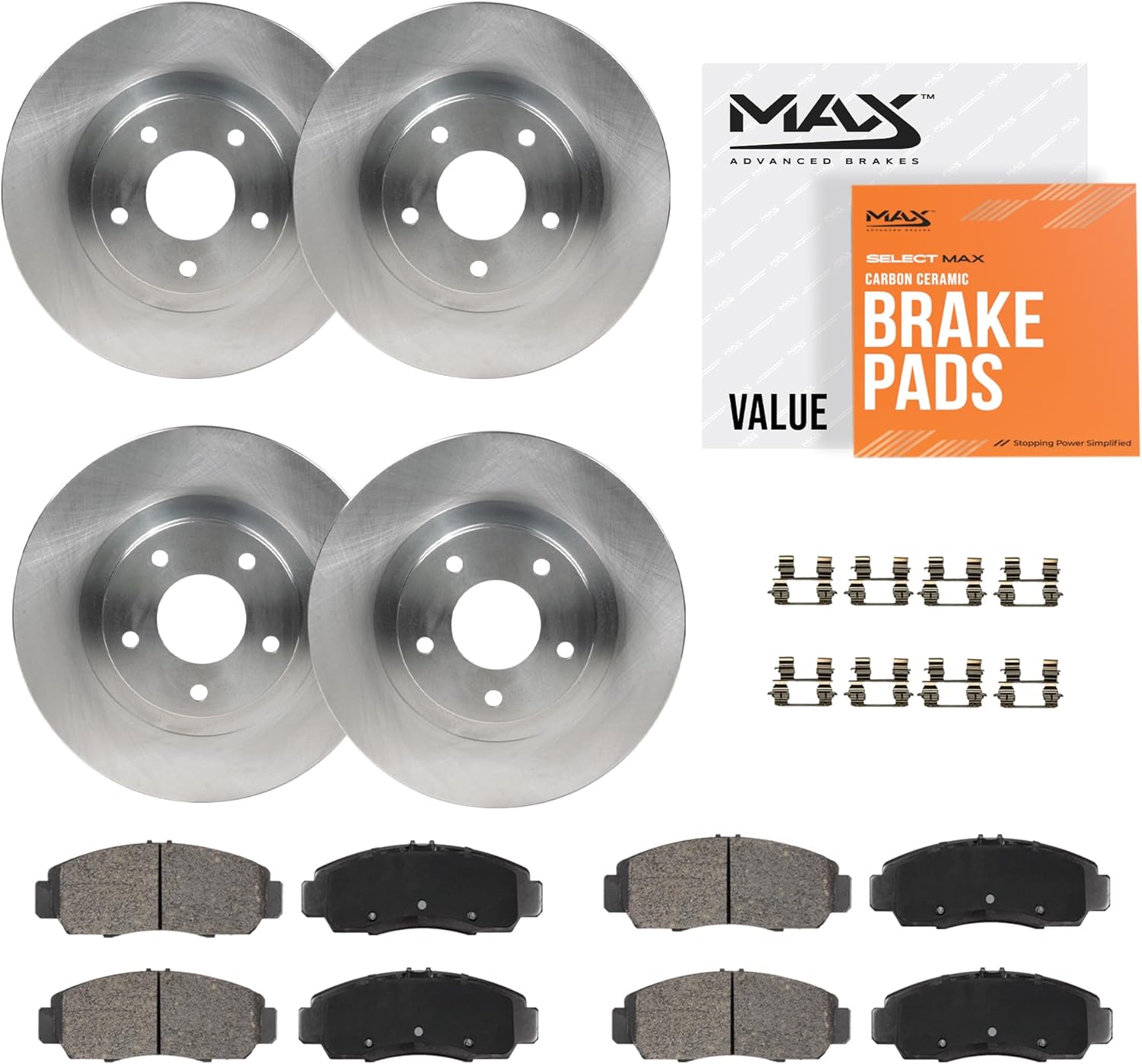
2. Max Advanced Brakes ValueMAX Front and Rear Brake Kit (Carbon Ceramic Pads, Rotors)
| Set Name | ValueMAX Series Automotive Replacement Brake Kit |
|---|---|
| Included Components | Brake Rotors, Brake Pads, Hardware |
| Automotive Fit Type | Vehicle Specific Fit |
| OEM Equivalent Part Number | 1506 31275 96795 536 31315 980138 |
This ValueMAX brake kit from Max Advanced Brakes supplies both front and rear rotors, pads, and installation hardware in one package for a direct vehicle-specific replacement. The rotors are precision-machined cast iron with a non-directional finish to speed bedding and reduce vibration, while the included carbon ceramic pads are formulated for low dust and quieter stops thanks to dual-layer rubberized shims. Typical use is daily commuting and urban driving where consistent, predictable stopping and cleaner wheels matter more than track-level bite. Installation is straightforward because the kit is designed to bolt on and includes the necessary hardware. Reported user experience shows good fitment across compatible Accords and similar cars and generally quiet operation after break-in. Limitations to note are that this is aimed at OEM-style performance for street use rather than high-temperature or track-focused braking, and longevity will vary with driving style; several reviews praise value and fit but mention occasional packaging or missing-part issues that the seller resolved.
Best for: Buyers who want a full, vehicle-specific brake replacement that prioritizes consistent street braking, quieter stops, and lower dust for routine commuting and light-duty driving.
Less Ideal for: Drivers seeking track-grade stopping power or heavy-duty commercial braking should choose performance- or heavy-duty-specific rotors and pads instead.
- Complete front-and-rear kit includes rotors, carbon ceramic pads, and installation hardware for a single purchase
- Precision-machined cast iron rotors with non-directional finish reduce vibration and speed bedding
- Carbon ceramic pads designed for low dust and reduced noise using dual-layer rubberized shims
- Vehicle-specific fit intended to bolt on for straightforward installation
- Designed for everyday street driving rather than high-heat track performance
Verdict: A convenient, vehicle-specific full brake kit that delivers quiet, low-dust, OEM-style stopping for everyday Honda Accord driving.
3. Detroit Axle 2.4L Front and Rear Brake Kit for 2003–2007 Honda Accord

| Fitment | 2003–2007 Honda Accord 2.4L with 4-wheel disc brakes |
|---|---|
| Front rotor size | 11.10 inch |
| Rear rotor size | 10.24 inch |
| Brake pads | Ceramic, hardware included |
| Finish | Zinc plated rotors |
This Detroit Axle kit supplies both front and rear rotors plus matching ceramic pads so you can replace the main wear items in one job. It includes vented, zinc-plated rotors for improved cooling and corrosion resistance and ceramic pads with the mounting hardware. In real-world use the ventilated rotors help dissipate heat during heavier braking and the zinc plating reduces surface rust and wheel-dust staining compared with bare rotors. The pads are described as low-noise and tend to bed in quietly for everyday street driving. Fitment is targeted to 2.4L Accords with 11.10-inch front and 10.24-inch rear rotors and installation should be straightforward when your vehicle matches that spec. Limitations: the kit is specific to 4-wheel disc brake configurations and not for DX or value-package cars, so double-check rotor diameter and brake package before buying. A small number of buyers have reported pad fitment issues, so confirm pad part numbers against your vehicle or be prepared to swap clips if necessary.
Best for: Buyers who prioritize a practical, all-in-one replacement that restores stopping performance with minimal parts sourcing and straightforward installation for the specified 2.4L Accord brake package.
Less Ideal for: Do not choose this kit if your Accord uses drum rear brakes, a DX/value brake package, or if you cannot verify the exact rotor diameters on your car.
- Complete kit replaces front and rear rotors and pads in a single purchase
- Vented rotors and zinc plating improve heat dissipation and resist surface corrosion
- Includes hardware and pre-matched ceramic pads for quieter, smoother street braking
- Manufactured to match factory locating holes for straightforward installation
- Fitment is limited to 2.4L Accords with specific rotor diameters and 4-wheel disc brakes
- Some buyers reported front pad fitment problems requiring minor adjustments
Verdict: A convenient, factory‑fit replacement kit that refreshes front and rear braking for 2.4L Accords with 4‑wheel disc brakes in one purchase.
4. Detroit Axle Front Brake Kit with 11.10" Rotors and Ceramic Pads

| Fitment rotor size | 11.10 inch (282 mm) |
|---|---|
| Kit contents | 2 front rotors, 2 front ceramic pads with hardware |
| Position | Front |
| Manufacturer | Detroit Axle |
This Detroit Axle front brake kit supplies both rotors and ceramic pads designed for 11.10" front-rotor Honda Accord applications. It is intended as a direct-fit factory-quality replacement using machined locating holes and zinc plating to resist corrosion. The rotors are vented for faster cooling and moisture removal, and the ceramic pads are presented as lower-noise, longer-wearing than basic metallic pads. Typical use is a complete front brake refresh on Accord models that specify the 11.10" rotor size; installation should be straightforward for anyone familiar with brake service since the kit includes pad hardware. Practical benefits include ready compatibility for the covered model years, improved corrosion resistance from zinc plating, and quieter braking from ceramic friction material. Limitations are the scope of fitment, since this kit only fits vehicles using the 11.10" rotor size, and buyers who need upgraded performance under heavy track use may prefer sport or slotted/drilled performance rotors instead of the standard ventilated design.
Best for: Buyers replacing worn front brakes on 2003–2007 Honda Accords who want a cost-conscious, ready-to-install kit that restores stopping performance with quieter ceramic pads.
Less Ideal for: Drivers seeking heavy track use upgrades or performance-focused rotors with aggressive cooling or directional slots should consider performance-specific options instead.
- Complete front kit with both rotors and ceramic pads plus installation hardware
- Vented rotors for improved heat dissipation and faster cooling
- Zinc plating on rotors helps resist corrosion and reduces visible wheel dust
- Machined locating holes for direct fit without vehicle modifications
- Designed only for vehicles using 11.10" front rotors, not universal for all Accords
Verdict: A budget-friendly complete front brake replacement that delivers direct-fit, corrosion-resistant rotors and quieter ceramic pads for Accords using 11.10" front rotors.
5. Acinoparts Front and Rear Brake Kit for 2003–2007 Honda Accord (2.4L 4‑cyl) — Drilled & Slotted Rotors with Ceramic Pads

| Fitment | 2003–2007 Honda Accord 4-cylinder, rear disc, 5‑lug |
|---|---|
| Front rotor size | 11.1 inch (282mm) |
| Rear rotor size | 10.24 inch (260mm) |
| Pad type | Ceramic |
| Included components | Front/Rear rotors, ceramic pads, hardware |
This Acinoparts kit supplies both front and rear drilled-and-slotted rotors plus matching ceramic pads and the necessary hardware to replace the brakes on 2003–2007 Honda Accord 4-cylinder rear-disc, 5‑lug models. The drilled and slotted rotor surface helps evacuate gas and dust and improves heat dissipation compared with plain rotors, while the ceramic pads are engineered for quieter operation and lower dust output. Installation is typical of a vehicle-specific replacement kit and should be done by a technician or a competent DIYer with the right tools; the parts are designed to fit the coupe and sedan disc-brake configurations without modification. Buyers will get improved cooling and cleaner wheels versus basic replacement pads and plain rotors, plus the convenience of a matched front/rear set and included hardware. Limitations to note are the fitment restrictions — this kit is not for V6 models or drum-rear configurations — and that the drilled/ slotted surface may show greater wear under extreme heavy-duty use compared with some heavier-duty rotor options.
Best for: Buyers prioritizing dependable, long-lasting replacements that closely match factory fit and behavior and who want quieter, lower-dust braking without major upgrades.
Less Ideal for: Drivers who need parts for V6 or rear-drum Accords or those seeking heavy-duty racing or towing-grade brake components should look elsewhere.
- Complete matched front-and-rear kit includes rotors, pads, and hardware for straightforward replacement
- Drilled and slotted rotors improve heat dissipation and help clear brake gases and dust
- Ceramic pads are formulated for lower noise and reduced wheel dust compared with semi-metallic pads
- Not compatible with V6 models or Accord models that have rear drum brakes
Verdict: Choose this kit if you want a reliable, vehicle-specific front-and-rear brake replacement that reduces noise and brake dust while improving rotor cooling.
6. Detroit Axle Front and Rear Drilled & Slotted Brake Kit with Ceramic Pads for 2003–2007 Honda Accord 2.4L (4-Wheel Disc)
| Fitment | 2003–2007 Honda Accord 2.4L with 4-wheel disc brakes |
|---|---|
| Front Rotor Size | 11.10 inch (282mm) |
| Rear Rotor Size | 10.24 inch (260mm) |
| Pad Type | Ceramic |
| Warranty | 10 Year |
This Detroit Axle kit supplies everything needed to replace both front and rear braking surfaces on 2003–2007 Honda Accord 2.4L cars equipped with 4-wheel disc brakes. The kit includes drilled-and-slotted rotors for improved heat dissipation, matching ceramic pads front and rear, basic hardware, a can of brake cleaner and a bottle of DOT3 brake fluid so you can finish a full axle service in one job. Zinc plating on the rotors helps resist corrosion and machined locating holes aim to simplify alignment during install. In use the rotors and ceramic pads provide confident stopping and a mostly quiet operation after proper bedding. Expect a DIY installation if you have common hand tools and a jack; several buyers noted there are no detailed instructions in the box and small hardware fitment can vary, so plan for a bit of troubleshooting. Overall this kit is a practical, value-oriented replacement for owners who want upgraded rotors and new pads in a single purchase limited to the specified Accord fitment.
Best for: Buyers who want a single-package replacement that upgrades rotors and pads and prefer products with a strong track record from other customers, and who are comfortable doing a DIY rotor and pad swap with basic tools.
Less Ideal for: If you want a plug-and-play, professional-shop-only install with full step-by-step instructions included or need parts for DX/value-package Accords that do not have 4-wheel disc brakes, this kit is not a good fit.
- Complete front-and-rear kit includes rotors, ceramic pads, hardware, brake cleaner and brake fluid for a single-service install
- Drilled and slotted rotor design improves heat dissipation and helps reduce fade during repeated stops
- Zinc plating and machined locating holes aid corrosion resistance and simplify alignment for a near-factory fit
- No detailed printed installation instructions included so less-experienced DIYers must rely on online guides
- Some customers reported inconsistent hardware fit or occasional damaged pad packaging on arrival
Verdict: A convenient, value-focused full front-and-rear brake kit that upgrades heat-management with drilled-and-slotted rotors and gives reliable stopping for 2003–2007 Accord 2.4L owners comfortable with a DIY install.
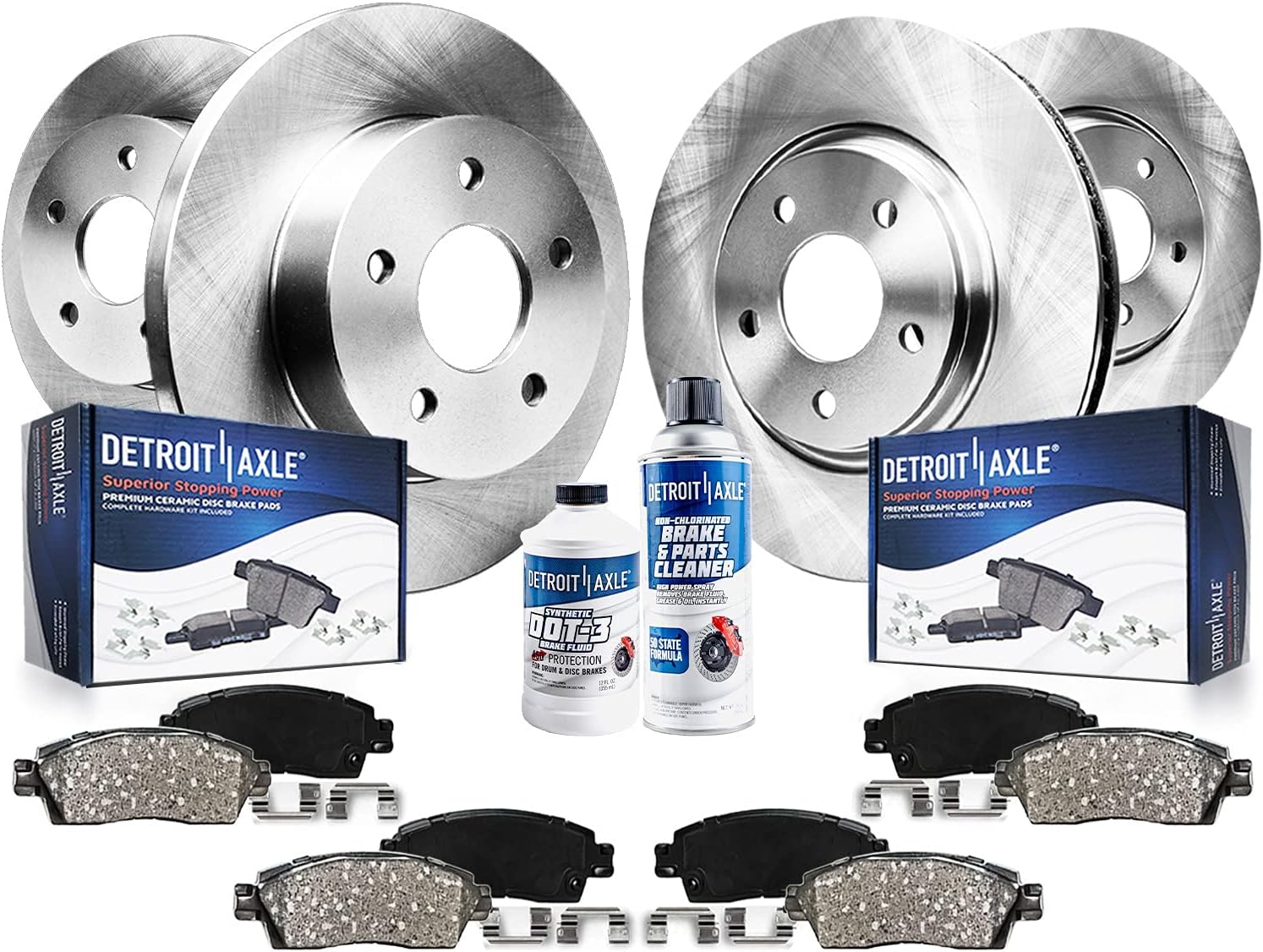
7. Detroit Axle Front and Rear Brake Kit for 2003–2007 Honda Accord 2.4L (4-Wheel Disc)
| Fitment | 2003–2007 Honda Accord 2.4L with 4-wheel disc brakes |
|---|---|
| Front Rotor Diameter | 11.10 inch (282mm) |
| Rear Rotor Diameter | 10.24 inch (260mm) |
| Pad Type | Ceramic |
| Finish | Zinc plated |
This Detroit Axle kit supplies everything needed to refresh the braking system on 2.4L Accords equipped with four-wheel discs. The kit includes two front and two rear ventilated rotors that are zinc plated to resist corrosion, ceramic brake pads with hardware, a bottle of brake fluid and a cleaner so you can complete the job without sourcing extra parts. Ventilated rotors help dissipate heat for more consistent performance under repeated stops and the locating holes are machined to fit the hub without modifications, which simplifies installation. Ceramic pads tend to produce less dust and lower noise than semi-metallic options, making the kit a good fit for everyday street driving. The main limitation is strict vehicle and brake‑type fitment — this kit is only for specific 2.4L Accord variants with 4-wheel discs and matching rotor diameters — so verify rotor size and trim before buying. For buyers who want a full do-it-yourself brake refresh with corrosion resistance and quieter pads, this is a practical, ready-to-install option.
Best for: A cautious buyer who prefers a full, factory-style replacement kit that minimizes part hunting and simplifies a DIY brake job on a 2.4L Accord with 4-wheel disc brakes.
Less Ideal for: Drivers with a different Accord engine, trim, or drum/rear-drum brake setup and anyone who needs performance or track-oriented brake components.
- Complete kit includes front and rear rotors, matching ceramic pads, hardware, brake cleaner, and brake fluid for a one-stop install.
- Zinc-plated ventilated rotors resist corrosion and promote faster cooling for more consistent stopping under repeated use.
- Machined locating holes and vehicle-specific fit reduce the need for modifications and simplify installation for DIYers.
- Fitment is narrowly limited to 2.4L Accord models with 4-wheel disc brakes and specific rotor diameters, so it will not fit other trims or brake configurations.
Verdict: Buy this kit if you want a complete, corrosion-resistant, ready-to-install front and rear brake replacement tailored to 2.4L Accords with four-wheel disc brakes.
Choosing the Right 2003-2007 Honda Accord Brake Rotors: Key Factors to Consider
Fitment and Exact Dimensions
Correct fitment is critical for the 2003-2007 Accord because rotor diameter, thickness, center bore, and bolt pattern must match the hub to avoid runout or installation issues. Installing a rotor with incorrect dimensions can cause excessive vibration, uneven pad wear, and potential safety hazards. Always verify the rotor's stamped or listed dimensions against the vehicle's factory specifications before purchase.
Beyond diameter and thickness, pay attention to rotor height and any hat design differences that affect caliper clearance. Some replacement rotors list multiple vehicle submodels; confirm the rotor matches the specific 2003-2007 Accord configuration you own to avoid fitment problems.
Rotor Material and Casting Quality
Most street rotors are iron castings, but casting grade and metallurgy vary. Higher quality castings reduce the likelihood of hairline cracks and provide more uniform heat dissipation, which helps resist warping under repeated stops. Look for rotors with consistent surface finish and tight machining tolerances on both friction faces and mounting surfaces.
Poor casting quality can lead to uneven wear and noise. Corrosion resistance and surface treatments also influence long-term performance in wet or salted conditions typical in many regions.
Thickness, Minimum Spec, and Resurfacing Options
Rotor thickness directly affects structural strength and heat capacity. Each rotor has a nominal thickness and a minimum safe thickness stamped or listed in the specs. If a rotor measures close to the minimum, resurfacing is not recommended because removing material can drop it below safe limits. Knowing how to measure rotor thickness and the minimum spec for the 2003-2007 Accord prevents unsafe reuse.
Consider whether you want rotors that are easily resurfaced or intended as one-time replacement parts. Some replacement rotors are designed to accept resurfacing and have extra material left, while others are lightweight or performance-focused and should be replaced rather than resurfaced.
Ventilation, Cooling, and Heat Management
Heat is the enemy of consistent braking. Vented rotor designs for the Accord increase airflow through the rotor hat and help dissipate heat during repeated stops. Better cooling reduces the chance of brake fade and rotor warping on longer downhill runs or during towing.
Match the ventilation style to your driving: daily commuting and occasional highway use benefit from standard vented rotors, while heavier use may justify rotors with improved internal vanes or higher thermal mass to maintain performance under stress.
Surface Pattern and Friction Face Design
Rotors come in plain, slotted, or drilled finishes, each affecting pad contact and braking behavior. Slotted patterns help clear gas and debris from the pad surface, improving bite and reducing glazing. Drilled rotors can aid heat dissipation and water evacuation but can be more prone to cracking under extreme thermal cycling.
For a 2003-2007 Accord used primarily on the street, a conservative approach favors plain or slotted faces that balance longevity and consistent pedal feel. Consider how pad compound choice interacts with the rotor surface to avoid accelerated wear.
Corrosion Protection and Environmental Durability
Rotors exposed to road salts, moisture, and winter conditions can corrode quickly if untreated. Zinc or ceramic coatings on non-friction surfaces, protective paint, and anti-corrosion treatments at the hat area help prevent rust buildup that can complicate removal and create uneven mounting faces. Good corrosion protection prolongs rotor life and makes future service easier.
Also consider shipping and storage conditions; rotors that arrive with consistent surface protection reduce the need for immediate cleaning and preparation before installation on a 2003-2007 Accord.
One-Piece Vs Two-Piece Rotors: Practical Tradeoffs
One-piece rotors are a common direct-replacement choice for the 2003-2007 Accord because they are simpler to install and generally less expensive. They offer consistent contact between the hat and friction surface, which reduces the number of potential failure points. Two-piece rotors separate the friction ring from the hat, often using lightweight hats paired with replaceable rings.
Two-piece designs can reduce unsprung weight and make ring replacement less costly in some scenarios, but they are typically used in performance or weight-sensitive applications. For most Accord owners focused on reliable street performance and longevity, one-piece rotors provide a sensible balance of durability, ease of service, and cost-effectiveness.
- One-piece: simpler, usually heavier, easier to resurface in many cases
- Two-piece: lighter, replaceable friction rings, more complex mounting hardware
Slotted, Drilled, or Plain Faces: Which Suits Daily Driving
For everyday driving in a 2003-2007 Accord, slotted or plain-faced rotors are generally the most practical. Slotted rotors help keep the pad surface clear of gases and debris and can improve initial bite. Plain faces provide steady contact area and typically wear more evenly with conventional pad compounds.
Drilled rotors shed heat and water quickly, but the holes create stress risers that can lead to cracking under repeated heavy thermal cycling. If your driving is mostly city and highway use, plain or slotted rotors paired with a compatible pad compound will deliver consistent performance and longer service life.
- Plain: best for even wear and quiet operation
- Slotted: better pad cleaning and bite, slightly more pad wear
- Drilled: rapid heat and water evacuation, higher cracking risk under severe use
How to Measure Rotor Thickness and Inspect Wear
Measuring rotor thickness requires a micrometer or caliper at several points around the friction surface. Record measurements and compare them to the rotor's minimum thickness spec. If any measurement is below the minimum, replacement is necessary rather than resurfacing.
Also inspect for grooving, runout, and heat spotting. Runout can be checked with a dial indicator at the rotor edge while turning the hub. Excessive runout or visible heat cracks indicate the rotor should be replaced. Proper measurement and inspection prevent unsafe braking performance and premature pad wear.
- Measure thickness at multiple points and compare to stamped minimum
- Check for lateral runout with a dial indicator
- Look for heat spots, deep grooves, and hairline cracks
Matching Rotor Choice to Brake Pad Type
Brake pads and rotors work as a system. Aggressive pad compounds can increase rotor wear and transfer, while OEM-style pads tend to be less abrasive. When selecting rotors for the 2003-2007 Accord, consider the pad chemistry you plan to use so the rotor surface finish and hardness are compatible.
If you intend to use semi-metallic or high-friction pads for enhanced bite, choose rotors designed to handle increased wear and heat. Conversely, if you prefer ceramic pads and quieter operation, a smoother friction surface and corrosion-resistant finish will complement that setup.
- Semi-metallic pads: expect higher initial wear on rotors, need robust surface
- Ceramic pads: quieter, produce less dust, pair well with smoother rotors
Installation Tips and Torque Specifications
Proper installation prevents premature rotor issues. Clean mounting surfaces on the hub to ensure even seating. Tighten wheel lug nuts in a star sequence to the manufacturer torque to avoid introducing rotor runout. If the rotor has a specified seating or runout tolerance, verify with a dial indicator after torquing.
Use anti-seize on hub contact surfaces sparingly and follow torque specs for caliper bracket bolts. After installation, perform a bedding-in procedure with a series of controlled stops to mate pads and rotors, which improves performance and reduces noise.
- Clean hub and rotor mounting surfaces before installation
- Torque wheel bolts in star pattern to factory spec
- Perform controlled bedding stops after installation
Still looking for the perfect fit?
Select your Honda Accord configuration to see the most relevant Brake Rotors recommendations
How We Chose the Best 2003-2007 Honda Accord Brake Rotors
We prioritized fitment, durability, thermal performance, and serviceability when selecting rotors for the 2003-2007 Honda Accord. Fitment and exact rotor dimensions were treated as nonnegotiable; only rotors that match factory hub bore, bolt pattern, and thickness specifications for the 2003-2007 Accord were considered. Material and manufacturing quality were assessed to favor castings with consistent metallurgy and balanced machining to reduce vibration and extend pad life. Thermal performance and resistance to warping were evaluated by looking at friction surface design and ventilation. Serviceability and installation factors such as whether the rotor is one-piece or two-piece, compatibility with common pad types, and whether the rotor accepts resurfacing were included. Corrosion protection and surface treatments were factored in to improve longevity in road conditions.We excluded rotors without clear fitment data for the 2003-2007 Accord, one-off specialty racing parts not intended for street use, and any item lacking adequate machining tolerances or spec sheets. The final picks balance proven materials, correct dimensions, and practical maintenance considerations that matter to Accord owners.
Our full evaluation process is outlined in our review methodology.
FAQ
How often should I replace brake rotors on a 2003-2007 Accord?
Replacement intervals vary by driving habits and pad compound. Many drivers replace rotors every 50,000 to 70,000 miles, but heavier use, frequent towing, or aggressive braking can shorten that. Inspect thickness and surface condition regularly and follow minimum thickness specs when deciding to replace.
Can I resurface rotors on my 2003-2007 Accord instead of replacing them?
Resurfacing is possible if the rotor is above the minimum thickness and free of deep cracks or severe heat damage. However, resurfacing removes material and can reduce thermal mass. If the rotor is close to the minimum spec or shows heat cracks, full replacement is safer.
Are slotted or drilled rotors better for highway driving in an Accord?
For normal highway driving, slotted or plain rotors are usually preferable because they offer steady wear and consistent pedal feel. Drilled rotors may help shed water but can be more prone to cracking under repeated high-heat cycles, which is unnecessary for typical highway use.
What symptoms indicate my rotors need attention?
Common signs include vibration or pulsing through the brake pedal, audible squealing or grinding, visible grooves or scoring, and reduced braking performance. Any of these symptoms warrant inspection for thickness, runout, and surface damage.
Will upgrading rotors change braking feel on my Accord?
Yes, different rotor materials and surface patterns can change initial bite, pedal feedback, and noise levels. Upgrading to rotors with better heat management or different surface treatments can improve feel during demanding stops, but the pad choice and proper bedding are equally important.
How do I know which rotors are compatible with my specific Accord trim?
Check the rotor's listed fitment against your Accord's model year, axle (front or rear), and any trim-specific hub dimensions. Verify rotor diameter, thickness, center bore, and bolt pattern. Compatibility information should match the 2003-2007 Accord specifications before purchase.
Final Verdict
When replacing rotors on a 2003-2007 Honda Accord prioritize correct fitment, adequate thickness, and a rotor design that matches how you drive. Focus on material quality and ventilation if you do heavier-stop driving, and choose surface patterns that pair well with your pad compound to avoid accelerated wear.Balancing durability, heat management, and serviceability will lead to safer stops and lower long-term maintenance. Use the decision criteria above to select the right rotor for your Accord and plan installation or resurfacing accordingly.
Explore More:
- Check out all Honda Accord parts & accessories
- Explore Brake Rotors Maintenance & Repair Guides
- Explore Brake System
- Browse all Auto Parts
