

Note: This article contains affiliate links. If you click on these links and make a purchase, I may earn a small commission at no extra cost to you. This helps support my research and content. Read my full affiliate disclosure here.
If you own a 2010-2014 Subaru Outback, worn or noisy brake pads can quickly undermine driving confidence and safety. Choosing the right brake pads affects pedal feel, stopping distance, cabin noise, and how often you need to service the brakes. This guide covers the top shortlisted brake pad options that suit typical Outback duty cycles, from daily commuting to light towing and highway driving.We evaluated candidates on real-world stopping performance, durability, and noise control, plus fitment and compatibility for the 2010-2014 Outback. Read on to see the top picks and the criteria we used to judge them.
Looking for other parts? See all Subaru Outback parts & accessories.
Top Picks at a Glance
| Best Overall The best all-around choice for most situations | Brake X Front Brake Pads and Rotors Kit for 2010–2014 Subaru Outback |  |
| Best Value The sweet spot between price and what you get | Bosch QuietCast Premium Semi‑Metallic Front Brake Pad Set (BP1078) |  |
| Best Budget The cheapest option that still gets the job done reliably | PEYU Ceramic Front and Rear Brake Pads (D929/D1114) for Subaru |  |
| Highest Rated A top-rated pick with lots of positive feedback | Bendix Premium SBC1078 Ceramic Front Brake Pads with Hardware |  |
| Most Popular A crowd favorite that many people choose with confidence | Max Advanced Brakes ValueMAX Front & Rear Brake Kit for Subaru Outback (2010–2014) |  |
| Best Seller A high-volume bestseller chosen again and again | Bendix Premium SBC1539 Ceramic Front Brake Pads |  |
1. Brake X Front Brake Pads and Rotors Kit for 2010–2014 Subaru Outback

| Fitment | 2010–2014 Subaru Outback (except Outback Sport, wagon) |
|---|---|
| Included components | 2 front rotors and 4 ceramic brake pads |
| Rotor material | G3000 grade cast iron |
| Pad type | Alpha ceramic brake pads |
| Manufacturer warranty | 1 year manufacturer |
This Brake X front brake kit supplies two rotors and four Alpha ceramic brake pads sized for 2010–2014 Subaru Outback (not Outback Sport or wagon). It is intended as a one-stop replacement for worn front braking components and installs like a factory-quality kit without modifications. The kit’s rotors are cast from G3000 grade iron, balanced and machined to resist cracking, while the ceramic pads are shimmed, chamfered and slotted to cut dust and reduce noise. In everyday driving the combination should deliver predictable pedal feel, quieter stops, and lower dust than many semi-metallic pads. Because the kit is sold specifically for the Outback front axle, fitment and installation are straightforward for a DIYer or mechanic familiar with Subaru brakes. Limitations include fewer performance advantages compared with premium directional or vented-sport rotors and high-end performance pads for aggressive driving; buyers seeking track use or heavy towing may prefer specialty parts. The kit comes with a manufacturer warranty and is marketed as meeting or exceeding factory specifications for longevity and corrosion resistance.
Best for: Buyers who want a balanced, straightforward front brake replacement that matches factory performance and reduces dust and noise for daily driving on a 2010–2014 Outback.
Less Ideal for: Drivers who plan frequent track sessions, heavy towing, or require extreme fade resistance should choose dedicated performance brake components instead.
- Complete front axle kit with both rotors and four pads for convenient simultaneous replacement
- Ceramic pads designed to reduce dust and braking noise
- Rotors made from G3000 grade cast iron with machining and balancing to resist cracking
- Built to meet or exceed factory specifications for direct-fit installation
- Not optimized for high-performance track use or heavy towing compared with specialized rotors and pads
Verdict: If you want a reliable, factory-style front brake replacement for a 2010–2014 Subaru Outback that reduces dust and noise, this all-in-one kit is a practical choice.
2. Bosch QuietCast Premium Semi‑Metallic Front Brake Pad Set (BP1078)

| Brand Name | Bosch |
|---|---|
| Auto Part Position | Front |
| Material Type | Semi‑Metallic |
| Model Number | BP1078 |
| Automotive Fit Type | Vehicle Specific Fit |
These Bosch QuietCast BP1078 pads are a vehicle‑specific front axle replacement engineered to match factory performance for Subaru models including 2010–2014 Outback. They use a semi‑metallic friction compound and Bosch’s molded OE‑style multilayer rubber core shims to reduce squeal and deliver firm, predictable stopping power in everyday and heavier duty driving. The kit ships with a hardware pack and synthetic lubricant to help ensure correct fit and smooth caliper sliding during installation. Practical benefits include low dust compared with many semi‑metallics, corrosion‑resistant powder‑coated backing plates for longer life, and an industry focus on quiet operation. Limitations are that these are semi‑metallic pads rather than a ceramic upgrade, so drivers prioritizing the absolute lowest dust and soft pedal feel may prefer a ceramic option; final fitment depends on trim and should be verified for specific Outback configurations before ordering.
Best for: A practical buyer who wants a direct, factory‑quality front pad replacement for a 2010–2014 Subaru Outback that balances quiet operation, durability, and solid stopping power.
Less Ideal for: Drivers seeking a premium ceramic upgrade strictly for the lowest dust and a softer pedal feel or those who prefer performance pads tuned for track/racing use should look elsewhere.
- Vehicle‑specific design intended to match factory fit and function for compatible Subaru front applications
- OE‑style multilayer rubber core shims for reduced noise and improved vibration control
- Includes hardware kit and synthetic lubricant to simplify installation and ensure proper caliper movement
- Powder‑coated backing plates and pad features (slots/chamfers) that help reduce corrosion and uneven wear
- Semi‑metallic compound offers strong braking but is not the lowest‑dust or softest‑feel option compared with ceramic pads
Verdict: Choose these Bosch QuietCast front pads if you want a direct, durable factory‑quality replacement for a 2010–2014 Subaru Outback that emphasizes quiet, dependable braking.
3. PEYU Ceramic Front and Rear Brake Pads (D929/D1114) for Subaru

| Material Type | Ceramic |
|---|---|
| Auto Part Position | Front, Rear |
| Number of Items | 8 |
| Model Number | D929-D1114 |
These PEYU ceramic pads come as an eight-piece kit with four front and four rear pads intended to replace factory-style brake pads on the listed Subaru fitments. Installation is the same as a standard pad swap and they are used as a complete axle set so both front and rear pads match in material and feel. Ceramic material typically reduces dust and runs quieter than semi-metallic options, and this kit lists multiple manufacturer equivalent part numbers for straightforward cross-referencing. Practical benefits include a full-vehicle refresh in one package and likely lower brake dust and vibration under normal driving. Important limitations are that compatibility must be checked carefully against the specific model year and trim because the listing covers several Subaru models and years; buyers should verify fit before installing. These pads are positioned as a vehicle-specific replacement rather than a performance upgrade, so drivers seeking aggressive fade resistance for towing or track use should consider a different compound.
Best for: A budget-minded Subaru owner who needs a straightforward, full-set brake pad replacement for routine street use and values lower dust and quieter braking.
Less Ideal for: Drivers who regularly tow heavy loads, carry heavy cargo, or do track driving and need higher heat tolerance and aggressive stopping power should look at performance-oriented pads instead.
- Complete 8-piece kit includes both front and rear pads for a matched replacement
- Ceramic formulation typically produces less brake dust and quieter operation than many semi-metallic pads
- Lists multiple manufacturer equivalent part numbers to simplify cross-referencing during fitment checks
- Not marketed as a high-performance or heavy-duty pad, so heat and fade resistance may be limited under extreme loads
Verdict: Choose this ceramic full-set if you want an affordable, quieter, lower-dust replacement kit for routine Subaru Outback driving.
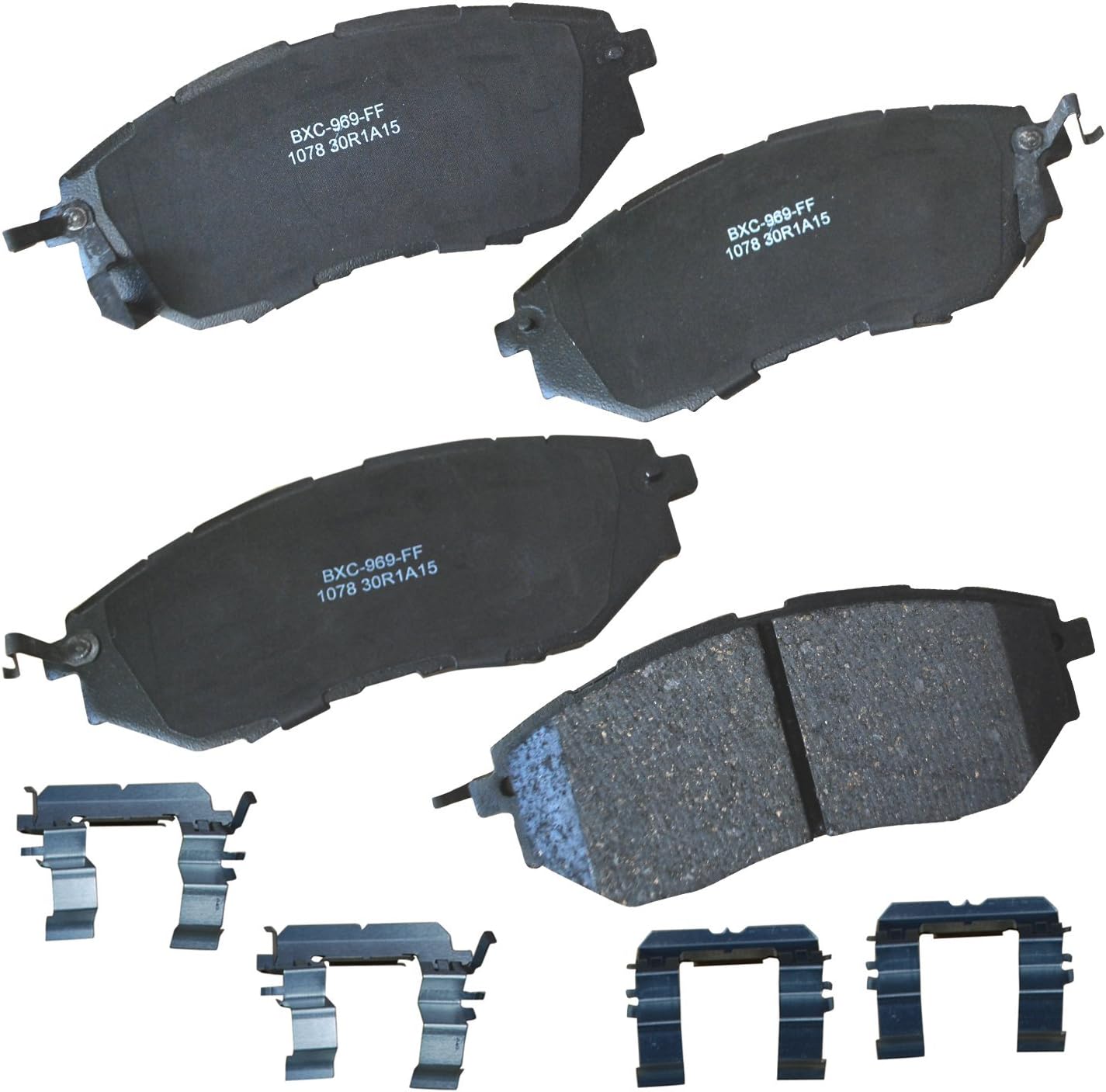
4. Bendix Premium SBC1078 Ceramic Front Brake Pads with Hardware
| Auto Part Position | Front |
|---|---|
| Automotive Fit Type | Vehicle Specific Fit |
| Included Components | Brake pad set with installation hardware |
| Material Type | Copper |
These Bendix Premium SBC1078 ceramic front brake pads are a direct-fit replacement intended to restore factory-style braking on compatible Subaru vehicles, including 2010–2014 Outback 3.6 applications listed in the fitment. The set includes installation hardware and uses a copper-based ceramic formulation that aims to resist wear and reduce fade during normal driving. In practice they suit daily commuting and highway driving where predictable pedal feel and low dust are priorities. Bendix emphasizes vehicle-specific fit, OEM-equivalent specification, and a durable construction that should extend pad life compared with cheaper generic compounds. Note that some later Outback trims may use an electric parking brake and require a specific service procedure to complete pad replacement, so installers should reference the vehicle service manual or a shop for those models. These pads are tuned for smooth operation rather than track use, so drivers seeking aggressive high-temperature stopping for repeated hard braking should consider performance-oriented options instead.
Best for: A buyer who prioritizes dependable, factory-like braking for everyday driving and wants a durable, low-dust replacement for a 2010–2014 Outback.
Less Ideal for: Not a good choice for track-focused drivers or owners who need heavy-duty commercial braking performance.
- Vehicle-specific fit for listed Subaru models ensures correct alignment and easy installation
- Ceramic copper-based compound reduces dust and provides consistent pedal feel for daily driving
- Includes installation hardware so the kit is ready for a standard brake job
- Engineered to match factory fit, form, and function for reliable replacement
- Not formulated for repeated high-temperature track use where aggressive friction is required
Verdict: Choose these Bendix Premium ceramic front pads if you want a durable, low-dust, factory-style replacement for a 2010–2014 Subaru Outback.
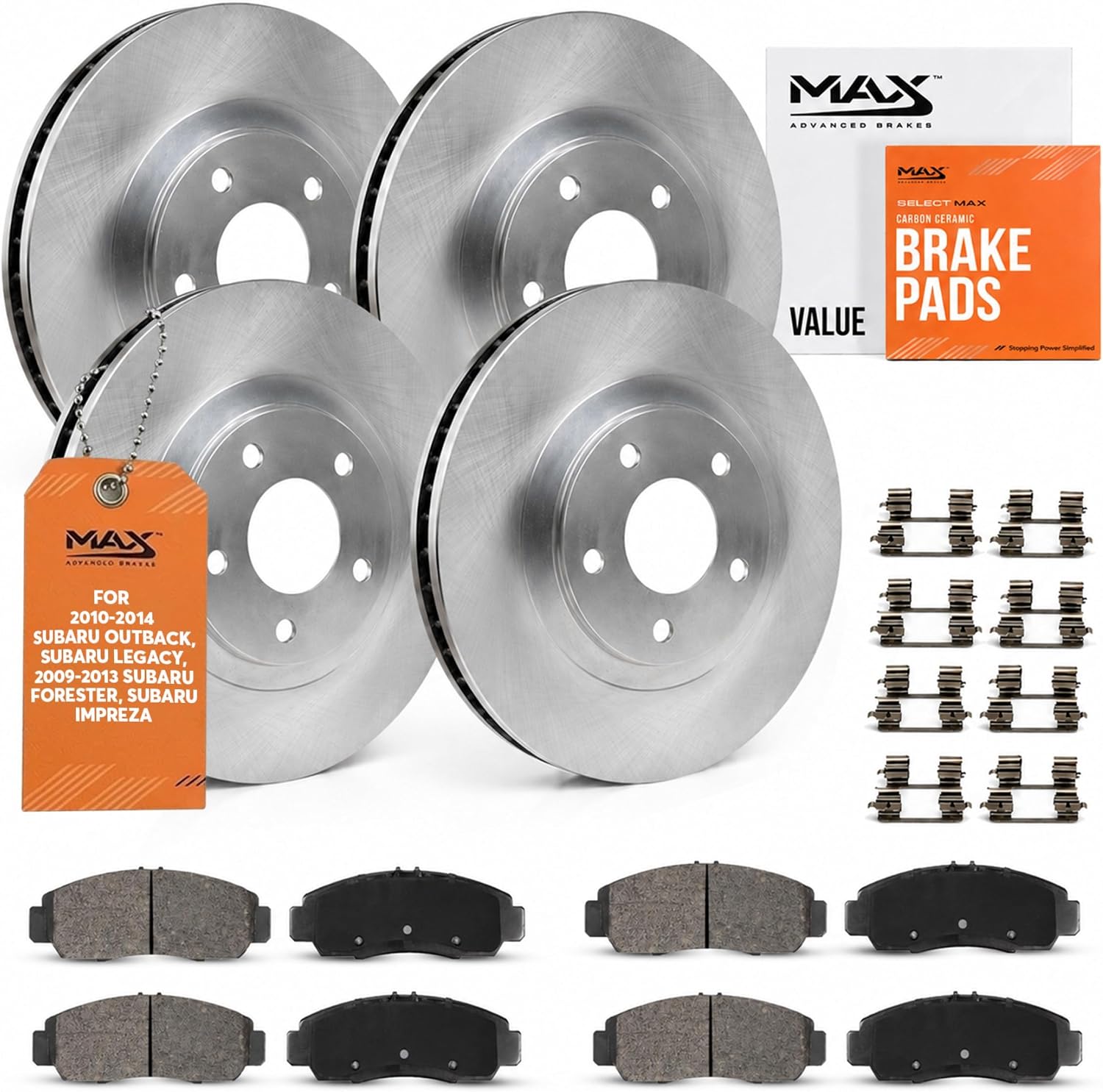
5. Max Advanced Brakes ValueMAX Front & Rear Brake Kit for Subaru Outback (2010–2014)
| Compatible models | 2010–2014 Subaru Outback (2.5 H4) fitment listed |
|---|---|
| Included components | Front and rear rotors, brake pads, hardware |
| Pad type | Carbon ceramic (low dust) |
| Rotor material | Precision-machined cast iron |
| Automotive fit type | Vehicle specific fit |
This ValueMAX kit supplies both front and rear rotors, ceramic-style pads, and the mounting hardware needed for a direct bolt-on replacement on compatible 2010–2014 Subaru Outback vehicles. The rotors are precision-machined cast iron with a non-directional finish to speed bedding and reduce vibration, while the carbon-ceramic pads are formulated to cut dust and noise. In everyday commuting and light-duty highway use the kit delivers consistent, quiet stops and cleaner wheels versus traditional semi-metallic pads. Installation is simplified by including necessary hardware so a competent DIYer can swap the whole set without sourcing extra parts. Expect reliable, factory-quality braking for routine driving, but this kit is aimed at street use rather than heavy towing or aggressive track driving where higher-performance rotors and pads would be preferable. Warranty terms differ by component, so check coverage for combined kits versus individual parts before purchase.
Best for: Buyers seeking a vehicle-specific, all-in-one brake replacement that restores quiet, low-dust braking for daily commuting and light highway use and who value peer validation and predictable, factory-quality performance.
Less Ideal for: Drivers who frequently tow heavy loads, carry heavy cargo, or push the car on track sessions should consider a performance-oriented rotor and pad package instead.
- Complete front-and-rear kit includes rotors, pads, and installation hardware for a single replacement procedure
- Precision-machined cast iron rotors with non-directional finish reduce vibration and speed bedding
- Carbon-ceramic pads are low-dust and paired with dual-layer rubberized shims to minimize noise
- Vehicle-specific fitment for the listed Subaru models simplifies selection and installation
- Designed for everyday driving and commuting rather than heavy-duty towing or track use
Verdict: If you want a single, vehicle-tailored kit that restores quiet, low-dust, factory-quality braking for daily driving on a 2010–2014 Subaru Outback, this all-in-one ValueMAX set is a sensible pick.
6. Bendix Premium SBC1539 Ceramic Front Brake Pads

| Auto Part Position | Front |
|---|---|
| Compatible with Vehicle Type | Cars, SUV, Truck |
| Included Components | Brake pad set with installation hardware |
| Material Type | Copper |
These Bendix Premium SBC1539 ceramic front brake pads are a factory-quality replacement designed for everyday driving on compatible Subaru Outback models from the 2013–2014 2.5L fitment listed. They provide the familiar feel of OEM pads while aiming to reduce dust and noise compared with older semi-metallic options. The set includes installation hardware so swapping the pads is straightforward for a routine brake service. Bendix emphasizes durable materials and resistance to wear and corrosion, which supports consistent braking and helps limit fade during normal commuting and light highway use. Because these are ceramic-based, expect quieter operation and cleaner wheels, though they may not offer the bite or extreme heat resistance of dedicated performance or heavy-duty semi-metallic pads. For owners who prioritize reliable, factory-style braking and low noise, these pads are a sensible replacement; drivers who tow heavily or regularly do aggressive track braking should consider a more aggressive compound instead.
Best for: A buyer who wants a dependable, factory-style replacement for routine driving and values low noise and clean wheels over aggressive stopping performance.
Less Ideal for: Not the best choice for drivers who frequently tow, haul heavy loads, or perform repeated high-speed track braking where a higher-temperature semi-metallic pad is preferable.
- Factory-quality fit and form for listed vehicle applications so installation aligns with factory expectations
- Ceramic compound designed for reduced noise and lower wheel dust compared with many semi-metallic pads
- Includes installation hardware for a complete front pad swap
- Engineered for consistent stopping and reduced brake fade during normal daily driving
- Ceramic material offers less high-temperature durability than aggressive semi-metallic or racing compounds
Verdict: Choose these Bendix premium ceramic front pads when you want a quiet, factory-quality replacement that keeps wheels cleaner for everyday Outback driving.
Choosing the Right 2010-2014 Subaru Outback Brake Pads: Key Factors to Consider
Stopping Performance and Pedal Feel
Stopping performance determines how quickly and predictably the Outback can slow from highway and city speeds. Pads with a strong initial bite reduce stopping distances and improve confidence during emergency braking, while a more progressive compound can make modulation easier in everyday driving. Consider how the compound behaves when cold versus at operating temperature, because inconsistent modulation can lead to a grabby or mushy pedal feel.
Pedal feel also ties into brake system response. Some compounds offer firmer pedal feedback, which many drivers prefer for a controlled feel. Evaluate how the pads interact with the Outback's rotors to avoid excessive fade during repeated stops, especially if you tow a small trailer or frequently drive in hilly terrain.
Wear Life and Material Durability
Brake pad longevity affects maintenance frequency and long-term cost of ownership. Different compounds wear at different rates depending on driving style, environment, and rotor condition. Ceramic and semi-metallic compounds generally have different wear profiles; ceramics often produce less dust and can last well in light-to-moderate use, while some semi-metallics resist fade better under heat but may wear rotors faster.
For the 2010-2014 Outback, consider your typical annual mileage and driving mix. Higher mileage or heavier-duty use favors pads with proven longevity. Also consider pad thickness specifications and expected remaining life after installation to plan future service intervals.
Noise, Vibration, and Harshness Control
Brake noise is one of the most common complaints and can indicate mounting or compound issues. Quality pads include noise-control features such as chamfers, shims, and specially designed backing plates to reduce squeal and vibration. For an Outback used for daily commuting and family driving, low noise and minimal vibration contribute directly to comfort.
Noise control also affects perceived quality. Pads that eliminate squeal without sacrificing bite typically incorporate multi-layer shims or damping materials. Inspect whether a pad design addresses NVH because some economical compounds omit these features to reduce cost, which can lead to increased squeal or vibration over time.
Rotor Compatibility and Brake Pad Thickness Spec
Pad thickness and rotor condition are linked. Installing thin pads on worn rotors reduces service life and braking effectiveness. Confirm the pad thickness spec matches the space available in the Outback calipers and provides adequate bedding material for reasonable service life. Also consider whether the pad material is rotor-friendly; some semi-metallic compounds can be abrasive and accelerate rotor wear, increasing long-term cost.
Evaluate rotor surface condition and thickness before fitting new pads. If rotors have deep grooves or are under the minimum thickness, a resurfacing or replacement will influence the choice of pad material and the overall stopping performance.
Dust Generation and Wheel Cleanliness
Brake dust affects wheel appearance and can be a nuisance. Ceramic compounds are often marketed for low dust, which keeps wheel faces cleaner and reduces the need for frequent cleaning. For Outback owners with alloy wheels or those who value clean wheels, dust generation is an important factor.
Dust production also relates to compound aggressiveness. High-friction materials tend to leave more metallic dust, which may adhere to wheels and be harder to remove. Consider whether low-dust performance is a priority versus raw stopping power.
Fitment Accuracy and Ease of Installation
Proper fitment ensures the pads install without modification and that anti-rattle clips, wear sensors, and backing plates align correctly with the Outback calipers. Poorly fitting pads can cause excessive movement, leading to noise or uneven wear. Look for pads designed specifically for the 2010-2014 Outback to minimize installation headaches.
Ease of installation also includes whether additional hardware like shims or pad guide clips are required. Some kits include upgraded hardware to improve longevity and reduce noise, while others assume reuse of existing components. Verify what is supplied and whether you will need to replace any small parts during service.
Understanding Brake Pad Compounds
Brake pads are built from different compound families, typically ceramic, semi-metallic, and organic blends. Each family balances stopping power, noise, dust, and rotor friendliness differently, so select a compound that matches how you drive your Outback.
Ceramic compounds usually offer quieter operation and lower dust at the cost of slightly reduced high-temperature fade resistance. Semi-metallic pads often provide stronger bite and better heat tolerance, which can benefit drivers who frequently tow or drive in hilly regions. Organic blends aim for a middle ground with acceptable comfort and moderate wear characteristics.
- Ceramic: quiet, low dust, comfortable pedal feel
- Semi-metallic: higher friction, better heat handling, potentially more dust
- Organic: softer feel, lower rotor wear in some cases, shorter lifespan
Front Versus Rear Brake Pads on the Outback
Front brake pads handle most of the braking load on the Outback, so they typically wear faster and are prioritized for high-performance compounds. Rear pads still matter for balance and stability but can often be a milder compound to reduce noise and increase longevity.
When replacing pads, many owners replace front and rear at different intervals depending on wear patterns. Inspect both axles during service to determine whether both should be replaced together or staged over different services.
- Front pads: prioritize stopping performance and fade resistance
- Rear pads: consider longer life and noise reduction
- Staggered replacement is common based on measured wear
Signs You Need Brake Pads Replacement
Recognizing wear symptoms early prevents rotor damage and maintains safe stopping distances. Common signs include a high-pitched squeal at light braking, reduced pad thickness, grinding noises, and a softer or spongy brake pedal. Any grinding noise often means the pad material is gone and metal is contacting the rotor, which requires immediate attention.
Also check for increased stopping distances or vibration in the steering wheel while braking. These symptoms can point to uneven pad wear, glazed pads, or warped rotors. Regular inspections and measuring the pad thickness against the Outback's recommended spec help you schedule replacement proactively.
- Squeal at low speeds: often wear indicators or early compound noise
- Grinding: immediate service needed to prevent rotor damage
- Reduced pad thickness: measure and compare to thickness spec
Installation Tips and Bedding Procedures
Correct installation and bedding are essential for consistent braking performance. Clean the caliper hardware, lubricate contact points with appropriate high-temperature brake grease, and verify anti-rattle clips and shims are installed properly. Torque caliper bolts to factory specifications and check for even pad contact after installation.
Bedding pads to the rotor forms a transfer layer that ensures consistent bite and reduces uneven wear. A typical bedding routine involves a series of progressively harder stops from moderate speed without bringing the vehicle to a complete stop until the final cycles. Follow safe, controlled procedures on an open road or empty lot when bedding new pads.
- Clean hardware and use proper brake grease on pad contact points
- Use correct torque on caliper and wheel fasteners
- Perform a bedding routine of progressive stops to build a transfer layer
When to Resurface or Replace Rotors
New pads on worn or scored rotors will not deliver optimal performance and may cause vibration or premature pad wear. Check rotor thickness and surface condition during pad change. If rotors are within thickness specifications but show light scoring, resurfacing can restore a smooth contact surface. Deep grooves or rotors below minimum thickness require replacement.
Consider rotor condition when selecting pad compound. Some aggressive compounds can accelerate rotor wear and make resurfacing necessary sooner. For a balanced approach on the Outback, pair a pad that meets your performance needs with rotors in good condition for reliable, low-noise braking.
- Inspect rotor thickness and surface during every pad service
- Resurface light scoring if within thickness limits
- Replace rotors with deep grooves or under-thickness measurements
Aftermarket Pad Fitment Guide
Aftermarket pads are available in multiple formulations and fitment options. When choosing aftermarket pads for the 2010-2014 Outback, confirm the part fits the specific model year and any trim-related caliper differences. Use vendor fitment references prudently and cross-check pad dimensions against the Outback caliper envelope.
Pay attention to whether the aftermarket kit includes necessary hardware such as shims, clips, and wear sensor provisions. Some kits supply universal shims that require adjustment, while others provide vehicle-specific hardware that simplifies installation.
- Verify pad shape, thickness, and backing plate alignment with Outback calipers
- Confirm inclusion of shims and anti-rattle hardware
- Cross-check fitment against your Outback model year and trim
Still looking for the perfect fit?
Select your Subaru Outback configuration to see the most relevant Brake Pads recommendations
How We Chose the Best 2010-2014 Subaru Outback Brake Pads
We prioritized evaluation criteria that matter most to 2010-2014 Subaru Outback owners, focusing on stopping performance, long-term wear characteristics, noise and dust levels, and fitment accuracy for the Outback's calipers. Stopping performance included initial bite, fade resistance under repeated braking, and consistent pedal feel. Longevity assessment considered material compound properties and typical mileage expectations for mixed driving. Noise and dust were judged by intended pad compound and backing plate design, as these affect passenger comfort and wheel cleanliness. Fitment accuracy examined pad shape, thickness, and backing plate features required for direct installation on the Outback without modification.We excluded specialty racing compounds and pads intended solely for heavy commercial towing, since most Outback owners need balanced daily-drive performance. We also filtered out pads that require caliper or rotor modifications. The final list emphasizes well-documented compounds and designs with reliable fitment, demonstrable wear life, and acceptable noise characteristics for the vehicle's usual operating conditions.
Our full evaluation process is outlined in our review methodology.
FAQ
How often should I replace brake pads on a 2010-2014 Subaru Outback?
It depends on driving habits and conditions. Many owners replace pads between 30,000 and 60,000 miles, but aggressive driving, hilly terrain, or frequent towing can shorten that interval. Inspect pad thickness regularly and follow the vehicle-specific thickness spec to decide.
Can I install different compound pads on the front and rear of my Outback?
Yes, mixing front and rear compounds is common. Because the front does most of the braking work, owners often choose a higher-performance compound up front and a milder, quieter compound in the rear for balance and comfort. Ensure overall brake bias remains safe and stable after any change.
What does a grinding noise from the brakes indicate?
Grinding usually indicates the pad material is worn through and metal is contacting the rotor. This requires immediate inspection and likely pad replacement and rotor evaluation to prevent more extensive damage.
Are ceramic brake pads a good choice for the Outback?
Ceramic pads are a good option for drivers prioritizing low dust and quiet operation in daily driving. They can offer consistent feel in normal conditions, but if you need higher fade resistance for heavy-duty use, consider compounds designed for that application.
How important is pad thickness when buying replacements?
Pad thickness affects expected service life and fitment. New pads should provide enough material to meet your desired interval before replacement. Verify the thickness spec to ensure you are getting pads that fit the Outback caliper clearance and offer reasonable longevity.
Will changing to aftermarket pads affect my ABS or braking performance?
Swapping to quality aftermarket pads usually does not affect ABS function, but different compounds may change pedal feel and initial bite. Choose pads designed for the Outback and follow correct bedding procedures to maintain consistent braking behavior.
Final Verdict
Prioritize stopping performance, correct fitment, and acceptable noise characteristics when selecting brake pads for the 2010-2014 Subaru Outback. Balance the need for strong initial bite and heat resistance with considerations like dust, rotor friendliness, and expected wear life to match your driving habits.Focus on pads that fit accurately and offer the performance characteristics you need for daily driving, occasional towing, or hilly routes. By matching compound and thickness to your use case and maintaining rotors and hardware, you can maximize safety and reduce maintenance surprises.
Explore More:
- Check out all Subaru Outback parts & accessories
- Explore Brake Pads Maintenance & Repair Guides
- Explore Brake System
- Browse all Auto Parts
