

Note: This article contains affiliate links. If you click on these links and make a purchase, I may earn a small commission at no extra cost to you. This helps support my research and content. Read my full affiliate disclosure here.
Brakes are the single most important safety system on a vehicle, and choosing the right rotors for a 2005-2009 Subaru Outback affects pedal feel, stopping distance, and long-term maintenance. Whether you drive a daily commuter, tow occasionally, or spend time on winding back roads, worn or warped rotors can undermine braking performance and increase vibration.This guide walks you through the top shortlisted brake rotors that suit the 2005-2009 Outback. We evaluated candidates against stopping performance, thermal behavior, durability, and ease of installation so you can pick an option that matches your driving style and maintenance preferences. Read on for what matters and practical tips for fitment and service.
Looking for other parts? See all Subaru Outback parts & accessories.
Top Picks at a Glance


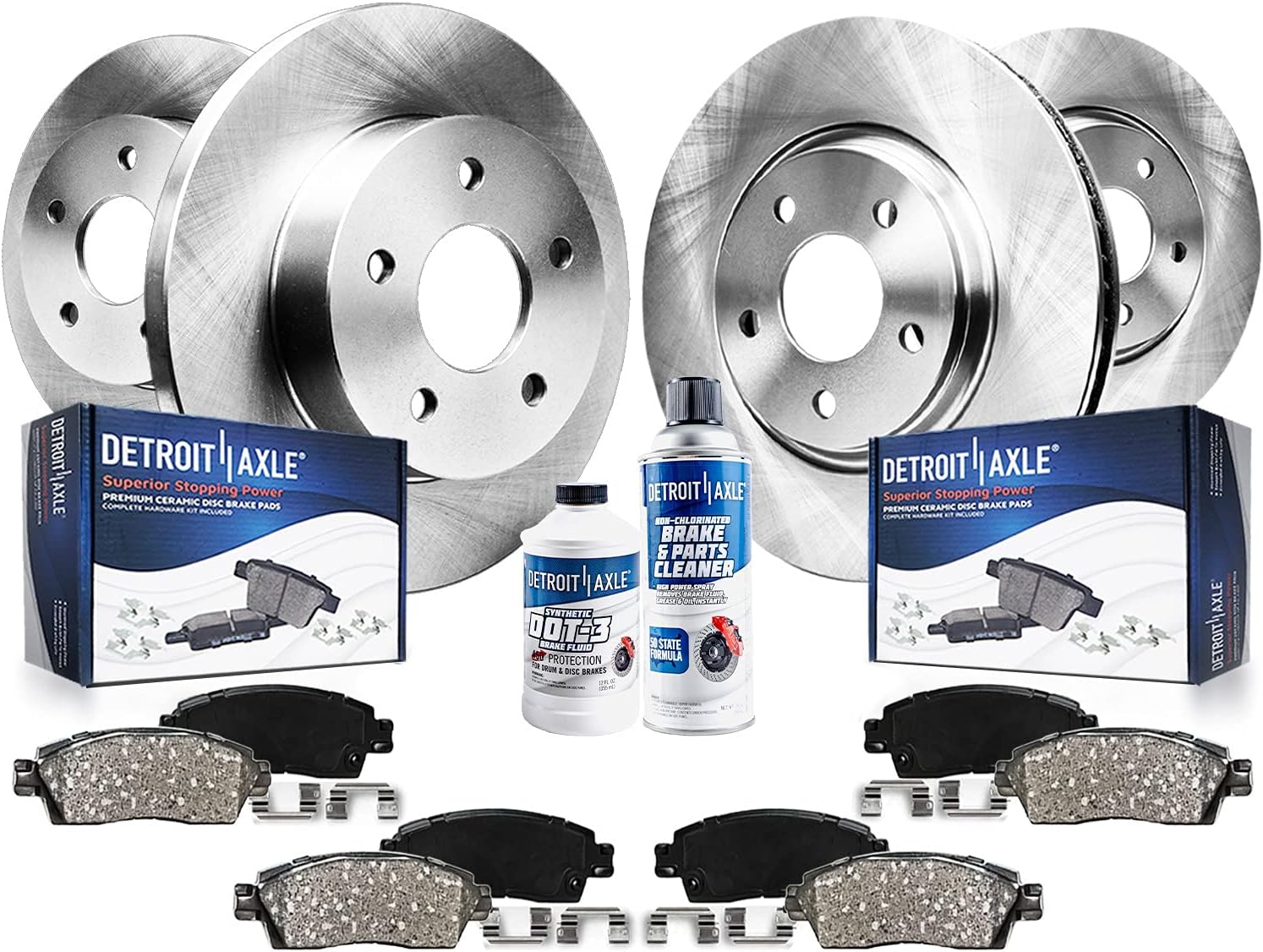
1. Detroit Axle Front and Rear Brake Kit with Rotors and Ceramic Pads for 2005–2009 Subaru Outback/Legacy
| Fitment | 2005-2009 Subaru Outback and Legacy models with 11.54" front and 10.79" rear rotors |
|---|---|
| Front Rotor | Vented, zinc plated |
| Rear Rotor | Solid, zinc plated |
| Brake Pads | Ceramic (front and rear) |
This Detroit Axle kit supplies everything needed to refresh the braking system on compatible 2005–2009 Subaru Outback and Legacy models that use 11.54" front and 10.79" rear rotors. The package includes two front vented rotors, two rear solid rotors, front and rear ceramic pads with hardware, a brake cleaner spray, and a bottle of brake fluid so you can complete the job in one stop. Vented front rotors help dissipate heat for more stable stopping under repeated braking while zinc plating resists surface corrosion and visible wheel dust. The pads are ceramic, which tends to be quieter and produce less dust than some semi-metallic options. Installation is intended to match factory locating holes and fit without modification, making the kit practical for DIY mechanics and shops. Limitations: the rear rotors are solid rather than drilled or slotted, and ceramic pads trade some ultimate bite under extreme load for lower noise and dust. Check rotor sizes and vehicle fitment carefully before ordering to ensure compatibility.
Best for: Buyers who want a balanced, all-in-one brake replacement that makes a front-and-rear refresh straightforward and leans toward quieter, lower-dust operation.
Less Ideal for: Drivers seeking track-oriented stopping performance or the maximum fade resistance under prolonged heavy braking should consider performance rotors and semi-metallic pads instead.
- Complete kit with front and rear rotors, front and rear pads, hardware, brake cleaner, and brake fluid for one-stop replacement
- Vented front rotors for improved cooling under repeated braking
- Zinc-plated rotors resist corrosion and reduce visible wheel dust
- Ceramic pads are quieter and produce less brake dust than many metallic pads
- Machined locating holes intended for direct fitment without modifications
- Rear rotors are solid rather than slotted or drilled, which may reduce heat dissipation under heavy use
- Ceramic pads can offer slightly less initial bite than performance-oriented semi-metallic pads
Verdict: A convenient, factory-quality replacement kit that refreshes both front and rear brakes with quieter ceramic pads and vented front rotors for balanced everyday performance.
2. R1 Concepts eLINE Front and Rear Drilled & Slotted Brake Kit with Semi-Metallic Pads

| Fitment years | 2005–2009 |
|---|---|
| Rotor pattern | Drilled and slotted |
| Pad type | Semi Metallic |
| Included components | 4 rotors and 8 brake pads |
This R1 Concepts eLINE kit replaces both front and rear rotors and pads with cross-drilled, diamond-slotted rotors plus semi-metallic pads designed for 2005–2009 Subaru Outback and compatible Legacy models. The drilled and slotted pattern helps dissipate heat and clear debris, which can reduce fade during spirited driving or towing, while the diamond slots help prevent pad glazing and provide a wear indicator. The included semi-metallic pads offer stronger bite and lower dust than many stock compounds, making them well suited for daily driving with occasional performance use. Rotors are zinc coated for added corrosion resistance and sold as direct-fit components, so installation requires no modifications. Expect a firmer pedal feel and improved repeatable stopping; however the semi-metallic pads may be noisier than premium ceramic options and the drilled surface can be more prone to cracking under extreme track abuse. The kit is a practical, bolt-on upgrade for drivers wanting better braking performance without a full performance brake system overhaul.
Best for: Drivers who want a bolt-on braking upgrade that improves repeatable stopping and heat control for spirited street driving or light towing on a 2005–2009 Subaru Outback.
Less Ideal for: Drivers seeking a quiet, low-dust street setup focused solely on comfort or those planning frequent high‑temperature track sessions should consider track-specific rotors and pad compounds instead.
- Drilled and diamond-slotted rotor pattern improves heat dissipation and helps prevent pad glazing.
- Semi-metallic pads deliver stronger initial bite and reduced wheel dust versus many factory pads.
- Zinc coating on rotors offers corrosion resistance to extend appearance and service life.
- Direct-fit design made for 2005–2009 Subaru Outback/Legacy models with no modifications required.
- Drilled rotors can be more susceptible to cracking under heavy track or extreme repeated high-heat use.
- Semi-metallic pads may produce more noise than ceramic alternatives.
Verdict: A direct-fit front and rear kit that gives 2005–2009 Subaru Outback drivers stronger, repeatable stopping and better heat control without major modifications.
3. Betthand Front and Rear Brake Rotors and Ceramic Pads Kit for 2005–2009 Subaru Outback / 2006–2009 Legacy

| Compatible vehicles | 2005-2009 Subaru Outback; 2006-2009 Subaru Legacy |
|---|---|
| Included components | 2 front rotors, 2 rear rotors, 4 front pads, 4 rear pads, mounting hardware |
| Rotor protection | Geomet corrosion coating |
| Pad type | Ceramic |
| Fit type | Vehicle specific fit |
This Betthand kit supplies everything needed for a full brake refresh on specified Subaru Outback and Legacy years: two front rotors, two rear rotors, front and rear ceramic pads, and necessary hardware. The rotors are Geomet coated to resist rust and maintain a cleaner, like-new appearance over time, while the ceramic pads are formulated to cut dust and reduce noise compared with semi-metallic options. In everyday driving the pairing delivers predictable, smooth stopping and good heat management for routine commuting and light towing. Because it is a vehicle-specific kit the parts match mounting points and simplify installation, saving time during a DIY job or at a shop. Limitations to note are that ceramic pads trade some initial bite for quieter operation, so drivers who demand aggressive track-level stopping may prefer a more performance-oriented compound. Also the kit focuses on corrosion protection and daily reliability rather than high-performance features like race-spec rotors or upgraded cooling vanes.
Best for: Buyers who want a practical, time-saving brake overhaul that prioritizes low dust, quiet operation, and long-term corrosion resistance for everyday driving.
Less Ideal for: Drivers seeking aggressive track performance, heavy-duty towing at high temperatures, or race-oriented braking upgrades should consider performance-focused alternatives.
- Complete all-in-one kit includes rotors, pads, and mounting hardware for a full axle replacement
- Geomet corrosion-resistant coating helps keep rotors rust-free and looking new
- Ceramic pads produce less brake dust and reduce squeal for cleaner wheels and quieter operation
- Vehicle-specific fitment simplifies installation and reduces need for additional parts
- Not targeted at high-performance or track use where more aggressive pad compounds and ventilated rotors are preferred
Verdict: If you want a practical, no-fuss full brake replacement for 2005–2009 Outback that reduces dust and resists corrosion, this matched kit delivers reliable daily-driving performance.
4. AUTOSTEADY Front Vented Disc Brake Rotors (Pair) for 2005-2014 Subaru Outback and Compatible Models

| Position | Front |
|---|---|
| Type | Vented |
| Rotors Material | Alloy Steel |
| Mounting Bolt Hole Quantity | 5 |
| Outside Dia | 11.54 Inch |
These AUTOSTEADY front vented rotors are a straightforward factory-replacement style option for drivers needing to refresh the front braking hardware on supported Subaru models. Sold as a pair, the rotors are made from alloy steel, vented for heat dissipation, and match the 5-bolt mounting pattern and 11.54-inch diameter used on many 2005–2014 Outback front hubs. In everyday use they provide predictable stopping performance for street and light-duty driving and their vented construction helps control fade during repeated stops. Because they are not drilled or slotted, they are quieter and less prone to premature pad wear than some performance-style rotors. The product is a budget-oriented replacement that focuses on compatibility and basic function rather than upgraded materials or performance features. Expect standard break-in bedding and occasional surface rust if the vehicle sits unused; also this design will not deliver the extra bite or self-cleaning of slotted/drilled rotors for aggressive driving or track use.
Best for: Drivers looking for an affordable, no-frills front rotor replacement to restore factory braking behavior on covered Subaru Outback years and similar models.
Less Ideal for: Enthusiasts who demand track-capable or high-performance rotors, or anyone wanting enhanced pad cooling or aggressive bite from slotted or drilled designs.
- Vented steel construction helps dissipate heat under repeated stopping
- Matches factory-style fitment (5-bolt pattern, 11.54 in diameter) for direct replacement
- Sold as a pair so both front rotors are replaced together
- Simple plain-face design tends to run quieter than drilled or slotted rotors
- No drilled or slotted surface so it does not improve pad bite or debris evacuation for spirited driving
Verdict: A practical, wallet-friendly factory-style front rotor pair that restores dependable everyday braking on 2005–2014 Subaru Outback and compatible models.
5. Detroit Axle Rear Disc Brake Rotors (pair) for 2005–2009 Subaru Outback/Legacy

| Fitment rear rotor size | 10.79 inch (274 mm) |
|---|---|
| Package contents | 2x Rear Disc Brake Rotors |
| Exterior finish | Zinc |
| Material type | Ceramic |
These Detroit Axle rear rotors are a direct-fit replacement designed for 2005–2009 Subaru Outback and Legacy models that use the 10.79 inch rear rotor. The kit includes two vented rotors with zinc plating and machined locating holes so they install without modification. The vented design improves heat dissipation for steadier brake performance on repeated stops, while the zinc finish helps resist corrosion and reduces visible wheel dust. Detroit Axle states the rotors are manufactured to meet factory-style fit and undergo wear and fatigue testing, which aligns with a buyer prioritizing dependable, long-lasting stopping performance. Installation is straightforward for a competent DIYer or a shop since the parts are machined to match factory mounting. Limitations to note are that these are conventional replacement rotors rather than high-performance or cross-drilled variants, so drivers seeking track-capable braking or more aggressive styling features should look elsewhere. For everyday driving and reliable service life on the specified Subaru models, these rotors provide a practical, corrosion-resistant factory-style replacement.
Best for: Buyers who want a dependable, factory-style rear rotor replacement for regular street driving on 2005–2009 Subaru Outback and Legacy models and prioritize long-term reliability over performance upgrades.
Less Ideal for: Drivers planning frequent track days, heavy towing, or who want upgraded drilled or slotted rotors for aggressive cooling and braking feel.
- Direct-fit machining and locating holes for bolt-on installation without modifications
- Vented rotor design improves heat dissipation during repeated braking
- Zinc plating resists corrosion and limits visible wheel dust
- Manufactured and tested to meet factory-style fit and durability expectations
- Not a drilled or slotted high-performance rotor, so less suited for aggressive track use
Verdict: A straightforward, corrosion-resistant factory-style rear rotor pair that delivers reliable, OEM-fit braking for 2005–2009 Subaru Outback and Legacy owners focused on dependable everyday performance.
6. Detroit Axle Front and Rear Drilled & Slotted Brake Rotor and Ceramic Pad Kit for 2005–2009 Subaru Outback / 2006–2009 Legacy

| Fitment | 2005–2009 Subaru Outback; 2006–2009 Legacy (check rotor size) |
|---|---|
| Front Rotor Size | 11.54 inch (293mm) option listed |
| Rear Rotor Size | 10.79 inch (274mm) solid rotors |
| Pad Type | Ceramic Brake Pads |
| Includes | Front and rear rotors, front and rear pads, brake cleaner, brake fluid |
This Detroit Axle kit supplies everything needed to refresh the front and rear disc brakes on the specified Outback and Legacy models: drilled and slotted rotors for both axles, matching ceramic pads with hardware, a brake cleaner spray, and a bottle of brake fluid. The rotors are zinc plated and vented to help shed heat and resist corrosion, while the ceramic pads aim to reduce dust and noise compared with semi-metallic compounds. Installation is straightforward for mechanically skilled owners or a local shop because the rotors are machined with accurate locating holes for direct fitment, but note there are two different front rotor sizes for Legacy models so measuring your current rotor before ordering is essential. The kit targets everyday driving and light spirited use rather than track abuse; the drilled design helps initial bite and wet-weather performance but can be less durable than heavy-duty slotted-only options under continuous high-heat use. Overall this is a complete, confidence-inspiring replacement option when you want a full axle refresh with matched pads and rotors.
Best for: Buyers who prioritize a full, matched brake refresh with parts that are easy to install and backed by many users' experience, and who want factory-quality fitment and lower dust in daily driving.
Less Ideal for: Drivers planning frequent high-heat track sessions or heavy towing should consider heavy-duty or track-focused rotors and pads tailored for sustained extreme braking instead.
- Complete kit includes front and rear drilled/slotted rotors plus ceramic pads, cleaner, and brake fluid for a one-purchase brake service.
- Zinc plating on rotors improves corrosion resistance and keeps them looking cleaner over time.
- Vented, drilled and slotted rotor design helps cooling and helps clear water and debris for better wet stopping.
- Machined locating holes promote straightforward installation and correct fit without modifications.
- Two different front rotor sizes exist for some Legacy models, so incorrect size selection is possible if you do not measure first.
- Drilled rotor design offers good initial performance but is not optimal for heavy track or extreme high-heat braking compared with some solid or specialty performance rotors.
Verdict: If you want a single purchase that replaces both front and rear rotors and pads with vehicle-specific, factory-quality fitment and reduced dust for everyday Outback or Legacy driving, this kit delivers.
7. Detroit Axle Front and Rear Drilled & Slotted Brake Rotor and Ceramic Pad Kit for Subaru Outback/Legacy (2005–2009)

| Fitment | 2005–2009 Subaru Legacy/Outback with 11.54" front rotors |
|---|---|
| Front Rotor Type | Drilled & slotted, ventilated |
| Rear Rotor Type | Drilled & slotted |
| Brake Pads | Ceramic, hardware included |
| Warranty | 10 – Year |
This Detroit Axle kit supplies both front and rear drilled-and-slotted rotors plus matching ceramic pads, basic hardware, brake cleaner and a small bottle of fluid so you can complete a full brake refresh. The rotors are zinc plated and ventilated to resist corrosion and help cool faster under repeated stops, while the ceramic pads are marketed as low-noise with no metal content for quieter operation and less dust. Fitment is vehicle-specific for Subaru Legacy and Outback models using 11.54" front and 10.79" rear rotors, so installation should be straightforward for a DIYer or tech following factory procedures. The included accessories reduce the need to source separate consumables. Limitations to note are that this is an aftermarket replacement rather than a factory part and drilled rotors can be more prone to crack under extreme track abuse; the kit is better suited to street driving and light towing than heavy performance use. Overall this kit is a practical, all-in-one option for owners who want refreshed stopping components with corrosion protection and quiet ceramic pads.
Best for: A cautious buyer who wants a complete, vehicle-specific brake refresh with corrosion protection and low-noise ceramic pads for everyday driving and occasional light hauling.
Less Ideal for: Not a good choice for drivers who regularly subject brakes to aggressive track sessions or heavy commercial towing where performance-grade, crack-resistant rotors are required.
- Complete front and rear kit includes rotors, ceramic pads, hardware, brake cleaner and fluid for one-stop installation.
- Drilled and slotted, ventilated rotors help dissipate heat and shed gas or moisture for more consistent braking in street use.
- Zinc plating provides added corrosion resistance to keep rotors looking cleaner and reduce surface rust during storage or seasonal use.
- Vehicle-specific fit reduces the chance of fitment errors and simplifies installation for DIY mechanics and shops.
- Drilled rotor design can be less durable than solid or cross-drilled alternatives under high-temperature track conditions.
- Aftermarket parts may vary slightly from factory parts in finish and feel compared with direct factory replacements.
Verdict: Buy this kit if you want a ready-to-install, vehicle-specific front-and-rear brake refresh with ceramic pads and corrosion-resistant drilled-and-slotted rotors for reliable street performance.
Choosing the Right 2005-2009 Subaru Outback Brake Rotors: Key Factors to Consider
Material and Manufacturing
Rotor metallurgy affects how the part resists wear, handles heat, and vibrates. Cast iron remains common because it balances cost, damping, and machinability. Some rotors use higher-grade alloys or heat treatments to improve strength and reduce cracking risk under high thermal cycling. For the Outback, which may face frequent highway driving and occasional light towing, choosing a rotor made from consistent, well-cast material reduces the chance of premature grooves or stress fractures.
Manufacturing quality matters as much as material. Look for rotors produced with controlled cooling and minimal porosity, since these influence runout and how well the rotor stays true over time. Poor casting or finishing can produce thickness variation that leads to pedal pulsing even on a correctly installed rotor.
Thickness, Runout, and Service Limits
Nominal thickness and minimum service thickness are critical safety parameters. Thicker rotors generally store more thermal mass and resist warping, but they must match factory caliper clearances on the 2005-2009 Outback. Always check the rotor's nominal and minimum thickness against the vehicle service manual and measure hub runout during installation to avoid vibration.
Lateral runout tolerance influences pedal feel. Tight manufacturing tolerances and precise machining help keep runout low. When a rotor is near its minimum thickness, it is more susceptible to heat-related distortion, so planning replacement before hitting the limit preserves braking consistency.
Thermal Management and Fade Resistance
How a rotor dissipates heat determines its resistance to brake fade during repeated stops or downhill descents. Vented designs, internal vanes, and surface features such as slots change how quickly heat moves away from the pad contact area. For drivers who do more highway miles or mountain driving in the Outback, improved venting reduces the risk of fade and extends pad life.
However, designs that emphasize cooling can increase pad wear if paired incorrectly. Consider intended use: for everyday commuting, optimized venting and standard machining provide good balance; for heavier-duty applications, prioritize rotors with proven thermal features while ensuring compatible pad compounds are used.
Surface Pattern: Slotted, Drilled, and Smooth
Surface features alter pad contact and water or gas evacuation. Slotted surfaces help clear debris and maintain a fresh pad face for more consistent bite, which can be beneficial in wet climates or when towing. Drilled rotors aid gas escape and can reduce weight slightly, but drilled holes risk crack initiation under extreme thermal stress. Smooth or machined surfaces offer the most consistent contact area and the longest pad life in typical driving.
For the 2005-2009 Outback, consider climate and driving style when selecting surface pattern. In wet or salty environments, slotting can help performance, but avoid drilled designs if you expect aggressive repeated high-heat stops.
Corrosion Protection and Coatings
Road salt, moisture, and debris accelerate corrosion, which affects hat areas and the rotor's mating surfaces. Coatings on the rotor hat and outside diameter slow rust and make future removal easier. Some finishes also reduce squeal by stabilizing surface conditions near the hub. For Outback owners driving in winter conditions, a rotor with durable corrosion-resistant coating reduces long-term maintenance challenges and helps preserve consistent torque at the wheel studs.
Ensure any coating does not cover braking surfaces; protective coatings should be limited to non-friction areas. Proper surface protection extends life and keeps replacement costs predictable.
Fitment and Ease of Installation
Fitment accuracy saves time and prevents issues like improper caliper alignment or rotor wobble. Rotors designed to OEM dimensions and mounting patterns fit directly without hub machining or adapter hardware. Check that the rotor's hat height, diameter, and hub bore match the 2005-2009 Outback specifications to avoid interference with wheel bearings or ABS tone rings.
Ease of installation also includes whether the rotor requires minimal clean-up before installation, whether mounting hardware is reused or provided, and how the rotor tolerances affect simple tasks like bed-in. For owners installing at home or independent shops, choosing a rotor that matches factory geometry reduces labor time and helps ensure consistent braking afterward.
Understanding Fitment for the 2005-2009 Outback
Fitment is the first practical hurdle when replacing rotors on a 2005-2009 Subaru Outback. Even small differences in hat height, bore diameter, or hub alignment can create wheel vibration, ABS errors, or caliper-binding issues. Confirming the rotor dimensions against the Outback's factory specifications ensures direct fit and reduces the need for hub resurfacing or spacer use.
When in doubt, compare the service limits published for the vehicle before removing the old rotor. A careful measurement of the old rotor and a visual inspection of the hub for rust or damage tells you whether extra work such as cleaning the hub face or replacing retaining hardware is needed.
- Verify hat height and center bore against the vehicle's spec
- Inspect hub mating surface for rust that can alter runout
- Confirm ABS reluctor clearance if your Outback is equipped
When to Resurface Versus Replace Rotors
Deciding between resurfacing and replacement depends on thickness, runout, and overall condition. Resurfacing can correct light scoring and minor warpage if the rotor remains above the minimum thickness after machining. However, aggressive machining reduces thermal capacity and may leave the rotor more prone to future distortion.
For the 2005-2009 Outback, many service shops opt for replacement when corrosion, deep grooves, or edge ridges are present. Replacement preserves nominal thickness and ensures uniform thermal behavior over the rotor's life.
- Resurface only if final thickness will exceed the minimum service limit
- Replace if there are deep scores, cracks, or severe corrosion
- Consider replacement when planning pad upgrades to ensure mating surfaces match
Matching Rotors to Brake Pads
Rotor selection should align with the pad compound you plan to use. Aggressive pad materials deliver strong initial bite but can accelerate rotor wear and may expose thin areas to heat-related damage. Conversely, very soft pads extend rotor life but may reduce stopping performance under heavy loads.
For the Outback, choose rotor surface patterns and hardness that complement the pad's abrasiveness. If switching to a performance-oriented pad, consider rotors engineered for improved heat dissipation and wear resistance to maintain consistent braking.
- Use compatible pad compounds to avoid rapid rotor wear
- Bed-in new pads and rotors together to create a uniform contact surface
- Replace pads and rotors as a matched set when wear is uneven
Routine Inspection and Measuring Rotor Thickness
Regular inspection helps catch wear before it affects safety. Measure rotor thickness at multiple points around the disc using a micrometer and compare readings to the Outback's minimum service thickness. Look for taper, localized thinning, or heavy corrosion near the hat that can indicate the need for replacement.
Visual signs such as grooves, glazing, or a pronounced lip indicate progressive wear. Brake rotor wear symptoms often begin with a subtle change in pedal feel or light vibration under braking; addressing these early preserves other braking components.
- Measure thickness with a micrometer at several radial points
- Monitor for pedal pulsing which suggests runout or thickness variation
- Inspect for heat discoloration indicating overheating
Installation Tips to Minimize Vibration
Proper installation prevents many post-service problems. Clean the hub mating surface thoroughly to remove rust and debris that can introduce runout. Hand-thread lug nuts and torque in the correct sequence to the specified values for the Outback to seat the rotor evenly.
If you observe pulsing after installation, re-check runout with a dial indicator and ensure the rotor wasn't cleaned on its friction surface with oily solvents that affect bed-in. Proper bed-in procedure and following torque specs will reduce the chance of vibration developing.
- Clean hub mating surfaces before mounting new rotors
- Torque wheel studs to factory specifications in a star pattern
- Check lateral runout with a dial indicator after installation
Environmental Considerations for Longevity
Environmental factors like road salt, heavy rain, and frequent short trips influence rotor life. Salt accelerates corrosion on hat and mounting faces, which can lock rotors to hubs and increase runout. Frequent short trips produce less heat per stop, which can allow glaze buildup on pads and rotors, reducing friction.
Choose rotors with appropriate corrosion protection and plan inspections more frequently in corrosive climates. For owners in snowy regions, consider parts with protective coatings on non-friction areas to ease future removal and reduce surface degradation.
- Inspect more often in salty or coastal climates
- Use protective coatings on non-friction areas to reduce corrosion
- Address glazing by following correct bed-in procedures
Still looking for the perfect fit?
Select your Subaru Outback configuration to see the most relevant Brake Rotors recommendations
How We Chose the Best 2005-2009 Subaru Outback Brake Rotors
We focused on criteria that matter specifically for the 2005-2009 Subaru Outback and its typical usage patterns. Key evaluation points included: material composition and metallurgy to assess wear resistance and heat capacity; rotor thickness and runout tolerances to reduce vibration and ensure consistent pedal feel; thermal-management features such as venting, slots, or machining patterns that affect fade resistance; corrosion protection and coatings to withstand regional road salt and moisture; and ease of installation and compatibility with the Outback's hubs and brake hardware.We prioritized rotors whose specifications matched factory dimensions and service limits for the Outback while also considering options aimed at heavier use or improved cooling. Exclusions included components that require hub modifications, non-fitment-specific universal parts, or designs that significantly change braking bias without corresponding pad choices. The list emphasizes parts that balance longevity, thermal performance, and straightforward installation for owners and independent shops alike.
Our full evaluation process is outlined in our review methodology.
FAQ
How do I know if my Outback's rotors need replacement?
Common signs include vibration or pulsing through the brake pedal, audible scoring or scraping noises, and a visible lip on the rotor edge. Measure thickness with a micrometer and compare it to the vehicle's minimum service limit; if the rotor is below that limit or shows deep grooves, replacement is recommended.
Can I resurface rotors on my 2005-2009 Outback instead of replacing them?
Resurfacing is acceptable when the rotor has moderate scoring or light warpage and will remain above the minimum thickness after machining. If machining would reduce thickness below the service limit, or if there are cracks or heavy corrosion, replacement is the safer option.
Are slotted or drilled rotors better for typical Outback driving?
Slotted rotors tend to clear gas and surface debris while preserving structural integrity, making them a good choice for wet or mixed-use driving. Drilled rotors can aid cooling but may be more prone to cracking under repeated high-heat use. For most Outback drivers, slotted or plain machined rotors offer a balanced solution.
How should I measure rotor runout during installation?
Use a dial indicator mounted to a fixed point on the suspension or hub to measure lateral runout at the rotor outer diameter while rotating the wheel hub. Compare readings to the vehicle specification; if runout exceeds recommended limits, clean the hub face and remount the rotor, or address uneven surfaces before driving.
Will higher-performance rotors increase pad wear on my Outback?
Certain rotors with harder surfaces or aggressive patterns can increase pad wear depending on the pad compound. Pair rotor choices with compatible pad materials and expect some tradeoff between stopping performance and longevity when switching to more aggressive rotor or pad combinations.
How often should I inspect rotors on a 2005-2009 Outback?
A visual inspection during every pad replacement or roughly every 12,000 to 20,000 miles is practical for most drivers. Inspect more frequently if you drive in hilly terrain, tow often, or operate in corrosive climates, since those conditions accelerate wear and thermal stress.
Final Verdict
When replacing brake rotors on a 2005-2009 Subaru Outback, prioritize fitment, correct thickness, and thermal management that matches your driving habits. Decide between resurfacing and replacement based on remaining thickness and condition, and align rotor surface features with the pad compound and typical operating environment.Balancing corrosion protection, manufacturing tolerances, and heat-dissipation characteristics will help you choose rotors that deliver consistent pedal feel and predictable stopping performance. Focus on matching specifications to the Outback, and select the rotor design that best suits your driving demands for a confident and durable braking system.
Explore More:
- Check out all Subaru Outback parts & accessories
- Explore Brake Rotors Maintenance & Repair Guides
- Explore Brake System
- Browse all Auto Parts
