

Note: This article contains affiliate links. If you click on these links and make a purchase, I may earn a small commission at no extra cost to you. This helps support my research and content. Read my full affiliate disclosure here.
Brakes are a safety-critical component on a Subaru Outback, especially for models from 2000 through 2004 where driving conditions and mileage can vary widely. Choosing the right brake pads affects stopping distance, pedal feel, noise, and how often you need pad service. This guide collects the top shortlisted options for 2000-2004 Subaru Outback brake pads, focusing on fitment, braking performance, durability, and noise control.Below you will find the best options that match the Outback's typical use, plus clear evaluation criteria to help you pick pads that match your driving style and maintenance plans.
Looking for other parts? See all Subaru Outback parts & accessories.
Top Picks at a Glance
| Best Overall The best all-around choice for most situations | Bendix Premium SBC770 Ceramic Rear Brake Pads (includes hardware) |  |
| Best Quality Built to a higher standard if you want something more solid | Bosch QuietCast Premium Ceramic Rear Disc Brake Pad Set (BC770) |  |
| Best Value The sweet spot between price and what you get | Quality-Built Rear Ceramic Brake Pads (Premium, Model 1001-0770C) |  |
| Best Budget The cheapest option that still gets the job done reliably | KAX Ceramic Rear Brake Pads (D770) — Set of 4 |  |
| Highest Rated A top-rated pick with lots of positive feedback | Detroit Axle Rear Brake Kit for 2000-2004 Subaru Outback / Legacy / Baja (11.42" Rear Rotors) |  |
| Most Popular A crowd favorite that many people choose with confidence | Detroit Axle Rear Brake Kit with Drilled & Slotted Rotors and Ceramic Pads for 2000–2004 Subaru Outback/Legacy/Baja |  |
| Best Seller A high-volume bestseller chosen again and again | Bendix Premium SBC721 Ceramic Rear Brake Pad Set |  |
1. Bendix Premium SBC770 Ceramic Rear Brake Pads (includes hardware)

| Auto Part Position | Rear |
|---|---|
| Compatible with Vehicle Type | Cars, SUV, Truck |
| Material Type | Ceramic |
| Included Components | Brake pad set with installation hardware |
| Automotive Fit Type | Vehicle Specific Fit |
These Bendix Premium SBC770 ceramic rear brake pads are a vehicle-specific replacement designed to match factory fit, form, and function for older Subaru models in the 2000–2004 range. They install like a direct replacement and include the necessary installation hardware, so a routine caliper job or pad swap is straightforward for a DIYer or shop. The ceramic compound is formulated to reduce brake fade, produce quieter engagement, and limit rotor wear compared with many semi-metallic options, which is helpful for everyday commuting and long highway runs. Bendix also emphasizes durability and corrosion resistance, so the pads should hold up to regular use without excessive dusting. Limitations are that ceramic pads typically deliver slightly less initial bite than performance-oriented semi-metallics, so they are not aimed at spirited driving or heavy towing, and they are a single-item set intended for a rear axle replacement only.
Best for: Drivers who prioritize a quiet, low-dust, and reliable daily-driving rear pad replacement for early 2000s Subarus and want a straightforward, factory-quality swap.
Less Ideal for: Drivers who plan spirited driving, frequent heavy loads, or towing and need maximum friction and initial bite should consider performance-oriented semi-metallic pads instead.
- Vehicle-specific design for a factory-like fit and easier installation
- Ceramic formulation reduces brake fade and keeps braking smooth under normal driving
- Includes installation hardware for a complete rear pad swap
- Lower rotor wear and reduced dust compared with many semi-metallic pads
- Ceramic material gives less initial bite than high-performance semi-metallic pads, so not ideal for aggressive driving
Verdict: Choose these Bendix ceramic rear pads for a quiet, low-dust, factory-fit replacement that improves everyday braking consistency on 2000–2004 Subaru Outbacks.
2. Bosch QuietCast Premium Ceramic Rear Disc Brake Pad Set (BC770)

| Auto Part Position | Rear |
|---|---|
| Material Type | Ceramic |
| Model Number | BC770 |
| Specification Met | OEM |
The Bosch QuietCast BC770 rear brake pads are a ceramic, vehicle-specific replacement intended to restore strong, quiet stopping for compatible Subaru models from the same axle. They install like a factory-quality pad and include hardware and synthetic lubricant to help fitment and slide operation. Bosch uses an OE-style multilayer rubber-core shim and powder-coated backing plates to cut noise and resist corrosion, while the ceramic friction formula aims for low dust and consistent stopping power. In real-world use you can expect noticeably quieter stops compared with many budget pads and a protective transfer layer that helps preserve rotor life. These are aimed at everyday and spirited street driving rather than track abuse; the ceramic compound balances comfort, low dust, and longevity but will not match the fade resistance of high-friction race or severe-duty compounds. If you want a near-OEM feel with improved noise control and clean wheels, these deliver; if you need heavy towing or repeated high-temperature stops, consider a performance or severe-duty friction option instead.
Best for: Buyers who prioritize quiet, low-dust street performance and a factory-like braking feel for a 2000-2004 Subaru Outback looking to replace worn rear pads.
Less Ideal for: Drivers who frequently tow heavy loads, run the vehicle on a track, or need extreme fade resistance should choose a heavy-duty or performance friction pad instead.
- Vehicle-specific rear fit for listed Subaru models makes installation straightforward
- OE-style multilayer rubber-core shim reduces noise and improves corrosion resistance
- Ceramic friction material produces low dust and smooth, consistent braking
- Includes hardware kit and synthetic lubricant for ready-to-install convenience
- Ceramic compound is not optimized for repeated high-temperature track or towing use
Verdict: If you want a quiet, low-dust, factory-quality rear replacement for a 2000-2004 Subaru Outback, QuietCast BC770 delivers reliable street performance and easy installation.
3. Quality-Built Rear Ceramic Brake Pads (Premium, Model 1001-0770C)

| Auto Part Position | Rear |
|---|---|
| Material Type | Ceramic |
| Specification Met | OEM |
| Included Components | Rear Automotive Brake Pads (Hardware Included Where Applicable) |
These Quality-Built rear ceramic brake pads are a vehicle-specific replacement designed for daily-driven Subaru Outback and similar models from the 2000–2004 era. They use a copper-free ceramic friction formula that aims to deliver strong, progressive stopping power while producing minimal brake dust and reduced noise, which helps keep wheels cleaner and cabin noise down. The pads come with precision-cut backing plates and include stainless steel hardware where needed for straightforward installation by a DIYer or technician. OE-style slots, chamfers, and layered noise-dampening shims help with heat dissipation and consistent pedal feel under normal driving conditions. They are best suited to commuting and light highway use rather than heavy towing or track duty where more aggressive friction materials would be preferable. Fitment is vehicle-specific so confirming compatibility before purchase is important.
Best for: A practical buyer who wants a quiet, low-dust factory-style rear pad replacement for a 2000–2004 Subaru Outback that installs easily and maintains predictable brake feel for everyday driving.
Less Ideal for: Drivers who regularly tow heavy loads, carry excessive weight, or do performance/track braking should choose a more aggressive friction compound designed for high-temperature use.
- Ceramic, copper-free compound for low dust and quiet braking
- Includes stainless steel hardware where required for easier installation
- OE-style slots and chamfers improve fit and heat dissipation
- Precision-cut backing plates for consistent wear and stability
- Formulated for daily driving rather than heavy-duty or track use
Verdict: A practical, low-dust, quiet ceramic rear pad that gives reliable everyday braking for 2000–2004 Subaru Outback drivers seeking a straightforward factory-style replacement.
4. KAX Ceramic Rear Brake Pads (D770) — Set of 4

| Auto Part Position | Rear |
|---|---|
| Material Type | Ceramic |
| Included Components | 4x Rear brake pads – D770 |
| Automotive Fit Type | Vehicle Specific Fit |
These KAX ceramic rear brake pads are a vehicle-specific replacement designed to fit late 1990s and 2000s Subaru rear applications. They use a ceramic friction compound with chamfered edges and slots to reduce noise, cut dust, and help channel heat and debris away from the pad face. In daily driving they deliver quiet, predictable stops and noticeably less wheel soiling compared with metallic pads, which saves cleaning time and keeps rotors looking better. The pads include noise-damping shims to reduce squeal and a design intended to be rotor-friendly so rotor wear is minimized. Because they are ceramic, they maintain consistent performance across normal city and highway temperatures and resist fade during sustained braking. Limitations are that ceramic pads typically produce slightly less initial bite than aggressive semi-metallic compounds and they are optimized for stock driving rather than heavy track or towing use, so drivers expecting high-performance or heavy-load braking may want a different compound.
Best for: Buyers wanting an affordable, quiet rear pad replacement that keeps wheels cleaner and restores comfortable everyday braking on the specified Subaru models.
Less Ideal for: Drivers who need aggressive bite for track days, heavy towing, or sustained high-temperature braking should choose a performance-oriented pad instead.
- Ceramic compound produces significantly less brake dust for cleaner wheels.
- Noise-damping shims and chamfered edges reduce squeal and vibration.
- Chamfered and slotted design improves heat dissipation and helps debris removal.
- Rotor-friendly formulation that reduces abrasive wear on rotors.
- Not tuned for heavy-duty, track, or towing use where semi-metallic pads deliver higher initial bite.
Verdict: A budget-friendly ceramic rear pad set that delivers quiet, low-dust, rotor-friendly braking for normal driving on compatible Subaru models.
5. Detroit Axle Rear Brake Kit for 2000-2004 Subaru Outback / Legacy / Baja (11.42" Rear Rotors)

| Fitment rotor size | 11.42 inch (290mm) |
|---|---|
| Includes | 2 rotors, 2 ceramic pads, hardware, brake cleaner, brake fluid |
| Orientation | Rear |
| Compatible vehicle type | Car |
This Detroit Axle rear brake kit supplies everything you need to refresh the rear braking system on compatible 2000–2004 Subaru Outback, Legacy, and 2003–2006 Baja models that use 11.42" rotors. The kit includes two vented rotors machined with precise locating holes, two ceramic brake pads with installation hardware, plus a brake cleaner and a small bottle of brake fluid. Vented rotors and zinc plating aim to reduce heat buildup and corrosion, while ceramic pads deliver low dust and quieter operation compared with semi-metallic options. For a reliability-focused replacement, the factory-style fit and included hardware make installation straightforward and minimize the chance of fitment issues. Limitations to note are that the pads are fully ceramic so they may take slightly longer to bed in and can feel a bit gentler under heavy repeated downhill braking compared with higher-friction metallic pads. Also this kit is specifically sized to 11.42" rear rotors, so confirm rotor size and rear-disc configuration before buying.
Best for: Buyers who prioritize a dependable, factory-style rear brake refresh for a Subaru from 2000–2004 and want low-dust, quiet ceramic pads and complete hardware included for a straightforward install.
Less Ideal for: Drivers who do a lot of heavy towing, aggressive performance driving, or frequent steep downhill braking should consider higher-friction metallic or performance pads instead.
- Complete kit includes both rear rotors, ceramic pads, hardware, brake cleaner, and brake fluid for one convenient purchase
- Vented rotors with machined locating holes for accurate fit and improved cooling under normal driving
- Ceramic pads produce low dust and tend to be quieter than many metallic pad options
- Zinc plating on rotors helps resist corrosion and visible wheel dust for longer appearance life
- Ceramic pads provide less initial bite than some metallic pads under heavy repeated high-heat braking
- Kit is specific to 11.42" rear rotor applications and not universal
Verdict: A full rear brake replacement kit engineered for direct-fit reliability and low-dust, quiet braking on 2000–2004 Subaru Outback and related models.
6. Detroit Axle Rear Brake Kit with Drilled & Slotted Rotors and Ceramic Pads for 2000–2004 Subaru Outback/Legacy/Baja

| Fitment rotor size | 11.42 inch (290mm) |
|---|---|
| Orientation | Rear |
| Pad material | Copper-free ceramic |
| Includes | 2 rotors, 2 pads, hardware, brake fluid, cleaner |
This Detroit Axle rear brake kit supplies everything needed to refresh the rear braking system on 2000–2004 Subaru Outback, Legacy (rear disc models) and 2003–2006 Baja with 11.42 inch (290 mm) rotors. The kit includes a matched pair of drilled and slotted rotors, copper-free ceramic pads, basic installation hardware, a 12 oz bottle of brake fluid and a 10 oz brake cleaner. Drilled and slotted rotors help with heat dissipation and water clearing for improved wet-weather braking, while the ceramic pads are formulated to reduce dust and noise compared with some semi-metallic options. The rotors are zinc plated to resist corrosion and are machined with accurate locating holes for direct fit without modification. This is a practical, do-it-yourself friendly option for owners who want a single purchase that covers pads, rotors and consumables. Limitations: drilled rotors can be more prone to cracking under extreme track use and ceramic pads trade some ultimate high-temperature fade resistance for quieter, lower-dust operation, so this kit is best suited to street driving rather than aggressive racing use.
Best for: Buyers who want a single, factory-quality replacement that covers pads, rotors and basic consumables with confident fitment and proven user satisfaction.
Less Ideal for: Drivers who regularly subject their brakes to track days, heavy towing, or repeated extreme high-temperature use should consider a more track-oriented rotor and pad combination.
- Complete rear kit that includes rotors, pads, hardware, brake fluid and cleaner for one convenient purchase.
- Drilled and slotted rotor design improves cooling and helps clear moisture for more consistent wet-weather stopping.
- Copper-free ceramic pads reduce brake dust and tend to run quieter than many metallic pads.
- Zinc plating and machined locating holes support corrosion resistance and straightforward bolt-on fitment.
- Drilled rotors are less suitable for heavy track or repeated high-heat use where slotted or solid performance rotors or directional vane designs may be preferred.
Verdict: Pick this kit if you want a complete, low-dust rear brake replacement for 2000–2004 Subaru Outback/Legacy/Baja that installs easily and improves everyday braking performance.
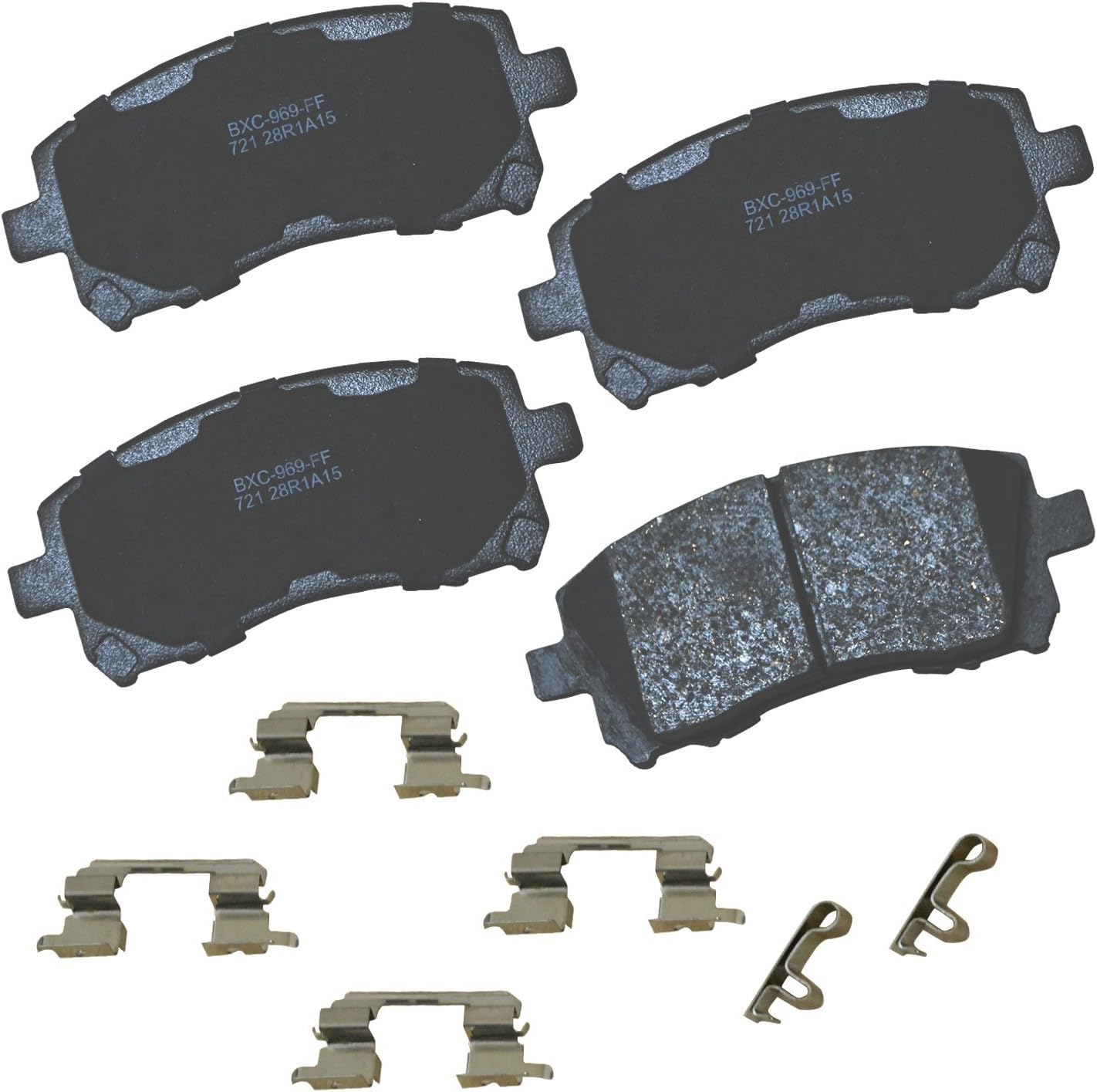
7. Bendix Premium SBC721 Ceramic Rear Brake Pad Set
| Auto Part Position | Rear |
|---|---|
| Compatible with Vehicle Type | Cars, SUV, Truck |
| Material Type | Copper |
| Included Components | Brake pad set with installation hardware |
| Specification Met | OEM |
The Bendix Premium SBC721 rear brake pad set is a vehicle-specific ceramic replacement intended for Subaru models including the Outback from the 2000–2002 range. These pads are manufactured to match factory fit, form, and function so installation is straightforward for a DIYer or a shop. Built from a ceramic/copper-based formulation, they are aimed at daily drivers and emphasize low dust, quiet operation, and resistance to wear and corrosion. The kit includes installation hardware, which simplifies a rotor-and-pad refresh. You can expect predictable pedal feel and reduced brake fade under normal commuting and highway use, but they are not a performance or heavy-towing solution. The pads carry a limited lifetime warranty and meet OEM-level specifications, which suits buyers who prioritize reliable, factory-quality replacements over aggressive bite or track-focused performance.
Best for: Buyers who want a reliable, factory-style replacement for routine driving and value low dust, quiet operation, and straightforward fitment for a 2000–2002 Subaru Outback.
Less Ideal for: Drivers who need high-performance pads for track use or frequent heavy towing should choose a purpose-built performance or heavy-duty pad instead.
- Vehicle-specific design for straightforward fit and installation
- Ceramic-based material reduces dust and promotes quieter braking
- Includes installation hardware for an easier swap
- Engineered to match factory braking feel for predictable performance
- Not intended for performance driving or heavy-duty towing where higher-temperature friction is required
Verdict: A dependable, factory-quality ceramic rear pad set that delivers quiet, low-dust braking and simple fitment for everyday driving on a 2000–2002 Subaru Outback.
Choosing the Right 2000-2004 Subaru Outback Brake Pads: Key Factors to Consider
Compound and Braking Performance
The friction compound determines initial bite, wet performance, and resistance to fade during repeated stops. For the 2000-2004 Subaru Outback, you want a compound that gives consistent pedal feel during daily driving and when hauling cargo. Organic and ceramic-like compounds tend to offer quieter operation and lower dust, while semi-metallic mixes can deliver stronger bite under heavier loads. Consider the Outback's typical duty cycle when choosing: longer highway trips need fade resistance, while city driving emphasizes smooth, predictable engagement.
Compound choice also affects rotor wear and service intervals. Aggressive compounds can shorten rotor life and increase maintenance costs, so balance stopping power with durability based on your driving style.
Pad Thickness and Wear Rate
Initial pad thickness and how quickly the material wears influence how often you will need replacements. Check the manufacturer's thickness spec and compare it to the vehicle's service intervals to estimate lifespan for your driving habits. For a 2000-2004 Outback used for commuting and occasional towing, moderate thickness with a durable compound tends to provide the best balance of longevity and performance.
Also watch for uneven wear patterns that can signal caliper or rotor issues. Choosing pads with stable wear characteristics helps avoid premature replacement and keeps braking predictable.
Noise, Vibration, and Harshness (NVH)
Brake noise is a common complaint, particularly on older vehicles. For an Outback, look for pads with proper shims, chamfers, and bedding behavior that minimize squeal and vibration. Ceramic-type materials generally produce less noise and dust, which helps keep wheels cleaner and improves ownership experience.
Proper installation and the use of anti-rattle hardware also influence NVH. When noise is a priority, select pads specifically designed for low-noise operation and follow recommended bedding procedures to reduce early squeal.
Compatibility With Rotors and Calipers
Fitment is critical for the 2000-2004 Subaru Outback. Pads must match the factory caliper geometry and rotor diameter to ensure correct contact area and even wear. Mismatched pad profiles can cause uneven braking, pedal pulsation, or increased wear on rotors.
Consider whether your Outback has resurfaced rotors or aftermarket rotors; some compounds perform differently against worn or turned surfaces. If rotors are near their minimum thickness, choose pads that are forgiving and avoid compounds that aggressively accelerate rotor wear.
Dust and Wheel Cleanliness
Brake dust affects wheel appearance and can be a maintenance nuisance, especially on lighter-colored alloys. Ceramic-like pad materials usually produce finer, lighter dust that is easier to clean, while semi-metallic pads tend to create darker, heavier deposits.
If you prioritize keeping wheels cleaner on a daily-driven Outback, select pads rated for low dust generation and plan regular cleaning intervals based on your driving environment.
Installation and Included Hardware
Ease of installation matters for owners who do their own maintenance. Pads that include full hardware kits, anti-squeal shims, and clear fitment guidance reduce the chance of installation errors. For this older Outback, verify whether the pads come with the correct clips and wear indicators for the front and rear positions.
Properly torqued caliper bolts, clean guide pins, and lubricated contact points are as important as the pad choice. Choosing pads that minimize the need for additional parts saves time and reduces the probability of NVH issues after installation.
Front Versus Rear Brake Pad Considerations
Front and rear pads serve different roles on the 2000-2004 Subaru Outback and should be selected accordingly. The front brakes typically handle the majority of braking force, so front pads need stronger initial bite and better heat resistance. Rear pads contribute to stability and parking brake function, so choose rear materials that provide predictable modulation without excessive grab.
- Inspect front pads for thicker material and compounds rated for higher energy dissipation.
- For the rear, prioritize smooth engagement and compatibility with the parking brake mechanism if applicable.
- Replace front and rear pads as a matched set when wear is uneven or when rotors are serviced to maintain balanced braking.
Signs You Need Brake Pad Replacement
Recognizing wear symptoms helps you address braking issues before they affect safety. Common signs on the Outback include a grinding sound that indicates metal-to-metal contact, a hollow or high-pitched squeal often caused by wear indicators, reduced pedal travel, or a spongy brake feel. Visual inspection through the wheel can reveal pad thickness and uneven wear.
- Grinding noise usually means pads have worn to the backing plate and require immediate replacement.
- Squeal on light braking can indicate glazed pads, missing shims, or normal wear indicator contact.
- Uneven pad wear can signal caliper slide problems or rotor runout; inspect hardware and rotors if you see this.
Bedding-In New Brake Pads For Optimal Performance
Proper bedding transfers a uniform layer of friction material onto the rotor, which stabilizes braking feel and reduces early noise or vibration. For the 2000-2004 Outback, follow a controlled bedding procedure: perform a series of moderate stops from progressively higher speeds, allowing cooling intervals between sets to avoid overheating the pads and rotors. Avoid aggressive hard stops during the initial 200 miles of use to let the compound stabilize.
- Start with 8 to 10 moderate stops from city speeds, then perform a few higher-speed decelerations.
- Allow cooling periods between repeated stops to prevent glazing or heat soak.
- After bedding, recheck hardware torque and pad seating to ensure consistent contact.
Inspecting Rotors and When to Resurface
Pad selection should consider rotor condition. Thin, heavily grooved, or warped rotors reduce pad life and can cause vibration. Measure rotor thickness against the vehicle specification and inspect for deep scoring or heat spotting. If rotors are within spec but show minor scoring, resurfacing can restore a true contact surface; otherwise replacement is safer and more cost-effective in the long run.
- Measure rotor thickness and compare to the Outback's service limit before choosing a pad that may accelerate wear.
- Light scoring can usually be corrected with turning, but deep grooves or heat cracks require replacement.
- Pair new pads with either resurfaced or new rotors to ensure even bedding and consistent braking performance.
Maintenance Tips to Extend Pad Life
Regular maintenance extends pad life and maintains braking performance. Keep caliper slides clean and lubricated, use the correct torque on caliper mounting hardware, and replace worn hardware like clips and pins during pad service. Periodic inspections for uneven pad wear help catch caliper or rotor issues early, preventing premature pad replacement.
- Clean and lubricate guide pins each time you change pads to ensure even wear.
- Replace anti-rattle clips and shims if corroded or damaged.
- Check for proper brake fluid level and condition, since contaminated fluid can indirectly affect braking behavior under heavy use.
Still looking for the perfect fit?
Select your Subaru Outback configuration to see the most relevant Brake Pads recommendations
How We Chose the Best 2000-2004 Subaru Outback Brake Pads
To create this shortlist we applied vehicle-specific and performance filters that matter for 2000-2004 Subaru Outback owners. First, we confirmed proper fitment across the full 2000–2004 model years and common wheel and rotor configurations for this Outback generation. We prioritized compounds and backing-plate designs that provide consistent stopping power without excessive rotor wear.Key evaluation criteria included: braking performance under repeated stops, pad longevity and wear rate, noise and dust generation, and compatibility with typical Outback rotor materials and sizes. We also considered ease of installation and whether the pads include features like wear indicators or shims to reduce noise. Durability under mixed city and highway driving for loaded wagons was weighted higher than niche track performance.We excluded options that required nonstandard hardware, oversized calipers, or significant rotor modifications. Pads with known fitment ambiguity or lacking clear vehicle-specific fit guides were not considered. The result is a focused set of choices that balance real-world stopping, longevity, and installation practicality for 2000–2004 Subaru Outback owners.
Our full evaluation process is outlined in our review methodology.
FAQ
How often should I replace brake pads on a 2000-2004 Subaru Outback?
It depends on driving conditions and pad compound. Typical replacement intervals range from 25,000 to 60,000 miles. Inspect pad thickness every oil change and look for wear indicators or noise that signal earlier replacement.
Can I replace only the front pads and keep the rear pads on an Outback?
You can replace only the front pads if the rears have sufficient thickness and even wear. However, replacing pads in pairs or axle-matched sets helps maintain balanced braking and consistent pedal feel.
What does a grinding noise from the brakes indicate?
Grinding usually indicates the pad material is worn away and the backing plate is contacting the rotor. This requires immediate service to prevent rotor damage and restore safe braking.
Are ceramic brake pads a good choice for the 2000-2004 Outback?
Ceramic-like compounds often provide low noise and dust with consistent everyday braking, which suits many Outback owners. They may wear differently than semi-metallic pads, so evaluate expected lifespan and rotor condition when choosing.
How can I check brake pad thickness without removing the wheel?
You can often see pad thickness through the wheel spokes using a flashlight. If the pad lining appears thin or less than a few millimeters, plan for replacement and perform a full inspection with the wheel off.
Will replacing pads improve a spongy brake pedal?
A spongy pedal usually stems from air in the brake lines or fluid issues rather than pad condition. If pads are worn unevenly it can affect pedal feel, but start by checking brake fluid and bleeding the system before assuming pads are the cause.
Final Verdict
Prioritize fitment, compound selection, and rotor condition when choosing brake pads for a 2000-2004 Subaru Outback. Balance stopping power with noise and rotor wear based on how you use the vehicle. For daily driving and light towing, favor pads with consistent bite, moderate dust, and good longevity; if you frequently carry heavy loads, emphasize heat resistance and wear rate.Choose pads that include proper hardware and follow recommended bedding and inspection steps after installation. That approach will give you safer, more predictable braking and reduce the need for premature service.
Explore More:
- Check out all Subaru Outback parts & accessories
- Explore Brake Pads Maintenance & Repair Guides
- Explore Brake System
- Browse all Auto Parts
