

Note: This article contains affiliate links. If you click on these links and make a purchase, I may earn a small commission at no extra cost to you. This helps support my research and content. Read my full affiliate disclosure here.
If you drive a 2013-2017 Honda Accord, the condition of your brake calipers has a direct impact on stopping power, pedal feel, and uneven pad wear. Choosing the right brake calipers can restore safe braking, prevent dragging, and extend the life of rotors and pads. This guide focuses on the most suitable caliper options matched specifically to the 2013-2017 Accord fitment and common service needs.Below are the top shortlisted calipers for this Accord generation along with the evaluation criteria we used. Read on to find which type of caliper and which features matter most for your driving and maintenance goals.
Looking for other parts? See all Honda Accord parts & accessories.
Top Picks at a Glance
| Best Quality Built to a higher standard if you want something more solid | TRQ Performance Front and Rear Brake Caliper Set (4-Piece) |  |
| Best Value The sweet spot between price and what you get | PHILTOP Front Left Disc Brake Caliper (19-B2660) |  |
| Best Budget The cheapest option that still gets the job done reliably | KAX Front Left Disc Brake Caliper Assembly for Honda (Front Left) |  |
| Most Popular A crowd favorite that many people choose with confidence | Detroit Axle Rear Right Brake Caliper with Bracket for 2013–2017 Honda Accord (Casting #10 CLP) |  |
| Best Seller A high-volume bestseller chosen again and again | TRQ Rear Driver and Passenger Side Brake Caliper Set (2-piece) |  |
1. TRQ Performance Front and Rear Brake Caliper Set (4-Piece)

| Model | TRQ CLA82705 4 Piece Brake Caliper Set |
|---|---|
| Application Years | 2013-2017 Honda Accord |
| Exterior | Machined |
| Coating | Electrostatic high-heat powder coating |
This TRQ Performance caliper kit replaces all four corners with pre-assembled, direct-fit calipers intended for the 2013–2017 Honda Accord. The set includes two front and two rear performance calipers with electrostatic high-heat powder coating to resist rust and EPDM seals and boots rated for high temperatures to reduce thermal deterioration. Installation is aimed at DIYers and shops alike since the calipers come ready to bolt on and TRQ provides step-by-step video guidance. In practical use the improved sealing and coating should help longevity under spirited driving and reduce corrosion from road salt or moisture. Buyers should note the kit is calipers only and does not include brake pads or rotors, so plan to pair with compatible pads and quality brake fluid and to properly bed new components. The weight of the assembly means professional help is reasonable if you lack a lift, and buyers should confirm fitment with their vehicle options before buying.
Best for: Buyers who want a performance-minded, direct-fit caliper upgrade for improving durability and heat resistance on a 2013–2017 Accord and prefer parts that are ready to install with DIY support.
Less Ideal for: Drivers looking for a complete brake refresh in a single purchase or those who need upgraded pads or rotors included should consider a full brake kit instead.
- Direct-fit, pre-assembled front and rear calipers simplify installation
- Electrostatic high-heat powder coat resists rust and corrosion
- High-temperature EPDM seals and boots reduce thermal deterioration
- Includes manufacturer installation videos to help DIYers
- Does not include brake pads or rotors so additional purchases are required
Verdict: Choose this TRQ four-piece caliper set when you want a direct-fit, heat-resistant replacement that improves corrosion resistance and is ready for DIY installation.
2. PHILTOP Front Left Disc Brake Caliper (19-B2660)

| Position | Front Left |
|---|---|
| Number of pistons | 1 |
| Piston material | Steel |
| Exhaust port size | M10x1.0 |
| Mounting hardware | Included |
This PHILTOP front-left brake caliper is a direct-style replacement intended for 2013-2017 Honda Accord and compatible Civic, ILX, CRZ, and Fit applications. It replaces the factory caliper position and is supplied with mounting hardware, a single steel piston, and standard inlet and exhaust port sizes for straightforward installation by a competent DIYer or mechanic. The unit is machined and pressure-tested with IATF16949-guided production, which suggests consistent sealing and fitment. Because it ships without pads, you can reuse good pads or choose fresh pads matched to your driving needs. Practical buyers will appreciate the included hardware and the one-piston simplicity that keeps installation and brake bleeding uncomplicated. The main limitations are that it is a single-piston caliper intended to match factory braking performance rather than upgrade braking power, and you must verify port thread and vehicle fit before ordering. For routine brake repairs on the specified Accord years this caliper provides a factory-style, serviceable replacement.
Best for: Buyers who want a reliable, factory-style replacement for a front-left caliper on a 2013–2017 Accord and prioritize straightforward installation, consistent sealing, and value.
Less Ideal for: Drivers seeking a performance upgrade, multi-piston setup, or a complete caliper-and-pad kit should look for a different option that includes upgraded components.
- Direct-fit front-left replacement for specified Honda and Acura models, including mounting hardware
- Manufactured under IATF16949 processes and pressure-tested for sealing
- Single steel piston design simplifies installation and brake bleeding
- Machined exterior finish that matches factory-style appearance
- Sold without brake pads, so pads must be purchased separately if needed
- Single-piston caliper maintains factory braking performance and is not a performance upgrade
Verdict: A practical, factory-style front-left replacement caliper for 2013–2017 Accord owners who want reliable fitment and easy installation.
3. KAX Front Left Disc Brake Caliper Assembly for Honda (Front Left)

| Position | Front Left |
|---|---|
| Brake piston diameter | 2.25 inch |
| Disc brake piston count | 1x Steel Piston |
| Bleeder port size | M10x1.0 |
| Brake inlet port size | M10x1.0 |
This KAX front-left disc brake caliper is a budget-minded, direct-replacement unit intended to restore braking function on compatible Honda models from the 2003–2017 era. It installs in place of the factory caliper and is commonly used when a corroded, leaking, or seized caliper is causing uneven pad wear or reduced stopping power. Notable features include a machined exterior, a single steel piston with a 2.25-inch diameter, M10x1.0 bleeder and inlet ports, and CNC precision machining aimed at smooth piston movement. The part also uses high-strength bolts to improve stability under hard braking. In real-world use this caliper should provide reliable braking performance for everyday driving and highway stops, and its direct-fit design keeps installation straightforward for experienced DIYers or independent shops. Limitations are that it ships without pads and may require matching hardware or brake hose transfer from the old caliper, and it is a single-side unit so buyers must confirm left/right placement and fitment before ordering.
Best for: A cost-conscious Honda owner or independent mechanic seeking an affordable, factory-style front-left caliper replacement to restore braking performance without paying for premium aftermarket brands.
Less Ideal for: Drivers wanting a full brake refresh should avoid this alone since pads, hardware, or a matching right-side caliper may be needed to complete the job; performance-focused buyers should consider upgraded performance calipers instead.
- Direct-replacement fit for specified Honda models to simplify installation
- CNC machined piston and steel piston design for smooth braking action
- Uses M10x1.0 bleeder and inlet ports that match common brake lines and tools
- High-strength bolts enhance caliper stability under heavy braking
- Sold as a single caliper and does not include brake pads or mounting hardware
Verdict: A practical, budget-friendly front-left replacement caliper that restores factory-style braking on compatible 2003–2017 Honda models.
4. Detroit Axle Rear Right Brake Caliper with Bracket for 2013–2017 Honda Accord (Casting #10 CLP)

| Position | Rear Right |
|---|---|
| Brake Caliper Bracket Included | Yes |
| Casting | #10 CLP |
| Item model number | 2405-H |
| Manufacturer | Detroit Axle |
This Detroit Axle rear right brake caliper is a direct replacement designed to match the factory fit for 2013–2017 Honda Accord applications that use the Casting #10 CLP. It ships as a single, painted caliper with the mounting bracket included, which streamlines installation when you are replacing a seized or leaking unit. The part is tested for impact and fatigue and comes with a long warranty, and many owners report OEM-like fit and smooth operation after installation. In practice you will remove the old caliper, transfer or replace hardware as needed, bolt the bracket and caliper in place, then bleed the brake system to restore firm pedal feel. Expect the unit to behave like a factory-quality replacement, but confirm casting and fitment against your VIN before ordering because some customers have seen bracket fitment differences on non-matching vehicles. Also the listing is for a single caliper so you'll need to buy the opposite side separately if replacing both sides.
Best for: Buyers who prioritize proven fit and peer-reviewed reliability and want a factory-quality replacement caliper that installs like the original on compatible 2013–2017 Accords.
Less Ideal for: Drivers who want a matched pair or a full brake refresh kit including pads and rotors in one purchase should consider a different offering that bundles both sides and pads.
- Direct-fit replacement for 2013–2017 Accord casting #10 CLP, minimizing modification during install
- Includes caliper bracket so you receive the main mounting hardware with the caliper
- Painted finish and testing for impact and fatigue suggest rust resistance and durability
- Many user reports of OEM-like fit and smooth operation after installation
- Sold as a single caliper rather than a pair so you may need to purchase another unit for the opposite side
Verdict: A tested, factory-style rear right caliper with bracket that delivers OEM-like fit and reliable performance for 2013–2017 Honda Accord owners seeking a confidence-inspiring replacement.
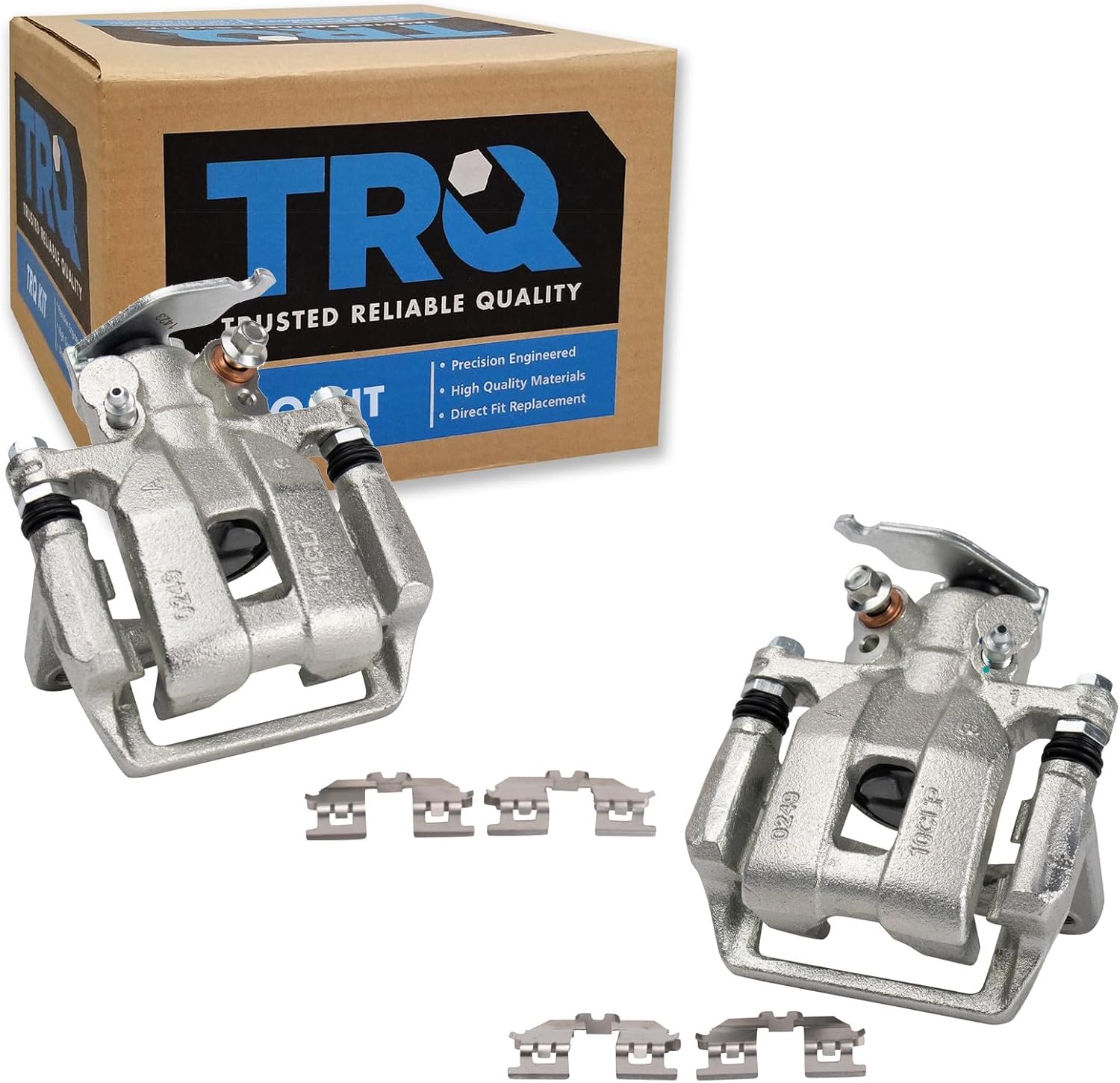
5. TRQ Rear Driver and Passenger Side Brake Caliper Set (2-piece)
| Fitment | 2013–2017 Honda Accord rear |
|---|---|
| Finish | Zinc Coated |
| Seals | EPDM Seals |
| Includes | Hardware and abutment kit |
| Core | 100% new components, no core charge |
These TRQ rear calipers come as a matched pair with hardware and abutment kit for a full rear caliper replacement on compatible Accords. They are zinc coated and pre-assembled, which helps reduce corrosion and cuts installation time compared with rebuilding old calipers. EPDM seals are listed to resist heat deterioration, and the kit includes new components with no core charge so you receive ready-to-install units. In practice this means a straightforward swap using common hand tools and a brake bleed procedure; TRQ also provides installation videos to guide DIYers. Many users report reliable fit and improved stopping performance, though there are isolated reports of pistons that feel tight out of the box. If you choose these, plan for a careful piston compression and a full brake fluid flush after installation. For a risk-averse buyer this kit offers a near-factory replacement experience and the convenience of included hardware, but expect to spend a little time on bleeding and initial bedding-in to verify smooth operation.
Best for: A buyer who wants a ready-to-install, factory-replacement rear caliper pair for a 2013–2017 Accord and values straightforward DIY installation with guidance available.
Less Ideal for: Drivers seeking high-performance or motorsport brake upgrades or those who prefer fully remanufactured cores with documented bench testing should consider specialist options instead.
- Direct-fit, pre-assembled pair reduces installation time and eliminates modification.
- Zinc coating provides rust resistance for longer service life in corrosive climates.
- Includes hardware and abutment kit so you get all needed rear components in one purchase.
- EPDM seals designed to resist thermal deterioration for more consistent piston operation.
- Some buyers reported tight pistons or sticking behavior that required additional troubleshooting or bedding-in.
Verdict: A convenient, near-factory direct-replacement rear caliper pair that simplifies DIY repair for 2013–2017 Honda Accord owners who prioritize reliability and ease of installation.
Choosing the Right 2013-2017 Honda Accord Brake Calipers: Key Factors to Consider
Correct Fitment and Mounting
Accurate fitment is the top priority for the 2013-2017 Accord because incorrect mounting points, piston diameters, or bracket misalignment can lead to improper pad contact and accelerated rotor wear. Verify that the caliper matches the vehicle's year range, front or rear position, and any factory parking brake integration. Mating surfaces and bolt patterns must align with the OEM mounting ears to avoid stress on mounting bolts and uneven braking.
When replacing calipers, check that the bleed screw orientation and hose inlet match the vehicle's hoses to avoid routing issues. Proper fitment also ensures the caliper clears the rotor and wheel components, preventing rub or interference that could generate noise or heat.
Piston Size and Seal Quality
Piston diameter affects clamping force and pedal feel. Calipers with the correct piston size for the Accord will reproduce the intended braking force and avoid overloading pads or causing a spongy pedal. Seal material and design influence leak resistance and longevity, especially in regions with temperature extremes or road salt exposure.
Inspect the quality of dust boots and fluid seals. Better seals reduce the risk of contamination entering the piston bore and extend maintenance intervals. For remanufactured units, confirm that piston surfaces were properly cleaned and reconditioned before reassembly.
Corrosion Resistance and Coatings
The 2013-2017 Accord is driven in a range of climates where salt, moisture, and road grime can accelerate caliper corrosion. Zinc or epoxy-based coatings on caliper bodies and guide pins help prevent pitting and seized hardware. Corrosion-resistant finishes reduce the likelihood of sticking pistons and frozen guide pins, lowering the need for early replacement.
Also consider stainless or plated hardware for bleeders and bolts. Protective finishes on internal components and thorough surface preparation during remanufacture are critical to long-term reliability.
Hardware and Included Components
A complete hardware kit simplifies installation and helps ensure correct operation. Essential components include guide pins, boots, anti-rattle clips, bleeder screws, and any pad-retention hardware specific to the Accord's front or rear setup. Missing or low-quality hardware can cause noise, uneven pad wear, or failure to secure pads properly.
For rear calipers, confirm whether the parking brake lever or mechanism is included or requires transfer from the original caliper. Having the correct bleeder and fitting sizes included reduces installation time and potential leaks.
Serviceability and Availability of Rebuild Parts
Consider whether seals, pistons, and guide pins are available as rebuild parts for future servicing. A caliper that can be rebuilt with a standard brake caliper rebuild kit extends the service life and can be more economical over time. Easy access to rebuild kits and clear documentation on piston sizes and seal part numbers matters when planning long-term maintenance.
For owners who prefer in-place repairs, check that the caliper design allows piston removal without specialized tooling and that replacement seals are sold separately.
Bleeding, Brake Line Compatibility, and Installation Ease
Bleeder screw placement and thread type must match the Accord's brake lines to simplify bleeding and avoid cross-threading. Calipers that allow straightforward access to bleeder screws reduce the risk of trapped air after installation. Hose inlet orientation and fitting size should be consistent with the vehicle to prevent awkward routing or adapter use.
Installation ease also factors in the weight and design of the caliper body, whether the unit comes with pre-installed seals, and whether the pads can be retained without additional clips. Less time in the garage reduces the chance of installation errors.
Front Versus Rear Caliper Requirements
Front calipers on the 2013-2017 Accord are typically larger and handle a greater share of braking force, so they need pistons and bores matched to the vehicle's front rotor size and pad profile. Rear calipers may incorporate parking brake mechanisms or require separate parking brake shoe assemblies, so confirm the rear-specific configuration when replacing rear units.
When planning service, treat front and rear replacements as distinct jobs. A front caliper swap may require heavier-duty bleeder access and careful attention to torque specs, while rear caliper work often involves ensuring the parking brake operates correctly after installation.
- Confirm piston count and diameter for front calipers
- Check rear caliper parking brake integration before purchase
- Ensure rotor clearance and pad profile match for both positions
Remanufactured Versus New Calipers
Remanufactured calipers can be a cost-effective option when rebuilt components meet strict standards. For the 2013-2017 Accord, ensure reman units list refurbished piston finishes, replaced seals, and recertified bores. Documentation of the remanufacturing process offers confidence in long-term performance.
New calipers eliminate uncertainty around prior damage but verify that the casting, machining, and coating processes meet corrosion and dimensional standards. Whether choosing remanufactured or new, prioritize complete hardware and clear fitment information.
- Look for documented rebuilding processes on reman units
- New calipers avoid prior wear concerns but check coatings
- Either option should include all necessary mounting hardware
Signs You Need Caliper Service or Replacement
Common symptoms that indicate caliper issues include uneven pad wear, a soft or sinking brake pedal, and a vehicle that pulls to one side during braking. You may also notice a burning smell or unusually hot wheels after a short drive, which can indicate a dragging caliper. Intermittent grinding or excessive noise during braking can point to loose or missing pad retention hardware.
Early detection reduces repair complexity. Inspect guide pins for smooth movement, check for fluid leaks around piston seals, and look for corrosion or pitting on the caliper surface. Addressing these symptoms promptly helps avoid rotor damage and maintains consistent stopping power.
- Uneven pad wear or vehicle pulling during braking
- Soft or sinking pedal and visible fluid leaks
- Excessive heat at the wheel or burning odor after driving
Installation Tips for the 2013-2017 Accord
Use the correct torque specifications for caliper mounting bolts and bleeder fittings to avoid bolt stretch or thread damage. Keep the brake system clean and free of contaminants during installation. When replacing calipers, pre-fill or bench-bleed the caliper if possible to reduce air introduction into the system.
After installation, perform a thorough bleed procedure and road test at low speed to confirm pedal firmness and absence of pulls. Re-check torque on mounting hardware after the first few miles of operation to ensure nothing has loosened during initial bedding.
- Bench-bleed calipers when possible before installation
- Use correct torque specs and re-check after initial road test
- Verify bleeder orientation and bleed thoroughly to remove air
Maintaining Calipers for Longevity
Regular maintenance can dramatically extend caliper life. Periodically clean guide pins and apply high-temperature grease to keep them sliding freely. Inspect dust boots and seals for cracks and replace them at the first sign of deterioration to prevent contamination of piston bores.
Address minor fluid weeping quickly and avoid long-term exposure to road salt by flushing the undercarriage after winter driving. Proper pad selection and avoiding prolonged braking under heavy loads can also reduce caliper heat stress and prolong service life.
- Clean and lubricate guide pins during pad changes
- Inspect seals and boots annually or when servicing brakes
- Flush contaminants and address leaks promptly
Still looking for the perfect fit?
Select your Honda Accord configuration to see the most relevant Brake Calipers recommendations
How We Chose the Best 2013-2017 Honda Accord Brake Calipers
We prioritized calipers that deliver reliable fitment and long-term service on the 2013-2017 Honda Accord platform. Evaluation emphasized correct mounting points and piston sizes, seal and bore finish quality, and compatibility with the vehicle's original brake hardware and parking brake configuration. We also considered materials and coatings that resist corrosion in wet climates, plus the quality of replacement guide pins, boots, and bleeder fittings.Durability tests in documentation or manufacturer specifications were considered, focusing on resistance to piston corrosion and seal degradation. Ease of installation and access to service parts such as replacement seals or rebuild kits were factored in, as well as whether the calipers supported OE-style brake pad retention and parking brake mechanisms where applicable.We excluded units with unclear fitment data, missing mounting or piston specifications, incomplete hardware kits, or those requiring brake system modifications. Our final list emphasizes calipers that balance serviceability, corrosion resistance, and precise fit for the 2013-2017 Honda Accord rather than unverified performance claims.
Our full evaluation process is outlined in our review methodology.
FAQ
What are common brake caliper symptoms on a 2013-2017 Accord?
Common symptoms include the car pulling to one side while braking, uneven pad wear, a soft or sinking brake pedal, visible fluid leaks, or wheels running unusually hot after short drives. These signs often point to piston or guide pin problems.
Can I use remanufactured brake calipers on my 2013-2017 Accord?
Remanufactured calipers can be suitable when the rebuilding process is documented and includes new seals, properly finished pistons, and inspected bores. Confirm fitment, included hardware, and that the parking brake mechanism matches the rear caliper configuration if applicable.
How difficult is it to replace a brake caliper on a 2013-2017 Accord?
Replacing a caliper is a moderate DIY task for those comfortable with brake work. It requires jacking the vehicle, removing the wheel, unbolting the caliper, transferring or installing hardware, and bleeding the system. Proper torque and bleeding are critical for safety.
When should I rebuild a caliper versus replacing it?
Rebuild when the bore and piston are in good condition and only seals or minor corrosion are present, provided rebuild kits and replacement parts are available. Replace the caliper if there is significant pitting, a warped or damaged body, or when fitment or hardware is missing.
Will a sticking caliper cause increased brake pad wear on my Accord?
Yes. A sticking piston or seized guide pin can keep the pad partially engaged with the rotor, causing accelerated and uneven pad wear, higher rotor temperatures, and possible rotor damage if left unaddressed.
Do front and rear calipers require different parts for the 2013-2017 Accord?
Yes. Front and rear calipers often have different piston sizes, mounting points, and, for rear units, potential parking brake mechanisms. Always select the caliper specified for the axle position to ensure correct operation.
Final Verdict
For the 2013-2017 Honda Accord, prioritize calipers that match factory mounting and piston specifications, include complete hardware, and offer corrosion-resistant finishes. Balancing correct fitment, seal quality, and availability of rebuild parts will give you reliable stopping power and reduce future maintenance needs.Choose the position-specific caliper that addresses the symptoms you are seeing and weigh the tradeoff between a remanufactured unit with proven rebuild standards or a new unit with fresh coatings. Focusing on those core criteria will help you select a caliper that restores safe, predictable braking for your Accord.
Explore More:
- Check out all Honda Accord parts & accessories
- Explore Brake Calipers Maintenance & Repair Guides
- Explore Brake System
- Browse all Auto Parts
