

Note: This article contains affiliate links. If you click on these links and make a purchase, I may earn a small commission at no extra cost to you. This helps support my research and content. Read my full affiliate disclosure here.
If your 1998-2002 Subaru Forester is showing weak airflow, unusual blower motor noise, or inconsistent fan speeds, the blower motor is a likely culprit. Swapping in the right replacement can restore steady heating and cooling, eliminate irritating rattles, and prevent further HVAC electrical wear.This guide highlights the top blower motors shortlisted for the 1998-2002 Forester, and explains the practical decision factors—fitment, airflow performance, noise level, build quality, and electrical compatibility—we used to evaluate them. Read on for the options that best match common Forester needs and a clear plan for choosing the right unit for your car.
Looking for other parts? See all Subaru Forester parts & accessories.
Top Picks at a Glance
| Best Quality Built to a higher standard if you want something more solid | AISIN HVAC Blower Motor with Wheel Assembly (BLMAZ-00027) |  |
| Best Value The sweet spot between price and what you get | BDFHYK HVAC Blower Motor Assembly Compatible with Subaru Forester 1999-2000 |  |
| Best Budget The cheapest option that still gets the job done reliably | TadaMark HVAC Blower Motor Assembly with Fan Cage |  |
| Highest Rated A top-rated pick with lots of positive feedback | PUAMRPTS HVAC Heater Blower Motor Assembly with Fan |  |
| Most Popular A crowd favorite that many people choose with confidence | Aspligo Blower Motor Fan Assembly for Subaru Forester 2.5L (2001–2013) |  |
| Best Seller A high-volume bestseller chosen again and again | Aspligo Blower Motor Assembly (Fits 1998–2000 Subaru Forester) |  |
1. AISIN HVAC Blower Motor with Wheel Assembly (BLMAZ-00027)

| Speed | 3050 rpm |
|---|---|
| Voltage | 12 volts |
| Horsepower | 150 watts |
The AISIN blower motor with wheel assembly is a direct-style replacement intended to restore cabin airflow in compatible Forester models. It installs where the factory blower sits and includes the cage wheel and a two-blade terminal motor for a straightforward swap. With a 12-volt, 150-watt brushed motor rated at about 3050 rpm, it delivers the torque and speed needed for normal and high fan settings, which helps recover heater and A/C airflow that diminishes with a worn unit. The motor ships with an installation manual and is backed by a one-year unlimited-mileage warranty. Because this is a brushed motor, it offers reliable, proven performance but may wear brushes over time compared with brushless designs. Fitment notes in the listing should be checked to confirm compatibility with specific model years and trims before purchase. For owners focused on restoring or maintaining strong cabin airflow, this unit provides a factory-quality replacement without added features like noise-isolating upgrades or brushless longevity improvements.
Best for: Forester owners who need a reliable, factory-style replacement to restore strong heating and A/C airflow and prefer a straightforward, install-and-forget swap guided by manufacturer instructions.
Less Ideal for: Drivers seeking the longest-lasting, lowest-maintenance brushless blower upgrades or who prioritize aftermarket noise reduction or performance-tuning features should consider other options.
- Includes blower cage wheel for a complete replacement assembly
- 12-volt, 150-watt motor provides sufficient power for typical and high fan speeds
- Ships with installation manual to simplify DIY replacement
- Backed by a one-year unlimited-mileage warranty from the manufacturer
- Brushed motor design means brushes will wear over time compared with brushless units
Verdict: A solid factory-quality replacement blower motor that restores strong cabin airflow for 1998–2000 Forester owners who want a straightforward, reliable swap.
2. BDFHYK HVAC Blower Motor Assembly Compatible with Subaru Forester 1999-2000

| Brand Name | BDFHYK |
|---|---|
| Model | BD-05-06272 |
| Included Components | AC Heater Blower Motor Fan |
| Material Type | Iron, Plastic |
This BDFHYK blower motor is a bolt-in replacement intended to restore the HVAC fan function on 1999–2000 Subaru Forester vehicles. It includes a precision-balanced impeller and reinforced shaft to reduce vibration and noise, so drivers should notice steadier, quieter airflow across fan speeds compared with a worn unit. The part lists multiple equivalent OEM numbers for cross-reference and is packaged to minimize shipping damage. In use it performs the core tasks: move air for heating, cooling, and windshield defogging, and it is built to operate in hot and cold conditions. Practical buyers will appreciate the focus on fitment and the factory-style performance claims, plus a one-year support window. Limitations are typical of aftermarket blower motors: longevity and fit can vary by vehicle condition, and buyers should confirm the OE number before ordering to ensure correct connector and mounting alignment.
Best for: A Forester owner who wants a cost-effective, practical replacement that restores HVAC airflow and reduces blower noise without unnecessary extras.
Less Ideal for: Those seeking a lifetime or upgraded high-performance blower beyond factory-spec or owners unwilling to verify OE numbers and connector fit before installation.
- Precision-balanced impeller and reinforced shaft reduce vibration and operational noise
- Designed to meet OEM-equivalent fit and deliver steady airflow for heating, cooling, and defogging
- Includes cross-referenced original part numbers to simplify compatibility checks
- Secure packaging and pre-delivery inspection reduce risk of shipping damage
- Aftermarket durability can vary compared with factory-installed units
- Compatibility requires confirming the vehicle year and OE number to ensure correct connector and mounting
Verdict: A straightforward, factory-style replacement that restores quiet, reliable blower performance for 1999–2000 Subaru Forester owners focused on practical results.
3. TadaMark HVAC Blower Motor Assembly with Fan Cage
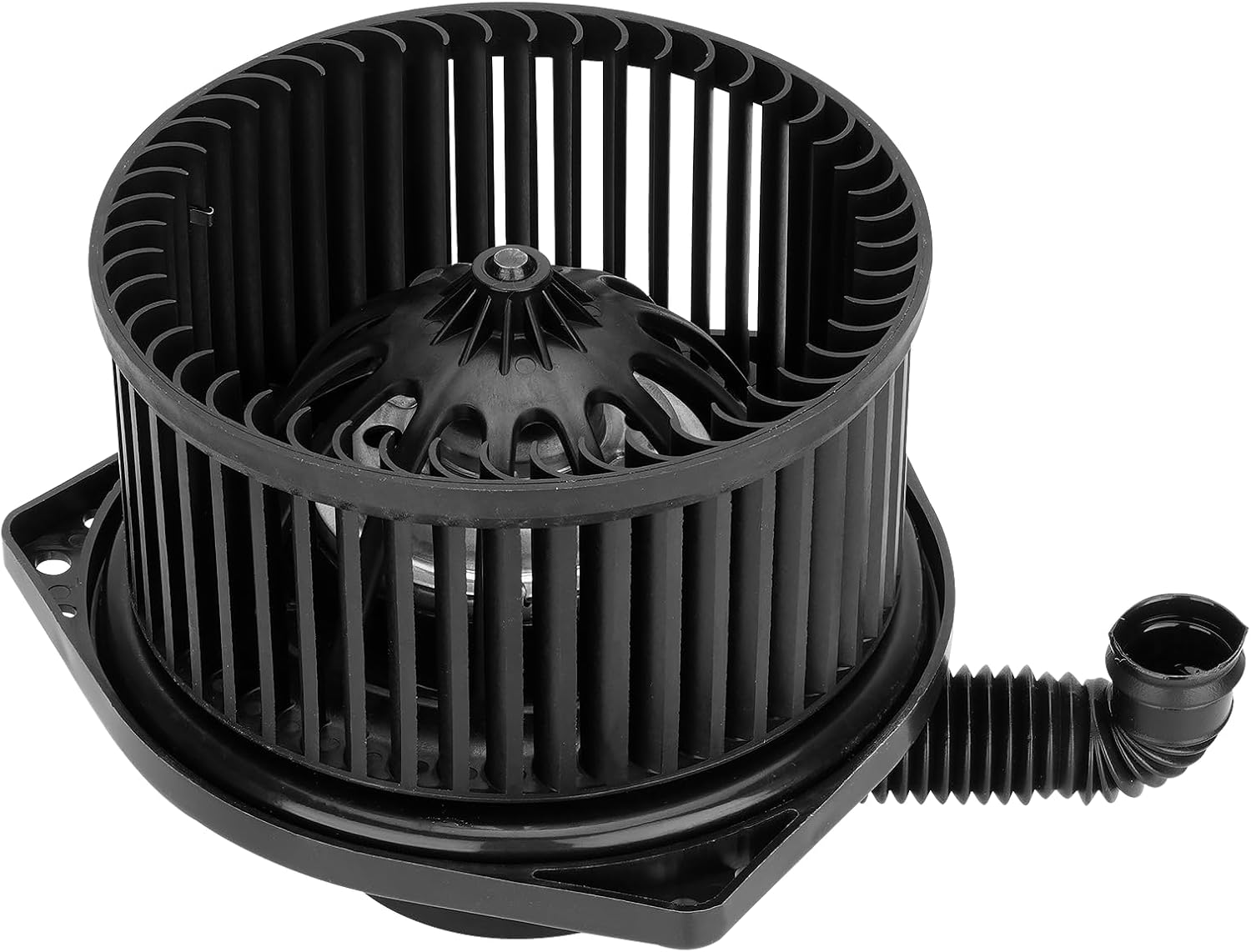
| Fitment | 1998-2002 Subaru Forester |
|---|---|
| Function | HVAC blower motor with fan cage |
| Manufacturer Part Number | 8BM0098-TD86 |
| OEM Part Numbers Replaced | 700046, 72240FA020, BM2713 |
This TadaMark blower motor assembly replaces a failed furnace or A/C blower to restore air circulation through the vents. It ships as a motor with integrated fan cage and is intended as a direct replacement for the listed fitments, so installation is the usual under-dash swap: disconnect the electrical connector, remove retaining screws, swap motors and reattach. The unit claims multiple quality checks and improved heat dissipation to reduce electronic failures. For routine cabin climate repair it delivers the core function you need—consistent airflow at all fan speeds—without extra features. Because it is an aftermarket replacement, expect stock-equivalent performance rather than upgraded airflow or quieter operation; some vehicles may require dash or glovebox removal for access which adds labor time. Overall this is a practical, no-frills option to get an out-of-service blower working again on compatible Forester models at a lower cost than many branded replacements.
Best for: Buyers who need an affordable, functional replacement to restore heating and A/C airflow on an older Forester and prioritize cost-effectiveness over premium noise or longevity performance.
Less Ideal for: If you want a near-silent premium upgrade or guaranteed extended lifespan beyond typical replacement motors, consider higher-end or factory-quality options instead.
- Made to directly replace factory blower motors for listed fitments
- Includes fan cage so you receive a ready-to-install assembly
- Manufacturer states multiple inspections and heat dissipation design to improve durability
- Lower-cost aftermarket choice compared with many branded replacements
- Aftermarket unit may not match the exact noise level or longevity of higher-end factory-quality motors
Verdict: A budget-friendly, direct-fit blower motor assembly that restores cabin airflow on 1998–2002 Forester models without frills.
4. PUAMRPTS HVAC Heater Blower Motor Assembly with Fan

| Included Components | HVAC Heater Blower Motor Assembly with Fan |
|---|---|
| Model | 27220F4305,700045,76957 |
| Part Number | HM1063 |
This blower motor assembly is a straightforward direct-replacement unit meant to restore cabin airflow when an original blower fails. It includes the fan wheel and is intended to bolt into the factory location so you can remove the old motor and install this unit with basic hand tools. The product lists multiple compatible reference numbers and specifically covers 1998-2000 Forester fitment, which simplifies buying for that model. Notable features include factory-style mounting and preassembled fan which reduces installation steps, and the listing says the unit is inspected and tested before shipping. In practice this delivers the primary benefit buyers want: consistent blower performance to recover heater and A/C airflow without expensive dealer service. Limitations are typical of aftermarket motors — longevity can vary compared with higher-end replacements and electrical connectors or mounting tabs may require minor adjustment during installation. For owners focused on getting reliable cabin airflow quickly, this unit is a practical, budget-conscious option.
Best for: Forester owners prioritizing a dependable, vehicle-specific replacement to restore cabin airflow without dealer labor and who prefer a tested, ready-to-install assembly.
Less Ideal for: Buyers seeking premium long-life or performance blower motors or those who want manufacturer-branded parts should consider higher-end or OEM options.
- Direct-replacement design that fits the factory blower location for supported models
- Includes blower fan wheel preassembled to simplify installation
- Compatible with multiple reference part numbers for easier cross-referencing
- Claimed inspection and testing before shipment to reduce early failures
- Aftermarket durability can vary compared with higher-end replacement brands
Verdict: A tested, ready-to-install blower motor assembly that restores reliable cabin airflow for 1998-2000 Forester owners without dealer service.
5. Aspligo Blower Motor Fan Assembly for Subaru Forester 2.5L (2001–2013)

| Voltage | 12 volts |
|---|---|
| Material Type | Metal |
This Aspligo blower motor is a direct-replacement fan assembly intended to restore ventilation and heating performance on compatible Subaru Forester 2.5L models. It combines a metal motor core with high-impact ABS components and uses upgraded copper windings and higher-quality bearings to deliver stronger, quieter airflow than worn original units. Installation is the same as most factory-style blower motors and it is typically used when the stock fan sputters, makes noise, or fails to move air through the evaporator or heater core. The unit can push both conditioned and heated air through the vehicle ducts and the seller claims reduced noise thanks to optimized internals. Practical benefits are improved cabin airflow, longer expected service life from the reinforced materials, and straightforward swap-in fitment for listed years. Limitations: the listing mixes fitment ranges across years so confirm the exact part numbers and connector type for 1998–2002 Forester models before buying, and it may require minor adaptors if your Forester uses a different plug or mounting bracket than later-model replacements.
Best for: Buyers who prioritize a proven replacement that restores cabin airflow and runs quietly, and who check part numbers or connector fit before ordering to avoid fitment surprises.
Less Ideal for: If you need an exact OEM stamped part or a dealer-sourced unit with manufacturer warranty coverage, this aftermarket assembly may not meet that requirement.
- Built with reinforced metal motor components and high-impact ABS for durability.
- Upgraded copper windings and bearings for stronger airflow and reduced noise.
- Direct-replacement design suited to the listed Subaru Forester 2.5L years for simple installation.
- Suitable for both cooling and heating functions to move air through evaporator or heater core.
- Fitment information on the listing spans multiple year ranges so buyers must verify connector and mounting compatibility for 1998–2002 Foresters.
Verdict: A durable, quieter aftermarket blower motor that restores HVAC airflow for Forester 2.5L cars when you verify part and connector compatibility for your year.
6. Aspligo Blower Motor Assembly (Fits 1998–2000 Subaru Forester)

| Voltage | 12 volts |
|---|---|
| Horsepower | 700046 hp |
| Material Type | Metal |
This Aspligo blower motor assembly replaces the vehicle blower motor responsible for pushing heated or cooled air through the cabin ventilation system. It is intended as a direct fit for select late 1990s Subaru Forester models and installs in the HVAC housing to restore fan speeds and airflow when the original unit fails. The motor uses a metal construction with a plastic fan wheel and runs on the vehicle standard 12 volt electrical system. Notable points are a claimed quieter operation and longer lifespan compared with older units, plus compatibility with several OEM interchange numbers. In practice this motor should return normal blower performance for heating, defrost, and A/C vents and is useful for routine HVAC repairs. Limitations include reliance on correct year and model fitment and the usual need for basic disassembly of the dash or glovebox area to install the unit. Buyers seeking an exact factory-quality match will want to verify part numbers before ordering.
Best for: A cautious buyer who wants a straightforward replacement to restore factory HVAC airflow on a late 1990s Subaru Forester without aftermarket modification. Ideal for owners prioritizing a dependable repair and quieter operation.
Less Ideal for: Not a good choice for shoppers who need cross-vehicle compatibility or who prefer OEM-branded parts backed by dealer support. It also does not suit those looking for performance upgrades beyond restoring stock function.
- Direct-replacement design for specified Subaru Forester years
- Metal construction for improved durability over fragile aftermarket plastics
- Operates on standard 12 volt systems without modification
- Claims lower electrical noise and quieter operation than older units
- Fitment limited to the listed model years so incorrect selection can cause incompatibility
Verdict: Choose this blower motor if you want a ready-fit, durable replacement to reliably restore HVAC airflow on a 1998–2000 Subaru Forester.
Choosing the Right 1998-2002 Subaru Forester Blower Motor: Key Factors to Consider
Fitment and Mounting Compatibility
Correct fitment is the single most important factor for the 1998-2002 Subaru Forester. A direct-fit blower motor minimizes the need for brackets, cuts, or electrical splicing and ensures the motor sits properly in the HVAC housing for correct airflow direction. Improper mounting can allow the fan wheel to rub the housing or produce vibration that sounds like mechanical failure.
When evaluating fitment, check that the motor uses the same bolt pattern and screw locations as the factory unit and that the electrical connector matches the Forester harness. Confirm the overall motor and wheel diameter clear interior ducting so the fan spins freely at high speeds. Choosing a unit designed for this year range reduces installation time and lowers the risk of recurring issues from poor alignment.
Airflow Performance Across Speeds
Airflow performance determines how well the Forester will heat and cool the cabin at each fan speed. A replacement blower motor should provide consistent airflow from low to high settings without excessive variation or sudden drops in volume. In practice, that means the fan wheel and motor combination must move adequate cubic feet per minute for the vehicle's HVAC design.
Assess reported user feedback about low-speed airflow, since owners often notice weak circulation first. Also consider the balance of the fan wheel, because imbalance can reduce effective airflow and introduce noise. For a Forester, satisfactory airflow ensures windshield defogging and passenger comfort in a range of temperatures.
Noise and Vibration Characteristics
Cabin noise from the blower motor is one of the most common complaints. Noise sources include worn bearings, unbalanced fan wheels, and motor mounting resonance. A good replacement should run smoothly with minimal whine or rattle, and it should not amplify road or engine vibrations.
Look for motors with sealed bearings or improved bushings and a well-molded fan wheel that resists cracking and deformation. Reports of growling, grinding, or clicking at specific speeds are red flags. Quiet operation improves perceived build quality and makes daily driving more pleasant, especially during long periods of HVAC use.
Electrical Compatibility and Current Draw
Electrical compatibility matters because the Forester's wiring and blower motor resistor are sized for specific current draws. A motor that draws substantially more current can overheat wiring or cause the resistor to fail prematurely, leading to lost fan speeds or intermittent operation. Conversely, a motor with much lower current draw might indicate underperformance.
Verify that the replacement's voltage and current specifications align with the vehicle's 12V system and that it will work with the stock resistor and switches. Clear documentation of electrical characteristics is valuable. Also consider whether the motor includes a pigtail or needs connector adaptation; poor electrical connections can introduce resistance and heat.
Durability and Materials
Durability affects long-term ownership costs and reliability. Motors exposed to cabin moisture, dust, and temperature swings need corrosion-resistant housings and robust fan wheels that do not become brittle over time. Bearings and motor brushes should be specified for long service life under repeated stop-start conditions common in daily driving.
Consider units with reinforced wheel materials and protected motor housings. Reports about premature wheel cracking, bearing failure, or corrosion are indicators to avoid. A durable motor reduces the chances of repeat removal and service for the same issue.
Installation Ease and Serviceability
Ease of installation reduces labor time and the chance of installation error. For the Forester, check whether the motor is accessible without removing extensive dashboard components and whether the replacement includes required gaskets, screws, or instructions. Plug-and-play electrical connectors and matching mounting studs make installation straightforward.
Also consider whether the motor assembly allows for later service, such as replacing the fan wheel independently of the motor if needed. Clear instructions and inclusion of basic hardware make DIY replacement feasible and help ensure proper reassembly to avoid leaks or rattles.
Common Symptoms Indicating Blower Motor Failure
Several distinct symptoms point to a failing blower motor in a 1998-2002 Subaru Forester. The most obvious is a sudden loss of airflow at all fan speeds or only at particular settings, which often reflects internal motor wear or electrical issues. Intermittent operation and fan speeds that drop out or only work at high setting indicate either motor wear or problems with the blower motor resistor.
Unusual noises such as squeals, growls, or high-pitched whines that change with fan speed are frequently caused by worn bearings or an unbalanced fan wheel. Burning smells during HVAC operation can indicate excessive electrical load or a failing motor drawing more current than expected. Recognizing these symptoms early helps avoid further damage to the HVAC system and prevents being stranded without climate control.
- Weak airflow at low fan speeds
- Fan only works on high or intermittent speeds
- Grinding, rattling, or squealing noises from under dash
- Burning or electrical smell when fan runs
Blower Motor Vs Blower Motor Resistor: How To Tell
Blower motor and blower motor resistor problems can produce similar symptoms, but they require different fixes. If the fan works on some speeds but not others, the resistor or its connector is often the culprit. If there is no airflow at any speed, a failed motor or fuse is more likely. However, a weak motor may still allow high-speed operation while failing on low speeds.
A simple diagnostic approach is to check fuse and power at the motor connector, then test the resistor if the motor receives full power only at certain settings. Measuring voltage at the motor across speed settings can reveal whether the control circuit or the motor itself is at fault. When in doubt, verify both components to avoid replacing only the resistor when the motor is marginal.
- Resistor failure typically affects only some fan speeds
- Motor failure often causes no airflow at any setting
- Check power at the motor connector before replacing parts
Practical Tips for Quiet, Long-Lasting Operation
Maintaining a clean cabin air intake and replacing the cabin air filter on schedule helps reduce debris that can wear a fan wheel or lodge in the housing. During installation, ensure the motor and wheel are balanced and that mounting points are torqued to avoid vibration. Using new grommets or isolators where the motor mounts can significantly reduce transmitted noise.
If you hear new noises after installation, recheck the wheel clearance and confirm that no debris was trapped. For owners who frequently drive on dusty roads or in coastal areas, periodic inspection for corrosion and wheel integrity will extend service life.
- Replace cabin air filter to reduce debris intake
- Use new mounting grommets to minimize vibration
- Verify fan wheel clearance after installation
- Inspect periodically for corrosion or damage
What To Expect During Blower Motor Installation
Installation for the 1998-2002 Forester typically involves accessing the blower motor from under the glove box or from the passenger-side footwell, depending on vehicle options. Expect to disconnect the battery, remove a few trim pieces, unplug the electrical connector, and unfasten the motor mounting screws. A direct-fit motor should align with the original screw holes and connector for a straightforward swap.
Allow additional time if the motor includes a wheel that must be transferred or if the unit requires removal of the lower dash panel. Having basic tools, a replacement gasket, and a flashlight will make the job quicker. If the replacement includes mounting hardware and clear instructions, the installation can be completed as a DIY job for owners comfortable working under the dash.
- Disconnect battery before starting work
- Access via glove box or passenger footwell
- Keep original screws or use included hardware
- Test motor electrically before reassembling trim
When to Seek Professional Diagnosis
If electrical testing shows inconsistent voltage or if there is significant burning smell or smoke, stop and seek professional diagnosis. Complex symptoms that involve intermittent operation combined with other electrical anomalies—such as fuse blowing or module warnings—require in-depth electrical troubleshooting beyond a simple motor swap.
Also consult a technician if accessing the blower motor requires removal of airbags, extensive dash disassembly, or if you are uncomfortable working near HVAC refrigerant components. A professional can also confirm whether the resistor, switch, or wiring harness has been compromised and ensure the correct safe replacement for the Forester.
- Seek help if fuses blow or smoke is present
- Consult a pro for extensive dash or airbag work
- Get professional electrical troubleshooting for intermittent faults
Still looking for the perfect fit?
Select your Subaru Forester configuration to see the most relevant Blower Motors recommendations
How We Chose the Best 1998-2002 Subaru Forester Blower Motor
We focused on the specific needs of the 1998-2002 Subaru Forester and used a combination of technical fitment checks and real-world performance criteria to narrow candidates. Evaluation prioritized correct mounting and connector compatibility to avoid modification, consistent airflow across all speed settings to ensure effective heating and cooling, and noise levels measured by real-user feedback to reduce cabin vibration and rattles.Durability and materials were evaluated next, with attention to motor bearings, fan wheel construction, and corrosion-resistant housings that handle repeated humidity and temperature cycles. Electrical characteristics such as current draw and compatibility with the factory blower motor resistor were considered to avoid overloading the Forester wiring and to preserve fan speed control.We also screened for availability of direct-replacement mounting hardware and clear instructions for blower motor installation, plus warranty support where offered. Exclusions included universal-fit units requiring major fabrication, motors designed for other vehicle platforms, and products lacking clear electrical or fitment specs. The final list balances fitment accuracy, quiet operation, longevity, and safe electrical performance for this Forester generation.
Our full evaluation process is outlined in our review methodology.
FAQ
How long should a blower motor last in a 1998-2002 Forester?
Lifespan varies with use and environment but blower motors often last many years under normal conditions. Exposure to moisture, debris, or heavy daily use can shorten service life, so periodic inspection helps catch wear early.
Can I replace the blower motor myself on this Forester?
Many owners can perform the replacement with basic tools and a clear set of instructions because the motor is accessible from the passenger side. Disconnecting the battery and taking care with wiring and mounting alignment are important safety steps.
Will a new blower motor fix all fan speed problems?
Not always. If the issue is a failed blower motor resistor or a wiring fault, replacing only the motor may not restore every speed. Diagnosing whether the motor is receiving proper voltage across settings helps ensure you replace the correct component.
Why does the blower motor make noise only at certain speeds?
Noise that occurs at specific speeds is often due to an unbalanced fan wheel or worn bearings that resonate at particular RPM ranges. It can also indicate the motor is drawing uneven current, which changes vibration characteristics as speed changes.
Should I replace the fan wheel when I replace the motor?
If the fan wheel shows signs of cracking, warping, or imbalance, replacing it is recommended. Some replacement motors come with the wheel preinstalled, while others require transferring the wheel from the old unit; inspect the wheel carefully during service.
How can I tell if the resistor or the motor is causing the blower failure?
A helpful test is to check for power at the motor connector across speed settings. If the motor receives correct voltage but does not run properly at some speeds, the motor may be at fault. If power varies or is absent at certain settings, the resistor or its connector is a likely cause.
Final Verdict
When replacing the blower motor in a 1998-2002 Subaru Forester, prioritize correct fitment, quiet operation, and electrical compatibility with the vehicle's existing HVAC controls. Balance airflow performance and noise reduction against durability to avoid repeat service. For straightforward symptoms—weak airflow or noisy operation—a direct-fit, well-documented replacement that matches the Forester's mounting and electrical characteristics is usually the best path to restore reliable heating and cooling.If you encounter ambiguous symptoms or electrical anomalies, verify power at the motor and inspect the blower motor resistor before replacing components. That approach reduces unnecessary work and ensures the selected unit delivers the expected performance and longevity.
Explore More:
- Check out all Subaru Forester parts & accessories
- Explore Blower Motors Maintenance & Repair Guides
- Explore HVAC
- Browse all Auto Parts
