

Note: This article contains affiliate links. If you click on these links and make a purchase, I may earn a small commission at no extra cost to you. This helps support my research and content. Read my full affiliate disclosure here.
If your 2009-2013 Subaru Forester is blowing warm air or showing signs of a refrigerant leak, replacing the AC condenser is often the fix that restores strong, consistent cooling. Choosing the right Forester AC condenser matters because fitment, core design, and durability all affect cooling performance, compatibility with the factory lines, and long-term leak resistance.This guide covers the top shortlisted AC condensers for the 2009-2013 Forester and explains the evaluation criteria used to find dependable options. We focus on fitment, cooling efficiency, corrosion resistance, and serviceability so you can decide which condenser matches your repair needs and garage capabilities.
Looking for other parts? See all Subaru Forester parts & accessories.
Top Picks at a Glance
| Best Overall The best all-around choice for most situations | TYC Condenser Assembly for 2009–2013 Subaru Forester |  |
| Best Quality Built to a higher standard if you want something more solid | BuyAutoParts A/C Condenser with Drier for Subaru Forester, Impreza and XV Crosstrek |  |
| Best Value The sweet spot between price and what you get | KAX A/C Condenser with Receiver Drier for 2009-2013 Forester and compatible Subaru models |  |
| Best Budget The cheapest option that still gets the job done reliably | OCPTY Aluminum A/C Condenser Replacement for Subaru Forester/Crosstrek/Impreza |  |
| Highest Rated A top-rated pick with lots of positive feedback | A-Premium AC Condenser Compatible with Subaru Forester and Impreza Models |  |
| Most Popular A crowd favorite that many people choose with confidence | PHILTOP A/C Condenser with Receiver Drier for Subaru Forester 2009-2013 |  |
1. TYC Condenser Assembly for 2009–2013 Subaru Forester

| Brand Name | TYC |
|---|---|
| Manufacturer Part Number | 3689 |
| OEM Equivalent Part Number | 73210SC012 |
| Included Components | Condenser |
This TYC condenser is a direct-fit replacement intended to restore air conditioning cooling on 2009–2013 Subaru Forester vehicles. It is built to mirror factory configuration with matching mounting points, inlet and outlet locations, and a louvered aluminum fin-and-tube design that maximizes heat transfer. TYC reports that units are leak-tested and test-fit on actual vehicles, so installation is typically straightforward and requires minimal modification for owners or technicians doing a condenser swap. The condenser is lightweight and uses bonded aluminum construction for corrosion resistance and efficient cooling. Where applicable the receiver/dryer is integrated with the assembly, simplifying parts replacement. Buyers should note this is a vehicle-specific condenser so it only replaces the Forester unit and does not include hoses, refrigerant, or professional installation; expect standard shop labor to add to overall repair cost. For a balanced replacement that prioritizes fit and reliable cooling, this unit aims to match factory expectations without heavy aftermarket changes.
Best for: Drivers repairing or refreshing the Forester air conditioning system who want a straightforward, factory-style replacement that balances fit, performance, and durability.
Less Ideal for: People looking for upgraded performance condensers with aftermarket enhancements or those needing a universal-fit part for multiple vehicle models.
- Vehicle-specific design with factory-style mounting points for easier drop-in installation
- Louvered aluminum fins and tubes for efficient heat transfer and corrosion resistance
- Leak-tested and test-fit on actual vehicles to reduce fitment surprises
- Lightweight construction that does not compromise cooling performance
- Does not include refrigerant, hoses, or installation hardware in most cases
Verdict: Choose this unit if you want a tested, vehicle-specific condenser that restores factory-style fit and cooling for a 2009–2013 Subaru Forester.
2. BuyAutoParts A/C Condenser with Drier for Subaru Forester, Impreza and XV Crosstrek

| Brand | BUYAUTOPARTS! |
|---|---|
| Model | A/C Condenser |
| Included parts | Drier filter included |
| Quality standard | ISO/TS 16949 |
This BuyAutoParts condenser replaces the factory unit and includes the drier cartridge, so it handles both heat exchange and moisture removal in one installation. It is built to meet ISO/TS 16949 quality standards and is intended as a direct-fit replacement for 2007–2016 Impreza (including WRX/STI), 2007–2013 Forester variants and 2013–2014 XV Crosstrek listed in the fitment. Typical use is straightforward: remove the old condenser, swap in this unit, and replace refrigerant and oil as required. The integrated drier is a practical inclusion because the desiccant must be renewed whenever the AC lines are opened. The product claims factory-quality fit and comes painted for corrosion protection. Keep in mind this is an aftermarket replacement rather than a factory part, so installation may require careful alignment and a pressure test after recharge to confirm leak-free operation. Also verify exact fitment against the OE part numbers before purchase to avoid compatibility issues with specific trim or turbocharged variants.
Best for: Drivers who want to restore or improve AC cooling on their Subaru and prioritize reliable replacement components that simplify service with an included drier.
Less Ideal for: Owners seeking an original factory part number match from Subaru dealership inventory or those who prefer professional diagnostics and installation bundled with OEM parts.
- Includes drier filter so the moisture-absorbing element is replaced during installation
- Manufactured to ISO/TS 16949 quality standards aiming for reliable durability
- Painted finish for basic corrosion resistance straight out of the box
- Direct-fit design intended to match factory mounting points and speed installation
- Aftermarket unit rather than factory part so minor fitment adjustments may be necessary during installation
Verdict: Buy this condenser if you want a factory-style direct-fit replacement that simplifies AC repair by including the drier and aiming for durable, tested construction.
3. KAX A/C Condenser with Receiver Drier for 2009-2013 Forester and compatible Subaru models

| Fitment Type | Direct Replacement |
|---|---|
| Refrigerant Type | R134A |
| Placement on Vehicle | Front |
| Includes | Built-in Receiver Drier |
This KAX A/C condenser is a direct-replacement unit designed to restore the vehicle air conditioning cooling loop by condensing refrigerant back to liquid before it flows to the evaporator. It installs in front of the radiator and includes a built-in receiver drier, so it combines the condenser and moisture filtration in one piece and reduces the number of separate parts to source. Constructed from high-density aluminum with reinforced welds, the unit emphasizes heat dissipation and durability and is intended for R-134a systems. Typical use is straightforward—remove the old condenser, transfer or replace associated fittings and hoses, evacuate and recharge the system, and verify leak-free operation. The modular design aims to simplify removal and replacement, and the part lists many OEM cross-reference numbers for fitment checks. Important limitations are that it is specified for R-134a refrigerant and buyers must confirm fitment to their exact Subaru model and part number before installation; professional refrigerant handling is required.
Best for: A practical buyer who wants a durable, straightforward replacement condenser that restores factory-style cooling with minimal extra parts and simplifies maintenance for a Forester.
Less Ideal for: Not a good choice for someone running a non-R134a refrigerant system or anyone wanting a universal or multi-vehicle condenser solution.
- Direct-replacement design simplifies swap-in for compatible Subaru models.
- Built-in receiver drier removes the need to buy a separate dryer assembly.
- High-density aluminum construction and reinforced welds for improved heat transfer and durability.
- Includes OEM cross-reference numbers to help confirm vehicle fitment.
- Specified for R-134a systems only, so not suitable for vehicles converted to different refrigerants.
Verdict: A practical, OE-style replacement condenser that restores reliable cooling for 2009–2013 Forester R-134a systems with minimal additional parts.
4. OCPTY Aluminum A/C Condenser Replacement for Subaru Forester/Crosstrek/Impreza

| Manufacturer | OCPTY |
|---|---|
| Brand | OCPTY |
| Model | condensers |
| Item Weight | 6.86 pounds |
This OCPTY aluminum A/C condenser is an aftermarket replacement designed to restore air conditioning cooling on compatible Subaru models. It installs in place of the factory condenser and is intended for routine repairs after a failure or front-end damage; typical use is direct swap-in with existing mounting points and refrigerant and oil recharge performed during service. The unit uses a parallel flow aluminum design, which helps with heat transfer while keeping weight low, and OCPTY positions it as a budget-friendly alternative to dealer parts. Practical benefits include broad fitment across many Subaru model years and the ability to get the A/C back to factory-style operation without an expensive OEM part. Limitations to consider are that this is an aftermarket part rather than a factory unit so fitment may require careful verification against your exact trim and year, and installation requires proper refrigerant handling and leak testing by a technician.
Best for: Budget-minded Subaru owners who need a working replacement condenser to restore A/C performance and prefer a lower-cost aftermarket part over dealer pricing.
Less Ideal for: Owners seeking an exact factory-original condenser or who want guaranteed perfect plug-and-play fit without any verification should consider OEM replacements or dealer parts instead.
- Aluminum parallel flow construction for efficient heat transfer
- Designed to fit multiple Subaru Forester, Crosstrek, Impreza and WRX model years
- Lower-cost aftermarket alternative to factory replacement condensers
- Replaces a failed or damaged condenser to restore A/C cooling function
- Aftermarket fit may require verification and careful alignment during installation
- Requires professional refrigerant evacuation and recharge; not a plug-and-play DIY for most owners
Verdict: A cost-effective aftermarket condenser that gets compatible Subaru Forester A/C systems working again without the premium of dealer parts.
5. A-Premium AC Condenser Compatible with Subaru Forester and Impreza Models
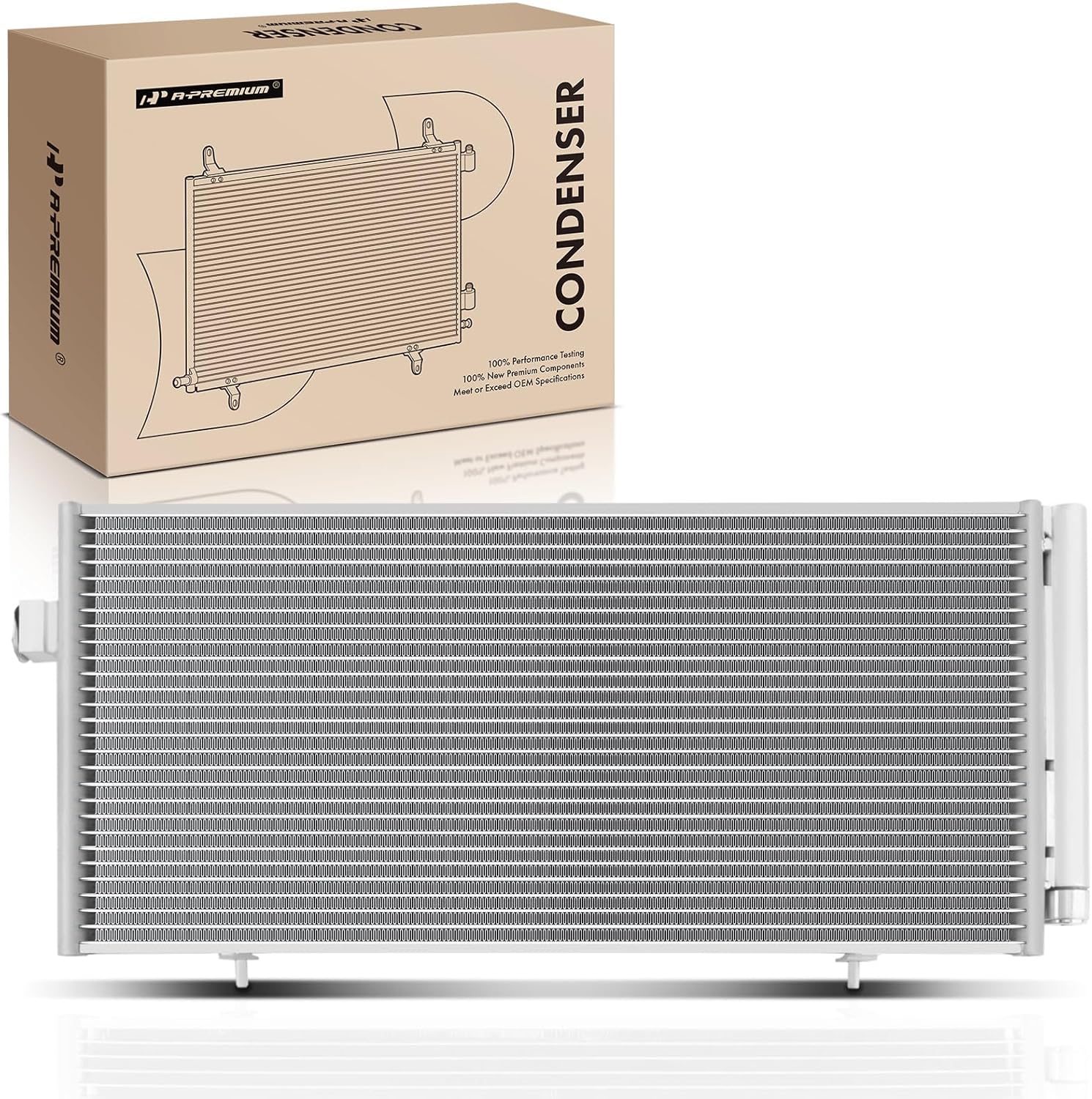
| Compatible Models | Forester 2009-2013, Impreza 2008-2016, XV Crosstrek 2013-2015, Crosstrek 2016-2017, WRX/WRX STI 2015-2020/2015-2019 |
|---|---|
| Material Type | Aluminum |
| Voltage | 12 volts |
This A-Premium condenser is a bolt-on replacement designed to restore air conditioning cooling in compatible Subaru models. It is built from aluminum and comes as a kit that includes a receiver drier and bracket, which simplifies replacing a leaking or clogged condenser during a system refresh. Typical installation follows standard condenser swap procedures and should fit without modifying mounting points when matched to the listed vehicle years and engines. The aluminum construction helps dissipate heat efficiently, and the included drier removes moisture and debris to protect downstream components. The main limitations are that fitment is specific to the listed Subaru models and engine variants, so verifying exact compatibility before purchase is required, and installation may still require professional evacuation and recharge of the A/C system. The one-year parts guarantee covers the cost of the item but not labor or related repair expenses.
Best for: Drivers who prioritize restoring reliable factory-quality A/C performance on covered Subaru models and want a complete replacement condenser that matches factory mounting and function.
Less Ideal for: Buyers seeking a universal or performance-upgraded condenser for other vehicle makes or for modified Subarus outside the listed fitment should look elsewhere.
- Direct bolt-on design for specified Subaru models reduces need for modification
- Aluminum construction improves heat dissipation for efficient cooling
- Includes receiver drier and bracket so the condenser swap is more complete
- Designed to match factory fit and mounting points for straightforward installation
- Guarantee covers only the part cost and excludes installation or related labor expenses
Verdict: A-Premium's aluminum bolt-on condenser offers a factory-style replacement that restores dependable A/C cooling for the listed Subaru Forester and related models.
6. PHILTOP A/C Condenser with Receiver Drier for Subaru Forester 2009-2013

| Built-in Receiver Dryer | Yes |
|---|---|
| Refrigerant Type | R134A |
| Fitting Type | Block Fitting |
| Compatible Models (selected) | Forester 2009-2013; Impreza 2008-2016; Crosstrek 2013-2017; WRX 2015-2021 |
This PHILTOP condenser replaces the factory unit and handles the job of condensing refrigerant and shedding heat so your Forester’s air conditioning can cool properly. It includes a built-in receiver drier and uses thin aluminum tubes and fins intended to maximize heat transfer for quicker cabin cooling in hot weather. Typical installation replaces a leaking or clogged condenser and requires recovering the refrigerant first; the unit is sold as a direct replacement to match factory mounting and fittings. Practical benefits are straightforward: improved cooling response after installation, a factory-style fitment aimed at straightforward bolt-in replacement, and a built-in drier that removes moisture during service. Limitations to note are that installation requires refrigerant recovery/refill and basic A/C system handling, and buyers should confirm exact fit for their VIN before ordering since multiple Subaru platform years and part numbers are referenced.
Best for: Buyers who want a factory-style replacement condenser that restores A/C performance and prefer products with solid seller ratings and compatibility coverage to reduce installation uncertainty.
Less Ideal for: If you need a universal or performance aftermarket condenser for modified cooling systems, this direct-fit replacement is not the right choice.
- Built-in receiver drier simplifies moisture removal and service.
- Designed to match factory mounting and fittings for direct replacement.
- Aluminum tube-and-fin construction aimed at efficient heat transfer for faster cooling.
- Covers multiple Subaru A/C part numbers and common Forester fitments for compatibility.
- Requires professional refrigerant recovery and recharge; not a do-it-entirely-yourself swap for inexperienced users.
Verdict: A ready-to-install, factory-style condenser with a built-in receiver drier that restores reliable A/C cooling in 2009–2013 Subaru Forester models.
Choosing the Right 2009-2013 Subaru Forester AC Condenser: Key Factors to Consider
Fitment And Mounting Alignment
Correct fitment is the first practical concern for a 2009-2013 Subaru Forester AC condenser because incorrect mounting can lead to stress on refrigerant lines and poor sealing at connections. Ensure the condenser matches factory mounting points, bolt patterns, and bracket locations so installation is straightforward and does not require modification.
Proper alignment also affects airflow through the condenser core. If the condenser sits too far forward or backward relative to the radiator and fan shroud, cooling efficiency can drop. Choosing a condenser designed for the Forester minimizes the risk of rubbing, vibration, and premature failure at hose connections.
Cooling Core Design
Core construction—tube count, fin density, and thickness—determines how effectively the condenser rejects heat from the refrigerant. A higher-efficiency core can restore or improve cabin cooling, especially in warm climates or when the system has marginal charge levels.
However, denser fins can be more susceptible to clogging from debris, so consider your local driving conditions. Balance cooling performance with durability; a condenser that offers better heat transfer but is too delicate for rough roads may not be the best long-term choice for a Forester used in mixed driving environments.
Corrosion Resistance And Material Quality
Road salt, moisture, and debris exposure accelerate corrosion and eventual leaks. Look for condensers fabricated from quality aluminum with protective coatings or anodization that resist pitting and galvanic corrosion in the Forester's engine bay environment.
Quality brazing and reinforced end tanks reduce the chance of seam failures. Poor material quality can result in leaks after a few seasons, so prioritize units with documented corrosion protection and robust construction.
Connection Types And Serviceability
Pay attention to the inlet/outlet fitting types and service port accessibility when choosing a condenser for this Forester. Compatibility with the factory line fittings and receiver-drier locations simplifies replacement and reduces the need for new hoses or adapters.
Serviceability also includes how easy it is to access and replace the receiver-drier, pressure switches, and nearby components. A condenser that allows routine service steps—evacuation, vacuum testing, and recharge—without major disassembly saves time and reduces labor complexity.
Leak Resistance And Pressure Ratings
A condenser must tolerate the operating pressures of the Forester air conditioning system without flexing or developing stress cracks. Check that the unit is rated for standard automotive refrigerant pressures and has reinforced joints where hoses attach.
Manufacturing consistency matters; small defects in brazing or fittings can cause slow leaks. Units designed and tested to hold pressure and resist vibration will reduce the likelihood of premature AC condenser leak repair and return visits.
Compatibility With System Components
The condenser does not operate alone; it must interface cleanly with the compressor, expansion valve or orifice tube, and receiver-drier or accumulator used on the 2009-2013 Forester. Confirm that the condenser supports the same refrigerant type and works with the vehicle's existing service ports and accumulator placement.
If replacement requires swapping related components, factor that into the repair plan. Ensuring component compatibility prevents performance problems after installation and helps maintain correct refrigerant charge and system pressures.
Signs Your Forester Needs A Condenser Replacement
Several symptoms point specifically to condenser problems in a 2009-2013 Subaru Forester. Noticeable loss of cooling at idle or while driving, a persistent refrigerant odor, visible oil residue near condenser joints, or reduced pressure readings during a routine AC check all suggest condenser issues.
Minor damage from road debris, bent fins, or small punctures can reduce performance before a full leak develops. Regular visual inspections during service are useful because early detection of fin damage or oil stains lets you address problems before a complete system failure.
- Warm or inconsistent cabin air despite compressor engagement
- Oil traces or wet spots around condenser outlets and fittings
- Unusual hissing sounds indicating a refrigerant leak
- Overheating compressor due to poor heat rejection
Preparing For Condenser Replacement
Proper preparation reduces installation time and prevents contaminating the AC system. Before removing the condenser, recover refrigerant using approved recovery equipment and follow safety protocols. Keep replacement receiver-drier or accumulator parts ready because contaminants from a failed condenser can contaminate the rest of the system.
Plan the job with the correct hardware and seals. New O-rings, gaskets, and the correct refrigerant oil type are often required. If you are doing the work yourself, have a clear procedure for evacuation, vacuum hold testing, and controlled refrigerant charging to ensure the system functions correctly after installation.
- Have replacement O-rings and seals sized for the Forester fittings
- Use the specified PAG oil type and the correct refrigerant charge
- Inspect adjacent components like the radiator and fan shroud for damage
Common Installation Challenges And How To Avoid Them
Accessing the condenser on the Forester may require removing the front bumper or lower trim panels in some service procedures. Be mindful of plastic clips, wiring harnesses, and nearby sensors to avoid accidental damage. Work methodically and label fasteners to simplify reassembly.
Avoid over-tightening fittings which can crush O-rings and create leaks. When brazing or welding nearby components, protect the condenser from heat and maintain system cleanliness. Finally, always pressure-test the installed condenser and perform a vacuum hold test before charging with refrigerant to confirm the repair succeeded.
- Use torque guidelines for all condenser fittings
- Protect the condenser core when removing debris with compressed air
- Run a vacuum test for at least 30 minutes to check for leaks
Routine Maintenance To Extend Condenser Life
Simple maintenance keeps a condenser performing well and delays replacement. Periodic visual cleaning of the condenser fins using low-pressure water or compressed air removes leaves, bugs, and road grime that reduce airflow. Avoid using high-pressure washers directly on the fins as they can bend or damage delicate surfaces.
Inspect inlet and outlet fittings during oil changes or scheduled AC checks to catch early signs of leaks. If driving in regions with heavy salt use, more frequent inspections and rinses can prevent corrosive damage that shortens condenser lifespan.
- Inspect fins for bent or crushed areas every 12 months
- Rinse accumulated debris from the core after winter or off-road exposure
- Check line fittings for oily residue during routine service
When To Replace Associated Components
Replacing the condenser often warrants replacing the receiver-drier or accumulator and inspecting the expansion valve and compressor for contamination. A failed condenser can scatter debris and oil through the system; if contaminants are present, they will shorten the life of any installed compressor and clog flow paths.
If moisture has entered the system or the vehicle has been without refrigerant for an extended period, changing the drier and flushing lines before charging helps ensure the repaired system performs reliably. Factor these additional parts and procedures into your service plan to avoid repeat repairs.
- Always replace the receiver-drier when the condenser is changed
- Consider flushing lines if contamination is suspected
- Inspect or test the compressor for metal debris after a catastrophic condenser failure
Still looking for the perfect fit?
Select your Subaru Forester configuration to see the most relevant AC Condensers recommendations
How We Chose the Best 2009-2013 Subaru Forester AC Condenser
We selected contenders based on measures that matter specifically for the 2009-2013 Subaru Forester. Fitment and OEM mounting points were primary filters to ensure straightforward installation and correct alignment with condenser brackets, receiver-drier, and refrigerant lines. Cooling capacity and core design followed, with emphasis on core tube count, fin density, and thickness because these directly affect heat rejection and cabin comfort.Durability factors included material and coating choices that reduce corrosion from road salt and moisture, plus reinforced inlet/outlet fittings to resist leak-prone stress. Service considerations were weighed: accessibility of service ports, compatibility with factory receiver-drier or accumulator, and whether the condenser supports standard retrofit procedures like evacuation and recharge. We also considered ease of replacing associated components such as the receiver-drier and expansion valve when required.We excluded items lacking clear fitment details for the 2009-2013 Forester, condensers without proper inlet/outlet specifications, and units with poor documented corrosion protection. The final list favors products that balance reliable cooling performance, durable construction, and straightforward installation for owners or technicians working on this Forester generation.
Our full evaluation process is outlined in our review methodology.
FAQ
What are common AC condenser symptoms in a 2009-2013 Forester?
Common symptoms include reduced cooling at idle or while driving, oil residue near condenser fittings, visible damage to fins, and hissing noises that indicate refrigerant escaping. Pressure readings that do not meet typical ranges during a service check also point to condenser problems.
Can I replace the condenser myself on a Forester?
You can replace the condenser yourself if you have mechanical experience and the right tools for refrigerant recovery, vacuum testing, and recharging. The job often requires bumper removal and careful handling of fittings, so follow safety procedures and local regulations for refrigerant handling.
How do I detect a condenser leak on this Forester model?
Start with a visual inspection for oily spots around fittings and along seams. Use a UV dye or electronic leak detector for more precise location, and perform a pressure test with dry nitrogen or an approved gas. A successful vacuum hold test after installation also helps confirm there are no leaks.
Do I need to replace other parts when I change the condenser?
It is usually recommended to replace the receiver-drier or accumulator when you replace the condenser, and to inspect the expansion valve and compressor for contamination. If the system was open to the atmosphere, changing the drier helps remove moisture and protect the new condenser.
How long should a replacement condenser last in a Forester?
Life expectancy depends on driving conditions and corrosion exposure. In normal conditions a quality condenser can last many years, but exposure to road salt, heavy debris impacts, or repeated overheating can shorten its lifespan. Regular inspections help catch problems early.
Will flushing the AC system help after replacing the condenser?
Flushing the system can remove debris and contaminated oil introduced by a failed condenser and is often advised if there was a catastrophic failure. However, flushing must be done correctly to avoid pushing debris into sensitive components. Consult service procedures for the Forester before proceeding.
Final Verdict
When replacing an AC condenser in a 2009-2013 Subaru Forester, prioritize correct fitment, adequate cooling capacity, and corrosion-resistant construction. These attributes determine whether the repair restores dependable cabin cooling and reduces the chance of return visits for leaks or poor performance.Balance tradeoffs between a higher-efficiency core and long-term durability based on your driving conditions. Also plan to replace the receiver-drier and inspect related components during the job to ensure a clean, long-lasting repair and confident system performance.
Explore More:
- Check out all Subaru Forester parts & accessories
- Explore AC Condensers Maintenance & Repair Guides
- Explore HVAC
- Browse all Auto Parts
