

Note: This article contains affiliate links. If you click on these links and make a purchase, I may earn a small commission at no extra cost to you. This helps support my research and content. Read my full affiliate disclosure here.
Fitting 35 inch tires on a GMC Sierra 1500 changes how the truck rides, handles, and carries loads. The right 35 inch tire delivers more ground clearance and better off-road capability while keeping highway manners and load safety within acceptable limits. You need options that manage traction, tread life, and load rating for your typical driving conditions.This guide shortlists the top 35 inch tires suited to the Sierra 1500, and explains why each made the cut using criteria owners care about: traction in wet and dry conditions, tread longevity, load capacity, and fitment considerations. Read on for practical guidance that helps you pick the best 35 inch tires for your driving and hauling needs.
Looking for other parts? See all GMC Sierra 1500 parts & accessories.
Top Picks at a Glance
| Best Overall The best all-around choice for most situations | Suretrac Wide Climber RT 35×12.50R22 All-Terrain 12-Ply Tire (Set of 4) |  |
| Best Quality Built to a higher standard if you want something more solid | Cooper Evolution M/T 35×12.50R15LT Mud-Terrain Tire (Single) |  |
| Best Value The sweet spot between price and what you get | Accelera M/T-01 35×12.50R18 Mud-Terrain Light Truck Tire (Load Range E) – Set of 4 |  |
| Best Budget The cheapest option that still gets the job done reliably | Landspider Wildtraxx A/T All-Terrain Light Truck Tire — 35×12.50R15 |  |
| Highest Rated A top-rated pick with lots of positive feedback | Nexen Roadian AT Pro RA8 All-Season Radial Tire LT35x12.50R18 |  |
1. Suretrac Wide Climber RT 35×12.50R22 All-Terrain 12-Ply Tire (Set of 4)

| Rim Size | 22 Inches |
|---|---|
| Load Index | 121 |
| Load Capacity | 3297 Pounds |
| Load Range | F |
| Construction Type | Radial |
The Suretrac Wide Climber RT is a 35×12.50R22 all-terrain tire aimed at light trucks and SUVs that need dependable year-round grip and heavier load capacity. Its aggressive, staggered tread and wide grooves help clear mud, snow, and rocks while the non-directional pattern and stabilized tread blocks improve steering response and on-road comfort. Reinforced sidewall construction and a 12-ply load range F construction increase durability and load carrying ability, making it suitable for trucks that tow or carry heavier loads. Buyers should expect a quieter, smoother ride than on typical mud tires while retaining off-road capability, and the tread compound is claimed to resist irregular wear for longer life. Practical limitations include a heavier construction and higher inflation pressure compared with passenger tires, which can slightly reduce fuel economy and ride suppleness; fitment must match 35×12.50R22 sizing and a 22-inch rim. Installation may require professional mounting and balance due to tire weight and bead stiffness.
Best for: Buyers who want a balanced all-round 35-inch tire that handles off-road work and daily driving while carrying heavier loads and prioritizing durability over a plush ride.
Less Ideal for: Drivers seeking the lightest, most fuel-efficient highway tire or those who prioritize the quietest possible touring ride should consider alternatives.
- Aggressive tread with self-cleaning grooves for mud and snow clearance
- Reinforced sidewalls and 12-ply load rating for improved durability and load capacity
- Non-directional tread and stabilized blocks that enhance on-road steering response and reduce uneven wear
- All-season compound intended for year-round use across wet, dry, and light winter conditions
- Heavy construction and higher inflation pressure can reduce fuel economy and slightly stiffen ride
Verdict: Choose these tires if you need a durable, load-capable 35×12.50R22 all-terrain tire that balances off-road traction and on-road comfort for regular truck use.
2. Cooper Evolution M/T 35×12.50R15LT Mud-Terrain Tire (Single)

| Size | 35X12.50R15LT 113Q |
|---|---|
| Load Capacity | 2535 Pounds |
| Tread Type | Non-Directional |
| Load Range | C |
| Ply | 6-Ply |
The Cooper Evolution M/T is a mud-terrain tire built to give trucks and SUVs confident traction off-road while still behaving acceptably on the road. It uses large, aggressive tread blocks with Earth Diggers and Mud Slingers features to dig into mud, sand, and loose dirt and to eject packed material from the tread. Stone Barrier ridges and a 6-ply construction add resistance to cuts and lodged debris for rough-terrain durability, and the tire is studdable for added winter traction. In real-world use this means strong mud and sand performance, good bite on rocky trails, and a more robust carcass for occasional heavy use. Users report lower-than-expected road noise for an M/T, though on-highway comfort and rolling efficiency will lag compared with dedicated highway/all-terrain tires. This tire is sized for 35×12.50R15LT fitments and carries a 113 load index and Q speed rating; expect higher fuel consumption and somewhat quicker wear if used mainly as a daily driver on pavement. The 45-day satisfaction window lets you evaluate fit and feel after installation.
Best for: Buyers who prioritize off-road traction and durability for trail, mud, and sand runs and are willing to accept reduced on-road refinement.
Less Ideal for: Drivers seeking a quiet, fuel-efficient daily-driver tire or maximum on-road mileage should consider highway or all-terrain alternatives instead.
- Aggressive tread with Earth Diggers and Mud Slingers for strong mud and sand traction
- Stone Barrier design and 6-ply construction improve resistance to cuts and lodged debris
- Studdable sidewall for enhanced winter traction when needed
- Reportedly quieter than many mud-terrain tires at typical driving speeds
- Not as smooth or fuel-efficient on highway use compared with highway or all-terrain tires
- Mud-terrain tread will typically wear faster when used primarily on pavement
Verdict: Choose the Evolution M/T when off-road grip and rugged durability are your top priorities for a 35-inch truck tire.
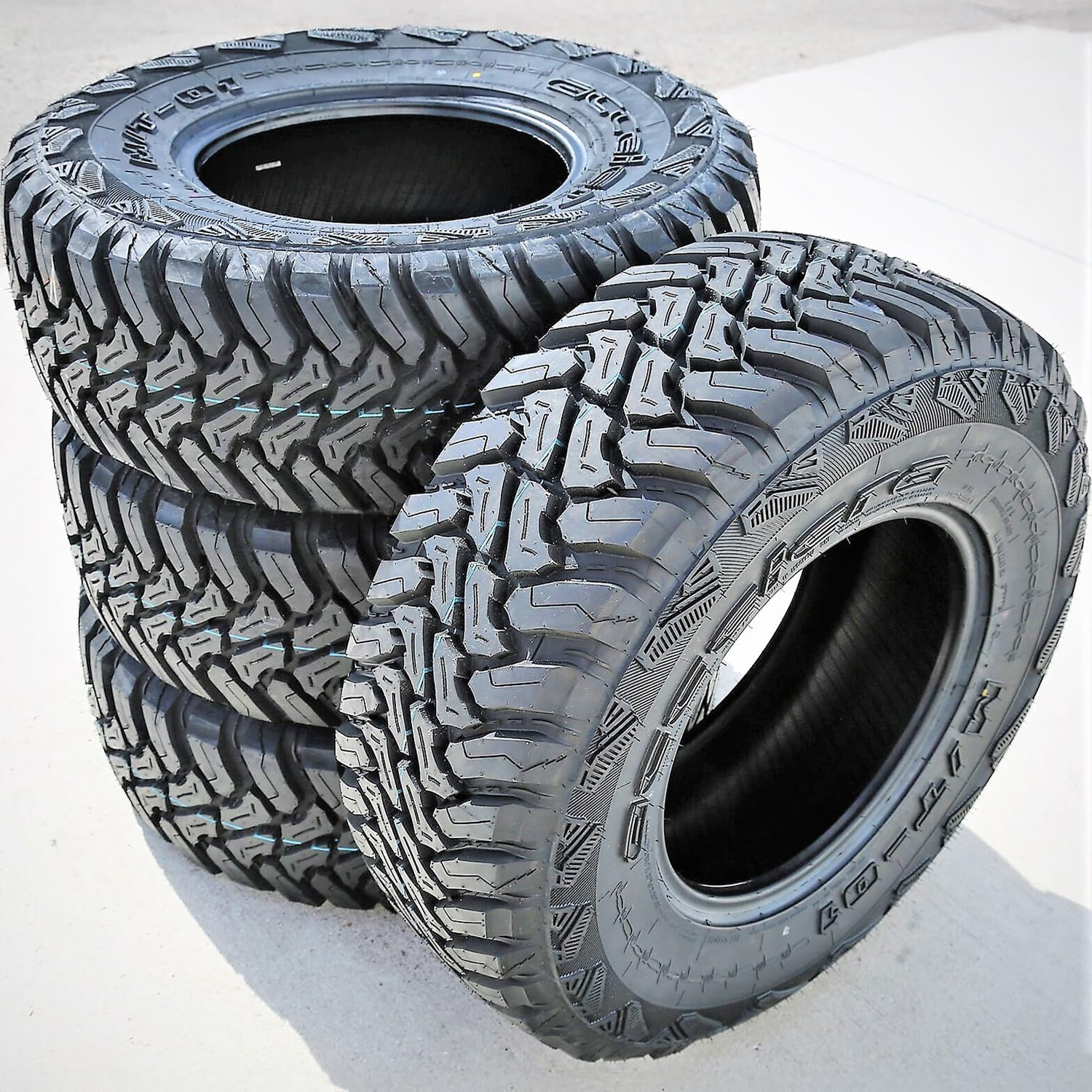
3. Accelera M/T-01 35×12.50R18 Mud-Terrain Light Truck Tire (Load Range E) – Set of 4
| Size | 35X12.50R18 |
|---|---|
| Load Index | 123 |
| Speed Rating | Q |
| Load Capacity | 3417 Pounds |
| Load Range | E |
The Accelera M/T-01 is a budget-focused mud-terrain tire sized 35×12.50R18 and built for light trucks like a GMC Sierra 1500 that need bigger off-road rubber. Its deep, staggered tread blocks and stone ejectors are engineered to boost traction in mud, loose dirt, and snow while the self-cleaning pattern helps eject debris so the tire keeps biting. The radial construction with a 10-ply, load range E rating supports heavier loads and towing scenarios common with pickups. On pavement the tread maintains steady road contact for decent steering response, but expect increased road noise and a firmer ride compared with highway tires; some owners also report balancing challenges at highway speeds. These tires translate to strong off-road capability and longer tread life for trucks used for trail work, with the compromise being comfort and highway refinement. If you plan to do a mix of trail driving and occasional hauling on a Sierra, these deliver solid value for the features offered.
Best for: A practical truck owner who wants an affordable, capable mud-terrain tire for a GMC Sierra 1500 that prioritizes off-road traction and load-carrying ability over highway comfort.
Less Ideal for: Drivers who spend most miles on highways and prioritize low road noise and a cushioned ride should consider more road-focused or all-terrain tires instead.
- Aggressive mud-terrain tread with self-cleaning design for better off-road grip and debris ejection
- Stone ejectors reduce rock retention and potential tread damage during off-road use
- 10-ply, Load Range E construction supports heavier payloads and towing common to light trucks
- Staggered edge tread blocks aim to reduce irregular wear and extend usable tread life
- Not as quiet or comfortable on highway driving compared with all-terrain or street tires
Verdict: Choose these tires for a Sierra 1500 when you want an inexpensive, heavy-duty mud-terrain tire that delivers strong off-road traction and load capacity.
4. Landspider Wildtraxx A/T All-Terrain Light Truck Tire — 35×12.50R15

| Size | 35X12.50R15 |
|---|---|
| Load Index | 113 |
| Speed Rating | R |
| Load Range | C |
| Construction Type | Radial |
The Landspider Wildtraxx A/T is an all‑terrain, all‑season tire sized 35×12.50R15 aimed at light trucks such as a GMC Sierra 1500 running 15-inch wheels. Its aggressive tread and wide footprint are designed to deliver grip on loose or uneven trails while a year‑round compound and symmetric tread pattern help resist hydroplaning on wet pavement. The reinforced carcass and 10‑ply construction support heavier loads and maintain shape under pressure, which helps with steering responsiveness and more stable handling during towing or hauling. Reported tread depth and a claimed long treadlife suggest decent longevity for a budget A/T tire, and owner feedback notes a quiet, smooth ride on highway surfaces. Downsides to consider are the universal fitment approach rather than vehicle‑specific tuning and that performance in extreme mud or deep snow will not match a dedicated mud‑terrain or winter tire. Expect a cost‑focused choice that balances everyday road comfort with capable light off‑road traction rather than top‑tier off‑road performance.
Best for: Buyers seeking a budget‑minded 35‑inch all‑terrain tire for everyday driving and occasional off‑road use on a GMC Sierra 1500 who prioritize a balance of highway comfort and capable trail traction.
Less Ideal for: Drivers who need maximum mud or deep‑snow performance, or those looking for a high‑end, vehicle‑tuned tire for aggressive off‑road builds should consider specialty tires instead.
- All‑terrain tread balances off‑road traction and on‑road handling for mixed use.
- 10‑ply reinforced construction and Load Range C for improved load capacity and stability.
- Year‑round compound and symmetric tread reduce hydroplaning risk in wet conditions.
- Reportedly quiet and smooth on highway for an aggressive A/T design.
- Aggressive block placement designed to resist stone retention and extend tread life.
- Not optimized for extreme mud or severe winter conditions compared with specialized M/T or winter tires.
- Universal fitment means less vehicle‑specific tuning for a Sierra 1500 compared with premium branded replacements.
Verdict: A cost‑focused 35×12.50 A/T that gives Sierra 1500 drivers solid all‑around grip and load support without the premium price.
5. Nexen Roadian AT Pro RA8 All-Season Radial Tire LT35x12.50R18

| Rim Size | 18 Inches |
|---|---|
| Load Index | 128 |
| Speed Rating | S |
| Load Range | F |
| Seasons | Year Round |
The Nexen Roadian AT Pro RA8 is a 35×12.50R18 all-terrain tire built for heavy-duty light truck use and frequent on- and off-road driving. It pairs an open multi-sequence tread with non-directional blocks and deep siping to balance traction, wet drainage, and reduced road noise for daily highway miles. The tire’s F load range, 12-ply construction and a 128 load index mean it carries high payloads without feeling underbuilt, while features like pebble-ejecting grooves and a high maximum pressure help keep the tread clean and durable under work loads. In practice this tire suits a Sierra that sees towing, hauling, and occasional trails: expect improved grip in loose surfaces and confident year-round handling, with slightly higher rolling resistance than a highway tire. Limitations include modest winter ice performance compared with dedicated snow tires and a potential small hit to fuel economy from the aggressive A/T tread pattern. Overall it is a durable, utility-first tire for demanding use where longevity matters more than top efficiency.
Best for: A GMC Sierra 1500 owner who prioritizes dependable, heavy-duty performance for towing, hauling, and mixed on/off-road use and values a long-lasting, work-capable tire over peak fuel efficiency.
Less Ideal for: Drivers who mostly run highway miles seeking maximum fuel economy or those who need top-tier traction on ice and packed snow should consider highway or winter-specific tires instead.
- High load capacity and F load range suitable for towing and hauling
- 12-ply construction and features that resist stone retention for improved durability
- All-season tread with multi-sequence center reduces road noise for daily driving
- High maximum pressure rating supports heavy loads and stable handling
- Not optimized for ice-covered roads compared with winter-specific tires
- Aggressive A/T tread can reduce fuel economy compared with highway tires
Verdict: Choose this tire for a GMC Sierra 1500 when reliable heavy-load capability and durable year-round traction are the primary priorities.
Choosing the Right GMC Sierra 1500 35 Inch Tires: Key Factors to Consider
Load Rating and Ply Construction
Load rating determines how much weight each tire can safely carry and is essential for a vehicle like the Sierra 1500 that often hauls cargo or tows. When you move to 35 inch tires you may also change wheel offset or use different rims, so matching the correct load index prevents overstressing the tire structure and reduces risk when carrying heavy loads.
Ply construction and internal reinforcement affect heat dissipation and sidewall strength. Higher ply or stronger internal construction is usually better for heavier loads and repeated highway miles. Choosing a tire with an appropriate load rating for your truck setup helps maintain handling and braking performance under load and avoids premature wear caused by under-rated tires.
Size Fitment and Clearance
A 35 inch tire requires adequate clearance for suspension travel, steering lock, and turning radius. Fitment depends on wheel width, backspacing, and any lift or leveling modifications on the Sierra 1500. Measure wheel well clearance and account for articulation to prevent rubbing at full turn or when the suspension compresses.
Failing to verify fitment can lead to damage to fenders, suspension components, and the tires themselves. Confirming the intended wheel and tire combination fits without trimming or excessive modification saves time and maintains resale value. Also consider how the larger rolling diameter affects speedometer calibration and gear loading.
Traction Across Conditions
Traction characteristics determine how the truck performs on wet pavement, loose dirt, mud, and light snow. Tire compound, tread block pattern, siping, and void ratio all influence grip. For truck owners who drive both on-road and off-road, look for a tire whose pattern balances water evacuation and bite for loose surfaces.
Tires labeled for mud or all-terrain use usually include more aggressive bite patterns, while highway-oriented tires focus on wet braking and steering precision. Consider the typical weather and terrain you encounter most often because an aggressive off-road tread can trade off some wet-road braking and comfort.
Tread Life and Compound Durability
Tread life is a major ownership cost when upgrading to larger tires. Tread compound formulation and pattern design determine how evenly the tire wears under the truck's weight and driving style. For Sierra 1500 owners who do many highway miles, selecting a durable compound with a stable footprint yields longer service life and fewer replacements.
Regular inspection of wear patterns will reveal alignment or pressure issues early. Tires with reinforced shoulder blocks and stone ejectors resist chunking and extend serviceability in mixed road conditions. Prioritize tread designs that offer balanced wear rather than extreme patterns that wear unevenly on pavement.
Ride Comfort and Noise
Larger tires can increase road noise and change the truck's ride quality. Tread block arrangement, siping density, and rubber compound all influence interior noise and vibration. If you use your GMC Sierra 1500 for daily commuting or long road trips, opt for a 35 inch tire that manages noise while still providing the traction you need.
Consider how much NVH you can tolerate relative to the gains in clearance and off-road performance. Some tires include noise-reducing features in their tread design and belt package to smooth the ride. Balancing aggressive tread for off-road use against highway comfort is a personal tradeoff that affects long-term satisfaction.
Sidewall Strength and Puncture Resistance
Sidewall durability matters when you encounter rocks, debris, or accidental curb contact. A reinforced sidewall or added plies reduces the chance of cuts and bulges when driving off-road or carrying heavy loads. Strong sidewalls also provide better lateral stability during cornering and when the truck is loaded.
If you frequently run lower pressures for off-road traction, choose tires with sidewall constructions designed for occasional pressure flexing. Protective features such as rock guards or rim protectors reduce the likelihood of rim damage and extend tire service life in demanding environments.
Understanding How 35 Inch Tires Affect Ride Height and Gearing
Switching to 35 inch tires increases roll radius and effectively raises the truck's ride height. That added height improves ground clearance for obstacles but also changes steering geometry and may affect anti-squat and anti-dive characteristics. If you plan to maintain factory handling, consider suspension adjustments or alignment settings after the upgrade.
A larger diameter also alters effective final drive ratio. The Sierra 1500 may feel slightly slower to accelerate and transmission shift points can shift. Owners who tow or frequently haul heavy loads should factor this change into their decision and consider whether a gear change or transmission recalibration is necessary for optimal performance.
- Increased clearance vs. potential rubbing at full turn
- Altered speedometer and odometer readings
- Possible need for re-gearing when towing regularly
Matching Wheel Width and Backspacing to 35 Inch Tires
Wheel selection is as important as tire choice. The right wheel width ensures an optimal tire profile and sidewall shape, which affects handling and wear. Too narrow a wheel can overstretch the tire bead, while too wide a wheel flattens the tread and reduces sidewall flex control.
Backspacing determines how far the tire sits inward toward suspension components. Improper backspacing increases the risk of rubbing and can change scrub radius, affecting steering feel. Use factory-recommended ranges for aftermarket wheel sizing when planning a 35 inch fitment.
- Confirm factory and aftermarket wheel specs before purchase
- Consider fender clearance and trim needs
- Test fit wheels with center caps and lug nuts installed
Tire Pressure Management for Larger Off-Road Tires
Managing tire pressure becomes more critical with larger tires. Lower pressures improve traction and ride comfort off-road but increase sidewall flex and heat generation on highways. Keep separate pressure targets for on-road and off-road use and check pressures regularly to avoid uneven wear or overheating.
Invest in a reliable pressure gauge and consider a portable inflator for on-the-go corrections. If you run lower pressures frequently, inspect bead seating and sidewall condition more often to catch damage early.
- Lower pressures for off-road traction, higher pressures for highway stability
- Monitor for uneven wear when switching pressure regimes
- Re-inflate to recommended highway pressures before extended road travel
Snow and Winter Use with 35 Inch Tires
If you encounter snow and ice, prioritize 35 inch tires with proven winter traction features. Tread siping, biting edges, and rubber compounds rated for cold temperatures improve grip on snow-packed surfaces. Some all-terrain designs offer a blend of year-round performance with limited winter proficiency, while dedicated winter tires provide the best cold-weather braking.
Consider your local winter severity. In regions with frequent heavy snow, keeping a dedicated set of winter tires sized appropriately for the Sierra 1500 may be safer than relying on an aggressive all-terrain tire year-round.
- Look for siping and soft compounds for cold-weather grip
- Assess whether a dedicated winter set is warranted
- Check local codes for winter traction requirements
Maintenance Practices to Extend 35 Inch Tire Life
Regular maintenance extends tread life and preserves handling. Rotate tires on a frequent schedule adapted to truck use, and perform periodic visual inspections for cuts, bulges, and abnormal wear. Proper inflation, balanced wheels, and timely alignments are especially important for larger tires that amplify handling issues.
Balancing and alignment prevent uneven tread wear that can be costly with larger, heavier tires. Keep torque on lug nuts within spec and inspect wheel studs and nuts after initial installation to ensure nothing loosens during break-in miles.
- Rotate every 5,000 to 7,000 miles depending on use
- Balance new tires and re-check after the first 100 miles
- Align after any suspension changes or if uneven wear appears
Still looking for the perfect fit?
Select your GMC Sierra 1500 configuration to see the most relevant Tires recommendations
How We Chose the Best GMC Sierra 1500 35 Inch Tires
We evaluated candidates against criteria that matter specifically to GMC Sierra 1500 owners who upgrade to 35 inch tires. Primary filters included load rating and size fitment to ensure tires can carry typical payloads and clear suspension and steering components. Traction performance across wet, dry, and light snow conditions was assessed because owners often expect a single tire to handle mixed use. Tread compound and pattern durability informed expected tread life and rolling resistance. Off-road capability and sidewall protection were considered for drivers who use their Sierra for trail or worksite tasks. Finally, ride comfort and noise were reviewed to avoid excessive NVH on long drives.We excluded tires that lack the physical size and load index compatible with the Sierra 1500's factory and commonly upgraded wheel setups. Tires designed strictly for passenger cars or performance sports cars were removed from consideration because their load and construction do not match truck requirements. The result is a focused list of 35 inch tires that meet load, traction, and durability expectations for this truck while minimizing fitment and clearance compromises.
Our full evaluation process is outlined in our review methodology.
FAQ
Will 35 inch tires fit my GMC Sierra 1500 without a lift?
It depends on your wheel width and backspacing as well as the truck's suspension and any factory clearance. Many stock Sierra 1500s require a modest lift or leveling kit to prevent rubbing at full lock or full suspension compression. Measure clearance and test-fit before finalizing a purchase.
How often should I check tread wear on 35 inch tires?
You should inspect tread wear at least monthly and after any off-road excursion. Larger tires carry heavier loads and can show uneven wear sooner, so watch for feathering, cupping, or rapid shoulder wear and address pressure or alignment issues promptly.
Do larger tires affect fuel economy on the Sierra 1500?
Yes. A bigger rolling diameter and heavier tire typically increase rolling resistance and weight, which can reduce fuel efficiency. The exact impact depends on driving style and tire selection, but expect a modest decrease in MPG compared with factory-sized tires.
Can I use all-season 35 inch tires year-round on my Sierra 1500?
Often they perform well in mixed conditions, but their winter performance varies by compound. For regions with severe snow and ice, a dedicated winter tire is usually safer. Evaluate local climate and typical roads before relying on all-season tyres for winter driving.
How important is wheel balancing and alignment after fitting 35 inch tires?
Very important. Proper balancing reduces vibration and premature wear, while alignment ensures even tread wear and predictable handling. Have both performed after installation and re-check balance after the first break-in miles.
Final Verdict
Upgrading to 35 inch tires on a GMC Sierra 1500 brings clear benefits in ground clearance and off-road ability, but it also requires careful attention to load rating, fitment, and maintenance. Prioritize tires with the correct load index and robust sidewall construction if you haul or tow regularly. Balance your need for off-road traction against on-road comfort and tread longevity to find a tire that suits how you drive.Make decisions based on how you use the truck: choose sturdier constructions for heavy-duty work or more road-focused 35 inch options for commuting and long-distance travel. With proper sizing, inflation management, and routine alignment and balancing, you can enjoy the advantages of 35 inch tires while minimizing tradeoffs.
Explore More:
- Check out all GMC Sierra 1500 parts & accessories
- Explore Tires Maintenance & Repair Guides
- Explore Wheels & Tires
- Browse all Auto Parts
