

Note: This article contains affiliate links. If you click on these links and make a purchase, I may earn a small commission at no extra cost to you. This helps support my research and content. Read my full affiliate disclosure here.
If you own a 2008-2011 Subaru Impreza and are seeing reduced performance or an emissions-related fault, choosing the right catalytic converter matters. The correct converter restores exhaust emissions control, supports engine efficiency, and avoids fitment headaches during installation. This guide covers the top shortlisted catalytic converters for the 2008-2011 Impreza, emphasizing durability, emissions performance, and correct fitment.Below you will find the top picks for this model, followed by the buying criteria we used to evaluate them and practical advice on installation, diagnostics, and maintenance.
Looking for other parts? See all Subaru Impreza parts & accessories.
Top Picks at a Glance
| Best Overall The best all-around choice for most situations | Anytek Front Catalytic Converter for Subaru 2.5L H4 (2006–2012) |  |
| Best Quality Built to a higher standard if you want something more solid | AISIN Front Catalytic Converter CCTAZ-00064 (EPA Compliant) |  |
| Best Value The sweet spot between price and what you get | PREMIER MILES Catalytic Converter for Subaru 2.5L H4 (2006–2011) |  |
| Best Budget The cheapest option that still gets the job done reliably | Auto Shack Rear Catalytic Converter for Subaru Forester/Impreza/Outback/Legacy 2.5L |  |
| Highest Rated A top-rated pick with lots of positive feedback | Walker Ultra 55585 Direct-Fit Catalytic Converter |  |
| Most Popular A crowd favorite that many people choose with confidence | AUTOSAVER88 Catalytic Converter Compatible with 2006–2011 Subaru 2.5L (Direct-Fit, EPA Compliant) |  |
| Best Seller A high-volume bestseller chosen again and again | SPEEDFusion 2-Inch Universal High-Flow Catalytic Converter with O2 Port (Bottom) |  |
1. Anytek Front Catalytic Converter for Subaru 2.5L H4 (2006–2012)

| Position | Front |
|---|---|
| Manufacturer | Anytek |
| Manufacturer Part Number | 10080110-N |
| OEM Part Number | 16564, 642803, 40859, 44620AA740, 44620AA76A, 44620AB43A, 44620AC07A, 44620AC12A |
| Compliance note | EPA compliant where allowed; not legal in CA, CO, NY, ME |
This Anytek front catalytic converter is a direct-replacement designed for Subaru 2.5L H4 models from the late 2000s and early 2010s. It installs in place of the factory front converter to restore emissions control and exhaust flow after a failed unit or damage. The converter uses a high-flow internal substrate and a 409L stainless steel shell intended to resist corrosion and high-temperature exposure, and the manufacturer says it is built to the original standard. Typical use is as a like-for-like repair during an exhaust service or after a check-engine code for catalyst efficiency. The practical benefits are straightforward: it restores emissions performance and drivability without requiring custom piping, and the stainless shell should improve durability over heavily rusted original parts. Important limitations are regulatory: this unit is not legal for sale or use in California, Colorado, New York, or Maine, so it is only suitable where EPA-compliant aftermarket converters are allowed; buyers should also verify the exact OEM reference numbers and fitment before purchase.
Best for: Buyers seeking a balanced, factory-style replacement that restores emissions function and drivability on late-2000s Subaru 2.5L H4 vehicles without custom exhaust work.
Less Ideal for: Drivers in states with strict emissions regulations or buyers needing a CARB-compliant converter should look for a certified alternative.
- Direct front replacement for Subaru 2.5L H4 models to simplify installation
- 409L stainless steel shell for improved corrosion and heat resistance
- Built to match original size and performance standards for straightforward fitment
- High-flow catalytic substrate to help restore exhaust flow and emissions function
- Manufacturer-backed warranty and stated OEM-style manufacturing standard
- Not legal for sale or use in several states with stricter emissions rules
Verdict: A practical, factory-style front replacement that restores emissions performance on Subaru 2.5L H4 models where non-CARB aftermarket converters are permitted.
2. AISIN Front Catalytic Converter CCTAZ-00064 (EPA Compliant)

| Position | Front |
|---|---|
| E.P.A. Compliant | Yes |
| Restricted States | CA, NY, CO, ME |
| Body Material | Stainless Steel |
| O2 Sensor Ports | 2 |
This front catalytic converter from Aisin replaces the factory unit on compatible Subaru 2.5L H4 vehicles to restore emissions performance and reduce exhaust pollutants. It is EPA compliant and built with a stainless steel body and ceramic substrate, and includes two O2 sensor ports so it integrates with the stock exhaust and sensors. The unit is positioned for front fitment and ships with installation accessories and instructions to simplify swapping the old converter. In practice this should return proper catalytic function, help the engine run cleaner and maintain correct sensor readings that affect fueling and throttle response. For a performance-minded buyer it preserves factory emissions controls while avoiding modifications that could trigger check-engine lights. The main trade-off is that it is a direct replacement focused on emissions compliance rather than improving flow for horsepower gains, so drivers seeking freer-flowing performance upgrades will need a different, non-compliant option.
Best for: Buyers who want a reliable, factory-quality emissions replacement that restores proper catalytic function and maintains sensor operation for smooth drivability and correct engine management.
Less Ideal for: Drivers whose priority is extracting extra power through a high-flow aftermarket exhaust should consider a performance-oriented converter or cat-back system instead.
- EPA compliant so it meets emissions requirements for federal use
- Stainless steel construction and ceramic substrate for durability and effective conversion
- Includes two O2 sensor ports for plug-and-play integration with factory wiring
- Comes with installation accessories and instructions to simplify replacement
- Designed for emissions restoration rather than increased exhaust flow or horsepower
Verdict: Choose this Aisin front catalytic converter to restore factory-level emissions control and sensor compatibility on 2008–2011 Subaru Impreza 2.5L H4 models.
3. PREMIER MILES Catalytic Converter for Subaru 2.5L H4 (2006–2011)
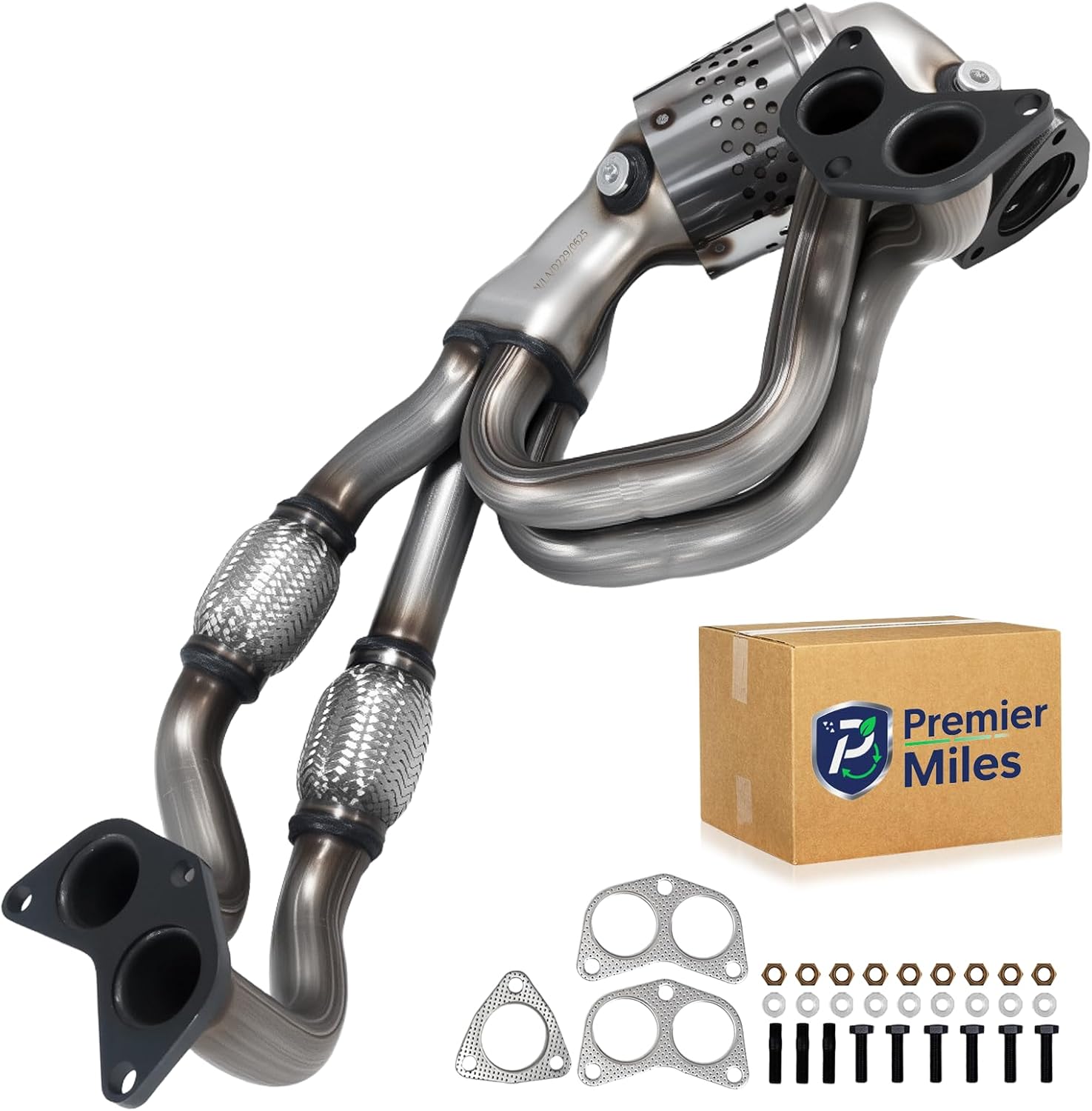
| Vehicle fit | Subaru Forester 2006-2010, Impreza 2006-2011, Outback 2006-2012, Saab 9-2X 2006 (2.5L H4) |
|---|---|
| Substrate | 400-cell ceramic |
| Emissions compliance | EPA-compliant (not CARB) |
| Warranty – structural | 5 years |
| Warranty – emissions | 2.5 years / 25,000 miles |
This PREMIER MILES catalytic converter is a direct-fit replacement for Subaru 2.5L H4 applications and is intended to restore emissions control and exhaust flow to factory-like levels. It uses a 400-cell ceramic substrate and precious metal catalysts to promote efficient conversion of exhaust gases while minimizing added backpressure. The unit is EPA-compliant and has passed the 25,000-mile long-term emissions test, so it is suitable for drivers outside CARB jurisdictions who need a legal replacement. Installation is typical for a bolt-in converter and will be used to clear check-engine codes tied to a failed converter, pass emissions tests, or recover lost performance from a clogged unit. The manufacturer backs structural durability with a five-year warranty and shorter emissions performance coverage. Limitations: it is not CARB-compliant so it cannot be used where California standards apply, and buyers should confirm exact fit for their model year and exhaust configuration before ordering.
Best for: Buyers who want a practical, legal replacement that restores emissions function and engine response on compatible Subaru 2.5L models without aftermarket modifications.
Less Ideal for: Drivers in California or other areas requiring CARB-certified parts or owners who need a universal or performance-oriented aftermarket converter.
- Direct-fit for specified Subaru 2.5L H4 models so installation is straightforward
- EPA-compliant and passed 25,000-mile emissions testing for long-term performance assurance
- OEM-grade 400-cell ceramic substrate for balanced flow and reduced backpressure
- Uses precious metal catalysts to improve conversion efficiency and durability
- Five-year structural warranty provides added confidence in build quality
- Not CARB-compliant so illegal for use in California and other CARB jurisdictions
Verdict: Choose this EPA-compliant direct-fit unit if you need a durable, factory-grade catalytic converter to restore emissions control and driveability on compatible Subaru 2.5L models.
4. Auto Shack Rear Catalytic Converter for Subaru Forester/Impreza/Outback/Legacy 2.5L

| Compatible engines | AWD H4 2.5L |
|---|---|
| Fitment | Rear catalytic converter for specified Subaru models |
| Exterior | Stainless Steel and Ceramic |
| Includes | 1 Rear catalytic converter |
This Auto Shack rear catalytic converter is a direct-fit replacement designed for Subaru 2.5L AWD models from roughly 2006–2011 and is intended to restore exhaust flow and emissions control after the original unit fails. It installs in place of the factory rear converter and is typically used during exhaust repairs or to resolve a check engine light tied to the catalytic system. The unit is built with stainless steel exterior and a ceramic core to handle exhaust temperatures and help reduce harmful gases. Because it is a direct-fit design, it simplifies installation for professional shops and experienced DIYers, though hardware is not included so some welding or new gaskets may be required. Note that this converter is not legal for sale or use in certain states with strict emissions rules. For budget-focused buyers this model offers a practical replacement option that balances basic performance with affordability, but buyers who need emissions-legal certification for restricted states should look elsewhere.
Best for: Budget-minded owners needing a straightforward rear catalytic converter replacement for a 2.5L Subaru AWD who prioritize restoring emissions function and exhaust flow without paying for higher-cost certified units.
Less Ideal for: Drivers who must meet strict state emissions requirements or want a certified emissions-compliant unit for states with stricter regulations should avoid this product.
- Direct-fit design built for Subaru 2.5L AWD rear application simplifies replacement
- Stainless steel exterior offers corrosion resistance compared with mild steel units
- Ceramic core reduces harmful exhaust gases and helps restore emissions performance
- Sold as a single rear converter for straightforward parts replacement
- Not legal for sale or use in California, Colorado, New York, and Maine due to emissions regulations
- Hardware and gaskets are not included which may require additional parts or welding for installation
Verdict: A cost-conscious direct-fit rear converter that restores emissions function and exhaust flow on the specified Subaru 2.5L AWD models when certified units are not required.
5. Walker Ultra 55585 Direct-Fit Catalytic Converter

| Brand | Walker |
|---|---|
| Model | Catalytic Converter |
| Item model number | 55585 |
| Manufacturer | Walker Exhaust |
The Walker Ultra 55585 is a direct-replacement catalytic converter engineered for Subaru applications built to meet EPA requirements on OBDII vehicles. It installs like a factory part using OE-style hangers, flanges, brackets and heat shields, which keeps installation simple and avoids cutting or welding in most cases. The converter uses a high-technology washcoat and a calibrated precious metal load to reduce tailpipe emissions to the levels expected for the original application, and the stainless-steel construction and thick mounting hardware aim to resist corrosion and road wear over time. This makes it a practical option for technicians or owners who want a durable, compliant replacement that preserves factory routing and underbody protection. The main limitations are that it is a vehicle-specific direct-fit part so you must confirm exact year and engine fitment, and it does not eliminate the need to check local aftermarket emissions rules before installation.
Best for: Buyers who prioritize reliable, factory-like replacements and want a compliant, long-lasting catalytic converter that installs without fabrication.
Less Ideal for: Anyone seeking a universal or custom-fit performance converter or those who need a non-compliant off-road or race-only unit.
- Direct-fit design with OE-style hangers and flanges for bolt-on installation
- Engineered to meet EPA standards for OBDII vehicles
- Stainless-steel body and reinforced mounting hardware for durability
- Includes aluminized heat shields where originally equipped to protect undercarriage
- Vehicle-specific fitment requires confirming exact model year and engine before purchase
Verdict: Choose this Walker Ultra unit when you want a durable, EPA-compliant direct-fit replacement that restores factory routing and emissions performance for compatible Subaru Impreza years.
6. AUTOSAVER88 Catalytic Converter Compatible with 2006–2011 Subaru 2.5L (Direct-Fit, EPA Compliant)
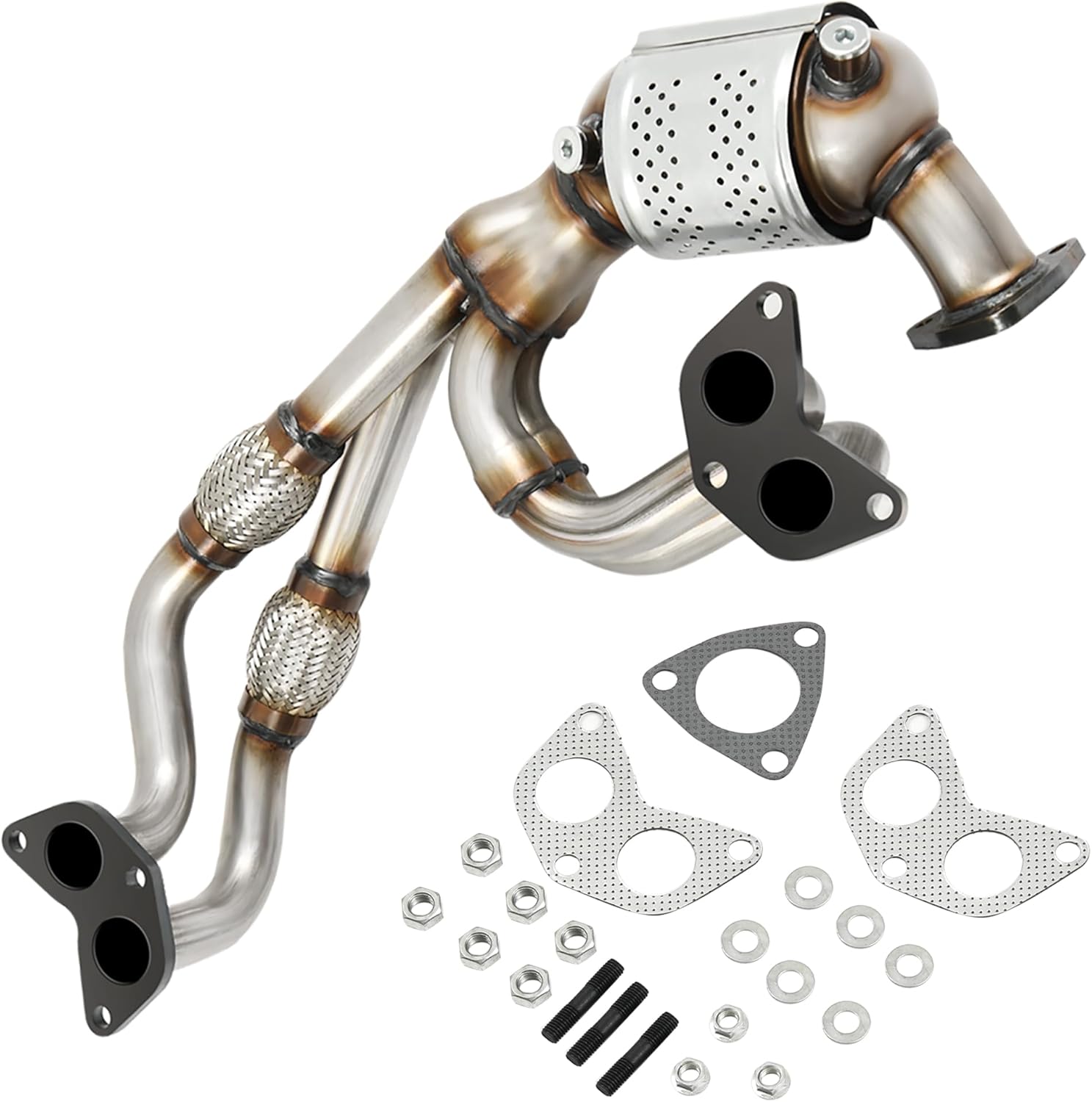
| Vehicle fitment | 2006-2010 Forester; 2006-2011 Impreza; 2006-2012 Legacy/Outback; 2006 Saab 9-2X 2.5L |
|---|---|
| Certification | EPA Federal Standard Certified |
| Position | Front |
| Manufacturer | TWG |
This AUTOSAVER88 catalytic converter is a bolt-on, direct-fit replacement for selected 2.5L Subaru applications and is intended to restore exhaust emissions control without extensive modification. It installs using the factory-style flange and includes gaskets and hardware for a straightforward swap by a mechanic. The unit uses a larger honeycomb ceramic substrate with increased precious metal loading to improve conversion efficiency and reduce emissions, and the T409 stainless steel shell offers stronger resistance to heat and corrosion than thinner shells. It is EPA certified for federal emissions models, which supports legal compliance outside states with additional rules. Expect a factory-like fit and performance when matched to the listed vehicle years, but professional installation is recommended and this unit will not ship to certain states with stricter emissions requirements. Watch for fit verification against your vehicle's OEM part number before ordering to avoid compatibility issues.
Best for: Buyers who prioritize a reliable, factory-style emissions replacement and want a product with documented EPA certification and visible construction features that align with other owners’ experiences.
Less Ideal for: People who need parts guaranteed for states with their own emissions rules or those seeking universal or performance-oriented aftermarket converters should look elsewhere.
- Direct-fit, bolt-on design with included gaskets and hardware for easier installation
- Enlarged ceramic substrate and higher catalyst loading for improved conversion efficiency
- T409 stainless steel shell resists heat and corrosion for longer service life
- Stamped with an EPA federal certification number for federal-emissions compliance
- Not eligible for sale/shipment to certain states with stricter emissions regulations
Verdict: Choose this direct-fit, EPA-certified converter if you want a factory-style replacement with larger substrate media and a durable stainless steel shell for 2.5L Subaru applications.
7. SPEEDFusion 2-Inch Universal High-Flow Catalytic Converter with O2 Port (Bottom)

| Inlet/Outlet Diameter | 2 inches |
|---|---|
| EPA Compliance | Meets federal emission standards |
| O2 Port Position | Bottom |
| Shell Material | Stainless steel |
This SPEEDFusion 2-inch universal catalytic converter is a compact high-flow unit intended to replace a failed midpipe converter on compatible exhaust systems. It uses a stainless-steel shell and a porous ceramic substrate plated with platinum, rhodium, and palladium to boost catalytic efficiency and reduce harmful emissions. The unit includes an O2 sensor port in a bottom position and is EPA compliant for vehicles that meet federal standards. Installation is typically done by welding or clamping into a 2-inch exhaust line and is best handled by a shop to ensure correct fit and sensor placement. Benefits include improved flow versus many restrictive stock converters and a design meant to avoid check engine light codes related to catalyst efficiency. Limitations are that it is a universal part requiring pipe modification or adaptors for a proper fit, and it is not CARB-compliant so it cannot be used in states with stricter regulations; fitment for a 2008-2011 Subaru Impreza must be confirmed before purchase.
Best for: Buyers who prioritize keeping emissions systems functioning and avoiding check-engine codes, and who want a cost-effective high-flow replacement that can be professionally adapted into a 2008–2011 Subaru Impreza exhaust system.
Less Ideal for: Owners in states with California-style emissions rules or those unwilling to modify piping or pay a shop for fitment should choose a vehicle-specific, certified converter instead.
- High-flow design improves exhaust throughput compared with restrictive converters
- Stainless-steel shell and multi-precious-metal coated ceramic substrate for effective emissions conversion
- Includes bottom-position O2 sensor port for retaining factory sensor monitoring
- EPA compliant for vehicles meeting federal emission standards
- Compact 2-inch inlet/outlet suits systems that use 2-inch piping
- Universal fit requires cutting, welding, or adapters for precise fitment to vehicle-specific exhausts
- Not CARB-compliant and therefore illegal for use in states with California-equivalent regulations
Verdict: For a risk-averse Impreza owner needing a high-flow replacement that keeps sensor monitoring intact, this EPA-compliant 2-inch converter is a practical, shop-installable solution.
Choosing the Right 2008-2011 Subaru Impreza Catalytic Converter: Key Factors to Consider
Fitment and Mounting
Correct fitment is the most critical factor for the 2008-2011 Subaru Impreza because exhaust routing, hanger locations, and O2 sensor placements vary between model years and engine options. A converter that matches factory flange types and sensor bung positions saves time and avoids costly exhaust modifications.
When a converter lists Impreza compatibility, verify whether it references the 2008-2011 range specifically and whether it accommodates the same engine configuration your car uses. Differences in mid-pipe length or hanger spacing will affect whether welding or additional adapters are required. Prioritizing a direct-fit unit reduces installation time and preserves factory exhaust geometry.
Catalyst Type and Emissions Performance
Catalyst composition and washcoat loading determine how effectively the converter reduces hydrocarbons, carbon monoxide, and nitrogen oxides. For street-driven 2008-2011 Impreza owners, converters with a high-quality ceramic or metallic substrate and adequately loaded precious metals provide more consistent emissions conversion across typical driving temperatures.
Consider whether the replacement meets regulatory emissions requirements for your area. Products that specify emission testing or compliance levels give greater confidence that the converter will restore proper exhaust emissions control for the Impreza without causing long-term check engine light issues tied to emissions.
Backpressure and Engine Compatibility
Different converters can alter exhaust backpressure and flow. On the 2008-2011 Impreza, excessive backpressure can reduce power and efficiency, while a converter with overly open flow might compromise emissions conversion under certain conditions.
Choose a unit engineered to balance flow and conversion efficiency for the Impreza's engine. Look for specifications or technical notes about flow characteristics. If your Impreza has a turbocharged engine or other performance modifications, factor that into the choice, since those setups have different flow and heat profiles than a naturally aspirated configuration.
Durability and Corrosion Resistance
The underside of an Impreza is exposed to moisture, road salt, and heat cycles, so the converter housing and welds should resist corrosion and stress. Stainless steel housings, plated flanges, and robust welds reduce the chance of premature leaks or structural failure.
Consider the expected service life and whether the converter uses a protective finish or higher-grade materials. A more durable unit can avoid repeat replacements and maintain emissions performance longer under typical driving conditions for these model years.
O2 Sensor Accommodation
The 2008-2011 Subaru Impreza uses upstream and downstream oxygen sensors located at specific points relative to the catalytic converter. A replacement must provide correctly positioned sensor bungs or retain the ability to accept factory sensors without relocation.
Incorrect sensor placement leads to false readings and a persistent check engine light catalytic converter-related fault code. Confirm the converter supports the same number and type of sensor bungs as the factory unit and that their threads and spacing match the Impreza's sensors.
Installation Requirements and Support
Some replacements are direct-fit and bolt into the factory exhaust, while others require cutting, welding, or adapter flanges. For many owners of a 2008-2011 Impreza, choosing a unit that minimizes shop time reduces overall disruption and labor risk.
Check product notes for installation hardware, gasket compatibility, and whether the supplier provides fitment diagrams. Also consider local emissions inspection rules that may affect whether modifications are permitted. Clear installation guidance and available support can make the difference between a straightforward swap and a prolonged repair.
Diagnosing Catalytic Converter Problems on the 2008-2011 Impreza
Before replacing the catalytic converter, verify the symptoms and rule out upstream causes. Common signs on the 2008-2011 Impreza include a persistent check engine light catalytic converter fault code, reduced acceleration, rough idle, and a noticeable drop in fuel economy. A visual inspection can reveal external damage, dents, or corrosion on the converter body that would justify replacement.
Use live data from the vehicle's O2 sensors where possible to confirm that downstream sensor readings are not mirroring upstream signals, which indicates poor conversion efficiency. Also inspect for exhaust leaks at flanges and broken hangers, because exhaust leaks can mimic converter failure by altering sensor readings and noise.
- Check engine light codes related to catalyst efficiency should be confirmed with a scan tool.
- Compare upstream and downstream O2 sensor voltages during warm idle and steady cruising.
- Look for rattling sounds that may indicate a broken substrate inside the converter.
Fitment Notes for 2008-2011 Impreza Owners
The Impreza's exhaust layout varies slightly across engines and model years within 2008-2011, so always match the converter's flange type and hanger spacing to your car. Direct-fit options are preferred because they avoid cutting and welding and keep factory exhaust geometry intact.
If a converter requires splicing or adapters, plan for additional labor and potential alignment work. Also verify that replacement O2 sensor bungs are welded in the correct locations; improperly located bungs can trigger catalytic converter symptoms and emissions test failures.
- Confirm the number and placement of O2 sensor bungs before purchase.
- Verify flange bolt patterns and hanger positions against the Impreza's factory layout.
Routine Maintenance to Extend Converter Life
Good engine tune and maintenance protect the catalytic converter. Address misfires, rich running conditions, and oil or coolant leaks promptly because these issues can overheat or contaminate the catalyst and lead to premature failure.
Use recommended engine controls and replace failing ignition or fuel system components quickly. Regular inspections of exhaust clamps, hangers, and joints help prevent vibration-related damage to the converter housing on older Impreza models.
- Repair misfires and fuel system faults immediately to avoid catalyst contamination.
- Maintain proper oil and coolant systems to prevent leaks into the exhaust.
- Check exhaust hangers and clamps annually for wear or corrosion.
What to Expect During Installation
A direct-fit catalytic converter swap on the 2008-2011 Impreza typically involves unbolting the old unit, transferring O2 sensors, and bolting in the replacement. Labor time varies with rust and access; seized bolts or corroded flanges can increase the work required.
If welding or pipe splicing is needed, a professional shop with exhaust experience is recommended. After installation, clear any codes and perform a test drive to confirm that O2 sensor readings and engine behavior return to normal and that no exhaust leaks remain.
- Transfer factory O2 sensors to the new converter when compatible.
- Torque flange bolts to factory specifications and inspect for leaks after installation.
Regulatory and Emissions Inspection Considerations
Local emissions rules determine whether a replacement catalytic converter must meet specific EPA or state standards. For the 2008-2011 Impreza, ensure the replacement is legal for on-road use in your jurisdiction and that it meets required emissions certifications if applicable.
Keep documentation that states compliance or testing results handy for inspections. Noncompliant modifications or improper installations can cause inspection failures even if the converter itself is functioning correctly.
- Verify emissions certification notes on the product listing or paperwork.
- Retain installation receipts and any compliance documentation for inspections.
Still looking for the perfect fit?
Select your Subaru Impreza configuration to see the most relevant Catalytic Converters recommendations
How We Chose the Best 2008-2011 Subaru Impreza Catalytic Converter
We focused exclusively on catalytic converters that are suitable for the 2008-2011 Subaru Impreza and evaluated candidates using vehicle-specific, practical criteria. Primary evaluation metrics included fitment compatibility with the Impreza exhaust routing and mounting points, catalyst type and washcoat loading for emissions conversion efficiency, and durability of the substrate and housing to resist heat and road corrosion. We also assessed ease of installation, including whether the converter requires modifications, and whether O2 sensor bungs align with factory locations. Thermal performance and backpressure characteristics were examined to minimize negative effects on engine performance and fuel economy. Finally, long-term reliability factors such as corrosion-resistant finishes and welded versus bolted connections were considered.We excluded units that did not explicitly list compatibility with the 2008-2011 Impreza, converters designed for racers or modified exhaust systems without fitment options, and any products lacking clear substrate material or emissions performance information. The result is a focused list of converters that balance emissions control, fitment accuracy, and service life for this car.
Our full evaluation process is outlined in our review methodology.
FAQ
What are common catalytic converter symptoms on a 2008-2011 Subaru Impreza?
Common symptoms include a persistent check engine light catalytic converter fault code, reduced acceleration, diminished fuel economy, and unusual exhaust odors. Rattling noises can indicate a broken internal substrate. These signs often appear after prolonged misfires or contamination events.
Can I replace the catalytic converter myself on an Impreza from 2008-2011?
A direct-fit replacement can be a DIY project if you have the right tools and experience with exhaust work, transferring O2 sensors, and freeing rusted bolts. Welding or splicing requires more advanced skills and equipment, so plan to use a professional if the job calls for fabrication.
Will a faulty catalytic converter trigger the check engine light on my Impreza?
Yes, the vehicle's diagnostic system monitors catalyst efficiency and will set a code that illuminates the check engine light if conversion falls below expected levels. However, upstream faults like failing O2 sensors or misfires can also trigger similar codes, so proper diagnosis is important.
How long should a replacement catalytic converter last on a Subaru Impreza?
Lifespan depends on driving conditions and maintenance; a well-made converter can last many years under normal use. Exposure to road salt, persistent engine problems, and physical damage will reduce longevity, so addressing engine issues promptly helps maximize service life.
Do I need to replace O2 sensors when changing the catalytic converter?
Not always. If the factory sensors are in good condition and compatible with the replacement, they can often be transferred. However, if sensor readings were contributing to converter failure or sensors show wear, replacing them at the same time is a prudent choice.
How do emissions inspections affect catalytic converter replacement for the Impreza?
Emissions inspections may require the replacement to meet specific certifications or to maintain factory-equivalent performance. Using a converter without proper compliance documentation can result in a failed inspection even if the unit restores function.
Final Verdict
When replacing a catalytic converter on a 2008-2011 Subaru Impreza, prioritize correct fitment, appropriate catalyst type, and durable construction. Address any underlying engine issues first so the new converter is not exposed to contamination or overheating. Balance flow and conversion efficiency to preserve engine performance while restoring emissions control.Choosing a direct-fit, emissions-compliant unit that accommodates the Impreza's O2 sensors and mounting points will minimize installation headaches and provide the most reliable long-term outcome for this vehicle.
Explore More:
- Check out all Subaru Impreza parts & accessories
- Explore Catalytic Converters Maintenance & Repair Guides
- Explore Exhaust & Emissions
- Browse all Auto Parts
