

Note: This article contains affiliate links. If you click on these links and make a purchase, I may earn a small commission at no extra cost to you. This helps support my research and content. Read my full affiliate disclosure here.
If you own a 1993-2001 Subaru Impreza, a failing catalytic converter can cause check-engine lights, reduced engine response, and emissions test failures. Choosing the right catalytic converter matters because fitment, emissions performance, and long-term durability directly affect drivability and legal compliance for this generation of Impreza.This guide covers our five shortlisted catalytic converter options that match the 1993-2001 Impreza scope. We focus on fitment compatibility, emissions effectiveness, build materials, and installation considerations so you can pick the solution that best restores exhaust performance and keeps the vehicle road-legal. Read on for practical guidance before you shop or plan a replacement.
Looking for other parts? See all Subaru Impreza parts & accessories.
Top Picks at a Glance
| Best Overall The best all-around choice for most situations | Walker Ultra 16089 Direct-Fit Catalytic Converter for Subaru |  |
| Best Quality Built to a higher standard if you want something more solid | MagnaFlow Catalytic Converter 49490 — Direct-Fit, EPA-Compliant |  |
| Best Budget The cheapest option that still gets the job done reliably | The Exhaust Doctor Direct-Fit Catalytic Converter for 1993–2001 Subaru 2.2L Bank 2 |  |
| Highest Rated A top-rated pick with lots of positive feedback | PHILTOP Stainless Steel Catalytic Converter for Subaru 2.5L (1999–2005) |  |
| Most Popular A crowd favorite that many people choose with confidence | PHILTOP High-Flow Catalytic Converter for Subaru 2.5L (1999–2005) | |
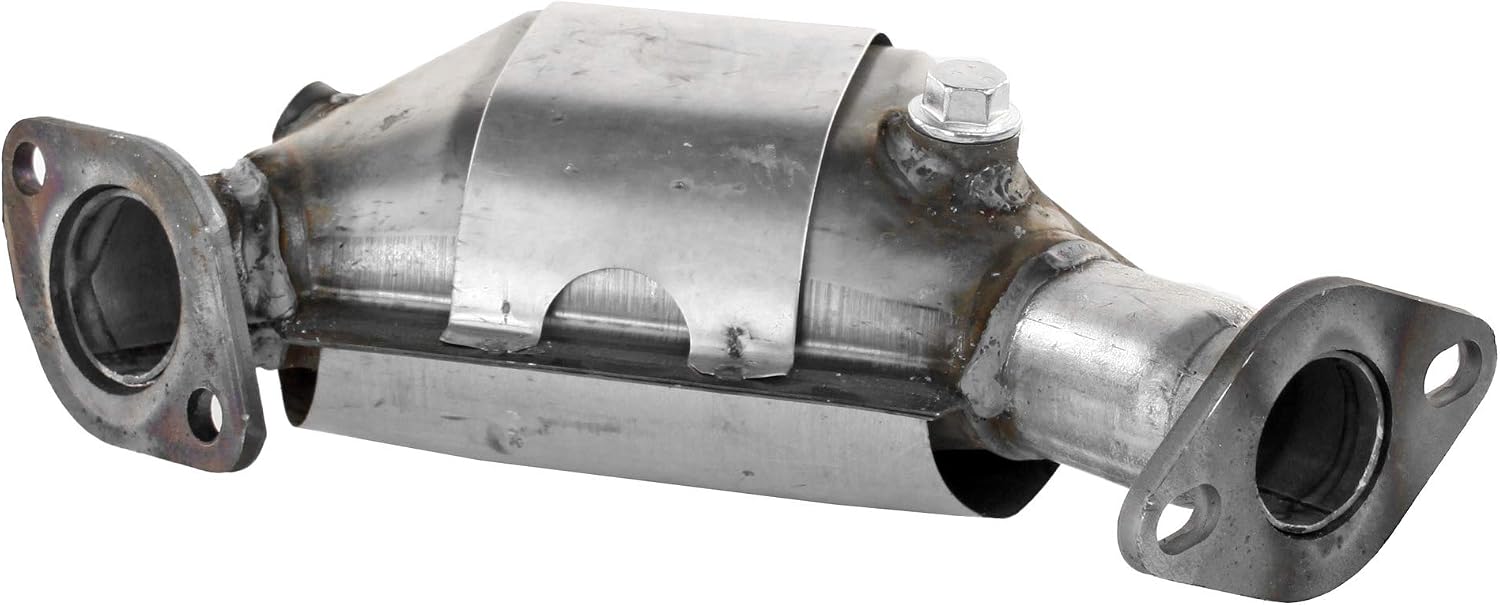
1. Walker Ultra 16089 Direct-Fit Catalytic Converter for Subaru
| Compatible with Vehicle Type | Car |
|---|---|
| Automotive Fit Type | Vehicle Specific Fit |
| Material Type | aluminum coated |
| Manufacturer Warranty Description | 25K Miles |
The Walker Ultra 16089 is a vehicle-specific catalytic converter intended as a bolt-on replacement for compatible Subaru models from the 1990s and early 2000s. It installs with OE-style hangers, flanges, brackets and heat shields so professional installers can swap it in without fabrication or welding. The unit is built with stainless components and an aluminized heat shield where originally equipped, which helps protect underbody components and improve longevity. Walker specifies an OE-style washcoat and a precious metal loading aimed at restoring emissions control on OBDII vehicles, making it useful for bringing older Subarus back into compliance. Practical limitations include the need to confirm exact fitment for your year, engine and trim before buying, and that installation still benefits from professional handling to ensure correct routing and sealing. The converter is positioned for technicians and owners who want a straightforward, durable replacement that focuses on regulatory compliance and dependable service life rather than performance upgrades.
Best for: Buyers who want a dependable, regulatory-compliant replacement for an aging Subaru exhaust system and prefer a direct-fit, professional-install solution that focuses on longevity and correct emissions performance.
Less Ideal for: Enthusiasts seeking a performance-oriented converter or a custom fabricated solution for modified engines should look elsewhere.
- Direct-fit design with OE-style hangers and flanges for straightforward bolt-on installation
- Engineered to meet EPA requirements for OBDII vehicles to restore emissions control
- Stainless construction and aluminized heat shields for corrosion resistance and underbody protection
- Factory-style washcoat and precious metal loading to match emissions reduction needs
- Fitment is vehicle- and trim-specific so buyers must verify exact compatibility before purchase
- Installation may still require a professional to ensure proper sealing and routing
Verdict: A straightforward, EPA-compliant direct-fit replacement that restores emissions control on compatible Subaru models with minimal modification.
2. MagnaFlow Catalytic Converter 49490 — Direct-Fit, EPA-Compliant

| Model | 49490 |
|---|---|
| Exterior | Stainless Steel |
| Manufacturer | MagnaFlow Exhaust Products |
| OEM Part Number | 44139SA010, 44139SA000, 44139FA010, 44139FA161, 44659AA00A, 44139FA160 |
This MagnaFlow catalytic converter is a direct-fit replacement built to match factory flow characteristics while meeting federal emissions standards. It installs using included gaskets and hardware so you can avoid reusing corroded seals, and the mandrel-bent tubing and OEM-sized hangers aim to preserve exhaust geometry and limit added restriction. Construction uses 16-gauge 409 stainless steel with 410 stainless hangers for improved corrosion resistance compared with mild steel converters, and the part is designed from 3D scans to align with original mounting points for a straightforward swap. It is EPA-compliant for federally registered OBDII systems but carries a legal restriction for sale or use in certain states. For someone focused on performance, it maintains near-factory flow and fuel economy rather than increasing exhaust throughput for power gains, so builders expecting a high-flow performance bump may find it conservative. Fitment and emissions compliance make it a practical factory-replacement option that prioritizes durability and legal conformity over aggressive performance tuning.
Best for: Buyers who want a durable, factory-like replacement that preserves engine drivability and emissions compliance while avoiding fitment headaches.
Less Ideal for: Enthusiasts seeking a high-flow or race-oriented catalytic upgrade aimed at extracting noticeable horsepower increases should look to performance-specific units instead.
- Direct-fit design with included gaskets and hardware simplifies installation and reduces leak risk
- Mandrel-bent tubing preserves factory exhaust flow and helps maintain fuel economy
- Stainless steel construction and corrosion-resistant hangers improve long-term durability
- Not designed as a high-flow performance converter so it offers minimal power gains compared with race-oriented units
Verdict: Choose this unit if you need a durable, EPA-compliant direct-fit replacement that preserves factory exhaust flow and simplifies installation.
3. The Exhaust Doctor Direct-Fit Catalytic Converter for 1993–2001 Subaru 2.2L Bank 2

| Brand | The Exhaust Doctor |
|---|---|
| Manufacturer Part Number | TED99148 |
| Applicable Engine | 2.2L Bank 2 |
| Vehicle Years | 1993-2001 |
This direct-fit catalytic converter from The Exhaust Doctor provides a straightforward replacement for the 2.2L Bank 2 exhaust on 1993–2001 Subaru Impreza and related models. It installs like a factory replacement and is intended for owners who need to restore emissions function without modifying the exhaust system. Typical use is bolt-on replacement where the failed converter is removed and this unit is fitted in its place; the direct-fit design reduces the need for custom flanges or welding. The unit brings the practical benefit of getting the vehicle back to emissions compliance and usable drivability at a lower cost than many dealer or high-end aftermarket options. Limitations are that this is a basic replacement part focused on fit and function rather than performance or long-term premium durability features, and it may not match higher-end converters in internal cell construction or precious-metal loadings.
Best for: Buyers seeking an affordable, straightforward factory-style replacement to restore emissions function and pass inspections without custom exhaust work.
Less Ideal for: Drivers wanting upgraded flow, high-performance catalytic technology, or a long-life premium converter should look at higher-end or performance-oriented options.
- Direct-fit design for bolt-on installation with minimal modifications
- Specifically matched to 1993–2001 Subaru 2.2L Bank 2 applications
- Lower-cost replacement compared with dealership parts
- Made by a specialist exhaust brand focused on replacement parts
- No detailed specs on catalyst substrate or metal loadings are provided
Verdict: A budget-friendly direct-fit replacement that gets 1993–2001 Subaru 2.2L Bank 2 vehicles back to emissions compliance with minimal fuss.
4. PHILTOP Stainless Steel Catalytic Converter for Subaru 2.5L (1999–2005)

| Compatible engines | 2.5L Subaru/Saab models (listed years) |
|---|---|
| Material | Stainless steel |
| EPA compliance | EPA compliant (not for sale in some states) |
| Manufacturer | PHILTOP |
This PHILTOP catalytic converter replaces the factory unit on select Subaru Impreza and Forester 2.5L models and is intended as a direct-fit emission component. It is constructed from machined stainless steel and ships with factory-style mounting points, so installation is straightforward for a shop or a competent DIYer using existing hangers and flanges. The item is EPA compliant, which indicates it is designed to pass federal emissions checks outside of states that restrict aftermarket converters. In practice this unit should stop check-engine codes caused by a failed converter and restore catalytic function for smog testing. Notable features include a stainless body for corrosion resistance and a claimed factory-matching fit to reduce modification or welding. Limitations are that EPA compliance prevents sale in California and some other states, and buyers must verify exact part numbers and local regulations before purchasing; fitment is limited to the listed 2.5L Subaru/Saab applications rather than broader model years or engine sizes.
Best for: A buyer who prioritizes a reliable, factory-like replacement to restore emissions performance on a 2.5L Subaru or Saab and wants a low-risk, long-lasting fix that reduces the chance of repeat failures.
Less Ideal for: Anyone who needs a converter certified for use in California or other state-restricted markets or those who require fitment outside the specified 2.5L Subaru/Saab applications should look elsewhere.
- Direct-fit design intended to match factory mounting points for easier installation
- Stainless steel construction for improved corrosion resistance over cheaper materials
- EPA compliant for federal emissions standards in allowed states, designed to help pass smog tests
- Machined exterior and factory-tested fitment reduce need for modification during replacement
- Not legal for sale or installation in California and some other states due to EPA aftermarket rules
Verdict: Choose this PHILTOP converter when you need a durable, factory-style direct replacement to reliably restore emissions performance on the specified 2.5L Subaru/Saab models.
5. PHILTOP High-Flow Catalytic Converter for Subaru 2.5L (1999–2005)
| Compatible engines | 2.5L |
|---|---|
| Vehicle fitment years | 1999-2005 |
| Position | Front, Rear |
| EPA status | EPA compliant |
This PHILTOP catalytic converter replaces the factory unit on select Subaru 2.5L models and is built around a high-flow ceramic honeycomb substrate to reduce backpressure while meeting federal emissions requirements. It is typically used as a direct-fit replacement for a failed or damaged converter; the listing says it includes OE-style gaskets and hardware so most installations can be completed in roughly 3 to 4 hours without modifications. The aluminized stainless body and double-layer ceramic carrier aim to resist corrosion and maintain oxygen storage for smoother catalytic performance, which can help engine breathing and potentially recover some lost fuel efficiency. Because it is EPA-compliant, it is legal for resale in most U.S. states but not for sale or use in certain states with stricter rules. Fitment is vehicle-specific, so confirm fit before buying; the product targets straightforward, no-fabrication swaps rather than custom exhaust builds.
Best for: Buyers who want a straightforward, factory-style replacement that restores emissions function and reduces backpressure without requiring exhaust modifications and who value products with documented fitment and user feedback.
Less Ideal for: Drivers planning custom exhaust work, performance tuning beyond stock expectations, or those who need a California-compliant catalytic converter should look for specialized alternatives.
- Direct-fit design with OE-style gaskets and hardware for bolt-on installation
- High-flow ceramic substrate reduces backpressure to help engine breathing
- Aluminized stainless body improves corrosion resistance for longer service life
- EPA-compliant for federal emissions standards
- Not legal for use or sale in states with stricter aftermarket converter rules
Verdict: Choose this PHILTOP converter if you need a direct-fit, EPA-compliant replacement that restores emissions function while improving flow over a damaged stock unit.
Choosing the Right 1993-2001 Subaru Impreza Catalytic Converter: Key Factors to Consider
Fitment and Flange Compatibility
Proper fitment is the most immediate concern when replacing a catalytic converter on a 1993-2001 Impreza. The converter must match the factory exhaust flange pattern, pipe diameter, and overall length to avoid exhaust leaks or the need for extensive pipe modification. A correct-fit unit reduces installation time and ensures the oxygen sensor positions remain correct for the engine management system.
When a converter does not align with the vehicle's flanges or hanger points you may need adapter pipes or welding, which increases labor time and cost and can introduce potential leak points. Verify the converter's physical dimensions, inlet/outlet pipe sizes, and flange style against the Impreza's exhaust layout before purchase.
Emissions Efficiency and Substrate Type
Catalytic converters use different substrate materials and cell densities that affect how well they convert harmful gases. For the Impreza years in this scope, a converter with an appropriate ceramic or metallic substrate and adequate cell density will provide better conversion of hydrocarbons, CO, and NOx.
Higher cell density can improve conversion efficiency but may raise backpressure. Balance is important: choose a substrate and cell count that provide regulatory-compliant emissions reduction without causing excessive exhaust restriction that could hurt throttle response or fuel economy.
Durability and Corrosion Resistance
Exhaust components face constant heat cycling, road salt, and moisture. The converter housing and weld quality determine how long the unit resists rust and maintains a gas-tight seal. Stainless steel housings and high-quality welds improve longevity on vehicles driven in wet or salted-road environments.
Poor corrosion resistance leads to early exhaust leaks or dropped converters. Consider protective coatings and thicker housings for extended service life, especially if the Impreza is used in regions with harsh winters or coastal salt exposure.
Impact on Engine Backpressure and Performance
A converter's internal design affects exhaust flow. Excessive restriction increases backpressure, which can reduce power output and throttle responsiveness on the Impreza's engine. Conversely, a too-free-flowing converter may not reach optimal temperatures for emissions conversion in normal driving.
Choose a converter engineered to balance flow and conversion efficiency. For daily-driven Imprezas, selecting a unit optimized for street use helps maintain drivability while meeting emissions goals. If your vehicle has modified engine tuning or exhaust upstream, consider how those changes interact with converter flow.
Sensor and Hardware Compatibility
The Impreza's engine control relies on upstream and downstream oxygen sensors to monitor converter performance. A replacement converter should preserve correct sensor mounting locations or supply compatible bungs to avoid triggering check-engine codes. Confirm sensor thread type and placement relative to the factory configuration.
Also inspect whether gaskets, bolts, or hangers are included or are required separately. Ensuring the necessary hardware aligns with the Impreza's underbody layout avoids installation delays and additional parts purchases.
Warranty and Replacement Support
Warranty coverage and manufacturer support matter for catalytic converters because failures can be costly and emissions-related issues can lead to inspection failures. Longer warranties often reflect confidence in materials and manufacturing quality. Review warranty terms for coverage of thermal failure, cracking, and corrosion.
In addition to warranty length, consider the availability of replacement units and customer support. Readily available technical information and clear fitment guides simplify a repair and provide confidence that the part was designed with the 1993-2001 Impreza in mind.
Common Catalytic Converter Symptoms on 1993-2001 Impreza
Identifying a failing catalytic converter on this generation of Impreza usually starts with the check-engine light. Codes related to the converter or oxygen sensors often show up when the converter no longer effectively reduces emissions or when the downstream sensor readings diverge from normal patterns.
Other symptoms include reduced engine power, a noticeable drop in fuel economy, or a rotten-egg sulfur smell from the exhaust. In severe cases the converter can become internally clogged and cause overheating or rattling noises from loose substrate fragments.
- Persistent check-engine light with OBD-II codes related to catalyst efficiency
- Lowered engine responsiveness or hesitation during acceleration
- Sulfur or rotten-egg exhaust odor indicating rich-running or catalyst degradation
- Rattling inside the converter housing when cold or during acceleration
Fitment Tips for Installation
Before beginning a replacement, inspect the existing exhaust layout for flange dimensions, hanger locations, and oxygen sensor placements. On many 1993-2001 Impreza setups, preserving sensor positions avoids the need to extend or relocate wiring harnesses.
If welding is required, clamp-fit the new converter and test alignment before final welding. Use high-temperature gaskets and torque bolts to specification to prevent leaks. Also check the condition of surrounding exhaust components to determine if additional repair is prudent while you have the system apart.
- Measure inlet and outlet pipe diameters and flange bolt patterns
- Confirm oxygen sensor bung locations match factory positions
- Use new gaskets and high-temperature hardware during reassembly
- Consider anti-seize on sensor threads for easier future removal
Emissions Testing and Legal Considerations
Replacement converters for the Impreza should meet applicable emissions requirements for the vehicle's model years. In many regions, a direct-fit unit designed to match factory conversion capacity will help the vehicle pass inspection. Keep documentation on hand showing the unit's emissions specifications if testing authorities request it.
Be cautious about using modified or universal converters that alter catalyst capacity or sensor placement, as these can lead to failed inspections or persistent diagnostic trouble codes. Always verify local regulations to ensure the chosen converter is compliant for a 1993-2001 Subaru Impreza.
- Confirm the converter's emissions performance matches required standards
- Retain product documentation for emissions inspections
- Avoid modifications that move sensor positions or reduce catalyst volume
When to Repair Versus Replace
Minor external damage or surface rust on a converter housing may be repairable with rust treatment and new gaskets if the internal substrate is intact. However, internal clogging, separated substrates, or significant thermal cracking usually require full replacement to restore emissions performance and avoid further engine issues.
If diagnostic codes point to marginal catalyst efficiency rather than a complete failure, inspect upstream components such as oxygen sensors, fuel trim, and ignition systems. Addressing those root causes can sometimes prevent premature converter failure and extend the life of a replacement unit.
- Repair small external leaks only when the substrate is undamaged
- Replace when there is internal damage, rattling, or severe clogging
- Check upstream engine systems to rule out causes of premature converter wear
Basic DIY Replacement Steps
Replacing a catalytic converter on this Impreza generation typically involves supporting the vehicle, removing the downstream and upstream oxygen sensors, unbolting the flanges or cutting the old section from the pipe, fitting the new converter, and reattaching sensors and hangers. Use safety gear and follow torque specs for flange bolts.
If you are not comfortable welding or cutting exhaust pipe, a professional installation avoids leaks and alignment issues. Keep spare gaskets and new bolts on hand because old hardware often corrodes and cannot be reused.
- Raise and support the vehicle safely before working under it
- Disconnect oxygen sensors first to prevent damage
- Replace gaskets and hardware when installing the new converter
- Test for leaks after installation and re-tighten bolts if necessary
Still looking for the perfect fit?
Select your Subaru Impreza configuration to see the most relevant Catalytic Converters recommendations
How We Chose the Best 1993-2001 Subaru Impreza Catalytic Converter
We shortlisted catalytic converters that specifically address fitment and performance needs for the 1993-2001 Subaru Impreza. Our selection process prioritized components designed to meet emissions standards for that model years range and to fit the common exhaust layouts used across those Impreza years.Evaluation criteria included substrate type and cell density for emissions conversion efficiency, measured or reported fitment compatibility with Impreza exhaust flanges and pipe diameters, corrosion resistance of the housing and welds for long-term service life, and thermal durability to withstand typical Subaru exhaust temperatures. We also considered materials and construction that affect backpressure, since excessive restriction can hurt drivability, and assessed ease of installation and availability of replacement gaskets or hardware.We excluded units that required extensive custom exhaust modification or that lacked clear fitment documentation for the 1993-2001 Impreza. We also filtered out converters with poor corrosion protection or unclear substrate specifications. The final list balances legal emissions performance, practical fitment, and durability for everyday use on this vehicle.
Our full evaluation process is outlined in our review methodology.
FAQ
What OBD-II codes typically indicate converter problems on a 1993-2001 Impreza?
Codes that mention catalyst efficiency or O2 sensor circuit discrepancies often point to converter issues. Commonly they indicate the downstream oxygen sensor is not matching upstream readings, suggesting reduced conversion performance or sensor contamination.
Can a clogged catalytic converter cause my Impreza to lose power?
Yes, a severely clogged converter raises exhaust backpressure and can reduce engine responsiveness and top-end power. If the vehicle feels sluggish and other engine systems check out, the converter is a suspect.
Should I replace oxygen sensors when I replace the catalytic converter?
Often it is a good idea to inspect and consider replacing oxygen sensors if they show age or poor response. Faulty sensors can cause incorrect fuel trimming that stresses the converter and may lead to premature failure.
Will a replacement converter fix a check-engine light immediately?
It can, but sometimes the ECU needs time or a drive cycle to clear the stored code. If the check-engine light persists after replacement, further diagnostics may be required to confirm sensor readings and engine performance.
How long should a properly installed converter last on an Impreza?
A well-made converter with good corrosion protection and correct installation can last many years. Longevity depends on driving conditions, exposure to road salt, and whether upstream engine issues accelerate wear.
Can I use a universal converter and make it fit my 1993-2001 Impreza?
Universal converters can be adapted, but they often require cutting, welding, or added adapters. That increases labor and the risk of leaks or improper sensor placement, so a direct-fit unit is usually preferable for this Impreza range.
Final Verdict
When replacing a catalytic converter on a 1993-2001 Subaru Impreza, prioritize correct fitment, verified emissions conversion capacity, and durable construction. Balancing substrate efficiency with acceptable exhaust flow preserves drivability while restoring emissions performance.Address any upstream engine issues before installing a new converter, and choose a unit that maintains oxygen sensor positions to avoid diagnostic trouble codes. With attention to fitment and materials, you can resolve emissions faults and regain reliable operation with confidence.
Explore More:
- Check out all Subaru Impreza parts & accessories
- Explore Catalytic Converters Maintenance & Repair Guides
- Explore Exhaust & Emissions
- Browse all Auto Parts
