

Note: This article contains affiliate links. If you click on these links and make a purchase, I may earn a small commission at no extra cost to you. This helps support my research and content. Read my full affiliate disclosure here.
If your Subaru Impreza WRX is showing poorer throttle response, reduced fuel economy, or a persistent check engine light, the catalytic converter can be a common culprit. Choosing the right Subaru Impreza WRX catalytic converter matters because it affects emissions compliance, engine performance, and long-term durability under boost and higher exhaust temperatures.This guide shortlists six strong options for the Impreza WRX and explains the practical factors you should weigh, from fitment and emissions effectiveness to backpressure and material robustness. Read on for a concise evaluation framework to help you pick the best replacement for your WRX and a clear transition into the detailed product list.
Looking for other parts? See all Subaru Impreza parts & accessories.
Top Picks at a Glance
| Best Overall The best all-around choice for most situations | MagnaFlow Catalytic Converter 21-822 — Direct-Fit, EPA Compliant |  |
| Best Quality Built to a higher standard if you want something more solid | Excel Exhaust EPA-Compliant Catalytic Converter for Subaru Impreza WRX 2.5L Turbo (Front) |  |
| Best Budget The cheapest option that still gets the job done reliably | Excel Exhaust Catalytic Converter Replacement for Subaru WRX STI 2015–2016 2.5L Turbo |  |
| Highest Rated A top-rated pick with lots of positive feedback | K&E Exhaust Direct Fit Front Catalytic Converter 49119A-PC-C |  |
| Most Popular A crowd favorite that many people choose with confidence | GELUOXI Catalytic Converter Replacement for Subaru WRX 2.0L / Forester XT 2.0L |  |
| Best Seller A high-volume bestseller chosen again and again | Sechune Catalytic Converter Compatible with 2015–2021 Subaru WRX 2.0L and 2014–2018 Forester 2.0XT |  |
1. MagnaFlow Catalytic Converter 21-822 — Direct-Fit, EPA Compliant

| Model Name | MagnaFlow Catalytic Converter 21-822 |
|---|---|
| Material | 16 gauge 409 stainless steel tubing |
| Compliance | EPA compliant |
| Included Components | Gaskets and hardware |
This MagnaFlow catalytic converter is a direct-fit replacement built to replicate factory exhaust flow while providing durable corrosion resistance. It uses mandrel-bent 16-gauge 409 stainless steel tubing to preserve OEM-like geometry for smooth exhaust flow and consistent engine performance. The unit is sold as an EPA-compliant assembly intended to simplify installation by including the necessary gaskets and hardware. In practice this means you get a near drop-in replacement that helps maintain factory fuel economy and emissions behavior without custom fabrication. The construction favors longevity in typical road conditions, though the part is not legal for sale in certain states with stricter emission rules. Buyers should also confirm vehicle-year fitment before ordering since this is targeted at specific Subaru 2.0L models. For drivers seeking a balanced, factory-quality replacement that prioritizes fit, emissions compliance, and corrosion resistance, this unit is a practical choice.
Best for: Drivers who want a balanced, factory-quality replacement that maintains stock performance and emissions without needing custom exhaust work.
Less Ideal for: People in states with stricter emissions regulations or those looking for high-performance, race-oriented converters should consider alternatives.
- Direct-fit design preserves factory exhaust geometry for straightforward installation
- EPA-compliant for legal highway use in permitted states
- 16-gauge 409 stainless steel tubing offers strong corrosion resistance
- Includes gaskets and hardware needed to install
- Not legal for use or sale in California, Colorado, or New York
Verdict: Choose this MagnaFlow direct-fit catalytic converter when you want a factory-like, durable replacement that preserves stock performance and emissions compliance for Subaru 2.0L models.
2. Excel Exhaust EPA-Compliant Catalytic Converter for Subaru Impreza WRX 2.5L Turbo (Front)

| Brand | Excel Exhaust System |
|---|---|
| Model | Subaru Impreza WRX 2.5L Turbo |
| Manufacturer Part Number | SUBARU-006 |
| Position | Front |
This Excel Exhaust catalytic converter is a direct-fit front replacement built to restore emissions control and compatible performance on the Subaru Impreza WRX 2.5L Turbo. It installs in place of the factory unit and is intended to integrate with the existing exhaust and O2 sensors, so it is typically used during repairs after a failed or clogged converter or when replacing a damaged unit. The product is marketed as EPA compliant and engineered for fit and function, which helps preserve engine management and keeps the vehicle within emissions requirements. Installation follows standard converter replacement steps and can be handled by a competent DIYer with jack stands and basic tools, though professional installation avoids alignment or leak issues. The converter supports routine driving by maintaining exhaust flow similar to factory levels, but it does not advertise higher flow or performance gains for tuned engines. Buyers seeking a straightforward, emissions-legal replacement will appreciate the focus on compatibility while those wanting measurable power or sound upgrades should look at performance-specific models instead.
Best for: Owners focused on restoring proper emissions control and factory-like exhaust flow on a WRX 2.5L Turbo who want a straightforward, compliant replacement that fits without major modifications.
Less Ideal for: Drivers building a performance exhaust or seeking measurable horsepower gains or a louder exhaust note should choose a performance-oriented converter or custom exhaust solution instead.
- Direct-fit design for Subaru Impreza WRX 2.5L Turbo front position to simplify installation
- EPA-compliant construction preserves emissions legality
- Engineered for fit and function to work with factory O2 sensors and exhaust routing
- Clear installation guidance supports DIY replacement when paired with basic tools
- Not marketed as a high-flow or performance-tuned converter for increased power
- Limited to the front position and specific WRX 2.5L Turbo fitment
Verdict: A factory‑style, EPA‑compliant front converter that gets your WRX 2.5L Turbo back to proper emissions and reliable drivability without modification.
3. Excel Exhaust Catalytic Converter Replacement for Subaru WRX STI 2015–2016 2.5L Turbo

| Manufacturer | Excel Exhaust |
|---|---|
| Manufacturer Part Number | SRCZ004-10 |
| Exterior | Polished |
| Vehicle Fit | Subaru WRX STI 2015-2016 2.5L Turbo |
This Excel Exhaust catalytic converter is a direct-fit replacement designed to swap into the 2015–2016 Subaru WRX STI 2.5L turbo exhaust where non-CARB parts are permitted. It installs like a standard factory-style converter: raise the car, remove O2 sensors and fasteners, unbolt the old unit and torque the new one to spec. The product emphasizes reliable fit and function and aims to reinstate proper backpressure and catalytic action to keep the engine running smoothly. Practical benefits include straightforward installation for a mechanically inclined DIYer or a quick shop job and a polished exterior that resists surface corrosion. Important limitations are its non-CARB status, so it cannot be used in California or New York and will fail emissions inspections there, and the listing provides limited detail on internal substrate or precious-metal loading compared with higher-end, certified units. Expect a cost-focused replacement that restores basic catalytic function but does not substitute for a certified emissions-compliant part in regulated states.
Best for: Buyers seeking an affordable, no-frills replacement to restore exhaust function on a 2015–2016 WRX STI who prioritize a budget-conscious repair over emissions certification.
Less Ideal for: Drivers who must pass strict state emissions testing or who want a high-end, certified converter with documented catalytic substrate details should look at compliant, higher-spec options.
- Direct-fit design for Subaru WRX STI 2015–2016 2.5L turbo for straightforward replacement
- Polished exterior finish for improved resistance to surface corrosion
- Instructions and installation approach align with typical shop or competent DIY procedures
- Not CARB compliant and illegal for use in California and New York
- Limited specification details about internal substrate or precious-metal content
Verdict: A cost-focused, direct-fit replacement that gets a 2015–2016 WRX STI back on the road quickly when CARB compliance is not required.
4. K&E Exhaust Direct Fit Front Catalytic Converter 49119A-PC-C
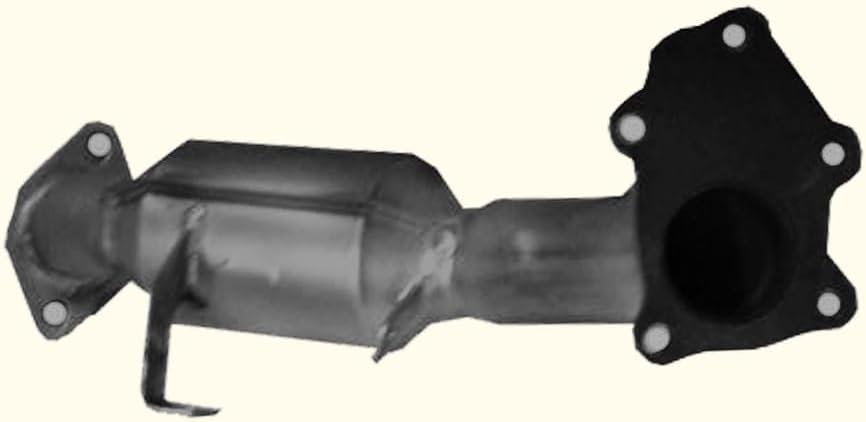
| Installation Type | Bolt-On |
|---|---|
| Included Components | Bolts, Gasket |
| Item Type Name | Exhaust Catalytic Converter |
This direct-fit front catalytic converter is designed as a factory-style replacement for Subaru 2.5L turbo applications and installs with a bolt-on procedure using the supplied bolts and gasket. It is intended to restore emission control function rather than increase performance, offering a straightforward swap that matches factory fit and routing. The unit ships with necessary hardware for installation, and the round shape and advertised OEM-style construction suggest it will integrate with existing exhaust flanges and hangers. Because it is a replacement part built for reliability, drivers can expect routine daily driving emissions compliance and serviceability without custom fabrication. Limitations are that it is not for sale in some states with stricter emissions rules and it is not positioned as a high-flow performance piece, so tuners seeking power gains should look elsewhere.
Best for: Buyers who prioritize a reliable, factory-style replacement to restore emission control and serviceability on Subaru 2.5L turbo vehicles without modification.
Less Ideal for: Those seeking emissions-legal options for restricted states or shoppers wanting a performance-oriented high-flow converter.
- Direct-fit bolt-on design intended to match factory routing for easier installation
- Includes bolts and gasket so needed hardware is provided
- Marketed as OEM-style construction aimed at restoring factory emission function
- Simple round shape compatible with standard exhaust flange connections
- Not legal for sale in states with stricter emissions regulations
- Not engineered as a high-flow or performance catalytic converter
Verdict: Choose this direct-fit OEM-style front catalytic converter when you need a straightforward, reliable replacement to restore factory emission function on a Subaru 2.5L turbo.
5. GELUOXI Catalytic Converter Replacement for Subaru WRX 2.0L / Forester XT 2.0L

| Manufacturer | GELUOXI |
|---|---|
| Model | Catalytic Converter |
| Applicable vehicles | Subaru WRX 2.0L 2015–2021; Forester XT 2.0L 2014–2018 |
| Manufacturer Part Number | 44612‑AA770, 44612‑AA771 |
This GELUOXI catalytic converter is sold as a direct replacement for Subaru part numbers 44612‑AA770 and 44612‑AA771, intended for the 2.0L WRX (2015–2021) and Forester XT (2014–2018). It is designed to bolt into the factory exhaust path and restore catalytic function after the original unit fails. The listing highlights polished exterior construction and claims corrosion resistance and durable materials, which should help with longevity in everyday driving. Practical benefits include fitment targeted to the listed Subaru models and a seller-provided six-month support window for early issues. Important limitations are regulatory: the unit is not available for sale in California, Colorado, New York, or Maine because it is not the three-way emissions-certified version required in those states, so it is only suitable where federal-standard converters are permitted. Buyers should also verify the OEM part number and vehicle fitment diagrams before purchase since aftermarket geometry and sensor locations can vary between mid‑generation trims.
Best for: Buyers who want a like-for-like replacement that matches Subaru part numbers and prefer checking peer feedback and seller support before committing.
Less Ideal for: Drivers in states with stricter emissions rules or anyone who needs a CARB-compliant three-way catalytic converter should look for a certified unit instead.
- Direct-fit replacement matching Subaru part numbers 44612‑AA770/44612‑AA771 for listed models
- Polished exterior and corrosion-resistant construction intended for long-term use
- Targeted compatibility for WRX 2.0L (2015–2021) and Forester XT 2.0L (2014–2018) simplifies selection
- Seller offers a six-month support period to address early issues
- Not certified for sale in California, Colorado, New York, or Maine due to emissions requirements
Verdict: Choose this unit if you need a direct-fit Subaru part-number replacement and you operate outside states that require CARB-certified converters.
6. Sechune Catalytic Converter Compatible with 2015–2021 Subaru WRX 2.0L and 2014–2018 Forester 2.0XT

| Manufacturer | Sechune |
|---|---|
| Exterior | Stainless Steel |
| Manufacturer Part Number | 44612AA770 |
| EPA compliance | EPA-compliant (not CARB-compliant) |
This Sechune catalytic converter is a direct-fit replacement intended for the front section on 2015–2021 Subaru WRX 2.0L and 2014–2018 Forester 2.0XT models. It is made from stainless steel with an extended catalyst chamber that the manufacturer says improves conversion efficiency and longevity. Installation is the same basic process as swapping a factory front converter and should fit without modification on the listed vehicles, making it suitable for routine exhaust repairs or restoring emissions performance after a failed unit. Notable practical benefits include factory-style fitment that reduces installation hassles and a rugged build that resists corrosion. Important limitations to be aware of are that the unit is EPA-compliant but not CARB-compliant, so it cannot be sold or installed in states that require California standards, and compatibility is limited to the specific Subaru years listed. The seller offers a one-year warranty which provides basic post-purchase protection for mainstream buyers seeking a straightforward replacement.
Best for: Buyers who want a straightforward, factory-style replacement to restore emissions function on the specified Subaru WRX or Forester without custom fitting and prefer a corrosion-resistant stainless steel unit.
Less Ideal for: Drivers in states that require California emissions certification or those seeking a CARB-compliant or performance-oriented catalytic solution.
- Direct-fit design for the listed Subaru WRX 2.0L and Forester 2.0XT years reduces installation complexity
- Stainless steel exterior offers improved corrosion resistance over mild steel units
- Extended catalyst chamber aimed at better conversion efficiency for emissions control
- One-year warranty provides basic coverage after purchase
- Not CARB-compliant so it cannot be used in states that require California emissions certification
Verdict: Choose this direct-fit stainless steel converter if you need a reliable, factory-style replacement for the specified Subaru WRX or Forester and do not require CARB certification.
Choosing the Right Subaru Impreza WRX Catalytic Converter: Key Factors to Consider
Fitment and Mounting Compatibility
Exact fitment matters because the WRX has specific exhaust flanges, oxygen sensor locations, and underbody clearances. A converter that lines up with the factory flange pattern and sensor ports reduces installation time and avoids exhaust leaks. Differences in inlet/outlet diameter or offset can change backpressure and may require adapters, which introduce leak points and can affect emissions readings.
When evaluating fitment, confirm whether the replacement uses the factory sensor bungs and whether it matches the vehicle's original inlet and outlet diameters. Also check mounting tab locations and the overall length to ensure the converter clears suspension components and heat-sensitive parts under the car. Choosing a converter made specifically for the Impreza WRX minimizes the chances of fitment-related headaches and preserves proper exhaust flow characteristics.
Emissions Performance and Substrate Type
Catalytic converters differ by substrate material and washcoat formulation, which dictate how effectively they convert hydrocarbons, carbon monoxide, and nitrogen oxides. For the Impreza WRX, you want a substrate and washcoat tuned for gasoline engines with the typical combustion profile of a turbocharged four-cylinder. Higher cell-density substrates can be more active but also raise backpressure if not designed correctly.
Look for converters that state compliance with applicable emissions standards and that use substrate types suitable for high-temperature operation. The right substrate helps the WRX maintain clean exhaust emissions, reduces the chances of failed emissions tests, and works reliably with the vehicle's oxygen sensor strategy.
Backpressure and Engine Performance
Excessive backpressure can reduce throttle response and peak power, which is especially noticeable on a turbocharged Impreza WRX. Converter internal geometry and substrate density influence exhaust flow resistance. A balance is required: enough catalytic surface area for emissions control but not so much restriction that it creates performance loss or turbo lag.
Consider the converter's claimed flow characteristics and whether the design is intended for stock or modified WRX engines. For lightly modified cars you may prefer a converter engineered to keep backpressure low while maintaining catalytic efficiency. For heavily modified engines with higher exhaust temperatures and flow rates, choose a unit rated to handle the increased demands without degrading.
Thermal Durability and Heat Management
WRX engines, especially those driven aggressively, expose exhaust components to high temperatures. The catalytic converter must withstand thermal cycling without substrate breakdown or washcoat deterioration. Look for robust shells, good welds, and materials selected to resist thermal fatigue.
Heat management details such as heat shields, insulation, and substrate design influence long-term reliability. A converter that resists thermal cracking and maintains surface activity will last longer and keep emissions levels low over time. For WRX owners in hilly or towing conditions, prioritize thermal durability to avoid premature failure.
Corrosion Resistance and Build Quality
Road salt, moisture, and road debris can accelerate corrosion under the vehicle. The shell material, plating, and weld quality determine how well the converter resists rust and maintains structural integrity. Stainless steel shells and corrosion-resistant coatings extend service life, while thin shells or poor welds can lead to early failure.
Inspect construction notes such as shell thickness, flange material, and protective finishes when choosing a converter for the Impreza WRX. A higher-quality build reduces the chance of exhaust leaks and extends time between replacements, which is important for owners in climates with harsh winters or coastal salt exposure.
Serviceability and Installation Ease
Ease of installation saves time and reduces labor costs. For the WRX, converters that match factory oxygen sensor locations, include gaskets or hardware, and use OEM-style flanges simplify fitting. Units that require cutting, welding, or custom adapters add complexity and can introduce fitment risks.
Consider whether the converter allows reuse of existing hangers and whether it fits within the available workspace under the Impreza WRX. Service-friendly features such as access to the sensor boss and modular design can make future maintenance easier and reduce the time your car is off the road.
Common Catalytic Converter Symptoms on an Impreza WRX
Understanding symptoms helps diagnose whether the catalytic converter is the likely cause of an issue. Typical signs include a persistent check engine light with codes related to oxygen sensor readings or catalyst efficiency, noticeable loss of power under load, and a rotten-egg or sulfur-like smell from the exhaust. Some drivers also report higher fuel consumption or rough idle when the converter is clogged or failing.
Symptoms can overlap with other exhaust or engine issues, so use these signals as a starting point rather than a definitive diagnosis. In many cases a diagnostic scan and a physical inspection for rattles or damage give a clearer picture before replacing the converter.
- Check engine light with O2 or catalyst efficiency codes
- Loss of power, especially under boost
- Sulfur or rotten-egg exhaust odor
- Rattling from the converter indicating substrate damage
- Reduced fuel economy or rough idle
Diagnostic Steps Before Replacing the Converter
Run a full scan of the vehicle to capture stored and pending codes, focusing on oxygen sensor readings and catalyst efficiency monitors. Compare upstream and downstream O2 sensor voltages during various engine loads; a converter that is functioning typically causes the downstream sensor to show a more stable, lower-amplitude signal.
Physically inspect the converter for external damage, dents, or signs of impact. A rattling noise with engine revs often indicates a broken substrate. Also check for exhaust leaks at flanges and gaskets, as leaks can mimic converter failure symptoms and trigger false catalyst-related codes.
- Use a code scanner to review O2 and catalyst-related fault codes
- Compare upstream and downstream oxygen sensor signals
- Visually inspect for dents, corrosion, and rattling
- Check flange and gasket seals for exhaust leaks
Installation Considerations for the WRX Exhaust Layout
The Impreza WRX has limited underbody space in some model years, so measure clearance and hanger positions before purchasing. Some replacement converters are heavier or longer than the factory unit, which can alter hanger alignment and stress mounts. Confirm that included hardware matches the WRX flange pattern and that sensor bungs are in the correct locations.
If cutting or welding is required, plan for quality welds and corrosion protection afterward. For owners who prefer bolt-on replacements, choose converters that state direct fitment for the WRX to avoid additional fabrication.
- Measure underbody clearance and hanger alignment
- Confirm oxygen sensor bung positions match the factory
- Prefer direct-fit units to minimize cutting or welding
- Plan corrosion protection for any new welds
Compliance and Emissions Testing for WRX Owners
If you live in a region with periodic emissions testing, choose a converter that states the required compliance level. Passing an emissions test depends on catalyst efficiency at the time of inspection; a properly functioning converter reduces hydrocarbons, carbon monoxide, and NOx to acceptable levels. Be aware that removing or bypassing emission components can fail inspections and may be restricted by local regulations.
Some replacements advertise match to original equipment emissions performance. Verify documentation and local requirements before selecting a unit to ensure the Impreza WRX remains compliant with test procedures in your area.
- Confirm the converter meets local emissions requirements
- Avoid modifications that bypass emissions controls
- Keep documentation of compliance where required
- Understand how oxygen sensor readings impact test results
Maintaining Your Catalytic Converter to Extend Service Life
Regular engine maintenance helps protect the converter. Issues like misfires, rich running, or oil and coolant leaks can contaminate the catalyst and accelerate failure. Address ignition and fueling problems promptly to avoid depositing unburned fuel or contaminants on the substrate.
Use recommended engine oil, fix leaks quickly, and replace faulty oxygen sensors as they arise. Proper maintenance reduces the chance of premature catalytic converter failure and keeps emissions low for longer.
- Repair misfires and fueling issues promptly
- Replace failing oxygen sensors to prevent catalyst stress
- Avoid prolonged driving with engine issues that produce contaminants
- Inspect the exhaust system periodically for damage and corrosion
Still looking for the perfect fit?
Select your Subaru Impreza configuration to see the most relevant Catalytic Converters recommendations
How We Chose the Best Subaru Impreza WRX Catalytic Converter
We selected candidates for this list based on a combination of technical fitment, emissions control effectiveness, and durability under the operating conditions typical of the Subaru Impreza WRX. Primary evaluation criteria included exact fitment to WRX exhaust flanges and mounting points, converter substrate type and washcoat quality for emissions performance, and internal design to balance catalytic activity with acceptable backpressure.We also assessed thermal resilience and corrosion protection, since WRX engines often run at higher exhaust temperatures and are exposed to road salt in certain regions. Durability factors included shell thickness, weld quality, and protective finishes. Serviceability and installation considerations were examined, such as included gaskets, OEM-style flanges, and ease of access for typical WRX exhaust layouts.Excluded items were any parts that did not provide explicit fitment for the Subaru Impreza WRX or that required manifold replacement unless explicitly intended for that configuration. We prioritized converters designed to meet emissions performance and long-term reliability for WRX owners, while filtering out universal-fit options that would need extensive modification.
Our full evaluation process is outlined in our review methodology.
FAQ
Can a failing catalytic converter cause a check engine light on my WRX?
Yes. A failing converter often triggers O2 sensor or catalyst efficiency codes that illuminate the check engine light. However, similar codes can be caused by sensor faults or exhaust leaks, so diagnosis should confirm the converter is the root cause.
How long does a catalytic converter typically last on a Subaru Impreza WRX?
Lifespan varies with driving style, climate, and maintenance. With normal driving and proper engine care, a converter can last many years, but thermal stress, contamination from misfires, or corrosion can shorten its service life.
Will a direct-fit converter affect my WRX performance?
A properly designed direct-fit converter aims to match the factory balance of emissions control and backpressure. If the unit is engineered for the WRX, performance changes should be minimal. Excessive restriction, however, can reduce power and throttle response.
Is it necessary to replace oxygen sensors when installing a new converter?
Not always, but testing the sensors is recommended. Faulty or sluggish oxygen sensors can cause poor engine management and may damage a new converter. If sensors are old or showing abnormal readings, replace them when installing the converter.
How can I tell if my converter is clogged or physically damaged?
Common signs include rattling noises from the converter, a strong sulfur smell, reduced power under load, and diagnostic codes. A visual inspection and sensor voltage comparison during engine operation can help verify clogging or substrate damage.
Do I need a special tool to install a WRX catalytic converter?
Basic installation usually requires common hand tools, a jack and stands, and possibly penetrating oil for rusty bolts. If welding or cutting is needed for a non-direct-fit unit, additional tools and welding expertise will be required.
Final Verdict
When replacing a catalytic converter on a Subaru Impreza WRX, prioritize exact fitment, emissions effectiveness, and a design that manages backpressure without sacrificing performance. Consider thermal durability and corrosion resistance to ensure long-term reliability under the higher exhaust temperatures common to WRX driving.Balance your goals: choose a direct-fit unit if you want straightforward installation and factory-like exhaust behavior, or select a more robust design if you frequently push the car hard or live in corrosive environments. Focus on the criteria discussed here to pick a converter that keeps emissions in check and preserves the driving character of your WRX.
Explore More:
- Check out all Subaru Impreza parts & accessories
- Explore Catalytic Converters Maintenance & Repair Guides
- Explore Exhaust & Emissions
- Browse all Auto Parts
