

Note: This article contains affiliate links. If you click on these links and make a purchase, I may earn a small commission at no extra cost to you. This helps support my research and content. Read my full affiliate disclosure here.
If you own a 2012-2016 Subaru Impreza, a failing catalytic converter can affect emissions, fuel economy, and engine behavior. Choosing the right replacement matters because an improper or poorly performing unit can trigger the check engine light, reduce scavenging efficiency, or cause fitment headaches during installation.This guide covers six shortlisted catalytic converters that suit the 2012-2016 Impreza. We focus on fitment, emissions and durability criteria, and installation considerations specific to this generation so you can decide which option best restores compliance and drivability. Read on for the factors we weighed and practical guidance for replacement and troubleshooting.
Looking for other parts? See all Subaru Impreza parts & accessories.
Top Picks at a Glance
| Best Overall The best all-around choice for most situations | PHILTOP High Flow Catalytic Converter for 2012–2016 Subaru Impreza/Forester/Outback/Crosstrek |  |
| Best Quality Built to a higher standard if you want something more solid | AISIN Front Catalytic Converter (EPA Compliant) — Compatible with 2012–2016 Subaru Impreza H4 2.0L/2.5L |  |
| Best Value The sweet spot between price and what you get | Anytek Catalytic Converter — Direct-Fit for Subaru 2.0L / 2.5L |  |
| Best Budget The cheapest option that still gets the job done reliably | ACZCR Rear Catalytic Converter 55673 (EPA Compliant) for Subaru Impreza/Crosstrek/Forester |  |
| Highest Rated A top-rated pick with lots of positive feedback | SPEEDFusion High-Flow Catalytic Converter (EPA Compliant) |  |
| Most Popular A crowd favorite that many people choose with confidence | ECHO AUTOMILES Catalytic Converter for Subaru Forester/Impreza/Outback/Legacy 2.5L (EPA Compliant) |  |
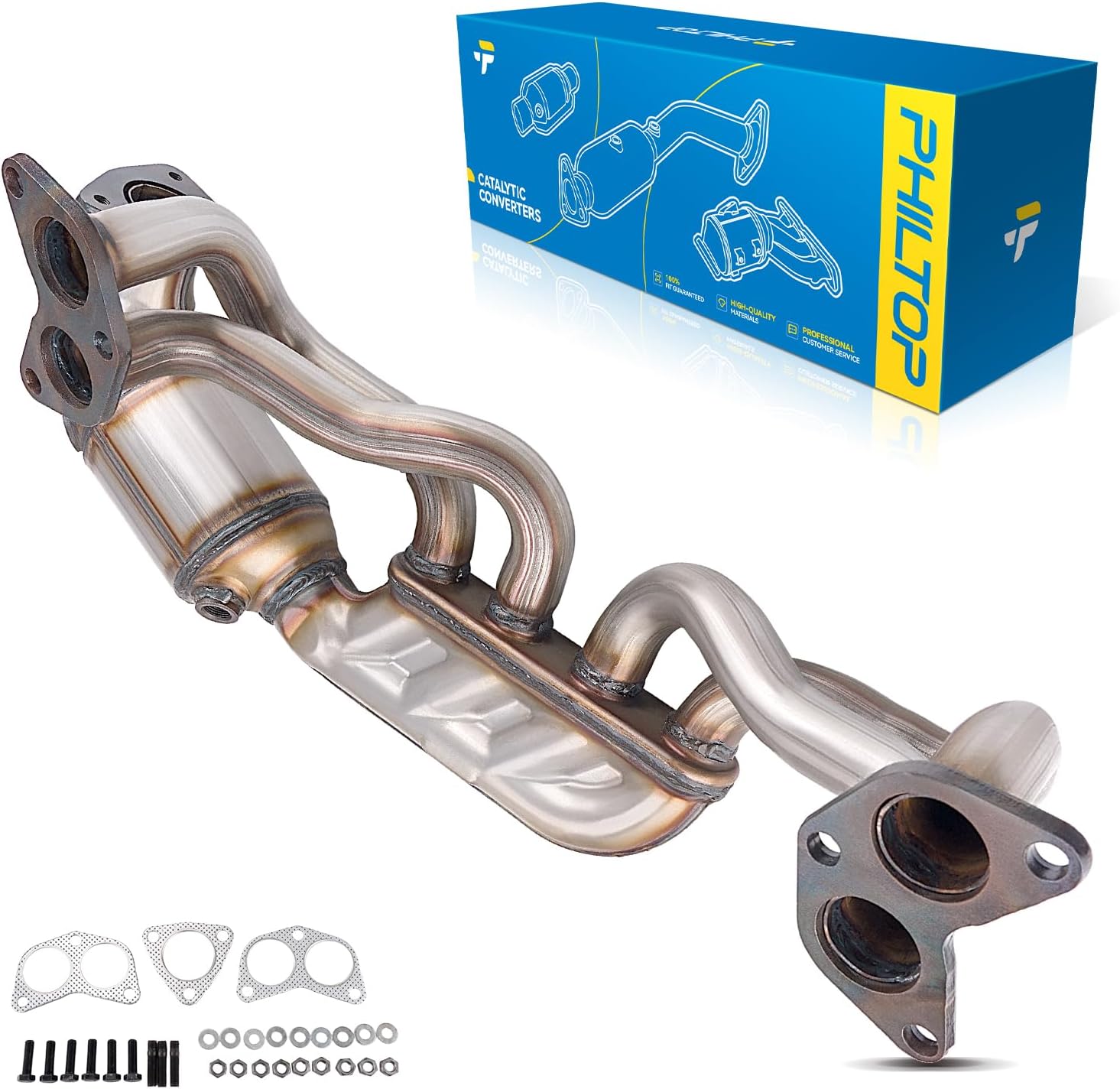
1. PHILTOP High Flow Catalytic Converter for 2012–2016 Subaru Impreza/Forester/Outback/Crosstrek
| Vehicle fitment | Select 2012–2016 Subaru 2.0L and 2.5L models |
|---|---|
| Position | Front |
| Manufacturer | PHILTOP |
| EPA status | EPA Compliant |
This PHILTOP catalytic converter is a direct-fit replacement aimed at restoring emissions control and maintaining engine performance on compatible Subaru 2012–2016 2.0L and 2.5L applications. It uses a stainless/aluminized steel housing and a double-layer high temperature ceramic carrier to increase flow area and oxygen storage capacity, which can help preserve fuel economy and reduce backpressure compared with a clogged unit. The kit includes gaskets and hardware for a bolt-on installation with no cutting or fabrication required. It is EPA compliant for federal emissions standards, making it suitable for vehicles outside states with more restrictive rules. Practical limits: EPA compliance means it is not legal for sale or installation in California and some other states, and buyers should verify local regulations. As with any aftermarket converter, fit and finish can vary from factory parts so careful inspection at install is advisable.
Best for: Buyers who want a reliable, bolt-on replacement that balances emissions compliance, improved flow, and straightforward installation for mid-2010s Subaru 2.0L and 2.5L vehicles.
Less Ideal for: Drivers in states with stricter aftermarket emissions laws or anyone who needs a state-specific certified converter should look for locally approved options or dealer-sourced parts.
- Direct-fit design with included gaskets and hardware for straightforward installation
- Stainless/aluminized steel construction resists rust and extends service life
- Double-layer ceramic carrier increases flow and oxygen storage to help reduce backpressure and support fuel economy
- EPA compliant for federal aftermarket use
- Not legal for sale or installation in California and other states with stricter aftermarket converter rules
Verdict: If you need a practical, bolt-on replacement that restores emissions control while improving flow for 2012–2016 Subaru 2.0L and 2.5L models, this PHILTOP converter is a strong balanced choice.
2. AISIN Front Catalytic Converter (EPA Compliant) — Compatible with 2012–2016 Subaru Impreza H4 2.0L/2.5L

| Position | Front |
|---|---|
| E.P.A. Compliant | Yes |
| Body Material | Stainless Steel |
| Substrate Material | Ceramic |
| O2 Sensor Ports | 2 |
This Aisin front catalytic converter is a direct-fit aftermarket replacement intended to restore proper emissions function, exhaust flow, and throttle response on compatible Subaru Impreza H4 2.0L and 2.5L engines. It installs at the front exhaust position and includes two O2 sensor ports so factory sensor wiring and diagnostics remain usable. Built with a stainless steel body and ceramic substrate and labeled EPA-compliant, it aims to meet emissions requirements for federal-spec vehicles while helping reduce buildup that can blunt performance over time. Installation accessories are included which simplifies swapping it into the factory exhaust path. The practical benefit for a performance-minded buyer is returning factory-level catalytic efficiency and steady flow without the unknowns of cheap universal units. Note that it is designed as an emissions control replacement rather than a high-flow performance race part, and its compliance with E.P.A. standards means it is not intended to significantly increase peak power compared with stock components.
Best for: Drivers who want a reliable, factory-quality replacement to restore emissions performance and throttle response on a 2012–2016 Impreza while retaining factory sensors and diagnostics.
Less Ideal for: Enthusiasts seeking a high-flow or race-oriented catalytic solution to extract measurable peak power should consider dedicated performance converters or custom exhaust work instead.
- Direct-fit design with two O2 sensor ports preserves factory sensor locations and diagnostics
- EPA-compliant construction suitable for restoring legal emissions control on federal-spec vehicles
- Stainless steel body and ceramic substrate offer corrosion resistance and durable catalytic function
- Includes installation accessories to simplify replacement with the factory exhaust system
- Not designed as a high-flow performance converter so gains in peak horsepower are limited
Verdict: Choose this Aisin front catalytic converter to reliably restore factory emissions control and drivability on 2012–2016 Subaru Impreza H4 engines without altering factory sensor fitment.
3. Anytek Catalytic Converter — Direct-Fit for Subaru 2.0L / 2.5L

| Compatible engines | H4 2.0L and 2.5L |
|---|---|
| Material | 409L stainless steel shell |
| Certification | EPA compliant (restricted states excluded) |
| Manufacturer part number | 10080118-ANK02 |
This Anytek catalytic converter is a direct-fit replacement designed for 2012–2016 Subaru Impreza and related 2.0L/2.5L models where the listed reference numbers apply. It installs like a factory replacement and uses a 409L stainless steel shell and high-temperature welding intended to resist corrosion and operate at exhaust temperatures. Typical use is a straightforward repair for a failed or clogged converter, restoring emissions control and clearing check-engine codes related to catalytic efficiency. Notable features include EPA-compliant construction (except in restricted states listed by the maker), OEM-style fitment, and a 10-year customer warranty. In practical terms the unit should simplify shop or DIY swaps because it matches original mounting and sensor locations, and the stainless shell promises longer life than mild-steel alternatives. Limitations: the listing notes restricted-state exclusion for CA, CO, NY, and ME meaning it may not meet local requirements there, and buyers should confirm exact reference numbers for fitment before ordering to avoid returns.
Best for: Buyers who prioritize a practical, factory-quality replacement that restores emissions function and keeps repair time and complexity low.
Less Ideal for: Buyers in states with stricter emissions rules or anyone who needs a state-certified converter for California, Colorado, New York, or Maine should look for compliant alternatives.
- Direct-fit design matching factory mounting and sensor locations for simpler installation
- 409L stainless steel shell with high-temperature welding for improved corrosion and heat resistance
- EPA-compliant construction for emissions control in allowed states
- Comes with a 10-year customer warranty for support and defect coverage
- Not suitable for use in certain restricted states listed by the manufacturer where local rules differ
Verdict: A practical, factory-style direct-fit replacement that restores emissions performance for 2012–2016 Subaru 2.0L/2.5L models without fuss.
4. ACZCR Rear Catalytic Converter 55673 (EPA Compliant) for Subaru Impreza/Crosstrek/Forester

| Position | Rear |
|---|---|
| Material | 409L stainless steel |
| Substrate | 400-cell honeycomb ceramic with platinum, rhodium, palladium |
| Inlet/Outlet | 3-bolt welded flange |
| Gasket & Bolts | Included |
This ACZCR rear catalytic converter is a budget-focused, direct-fit replacement designed for certain Subaru Impreza, Crosstrek, and Forester applications from the listed years. It uses a 400-cell ceramic honeycomb coated with platinum, rhodium and palladium and a 409L stainless steel housing with robotic welds, so it aims to meet emissions performance while resisting corrosion. The unit is sold as EPA-compliant and includes gaskets and bolts so you can bolt it in without cutting or welding when the vehicle and year match the fitment chart. Practical benefits include lower upfront cost, included hardware, and simplified installation for a straightforward swap. Important limitations are regulatory restrictions in some states and the need to verify exact year, engine and O2 sensor bung count before buying since fit varies by model year and configuration. Also, buyers seeking a long-term factory-quality replacement or warranty-backed OEM equivalent may prefer higher-end options.
Best for: Drivers seeking a lower-cost, ready-to-install replacement who prioritize getting emissions controls restored without a complex installation process.
Less Ideal for: Those who need a state-certified high-end factory replacement, long warranty support, or who are uncertain about precise year and sensor fitment should consider other options.
- Direct-fit bolt-on design with included gaskets and bolts reduces installation time
- 409L stainless steel housing and robotic welds improve corrosion resistance
- OEM-grade 400-cell ceramic substrate with catalytic metals for emissions control
- Sold as EPA-compliant where allowed, intended to meet emissions standards for compatible vehicles
- Restricted from sale or limited in certain states which can prevent legal installation
- Compatibility varies by year, engine and sensor configuration so fit must be double-checked
Verdict: If you need an affordable, bolt-on rear catalytic converter to restore emissions function on a compatible Subaru without welding, this ACZCR unit is a practical budget choice.
5. SPEEDFusion High-Flow Catalytic Converter (EPA Compliant)

| Applicable models | 2011–2016 Forester, 2012–2016 Impreza, 2013–2014 Outback/Legacy, 2016 Crosstrek, 2013–2015 XV Crosstrek |
|---|---|
| Reference OEM part numbers | 16689, 17367 |
| Material | 409L stainless steel shell |
| Substrate | 400-hole ceramic with Pt, Rh, Pd plating |
| Certification | EPA compliant (federal) |
This SPEEDFusion catalytic converter is a direct-fit replacement intended for Subaru 2.0L and 2.5L H4 models from the 2011–2016 era, including the Impreza. It uses a stainless steel shell and an OEM-style 400-hole ceramic substrate plated with platinum, rhodium, and palladium to increase conversion efficiency and lower harmful emissions. Typical installation is a bolt-in swap at a professional shop, returning the exhaust system to factory-quality emissions control and helping prevent PO420/PO430 fault codes. Notable features include EPA certification for federal standards, 409L stainless construction, and an anti-core-detachment welding process intended to improve durability in real-world driving. The package includes a limited structural and emissions performance warranty. Limitations to note are that it is not CARB compliant, so it cannot be used where state regulations require California-approved parts, and professional installation is recommended to ensure fitment and emission-system function.
Best for: Someone who prioritizes dependable, factory-level emissions performance for a mid-2010s Subaru and wants a direct-fit replacement that minimizes the risk of emission-related fault codes.
Less Ideal for: Drivers who need a California-compliant catalytic converter or those looking for an ultra-budget no-warranty aftermarket option.
- Direct-fit design for listed Subaru H4 models simplifies installation and reduces modification time.
- EPA certification for federal emission standards ensures it restores emissions control for compliant vehicles.
- OEM-style 400-hole ceramic substrate with precious metal plating boosts catalytic conversion efficiency.
- 409L stainless steel shell and anti-core-detachment welding improve corrosion resistance and long-term durability.
- Includes structural and emissions performance warranty for added buyer confidence.
- Not CARB compliant so illegal for use in states that require California emissions parts.
Verdict: If you want a reliable, direct-fit replacement that restores factory-level emissions control for mid-2010s Subaru H4 cars, this EPA-compliant SPEEDFusion converter is a practical choice.
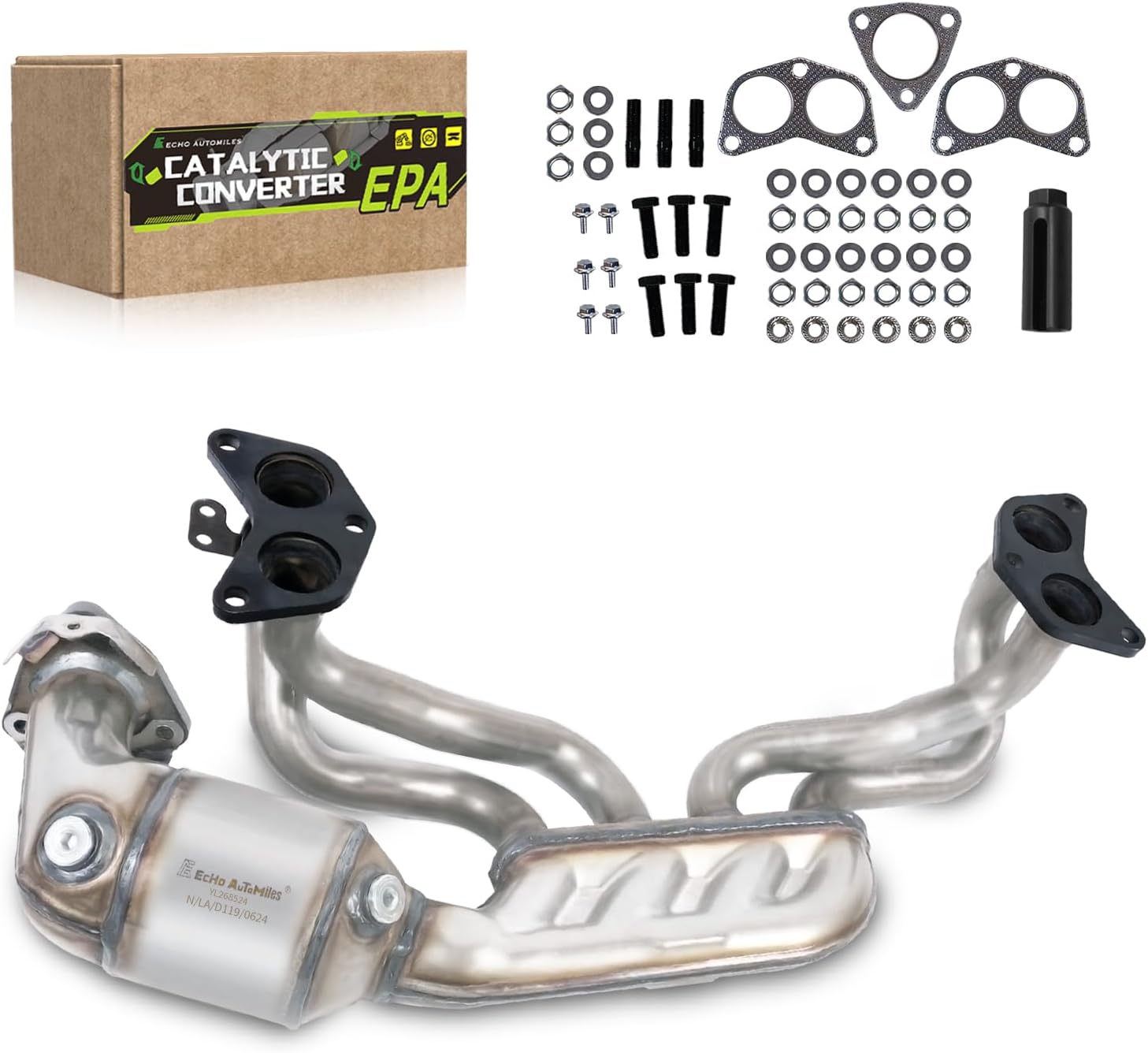
6. ECHO AUTOMILES Catalytic Converter for Subaru Forester/Impreza/Outback/Legacy 2.5L (EPA Compliant)
| Brand | ECHO AUTOMILES |
|---|---|
| Model | For Forester 2011-2016 |
| Cell count | 400-Cell honeycomb |
| Warranty | 2.5 years / 25,000 miles |
This ECHO AUTOMILES catalytic converter is a direct-fit replacement for 2.5L Subaru applications in the 2011–2016 model range and is intended to restore emissions control while minimizing exhaust restriction. It uses a 400-cell honeycomb substrate aimed at balancing filtration and flow, which should preserve engine power and help maintain factory-like drivability. The unit comes with gaskets and necessary hardware for straightforward installation by a competent mechanic and the listing notes a 2.5-year or 25,000-mile warranty. Practical benefits include reduced backpressure compared with denser substrates and a polished exterior that resists corrosion. Important limitations: it is not legal for sale or installation in California or Colorado and has additional state restrictions in Maine and New York, so buyers in regulated states must verify compliance before purchasing. Expect professional installation to ensure proper fit and emissions performance rather than a quick DIY swap if you lack exhaust experience.
Best for: Buyers who want a factory-replacement style catalytic converter for a 2.5L Subaru and who prioritize restoring emissions controls with evidence of other buyers' satisfaction.
Less Ideal for: Drivers located in states with strict catalytic converter regulations or anyone seeking a custom or high-performance aftermarket exhaust solution.
- 400-cell honeycomb substrate balances emissions filtering with exhaust flow to help preserve engine power.
- Includes gaskets and hardware for a more complete replacement package.
- Designed as a direct replacement for compatible 2011–2016 2.5L Subaru models for easier fitment.
- Comes with a 2.5-year or 25,000-mile warranty for added buyer protection.
- Not eligible for sale or installation in California or Colorado and has restrictions in other states, limiting use in regulated regions.
Verdict: A direct-fit, EPA-compliant replacement that restores emissions function for 2.5L Subaru models while offering buyer reassurance through included hardware and a limited warranty.
Choosing the Right 2012-2016 Subaru Impreza Catalytic Converter: Key Factors to Consider
Fitment and Flange Type
Correct fitment is the top priority because the 2012-2016 Subaru Impreza has specific exhaust routing and oxygen sensor locations. A converter with matching flanges and pipe diameters reduces the need for cutting or custom adapters and shortens installation time.
Flange type also affects gasket selection and torque specs. Mismatched flanges can cause leaks or stress that lead to premature failure, so confirm the converter matches the vehicle's flange pattern and pipe diameter before buying.
Emissions Performance and Substrate
The internal substrate and catalyst loading determine how effectively the converter reduces hydrocarbons, carbon monoxide, and nitrogen oxides. For street-driven 2012-2016 Imprezas, choose converters with an appropriate precious-metal coating and cell density that balance conversion efficiency with heat tolerance.
Higher cell density can improve conversion but may increase backpressure. Consider substrates designed for light passenger use rather than race-spec cores that prioritize flow over emissions control.
Oxygen Sensor Compatibility
The Impreza relies on upstream and downstream oxygen sensors to monitor catalytic efficiency and manage fuel trim. A replacement must allow proper sensor placement and wiring access so sensor readings remain accurate.
If a converter relocates a sensor or uses a bung in a nonstandard position, it can trigger the check engine light catalytic converter codes or cause drivability issues. Verify sensor bung locations and ensure sealed, properly threaded ports.
Durability and Thermal Management
Catalytic converters operate at high temperatures; materials and construction quality affect lifespan. Look for units with robust welding, corrosion-resistant shells, and heat-tolerant substrates to withstand repeated heating cycles typical of daily driving.
Poor thermal management can lead to cracking or substrate collapse, which causes rattling and performance loss. Consider converters with thermal shields or thicker shells if you frequently drive in stop-and-go conditions or on steep grades.
Installation Requirements
Some converters are direct-fit and bolt into place, while others are close-fit or universal and need cutting, welding, or adapter kits. Choose based on your access to tools and skill level. Direct-fit units minimize shop time and reduce the risk of leaks when installed correctly.
Factor in whether the replacement requires manifold removal, sensor transfer, or exhaust hanger relocation. Clear installation instructions and included gaskets or hardware simplify the job and reduce unexpected labor.
Regulatory Compliance and Warranty
Ensure the converter meets emissions regulations applicable to your area and the vehicle model years. Converters intended for street use are typically certified or meet specified conversion efficiencies; avoid those labeled for off-road or competition use unless that matches your application.
Warranty terms provide insight into expected longevity and manufacturer confidence. A meaningful warranty and accessible support can offset the inconvenience if a unit fails prematurely.
Common Catalytic Converter Symptoms On The Impreza
Recognizing early symptoms helps you decide whether the converter is the likely culprit or if further diagnostics are needed. Typical signs include a persistent check engine light catalytic converter code, reduced engine performance, or a noticeable decrease in fuel economy.
Other symptoms specific to a failing converter are a rotten-egg or sulfur smell from the exhaust and rattling noises from a damaged substrate. In some cases the vehicle may fail an emissions inspection due to elevated tailpipe readings.
- Check engine light with P0420-style codes indicating efficiency
- Reduced acceleration or hesitation under load
- Unusual exhaust odors, often sulfur-like
- Rattling noise from the exhaust area at idle or low speeds
- Poor fuel economy compared to typical Impreza performance
Diagnosing The Issue Before Replacing
Before committing to a catalytic converter replacement, perform straightforward checks: scan for diagnostic trouble codes, inspect for physical damage or external leaks, and compare exhaust backpressure if possible. A code alone does not always mean the converter is irreparably failed.
Visual inspection can reveal heat discoloration, dents, or crushed sections that indicate mechanical damage. If possible, monitor upstream and downstream oxygen sensor voltages to see whether the converter is actually reducing oscillation between sensors.
- Scan OBD-II codes and capture live sensor data
- Visually inspect the converter for damage or corrosion
- Check for exhaust leaks at flanges and piping
- Measure backpressure or consult a shop for flow testing
Installation Tips For The 2012-2016 Impreza
When installing a replacement on a 2012-2016 Impreza, prepare the vehicle with safe stands and a cool exhaust system. Transferring oxygen sensors from the old unit to the new one is common; apply anti-seize to sensor threads where recommended but avoid contaminating the sensor tip.
Torque specifications and gasket types matter. Use new gaskets and properly torque flange bolts in the correct sequence to prevent exhaust leaks. If welding is required for a close-fit unit, ensure clean mating surfaces and consider professional welding if you lack experience.
- Allow the exhaust to cool fully before working
- Use new gaskets and torque bolts to spec
- Transfer oxygen sensors carefully and check wiring
- Consider a shop for welding or if flange alignment is off
Maintaining Converter Health And Avoiding Premature Failure
Routine engine maintenance reduces the risk of catalytic converter failure. Fixing misfires, addressing oil or coolant leaks, and ensuring proper fuel trim keeps contaminants out of the substrate and preserves conversion efficiency.
Avoid prolonged idling and repeated short trips that do not allow the converter to reach optimal operating temperature. If you tow or drive in severe conditions, inspect the converter more frequently for signs of heat stress or external damage.
- Address ignition and fuel system issues promptly
- Repair oil or coolant leaks that can foul the catalyst
- Drive the vehicle periodically at highway speeds to maintain normal operating temperature
- Inspect the exhaust for physical damage after impacts or off-road use
Fitment Notes And Preparing For Shop Quotes
When you seek quotes, provide the year range and exact model to get accurate fitment information. Mention any existing modifications to the exhaust, such as aftermarket piping or previous repairs, because these affect whether a direct-fit converter will work.
Ask whether the quoted unit is a direct-fit or requires additional labor like cutting and welding. Confirm if the shop will reuse sensors or install new ones and whether gaskets and hardware are included in the labor estimate.
- Confirm if the unit is direct-fit or requires modification
- Disclose any prior exhaust modifications before getting quotes
- Clarify whether oxygen sensors will be transferred or replaced
- Request a breakdown of parts and labor for transparency
Still looking for the perfect fit?
Select your Subaru Impreza configuration to see the most relevant Catalytic Converters recommendations
How We Chose the Best 2012-2016 Subaru Impreza Catalytic Converter
We selected candidates using criteria that matter for 2012-2016 Subaru Impreza owners and the role catalytic converters play in emissions control and drivability. First, fitment and flange type were prioritized to minimize modification during installation and ensure correct sensor positioning. Second, emissions performance and substrate composition were evaluated to favor designs likely to meet or approach factory catalytic conversion efficiency. Third, durability and thermal management were considered, including construction that resists cracking and provides adequate heat dissipation under normal Impreza operating conditions. Fourth, compatibility with upstream oxygen sensor locations and exhaust routing for the specified model years was required. Fifth, warranty and manufacturing quality controls were factored in as an indicator of long-term reliability.We excluded universal or generic one-size-fits-all units that normally require extensive cutting, welding, or adapter kits. We also excluded converters intended solely for off-road or racing use that do not meet street emissions standards. The resulting list focuses on properly designed direct-fit or close-fit options with the specifications and installation characteristics most relevant to 2012-2016 Subaru Impreza owners.
Our full evaluation process is outlined in our review methodology.
FAQ
How long does a catalytic converter typically last on a 2012-2016 Impreza?
Lifespan varies based on driving conditions and maintenance. Often they last many years, but repeated misfires, oil or coolant contamination, or physical damage can shorten service life significantly.
Will a failing catalytic converter cause the check engine light to come on?
Yes, the check engine light often illuminates when oxygen sensor readings show reduced converter efficiency. Codes indicating catalyst performance are a common trigger but should be confirmed with diagnostics.
Can I drive with a damaged catalytic converter on my Impreza?
You can sometimes drive short distances, but performance, fuel economy, and emissions may suffer. Severe damage can cause rattling or further engine issues, so limit driving and arrange repair soon.
Does replacing oxygen sensors solve catalytic converter codes?
Sometimes, especially if sensor failure caused incorrect readings. However, if the catalyst itself is degraded, replacing sensors will not clear the underlying problem. Verify sensor operation with live data before replacing parts unnecessarily.
Will a replacement converter affect engine performance or fuel economy?
A properly fitted converter restores expected backpressure and emissions control, which can improve fuel trim and drivability if the old unit was clogged. Conversely, an improperly matched unit could introduce flow issues that affect performance.
Do I need special tools to replace the catalytic converter on this Impreza?
Basic tools include common wrenches, sockets, and possibly penetrating oil for rusty bolts. If welding or pipe cutting is required, those tasks usually demand specialized equipment or a professional shop.
Final Verdict
When replacing a catalytic converter on a 2012-2016 Subaru Impreza, prioritize correct fitment, oxygen sensor compatibility, and emissions performance. Balancing substrate design against expected driving conditions will help you get a unit that restores drivability without creating unnecessary backpressure.Consider direct-fit options if you want minimal installation work, and address any underlying engine issues before installing a new converter. Focusing on these tradeoffs will help you choose a reliable replacement that keeps emissions in check and maintains normal Impreza performance.
Explore More:
- Check out all Subaru Impreza parts & accessories
- Explore Catalytic Converters Maintenance & Repair Guides
- Explore Exhaust & Emissions
- Browse all Auto Parts
