

Note: This article contains affiliate links. If you click on these links and make a purchase, I may earn a small commission at no extra cost to you. This helps support my research and content. Read my full affiliate disclosure here.
Replacing the catalytic converter on your Subaru Impreza 2.5RS can directly affect emissions compliance, engine response, and long-term exhaust reliability. Whether you need to address a failed unit, clear a persistent check engine light, or prepare the car for inspection, choosing the right converter matters for day-to-day driving and regulatory reasons.This guide shortlists the top options for the 2.5RS and explains the practical tradeoffs between fitment, emissions performance, and durability. Below you will find our top picks followed by the evaluation criteria we used and key considerations to help you select the best catalytic converter replacement for your Impreza 2.5RS.
Looking for other parts? See all Subaru Impreza parts & accessories.
Top Picks at a Glance
| Best Overall The best all-around choice for most situations | ECHO AUTOMILES Catalytic Converter for Subaru Forester/Impreza/Outback/Legacy 2.5L (EPA Compliant) |  |
| Best Quality Built to a higher standard if you want something more solid | AISIN Front Catalytic Converter CCTAZ-00064 — EPA Compliant |  |
| Best Budget The cheapest option that still gets the job done reliably | Generic Catalytic Converter for Subaru 2.5L H4 (Front) |  |
| Highest Rated A top-rated pick with lots of positive feedback | PREMIER MILES Catalytic Converter for Subaru 2.5L H4 (2006–2012 fitments) |  |
| Best Seller A high-volume bestseller chosen again and again | SPEEDFusion 2-inch Universal High-Flow Catalytic Converter with Bottom O2 Port |  |
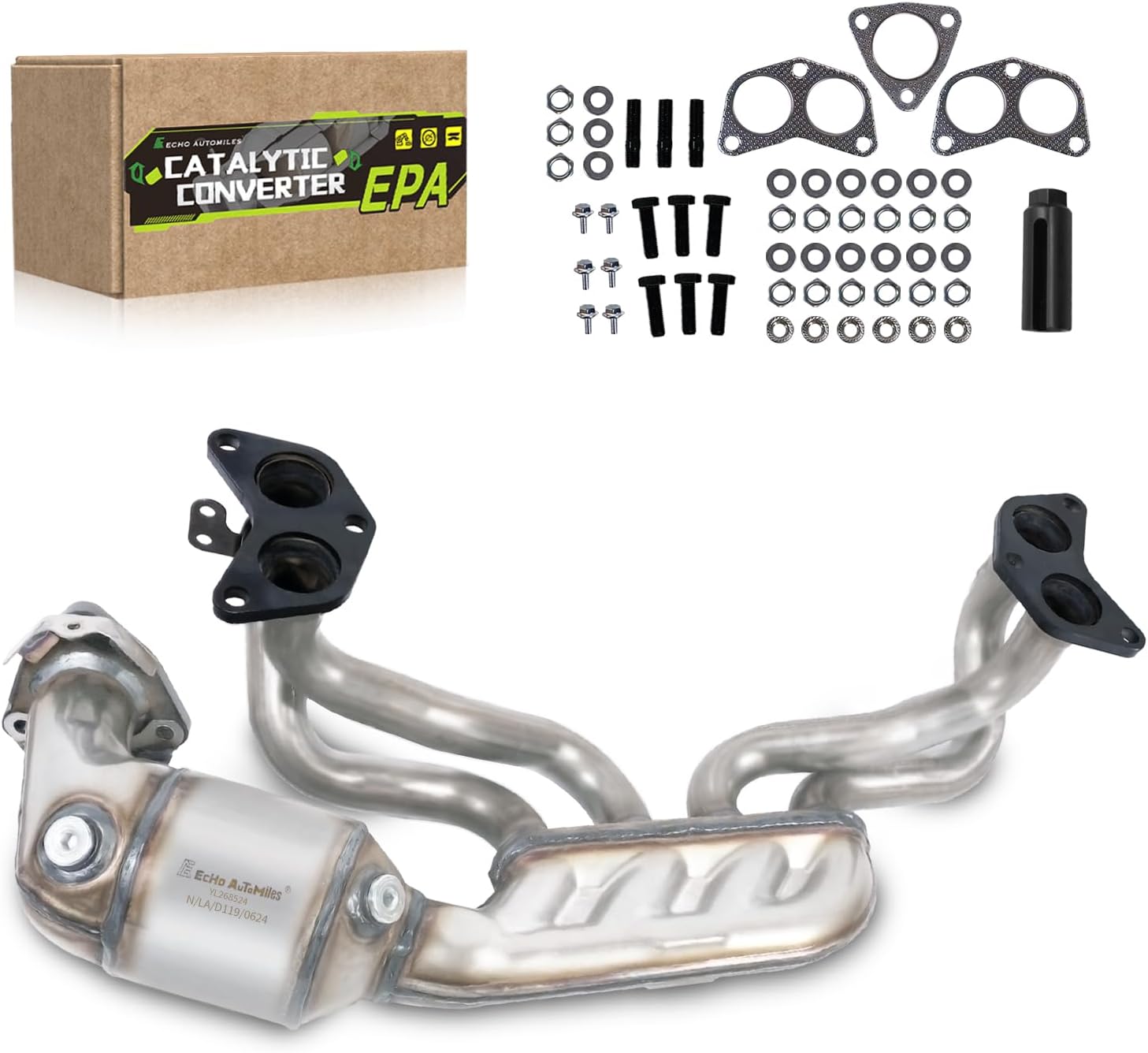
1. ECHO AUTOMILES Catalytic Converter for Subaru Forester/Impreza/Outback/Legacy 2.5L (EPA Compliant)
| Compatible engine | 2.5L Subaru models |
|---|---|
| Honeycomb cell count | 400-Cell |
| Exterior finish | Polished |
| Manufacturer | ECHO AUTOMILES |
| Warranty | 2.5 years or 25,000 miles |
This catalytic converter is a direct-fit replacement for Subaru 2.5L models and is built around a 400-cell honeycomb substrate to balance filtration and flow. It is used to restore emissions control and maintain engine performance by reducing backpressure compared with denser substrates. The unit ships with the gaskets and hardware needed for installation and claims improved high-temperature durability to handle normal highway and city driving. It is EPA compliant for most states but not eligible for sale or installation in California or Colorado and has additional restrictions in some states, so check local rules before buying. The included warranty period provides extra peace of mind for typical owners who want a factory-quality replacement without extensive modification. Buyers should expect a straightforward swap-in replacement rather than a performance upgrade; fitment and legal eligibility depend on region.
Best for: Buyers who want a reliable, factory-quality replacement catalytic converter that restores emissions control and maintains normal engine performance without modifying the exhaust system.
Less Ideal for: Do not choose this if you need a California-compliant part or are seeking a high-performance or race-oriented exhaust upgrade.
- Direct-fit design for Subaru 2.5L models simplifies installation
- 400-cell honeycomb substrate balances emissions reduction with exhaust flow
- Ships with necessary gaskets and hardware for a complete replacement
- EPA-compliant design for sale/installation in most states
- 2.5-year or 25,000-mile warranty included
- Not legal for sale or installation in California or Colorado and restricted in some other states
Verdict: A practical, direct-fit catalytic converter that restores emissions compliance and preserves engine performance for Subaru 2.5L owners seeking a balanced, OEM-style replacement.
2. AISIN Front Catalytic Converter CCTAZ-00064 — EPA Compliant

| Position | Front |
|---|---|
| E.P.A. Compliant | Yes |
| O2 Sensor Ports | 2 |
| Body Material | Stainless Steel |
| Substrate Material | Ceramic |
This Aisin front catalytic converter is a direct-fit, EPA-compliant replacement for H4 2.5L Subaru applications and is intended to restore proper emissions function and exhaust flow. It installs in the front position and includes two O2 sensor ports and the necessary installation accessories, so it is typically swapped in during a catalytic converter failure or when preparing the car to pass emissions testing. The stainless steel body and ceramic substrate aim to provide durable, serviceable performance while keeping combustion cleaner to protect downstream components. For performance-focused drivers the unit brings predictable backpressure and proper sensor readings, which helps maintain throttle response and engine tuning compared with a clogged unit. It is not a high-flow race part but rather a factory-quality replacement built to meet federal emissions standards and restricted-state requirements. Buyers should expect straightforward fitment and emissions compliance rather than increased peak power.
Best for: Owners who want a reliable, emissions-legal replacement that restores proper exhaust flow and sensor operation on a Subaru 2.5L while keeping the engine running smoothly.
Less Ideal for: Drivers seeking a high-flow or race-oriented converter to gain peak power or change exhaust characteristics should consider aftermarket performance-specific units instead.
- EPA-compliant design maintains legal emissions performance
- Two O2 sensor ports preserve factory sensor locations and readings
- Stainless steel construction resists corrosion for longer service life
- Includes installation accessories and instructions for straightforward fitment
- Not designed as a high-flow performance converter for increased horsepower
Verdict: Choose this Aisin front catalytic converter when you need a factory-quality, emissions-legal replacement that preserves sensor function and drivability on a Subaru 2.5L.
3. Generic Catalytic Converter for Subaru 2.5L H4 (Front)

| Model | Catalytic Converter |
|---|---|
| Manufacturer | Generic |
| Manufacturer Part Number | 096-1854 44620-AB620 44620-AA970 |
This catalytic converter is a budget-focused, direct-replacement front unit for 2.5L H4 Subaru applications and the Saab 9-2X non-turbo 2006 model. It installs in place of factory front converters and is intended to restore exhaust flow and emissions control after the original unit fails. The listing references multiple OEM part numbers so buyers can match fitment to their vehicle, and the package includes the catalytic converter set as shown. Practical benefits are straightforward: it offers a lower-cost option to replace a failed converter and avoids the expense of a dealer part, making it suitable for routine repair work. Limitations to note are regulatory restrictions that prevent sale in several states with stricter emissions rules and the recommendation for professional installation rather than DIY fitment. Buyers should confirm OEM part numbers and visual match to ensure proper fit and be aware this unit excludes turbo and certain California-emission variants.
Best for: Owners looking to replace a failed front catalytic converter on a 2.5L Subaru or Saab 9-2X who prioritize an affordable, direct-fit repair and are comfortable matching OEM part numbers before purchase.
Less Ideal for: Drivers in states with stricter emissions laws or anyone who needs a certified emissions-compliant converter for California-style regulations.
- Direct-replacement design referencing multiple OEM part numbers for easier fitment verification
- Lower-cost alternative to dealer or branded converters for budget repairs
- Sold as a complete front catalytic converter set so no separate components are required
- Cannot be shipped to or used in states with stricter emissions regulations listed in the description
Verdict: A cost-conscious, direct-replacement front catalytic converter for 2.5L Subaru H4 vehicles when you need an affordable factory-fit repair.
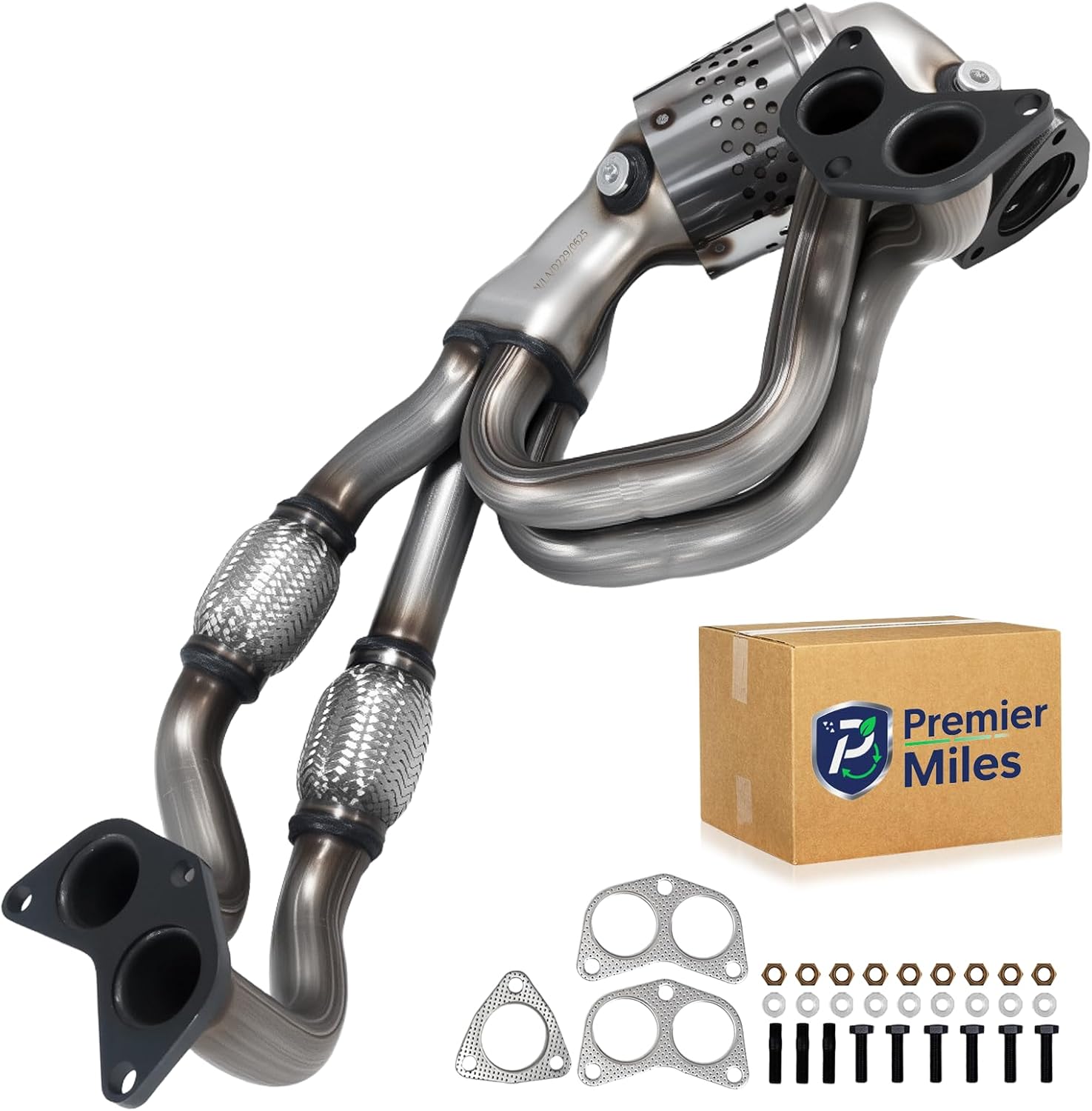
4. PREMIER MILES Catalytic Converter for Subaru 2.5L H4 (2006–2012 fitments)
| Vehicle fitment | Subaru Forester/Impreza/Outback 2006–2012 2.5L H4 |
|---|---|
| Substrate | 400-cell ceramic |
| Emissions compliance | EPA compliant |
| Warranty | 5-year structural; 2.5-year/25,000-mile emissions performance |
This PREMIER MILES catalytic converter is a direct-fit replacement for Subaru 2.5L H4 vehicles from the 2006–2012 era and is built to restore proper emissions control and exhaust flow. It uses a 400-cell ceramic substrate and precious metal catalysts to improve exhaust throughput and reduce backpressure compared with a clogged or failing unit. The part is EPA compliant and was tested for 25,000-mile durability, so it is suitable where federal emissions standards apply but not for California or CARB-regulated areas. Installation is the typical bolt-up style for a vehicle-specific replacement and should return drivability and fuel economy lost to a degraded converter. The product includes a structural and emissions performance warranty and comes polished for corrosion resistance. Buyers should note it is not CARB-approved and that long-term performance still depends on correct installation and upstream engine health.
Best for: Buyers seeking a dependable, emissions-compliant replacement to restore factory-like exhaust flow and drivability on older Subaru 2.5L H4 cars prioritizing long-term reliability.
Less Ideal for: Drivers who need a CARB-compliant converter for use in California or regions that require state emissions certification.
- Direct-fit design for specified Subaru 2.5L H4 model years simplifies installation
- EPA-compliant with 25,000-mile durability testing to meet federal emissions rules
- OEM-grade 400-cell ceramic substrate for improved flow and reduced backpressure
- Contains precious metal catalysts intended to extend service life
- Not CARB-compliant so cannot be used in California or CARB-regulated areas
Verdict: Choose this EPA-tested, direct-fit converter if you want a reliable, factory-style emissions replacement that restores exhaust flow on Subaru 2.5L H4 models outside CARB jurisdictions.
5. SPEEDFusion 2-inch Universal High-Flow Catalytic Converter with Bottom O2 Port

| Inlet/Outlet diameter | 2 inches |
|---|---|
| O2 port position | Bottom |
| Shell material | 409L stainless steel |
| Compliance | EPA (federal) compliant |
This SPEEDFusion converter is a universal 2-inch high-flow unit built with a stainless steel shell and a porous ceramic substrate loaded with platinum, rhodium, and palladium to boost catalytic performance. It is intended to replace a failed or clogged catalytic section and is typically used where a 2-inch exhaust pipe and a bottom-position oxygen sensor port align with the vehicle routing. The high-flow design aims to reduce backpressure compared with restrictive cores while still converting harmful emissions, and the stainless outer shell and anti-core-detachment welding add durability in harsh underbody conditions. It is EPA compliant for federal standards but not CARB-approved, so it cannot be used in states with stricter regulations. Installation should be performed by a professional to ensure proper fit and to keep the check-engine light from returning. For a Subaru Impreza 2.5RS this unit can work only if your factory exhaust measures 2 inches and the O2 port lines up; confirm dimensions and sensor placement before buying.
Best for: A risk-averse Impreza 2.5RS owner who prioritizes a durable, federally compliant replacement and wants a direct replacement that keeps the emissions monitor from triggering when sensor location and pipe diameter match.
Less Ideal for: Do not choose this if your Impreza has a different exhaust diameter or if you need a CARB-compliant part for sale or use in California or other states with stricter rules.
- High-flow ceramic substrate improves exhaust purification while reducing backpressure.
- Stainless steel 409L shell and anti-core-detachment welding increase durability under road conditions.
- Built-in bottom-position O2 sensor port simplifies replacement when sensor location matches.
- EPA compliant for federal emission standards where applicable.
- Universal 2-inch inlet/outlet fits systems with matching outer pipe diameter.
- Not CARB-compliant so illegal to install in states with California-equivalent regulations.
Verdict: Choose this converter for a rugged, federally compliant 2-inch replacement that balances high-flow performance with durability for a properly measured Subaru Impreza 2.5RS.
Choosing the Right Subaru Impreza 2.5RS Catalytic Converter: Key Factors to Consider
Fitment and Flange Compatibility
Correct fitment is the first practical concern when replacing a catalytic converter on the Subaru Impreza 2.5RS. Mismatched inlet or outlet diameters, incorrect flange bolt patterns, or poorly placed sensor bungs can force you into additional exhaust modifications, tubing adapters, or welding work that adds cost and complexity.
Choose a converter specified for the 2.5RS or one that explicitly lists matching flange styles and bolt centers. When fitment specs are precise, installation time tends to be shorter and sealing reliability higher, which reduces the likelihood of exhaust leaks and check engine light issues arising from poor connections.
Emissions Performance and Substrate Type
The catalyst substrate and washcoat determine how effectively the converter reduces hydrocarbons, carbon monoxide, and nitrogen oxides. Common substrates vary in cell density and precious metal loading; higher cell densities and adequate precious metal content typically improve conversion efficiency but can increase flow restriction.
For the Impreza 2.5RS you want a balance that restores legal emissions levels without creating excessive backpressure that harms drivability. Verify that the converter meets relevant emissions standards for your vehicle's model year or local inspection requirements where applicable.
Backpressure and Engine Performance
Excessive restriction through a catalytic converter can raise exhaust backpressure and reduce engine efficiency, leading to rough idle, reduced throttle response, or lowered fuel economy. Conversely, overly free-flowing units may not provide sufficient catalyst surface area to clean exhaust gases effectively.
Prioritize converters designed to match the Impreza 2.5RS exhaust flow characteristics so you maintain engine performance while achieving necessary emissions control. Technical specs or flow ratings can help identify units that strike the right compromise between filtration and flow.
Durability and Corrosion Resistance
Catalytic converters operate under high temperatures and exposure to road salts and moisture, so housing materials and finishes matter for long-term durability. Units with corrosion-resistant shells and quality welds are less likely to suffer perforation, flange warping, or structural cracking over time.
Consider build features such as stainless steel housings, robust mounting brackets, and reinforced flanges that hold up to winter driving conditions and frequent thermal cycling. Durable construction reduces the chance of premature replacement and limits exhaust leaks caused by deteriorated housings.
Oxygen Sensor Placement and Compatibility
The Subaru Impreza 2.5RS has oxygen sensors positioned to monitor upstream and sometimes downstream catalyst performance. A replacement converter must either include the correct sensor bungs in the proper locations or allow straightforward reuse of the original sensor positions.
Incorrect bung placement can trigger false sensor readings and a persistent check engine light. Confirm the converter supports the same sensor count and locations as the vehicle so the engine management system continues to operate without adaptation issues.
Warranty and Regulatory Compliance
Warranty coverage and documented emissions compliance offer reassurance that the converter will meet expectations over time. Manufacturers and suppliers may offer warranties against structural defects or premature failure, which matters if you anticipate extended ownership or heavy use.
Additionally, ensure the part has any required certifications or statements that it meets local emissions regulations for the vehicle's model year. Compliance documentation helps avoid inspection failures and provides clarity if a replacement is needed under warranty.
Common Catalytic Converter Symptoms on the Impreza 2.5RS
Recognizing early signs of catalytic converter distress helps you act before emissions or drivability worsen. On the Impreza 2.5RS, symptoms often develop gradually and can be mistaken for unrelated engine issues.
Typical indicators include a persistent check engine light with codes related to catalyst efficiency, a noticeable drop in throttle response during acceleration, and unusually strong exhaust odors. In some cases a clogged converter produces reduced power at higher RPMs or a metallic rattle when the internal substrate has broken apart.
Because these symptoms overlap with ignition, fuel, and sensor problems, use a methodical diagnostic approach that includes sensor checks, smoke or smoke-scan testing for leaks, and monitoring fuel trim and long-term oxygen sensor behavior before concluding the converter is the root cause.
- Check engine light with catalyst efficiency codes
- Reduced acceleration or power above certain RPMs
- Distinct sulfur or rotten-egg exhaust odor
- Rattling noises from the catalytic housing at idle or on bumps
Inspection and Basic Diagnostics
Start by scanning for stored fault codes and viewing live sensor data. Look for elevated downstream oxygen sensor readings that do not vary as expected, which can signal a failing catalyst. Inspect the exhaust path visually for leaks, damaged heat shields, and signs of external damage to the converter housing.
A hands-on check includes feeling for excessive heat differentials along the converter after a short drive. A functioning converter will show temperature rise from the front to the rear; a nearly uniform temperature or a cold tailpipe can indicate a clogged or inactive substrate. For rattle diagnosis, tap the housing gently when cool and listen for loose internal material.
- Scan for diagnostic trouble codes and monitor downstream O2 sensor behavior
- Visually inspect the housing, flanges, and heat shields for damage
- Check temperature profile along the converter after a warm-up
Fitment Tips to Simplify Installation
To reduce installation time and the need for exhaust modifications, confirm flange type, bolt spacing, and inlet/outlet diameters before purchasing. If possible, keep original gaskets and hardware ready to reuse when they are in good condition; new gaskets improve sealing for a fresh installation.
Plan for welding or bolting based on the chosen converter style and your access to tools. For vehicles that see occasional hard use or rough roads, secure hangers and brackets should be inspected and, if necessary, reinforced to prevent undue stress on the converter joints.
- Measure inlet/outlet diameters and flange bolt spacing before ordering
- Keep or replace gaskets and avoid overtightening flange bolts
- Inspect and secure exhaust hangers to prevent premature strain
Legal and Emissions Inspection Considerations
Local emissions rules influence which converters are acceptable for road use. For the Subaru Impreza 2.5RS, choosing a unit with clear emissions compliance or appropriate documentation helps avoid inspection failures and potential fines. Some jurisdictions require converters certified to specific standards; verify local requirements before selecting a replacement.
If the vehicle is subject to periodic inspections, keep documentation of the converter's emissions compliance handy. In many cases, restoring factory-like emissions performance is the safest route to pass inspections without modifications to the exhaust or engine calibration.
- Check local emissions certification requirements before purchase
- Maintain compliance paperwork or manufacturer statements for inspections
- Prefer converters with documented emissions performance for the model year
Maintenance and Prolonging Converter Life
Good engine maintenance reduces the risk of premature converter failure. Address misfires, rich-running conditions, and oil or coolant leaks promptly, because unburned fuel, oil, or coolant contamination can poison and clog the catalyst. Regular tune-ups and timely replacement of worn ignition components help keep exhaust chemistry within design parameters.
Avoid frequent, high-load driving when the converter is new to allow proper light-off and bedding. If towing or heavy-load usage is anticipated, consider more robust mounting or heat management practices to reduce thermal stress on the unit.
- Fix misfires and fuel system faults quickly to avoid catalyst contamination
- Ensure no oil or coolant is leaking into the exhaust stream
- Drive moderately after installation to allow proper catalyst light-off
Still looking for the perfect fit?
Select your Subaru Impreza configuration to see the most relevant Catalytic Converters recommendations
How We Chose the Best Subaru Impreza 2.5RS Catalytic Converter
We shortlisted catalytic converters that balance correct fitment for the Subaru Impreza 2.5RS with verified emissions performance and robust construction. Selection prioritized components that match the factory mounting points and inlet/outlet diameters to minimize installation complexity and reduce the need for custom exhaust work. We evaluated substrate type and cell density as proxies for emissions effectiveness and long-term flow characteristics. Build quality criteria included corrosion-resistant housings, welding quality, and flange design to ensure leak-free connections under typical road and climate conditions.We also considered thermal resilience and expected lifespan under normal driving and occasional high-load conditions. Practical installation factors such as sensor bung placement and compatibility with the vehicle's oxygen sensor layout were weighed to avoid re-routing or adapter requirements. Exclusions included units without clear fitment specifications for the 2.5RS, converters lacking emission performance data, and parts intended solely for off-road or racing applications. The final list focuses on options that provide dependable emissions control, reasonable durability, and straightforward fitment for Subaru Impreza 2.5RS owners.
Our full evaluation process is outlined in our review methodology.
FAQ
What are the most common catalytic converter symptoms on a Subaru Impreza 2.5RS?
Common symptoms include a check engine light with catalyst-related codes, reduced power or throttle response, unusual exhaust odors, and sometimes a rattling noise from inside the converter housing. These signs can overlap other engine issues, so diagnostics are important.
Can a failing catalytic converter cause the check engine light to stay on?
Yes. The engine control unit monitors catalyst efficiency via oxygen sensors and can set codes that trigger the check engine light when conversion falls below expected levels. However, sensor faults and other exhaust issues can produce similar codes, so confirm with live-data checks.
Is it okay to drive the Impreza 2.5RS with a bad catalytic converter?
Short-term driving is usually possible but not advised. A clogged converter can reduce power and fuel economy and may cause engine damage if the problem is severe. Driving with a damaged converter can also lead to failed emissions inspections.
How does oxygen sensor placement affect replacement choices?
Replacement converters need correct bung locations to match the vehicle's oxygen sensor layout. Incorrect placement can produce false readings and persistent fault codes. Verify sensor count and bung positions before purchasing to avoid sensor relocation work.
Will replacing the catalytic converter fix all check engine light catalytic converter codes?
Not always. If downstream oxygen sensors or wiring are faulty, or if there are unrelated engine issues that affect combustion, codes may persist after converter replacement. Perform a full diagnostic on sensors and engine operation before and after installation.
What maintenance helps prevent catalytic converter failure signs?
Regular engine tune-ups, prompt repair of misfires, fixing oil or coolant leaks, and maintaining the fuel system help prevent catalyst contamination and premature failure. Proactive maintenance reduces the likelihood of costly converter replacements.
Final Verdict
When replacing a catalytic converter on the Subaru Impreza 2.5RS prioritize correct fitment, verified emissions performance, and durable construction. Balancing flow characteristics with sufficient catalyst surface area helps retain engine response while ensuring the vehicle meets inspection requirements. Address underlying engine issues such as misfires or leaks before replacing the converter to protect the new unit.Ultimately, choose a converter that matches the Impreza 2.5RS sensor layout and flange dimensions, offers clear emissions compliance, and provides a reasonable warranty. Prioritizing those factors will minimize installation headaches and deliver reliable emissions control for everyday driving.
Explore More:
- Check out all Subaru Impreza parts & accessories
- Explore Catalytic Converters Maintenance & Repair Guides
- Explore Exhaust & Emissions
- Browse all Auto Parts
