

Note: This article contains affiliate links. If you click on these links and make a purchase, I may earn a small commission at no extra cost to you. This helps support my research and content. Read my full affiliate disclosure here.
If you own a 1995-2001 Ford Explorer, a failing radiator can quickly turn routine driving into an overheating headache. Choosing the right replacement radiator matters because fitment, material quality, and cooling capacity affect engine temperature control, long-term reliability, and ease of installation. This guide highlights the top shortlisted radiators that match the Explorer's cooling requirements and discusses the practical reasons each type is a sensible choice.We evaluated candidates for correct fit, core design, and corrosion resistance so you can prioritize durability and performance. Read on for what to look for and the key tradeoffs to weigh before replacing your radiator.
Looking for other parts? See all Ford Explorer parts & accessories.
Top Picks at a Glance
| Best Overall The best all-around choice for most situations | DWVO Complete Radiator for 1998–2001 Ford Explorer 4.0L and Compatible Ford/Ranger Models |  |
| Best Quality Built to a higher standard if you want something more solid | DUST GLOW R1 Radiator, 2-1/4" Core Thickness for Ford Explorer 4.0L 1995-2001 |  |
| Best Value The sweet spot between price and what you get | KAX CU2310 Replacement Radiator for 1998–2003 Ford Explorer and Ranger Series |  |
| Best Budget The cheapest option that still gets the job done reliably | SCITOO Aluminum Radiator Replacement for 1995–1997 Ford Explorer 4.0L |  |
| Highest Rated A top-rated pick with lots of positive feedback | Alpaspare Direct-Fit Aluminum Radiator for Ford Explorer and Ranger (1997–2011) |  |
| Most Popular A crowd favorite that many people choose with confidence | YITAMOTOR Radiator for 1998–2001 Ford Explorer and Compatible Models |  |
| Best Seller A high-volume bestseller chosen again and again | DWVO Complete Radiator for Ford/Mazda 3.0L & 4.0L V6 (Direct Fit) |  |
1. DWVO Complete Radiator for 1998–2001 Ford Explorer 4.0L and Compatible Ford/Ranger Models
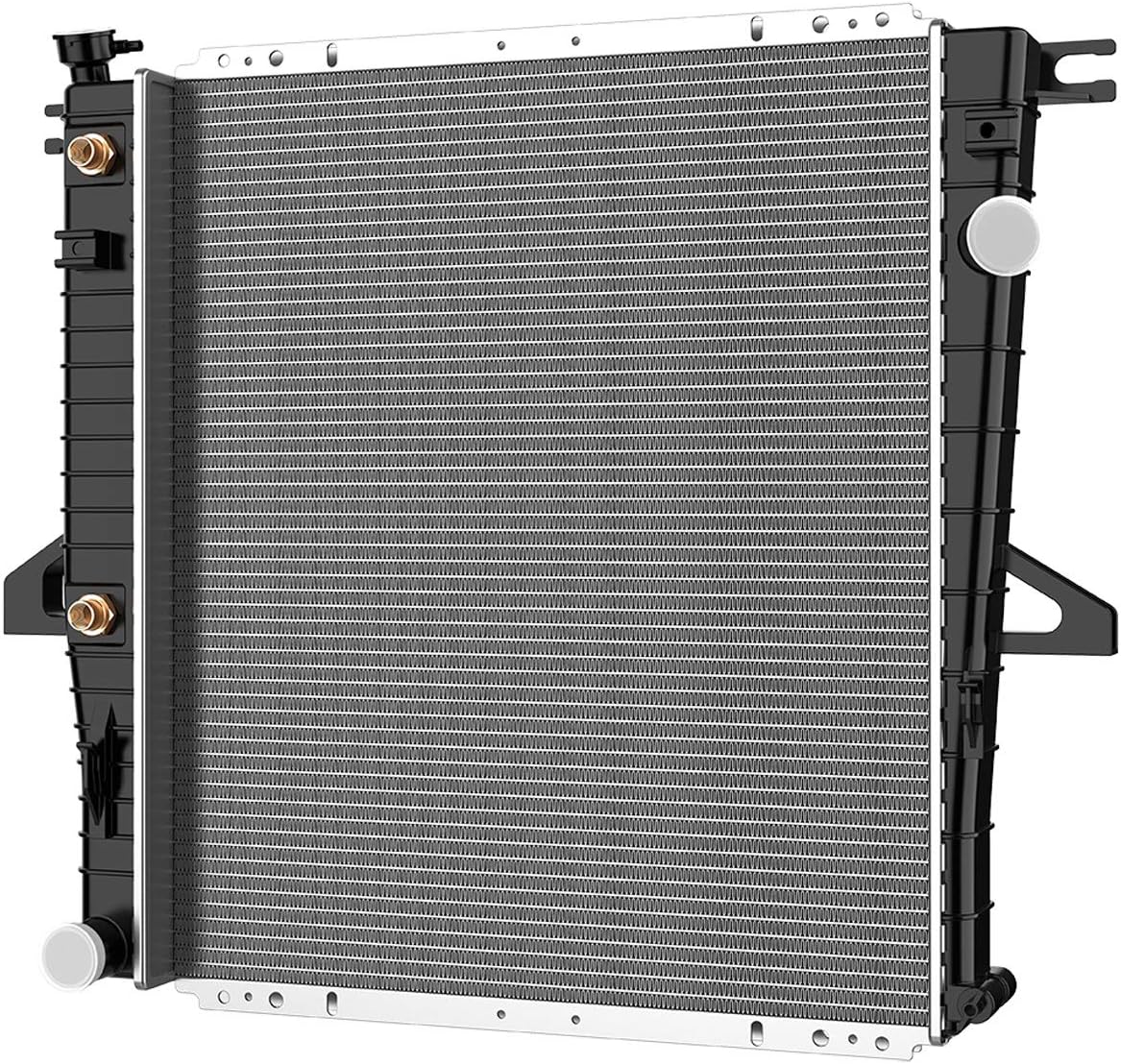
| Manufacturer Part Number | DWRD1086 |
|---|---|
| OEM Part Number | FD37071A,6L5Z8005DA |
| Exterior | Machined |
| Item model number | Radiator |
This DWVO complete radiator replaces the factory cooling unit for 1998–2001 Ford Explorer 4.0L applications and several compatible Ranger and Mountaineer V6 models. It uses a high-density multi-louvered aluminum core to increase cooling efficiency and help manage engine temperature under typical driving and towing loads. The unit comes with TIG-welded end tanks and PA66 GF30 inlet/outlet tanks plus a brass transmission oil cooler built in, which supports automatic transmission cooling where applicable. Packaging includes foam corner supports to protect the radiator during transit and a user manual; the radiator does not include a cap. Installation is intended to be a direct fit but professional installation is recommended to ensure correct sealing and connection of coolant and transmission lines. Expect solid cooling performance and a durable construction for road use, though you will need to supply a radiator cap and follow fitment checks before purchase.
Best for: Buyers who want a cost-effective, factory-style replacement radiator to restore reliable cooling on late 1990s to early 2000s Ford Explorer 4.0L vehicles and compatible Ford V6 trucks, prioritizing fitment and durable construction.
Less Ideal for: Those looking for performance upgrades beyond stock cooling capacity or a plug-and-play swap for non-specified vehicles should consider purpose-built high-performance radiators or vehicle-specific alternatives.
- Direct-fit replacement for 1998–2001 Explorer 4.0L and specified Ranger/Mountaineer models
- High-density multi-louvered aluminum core for improved cooling efficiency
- TIG-welded end tanks and reinforced inlet/outlet tanks for durability
- Includes built-in brass transmission oil cooler for models with automatic transmissions
- Radiator cap not included so you must reuse the original or buy a replacement separately
Verdict: A direct-fit, heavy-duty replacement radiator that restores dependable factory-style cooling for 4.0L Explorers and compatible Ford V6 trucks.
2. DUST GLOW R1 Radiator, 2-1/4" Core Thickness for Ford Explorer 4.0L 1995-2001

| Fitment | Ford Explorer 4.0L 1995-2001 |
|---|---|
| Core Thickness | 2-1/4" |
| Material | Aluminum |
| Part Number | FO3010149, FD37051A, SBR1728, Q1728, RAD1728 |
This DUST GLOW R1 radiator is a full-aluminum, tube-and-fin replacement designed to restore cooling capacity on 1995–2001 Ford Explorer 4.0L engines. It replaces the factory unit and is used the same way as a standard radiator swap: drain coolant, remove hoses and mounting bolts, transfer any brackets, and install the new core before refilling and bleeding the system. The thicker 2.25-inch core and increased surface area improve heat transfer compared with older, corroded stock radiators, which helps keep operating temperatures down during towing or spirited driving. The unit is described as engineered to factory tolerances for fitment and includes provisions for transmission cooler lines where applicable, making installation straightforward for experienced DIYers. Limitations include the likely need to reuse or transfer mounting hardware and potential differences in small fittings that may require minor adjustments during install. Cooling gains are practical for performance-minded drivers but this is a replacement-style radiator rather than a dedicated high-capacity racing unit.
Best for: Drivers wanting a stronger, direct-fit replacement to lower coolant temperatures on a 1995–2001 Explorer 4.0L, especially those who do occasional towing or drive aggressively and prefer a DIY install.
Less Ideal for: Owners seeking a purpose-built high-capacity race radiator or those unwilling to handle minor installation adjustments should look at specialty performance cooling options or professional installation.
- Full-aluminum tube-and-fin construction for improved heat dissipation
- 2.25-inch core thickness increases cooling surface area over older cores
- Designed to fit Ford Explorer 4.0L 1995–2001 for straightforward replacement
- Includes provision for transmission cooler lines on automatic models
- Not a dedicated heavy-duty performance racing radiator, so extreme track use may exceed its capabilities
- May require transferring factory brackets or adjusting small fittings during installation
Verdict: A direct-fit aluminum replacement that raises cooling capacity for 1995–2001 Explorer 4.0L drivers who want lower operating temps without swapping to a race-only radiator.
3. KAX CU2310 Replacement Radiator for 1998–2003 Ford Explorer and Ranger Series

| Model | CU2310 |
|---|---|
| Manufacturer | KAX |
| Compatible vehicles | 1998–2003 Explorer, 1998–2010 Ranger, B3000/B4000, Sport Trac (per listing) |
| Core material | Aluminum core |
| Item model number | CU2310 |
This KAX CU2310 radiator is a direct-fit replacement meant to restore proper engine cooling in the specified Ford Explorer, Ranger, B3000/B4000 and Sport Trac fitments. It pairs an aluminum core with plastic end tanks and is delivered pressure- and leak-tested, so installation replaces a failing unit without requiring core modification. Typical use is a like-for-like swap when your existing radiator is corroded, leaking, or clogged; the aluminum core improves heat transfer compared with older, damaged cores while the plastic tanks keep weight and cost down. Packaging includes foam corner protection to reduce shipping damage and the manufacturer states a two-year warranty. Limitations to note are the plastic tank construction, which is common for replacement radiators but can be less robust than full-metal designs, and the product requires correct fitment to the listed vehicle years and configurations to avoid clearance or channel mismatches. Expect straightforward bolt-in installation for competent DIYers or a standard shop job.
Best for: Buyers who want a cost-effective, ready-to-install replacement to restore reliable cooling on the specified Ford Explorer and Ranger family vehicles and prefer a balance of thermal performance and value.
Less Ideal for: Drivers seeking a heavy-duty, all-metal performance radiator for towing, racing, or high‑heat applications should consider purpose-built aftermarket cores instead.
- Aluminum core improves thermal conductivity and cooling efficiency.
- Pressure and leak testing before shipping reduces early-failure risk.
- Direct-fit design for the listed Explorer, Ranger, Sport Trac and B-series models simplifies installation.
- Protective foam packaging reduces risk of transit damage.
- Plastic end tanks are less impact- and heat-resistant than all-metal radiators.
Verdict: A budget-minded, direct-fit aluminum-core replacement that restores factory-style cooling for the listed Ford Explorer and Ranger models.
4. SCITOO Aluminum Radiator Replacement for 1995–1997 Ford Explorer 4.0L

| Fitment | 1995-1997 Ford Explorer 4.0L |
|---|---|
| Material | Aluminum |
| Engine oil cooler | Included |
| Inlet/Outlet | 1.5 in |
This SCITOO radiator replaces the factory unit on 1995–1997 Ford Explorer 4.0L models and is built from aluminum for improved heat transfer and corrosion resistance. It installs like a typical replacement radiator and includes an integrated engine oil cooler, so you keep oil cooling without a separate component. The inlet and outlet are 1.5 inches, which matches common factory hose sizes for straightforward hose connections. The radiator omits a transmission oil cooler, so it is intended for Explorer configurations that do not require an internal trans cooler. As a budget-focused aftermarket option it delivers the core functions you need—coolant flow, engine oil cooling, and a corrosion-resistant core—while relying on standard mounting points and OEM-style connections. Expect a practical, cost-conscious swap with decent thermal performance, but be prepared to verify fitment and check that your vehicle does not need a transmission cooler integrated in the radiator before ordering.
Best for: Buyers replacing a failed radiator on a tight budget who want a straightforward, factory-style replacement that restores cooling and retains engine oil cooling without extra frills.
Less Ideal for: Drivers who need a radiator with an integrated transmission cooler or who want premium performance upgrades like high-capacity cores or multi-pass designs.
- Aluminum construction improves heat dissipation and corrosion resistance compared with older units
- Includes integrated engine oil cooler so engine lubrication cooling is retained
- Designed to match factory mounting points for straightforward installation
- 1.5 inch inlet and outlet match common factory hose sizes for easy hose connection
- Does not include a transmission oil cooler, so not suitable if your Explorer requires an internal trans cooler
Verdict: A practical, budget-minded aluminum radiator that restores cooling and retains engine oil cooling for 1995–1997 Ford Explorer 4.0L owners.
5. Alpaspare Direct-Fit Aluminum Radiator for Ford Explorer and Ranger (1997–2011)

| Manufacturer | Alpaspare |
|---|---|
| Model | CU2173 Cooling Radiator |
| Compatible Vehicles | Ford Ranger/Explorer, Mazda B3000/B4000, Mercury Mountaineer (listed years) |
| Inlet/Outlet Diameter | 1.49in |
| Core Thickness | 1.02in |
This Alpaspare radiator is a one-to-one replacement designed to restore the cooling system on compatible late 1990s and early 2000s Ford, Mazda, and Mercury V6 vehicles. It installs using the factory mounting points and hose connections so most owners can swap it in without modification, making it suitable for DIY repairs or quick shop work. Constructed from aluminum and factory-tested for pressure and leaks, the unit aims to deliver consistent heat dissipation to prevent overheating during daily driving, highway use, or towing. Notable features include verified inlet and outlet sizing and a core built to match factory dimensions so thermostat and fan operation remain unchanged. Limitations are that fitment is specific to the listed model years and engine types, so confirming compatibility before purchase is essential, and buyers replacing additional cooling components may need to transfer or replace brackets, sensors, or fans separately since those items are not included.
Best for: Buyers who prioritize a reliable, factory-style cooling replacement for older Ford Explorer and similar V6 vehicles and want a durable part that installs without modification.
Less Ideal for: Those seeking a full cooling-system upgrade with performance cores, bundled fans, or ships with additional mounting hardware should consider other options.
- Direct one-to-one fit with factory mounting points and hose locations
- Aluminum construction for corrosion resistance and heat transfer
- Pressure and leak tested to meet factory-style performance
- Matches OEM inlet and outlet diameters to avoid hose modification
- Does not include fans, brackets, or additional hardware that may be needed for a complete cooling-system refresh
Verdict: Choose this radiator when you need a dependable, drop-in aluminum replacement that restores factory cooling performance for late 1990s to early 2000s Ford Explorer and related V6 models.
6. YITAMOTOR Radiator for 1998–2001 Ford Explorer and Compatible Models

| Brand | YITAMOTOR |
|---|---|
| Exterior | Aluminum |
| Item model number | MAYIMVNVVS |
| OEM Part Number | 1l5Z8005MA, 1l5Z8005NA, 6l5Z8005DA, XL2Z8005LA |
This YITAMOTOR radiator replaces the factory cooling core with a high-density aluminum tube-and-fin core and reinforced PA66 nylon tanks to restore engine cooling for affected Explorer-era vehicles. It installs as a like-for-like replacement with an OE-style layout so no major modifications are needed, and the manufacturer says each unit is leak tested before shipping. The aluminum core and oil cooler aim to improve heat dissipation over older units, which helps control operating temperature during towing or stop-and-go driving. Reinforced inlet and outlet tanks reduce the chance of cracks that commonly afflict aging plastic tanks. On the downside the cap is not included and professional installation may be needed if you do not have cooling-system experience. Fitment targets 1998–2001 Explorer and the listed compatible Ranger/B3000/B4000/Mountaineer applications, so confirm vehicle-year and engine before ordering.
Best for: Buyers who want a tested, factory-style replacement to restore cooling performance and avoid repeated failures from old or cracked radiators, guided by peer feedback and reliability concerns.
Less Ideal for: If you need a radiator that includes every small accessory or want a performance aftermarket core for motorsport use, this unit may not meet those needs.
- Designed as an OE-style direct replacement for specified vehicle models for straightforward installation
- High-density aluminum core and fins for improved heat dissipation
- PA66 reinforced tanks tested for leaks to reduce cracking and leaks
- Includes an integrated aluminum oil cooler to aid cooling under heavier loads
- Radiator cap is not included with the unit
Verdict: A leak-tested, factory-style aluminum replacement built to restore reliable cooling on late 1990s to early 2000s Ford Explorer family vehicles.
7. DWVO Complete Radiator for Ford/Mazda 3.0L & 4.0L V6 (Direct Fit)

| Compatible engines | 3.0L and 4.0L V6 |
|---|---|
| Fitment years | Late 1990s to early 2000s (listed 1997–2011 across models) |
| Core material | Aluminum |
| Transmission cooler | Brass integrated |
This DWVO complete radiator is a direct replacement for late 1990s to early 2000s Ford and Mazda 3.0L and 4.0L V6 vehicles and installs in place of the factory unit. It uses a high-density multi-louvered aluminum core with TIG-welded end tanks and a brass transmission oil cooler to improve cooling efficiency and durability. The unit ships as a full radiator assembly with inlet and outlet tanks and comes with foam protection in the box to reduce shipping damage. In practical use it aims to restore cooling performance for vehicles running hotter due to a failed or leaking original radiator and is intended for professional or experienced DIY installation since the radiator cap is not included. The design emphasizes leak resistance and longevity, but buyers should plan to reuse or buy a compatible cap and verify hose and mounting alignment during installation. For someone seeking a factory-style replacement that focuses on dependable cooling rather than performance upgrades, this radiator is a straightforward option.
Best for: Buyers who want a reliable, factory-style replacement to restore cooling on older Ford or Mazda V6 vehicles and prefer a part built to match original fitment and function with minimal fuss.
Less Ideal for: Do not choose this if you want a performance-focused upgrade with increased cooling capacity beyond factory specifications or if you need a kit that includes every small accessory for installation.
- Direct-fit design matched to factory replacement part numbers for late 1990s to early 2000s Ford and Mazda V6 models
- High-density multi-louvered aluminum core for improved heat dissipation
- TIG-welded end tanks and brass transmission oil cooler for durable construction
- Shipping foam protection reduces risk of damage in transit
- Radiator cap is not included so a compatible cap must be sourced separately
Verdict: A dependable, factory-style replacement radiator that restores proper cooling for late 1990s to early 2000s Ford and Mazda V6 vehicles with durable construction and OEM-matching fitment.
Choosing the Right 1995-2001 Ford Explorer Radiator: Key Factors to Consider
Fitment and Mounting
Correct fitment is the top priority when replacing a radiator on a 1995-2001 Ford Explorer. A radiator that matches the factory mounting points, inlet and outlet locations, and transmission cooler ports when required will install cleanly and avoid leaks. Mismatched radiators can force hose rerouting, require bracket fabrication, or prevent the fan shroud from seating properly. Those issues increase labor time and risk of cooling system stress.
When assessing fitment, verify year-range coverage and whether the radiator supports the specific engine and transmission setup in your Explorer. Small differences across model years and engine options can change hose orientation or require different fittings. Prioritizing direct-fit units reduces the chance of post-installation problems and simplifies the coolant service process.
Core Construction and Materials
Core construction determines heat transfer efficiency and long-term durability. Aluminum cores with brazed joints are common for modern replacements because they are lightweight, transfer heat well, and resist many forms of corrosion. Brass and copper cores were common historically and offer excellent thermal conductivity, but they are heavier and may be more susceptible to electrochemical corrosion with certain coolants.
Consider the tube-and-fin density and whether the core is a single-pass or multi-pass design. Higher fin density and multiple passes can improve cooling in stop-and-go conditions, but they may be more prone to clogging if the system is dirty. Materials used for end tanks matter too; stamped aluminum end tanks are durable, while plastic tanks can be cost-effective but may crack over time, especially with older vehicles that experience thermal cycling.
Cooling Capacity and Core Size
The Explorer's engines generate heat loads that the radiator must dissipate under highway and heavy-load conditions. Cooling capacity is driven by core surface area, thickness, and airflow efficiency. A thicker core or larger surface area can lower operating temperatures but may require additional clearance or a different fan shroud.
If you tow, carry heavy loads, or frequently drive in hot climates, prioritize radiators with higher cooling capacity and improved airflow designs. Keep in mind that larger cores might affect airflow path and fan performance, so check that the shroud and fan will still engage correctly with the replacement unit.
Transmission Cooler Integration
Many 1995-2001 Ford Explorer models use an integrated transmission cooler within the radiator. When replacing the radiator on a vehicle with an automatic transmission, ensure the unit includes compatible transmission cooler ports and the correct internal routing. An incompatible radiator can cause transmission overheating or require an external cooler addition.
Confirm whether the radiator fits both the engine and transmission configuration for the specific year of your Explorer. Proper integration avoids additional plumbing, reduces leak points, and maintains factory thermal management for the transmission fluid.
Corrosion Resistance and Warranty
Radiator life depends heavily on corrosion resistance. Look for corrosion-resistant coatings, proper brazing, and materials that tolerate the coolant chemistry typically used in Ford vehicles of this era. Radiators with treated cores or protective finishes will resist electrochemical attack and extend service life.
Warranty length and terms indicate manufacturer confidence. A solid limited warranty covering leaks or structural defects gives additional assurance, particularly for vehicles that may have older cooling system components. Still, installation quality and coolant maintenance also play big roles in longevity.
Ease of Installation and Serviceability
A radiator that is straightforward to install reduces labor and the chance of installation-related failures. Check whether the replacement preserves factory hose sizes, uses the same fan shroud attachment points, and includes necessary fittings or adapters for transmission lines. Some replacements come with extra brackets or pre-drilled holes that simplify fitment.
Serviceability matters too. Radiators that allow easy access to drain plugs, petcock valves, or deburred hose connections make coolant changes and leak diagnosis simpler. If you plan to do the work yourself, prioritize direct-fit units and clear installation instructions to avoid rework.
Signs Your Explorer's Radiator Needs Replacement
Early detection prevents engine damage. Common signs include persistent coolant loss without visible external leaks, frequent overheating during normal driving, or visible coolant contamination and rust in the coolant. Steam from the radiator area after short drives or a rapidly rising temperature gauge are more urgent indicators.
Other practical clues are wet spots under the vehicle that stain green or orange coolant, a soft or swollen upper radiator hose after running, and a climate system that blows warm air despite the engine temperature being high. Addressing these symptoms promptly reduces the risk of head gasket failure or severe engine seizure.
- Persistent coolant level drops with no obvious leaks
- Engine temperature spikes during idle or slow traffic
- Discolored, rusty, or oily coolant
- Visible wetness, corrosion, or damage on the radiator core or tanks
Preparing Your Explorer for Radiator Replacement
Gather the proper tools and parts before starting. For the 1995-2001 Explorer, confirm the radiator matches the year range and whether the vehicle has an automatic transmission requiring internal cooler ports. Have replacement hoses, hose clamps, coolant, and any needed mounting hardware ready.
Work on a cool engine, drain the cooling system into a suitable container, and dispose of old coolant properly. Inspect related components like the thermostat, water pump, and fan clutch or electric fan; replacing these at the same time can prevent future labor duplication.
- Verify year-specific fitment and transmission cooler needs
- Replace worn hoses and clamps during the service
- Consider a thermostat and water pump inspection while access is open
- Have new coolant and a funnel ready for refill and bleeding
When to Consider Upgrading Core Design
If you tow or frequently operate in hot climates, upgrading to a higher-capacity core can provide more consistent coolant temperatures under load. Multi-row cores or upgraded fin designs can reduce operating temperature margins and improve resilience to heavy duty use.
However, an upgraded core may be thicker and require checking clearance with the fan shroud and grille opening. Confirm that the increased core size does not obstruct airflow or interfere with existing mounting positions on your Explorer.
- Assess towing and heavy-load usage before choosing an upgraded core
- Measure clearance for thicker cores relative to the fan shroud
- Balance improved cooling against potential fitment complications
Basic Steps to Bleed and Refill the Cooling System
Proper bleeding removes trapped air that can cause hot spots and inaccurate temperature readings. After installing a new radiator, fill the system with the recommended coolant mixture, run the engine with the heater on high, and allow the thermostat to open so coolant circulates fully.
Use the radiator or a bleeder port to release air pockets until a steady stream of coolant flows. Monitor coolant level as air escapes and top off as needed. Recheck after a short test drive and again after a few heat cycles to ensure the level remains stable.
- Fill with the correct coolant-to-water ratio for Ford specifications
- Run engine until thermostat opens and bleed air via ports
- Recheck coolant level after a short drive and top off if necessary
Common Installation Pitfalls to Avoid
Avoid overtightening hose clamps which can crush soft radiator hose ends and create pinhole leaks. Ensure all fittings seat squarely and that transmission cooler lines are properly flared and torqued to avoid internal leaks. Do not ignore small coolant seepage after installation; tightening may be needed but reassess bracket alignment first.
Also, confirm the fan shroud is secured and that the electric fan wiring or mechanical fan clutch is reconnected correctly. An improperly mounted shroud reduces airflow efficiency and can lead to higher operating temperatures.
- Do not overtighten hose clamps or reuse damaged hoses
- Confirm transmission cooler lines are sealed and routed properly
- Secure the fan shroud to maintain correct airflow
- Check for leaks and retorque fittings after initial heat cycle
Still looking for the perfect fit?
Select your Ford Explorer configuration to see the most relevant Radiators recommendations
How We Chose the Best 1995-2001 Ford Explorer Radiator
We focused on objective, model-specific criteria to identify radiators that reliably serve 1995-2001 Ford Explorer owners. Primary filters included exact fitment to the year range and factory mounting points, verified inlet and outlet locations, and proper transmission cooler compatibility where applicable. We prioritized build characteristics that directly affect cooling and longevity: core construction (aluminum versus brass/copper), tube and fin density, header quality, and corrosion protection.Performance factors considered were flow capacity, cooling surface area, and suitability for the Explorer's V6 and V8 engine options across the year range. Practical considerations included ease of installation, availability of necessary hose and shroud connections, and compatibility with original fan assemblies. We excluded products that required substantial modification, lacked clear fitment documentation, or omitted essential transmission cooler fittings when required. Final selections balanced durability, cooling effectiveness, and installation practicality for this specific vehicle.
Our full evaluation process is outlined in our review methodology.
FAQ
How long does a radiator typically last on a 1995-2001 Ford Explorer?
Radiator lifespan varies with maintenance and environment, but many last 8 to 15 years. Corrosion, coolant neglect, and physical damage shorten life, while regular coolant changes and proper sealing extend it.
Can I replace the radiator myself on a 1995-2001 Explorer?
Do-it-yourself replacement is possible if you have basic mechanical skills and the right tools. Ensure you follow fitment details for your year and transmission type, drain coolant safely, and properly bleed the system after installation.
What coolant should I use after installing a new radiator?
Use the coolant type and mixture recommended for Ford vehicles of this era, typically a 50/50 coolant-to-water mix unless the vehicle manual specifies otherwise. Always flush the system if the old coolant is contaminated before refilling.
Will a radiator replacement fix overheating immediately?
Replacing a failing radiator often resolves overheating caused by restricted flow or leaks, but overheating can also stem from a bad thermostat, weak water pump, or clogged passages. Diagnose related components if issues continue after replacement.
Do I need a radiator with an integrated transmission cooler?
If your Explorer has an automatic transmission that used an internal cooler, choose a radiator with compatible integrated transmission ports. Using a radiator without the cooler requires adding an external transmission cooler to prevent fluid overheating.
How can I tell if the radiator is leaking or if the leak is elsewhere?
Inspect the cooling system for wetness around hose connections, the radiator core, and the transmission cooler lines. Pressure testing the cooling system helps identify hidden leaks and can distinguish radiator leaks from head gasket or water pump issues.
Final Verdict
For a 1995-2001 Ford Explorer, prioritize direct-fit radiators that match mounting points, hose orientations, and transmission cooler requirements. Balance core construction, cooling capacity, and corrosion resistance against installation complexity to select a durable solution.If you regularly tow or drive in hot conditions, favor higher-capacity cores but confirm clearance and shroud compatibility. For typical daily driving, a well-built direct-fit radiator that preserves factory connections and offers good corrosion protection will deliver the most reliable service.
Explore More:
- Check out all Ford Explorer parts & accessories
- Explore Radiators Maintenance & Repair Guides
- Explore Cooling System
- Browse all Auto Parts
