

Note: This article contains affiliate links. If you click on these links and make a purchase, I may earn a small commission at no extra cost to you. This helps support my research and content. Read my full affiliate disclosure here.
If your 2006-2010 Ford Explorer is showing higher temperatures, low heater output, or visible coolant loss, replacing the radiator can solve the root cause and prevent engine damage. The right radiator restores cooling capacity, seals up leaks, and fits correctly with the Explorer's hose routing and mounting points. This guide shortlists seven top radiator options that match the 2006-2010 Explorer fitment and evaluates them on cooling performance, construction quality, and ease of installation.Below you will find practical details to help you choose based on driving conditions, whether you plan to DIY the swap, and what tradeoffs to expect between longevity and serviceability.
Looking for other parts? See all Ford Explorer parts & accessories.
Top Picks at a Glance


1. SCITOO Aluminum Radiator Replacement for 2006–2010 Ford Explorer / Sport Trac / Mercury Mountaineer

| Brand | SCITOO |
|---|---|
| Model | 125620 |
| Special Features | Core Rows: 1 Row |
| Engine Oil Cooler Included | Yes |
| Transmission Oil Cooler Included | No |
This SCITOO radiator replaces the factory cooling unit for 2006–2010 Ford Explorer and Sport Trac and 2007–2010 Mercury Mountaineer models and includes an integrated engine oil cooler. It is a single-row core aluminum radiator intended for direct fitment and installation without major modification. Typical use is as a factory-style replacement when the original radiator is leaking, clogged, or damaged; the built-in engine oil cooler helps keep engine oil temperatures in check for vehicles that had that feature from the factory. Buyers will appreciate the model-specific fitment, claimed ease of installation, and aluminum construction that resists corrosion compared with some older cores. Expect the radiator to perform like a standard replacement part rather than a high-performance upgrade, so it is best for restoring reliable cooling rather than increasing cooling capacity for heavy towing or racing. Installation may require standard removal of the old unit and reconnecting coolant lines and mounting hardware, and professional help can ensure correct bleed and leak checks.
Best for: Buyers who want a straightforward, factory-quality replacement to restore cooling system reliability on a 2006–2010 Explorer or Sport Trac or a 2007–2010 Mountaineer and prefer a part that installs like the original.
Less Ideal for: Drivers who need extra cooling for heavy towing, off-road use, or performance builds should consider a multi-row or high-capacity aftermarket radiator instead.
- Model-specific fitment for 2006–2010 Ford Explorer, Sport Trac and 2007–2010 Mercury Mountaineer
- Integrated engine oil cooler included
- Aluminum core resists corrosion compared with older materials
- Sold as a complete radiator assembly intended for direct replacement
- Single-row core design limits peak cooling capacity compared with multi-row performance radiators
Verdict: A direct-fit aluminum replacement that restores factory-style cooling and includes an engine oil cooler, making it a practical choice for routine repairs on 2006–2010 Explorers and related models.
2. ASCIUTTA 3-Row Aluminum Radiator for 2006–2010 Ford Explorer / Mercury Mountaineer / Sport Trac

| Core Rows | 3 Rows |
|---|---|
| Core Material | All Aluminum |
| Flow Type | Down Flow |
| Radiator Cap | Included |
This ASCIUTTA radiator replaces the factory unit with a 3-row all-aluminum core intended to improve cooling capacity and resistance to heat soak under heavy use. It installs as a bolt-on drop-in and includes a CNC-machined filler neck and cap plus an OEM-style brass petcock drain, so routine maintenance and fill/bleed are straightforward. The heavier-duty AA5052 aluminum construction and brazed core construction increase durability and cooling efficiency, making it well suited for performance driving, towing, or stop-and-go traffic that stresses the cooling system. Because it is a downflow design with a larger coolant capacity than stock, you should see lower operating temperatures and improved temperature stability during sustained high-load runs. Expect professional-fit mounting but plan for conventional radiator swap steps and coolant replacement. This is a performance-focused replacement rather than a stock look-alike, so if you need an exact factory appearance or the lightest OEM-matching part, this is a more robust aftermarket option.
Best for: Buyers wanting a performance-minded cooling upgrade for their 2006–2010 Explorer/Mountaineer/Sport Trac who prioritize lower operating temperatures during towing, spirited driving, or high-load use.
Less Ideal for: If you need an exact factory cosmetic match, a lightweight OEM-equivalent, or are only replacing for aesthetic reasons, choose a factory-style unit instead.
- All-aluminum 3-row core increases cooling capacity and heat rejection.
- CNC-machined filler neck and cap for durable, precise sealing.
- Direct bolt-on fitment for 2006–2010 Explorer/Mountaineer/Sport Trac V6 and V8 models.
- Includes radiator cap and OEM-style brass petcock drain for easier service.
- Heavier and more substantial than some factory replacements which may affect handling during installation.
- Raw aluminum finish may require extra care to avoid cosmetic oxidation over time.
Verdict: Choose this radiator when you want a direct-fit, heavy-duty aluminum upgrade to lower engine temps and improve cooling stability for 2006–2010 Ford Explorer family vehicles.
3. Auto Dynasty 2-Row Aluminum Radiator for 2007–2010 Ford Explorer / Mercury Mountaineer

| Compatible models | Ford Explorer / Mercury Mountaineer 2007-2010 |
|---|---|
| Engine fitment | 4.0L and 4.6L |
| Core material | T-6061 aluminum |
| Rows | 2 |
| Transmission cooler | Yes (for automatic) |
This Auto Dynasty radiator replaces the factory unit for 2007–2010 Explorer and Mountaineer 4.0L and 4.6L vehicles and is built as a lightweight, direct bolt-on replacement. It uses a full T-6061 aluminum core with two rows and cooling fins to increase coolant capacity and heat transfer versus some stock radiators, and it includes a transmission oil cooler passage for automatic transmissions. Installation is intended to be straightforward with factory-style mounting points so a professional or experienced DIYer can swap it in without drilling or modification. The design favors improved cooling performance and corrosion resistance, but the 2-row core prioritizes fit and weight over maximum cooling capacity compared with larger multi-row aftermarket radiators. Instructions are not included so plan for basic tools and possible shop time. For routine street driving and towing within typical limits this radiator offers a practical, durable replacement that balances performance improvements with an easy install.
Best for: Buyers who want a straightforward, factory-style replacement that improves cooling reliability without complexity and who prioritize a durable, easy-to-install part for regular driving and light towing.
Less Ideal for: People seeking maximum track-level cooling or heavy commercial towing capacity should consider a multi-row or high-capacity performance radiator instead.
- Full T-6061 aluminum core for improved heat transfer and corrosion resistance
- Direct bolt-on fitment for 2007–2010 Explorer and Mountaineer with no drilling required
- Includes transmission oil cooler passage for automatic transmission models
- Lightweight 2-row design that simplifies handling and installation
- Two-row core offers less peak cooling capacity than larger multi-row performance radiators
- No installation instructions included so some installers may need independent guidance
Verdict: A practical, factory-style aluminum replacement that boosts cooling reliability and installs easily on 2007–2010 Explorer and Mountaineer models.
4. OCPTY Replacement Radiator for 2007–2010 Ford Explorer / Sport Trac / Mercury Mountaineer

| Compatible vehicles | 2007–2010 Ford Explorer, Explorer Sport Trac, Mercury Mountaineer (4.0L/4.6L) |
|---|---|
| Core material | Aluminum |
| Manufacturer part number | 125620-5209-1638131081 |
| OEM part number | 2952 |
This OCPTY radiator is built as a direct-replacement cooling unit for 2007–2010 Ford Explorer, Explorer Sport Trac, and Mercury Mountaineer models with 4.0L or 4.6L engines. It uses an aluminum core with high-density fins and factory-style plastic tanks intended to match the original fit and mounting points for a drop-in installation without drilling or modification. Typical use is as a budget-friendly replacement to restore cooling performance after a leak or clog; the seller reports leak testing and thermal-shocked gaskets for durability. In real-world terms you should expect straightforward installation for a DIYer or shop, improved coolant flow compared with a failing radiator, and components that mirror factory placement for hoses and brackets. Limitations include fewer brand assurances than a dealer part and the potential variability in long-term durability compared with higher-end aftermarket radiators, so plan routine inspections after installation.
Best for: Buyers looking for an affordable, drop-in replacement radiator to get a 2007–2010 Explorer or Mountaineer back on the road quickly while keeping repair costs low.
Less Ideal for: If you prioritize longest-possible service life, heavy-duty cooling for modified engines, or a dealer-backed part, consider higher-end or OEM-sourced radiators instead.
- Direct-fit design for 2007–2010 Explorer/Sport Trac and Mountaineer 4.0L and 4.6L to simplify installation
- Aluminum core with high-density fins for efficient cooling compared to a failing radiator
- Leak-tested units and thermal-shocked gaskets aimed at improving initial durability
- Aftermarket construction may not match long-term durability of premium replacement radiators
Verdict: A budget-focused, direct-fit aluminum replacement that restores cooling for 2007–2010 Explorer-family vehicles without modification.
5. AParts Replacement Radiator for Ford Explorer (2006–2010)

| Vehicle fitment | Ford Explorer 4.0L and 4.6L 2006–2010 |
|---|---|
| OE reference | Replaces 6L2Z8005AA, 6L2Z8005AD, 7L2Z8005A, 6L248005AB, 8L2Z8005A |
| Direct fit | Designed to align with factory mounting points |
| Inlet/outlet size | 33.00 mm (1.3 inch) |
This AParts replacement radiator is built as a direct-fit cooling component for 2006–2010 Ford Explorer with 4.0L or 4.6L engines. It installs using the factory mounting points, so it is typically used as a like-for-like service part when an original radiator fails or begins leaking. The unit supports proper coolant circulation and is matched to common OE reference numbers for straightforward compatibility checks. In practice you can expect easier installation than a universal core and a return to stable engine temperatures under normal driving and towing loads. The radiator’s construction and matched inlet/outlet sizes make it suitable for standard repair shops or DIY owners comfortable with draining and refilling the cooling system. Limitations to consider are that it replaces the factory part without performance upgrades, so it will not increase cooling capacity beyond stock levels, and vehicle fitment must be confirmed against year, engine, and OE numbers before purchase.
Best for: Buyers who prioritize a dependable, factory-style replacement to restore original cooling performance on a 2006–2010 Explorer and want a straightforward install without modifying the vehicle.
Less Ideal for: Drivers seeking increased cooling capacity for heavy-duty towing, performance modifications, or custom radiator configurations should consider upgraded or high-performance radiators instead.
- Direct-fit design matches factory mounting points for easier installation
- Specifically listed for Ford Explorer 4.0L and 4.6L 2006–2010 ensuring targeted compatibility
- Supports stable coolant circulation to address overheating and restore normal engine temperature
- Matches common OEM reference numbers for straightforward verification
- Core and configuration are stock-replacement only and do not improve cooling capacity beyond factory performance
Verdict: Choose this radiator when you want a reliable, factory-style replacement to restore proper cooling on a 2006–2010 Ford Explorer without changing performance.
6. AUTOSAVER88 Complete Radiator for 2007–2010 Ford Explorer Sport Trac / 2007–2010 Mercury Mountaineer

| Compatibility | 2007–2010 Ford Explorer Sport Trac, 2007–2010 Mercury Mountaineer 4.0L/4.6L |
|---|---|
| Core material | Aluminum core |
| Tank material | Plastic tanks |
| Includes | 1x Complete radiator, 1x User manual |
| Replacement OEM part numbers | FO3010281, 6L2Z8005AA/AD, 7L2Z8005A, 8L2Z8005A |
This AUTOSAVER88 radiator is a direct-fit replacement for 2007–2010 Ford Explorer Sport Trac and 2007–2010 Mercury Mountaineer models with 4.0L or 4.6L engines. It uses an aluminum core with multi-louvered fins and plastic tanks to provide high cooling efficiency and is pressure-tested for leaks before shipping. Typical installation replaces the vehicle’s entire radiator assembly; the unit ships without a radiator cap so plan to reuse the original cap or buy a replacement. The manufacturer highlights an upgraded foam-and-cardboard package to reduce shipping damage and includes a user manual. In practice you get a cost-effective, factory-style cooling component that should restore proper engine temperature control, but professional installation is recommended since bleeding the cooling system and ensuring fan and thermostat operation are important. Expect factory-matching fitment when the OEM part numbers listed match your vehicle, and be prepared to verify the cap and any mounting hardware during installation.
Best for: Buyers who prioritize a like-for-like replacement with proven fitment and want a radiator that restores factory cooling performance without custom modification.
Less Ideal for: Not a good choice for someone looking for upgraded performance cooling beyond stock capacity or a universal radiator solution for multiple vehicle types.
- Direct-fit design for the listed 2007–2010 Explorer Sport Trac and Mountaineer applications
- Aluminum core with high-density multi-louvered fins for improved cooling efficiency
- Pressure-tested for leaks and shipped with protective foam packaging to reduce transit damage
- Complete radiator assembly replaces the factory unit so no separate core/tank assembly is needed
- Radiator cap is not included so you must reuse the original cap or purchase one separately
Verdict: Choose this radiator when you want a pressure-tested, direct-fit factory-style replacement to restore proper cooling on 2007–2010 Explorer Sport Trac and Mountaineer vehicles.
7. Alpaspare CU2952 Direct-Fit Radiator for Ford Explorer / Mountaineer (2006–2010)
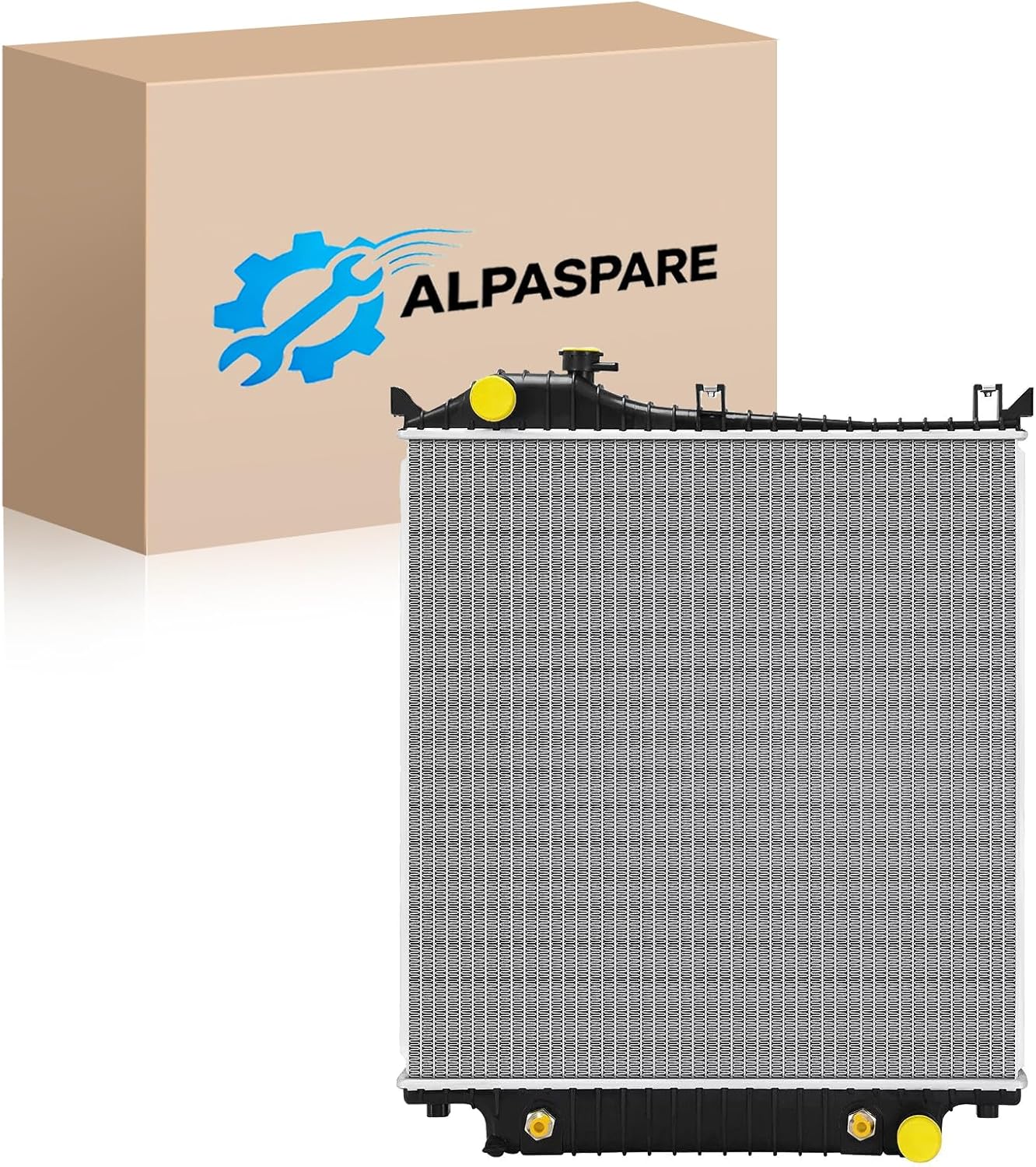
| Compatible models | Ford Explorer 2006-2010; Explorer Sport Trac 2007-2010; Mercury Mountaineer 2006-2010 |
|---|---|
| Material | Aluminum |
| Transmission fit | AT (automatic) specified |
| Manufacturer part number | RADIATOR2952ALPA |
| OEM reference numbers | 6L2Z8005AA;6L2Z8005AD;7L2Z8005A;6L248005AB;8L2Z8005A;2952 |
This Alpaspare CU2952 radiator is a straight replacement for the 2006–2010 Ford Explorer family and Mountaineer models, offering a drop-in aluminum core that aligns with original mounting points and hose connections. It is used to replace a failing or leaking factory radiator and is intended for straightforward installation without cutting or modification, which suits DIY mechanics and shops. Notable features include a machined aluminum construction, pressure and leak testing, and compatibility with multiple OEM part numbers so it matches factory fitment. In practice the radiator should restore proper engine cooling, reduce overheating risk, and hold up well against corrosion compared with older units. Trade-offs to consider are that this is a single-piece aftermarket option rather than a dealer unit and the description lists core dimensions and inlet/outlet sizes that must match your vehicle variant and transmission type. Buyers focused on minimal fuss and reliable cooling will find it practical, while those wanting dealer-branded parts may prefer to compare alternatives first.
Best for: A buyer who wants a low-risk, straightforward replacement to restore factory cooling on a 2006–2010 Explorer or Mountaineer and prefers parts that fit without modification and resist corrosion.
Less Ideal for: Shoppers who require dealer-branded parts for warranty or fleet spec reasons or those who prefer to source used/more economical repairs instead of a full replacement.
- Direct 1:1 drop-in fit that uses original mounting points and hose connections
- Aluminum construction for improved corrosion resistance and thermal dissipation
- Units tested for pressure, leaks, and thermal cycling to help ensure reliability
- Compatible with several OEM part numbers for easier match to vehicle variants
- Aftermarket unit rather than dealer-branded part which may concern buyers wanting manufacturer sourcing
- Core dimensions and inlet/outlet sizes must be checked against vehicle variant to ensure correct fit
Verdict: If you need a direct, corrosion-resistant replacement that drops in and restores factory cooling for a 2006–2010 Explorer or Mountaineer, this radiator is a practical, low-risk choice.
Choosing the Right 2006-2010 Ford Explorer Radiator: Key Factors to Consider
Fitment and Mounting Accuracy
Correct fitment is the primary concern when replacing a radiator on a 2006-2010 Ford Explorer. The inlet and outlet locations, mounting tab positions, and overall core dimensions must align with the vehicle so hoses, fan shroud, and transmission cooler lines attach without stress.
A radiator that requires cutting or adapter fittings can introduce leak points and complicate installation. When fitment is right, you save time and reduce the chance of vibration or misalignment that leads to accelerated wear. For owners planning a DIY swap, exact fitment limits the need for specialty tools and prevents repeated trips to the parts store.
Cooling Capacity and Core Design
Cooling capacity determines how well the radiator removes heat under real driving loads. For the Explorer, consider core thickness, fin density, and whether the unit uses a single or multi-row core design.
Thicker cores and denser fins usually increase heat rejection but can require more airflow or a stronger fan to be fully effective. If you tow, drive in hot climates, or regularly carry heavy loads, prioritize radiators with higher cooling capacity. Matching the original equipment cooling profile helps maintain stable engine temperatures and avoids thermostat or fan cycling issues.
Material Quality and Corrosion Resistance
Radiator materials affect durability and long-term reliability. Aluminum cores and tanks are common for their light weight and good heat transfer, while some designs use plastic end tanks to cut cost.
Plastic tanks can crack with age or thermal cycling, particularly if the vehicle sees hot-cold extremes. Aluminum tanks or heavy-gauge cores resist corrosion and physical damage better. Look for quality brazing, consistent fin spacing, and protective coatings that help prevent electrochemical corrosion in the Explorer's cooling environment.
Transmission Cooler Integration
Many 2006-2010 Ford Explorer models route transmission fluid through the radiator to manage gearbox temperature. If your Explorer has this setup, ensure the replacement radiator includes properly placed transmission cooler ports and rated internal passages.
Incorrect or undersized transmission cooler passages can raise transmission temperatures and shorten component life. Verify that the radiator supports the required line fittings and that the flow path matches the factory arrangement to maintain transmission cooling efficiency.
Ease of Installation and Serviceability
How easy a radiator is to install affects total ownership cost and downtime. Consider whether the radiator accepts the original fan shroud and sensors, includes necessary mounting hardware, and allows simple hose clamp access.
Units that require minimal disassembly of surrounding components or straightforward transfer of factory parts reduce labor time for both DIYers and mechanics. Serviceability also includes how simple it is to flush, attach bleed lines, and reattach sensors without reworking the cooling system.
Warranty and Support
Warranty coverage is an important indicator of manufacturer confidence. Radiators for the Explorer should come with clear warranty terms that cover leaks, core failures, and manufacturing defects.
Longer warranties reduce risk for owners who expect high mileage or heavy use. Also consider the availability of customer support or technical guidance if you encounter fitment questions during installation. Warranty transferability and claim process clarity are practical aspects that matter when evaluating long term ownership.
Signs Your Explorer Needs a Radiator Replacement
Early symptoms of radiator failure can be subtle. Watch for a persistent rise in engine temperature during idling or slow-speed traffic, frequent low coolant level warnings, visible signs of coolant pooling under the vehicle, rusty or discolored coolant, or a sweet smell in the engine bay. These indicators often point to a leak or reduced cooling efficiency.
Other practical checks include inspecting the radiator for bent fins, corrosion at the seams, or damp areas around the tanks. A pressure test or dye inspection helps confirm leaks that are not obvious during a visual check.
- High idle temperature or overheating under load
- Visible coolant leaks or dried coolant stains near the radiator
- Low heater output in cold weather due to reduced coolant volume
- Evidence of external corrosion or damaged fins
Routine Maintenance to Extend Radiator Life
Regular cooling system maintenance reduces the chance of premature radiator failure. Periodic coolant changes with the correct type and concentration, scheduled pressure cap checks, and inspecting hoses and clamps for brittleness or slippage all help preserve the radiator. Clean the exterior fins from debris to maintain airflow.
A routine coolant flush helps remove scale and contaminants that can clog passages. For the 2006-2010 Explorer, follow the manufacturer recommended intervals for coolant service and top off with the proper antifreeze formulation when necessary.
- Inspect hoses and clamps during oil changes
- Keep radiator fins free from leaves and road debris
- Pressure-test the cooling system if temperatures climb
- Follow coolant change intervals to prevent internal corrosion
Common Installation Pitfalls and How to Avoid Them
Installation issues often come from skipped steps or incorrect reuse of old parts. Never assume old hose clamps or brittle hoses are reusable. Replace any components showing wear. Ensure the fan shroud and cooling fan are properly centered to avoid rubbing or restricted airflow.
Bleed the cooling system correctly after installation to prevent air pockets that cause hot spots. Tighten clamps to manufacturer torque guidance where specified and confirm transmission cooler lines are snug but not over tightened to avoid damaging fittings.
- Replace brittle hoses and worn clamps during radiator swap
- Transfer and align fan shroud carefully to prevent contact
- Bleed the system thoroughly to remove trapped air
- Confirm transmission cooler line seating to prevent leaks
When to Consider Professional Help
Some radiator replacements are straightforward, but if your Explorer shows symptoms of head gasket issues, recurring coolant loss after a new radiator, or unexplained white smoke from the exhaust, seek professional diagnosis. These signs can indicate engine or head gasket problems that a radiator alone will not fix.
If you lack tools for handling transmission cooler lines or cannot pressure-test the system, a shop can ensure proper sealing and cooling performance. Professional installation also makes warranty claims easier if a part underperforms.
- Seek a shop for recurring coolant loss after replacement
- Get professional pressure testing for suspected head gasket failures
- Use a pro for complex cooling systems with transmission integration
DIY Radiator Replacement Checklist
Preparing before you start reduces surprises. Gather fresh coolant of the correct specification, new hose clamps, and any replacement hoses you suspect are old. Have a drip pan, basic hand tools, and a pressure tester or fill and bleed kit on hand.
Plan for time to allow the engine to cool fully and to properly bleed the system after installation. Inspect the old radiator to determine if other components like the thermostat or water pump should be replaced while the system is open.
- New coolant and correct concentration
- Replacement clamps and hoses if needed
- Hand tools, drip pan, and bleed kit
- Time to flush and properly fill the system
Still looking for the perfect fit?
Select your Ford Explorer configuration to see the most relevant Radiators recommendations
How We Chose the Best 2006-2010 Ford Explorer Radiator
We focused on criteria that matter specifically for the 2006-2010 Ford Explorer application. Fitment and hose connection accuracy were non negotiable filters, because incorrect inlet/outlet placement or wrong mounting tabs lead to installation delays and potential leaks. Cooling capacity and core design were weighted heavily to reflect the Explorer's engine cooling demands under towing or hot-weather driving. Corrosion resistance and material quality were assessed to estimate service life in climates that use road salt or frequent temperature cycling. Ease of installation, including whether the radiator requires special tools, fan shroud transfer, or trimming, influenced rankings to help DIY mechanics and independent shops. Warranty coverage and manufacturer technical support were considered as a proxy for build confidence.We excluded units that did not match 2006-2010 Explorer core dimensions or required substantial modifications to the vehicle. Units with unverified fitment claims, visibly poor brazing or thin fins, or lacking basic mounting hardware were removed. In short, selections were filtered for correct fit, adequate cooling capacity, durable materials, straightforward installation, and reasonable warranty support.
Our full evaluation process is outlined in our review methodology.
FAQ
How can I tell if the radiator is the cause of my Explorer's overheating?
Often the radiator is one of several causes. Look for visible leaks, discolored coolant, or low coolant level. If the thermostat and water pump are functioning and the radiator shows internal clogging or external damage, it is a likely cause. A pressure test or flow check will help confirm radiator-specific problems.
Is it safe to drive a 2006-2010 Explorer with a slow radiator leak?
Driving with a slow leak can risk engine overheating and more costly repairs. Short trips with close temperature monitoring may be manageable temporarily, but you should address the leak promptly to avoid engine damage or loss of coolant while driving.
Should I replace hoses and clamps when installing a new radiator?
It usually makes sense to replace hoses and clamps that show wear, hardening, or corrosion. Fresh clamps and good condition hoses ensure tight seals and reduce the chance of leaks after installation.
Do I need a radiator with a transmission cooler for my Explorer?
If your Explorer uses the radiator for transmission cooling, you must choose a replacement that includes the appropriate transmission cooler ports and internal passages. Using a radiator without these features will leave the transmission without proper cooling.
How long does a radiator replacement typically take on this vehicle?
For someone with basic mechanical skills and the right tools, a radiator swap on a 2006-2010 Explorer often takes a few hours. Time increases if the job requires fan shroud removal, draining and flushing the system, or replacing related components like hoses or the thermostat.
Will flushing the coolant fix minor radiator issues?
A coolant flush can clear scale and light blockages and is a good first step for diminished flow. However, flushing will not fix physical leaks, cracked tanks, or significant internal collapse of passages. If symptoms persist after a flush, replacement is likely required.
Final Verdict
For the 2006-2010 Ford Explorer, prioritize a radiator that matches factory fitment, provides adequate cooling capacity for your driving and towing habits, and uses durable materials that resist corrosion. Balance the benefits of robust core construction against the ease of installation and serviceability you need.Addressing hoses, clamps, and the cooling system during a radiator swap reduces the chance of repeat work. Choose a unit with clear warranty support and correct transmission cooler integration when applicable to make a long term, dependable repair.
Explore More:
- Check out all Ford Explorer parts & accessories
- Explore Radiators Maintenance & Repair Guides
- Explore Cooling System
- Browse all Auto Parts
