

Note: This article contains affiliate links. If you click on these links and make a purchase, I may earn a small commission at no extra cost to you. This helps support my research and content. Read my full affiliate disclosure here.
Upgrading or replacing the radiator in your Ford Explorer XLT is one of the most effective ways to prevent overheating and keep the cooling system functioning under load. Whether you drive a lot of highway miles, tow occasionally, or live in hot climates, a properly sized radiator with solid construction reduces the risk of boil-over, hot spots, and premature coolant breakdown.This guide covers the top shortlisted radiators for the Ford Explorer XLT, focusing on compatibility, cooling performance, and durability. We explain the criteria used to evaluate options and provide practical guidance on signs of failure and fitment considerations so you can select the right radiator for your driving needs and maintenance habits.
Looking for other parts? See all Ford Explorer parts & accessories.
Top Picks at a Glance
| Best Overall The best all-around choice for most situations | TRQ Radiator RDA80024 for Ford Explorer, Flex and Lincoln MKT (direct-fit) |  |
| Best Quality Built to a higher standard if you want something more solid | RAYTEN Radiator Compatible with Ford Explorer 3.5L V6 (2011–2019) |  |
| Best Value The sweet spot between price and what you get | OCPTY Aluminum Replacement Radiator for Ford Explorer (2016–2019) / Police Interceptor Utility (2013–2019) |  |
| Best Budget The cheapest option that still gets the job done reliably | AutoShack Radiator for Ford Explorer V6 3.5L (2014–2019) |  |
| Highest Rated A top-rated pick with lots of positive feedback | A-Premium Engine Coolant Radiator Assembly for Ford Explorer & Lincoln Aviator (2020–2023) |  |
| Most Popular A crowd favorite that many people choose with confidence | SCITOO Radiator Replacement for Ford Explorer 3.5L (Fits 2013–2019) |  |
| Best Seller A high-volume bestseller chosen again and again | DWVO Radiator Replacement for 1998–2001 Ford Explorer 4.0L and Compatible Models |  |
1. TRQ Radiator RDA80024 for Ford Explorer, Flex and Lincoln MKT (direct-fit)

| Core Row Quantity | 1 |
|---|---|
| Core Thickness | 1.25 in |
| Core Material | Aluminum |
| Inlet Diameter | 1.5 in |
| Outlet Diameter | 1.5 in |
This TRQ radiator is a direct-fit replacement built around a single-row aluminum core with plastic tanks, intended for V6 Ford Explorers (2011–2019) with tow package, Ford Flex (2013–2019) and Lincoln MKT (2010–2018) configurations noted in the fitment. It installs like a factory replacement and is used to restore cooling performance after a failed or leaking original radiator. Notable features include a 1.25 inch core thickness, cross-flow design, top-right inlet and bottom-left outlet locations, and pre-assembled mounting points for left and right supports. In practice you get improved cooling circulation for towing and heavier loads compared with a degraded unit, and the aluminum core helps dissipate heat efficiently while plastic tanks keep weight down. Limitations: it does not include a transmission or engine oil cooler, radiator cap, or reservoir hose connection, so verify your vehicle’s auxiliary connections before swapping. Also the single-row core favors standard cooling demands over extreme high-performance or heavy-duty racing use.
Best for: Buyers who want a reliable, factory-style replacement to restore cooling on Explorer XLT and similarly equipped vehicles used for regular driving and towing, and who prefer a straightforward install over performance upgrades.
Less Ideal for: Not a good choice for owners seeking heavy-duty, high-performance cooling upgrades or integrated oil/transmission cooling in motorsport or extreme towing setups.
- Direct-fit design with pre-assembled mounting reduces installation time and need for modifications
- Aluminum core with cross-flow layout promotes efficient heat dissipation
- Core thickness and inlet/outlet placements match factory routing for tow-package applications
- Mounting supports for left and right simplify alignment during replacement
- Does not include transmission or internal engine oil cooler or radiator cap, so additional components may be required separately
Verdict: Choose this TRQ direct-fit aluminum radiator when you need a straightforward, factory-style replacement to restore reliable cooling on an Explorer XLT with tow package.
2. RAYTEN Radiator Compatible with Ford Explorer 3.5L V6 (2011–2019)

| Compatible engines | 3.5L V6 (Ford Explorer) |
|---|---|
| Model years | 2011-2019 |
| Manufacturer part number | BES-F-13364RAD |
| OEM part numbers | EB538005JA;BB538005CA;EB5Z8005B;EB5Z8005E |
This RAYTEN radiator is a direct-fit replacement for the 3.5L V6 Ford Explorer and is built to address overheating and durability concerns in everyday and spirited driving. It installs in place of the factory unit and uses high-density cooling fins to improve heat dissipation, which helps keep operating temperatures lower under load or in hot weather. Reinforcements such as aluminum inlet rings, internal tank ribs, an expansion chamber, and double-header plates aim to reduce leak points and increase structural strength compared with basic aftermarket cores. For a performance-minded owner, the improved cooling capacity can translate to more consistent power delivery and reduced thermal stress during towing or aggressive driving. The radiator comes from an OEM factory and is advertised with a two-year after-sales service; professional installation is recommended because correct fitment and proper bleed/pressure testing are important for reliable operation. Buyers should note this is a direct replacement component rather than a high-end race unit, so extreme track use or heavily modified engines may still benefit from an upgraded performance radiator.
Best for: Buyers looking to restore or modestly improve cooling on a stock or lightly modified Explorer who prioritize reliable temperature control during spirited driving and towing.
Less Ideal for: Drivers building high-horsepower or track-focused Explorers who need an aftermarket performance core with larger capacity and dedicated racing features.
- Direct-fit for Ford Explorer 3.5L V6 model years 2011–2019 for straightforward replacement
- High-density fins for improved heat dissipation under load
- Reinforced construction features (aluminum inlet rings, internal ribs, expansion chamber) to reduce leaks and boost durability
- Manufactured in an OEM factory and supported with a two-year after-sales service
- Not marketed as a dedicated high-performance or aftermarket race radiator for heavily modified engines
Verdict: A cost-effective, OEM-factory direct replacement that strengthens cooling reliability for 3.5L Explorer owners seeking better temperature control without swapping to a race-specific radiator.
3. OCPTY Aluminum Replacement Radiator for Ford Explorer (2016–2019) / Police Interceptor Utility (2013–2019)

| Compatible vehicles | 2016–2019 Ford Explorer 3.5L; 2013–2019 Police Interceptor Utility 3.7L |
|---|---|
| Core material | Aluminum |
| Transmission/engine cooler | No integrated oil or transmission cooler |
| Manufacturer part number | 127964-5209-1830259661 |
This OCPTY aluminum radiator is a direct replacement designed to drop into late-model Ford Explorer and Police Interceptor Utility V6 applications. It uses a multi-louvered fin design and factory-style mounting to match the original fit and restore engine cooling capacity after a failed core. Typical use is a one-for-one swap during a cooling-system repair; the radiator does not include oil or transmission coolers so plumbing remains simple for models without those features. The construction and thermal-shocked gaskets aim to resist breakdown from temperature cycling, and the advertised exact-fit design reduces trimming or modification during installation. Expect straightforward fitment for compatible Explorer XLT models and a functional, OEM-quality replacement at a budget-friendly level. Limitations: it lacks integrated oil or transmission coolers and any performance upgrades beyond improved fin density, so it is not targeted at towing-heavy or high-performance builds.
Best for: Buyers who want a reliable, budget-conscious replacement radiator that restores factory cooling performance with minimal fuss and installation time.
Less Ideal for: Drivers planning heavy towing, high-performance tuning, or those who need an integrated oil or transmission cooler should consider upgraded or purpose-built radiators instead.
- Direct-fit, factory-style design for 2016–2019 Explorer and Police Interceptor Utility V6 models
- Aluminum core with high-density multi-louvered fins for improved cooling efficiency
- Gaskets and rings thermally treated for durability through temperature cycling
- Simple drop-in replacement that minimizes installation modifications
- No integrated engine oil cooler or transmission oil cooler included
Verdict: A cost-effective, factory-style aluminum radiator that restores proper cooling on compatible Explorer XLT models with a straightforward drop-in installation.
4. AutoShack Radiator for Ford Explorer V6 3.5L (2014–2019)

| Fitment | Ford Explorer 2014-2019 V6 3.5L |
|---|---|
| Core Rows | 1 |
| Engine Oil Cooler | Yes |
| Transmission Oil Cooler | Yes |
This AutoShack radiator is a direct-fit replacement for the Ford Explorer V6 3.5L (2014–2019) and is intended as a budget-friendly repair or maintenance swap. It installs in place of the factory unit and provides a single-row aluminum core with integrated engine oil and transmission oil cooling passages, which helps reinstate the vehicle's cooling and transmission cooling functions after a failed original. Typical use is like-for-like replacement during routine cooling system repair or when the original radiator leaks or corrodes. The unit omits a radiator cap and recommends confirming engine, transmission, and cooling-package details prior to purchase. Practical benefits include a factory-style fitment focus and straightforward compatibility with manual-transmission configurations, while limitations are a basic single-row core design that may not match heavy-duty cooling performance and the need for professional installation if you are not experienced. Verify fitment carefully before ordering and plan to reuse or replace ancillary parts like the cap and hoses as needed.
Best for: Buyers looking for an affordable, correct-fit replacement to restore the factory cooling system on a 2014–2019 Explorer V6 who prioritize cost-effective repairs and straightforward installation.
Less Ideal for: Drivers seeking upgraded cooling for heavy towing, performance driving, or high-load use should consider multi-row or performance radiators instead.
- Designed as a direct-fit replacement for Ford Explorer 2014–2019 V6 3.5L for simpler installation
- Integrated engine oil and transmission oil cooler passages restore factory cooling functions
- Aluminum core construction aids heat dissipation compared with all-plastic designs
- Single-row core may provide less cooling margin than multi-row or performance radiators
- Radiator cap is not included so additional parts may be required for installation
Verdict: A wallet-friendly, direct-fit radiator that restores factory cooling functions for 2014–2019 Explorer V6s without added performance frills.
5. A-Premium Engine Coolant Radiator Assembly for Ford Explorer & Lincoln Aviator (2020–2023)

| Compatible vehicles | Ford Explorer 2020-2023, Police Interceptor Utility 2020-2022, Lincoln Aviator 2020-2023 |
|---|---|
| Engine fitment | 2.3L L4 and 3.0L V6 |
| Transmission oil cooler | Not included |
| Engine oil cooler | Not included |
This A-Premium radiator is a full replacement unit made to fit 2020–2023 Ford Explorer (2.3L and 3.0L) and Lincoln Aviator 3.0L applications that do not use a transmission or engine oil cooler. It replaces the factory cooling core and is typically used when the original radiator is leaking, clogged, or damaged. The unit matches factory mounting points and hose inlet/outlet sizes for straightforward swap-in installation and is supplied with a tested coolant core intended to return cooling performance to proper operating temperature. Practical benefits include a complete assembled core that reduces installation time compared with rebuilding the old radiator and a one-year unlimited-mileage guarantee for peace of mind. Limitations to note are the absence of an integrated transmission oil cooler or engine oil cooler, so vehicles that require those features will need a different part or additional plumbing, and buyers should verify the inlet/outlet diameters and towing-package compatibility before ordering.
Best for: Buyers who prioritize a reliable, factory-style cooling system replacement for mid-2020s Explorer or Aviator models and want a straightforward swap that restores original cooling performance.
Less Ideal for: Drivers who need a radiator with an integrated transmission or engine oil cooler or who plan extensive performance modifications requiring upgraded cooling capacity.
- Direct-fit replacement for specified 2020–2023 Explorer and Aviator engines for easier installation
- Complete assembled core reduces time compared with repairing the old radiator
- Manufactured and tested to restore factory cooling performance
- One-year unlimited-mileage guarantee included
- Does not include a transmission oil cooler or engine oil cooler, so not suitable for vehicles that require those integrated coolers
Verdict: A straightforward, factory-compatible replacement radiator for 2020–2023 Explorers and Aviators that restores reliable cooling without added integrated coolers.
6. SCITOO Radiator Replacement for Ford Explorer 3.5L (Fits 2013–2019)

| Fitment | Ford Explorer 2013–2019 3.5L V6 (FWD, no towing package) |
|---|---|
| Core Rows | 1 Row |
| Inlet Diameter | 1.5 in. |
| Outlet Diameter | 1.5 in. |
| Core Thickness | 0.63 in. |
This SCITOO radiator is a direct-fit replacement intended for Ford Explorer 3.5L V6 models from 2013–2019 (FWD, without towing package or auxiliary oil cooler). It uses a single-row aluminum core and delivers the basic cooling capacity expected for street driving and daily use. Typical installation requires swapping the factory radiator into the stock mounting points and reconnecting 1.5-inch inlet and outlet hoses; the listing notes the unit does not include transmission or engine oil coolers so those systems remain unchanged. The radiator’s core thickness and dimensions indicate a compact, straightforward unit that will restore cooling performance for an aging or leaking factory radiator. Expect practical benefits like corrosion-resistant aluminum construction and compatibility guidance for fitment. Limitations are that it lacks integrated oil or transmission coolers and may not be suited for heavy towing, high-performance upgrades, or vehicles with factory auxiliary coolers, so verify trim and options before buying.
Best for: Buyers who value a vehicle-specific replacement that restores factory cooling for everyday driving and want reassurance from a commonly purchased, fit-focused part.
Less Ideal for: Drivers who regularly tow heavy loads, run performance upgrades, or have factory auxiliary oil or transmission coolers should look for a multi-row or integrated-cooler radiator designed for those requirements.
- Model-specific fitment for 2013–2019 Ford Explorer 3.5L V6, simplifying installation
- Aluminum single-row core resists corrosion and provides reliable everyday cooling
- 1.5-inch inlet and outlet match common factory hose sizes for straightforward hose connection
- Precision engineered for stock mounting points to reduce modification or trimming needs
- Does not include transmission or engine oil coolers, so vehicles that require integrated coolers need a different unit
- Single-row core may not provide the extra cooling capacity needed for heavy towing or high-performance use
Verdict: A straightforward, vehicle-specific aluminum radiator replacement that reliably restores factory cooling for 2013–2019 Explorer 3.5L owners who need a proven fit.
7. DWVO Radiator Replacement for 1998–2001 Ford Explorer 4.0L and Compatible Models
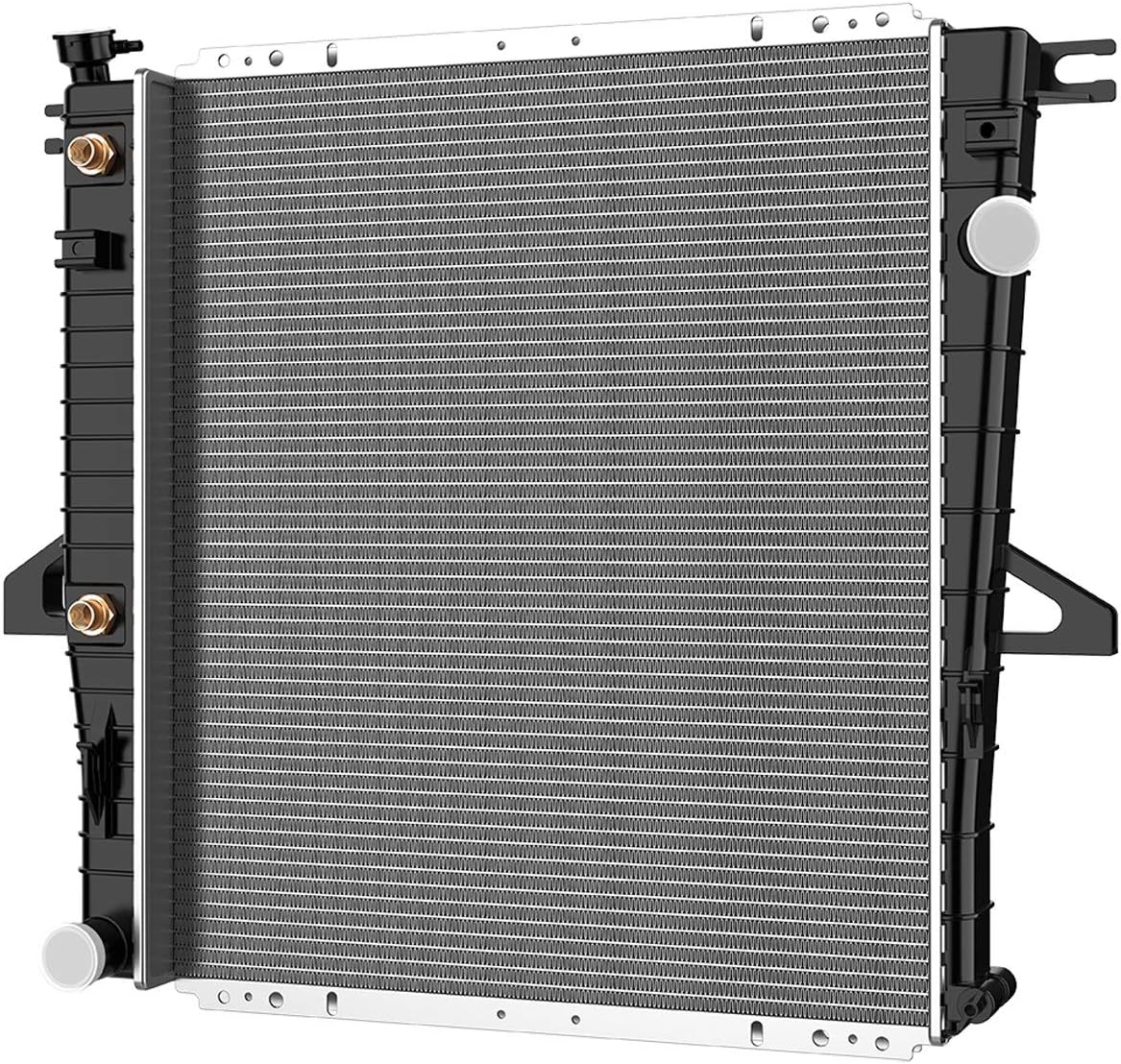
| Manufacturer | DWVO |
|---|---|
| Model | Radiator |
| Manufacturer Part Number | DWRD1086 |
| OEM Part Number | FD37071A,6L5Z8005DA |
This DWVO complete radiator is a direct-fit replacement made for 1998–2001 Ford Explorer 4.0L and several compatible Ford/Mercury V6 trucks. It swaps in like a factory-style unit and is built with a high-density, multi-louvered aluminum core to improve cooling efficiency while TIG-welded inlet and outlet tanks add durability. The radiator includes a brass transmission oil cooler and comes packaged with foam protection and a user manual, though the radiator cap is not included. Typical use is straightforward: remove the old core and install this radiator as a like-for-like replacement to restore cooling performance and stop leaks. The construction and treated coating aim to resist corrosion and cold-weather cracking, but professional installation is recommended to ensure proper mounting and connections. If you want a cost-effective, matched-fit replacement that emphasizes reliability over performance upgrades, this unit delivers solid cooling and factory-like fitment for Explorer owners seeking a low-risk repair path.
Best for: Buyers who want a dependable, factory-style replacement to restore cooling on an older Explorer without experimenting with performance parts, prioritizing fitment and long-term reliability.
Less Ideal for: Drivers looking for upgraded performance radiators or custom cooling solutions should consider higher-capacity or aftermarket performance cores instead.
- Direct-fit design for 1998–2001 Ford Explorer 4.0L and specified compatible models
- High-density multi-louvered aluminum core for improved cooling efficiency
- TIG-welded inlet/outlet tanks and treated coating for durability and corrosion resistance
- Includes integrated brass transmission oil cooler for automatic transmission models
- Radiator cap is not included so you must reuse the old cap or buy one separately
Verdict: A matched-fit, factory-style replacement radiator that restores reliable cooling for late 1990s to early 2000s Ford Explorer 4.0L owners seeking a low-risk repair.
Choosing the Right Ford Explorer XLT Radiator: Key Factors to Consider
Compatibility and Fitment
Correct fitment is critical for the Ford Explorer XLT because radiator inlet and outlet positions, mounting tabs, and transmission cooler ports must align with the vehicle's factory plumbing. A radiator that looks similar may still require modification or different hoses, adding time and cost to installation.
Confirming bolt locations, sensor bosses, and whether the radiator includes the transmission cooler or requires separate lines prevents installation surprises. Fitment affects not only ease of installation but also long-term reliability since misaligned components can introduce stress points that lead to leaks.
Cooling Capacity and Core Design
Cooling capacity determines how well the radiator removes engine heat under various loads. Core size, number of rows, fin density, and tube design all influence how much heat the radiator can dissipate. For drivers who tow, haul, or operate in hot climates, a higher-capacity core helps maintain stable temperatures.
A larger or denser core can improve cooling but may add weight and require slightly more space. Evaluate whether the radiator offers an increased core thickness or additional rows compared with the factory unit, and weigh that against available radiator support and fan clearance.
Material and Build Quality
Radiators typically use aluminum cores with plastic or aluminum end tanks, or copper/brass construction. Aluminum cores paired with stamped or welded tanks are common due to favorable weight and thermal performance. However, tank material and the quality of brazing or welding significantly affect durability and resistance to vibration and thermal cycling.
Inspect construction details such as seam quality, reinforcement at mounting points, and whether tanks are welded or crimped. Better materials and manufacturing methods reduce the chance of stress fractures, leaks, and premature failure, especially in vehicles driven off-highway or under frequent heavy loads.
Transmission Cooler Integration
Many Ford Explorer XLT models use a radiator that also serves as a transmission cooler. If your vehicle has an automatic transmission, ensure the replacement radiator either includes integrated transmission cooler ports or that you plan to retain the factory cooler lines. Compatibility here prevents transmission overheating and avoids unnecessary line rerouting.
Using a radiator without proper transmission cooling provisions can force you to retrofit an external cooler or risk higher transmission temperatures under tow or in stop-and-go traffic. Verify port size and placement to match the factory lines and avoid adapter-heavy solutions.
Corrosion Resistance and Warranty
The cooling system is exposed to moisture, road salt, and corrosive byproducts of coolant breakdown. Radiators with corrosion-resistant coatings, quality brazing, and durable tank materials will last longer in real-world conditions. Warranty coverage is a practical indicator of manufacturer confidence and offers protection against premature failure.
Consider the expected service life and what the warranty covers. A longer warranty or corrosion-resistant construction can justify a higher initial investment because it lowers the risk of replacement or repair down the road.
Installation and Maintenance Considerations
Ease of installation matters for owners doing the work themselves or paying a shop. Features that simplify installation include preinstalled mounting hardware, straight bolt-hole alignment with factory points, and clear provision for sensors and fan shrouds. Also consider maintenance items like drain petcocks and accessibility of hose connections.
Think about long-term maintenance too. A radiator that allows straightforward coolant flushing and has accessible ports for sensors reduces labor for future service. If an upgrade requires additional parts such as new hoses or transmission cooler adapters, factor that into overall cost and complexity.
Common Radiator Symptoms and When to Act
Recognizing early signs of radiator problems helps avoid engine damage. Typical symptoms include frequent overheating, coolant puddles under the vehicle, a sweet smell of coolant, or visible corrosion and crusting on the radiator surface. Another common indicator is a drop in coolant level without obvious external leaks, which may signal internal degradation or seepage.
If you notice fluctuating temperature gauge readings, persistent low coolant, or discoloration in the coolant, address the issue promptly. Continued operation with a compromised radiator can lead to warped cylinder heads or blown head gaskets, which are far more expensive to repair than replacing a failing radiator.
- Overheating during idling or at highway speeds
- Visible coolant leaks or wet spots around radiator seams
- Steam from under the hood during heavy load
- Coolant contamination or rusty-looking fluid
- Reduced heater performance in cold weather
Deciding Between OEM-Style and Enhanced-Capacity Units
OEM-style radiators aim to replicate factory dimensions and performance, which simplifies fitment and typically requires no additional changes. Enhanced-capacity units increase core size or fin density to improve cooling for towing or heavy-duty use. For most daily-driven Explorer XLT trucks, an OEM-style replacement will restore original cooling performance with minimal fuss.
If you frequently tow, live in hot climates, or push the engine with heavy loads, an enhanced-capacity radiator can provide more headroom and reduce temperature spikes. Keep in mind that increased core thickness may affect fan spacing and require careful verification of mounting and clearance before purchase.
- OEM-style for direct fit and straightforward installation
- Enhanced-capacity for heavy-duty use and better heat rejection
- Check fan clearance and hood fit when upgrading core size
Inspecting the Cooling System During Replacement
When replacing the radiator, use the opportunity to inspect hoses, clamps, thermostat housing, and the water pump for wear. Old or brittle hoses can fail shortly after a new radiator is installed, negating the benefit of the replacement. Also examine the condition of the fan clutch or electric fan assembly, as these components are integral to proper cooling performance.
A pressure test of the cooling system before and after installation helps reveal leaks in hoses or connections and confirms the radiator holds pressure. Flushing the system to remove rust and debris prevents premature clogging of the new core and helps restore consistent flow through the engine and heater core.
- Inspect hoses, clamps, and fan assembly when installing a new radiator
- Pressure-test the system to confirm leak-free installation
- Perform a coolant flush to remove scale and contaminants
Practical Tips for Installation and Avoiding Common Pitfalls
Plan for the job by gathering necessary replacement hoses, clamps, and any sensors that may need transfer. Label electrical connectors and take reference photos to ensure correct reconnection. Use new clamps and replace any hoses that show swelling, cracking, or soft spots.
When bleeding the cooling system, follow a methodical approach to remove air pockets which can cause localized overheating. Tighten mounting bolts to the correct torque and avoid over-tightening plastic tanks which can crack. After installation, run the engine to operating temperature while monitoring for leaks and verifying stable gauge readings.
- Bring extra clamps and replacement hoses to avoid rework
- Use a proper bleed procedure to remove air pockets
- Torque mounting hardware to factory specs to prevent leaks
Maintenance Practices to Extend Radiator Life
Regular coolant replacement and system flushing are fundamental to radiator longevity. Old coolant accumulates scale and acids that attack metal surfaces and seals. Adhere to the manufacturer's recommended coolant change intervals and use the proper fluid type for your Explorer XLT.
Keep the exterior of the radiator free of debris and bent fins since restricted airflow reduces cooling efficiency. Inspect the radiator during routine oil changes and look for early signs of leakage or corrosion. Address minor leaks or warped fins early to avoid escalation into more serious failures.
- Follow recommended coolant change intervals and use the correct fluid
- Clean debris from radiator fins and straighten bent fins carefully
- Inspect radiator and hoses during routine maintenance checks
Still looking for the perfect fit?
Select your Ford Explorer configuration to see the most relevant Radiators recommendations
How We Chose the Best Ford Explorer XLT Radiator
We shortlisted radiators for the Ford Explorer XLT by applying vehicle-specific fitment checks and performance-focused criteria. First, compatibility with the XLT configuration was mandatory, including correct inlet/outlet orientation, mounting points, and transmission cooler provisions where applicable. We excluded any items without documented fitment for the Explorer XLT or lacking clear material and core specifications.Evaluation prioritized heat dissipation characteristics such as core size, fin density, and tube construction because these directly affect cooling capacity under load. Materials and build quality were assessed next, including whether cores were aluminum or copper/brass, and the robustness of end tanks and brazing. Corrosion protection and warranty coverage were considered to judge long-term value. Ease of installation and whether the radiator supports factory hose and sensor locations were also factored in.We excluded units with vague fitment claims, missing spec sheets, or unclear transmission cooler compatibility. The resulting list balances cooling performance, durability, and practical fit for typical Explorer XLT driving scenarios.
Our full evaluation process is outlined in our review methodology.
FAQ
How do I know if my Ford Explorer XLT radiator is leaking internally?
Internal leaks often show as coolant contamination in engine oil, such as a milky color on the dipstick, or unexplained coolant loss without external puddles. Compression testing and a cooling system pressure test can help confirm internal leaks.
Can I replace the radiator myself on an Explorer XLT?
Many owners can handle the replacement with basic mechanical skills and the right tools, but attention to bleed procedures, correct hose connections, and torque specifications is important. If you are uncomfortable with these steps, professional installation reduces the chance of mistakes.
Is it worth getting an upgraded-capacity radiator for towing with an Explorer XLT?
An upgraded-capacity radiator can be worthwhile if you tow frequently or operate in high-temperature environments because it reduces temperature rise under load. Evaluate fan clearance and mounting compatibility before choosing an enlarged unit.
How often should I flush the coolant on my Explorer XLT?
Cooldown intervals vary by coolant type and service history, but flushing every 3 to 5 years is common for many vehicles. Check your vehicle's maintenance recommendations and monitor coolant condition; discolored or gritty fluid indicates a need for earlier service.
Will a radiator replacement fix overheating immediately?
Replacing a defective radiator often resolves overheating caused by poor heat rejection, but you should verify the entire cooling system is healthy. Issues such as a stuck thermostat, failing water pump, or clogged heater core can also cause overheating.
Final Verdict
When choosing a replacement radiator for the Ford Explorer XLT, prioritize proper fitment and adequate cooling capacity for how you use the vehicle. Confirm inlet and outlet alignment, transmission cooler provisions, and core dimensions before buying. Balance material quality and corrosion protection against installation complexity and serviceability.For typical daily driving, a direct-fit OEM-style radiator restores factory performance with minimal fuss. If you tow frequently or operate in hot climates, consider a higher-capacity unit while verifying fan and mounting clearances. Focus on proven construction, correct fitment, and proper installation to ensure long service life and dependable engine temperatures.
Explore More:
- Check out all Ford Explorer parts & accessories
- Explore Radiators Maintenance & Repair Guides
- Explore Cooling System
- Browse all Auto Parts
