

Note: This article contains affiliate links. If you click on these links and make a purchase, I may earn a small commission at no extra cost to you. This helps support my research and content. Read my full affiliate disclosure here.
If you own a 2013-2017 Honda Accord, picking the right brake pads affects safety, pedal feel, and long-term maintenance costs. Worn or inappropriate pads can increase stopping distances, create excessive dust, or cause annoying squeal on city commutes. This guide collects the top shortlisted brake pad options tailored to the Accord's braking system and driving patterns, focusing on fitment, braking performance, noise, and expected life.Below you will find options chosen for different priorities such as quiet daily driving and heavier duty use, along with the evaluation criteria we used to narrow the field and what to watch for when you install replacements.
Looking for other parts? See all Honda Accord parts & accessories.
Top Picks at a Glance
| Best Overall The best all-around choice for most situations | Max Advanced Brakes ValueMAX Front and Rear Brake Kit for 2013–2017 Honda Accord |  |
| Best Quality Built to a higher standard if you want something more solid | PowerStop Z23 Front and Rear Brake Kit with Drilled & Slotted Rotors |  |
| Best Value The sweet spot between price and what you get | Detroit Axle Ceramic Brake Pad Kit (Front & Rear) for 2013–2017 Honda Accord |  |
| Best Budget The cheapest option that still gets the job done reliably | evkingauto Ceramic Front and Rear Brake Pad Set with Clips (8-piece) |  |
| Highest Rated A top-rated pick with lots of positive feedback | Bendix Priority1 CFC914 Ceramic Rear Brake Pads |  |
| Most Popular A crowd favorite that many people choose with confidence | Detroit Axle 8‑Piece Brake Kit for 2013–2017 Honda Accord (Front and Rear Rotors + Ceramic Pads) |  |
| Best Seller A high-volume bestseller chosen again and again | Bosch QuietCast BC1451 Premium Ceramic Rear Brake Pad Set |  |
1. Max Advanced Brakes ValueMAX Front and Rear Brake Kit for 2013–2017 Honda Accord
| Compatible years | 2013-2017 Honda Accord (specified trims) |
|---|---|
| Included components | Front and rear rotors, brake pads, hardware |
| Pad material | Carbon ceramic |
| Rotor material | Cast iron |
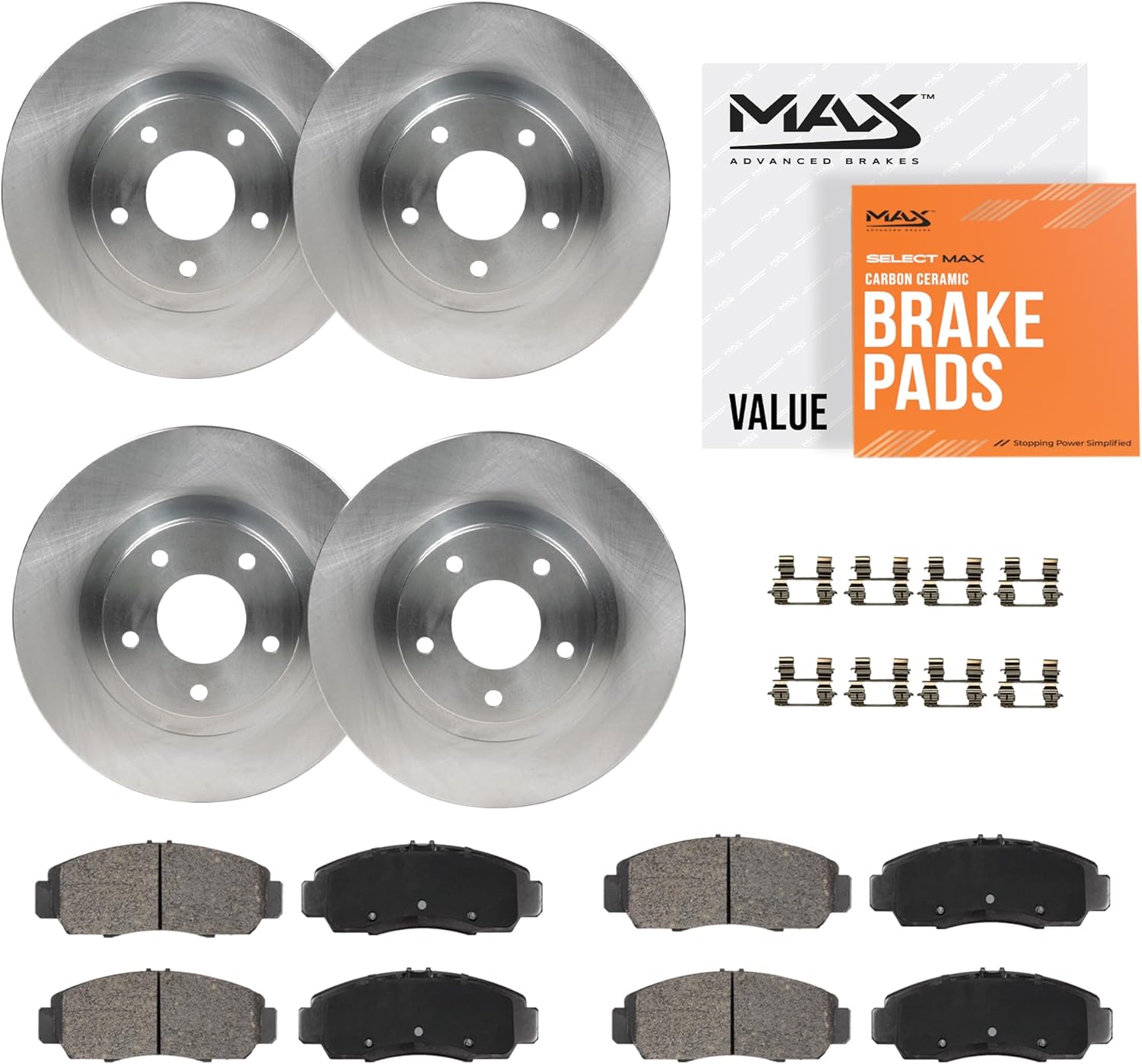
This ValueMAX kit from Max Advanced Brakes supplies everything needed to replace both front and rear brakes on compatible 2013–2017 Honda Accords. The package includes precision-machined cast iron rotors and carbon ceramic pads plus the required hardware, so installation is a direct bolt-on for the specified Accord trims. In everyday driving the carbon ceramic pads aim for quiet, low-dust operation and reviewers report smooth, consistent stopping with minimal vibration. The rotors are finished non-directionally for faster bedding and stable performance during routine commuting and light highway use. Practical benefits include cleaner wheels, quieter stops, and the convenience of a full kit rather than sourcing parts separately. Watch for shipping or packaging problems reported by a few buyers and the usual variability in long-term pad and rotor life compared with higher-end performance parts. For balanced drivers who want a factory-style replacement that keeps noise and dust down, this kit covers the bases without extra performance-focused features.
Best for: Buyers who want a practical, all-in-one factory-style brake replacement for daily driving that prioritizes quiet stops and low dust over high-performance braking.
Less Ideal for: Drivers seeking track-capable or premium performance brake upgrades should consider higher-end performance rotors and pads instead.
- Complete kit includes front and rear rotors, pads, and installation hardware for a single purchase and install
- Carbon ceramic pads formulated for low dust and reduced noise for cleaner wheels
- Precision-machined cast iron rotors with non-directional finish for stable braking and quicker bedding
- Some customers reported packaging or missing-part issues on delivery which can delay installation
Verdict: A convenient, balanced full front-and-rear replacement kit that restores quiet, low-dust everyday braking for 2013–2017 Honda Accords.
2. PowerStop Z23 Front and Rear Brake Kit with Drilled & Slotted Rotors

| Included components | Z23 pads, drilled & slotted rotors, hardware |
|---|---|
| Warranty | 3 year / 36,000 mile limited warranty |
| Fitment | Vehicle specific for 2013–2017 Honda Accord listed variants |
| Pad type | Carbon-fiber ceramic Z23 |
This PowerStop kit replaces both front and rear pads and rotors with Z23 carbon-fiber ceramic pads and drilled and slotted rotors, making it a direct bolt-on performance upgrade for compatible 2013–2017 Accord models. The Z23 pads are designed to increase stopping power over factory replacements while keeping noise and dust to a minimum, and the carbon-fiber reinforcement helps maintain bite during more aggressive braking. The rotors are precision machined from G3000-grade metallurgy with drilled holes and slots to vent heat and shed gas and debris, and a silver zinc dichromate coating reduces surface rust. The kit includes rubberized shims, stainless-steel hardware, and a small packet of brake grease to simplify DIY installation. Practical benefits for daily-driven performance include stronger pedal feel in stop-and-go traffic, reduced brake dust, and better resistance to fade under repeated heavy stops. Limitations to note are that some buyers report fitment-check mismatches for certain model years and the grease packet supplied may be insufficient for a full job, so plan to have extra supplies and double-check exact fitment before installing.
Best for: Buyers who prioritize stronger, more consistent braking and cleaner, quieter pads for spirited daily driving on a 2013–2017 Accord and who plan to do a DIY install or have a shop perform a straightforward bolt-on replacement.
Less Ideal for: Drivers who only want the cheapest possible replacement or those unwilling to verify fitment closely before purchase should consider simpler OE-style pads and rotors instead.
- Complete front-and-rear kit includes pads, drilled & slotted rotors, shims, and stainless-steel hardware for a single purchase.
- Carbon-fiber ceramic Z23 pads deliver stronger stopping power with lower dust and reduced noise compared with many stock replacements.
- Drilled and slotted rotors improve heat dissipation and help resist brake fade under repeated heavy braking.
- Silver zinc dichromate plating on rotors helps resist surface rust and corrosion for longer-looking parts.
- Some customers report vehicle fitment confusion for specific model years requiring extra verification before installation.
- Small grease packet included may be insufficient so additional brake lubricant may be needed.
Verdict: A one-stop upgrade that gives 2013–2017 Accord drivers stronger, low-dust braking and improved heat management in a bolt-on kit tailored for performance-minded daily driving.
3. Detroit Axle Ceramic Brake Pad Kit (Front & Rear) for 2013–2017 Honda Accord

| Fitment | 2013–2017 Honda Accord (see exclusions in listing) |
|---|---|
| Material Type | Ceramic |
| Includes | Front and rear pads with hardware |
| Specification Met | OEM |
This Detroit Axle kit supplies both front and rear ceramic pads sized to fit the specified 2013–2017 Honda Accord configurations in the listing. The pads use a ceramic friction material with chamfers and a multi-layer backing intended to cut vibration and reduce noise, so you can expect quieter stops and less brake dust than many semi-metallic pads. The kit includes hardware for installation and is presented as a direct replacement with factory-quality fit. In practice these pads are best for day-to-day driving and commuting where low noise, rotor-friendly operation, and stable braking at typical temperatures matter most. They claim improved high-temperature resistance to limit fade during heavier use, but ceramic pads are not a performance racing choice. Buyers should follow the break-in procedure and monitor pad wear; longevity depends on driving style and conditions. Overall this is a practical, vehicle-specific ceramic option that balances comfort and dependable stopping power for regular street use.
Best for: Buyers who prioritize a quiet, low-dust, factory-style replacement for everyday commuting and routine driving and want a complete front-and-rear kit that fits specified Accord models.
Less Ideal for: Drivers seeking high-friction performance pads for track days, aggressive driving, or heavy towing should consider performance-oriented or metallic compounds instead.
- Vehicle-specific fit for listed 2013–2017 Accord configurations makes installation straightforward
- Ceramic formulation reduces noise and leaves less dust than many metallic pads
- Includes installation hardware so you have the necessary clips and shims
- Designed to be rotor-friendly to help extend rotor life during normal driving
- Not intended for track or heavy towing where performance-oriented compounds perform better
Verdict: A complete, vehicle-specific ceramic pad kit that delivers quiet, low-dust, factory-style braking for everyday 2013–2017 Honda Accord use.
4. evkingauto Ceramic Front and Rear Brake Pad Set with Clips (8-piece)

| Compatible Years | 2011–2017 (select Accord coupe and sedan trims) |
|---|---|
| Material Type | Ceramic |
| Number of Pieces | 8 (front and rear pads with clips) |
This 8-piece ceramic kit supplies both front and rear replacement pads plus mounting clips so you can refresh all four corners in one purchase. Designed as a vehicle-specific fit for many 2011–2017 Honda Accord Coupe and Sedan trims, the pads use ceramic material, chamfers, and gas slots to reduce dust, manage heat, and cut down on brake noise and vibrations. Typical use is a direct swap for worn pads during a routine brake service; the included clips simplify reinstallation and help keep the pads positioned correctly. The practical benefits are quieter operation, lower dust than many semi-metallic options, and a complete kit that saves time sourcing parts. Limitations to note are that these are economy aftermarket pads so you should not expect the same high-temperature fade resistance as performance racing compounds, and bedding-in may be needed to reach optimal feel and stopping consistency.
Best for: Buyers who need an affordable, full replacement kit that lowers brake dust and reduces noise while restoring normal braking for everyday driving on a Honda Accord.
Less Ideal for: Enthusiasts who do frequent high-speed or track driving or anyone seeking maximum fade resistance and very aggressive braking performance should consider performance-oriented pads instead.
- Vehicle-specific fit for 2011–2017 Honda Accord trims covered, simplifying selection
- Ceramic material produces lower brake dust and quieter braking compared with many metallic pads
- Includes both front and rear pads plus mounting clips for a complete replacement in one kit
- Chamfers and gas slots help with heat dissipation and reduce harsh noise
- Not aimed at high-performance driving so may show more fade under repeated hard stops than racing-grade compounds
Verdict: A cost-conscious complete ceramic pad kit that quietly restores everyday braking and reduces dust for 2011–2017 Honda Accord owners.
5. Bendix Priority1 CFC914 Ceramic Rear Brake Pads

| Material Type | Ceramic |
|---|---|
| Auto Part Position | Rear |
| Automotive Fit Type | Vehicle Specific Fit |
| Included Components | Brake pad set with installation hardware |
These Bendix Priority1 CFC914 ceramic rear brake pads are a direct-fit replacement designed to meet factory fit, form, and function for select Honda and Acura models including many Accord years in the 2003–2017 range. The kit includes installation hardware and pads shaped with shims, slots, and chamfers to reduce noise and provide a secure fit. In real-world use they translate to predictable, quiet braking and resistance to brake fade during heavier use thanks to the ceramic friction material and thermal stability claims. Installation is the same as a normal rear pad job and the vehicle-specific fit reduces the chance of fitment headaches compared with universal pads. One limitation is that compatibility is restricted to certain trims and years so you must confirm fit for your exact Accord configuration before buying. These are aimed at drivers who prioritize consistent, factory-like braking and low-noise operation over sportier metallic compounds that trade comfort for higher bite or longevity under extreme duty.
Best for: Buyers who want a reliable, factory-quality rear pad replacement for their Accord and prioritize quiet, consistent braking and easy, trouble-free installation.
Less Ideal for: Drivers seeking maximum performance under track or heavy towing use should consider high-performance semi-metallic compounds instead.
- Vehicle-specific fit reduces installation adjustments and fitment uncertainty
- Ceramic friction material offers quiet braking and stable performance under heat
- Includes installation hardware for a complete rear pad replacement set
- Compatibility limited to specific trims and years so need to verify exact fit before purchase
Verdict: Pick these Bendix Priority1 ceramic rear pads when you want a dependable, quiet, factory-style replacement for supported Honda Accord models.
6. Detroit Axle 8‑Piece Brake Kit for 2013–2017 Honda Accord (Front and Rear Rotors + Ceramic Pads)

| Compatible with Vehicle Type | Car |
|---|---|
| Automotive Fit Type | Vehicle Specific Fit |
| Orientation | Dual |
| Manufacturer Warranty Description | 10-Year |
This Detroit Axle 8‑piece brake kit supplies both front and rear rotors with matching ceramic pads designed to fit 2013–2017 Honda Accord variants listed in the description. It is intended as a direct vehicle-specific replacement: installers remove the old rotors and pads and fit the new rotors and pad sets in the usual service interval or when braking performance declines. The kit’s ceramic pads typically run quieter and produce less dust than semi-metallic pads, while the rotors are manufactured to meet factory replacement standards and are offered with a 10-year warranty backed by testing for wear and fatigue. Practical benefits include having all four corners serviced at once and avoiding part-matching headaches. Limitations to expect are that ceramic pads can feel slightly less aggressive under repeated hard braking compared with performance-oriented compounds, and rotors in any aftermarket kit may need light truing or bedding-in for optimal pedal feel. This is a sensible all-around replacement for routine street driving when you want quieter, lower-dust braking and a complete kit for the job.
Best for: A buyer who prioritizes a reliable, quieter, low-dust street replacement and wants the reassurance of a full kit and documented testing when replacing the Accord’s brakes.
Less Ideal for: Drivers who frequently tow, carry heavy loads, or do spirited/track driving and need high‑fade resistance should consider performance brake compounds instead.
- Complete front-and-rear kit includes rotors and ceramic pads so you can replace all four corners at once
- Vehicle-specific fit reduces fitment guesswork for the listed 2013–2017 Accord models
- Ceramic pads run quieter and produce less brake dust than many semi-metallic alternatives
- Rotors and pads are tested for wear and fatigue and come with a 10-year warranty
- Ceramic pads may offer less fade resistance during aggressive or track driving compared with performance pads
Verdict: Buy this if you want a complete, vehicle-specific replacement kit that delivers quieter ceramic braking and low dust for everyday Honda Accord use.
7. Bosch QuietCast BC1451 Premium Ceramic Rear Brake Pad Set
| Material | Ceramic |
|---|---|
| Auto Part Position | Rear |
| Specification Met | OEM |
| Manufacturer | Bosch Automotive |
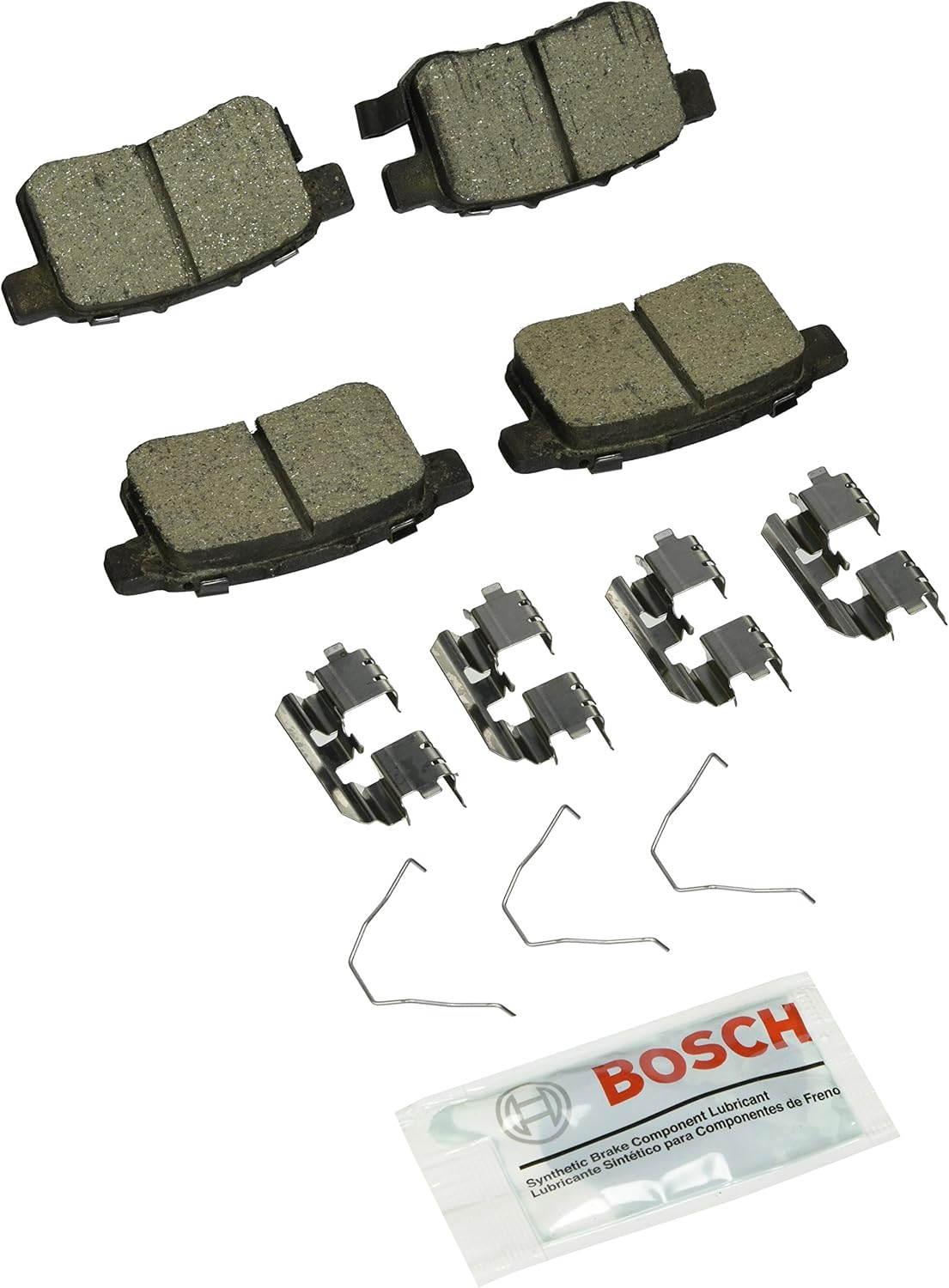
The Bosch QuietCast BC1451 rear brake pad set is a vehicle-specific ceramic replacement intended for late-model Accords and TSX rear axles. It uses Bosch molded shim technology with pre-attached multilayer rubber-core shims to reduce squeal and improve noise control, and a powder-coated backing plate to resist corrosion. The kit ships with pads for one axle plus hardware where applicable and synthetic lubricant for sliding contact points, making a home or shop installation straightforward. In everyday driving the ceramic compound provides firm, predictable stops with minimal brake dust compared with semi-metallic pads, and reviewers report a snug fit and quiet operation on compatible Accords. Limitations to consider are fitment sensitivity by trim or caliper variation and occasional hardware clip mismatches reported by some installers, so double-check vehicle fitment and keep original clips if unsure. For a buyer prioritizing low noise and a factory-style replacement, these pads balance performance, durability, and ease of installation without aggressive bite intended for track use.
Best for: Buyers who want a conservative, factory-style replacement for rear brakes on compatible Accords or TSX that prioritizes quiet, low-dust operation and dependable everyday stopping performance.
Less Ideal for: Drivers who need heavy-duty, track-capable or performance-oriented pads should choose a friction material designed for high-temperature stopping rather than a ceramic street pad.
- Vehicle-specific ceramic compound gives quieter stops and lower dust than many aftermarket pads
- Pre-attached multilayer rubber-core shims reduce squeal and improve fit
- Powder-coated backing plates resist rust for longer service life
- Includes hardware kit and synthetic lubricant to simplify installation
- Hardware clips may not fit every caliper variation despite being included
Verdict: Choose these Bosch QuietCast rear ceramic pads when you want a quiet, low-dust, factory-quality replacement for compatible Honda Accord or Acura TSX rear brakes.
Choosing the Right 2013-2017 Honda Accord Brake Pads: Key Factors to Consider
Correct Fitment and Backing Plate
Proper fitment ensures the pad sits flush in the caliper carrier and engages the rotor without binding or excessive free play. For the 2013-2017 Accord, correct backing plate shape, locating tabs, and edge tolerances prevent uneven wear and minimize the need for hardware changes.
Incorrect fitment can cause uneven pad loading, resulting in vibration, premature wear, or dragging that raises fuel consumption and rotor heat. Always verify dimensions and backing plate features against the vehicle's OEM service data or a trusted fitment guide before purchase.
Friction Material and Stopping Performance
The friction compound determines bite, modulation, and performance across temperature ranges. Compounds optimized for everyday driving provide consistent stopping distances in cold and warm conditions while avoiding excessive aggressiveness that can chatter at low speeds.
Higher-friction materials may shorten stopping distances but can increase rotor wear and dust. Conversely, low-dust compounds improve wheel cleanliness but sometimes trade off initial bite. Consider your driving style and the typical operating temperatures when choosing the material.
Noise Control and NVH
Brake pad noise is one of the most noticeable ownership annoyances. Features such as bonded or layered shims, chamfers on pad edges, and optimized surface finish reduce squeal and harshness on the Accord. Properly designed pads dissipate vibration energy that would otherwise produce tonal squeals at certain speeds or pedal forces.
Pads that ignore NVH can lead to repeated visits to troubleshoot squeal even if braking performance is acceptable. Choose pads with documented noise-control features if you prioritize quiet operation in city and residential driving.
Pad Wear Life and Rotor Impact
Pad longevity affects both direct replacement cost and rotor service intervals. Some compounds wear more slowly but transfer more abrasive particles to the rotor, causing scoring. Others are gentler on rotors but require more frequent pad changes.
Estimate life based on material composition and reported mileage ranges for similar driving conditions. Also consider whether the pad generates glaze or deposits that demand rotor resurfacing. A balanced choice minimizes total service cost while preserving braking effectiveness.
Heat Resistance and Fade Characteristics
Heat tolerance matters if you frequently drive in hilly terrain, tow light loads, or do repeated heavy braking. Pads with better fade resistance maintain consistent friction after repeated stops and avoid softened pedal feel.
Low-end compounds can fade under high thermal loads, increasing stopping distance and pedal travel. Match heat resistance to your typical use case to avoid surprises during spirited driving or extended descents.
Installation Hardware and Ease of Service
Many pad replacements require new shims, anti-rattle clips, or retaining hardware to perform as intended. Using correct hardware reduces noise and prevents pad movement that can cause uneven wear. For the Accord, verify whether the replacement set includes necessary clips and whether any minor caliper servicing is recommended during installation.
Ease of service also covers how readily the pads compress for piston retraction and whether any specialty tools are needed. Choosing pads that align with standard brake service practices saves time and reduces the chance of installation errors.
Understanding Brake Pad Types
Brake pads come in common compound categories that trade off noise, dust, and performance. Ceramic-type compounds tend to offer quieter operation and lower dust, while semi-metallic formulations often provide stronger bite and higher heat tolerance. For the 2013-2017 Accord, selecting the compound that matches your driving habits reduces compromise between stopping power and maintenance.
Consider how you use the Accord day to day. If most driving is urban commuting with frequent stops, a quieter, low-dust compound can improve ownership experience. If you regularly experience steep grades or do performance-minded driving, a pad with higher friction and better fade resistance will feel more consistent under stress.
- Ceramic-like compounds: quiet, low dust, comfortable pedal feel
- Semi-metallic-like compounds: stronger initial bite, higher heat tolerance
- Balanced compounds: designed for mixed driving without extreme tradeoffs
Front Versus Rear Pad Roles on the Accord
The front pads handle the majority of braking force due to weight transfer during deceleration, so they typically wear faster than rears. Choosing appropriate front pads has the biggest impact on stopping distance and feel. Rear pads contribute to stability and parking brake effectiveness and should be matched to front characteristics for balanced performance.
When replacing pads, inspect both axles. Uneven wear between front and rear pads can indicate caliper problems or fluid system issues. Matching the friction characteristics front to rear helps maintain predictable brake bias under different loading conditions.
- Front pads: primary stopping force, monitor thickness more frequently
- Rear pads: contribute to stability and assist the front pads
- Replace axles in logical pairs to preserve balanced braking
Interpreting Brake Pad Wear Symptoms
Common wear symptoms include reduced pad thickness, a change in pedal feel, squealing noises, and vibration during braking. Squeal often indicates glazing or vibration rather than total loss of friction, while grinding typically means the pad material is exhausted and metal-on-metal contact may be occurring.
Regular visual inspection of pad thickness and rotor condition helps catch issues early. If you notice consistent noise or a drop in braking performance, address it promptly to avoid increased rotor damage or safety risks.
- Squeal: often vibration or glazing, check shims and surface finish
- Grinding: likely pad material gone, inspect rotors and calipers immediately
- Uneven wear: possible caliper sticking or hardware issues
Brake Pad Thickness and When to Replace
Pad thickness specifications give a clear replacement threshold. While the exact wear limit varies, a common practice is to consider replacement when friction material approaches the lower limit recommended in service literature. Thinner pads reduce thermal mass and can lead to quicker fade under heavy use.
How often to replace brake pads depends on driving style and conditions. City drivers with stop-and-go traffic will see faster wear than mostly highway drivers. Inspect pads visually at regular intervals and measure thickness if you suspect accelerated wear.
- Measure pad thickness at each service interval
- Factor driving environment into replacement frequency
- Replace pads before reaching a thickness that risks rotor damage
Aftermarket Fitment and Compatibility Notes
Aftermarket brake pads vary in backing plate tolerances and included hardware. For the 2013-2017 Accord, ensure the chosen set lists explicit compatibility with the vehicle year range and model configuration. Minor dimensional differences can lead to installation headaches or inadequate contact with the rotor.
Check whether the replacement includes shims, clips, and any anti-rattle hardware. If not included, budget for OEM-equivalent components to maintain NVH performance and proper pad retention.
- Verify explicit year-range and model fitment
- Confirm included hardware to prevent rattle and uneven wear
- Look for clear installation guidance to avoid fitment surprises
Maintaining Pads and Rotors After Replacement
Proper bedding-in of new pads and rotors establishes a stable friction layer and reduces noise. Follow a progressive bedding procedure with gradual stops from moderate speeds rather than repeated hard stops to avoid glazing. Inspect rotors for hot spots or uneven wear and resurface or replace if necessary before installing new pads.
Routine maintenance such as cleaning caliper slides, lubricating contact points with brake-specific grease, and replacing worn hardware extends pad life and reduces noise incidents. Regular brake fluid checks also support consistent pedal feel and pad performance.
- Perform an appropriate bedding-in routine
- Service caliper hardware during pad changes
- Monitor rotors and fluid for signs of system stress
Still looking for the perfect fit?
Select your Honda Accord configuration to see the most relevant Brake Pads recommendations
How We Chose the Best 2013-2017 Honda Accord Brake Pads
We evaluated candidates based on a combination of technical fitment and real-world performance factors relevant to the 2013-2017 Honda Accord. Primary criteria included correct pad dimensions and backing plate design to ensure direct fitment without caliper modification, and friction compound balance to deliver predictable stopping power across temperature ranges common to everyday driving.Durability was assessed through reported pad life and material composition to estimate wear patterns and dust generation. Noise and vibration control were considered by looking at shims, chamfers, and friction formulations that reduce squeal and pedal pulsation. Heat tolerance and fade resistance were reviewed for drivers who encounter steep grades or towing situations. Brake rotor wear and compatibility were also included to avoid choices that accelerate rotor scoring.We excluded any pads that do not match the factory specifications for the 2013-2017 Accord or that require caliper or bracket modification. We also filtered out candidates lacking consistent installation feedback or with frequent fitment complaints. The final list prioritizes options that balance stopping performance, longevity, and low noise for typical Accord owners.
Our full evaluation process is outlined in our review methodology.
FAQ
How often should I replace the brake pads on a 2013-2017 Accord?
Frequency depends on driving habits. City driving with frequent stops typically requires replacement sooner than highway driving. Many owners see changes around 30,000 to 50,000 miles, but inspect thickness regularly and replace when material approaches the service limit.
What does grinding noise from the brakes usually mean?
Grinding often indicates the friction material is worn down and metal is contacting the rotor. It usually requires immediate inspection and likely pad replacement to prevent rotor damage.
Can I mix different pad compounds front and rear?
Mixing compounds is not ideal because it can alter brake bias and pedal feel. If you need temporary pairing, choose materials with similar friction characteristics, but replace axles in matched sets for consistent performance.
Are ceramic-style pads a good choice for an Accord?
Ceramic-style pads typically offer lower noise and dust with comfortable pedal modulation, making them a solid choice for daily-driven Accords. If you need higher heat tolerance, consider a compound with better fade resistance instead.
How can I tell if a pad is worn unevenly?
Uneven wear shows as one side of the pad thinner than the other or as grooves on the rotor surface. This can signal caliper guide issues, stuck pistons, or improper installation and should be diagnosed promptly.
Do I need to replace hardware when changing pads?
Replacing clips, shims, and anti-rattle hardware is recommended when they show wear or corrosion. Fresh hardware helps maintain proper pad alignment and reduces noise, improving the longevity of new pads.
Final Verdict
When choosing brake pads for a 2013-2017 Honda Accord, prioritize correct fitment, appropriate friction material, and noise control to preserve stopping performance and minimize maintenance. Balance pad longevity against rotor friendliness and heat tolerance based on how you drive the vehicle. In most cases, selecting pads that match the Accord's service specifications and installing fresh hardware will deliver reliable braking and a quieter ownership experience.
Explore More:
- Check out all Honda Accord parts & accessories
- Explore Brake Pads Maintenance & Repair Guides
- Explore Brake System
- Browse all Auto Parts
